2027 Online Physics Degrees With Practice-Focused Curricula

Co-Founder and Chief Data Scientist
Choosing an online physics degree is harder than comparing tuition because the real question is whether the program can deliver serious lab, math, and computing experience at a distance. That matters for students targeting research support, engineering-adjacent, teaching, data, or graduate school pathways. The U.S. Bureau of Labor Statistics reported a May 2024 median annual wage of $149,530 for physicists and astronomers, but many roles require graduate study.
This guide explains accredited options, practical labs, costs, admissions, career outcomes, and red flags so you can choose a program that fits your goal.
Key Things You Should Know
- Fully online physics degrees are uncommon, so the strongest options usually combine institutional accreditation, remote lab kits or simulations, computational physics, and clear transfer or graduate-school pathways.
- College Board data for 2024-2025 lists average published tuition and fees at $11,610 for in-state public four-year colleges and $43,350 for private nonprofit four-year colleges, so residency, transfer credit, and online fees can change the real cost substantially.
- The highest physics-labeled occupations often require a master's or PhD; the May 2024 BLS median wage for physicists and astronomers was $149,530, while bachelor's graduates more commonly start in technical, data, laboratory, education, or engineering-support roles.
What are online physics degrees with practice-focused curricula?
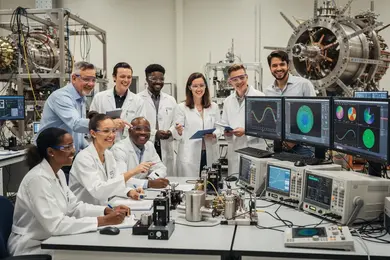
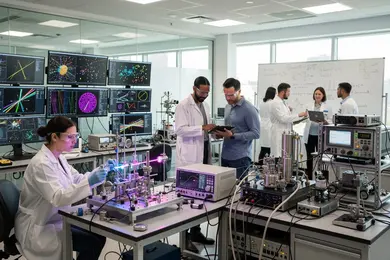
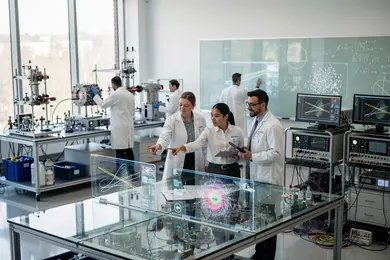
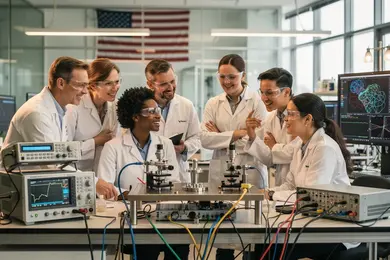
Online physics degrees with practice-focused curricula are programs that teach physics theory while also requiring applied problem-solving, laboratory work, data analysis, instrumentation, modeling, and often a capstone or research-style project. The "practice-focused" part matters because physics is not only a lecture subject; employers and graduate schools want evidence that students can measure, model, troubleshoot, code, and explain complex systems.
These programs can appear at different levels. A bachelor's degree is usually designed for transfer students, future teachers, technical professionals, or students planning graduate study. A master's degree may focus on applied physics, health physics, physics education, computational methods, or preparation for doctoral study.
Certificates and individual online physics courses can help with prerequisites, but they usually do not replace a full degree for research or advanced technical roles.
Online physics is a good fit when you need flexibility but still want a quantitative science degree. It may not be the best fit if you need frequent access to specialized campus equipment, want a traditional undergraduate research lab experience from the first year, or are targeting a PhD program that expects extensive in-person research before admission.
The best online route is usually the one that matches your next step rather than the one with the shortest completion time.
The table below summarizes common online physics-related options and the kind of student each one usually serves. Use it to decide whether you need a full degree, a graduate credential, or a more targeted alternative.
| Program type | Typical focus | Best fit | Main limitation |
| Online bachelor's in physics | Mechanics, electromagnetism, modern physics, labs, math, computing | Transfer students, future teachers, technical workers, graduate-school planners | Fewer fully online choices than many other STEM majors |
| Online master's in physics or applied physics | Advanced theory, modeling, radiation, materials, computation, or education | Working professionals who already have physics, engineering, or math preparation | May not substitute for a research-intensive PhD track |
| Online health physics or radiation science program | Radiation protection, dosimetry, nuclear safety, regulatory practice | Students interested in hospitals, nuclear facilities, government, or environmental safety | Career requirements can vary by employer and certification body |
| Online physics courses or certificate | Prerequisites, teacher preparation, or skill refreshers | Students filling gaps before another degree | Usually limited career value without a completed degree |
Which schools offer accredited online physics programs?
Accredited online physics programs are offered by a small set of U.S. institutions, and the exact format can change by term. In physics, the key accreditation issue is usually institutional accreditation from an agency recognized by the U.S. Department of Education or CHEA; programmatic accreditation is less common for physics than it is for engineering, nursing, or teacher preparation.
The following examples show the types of accredited U.S. options students commonly compare. Always verify the current catalog, delivery format, state authorization, lab requirements, and whether the program is open to students in your state before applying.
| School | Online physics-related option | Practice-focused features to check | Accreditation note |
| Arizona State University | Online bachelor's program in physics | Short-course format, math sequence, physics labs, computational work, transfer-credit fit | Institutionally accredited by the Higher Learning Commission |
| University of North Dakota | Online bachelor's and graduate study options in physics-related fields | Remote or arranged labs, upper-division physics courses, research or project expectations | Institutionally accredited by the Higher Learning Commission |
| Illinois Institute of Technology | Online health physics graduate program options | Radiation safety, measurement, regulation, applied nuclear science, professional practice | Institutionally accredited by the Higher Learning Commission |
A reputable program should make its accreditation easy to confirm and should explain how online students complete labs. If a school advertises physics but mainly offers general science, physical science education, or engineering technology, that may still be useful, but it is not the same as a physics degree. Ask admissions staff for the official program name that will appear on the transcript.
How do online physics degrees compare with campus programs?
Online and campus physics programs can cover similar theory, but they differ in access, scheduling, lab delivery, peer interaction, and research opportunities. The better choice depends on whether your main goal is flexibility, hands-on research immersion, teacher preparation, technical career mobility, or graduate-school competitiveness.
The comparison below highlights the practical trade-offs. It is especially useful if you are deciding between staying employed while studying online or relocating for a traditional campus program.
| Factor | Online physics degree | Campus physics degree | Decision point |
| Flexibility | Often stronger for working adults and transfer students | Less flexible but more structured | Choose online if schedule control is essential |
| Labs | May use home kits, simulations, remote instruments, or intensive lab sessions | Usually direct access to campus equipment | Choose campus if you need frequent specialized instrumentation |
| Research exposure | Possible but more dependent on faculty design and student initiative | Often easier to join faculty labs | Campus may be better for PhD-bound students seeking research depth |
| Networking | Requires intentional use of office hours, online cohorts, and projects | More spontaneous peer and faculty contact | Online students should plan networking deliberately |
| Cost control | Can reduce relocation and commuting costs | May provide assistantships or campus research jobs | Compare total cost, not only tuition |
Online physics can be academically credible when labs, assessment, and faculty support are strong. However, it is not automatically easier. Students often need more self-direction because physics courses build quickly from calculus, differential equations, and experimental reasoning.
What coursework is included in an online physics curriculum?
A practice-focused online physics curriculum should combine core theory with measurable applications. That means students should not only solve equations but also collect data, write code, interpret uncertainty, prepare technical reports, and connect physics concepts to real systems.
The table below shows common coursework and the practical skill each area is meant to build. Course names vary by school, but the sequence should show a clear path from foundations to advanced application.
| Course area | What students learn | Practice-focused outcome |
| Classical mechanics | Motion, forces, energy, oscillations, rotational systems | Model physical systems and validate predictions with data |
| Electricity and magnetism | Fields, circuits, waves, Maxwell's equations | Analyze circuits, sensors, signals, and electromagnetic systems |
| Modern and quantum physics | Relativity, atomic physics, quantum behavior, spectroscopy | Understand technologies used in semiconductors, lasers, and imaging |
| Thermodynamics and statistical physics | Heat, entropy, gases, probability, many-particle systems | Apply energy and materials concepts to engineering and environmental problems |
| Computational physics | Numerical methods, simulation, coding, visualization | Use programming to solve problems that are difficult analytically |
| Laboratory methods | Measurement, uncertainty, instrumentation, reporting | Design experiments and communicate results clearly |
| Capstone or project | Independent or team-based applied work | Create evidence of skill for employers or graduate applications |
Some students discover that their interests are adjacent to physics rather than centered on it. For example, students drawn to Earth systems, geophysics, mapping, and environmental measurement may want to compare a geology online degree with a physics program before committing.
How do online physics labs and experiments work?
Online physics labs work best when they are designed around the same scientific habits as campus labs: measuring, estimating uncertainty, testing models, documenting procedures, and explaining results. The equipment may be different, but the learning goal should remain experimental reasoning.
Schools commonly use several lab formats. Before enrolling, ask which formats are required in your specific courses because lab delivery can vary between lower-division and upper-division physics.
- Home lab kits: Students receive or purchase equipment such as sensors, optics components, circuit boards, or mechanics apparatus and complete experiments under instructor guidance.
- Simulation labs: Students use software to model physical systems, adjust variables, and compare theoretical predictions with simulated results.
- Remote instrumentation: Students access real lab equipment through an online interface and collect data from a distance.
- Intensive residencies: Some programs require short campus visits for concentrated lab work, especially for advanced experiments.
- Local proctoring or arranged labs: A school may allow students to complete certain lab requirements at an approved local institution or partner site.
A strong online lab should include graded lab notebooks or reports, instructor feedback, error analysis, and clear safety instructions. Be cautious if a program treats labs as optional videos only; watching demonstrations can support learning, but it does not fully replace doing experimental work.
What are the admission requirements for online physics programs?
Admission requirements depend on the degree level and the student's academic background. Physics programs are math-intensive, so readiness for calculus is often more important than a polished personal statement.
Most applicants should prepare for the following requirements. The list is especially important for transfer students because missing math or lab prerequisites can delay graduation even after admission.
- High school diploma or equivalent for bachelor's admission, or a completed bachelor's degree for graduate admission.
- College preparatory math, typically including precalculus or calculus readiness for undergraduate applicants.
- Prior coursework in physics, calculus, differential equations, linear algebra, or programming for upper-division transfer or graduate applicants.
- Official transcripts from all colleges attended, including community college and dual-enrollment records.
- Minimum GPA requirements that vary by school and may be higher for graduate programs.
- Letters of recommendation, statement of purpose, resume, or prerequisite review for many master's programs.
- English language proficiency documentation for applicants whose prior education was not in English.
Students who are not calculus-ready can still pursue physics, but they should plan for a longer timeline. A smart first step is to complete precalculus, calculus I, and an introductory programming course before taking upper-level physics. That sequence reduces the risk of paying for courses before you have the tools to succeed.
How long does an online physics degree take and cost?
An online bachelor's degree in physics usually takes about four years for first-time, full-time students, while transfer students may finish faster if prior credits apply cleanly. Part-time students often need longer because physics courses must be taken in sequence. Online master's programs commonly take two to three years part time, depending on prerequisites, thesis or non-thesis format, and course availability.
Cost varies by residency, institution type, transfer credits, lab fees, technology fees, and whether the school charges a flat online rate. College Board's 2024-2025 national averages provide a useful benchmark, but your actual bill may differ.
Those figures are annual published prices, not a personalized net price after grants, scholarships, employer tuition assistance, or transfer credits. Online students should also check lab-kit costs, proctoring fees, software subscriptions, textbook costs, graduation fees, and whether summer courses cost more.
Physics students often compare costs with other quantitative STEM paths. If you are weighing physics against engineering, reviewing mechanical engineering degree online cost information can help you understand how tuition, labs, accreditation expectations, and equipment fees differ across technical majors.
To estimate return on investment, compare the total net cost with the specific roles you are targeting. A physics bachelor's can be valuable, but the payoff depends heavily on whether you build marketable skills in coding, data analysis, instrumentation, teaching, or engineering support during the degree.
What jobs can you get with an online physics degree?
An online physics degree can lead to several career directions, but the job title "physicist" usually requires graduate education, especially in research and development. Bachelor's graduates often compete for roles that value quantitative reasoning, lab skills, programming, technical documentation, and problem-solving rather than physics theory alone.
The table below connects common career paths with realistic preparation levels. Use it to avoid choosing a degree based only on a job title.
| Career path | Typical responsibilities | Common education expectation | Skills that strengthen employability |
| Research assistant or laboratory technician | Prepare experiments, collect data, maintain instruments, document results | Bachelor's degree may qualify for some roles | Lab methods, Python or MATLAB, safety, technical writing |
| Data analyst or scientific programmer | Model data, automate analysis, build visualizations, support technical teams | Bachelor's degree plus portfolio often important | Statistics, Python, SQL, machine learning basics, communication |
| Engineering technician or test specialist | Run tests, analyze performance, troubleshoot prototypes, support engineers | Bachelor's degree or technical experience may qualify | Electronics, CAD exposure, instrumentation, documentation |
| Physics or science teacher | Teach science courses, develop labs, assess student learning | Bachelor's degree plus state teacher licensure if teaching in public schools | Pedagogy, classroom management, state-approved preparation |
| Health physics or radiation safety professional | Monitor radiation exposure, apply safety rules, support medical or nuclear operations | Bachelor's or graduate training, depending on role | Radiation measurement, regulation, dosimetry, safety practice |
| Physicist or astronomer | Conduct advanced research, develop models, publish findings, lead projects | Master's or PhD commonly required | Research methods, advanced math, computing, publication experience |
AI and automation are changing entry-level expectations. Physics students who can use programming tools, automate data cleaning, validate model outputs, and explain technical results to non-specialists may be more competitive than students who complete only traditional theory courses. The safest strategy is to graduate with a portfolio that includes code, lab reports, simulations, and a capstone project.
If your interest in physics is tied to health, metabolism, food technology, or public health rather than physical systems, an online bachelor's degree in nutrition may be a more direct route to those goals than a physics major.
What is the salary outlook for physics graduates?
The salary outlook for physics graduates depends strongly on degree level, occupation, location, industry, and experience. A bachelor's degree in physics does not automatically place someone in a physicist role, but it can support entry into technical occupations where quantitative and computing skills matter.
BLS wage data is useful because it shows the earning potential of advanced physics occupations, but it should be interpreted carefully. The May 2024 median annual wage for physicists and astronomers was $149,530, yet many positions in that category require graduate education and research experience. For a bachelor's student, this figure is better viewed as an upper-path benchmark than an entry-level expectation.
Salary outcomes are usually stronger when students pair physics with applied skills. Employers in defense, aerospace, energy, semiconductors, medical technology, software, finance, education, and government labs may value physics training, but they often screen for practical tools such as programming, statistics, electronics, instrumentation, or domain-specific regulation.
To evaluate salary potential realistically, compare job postings in your target region before enrolling. Look for the required degree level, preferred software, clearance requirements, lab experience, and whether the role says "physics," "engineering," "data," "test," "radiation," or "research." Those keywords often reveal whether a physics degree is sufficient or whether you need a master's, certification, licensure, or engineering credential.
How do you choose a reputable online physics program?
Choosing a reputable online physics program requires more than checking whether the word "physics" appears on the program page. You need to confirm accreditation, lab quality, academic rigor, student support, transfer rules, and alignment with your career or graduate-school plan.
Use the following steps before applying. They are designed to help you compare programs on evidence rather than advertising language.
- Verify institutional accreditation through the school's accreditor and confirm that the agency is recognized by the U.S. Department of Education or CHEA.
- Ask how every required lab is completed, including equipment, safety procedures, grading, software, and whether any campus visit is required.
- Map the course sequence from calculus through upper-level physics to make sure prerequisites will not create hidden delays.
- Request a transfer-credit evaluation before enrolling if you have prior college credit.
- Compare total net price, including fees, lab kits, textbooks, software, and lost income if you reduce work hours.
- Review faculty qualifications, office-hour access, tutoring, online advising, and career services for distance students.
- Check graduate-school outcomes, teacher licensure alignment, or employer partnerships if those are central to your plan.
- Ask for examples of student projects, capstones, research opportunities, or portfolios that online students complete.
Common mistakes can be expensive in a physics degree because prerequisites build on one another. The biggest red flags are vague lab descriptions, unclear accreditation, no published course sequence, limited math support, and admissions staff who cannot explain whether the degree prepares students for your target outcome.
Some students ultimately realize they like scientific information, research organization, and data access more than physics problem sets or lab work. If that sounds like you, comparing a degree in library science with physics can help you choose a path that better fits your daily work preferences.
Other Things You Should Know About Physics
Yes, but fully online physics degrees are relatively rare. The best programs explain how students complete labs, receive faculty feedback, and build applied skills such as computation, measurement, and technical reporting.
It can be respected when it comes from an accredited institution and includes rigorous coursework, labs, and projects. Employers usually care about the school's credibility, your skills, and your portfolio more than the delivery format alone.
In 2027, online physics degrees with practice-focused curricula often offer entirely remote options, but some programs may require occasional campus visits for hands-on labs or workshops. It's crucial to check individual program requirements for any mandatory in-person components.
References
- Explore online physics courses and programs | edX https://www.edx.org/learn/physics
- Online Physics Course with Lab for Deeper Learning https://praxilabs.com/en/blog/2025/12/08/online-physics-course-with-lab/
- General Physics I https://www.straighterline.com/online-college-courses/general-physics-i/
- 9 Best Physics Courses for 2025: Learn Physics Online — Class Central https://www.classcentral.com/report/best-physics-courses/
- 2025 Best Online Degrees in Physics https://www.onlineu.com/degrees/physics
- What Can You Do with a Physics Degree? https://willamette.edu/academics/college/physics/career-options
- Physics degree. Which career has the highest earning potential? https://www.physicsforums.com/threads/physics-degree-which-career-has-the-highest-earning-potential.694691/
- Physics Lab Experiments - Lehigh Carbon Community College https://www.lccc.edu/science-in-motion/labs-equipment/physics-lab-experiments/
- Physics Employment Facts https://www.compadre.org/careers/facts.cfm
- Online Physics Course: 6 Helpful Considerations - Prereqcourses https://www.prereqcourses.com/online-physics-course/