2027 Online Physics Degrees for Students Who Want Science Careers Outside Academia

Co-Founder and Chief Data Scientist
Choosing an online physics degree is really a career strategy decision: can the program give you enough math, labs, coding, and applied experience to compete for science jobs outside academia? The stakes are significant. The U. S. Bureau of Labor Statistics reported a $157,740 median annual wage for physicists and astronomers in May 2024, but many physics graduates work in adjacent technology, engineering, data, and research roles.
This guide explains degree options, costs, accreditation, skills, career paths, and red flags so you can choose a program with a clear return on effort and cost.
Key Things You Should Know
- Online physics degrees can support industry paths in data, instrumentation, aerospace, semiconductors, optics, energy, and technical sales, but the strongest programs prove lab access, coding depth, and employer-facing projects.
- College Board reported average published 2024-25 tuition and fees of $11,610 for in-state public four-year colleges and $43,350 for private nonprofit four-year colleges, before aid.
- BLS data show physicists and astronomers had a $157,740 median annual wage in May 2024, while many physics graduates work in adjacent roles where pay depends on programming, engineering, and domain skills.
What is an online physics degree and how does it prepare you for non-academic science careers?
An online physics degree is a college program that teaches the laws governing matter, energy, motion, fields, waves, particles, and measurement through a distance-learning format. For students who want science careers outside academia, the key question is not only whether the degree is online; it is whether the program builds transferable technical ability in modeling, experimentation, computation, and quantitative problem-solving.
A strong physics degree can prepare students for non-academic work because physics is less about memorizing facts and more about learning how to turn messy real-world systems into testable models. Employers in technology, manufacturing, energy, national laboratories, defense, medical technology, and finance often value that approach when it is paired with programming and communication skills.
Non-academic does not mean "less scientific." It usually means your work is tied to products, systems, data, regulation, customers, or mission-driven research rather than tenure-track teaching and publishing. A physics graduate in industry might calibrate sensors, analyze satellite data, model materials, test optical devices, write simulation code, support radiation safety, or translate technical findings for engineering and business teams.
The best online physics programs for industry-minded students usually share several traits: calculus-based physics, modern lab experiences, numerical methods, Python or another scientific programming language, access to faculty, and opportunities to produce portfolio evidence such as lab reports, code repositories, design projects, or research posters. Those artifacts matter because they help employers see what you can actually do.
How do online physics degrees compare with campus programs for rigor, labs, and flexibility?
Online physics programs can be academically rigorous, but they require closer scrutiny than many online majors because physics depends heavily on labs, mathematical sequencing, and instructor feedback. A well-designed online course may use simulations, mailed lab kits, remote instruments, local lab arrangements, or short campus residencies; a weak program may rely too heavily on videos and multiple-choice exams.
The table below compares the major decision points that usually separate strong online physics programs from campus-based programs. Use it to decide whether the flexibility of online study outweighs the extra responsibility of verifying labs, support, and career preparation.
| Factor | Online physics degree | Campus physics degree | What it means for career-focused students |
| Rigor | Can be comparable when courses are calculus-based, proctored, and taught by qualified faculty | Often easier to verify through established department structures and course sequences | Ask for syllabi, lab requirements, grading methods, and examples of student projects before enrolling |
| Labs | May use lab kits, simulations, remote equipment, local partner labs, or residencies | Typically provides direct access to teaching labs and research equipment | Students targeting instrumentation, optics, materials, or hardware roles should prioritize programs with hands-on lab evidence |
| Flexibility | Usually better for working adults, military students, caregivers, and transfer students | Less flexible but often more immersive | Online works best for disciplined students who can protect study time for math-heavy courses |
| Networking | Depends on virtual advising, online research groups, career services, and project-based courses | Often stronger for spontaneous faculty contact, clubs, and undergraduate research | Online students should intentionally seek internships, professional societies, and faculty-led projects |
| Employer perception | Generally strongest when the school is institutionally accredited and the transcript does not signal a low-quality shortcut | Often familiar to employers, especially regional public universities and research institutions | Accreditation, coursework, projects, and skills usually matter more than delivery format alone |
A current trend shaping online physics education is the wider use of cloud-based computation, virtual laboratories, and AI-assisted coding tools. These tools can make online learning more realistic, but they do not replace the need to understand experimental uncertainty, document methods, and explain results clearly. Employers still need graduates who can reason, troubleshoot, and communicate under real constraints.
Online study is usually a better fit if you already have some college credit, need to work while studying, or live far from a suitable campus. Campus study may be better if you want heavy access to physical laboratories, faculty research groups, or a direct path into a research-intensive PhD program.
What types of physics degrees can you earn online and which are best for industry roles?
Online physics options are not all designed for the same outcome. Some programs are broad liberal arts degrees, while others emphasize applied physics, engineering physics, computational science, education, or graduate-level specialization.
The table below summarizes common online or partially online physics-related credentials and how they usually fit non-academic career goals. Availability varies by school, and fully online bachelor's programs in physics are less common than online programs in business, computer science, or health fields.
| Credential | Typical level | Best fit | Limitations to check |
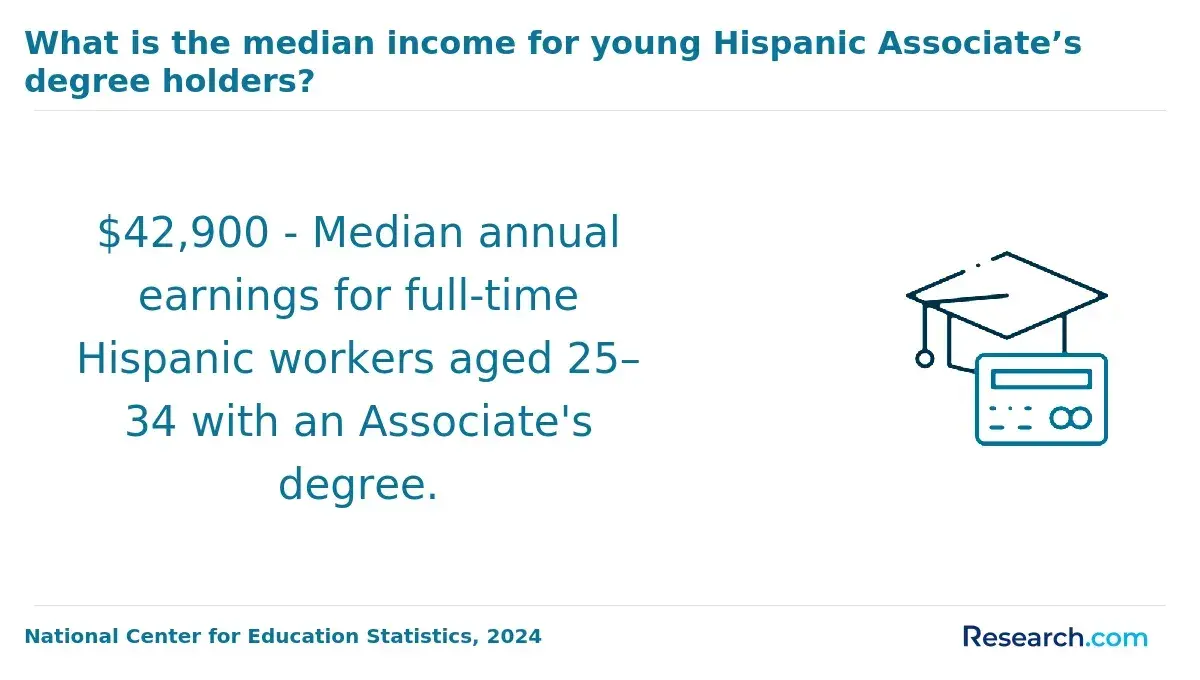
| Associate degree with physics transfer pathway | Undergraduate | Students lowering cost before transferring into a bachelor's program | Physics, calculus, and chemistry courses must transfer cleanly into the target school |
| BA in physics | Undergraduate | Students combining physics with data science, education, business, policy, or technical communication | May require fewer advanced physics or lab courses than a BS |
| BS in physics | Undergraduate | Students targeting technical industry roles, graduate school, engineering-adjacent work, or applied research | Labs and upper-division courses are harder to deliver fully online |
| Applied physics or engineering physics degree | Undergraduate or graduate | Students who want stronger ties to devices, materials, instrumentation, optics, energy, or manufacturing | Course names vary, so compare actual syllabi rather than relying on the program title |
| Graduate certificate in physics, optics, data science, or scientific computing | Post-bachelor's | Working professionals who need targeted skills without a full degree | May not substitute for a full degree when employers require one |
| Master's in physics or applied physics | Graduate | Students seeking advanced technical roles, research and development support, or specialization | Thesis, lab, or residency requirements may limit fully online completion |
For many industry roles, the strongest undergraduate option is a BS in physics, applied physics, or engineering physics with electives in programming, statistics, electronics, computational modeling, and materials or optics. If your target job is clearly engineering licensure, product design, or mechanical systems design, a mechanical engineering degree online may be a more direct route than physics.
Students should also distinguish between "physics for career flexibility" and "physics for a specific regulated occupation." Medical physics, health physics, nuclear work, and some radiation safety roles may require specialized graduate education, board certification, supervised experience, or employer-specific clearances. An online physics bachelor's degree can be a foundation, but it may not be the final credential.
How can you verify that an online physics program is properly accredited and respected by employers?
Accreditation is the first quality filter for any online physics program. In the United States, students should look for institutional accreditation from an agency recognized by the U.S. Department of Education or the Council for Higher Education Accreditation. This matters for federal financial aid, transfer credit, graduate school eligibility, and employer trust.
Physics programs typically do not have the same kind of universal programmatic accreditation that many engineering, nursing, counseling, or education programs do. That makes institutional accreditation, faculty qualifications, lab design, curriculum depth, and graduate outcomes especially important. If a program calls itself engineering physics or prepares students for engineering work, ask whether any related engineering program holds ABET accreditation.
Use the following steps before you apply or pay an enrollment deposit. They help you verify both formal legitimacy and practical employer value.
- Confirm the school's institutional accreditation through official accreditation databases rather than relying only on marketing pages.
- Ask whether the online program is authorized to enroll students in your state, especially if the program includes internships, labs, or field experiences.
- Request a degree plan showing calculus, differential equations, classical mechanics, electromagnetism, modern physics, quantum mechanics, labs, and computing courses.
- Ask how labs are completed, what equipment is used, how lab reports are graded, and whether employers or graduate schools have accepted the format.
- Review faculty profiles, student support, career services, transfer policies, and examples of recent graduate pathways.
Common red flags include vague accreditation language, no clear lab plan, pressure to enroll immediately, unusually high transfer-credit promises, no published faculty information, or a curriculum that avoids calculus. A convenient online format should not come at the cost of scientific depth.
What core courses and technical skills do online physics programs teach for science and tech careers?
Physics programs are built around mathematical modeling, measurement, and physical reasoning. For non-academic careers, the most valuable programs connect that foundation to computing, data, instrumentation, and communication.
The table below links common physics coursework to workplace skills. This can help you look beyond course titles and identify whether a program supports the kind of work you want to do after graduation.
| Course or skill area | What students learn | Career relevance outside academia |
| Calculus and differential equations | Change, rates, optimization, and systems that evolve over time | Modeling, simulation, signal processing, engineering analysis, quantitative finance |
| Classical mechanics | Motion, forces, energy, oscillations, and stability | Aerospace, robotics, mechanical testing, defense systems, product analysis |
| Electricity and magnetism | Fields, circuits, waves, and electromagnetic interactions | Electronics, sensors, telecommunications, energy systems, semiconductor work |
| Modern and quantum physics | Atomic structure, photons, quantum states, and microscopic systems | Optics, lasers, materials, semiconductors, quantum technology support roles |
| Thermodynamics and statistical mechanics | Heat, entropy, probability, and collective behavior | Materials, climate technology, energy, manufacturing, chemical and process industries |
| Laboratory methods | Measurement, uncertainty, calibration, documentation, and troubleshooting | Quality assurance, instrumentation, test engineering, research and development support |
| Programming and numerical methods | Simulation, data analysis, algorithms, visualization, and reproducible workflows | Data science, scientific software, automation, modeling, AI-enabled analysis |
Students who want industry roles should graduate with evidence of applied skill, not just completed courses. The following portfolio items are especially useful because they show employers how you think and solve problems.
- A coded simulation or numerical model with clear documentation and version control
- A lab report that includes uncertainty analysis, calibration notes, and interpretation of results
- A data analysis project using Python, R, MATLAB, Julia, or another technical tool
- A technical presentation written for a non-specialist audience
- A project connected to an industry topic such as sensors, optics, energy, materials, aerospace, or machine learning
AI is changing the expectations for technical graduates. Tools can help with code generation, literature review, and data visualization, but employers still need people who can validate outputs, understand assumptions, detect errors, and explain why a model is appropriate. Physics training is valuable when it teaches that judgment.
What admission requirements, prerequisites, and math background do online physics programs expect?
Admissions requirements depend on the school and degree level, but online physics programs usually expect stronger math preparation than many other online majors. Even when a program is open to beginners, students who are not ready for calculus may need extra semesters before reaching upper-division physics.
Most undergraduate applicants should be prepared to submit the standard materials below. Transfer students should pay special attention to course equivalency because physics sequences are often tightly ordered.
- High school diploma, GED, or prior college transcript
- College-preparatory algebra, trigonometry, and preferably precalculus or calculus
- Official transcripts from all colleges previously attended
- Placement results or prior coursework showing readiness for calculus
- Possible SAT or ACT scores, depending on the institution's current policy
- For transfer students, syllabi for prior physics, calculus, chemistry, or engineering courses may be needed
Graduate applicants usually need a bachelor's degree in physics or a closely related field. Programs may expect coursework in classical mechanics, electromagnetism, quantum mechanics, thermodynamics, statistical mechanics, advanced labs, and mathematical methods. Students coming from engineering, mathematics, computer science, or chemistry may be admitted conditionally if they complete missing prerequisites.
If your math background is rusty, do not treat that as a minor issue. Calculus, linear algebra, differential equations, and statistics often determine whether students can keep up. A practical preparation path is to refresh algebra and trigonometry, complete precalculus if needed, take calculus in sequence, and add Python-based problem solving as early as possible.
How long do online physics degrees take to complete, and what do they cost?
Completion time depends on degree level, transfer credit, course availability, and whether labs or residencies are required. A full-time bachelor's degree usually takes about four years from the first semester, while transfer students with an associate degree may finish in about two years if prerequisites match. Part-time students often need longer because physics courses must be taken in sequence.
The table below gives typical timelines, not guarantees. Use it to estimate how your starting point affects the time investment.
| Student starting point | Typical completion pattern | Main factor that can slow progress |
| First-time bachelor's student | About four years full time | Math readiness and access to required lab sequences |
| Associate degree transfer student | About two to three years if prerequisites transfer | Physics and calculus courses that do not match the new school's requirements |
| Working adult studying part time | Often five or more years for a bachelor's degree | Course sequencing, limited summer offerings, and time-intensive labs |
| Graduate certificate student | Often less than two years part time | Prerequisite gaps in physics, math, or programming |
| Master's student | Commonly two to three years depending on pace and capstone format | Thesis, research, residency, or advanced lab requirements |
Cost should be evaluated as total cost of attendance, not just tuition. College Board's 2024-25 published tuition and fee averages provide a useful national benchmark for four-year institutions, but your actual net price may be lower after grants, scholarships, employer assistance, military benefits, or transfer credits.
- Average published 2024-25 tuition and fees for in-state students at public four-year colleges: $11,610
- Average published 2024-25 tuition and fees for out-of-state students at public four-year colleges: $30,780
- Average published 2024-25 tuition and fees at private nonprofit four-year colleges: $43,350
Online students should also budget for lab kits, proctoring fees, technology requirements, textbooks or digital platforms, possible travel for residencies, and fewer opportunities to use campus equipment without advance planning. The cheapest program is not always the best value if it lacks labs, advising, or career-aligned coursework.
To reduce cost, start by maximizing transfer credit from accredited community colleges, comparing per-credit tuition rather than headline tuition, asking about online student fees, and checking whether upper-division physics courses are offered often enough to prevent delays. A low tuition rate can lose its advantage if a required course is offered only once every two years.
What non-academic careers can you pursue with an online physics degree in the United States?
Physics graduates can pursue many science and technology careers outside academia, but job titles vary widely because employers do not always post roles under the word "physicist." Many openings are listed under data analyst, test engineer, systems analyst, research associate, optical engineer, quality engineer, modeling analyst, or technical consultant.
The table below highlights common non-academic paths for physics graduates in the United States. Some roles may require graduate study, engineering experience, security clearance, certification, or specialized software skills.
| Career path | Typical responsibilities | Industries that hire | Preparation that helps |
| Data scientist or quantitative analyst | Model data, build predictive tools, evaluate uncertainty, communicate findings | Technology, finance, healthcare, energy, government contractors | Python, statistics, machine learning, databases, visualization |
| Test or instrumentation engineer | Design tests, measure performance, troubleshoot systems, document results | Manufacturing, aerospace, defense, electronics, medical devices | Labs, electronics, sensors, calibration, technical writing |
| Optics or photonics specialist | Work with lasers, lenses, imaging systems, fiber optics, or optical sensors | Telecommunications, defense, biomedical devices, semiconductor equipment | Electromagnetism, modern physics, lab optics, simulation software |
| Materials or semiconductor technician or analyst | Support materials testing, process analysis, device characterization, or quality control | Semiconductors, advanced manufacturing, energy storage, nanotechnology | Solid-state physics, statistics, lab methods, cleanroom exposure when available |
| Radiation safety or health physics assistant | Support radiation monitoring, compliance, safety procedures, and documentation | Hospitals, nuclear facilities, laboratories, environmental firms | Nuclear physics, radiation detection, regulatory awareness, employer-specific training |
| Technical sales or applications scientist | Explain complex products, support customers, translate technical needs into solutions | Scientific instruments, software, optics, sensors, industrial technology | Communication, lab familiarity, product knowledge, customer-facing experience |
Some physics graduates move into scientific information, research data, patent search, or technical library roles; a library science masters can be a better fit when the target job is information stewardship rather than laboratory or engineering work.
Entry-level candidates should look for job descriptions that value analytical ability, programming, lab documentation, troubleshooting, or quantitative modeling. Titles with "associate," "analyst," "technician," "junior," "applications," or "test" can be realistic starting points, especially when paired with internships or project evidence.
For advancement, physics graduates often specialize. Common next steps include a master's degree in applied physics, engineering, data science, materials science, medical physics, optics, or computer science; industry certifications; or employer-sponsored training in regulated environments.
What are typical salaries and job outlook for physics graduates working outside academia?
Salary and job outlook depend heavily on the role, industry, location, clearance requirements, software skills, and degree level. A physics degree can open doors, but it does not automatically place graduates into physicist-titled positions; many non-academic physics graduates compete in broader technical labor markets.
The table below uses U.S. Bureau of Labor Statistics wage data from May 2024 and employment projections for 2024-2034 where available. Treat these figures as labor-market benchmarks, not guaranteed outcomes for any individual graduate.
| Occupation | Relevant fit for physics graduates | Median annual wage, May 2024 | Projected employment growth, 2024-2034 |
| Physicists and astronomers | Advanced research, national labs, defense, aerospace, scientific consulting, instrumentation | $157,740 | 7% |
| Data scientists | Modeling, analytics, machine learning, experimental data, forecasting | $112,590 | 34% |
| Computer and information research scientists | Algorithms, scientific computing, simulation, AI research, advanced technical development | $140,910 | 20% |
The salary pattern is important: physics graduates often earn the strongest returns when they combine physics with another marketable layer, such as software development, statistics, electronics, engineering methods, optics, or domain-specific compliance. A student who wants industry employment should therefore choose electives and projects with job postings in mind.
Job outlook is also shaped by AI and automation. Routine analysis and coding tasks are becoming easier to automate, but demand remains strong for people who can define the problem, validate models, understand physical systems, and explain uncertainty. Physics graduates who can use AI tools responsibly may be more competitive than those who only complete traditional problem sets.
Geography matters. National laboratories, defense contractors, aerospace firms, semiconductor employers, and energy companies are concentrated in certain regions. Online students should research local and remote-friendly employers early, because internship access and networking can influence outcomes as much as the degree format.
How should students choose the best online physics program for their career goals?
The best online physics program is the one that matches your target role, learning needs, budget, and tolerance for lab logistics. A highly flexible program may be ideal for a working adult, while a more structured campus or hybrid program may be better for students who need daily access to equipment and faculty.
Use this selection process before committing. It keeps the decision focused on career fit rather than marketing language.
- Choose a target career cluster first, such as data science, instrumentation, optics, aerospace, energy, semiconductors, medical physics, teaching, or technical sales.
- Collect five to ten job postings in that cluster and list the recurring skills, software tools, degree requirements, and preferred experience.
- Compare the program curriculum against those job postings, paying special attention to labs, coding, statistics, electronics, and project work.
- Verify accreditation, state authorization, transfer policies, financial aid eligibility, and whether credits will support graduate school if needed.
- Ask admissions or the department how online labs work, how often upper-division courses are offered, and whether students complete internships or capstones.
- Calculate net cost after aid, transfer credit, employer benefits, and fees, then compare that cost with realistic entry-level roles rather than best-case salaries.
- Speak with current students, alumni, faculty, or career services before enrolling if possible.
Common mistakes can be expensive in a technical major. Watch for these red flags before you decide.
- Choosing a program because it is fast without checking whether it includes calculus-based physics and real lab work
- Assuming "online" means easier, even though physics courses often require long problem sets and disciplined study
- Ignoring transfer rules for calculus, chemistry, and physics sequences
- Overlooking programming, statistics, and data analysis even when target jobs require them
- Using tuition alone as the decision point while ignoring course availability, lab travel, and career support
- Assuming a physics bachelor's degree alone is enough for regulated or advanced roles such as medical physics
Also consider whether physics is the right science degree for your intended work. If you want machines, product design, and licensure-oriented engineering, engineering may fit better. If you want agriculture, food systems, livestock science, or veterinary-adjacent applied science, an online animal science bachelor degree may align more closely with your goals.
A good final test is simple: can you explain how the program's courses, labs, projects, and support services connect to three real job titles you would apply for? If not, keep comparing programs before you enroll.
Other Things You Should Know About Physics
Yes, but fully online physics bachelor's programs are less common than many other online majors because labs are difficult to deliver remotely. Verify institutional accreditation, lab format, course sequence, and whether upper-division physics courses are regularly available.
Many employers focus on the school's accreditation, curriculum, skills, projects, and experience rather than delivery format alone. An online degree is strongest when it includes rigorous math, credible labs, programming, and evidence of applied work.
Online physics students can enhance job prospects by gaining hands-on experience through internships or research projects, utilizing online platforms to network with professionals, and developing marketable skills such as programming and data analysis, which are highly valued in industries beyond academia.
References
- Physics degree. Which career has the highest earning potential? https://www.physicsforums.com/threads/physics-degree-which-career-has-the-highest-earning-potential.694691/
- Solicited Advice — KATIE MACK, ASTROPHYSICIST https://www.astrokatie.com/solicited-advice
- Is Your Online Degree Legitimate? How to Verify Private University Approval https://matchtocollege.com/blog/verify-private-university-online-degree-approval
- Physics Degree Online - Edubrain https://edubrain.ai/blog/physics-degree-online/
- Accredited Online Courses: How to Pick Programs That Actually Count https://www.upskillist.com/blog/accredited-online-courses-how-to-pick-programs-that-actually-count/
- Online Physics Course: 6 Helpful Considerations - Prereqcourses https://www.prereqcourses.com/online-physics-course/
- How to Get Into a Physics Program in Europe: What Actually Matters - StudyinEurope.eu https://www.studyineurope.eu/physics/admission-guide/
- Are Online Degrees Accredited? How to Identify Quality Distance Learning Programs https://www.umassglobal.edu/blog-news/online-degrees-accredited-identify-quality-distance-learning-programs
- Where to Pursue a Physics Degree? https://www.superprof.ca/blog/studying-physics-in-canada/
- What Qualifications Do You Need for a Job in Quantum Computing? https://www.quantumjobs.us/post/what-qualifications-do-you-need-for-a-job-in-quantum-computing