2027 Best LPN Programs in Arkansas – Accredited Online LPN Programs

Co-Founder and Chief Data Scientist
Choosing an LPN program in Arkansas is usually a practical decision: you want the fastest credible route into nursing, but you also need a program that fits your schedule, qualifies you for licensure, and leads to real clinical experience. Arkansas’ nursing workforce pressures make that decision more important. The state has only one registered nurse (RN) for every 106 citizens, and licensed practical nurses (LPNs) continue to play a key role in hospitals, long-term care, home health, clinics, and other care settings.
This guide explains how online LPN programs in Arkansas work, what they cost, how long they take, which programs stand out, and what to check before enrolling. It is designed for prospective nursing students, working adults, career changers, and current healthcare workers who want a shorter pathway into practical nursing while keeping future RN or advanced nursing options open.
Quick answer: Can you complete an LPN program online in Arkansas?
You can complete some LPN coursework online in Arkansas, but practical nursing programs are not fully online. Because LPN licensure requires hands-on patient care training, students must complete in-person labs, simulations, and clinical rotations at approved healthcare sites. After graduating from an approved practical nursing program, students can sit for the NCLEX-PN, the licensure exam for practical nurses.
What are the main benefits of an online LPN program in Arkansas?
- Graduates of approved programs can become eligible to take the NCLEX-PN for practical nursing licensure.
- Arkansas LPNs may work in hospitals, nursing homes, long-term care facilities, home health agencies, clinics, physician offices, and schools.
- Reported Arkansas LPN salaries range from $33,700 to $75,276, depending on location, experience, employer type, and schedule.
- Hybrid delivery can make nursing school more manageable for students who work, care for family members, or live far from campus.
- An LPN credential can also become the first step toward RN, BSN, MSN, or APRN pathways if you continue your education later.
What can I expect from an online LPN program in Arkansas?
Online LPN programs in Arkansas are best understood as hybrid nursing programs. Academic subjects such as nursing theory, pharmacology basics, anatomy-related content, communication, and patient care concepts may be delivered online. However, skills labs and clinical rotations must be completed in person because students need supervised practice with real or simulated patient care tasks.
Most programs prepare students for entry-level practical nursing responsibilities, including taking vital signs, assisting with activities of daily living, administering medications within the LPN scope of practice, documenting patient care, observing changes in patient condition, and communicating with RNs, physicians, patients, and families.
Before enrolling, confirm that the program is approved for Arkansas practical nursing education and that its clinical sites are realistic for your location and schedule. A program that is “online” may still require frequent campus visits or clinical shifts during specific daytime, evening, or weekend hours.
Where can I work with an LPN credential in Arkansas?
LPNs in Arkansas work in many healthcare environments, although the exact duties depend on employer policy, state scope-of-practice rules, and supervision requirements. Based on U.S. Bureau of Labor Statistics (BLS) data, many LPNs work full time in healthcare facilities. Arkansas employers may include hospitals such as Arkansas Children's Hospital and CHI St. Vincent, where LPNs can assist with vital signs, medication administration, wound dressing, hygiene support, and basic bedside care.
Long-term care facilities, nursing homes, and home health agencies are also major settings for LPN employment. Clinics, physician offices, schools, outpatient facilities, and community-based care organizations may hire LPNs for patient intake, treatment support, documentation, education reinforcement, and care coordination tasks.
| Work setting | Common LPN responsibilities | Good fit for students who want... |
| Hospitals | Bedside support, vital signs, medications, wound care, documentation, and team communication | A faster-paced environment with exposure to multiple patient needs |
| Nursing homes and long-term care | Medication support, chronic condition monitoring, resident care, hygiene assistance, and family communication | Ongoing patient relationships and stable care routines |
| Home health | Patient observation, care plan support, medication reminders, and in-home assistance | More independent work with one-on-one patient care |
| Clinics and physician offices | Patient intake, basic procedures, treatment support, records, and administrative coordination | More predictable hours than many inpatient settings |
| Schools and community settings | Basic health support, documentation, screenings, and communication with families or providers | Community-focused care and preventive health work |
How much can I make with an LPN degree in Arkansas?
According to ZipRecruiter, LPNs in Arkansas earn an average annual salary of $56,611, which is slightly below the national average. That figure should be considered alongside Arkansas’ cost of living, which is about 8% below the national average.
Reported salaries for graduates of online LPN programs in Arkansas can reach $75,276, depending on experience, work location, employer, shift differentials, and specialty setting. Entry-level or lower-reported salaries begin at $33,700 per year. Salary outcomes are not guaranteed, so students should compare program cost, completion time, job placement support, and local employer demand before enrolling.
- Best LPN Programs in Arkansas for 2027
- How long online LPN programs in Arkansas take
- Online vs. campus LPN programs in Arkansas
- Average cost of Arkansas online LPN programs
- Financial aid options for LPN students
- Common LPN program admission requirements
- Typical courses in an Arkansas LPN program
- LPN specializations and focused coursework
- How to choose the right Arkansas LPN program
- Career paths after an online LPN program
- Career placement and growth support
- Arkansas job market for LPN graduates
- Allied health options beyond nursing
- Why accreditation and approval matter
- How Arkansas license requirements affect planning
- Paths from LPN to advanced practice nursing
- Technology, simulation, and telehealth in LPN education
- NCLEX-PN and job placement outcomes
- Further nursing education after LPN licensure
- Return on investment for Arkansas LPN programs
- How employers view online LPN programs
- Salary growth after moving beyond LPN roles
- Challenges of online LPN study
- Pathway from LPN to nurse midwife
- Continuing education and certifications for Arkansas LPNs and accreditation considerations
List of the Best LPN Programs in Arkansas for 2027
How do we rank schools?
This list emphasizes Arkansas practical nursing programs with relevant approval or accreditation, NCLEX-PN preparation, clinical training, program structure, flexibility, and student support. We consider information from the IPEDS database, Peterson’s database, the Distance Learning Licensed Data Set from the College Scorecard database, and the National Center for Education Statistics. You can review our broader evaluation process in the Research.com methodology section.
1. Baptist Health College
Baptist Health College offers a Practical Nursing program with an online component for eligible students. The curriculum prepares graduates to provide direct bedside care under RN supervision, including hygiene assistance, treatments, medication-related duties, and basic patient support.
- Program Length: 10 and a half months
- Tracks/concentrations: None specified
- Estimated Cost: $17,995 total program cost
- Required Credits to Graduate: 45
- Accreditation: Arkansas State Board of Nursing (ASBN)
2. Arkansas State University-Beebe
The Practical Nursing program at Arkansas State University-Beebe is designed to prepare students for LPN practice in multiple healthcare settings. The program emphasizes communication, clinical judgment, critical thinking, and practical skills needed for entry-level nursing care.
- Program Length: 11 months
- Tracks/concentrations: None specified
- Estimated Cost: $9,600 total program cost
- Required Credits to Graduate: 46
- Accreditation: Arkansas State Board of Nursing (ASBN)
3. Northwest Technical Institute
Northwest Technical Institute provides practical nursing education aligned with Arkansas State Board of Nursing competency expectations. The program prepares students for Arkansas LPN licensure and may support later nursing study at Northwest Arkansas Community College (NWACC) or the University of Arkansas (U of A).
- Program Length: Three semesters and one summer term
- Tracks/concentrations: None specified
- Estimated Cost: $10,119 total program cost
- Required Credits to Graduate: No information available
- Accreditation: Accreditation Commission for Education in Nursing (ACEN)
4. Arkansas Northeastern College-Blytheville
The Practical Nursing program at Arkansas Northeastern College-Blytheville prepares students for the NCLEX-PN and practical nursing licensure. While the program is not fully online, selected courses may be available online, and students receive advising and instruction from faculty and staff focused on individualized support.
- Program Length: 10.5 to 12 months
- Tracks/concentrations: None specified
- Estimated Cost: $2,570 to $2,850 per year (in-state rate), $4,250 (out-of-state rate)
- Required Credits to Graduate: 45
- Accreditation: Arkansas State Board of Nursing (ASBN)
5. Black River Technical College
Black River Technical College offers practical nursing education at its Pocahontas campus. The program combines classroom instruction, applied training, and technology-supported learning to prepare students for workforce entry and practical nursing responsibilities.
- Program Length: 10 months
- Tracks/concentrations: None specified
- Estimated Cost: $178 per credit hour (in-state rate), $291 per credit hour (out-of-state rate)
- Required Credits to Graduate: 42
- Accreditation: Arkansas State Board of Nursing (ASBN)
6. Ozarka College
The Ozarka College Practical Nursing program includes science, nursing concepts, clinical education, and general education. Its curriculum addresses ethical practice, patient care, and adaptation to changing healthcare environments while preparing students for employment or future nursing education.
- Program Length: 18 months
- Tracks/concentrations: None specified
- Estimated Cost: $124 per credit (in-state rate), $224 per credit (out-of-state rate)
- Required Credits to Graduate: 52
- Accreditation: Arkansas State Board of Nursing (ASBN)
7. Arkansas Tech University-Ozark
The Practical Nursing program at Arkansas Tech University-Ozark prepares students for entry-level LPN work. Students receive clinical exposure in areas such as medical care, maternal child care, mental health, and pediatrics, with experiences in hospitals, long-term care facilities, and mental health units.
- Program Length: 15 months
- Tracks/concentrations: None specified
- Estimated Cost: $136 to $250 per credit hour
- Required Credits to Graduate: 48
- Accreditation: Arkansas State Board of Nursing (ASBN)
8. University of Arkansas Community College-Batesville
The Licensed Practical Nursing program at the University of Arkansas Community College-Batesville blends classroom learning with clinical experiences that align with state board practical nursing requirements. Students who complete the program can take the NCLEX-PN.
- Program Length: No information available
- Tracks/concentrations: None specified
- Estimated Cost: $84 to $99 per credit hour (in-state rate), $125 per credit hour (out-of-state rate)
- Required Credits to Graduate: 46
- Accreditation: Arkansas State Board of Nursing (ASBN)
9. Arkansas State University-Three Rivers
Arkansas State University-Three Rivers offers a Practical Nursing program with classroom instruction and supervised clinical practice. Students may train in nursing homes, hospitals, and other healthcare facilities in nearby areas while preparing for NCLEX-PN testing and employment.
- Program Length: 12 months
- Tracks/concentrations: None specified
- Estimated Cost: $109 per credit hour (in-state rate), $134 per credit (out-of-state rate)
- Required Credits to Graduate: No information available
- Accreditation: Arkansas State Board of Nursing (ASBN)
10. North Arkansas College
The North Arkansas College Practical Nursing program uses classroom instruction and hands-on clinical training at local hospitals and nursing homes. The program is NCLEX-PN approved and reports a history of high pass rates among graduates pursuing licensure.
- Program Length: 11 months
- Tracks/concentrations: None specified
- Estimated Cost: $112 to $127 per credit hour (in-state rate), $199 per credit hour (out-of-state rate)
- Required Credits to Graduate: 42
- Accreditation: Arkansas State Board of Nursing (ASBN)
Fast facts before you apply
- An Arkansas practical nursing diploma can be completed in about a year, depending on the school and schedule.
- Online LPN programs in Arkansas are hybrid programs because clinical rotations must be completed in person.
- Program costs vary widely by school, residency status, fees, supplies, and clinical requirements.
- LPN graduates who want broader nursing responsibilities can later pursue RN, BSN, MSN, or APRN pathways.
- Job growth for LPNs in Arkansas is projected at 7% through 2032, with employment increasing from 10,930 to 11,660 by 2032.
How long does it take to complete an online LPN program in Arkansas?
The required education depends on your nursing goal. Students who want to become LPNs complete a practical nursing diploma or certificate program. Students aiming for RN licensure usually need an associate degree or bachelor’s degree, and some compare options such as the cheapest ADN online programs when planning a longer nursing pathway.
In Arkansas, practical nursing programs may take as little as 10 months. Among the programs in this guide, Black River Technical College has the shortest listed timeline, while Ozarka College lists the longest at 18 months.
| Program pace | Typical fit | Trade-off to consider |
| Accelerated or shorter format | Students who can commit significant weekly time to coursework, labs, and clinicals | Less scheduling flexibility and a heavier workload |
| Standard full-time format | Students who want to finish quickly but still need a structured pace | May still be difficult with full-time employment |
| Longer format | Students balancing school with work, family, or travel to clinical sites | Delays workforce entry compared with shorter programs |
How does an online LPN program compare to an on-campus program?
Campus-based LPN programs generally require students to attend lectures, labs, discussions, exams, and clinical preparation in person. Online LPN programs in Arkansas usually shift some lecture-based coursework to a remote format while keeping required skills labs and clinical rotations face-to-face.
The right format depends on how you learn best and how far you live from campus or clinical partners. Online coursework can reduce commuting for some classes, but it does not remove the need for reliable transportation, clinical availability, strong time management, and technology access.
| Factor | Hybrid/online LPN program | On-campus LPN program |
| Course delivery | Some theory courses may be online | Most instruction takes place in person |
| Clinical training | Required in person at approved sites | Required in person at approved sites |
| Best for | Self-directed students who need some schedule flexibility | Students who prefer direct classroom interaction and campus routines |
| Main risk | Underestimating clinical scheduling and online workload | Less flexibility for commuting, work, or family responsibilities |
| Licensure preparation | Can prepare students for NCLEX-PN if properly approved | Can prepare students for NCLEX-PN if properly approved |
What is the average cost of an online LPN program in Arkansas?
Costs for online LPN programs in Arkansas depend on the institution, residency classification, fees, supplies, uniforms, background checks, testing expenses, and whether you qualify for in-district or in-state pricing. In-state students may pay between $84 and $250 per credit. Some schools, including the University of Arkansas Community College-Batesville, list lower rates for in-district students.
Out-of-state students generally pay more. Non-resident tuition for an Arkansas online or hybrid LPN program may range from $125 to $291 per credit. These comparisons are useful for healthcare students considering other short workforce programs as well, including an affordable medical billing and coding certification.
| School | Cost per credit (in-state rate) | Cost per credit (out-of-state rate) |
| Black River Technical College | $178 | $291 |
| Ozarka College | $124 | $224 |
| Arkansas Tech University-Ozark | $136 | $250 |
| University of Arkansas Community College-Batesville | $84 to $99 | $125 |
| Arkansas State University-Three Rivers | $109 | $134 |
| North Arkansas College | $112 to $127 | $199 |
What are the financial aid options for students enrolling in an online LPN program in Arkansas?
Students in eligible nursing programs may be able to use federal financial aid. Start by submitting the Free Application for Federal Student Aid (FAFSA), which helps determine eligibility for grants, scholarships, work-study, and federal loans. The same process is often used by students in other nursing pathways, including those comparing affordable online FNP programs.
Also ask each school about nursing scholarships, workforce grants, payment plans, employer tuition assistance, and local foundation awards. Private grants may begin at $500, and students can often combine multiple funding sources. Before borrowing, calculate the total program cost, expected completion date, licensing costs, and realistic local earnings.
Questions to ask the financial aid office
- Is the LPN program eligible for federal financial aid?
- What fees are not included in posted tuition?
- Are books, uniforms, testing, supplies, immunizations, CPR certification, or background checks billed separately?
- Does the school offer nursing-specific scholarships or emergency aid?
- Can employer tuition reimbursement be used for this program?
- What happens financially if I fail or repeat a clinical course?
What are the prerequisites for enrolling in an online LPN program in Arkansas?
Admission requirements vary by school, but Arkansas practical nursing programs commonly ask applicants to submit academic records, meet minimum course standards, and show readiness for healthcare training.
- High school diploma or GED
- Official transcripts from previously attended schools
- Current CPR certification
- TEAS exam score
- Completion of required general education courses with a grade of "C" or higher
Competitive programs may also require background checks, drug screening, immunization documentation, interviews, placement testing, or proof that you can meet clinical site requirements. Ask about these items early because missing documents can delay admission or clinical placement.
What courses are typically in an online LPN program?
Arkansas LPN programs build the foundation needed for safe entry-level practical nursing and NCLEX-PN preparation. Course names differ by college, but most programs cover patient care fundamentals, nursing judgment, medication safety, communication, documentation, and care across the lifespan.
- Introduction to Nursing: Covers nursing history, LPN responsibilities, the nursing process, critical thinking, teamwork, communication, and professional behavior in healthcare settings.
- Medication Administration: Teaches safe medication principles, dosage awareness, documentation, patient observation, and the LPN’s role in medication-related care.
- Basic Patient Needs: Focuses on comfort, hygiene, pain assessment, pain management approaches, sleep concerns, mobility, nutrition support, and practical interventions that promote patient well-being.
What types of specializations are available in online LPN programs?
Most Arkansas LPN programs prepare students for general practical nursing rather than a formal specialization. Dedicated specialty tracks are more common at higher nursing levels, including RN completion options such as the least expensive RN to BSN online programs.
Still, some LPN programs may include focused coursework or clinical exposure in geriatric nursing, maternal-child nursing, mental health nursing, pediatrics, or long-term care. If you already know your preferred work setting, ask how often students rotate through that environment.
How to choose the best online LPN program in Arkansas
The best online LPN program is not always the cheapest or fastest one. It is the program that is approved for licensure preparation, fits your schedule, offers accessible clinical placements, reports useful outcomes, and supports you through NCLEX-PN preparation and job search.
Start by confirming approval from the Arkansas State Board of Nursing (ASBN). The Board approves educational programs that prepare candidates for practical nursing and registered nursing licensure, establishes criteria, reviews curricula, and evaluates programs through its designated representative. There are 27 practical nursing programs accredited by the ASBN.
| Selection factor | Why it matters | What to ask |
| ASBN approval or recognized accreditation | Licensure eligibility depends on completing an acceptable program | Is this program currently approved for Arkansas LPN licensure preparation? |
| Clinical placement access | You cannot complete LPN training fully online | Where are clinical sites, and who arranges placements? |
| NCLEX-PN preparation | Passing the exam is required for licensure | What support is provided for NCLEX-PN review and remediation? |
| Schedule format | Hybrid programs still require labs and clinical shifts | Are clinicals offered on days, evenings, or weekends? |
| Total cost | Tuition alone may not reflect the full price | What is the full estimated cost, including fees, supplies, and testing? |
| Student support | Nursing programs are intensive and require timely help | What tutoring, advising, career services, and faculty access are available? |
Common mistakes to avoid when choosing an Arkansas LPN program
- Assuming “online” means no campus or clinical attendance: LPN students must complete in-person clinical training.
- Looking only at tuition: Fees, supplies, transportation, testing, and missed work can change the true cost.
- Skipping approval checks: Verify ASBN approval before applying or paying deposits.
- Ignoring clinical location: A low-cost program may become impractical if clinical sites are far away.
- Relying only on rankings: A highly ranked program may not fit your schedule, learning style, or local employment goals.
- Assuming salary outcomes are guaranteed: Earnings depend on employer, geography, shift, experience, and credential progression.
What career paths are available for graduates of online LPN programs in Arkansas?
After completing an approved program, passing the NCLEX-PN, and obtaining licensure, graduates can pursue LPN roles in hospitals, nursing homes, home health, clinics, long-term care, and other healthcare settings. LPNs commonly monitor vital signs, assist with medications, document care, support hygiene and mobility, and report patient changes to RNs or physicians.
LPNs who want expanded responsibilities often continue their education. Some apply LPN coursework or experience toward ADN or BSN programs that can lead to RN licensure. Later, an MSN from options such as the cheapest MSN programs can support advanced nursing preparation for students who meet the required academic and licensure steps.
How can online LPN programs in Arkansas boost career placement and growth?
Career support can make a major difference in how quickly students move from training to employment. Strong programs may offer resume help, interview preparation, academic advising, NCLEX-PN support, employer connections, job fairs, referrals, and clinical partnerships with local healthcare providers. These services help align classroom and clinical learning with real employer expectations.
When comparing programs, ask whether the school has formal employer relationships, whether students complete clinicals in facilities that hire graduates, and whether job placement data is published clearly. Students exploring nearby allied health alternatives can also compare workforce-focused options such as the best medical assistant programs in Arkansas.
What is the job market for graduates with an online LPN degree in Arkansas?
The Arkansas nursing labor market continues to need licensed workers. The Arkansas Center for Nursing reports that 13,809 LPNs were employed in local facilities.
Job opportunities for registered nurses will grow at a 7% rate through 2032, with 930 annual openings. For LPNs, the employed workforce in the state exceeds the 2032 total employment projection of 11,660, although the workforce has gradually decreased over the past decade. This makes local research important: demand can vary by county, employer type, shift, and care setting.
LPN training can also support broader healthcare mobility. For example, an LPN who later completes public health education, including one of the cheapest MPH online programs, may pursue community health, policy, prevention, or population health work outside traditional bedside nursing.
Can LPN credentials open doors to allied health careers beyond nursing?
An LPN credential is primarily a nursing credential, but the patient care experience can be valuable in related healthcare pathways. LPNs who develop skills in communication, chronic disease support, nutrition education reinforcement, wellness coaching, or community health may later consider nontraditional roles in outpatient care, care coordination, health education support, or other allied health areas.
Moving into a different licensed profession usually requires additional education and credentialing. Students interested in nutrition-related healthcare work, for example, can review how to become a nutritionist in Arkansas to understand separate requirements.
Why is accreditation important for LPN programs in Arkansas?
Program approval and accreditation are critical because practical nursing is a licensed profession. Before enrolling, students should verify that the program meets the educational requirements needed for NCLEX-PN eligibility and Arkansas licensure planning.
- Licensure eligibility: Graduating from an approved program is typically necessary before taking the NCLEX-PN.
- Educational quality: Approved and accredited programs are evaluated against established nursing education standards.
- Financial aid access: Some scholarships, grants, and federal aid options may require attendance at an eligible institution or program.
- Employer confidence: Healthcare employers often look for graduates from programs that meet recognized nursing education expectations.
- Future education: Credits and credentials from approved programs may be easier to evaluate when applying to bridge or degree-completion pathways.
LPNs who plan to continue toward RN licensure should also check bridge-program requirements early. Flexible pathways such as online RN programs for non nurses may be relevant for some students, but admission rules, transfer policies, and licensure alignment vary by program.
How do Arkansas nursing license requirements impact LPN career planning?
Licensure rules should shape your program choice, timeline, and long-term career plan. Understanding Arkansas nursing license requirements can help you prepare for initial licensing, renewal, continuing education, and possible advancement into RN or advanced practice roles.
Before enrolling, compare the program curriculum, clinical hours, approval status, and graduate eligibility with current state requirements. This reduces the risk of completing coursework that does not support your intended license or future bridge-program admission.
What paths can LPNs take to become advanced practice registered nurses?
LPNs do not move directly into advanced practice without additional education and licensure steps. A common route is to become an RN through a bridge program, complete a BSN if needed, and then pursue graduate education such as an MSN. Advanced practice roles, including nurse practitioner positions, require specialized graduate preparation and applicable certification or licensure.
Students interested in that long-term route can explore the best nurse practitioner programs in Arkansas to understand how advanced practice education is structured after the RN and bachelor’s-level stages.
How are advanced technology and telehealth integrated into online LPN programs in Arkansas?
Hybrid LPN education increasingly uses learning technology to support skill development before students enter clinical settings. Programs may use online learning platforms, simulation labs, virtual case studies, electronic documentation practice, and telehealth-related modules to help students connect theory with patient care scenarios.
Technology does not replace in-person clinical practice. Instead, it helps students prepare for modern care environments where digital communication, remote monitoring, electronic health records, and virtual patient interactions are more common. Students planning a longer nursing career can also review pathways such as how to become a nurse practitioner in Arkansas to see how technology skills may matter in advanced roles.
What are the job placement and NCLEX-PN success rates for online LPN programs in Arkansas?
Program outcomes are among the most important data points to request. Ask each school for recent NCLEX-PN pass rates, job placement rates, graduation rates, clinical partner information, and how outcomes are calculated. Transparent programs should be able to explain how they support students who struggle academically or need NCLEX-PN remediation.
When reviewing nursing education quality, compare practical nursing outcomes with broader nursing school indicators. Resources such as the best nursing schools in Arkansas can help you understand what to look for when evaluating program reputation, support, and licensure preparation.
What are the pathways to further nursing education after completing an LPN program in Arkansas?
Many Arkansas LPNs use practical nursing as the first step in a longer nursing career. Further education can increase scope of practice, leadership opportunities, and access to specialized roles, but each step requires careful planning around admissions, transfer credit, clinical requirements, and licensure.
LPN to RN programs: Bridge programs help LPNs work toward RN licensure, often recognizing some prior nursing education or clinical experience. Students who want the full RN pathway can review how to become a registered nurse in Arkansas.
LPN to BSN programs: These programs support students who want to earn a Bachelor of Science in Nursing and prepare for broader RN-level roles. Online coursework may be available, but clinical and practicum requirements still need careful review.
Specialized certifications: LPNs may pursue additional training in areas such as long-term care, IV therapy, wound care, or pharmacology to strengthen role-specific skills.
Advanced nursing degrees: LPNs who eventually complete RN, BSN, and graduate-level nursing education may pursue advanced practice preparation such as nurse practitioner education, depending on program admission and licensing requirements.
What is the return on investment for online LPN programs in Arkansas?
ROI for an Arkansas LPN program depends on more than tuition. A realistic calculation should include program length, fees, books, uniforms, technology, commuting, clinical travel, exam costs, lost work hours, financial aid, expected local wages, and whether you plan to continue toward RN or BSN education.
Shorter and lower-cost programs may offer faster payback, but only if they are approved, fit your schedule, and support NCLEX-PN success. Programs with strong clinical partners and clear graduate employment data may be worth comparing with broader options such as the best online nursing programs in Arkansas.
Do employers view online LPN degrees differently than traditional programs?
Employers generally care most about licensure, clinical competence, professionalism, and whether the program prepared graduates for safe patient care. Because Arkansas online LPN programs include required in-person clinical training, the online portion of coursework is not the only factor employers consider.
To strengthen employability, choose an approved program, complete clinical rotations seriously, prepare for NCLEX-PN, and build references from instructors or clinical supervisors. LPNs with long-term goals can later pursue advanced pathways that may lead to specialized roles, including some of the highest-paid nurse practitioner specialties after meeting all intermediate education and licensure requirements.
How does transitioning from an LPN role to advanced practice impact salary potential?
Moving from LPN practice to RN, BSN-prepared RN, MSN-prepared nurse, or doctoral-level roles can increase earning potential because the scope of practice, autonomy, and responsibility generally expand with additional licensure and education. The financial benefit depends on the role, specialty, employer, location, and total cost of further education.
Students planning a long nursing career should compare salary benchmarks across credentials and specialties, including resources such as DNP salary by specialty. Use these figures as planning tools, not guarantees, and weigh them against tuition, time in school, and opportunity cost.
What challenges do online LPN programs in Arkansas present?
Hybrid LPN programs can be convenient, but they are not easy. Students must manage online coursework, skills practice, exams, clinical schedules, transportation, and personal responsibilities. Reliable internet, a suitable study environment, and strong time management are essential.
Clinical placement can be another challenge, especially for students far from campus or in areas with limited healthcare sites. Before enrolling, ask how clinical assignments are made, whether travel is required, and what happens if a clinical site changes. For a step-by-step overview of the profession, see how to become a certified LPN in Arkansas.
Can LPNs Transition to Nurse Midwife Roles?
LPNs who want to become nurse midwives must complete several additional education and licensure steps. Nurse midwifery requires advancement beyond practical nursing, typically through RN preparation, further degree completion, and specialized graduate-level midwifery education with required clinical experiences.
Because this pathway is highly regulated, students should review state expectations and program prerequisites early. A useful starting point is nurse midwife education requirements in Arkansas.
What are the continuing education and certification opportunities for LPNs in Arkansas?
Continuing education helps Arkansas LPNs maintain licensure, stay current with patient care standards, and build skills for specific work settings. It can also support future bridge-program applications or employer advancement opportunities.
Continuing Education Requirements: In Arkansas, LPNs are required to complete continuing education as part of license renewal. The Arkansas State Board of Nursing requires LPNs to complete 15 contact hours of continuing education every two years to maintain licensure.
Specialized Certifications: LPNs in Arkansas may pursue focused certifications or training that align with their practice setting and employer needs.
- Certified Gerontological Nurse (CGN): Supports LPNs who work with older adults, especially in long-term care environments.
- IV Therapy Certification: Builds skills related to intravenous medication administration where permitted by role and employer policy.
- Wound Care Certification: Helps LPNs develop expertise in managing chronic, complex, or slow-healing wounds.
- Pediatric Nursing Certification: Supports LPNs who want to strengthen their preparation for child-focused care settings.
Can you do LPN to BSN online? Some LPNs pursue online LPN to BSN pathways as a flexible route toward a Bachelor of Science in Nursing. These programs build on prior practical nursing education, but students should confirm clinical requirements, RN licensure preparation, transfer credit rules, and Arkansas eligibility before enrolling.
Workshops and Seminars: Short professional development options in pain management, mental health nursing, infection control, patient safety, documentation, or chronic disease care can help LPNs keep skills current.
Employer-Sponsored Training: Some Arkansas healthcare facilities provide in-house education for LPNs. Training may cover facility procedures, advanced patient care tasks, policy updates, or new healthcare technologies.
Related Articles for Nearby States
- 2027 Best LPN Programs in Missouri – Accredited Online LPN Programs
- 2027 Best LPN Programs in Oklahoma – Accredited Online LPN Programs
- 2027 Best LPN Programs in Tennessee – Accredited Online LPN Programs
- 2027 Best LPN Programs in Mississippi – Accredited Online LPN Programs
- 2027 Best LPN Programs in Kentucky – Accredited Online LPN Programs
- 2027 Best LPN Programs in Kansas – Accredited Online LPN Programs
- 2027 Best LPN Programs in Alabama – Accredited Online LPN Programs
- 2027 Best LPN Programs in Illinois – Accredited Online LPN Programs
- 2027 Best LPN Programs in Iowa – Accredited Online LPN Programs
- 2027 Best LPN Programs in Indiana – Accredited Online LPN Programs
References:
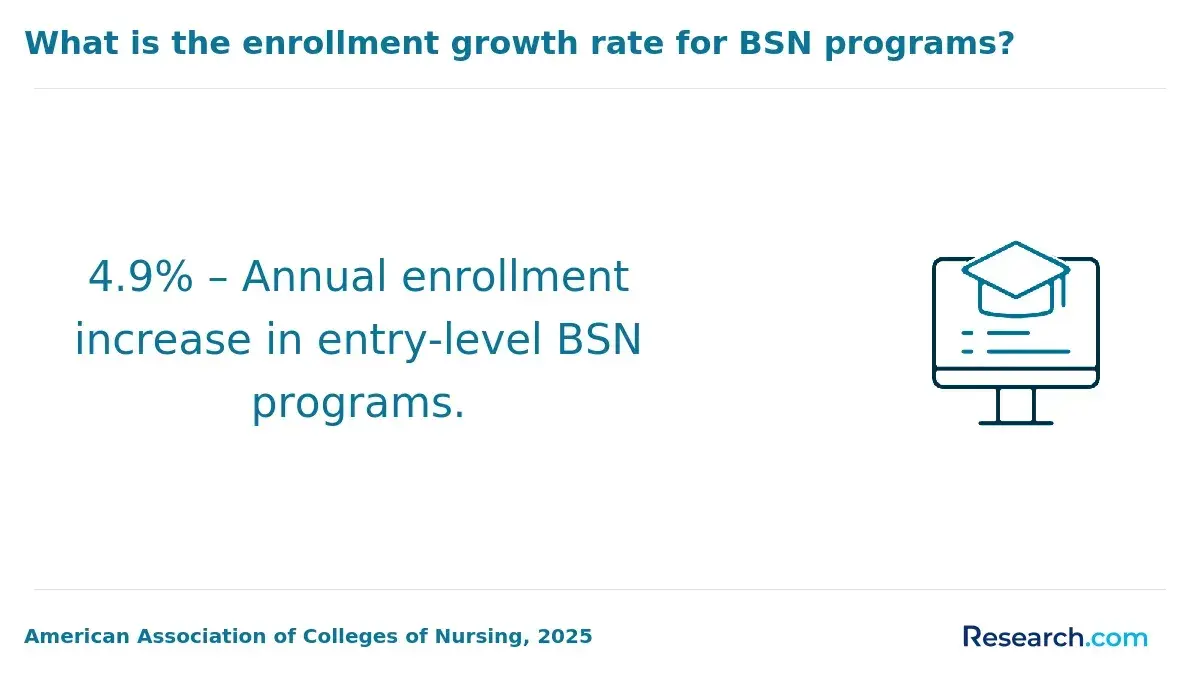
- AACN. (2025). 2024-2025 Enrollment and Graduations in Baccalaureate and Graduate Programs. https://www.aacnnursing.org
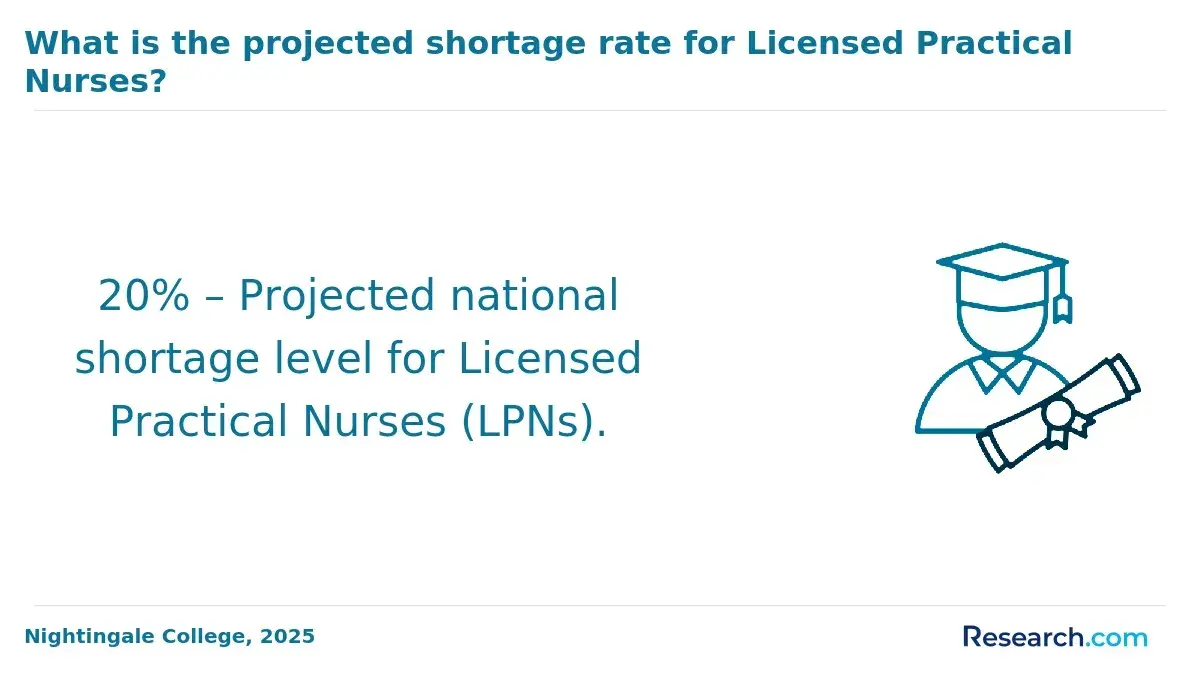
- Nightingale College. (2025). Nursing Shortage: 2026 US Statistics. https://nightingale.edu
- O*NET OnLine. (2026). Arkansas Employment Trends - Licensed Practical and Licensed Vocational Nurses. https://www.onetonline.org/link/localtrends/29-2061.00?st=AR
- U.S. Bureau of Labor Statistics. (2025). Occupational projections and worker characteristics. https://www.bls.gov/emp/tables/occupational-projections-and-characteristics.htm
- ZipRecruiter. (2026). LPN Salary in Arkansas. https://www.ziprecruiter.com/Salaries/Lpn-Salary--in-Arkansas
Key Insights
- Online LPN programs in Arkansas are hybrid programs. You may complete some coursework remotely, but clinical rotations and skills training must be completed in person.
- Program approval matters more than convenience. Always verify Arkansas State Board of Nursing approval or recognized accreditation before applying.
- Timelines are short compared with RN programs. The programs listed range from 10 months to 18 months when a length is available.
- Costs vary significantly. In-state per-credit tuition in this guide ranges from $84 to $250, while out-of-state rates range from $125 to $291.
- Salary should be evaluated against total cost and local demand. Arkansas LPN salaries are reported from $33,700 to $75,276, with an average annual salary of $56,611 from ZipRecruiter.
- The best program is the one that matches your licensure goal, schedule, clinical access, budget, and future nursing plans—not simply the fastest or least expensive option.
- LPN licensure can be a career starting point. With additional education, LPNs may move toward RN, BSN, MSN, nurse practitioner, or other advanced nursing pathways.
Other Things You Should Know About the Best LPN Programs in Arkansas
To become a licensed LPN in Arkansas, you must pass the National Council Licensure Exam for Practical Nurses (NCLEX-PN) examination administered by the National Council of State Boards of Nursing (NCSBN).
A passing score will qualify you for licensure. You must apply for licensure through the ASBN approximately 60 days before graduation from online LPN programs in Arkansas. The application is not complete until all required documentation and fees are received.
In Arkansas, it typically takes about 12 to 18 months to complete an LPN program. This period includes the necessary coursework and clinical practice requirements needed to prepare for the NCLEX-PN exam to obtain licensure.
In Arkansas, the state-specific licensing process for Licensed Practical Nurses (LPNs) involves several key steps. Firstly, candidates must complete a state-approved LPN program, which typically includes both classroom instruction and clinical practice. After graduation, they must pass the National Council Licensure Examination for Practical Nurses (NCLEX-PN). Candidates then need to submit an application for licensure to the Arkansas State Board of Nursing, including proof of program completion and NCLEX-PN results. Background checks and fingerprinting are also required as part of the process. Once all requirements are met and the application is approved, candidates receive their LPN license to practice in Arkansas.
In 2027, the top LPN programs in Arkansas include those at Arkansas State University-Beebe, Baptist Health College Little Rock, and Southeast Arkansas College. These programs are known for their comprehensive curriculum, high NCLEX-PN pass rates, and strong clinical partnerships, ensuring graduates are well-prepared for the workforce.
In 2027, the cost of LPN programs in Arkansas varies widely, with tuition typically ranging from $5,000 to $15,000. This range covers different institutions, including community colleges and technical schools, often excluding additional expenses like books, supplies, and licensing fees.