2027 Military Science Degree Guide: Costs, Requirements & Job Opportunities

Co-Founder and Chief Data Scientist
Choosing a military science degree is not just a college-major decision; it is a decision about leadership training, service obligations, career flexibility, physical readiness, and long-term return on investment. Students who are considering Army, Navy, Air Force, ROTC, service academy, defense, security, emergency management, or public-sector careers often ask the same question: will this degree prepare me for a real career, or is it too narrow?
A military science program can be valuable because it combines military history, strategy, leadership, ethics, physical training, technology, and public policy with broader coursework in the social sciences and physical sciences. Depending on the school, students may study topics connected to military bases and installations, logistics, engineering, international relations, psychology, and crisis response. That mix can lead to military officer pathways as well as civilian roles in law enforcement, human resources, education, museums, defense contracting, research, and healthcare administration.
This guide explains what a military science degree is, how much it can cost, what jobs it may lead to, how online and campus programs compare, what requirements to expect, and how to choose a program that fits your goals. It also helps you compare military science with related fields such as psychology, political science, homeland security, engineering, and public administration. If location matters to your college experience, you can also use resources on the best college towns to evaluate where you may want to study.
Quick Answer: Is a Military Science Degree Worth It?
A military science degree can be worth it for students who want structured leadership training, a potential officer pathway, ROTC opportunities, and transferable skills for military or civilian careers. It is strongest for students who are comfortable with discipline, physical fitness expectations, ethical responsibility, and public service. It may be less suitable for students who want a purely technical degree, want to avoid service commitments, or are not ready for the physical and time demands that often come with ROTC or field training.
| Best fit | May not be the best fit | Key decision point |
| Students seeking military officer preparation, ROTC participation, defense careers, leadership training, or public-service roles | Students who want no physical training, no military structure, or a career path unrelated to service, security, leadership, or public policy | Confirm whether the program aligns with your desired branch, career outcome, scholarship rules, and service obligations |
Military Science Degree Table of Contents
- What a Military Science Degree Covers
- Why Students Choose Military Science
- Cost, Scholarships, and Service Academy Options
- Jobs and Career Outcomes
- Degree Levels in Military Science
- Career Transition Support
- Admissions, Fitness, and Skill Requirements
- Technology Trends in Military Science
- Ethics and Decision-Making
- How to Choose a Military Science Program
- Accelerated Program Options
- Using Expert Guidance
- Related Majors to Compare
- Internships, ROTC Training, and Field Experience
- Online vs. Campus Military Science Programs
- Common Challenges in Military Science Programs
What is a Military Science Degree?
A military science degree, sometimes called a military studies degree, is a college program that examines the theory, practice, history, leadership, and organization of military operations. Many programs run for two to four years, depending on the degree level. The curriculum often includes military history, national security, diplomacy, negotiation, human behavior, strategy, politics, warfare, leadership, and risk management.
The field is interdisciplinary. Students may take courses in engineering, mathematics, psychology, resource management, communications, international relations, and physical fitness. The goal is not only to understand military institutions but also to develop judgment, discipline, teamwork, communication, and decision-making under pressure. Students interested in leadership development can also compare this field with broader resources on leadership training trends.
Military science is not as common as business, marketing, or a human resources degree, but it has grown in visibility as students look for structured career pathways, ROTC options, and public-service roles. Data from the National Center for Education Statistics show that bachelor’s degrees conferred in military technologies and applied sciences represent a significant upward trend from previous years (National Center for Education Statistics, 2024).
| Course area | What students learn | Why it matters |
| Military history and strategy | Major conflicts, operational planning, tactics, and security policy | Builds context for defense, leadership, and policy decisions |
| Leadership and ethics | Command responsibility, accountability, communication, and moral decision-making | Prepares students for high-stakes leadership roles |
| Physical training and field skills | Fitness, resilience, teamwork, safety, and applied exercises | Supports ROTC, officer preparation, and military readiness |
| Technology and security | Cybersecurity, unmanned systems, simulations, communications, and data-informed planning | Reflects the changing nature of defense and emergency operations |
| Public policy and international relations | Diplomacy, political systems, national security, and global threats | Helps students connect military operations to government and civilian institutions |
Advantages of Military Science Degrees Over Other Fields of Study
The main advantage of a military science degree is that it blends academic study with applied leadership preparation. Unlike many classroom-only majors, military science programs often connect theory to drills, field exercises, ROTC training, case studies, simulations, and structured leadership labs. That practical component can help students build confidence before entering military or public-service roles.
Another major advantage is the potential access to military-linked financial support. ROTC scholarships and service academy sponsorships can reduce or eliminate education costs for eligible students, although these options often come with requirements, competition, and service commitments. Students comparing online options can review military friendly online colleges and determine whether those schools support active-duty, veteran, ROTC, or military-family learners.
The degree can also be broader than many students expect. Graduates may apply leadership, logistics, research, communication, and strategic planning skills in civilian sectors. For students comparing affordability, affordable online colleges for military students may be useful when evaluating total cost, transfer credit, and military education benefits.
What Can You Do With a Military Science Degree?
Many graduates use a military science degree to pursue officer roles in the armed forces. Others move into law enforcement, emergency management, defense contracting, education, museums, human resources, or government. The degree is most useful when students pair it with a clear career goal, relevant training, and, when needed, branch-specific requirements.
Students should not assume the degree automatically guarantees a military commission or a specific civilian job. ROTC participation, physical qualifications, academic performance, background checks, medical standards, service branch needs, and citizenship requirements may affect eligibility for military pathways. For civilian roles, employers may also look for internships, security clearance eligibility, technical skills, graduate education, or related certifications.
| Career goal | How military science helps | What else may be required |
| Military officer | Develops leadership, military knowledge, discipline, and operational understanding | ROTC, service academy completion, Officer Candidate School, medical and fitness standards, or branch-specific requirements |
| Law enforcement | Builds discipline, crisis response, public-service orientation, and command presence | Police academy training, background checks, physical tests, and local or state requirements |
| Defense contractor | Provides familiarity with military systems, security issues, and operations | Technical skills, project experience, clearance eligibility, or specialized credentials |
| Museum or archives work | Supports military history specialization and research skills | Archival, curatorial, museum, or graduate-level training may be needed |
| Human resources or administration | Strengthens leadership, personnel management, communication, and planning | Business experience, HR credentials, or knowledge of employment law may help |
Cost of Military Science Degree
The cost of a military science degree depends on the school type, residency status, delivery format, housing, books, fees, and whether the student receives ROTC, military, veteran, or service academy support. Compared with the average cost of college in the US, some military science routes can be more affordable, especially when students qualify for scholarships or academy funding.
Depending on the institution, tuition for a military science degree may range from around $11,630 a year for in-state public universities to over $42,680 a year for private institutions (College Board, 2024). Tuition is only one part of the total cost, so students should also compare housing, meal plans, uniforms, transportation, fees, technology expenses, and whether credits transfer if they change schools.
Students who want an immersive military education may consider the United States service academies. The United States Military Academy, Naval Academy, and Air Force Academy cover the full costs of cadets’ studies in exchange for time in enlisted service. This can be financially powerful, but applicants must understand the commitment, admissions competitiveness, and service expectations before applying.
Another common route is ROTC. Students may enter ROTC programs in high school or college. ROTC scholarships may cover room and board or tuition, fees, and books (Niche, 2024), and they may support study for two to four years. Because scholarship rules vary, students should confirm what is covered, what is not covered, and what service obligation applies after graduation.
| Path | Potential cost advantage | Important caution |
| Public university military science program | In-state tuition may be lower than private college tuition | Costs can rise with housing, fees, travel, and out-of-state tuition |
| Private college military science program | May offer strong advising, scholarships, or specialized programs | Tuition may exceed $42,680 a year at some institutions |
| Service academy | Full study costs are covered for cadets | Requires service commitment and a highly structured environment |
| ROTC scholarship | May cover tuition, fees, books, or room and board | Scholarships are competitive and may include service obligations |
| Online military-friendly college | May offer flexibility for working adults, active-duty students, or veterans | Online study may not replace required field, lab, or ROTC components |
Is a Degree in Military Science Worth It?
A military science degree is most likely to be worth it when the student has a realistic service or public-sector goal, understands any required commitment, and uses the program to build practical experience. The return is not only financial. Students may gain leadership ability, discipline, physical conditioning, ethical judgment, and exposure to military or government systems.
It can also be valuable for students who do not plan to serve in active combat roles. Depending on coursework and experience, graduates may work in education, research, engineering support, emergency management, law enforcement, museums, administration, or defense-related organizations. However, students seeking a highly specialized civilian career should compare military science with majors such as engineering, cybersecurity, homeland security, public policy, or business before committing.
-
: "Military training was effective in enhancing psychological resilience and decreasing depression. This … adds further support to the previous reviews and meta-analyses showing the significant positive effects of physical fitness through military training on improving resilience and decreasing depression. Through military training, students develop good and healthy lifestyles such as sleeping early and getting up early, eating healthy food, and exercising intensively. These healthy lifestyles all help students maintain physical fitness and wellbeing, which contribute to better resilience and lower depression.
"
Military Science Degree Jobs
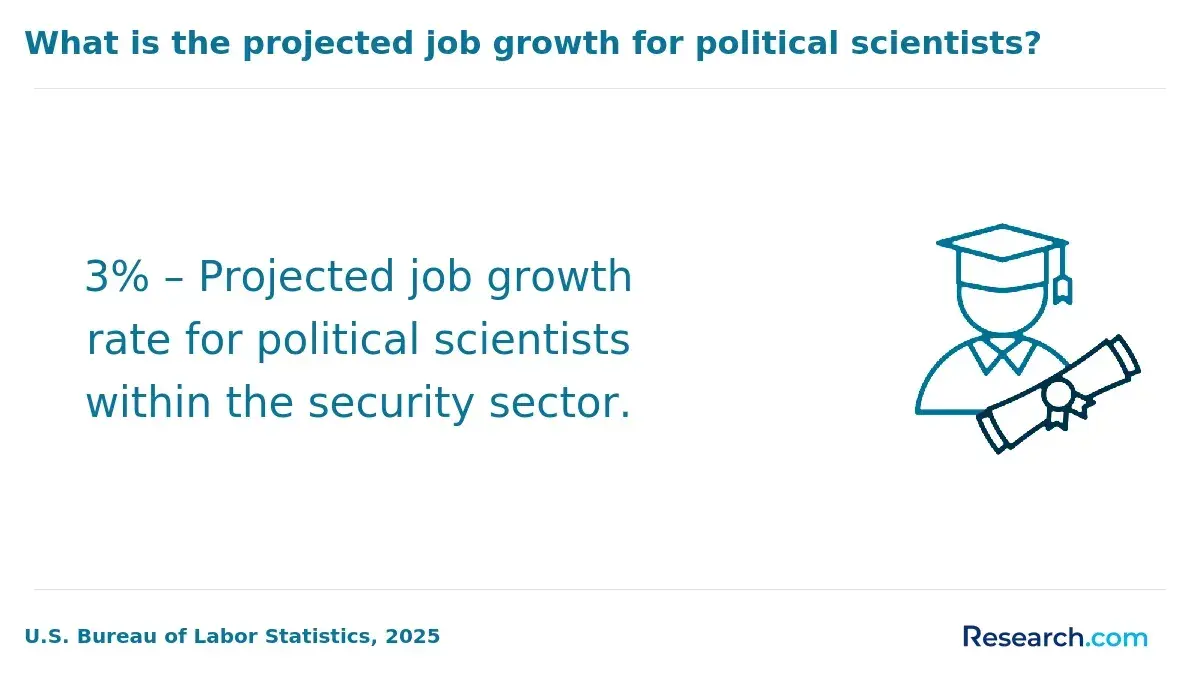
Military science graduates often pursue roles connected to the armed forces, national security, public safety, education, and organizational leadership. The degree can also overlap with pathways commonly associated with political science degree jobs, especially in government, policy, international relations, and security-focused organizations.
Is Military Science in High Demand?
The armed forces continually need qualified personnel to maintain readiness, replace members who leave service, and support national defense. The U.S. Bureau of Labor Statistics expects job prospects to be “very good” for qualified individuals through 2034 (U.S. Bureau of Labor Statistics, 2025). Demand can vary by branch, occupation, physical and medical eligibility, education level, and current military needs.
Civilian opportunities depend on the specific role. For example, military science graduates who focus on military history may pursue archives, museums, or curatorial work. The Bureau of Labor Statistics projects employment of archivists, curators, and museum workers to grow 6% from 2024 to 2034, faster than the average for all occupations (U.S. Bureau of Labor Statistics, 2025).
What Jobs Can You Get With a Military Science Degree?
- Officer in the Armed Forces: Graduates who meet all commissioning requirements may enter leadership roles in the Army, Navy, Air Force, or another branch. Officers may lead personnel, coordinate operations, supervise services, or manage specialized units.
- Law enforcement officer or detective: Military science training can support careers in policing, investigations, public safety, and federal, state, or local law enforcement, although academy training and agency requirements still apply.
- Correctional officer: Some agencies value or require military experience. Correctional officers help maintain safety, enforce rules, and inspect conditions in jails and prisons.
- Human resources manager or personnel specialist: Leadership, communication, discipline, and organizational skills can transfer to workforce management and employee relations.
- Museum worker, archivist, or curator: Students who specialize in military history may preserve records, manage collections, support exhibits, and help interpret historical materials.
- Teacher or professor: A bachelor’s degree in military science may support high school ROTC teaching opportunities, while college-level instruction commonly requires a master’s degree or PhD in military science or a closely related field.
- Defense or security contractor: Graduates may support logistics, planning, operations, research, training, or administrative functions for organizations serving military or government clients.
What Kind of Salary Can I Earn With a Military Science Degree?
Salary depends heavily on whether you enter active-duty service, government, education, law enforcement, museums, HR, consulting, contracting, or another civilian sector. With a four-year college degree, an officer reaching the rank of Captain (O-3) with five years of service can earn between $103,116 and $127,103 in regular military compensation (Defense Finance and Accounting Service, 2025).
Benefits for military personnel on active duty may include dental insurance, medical insurance, medical professional pay, and housing allowance. For civilian roles, the Bureau of Labor Statistics reports median salary figures ranging from $57,100 for archivists and curators to $140,030 for human resources managers (U.S. Bureau of Labor Statistics, 2025).
Some older or secondary summaries list civilian salary ranges from $46,339 for archivists and curators to $71,199 for human resources managers. Students should verify salary data against current employer postings, BLS occupational pages, location, rank, experience, benefits, and clearance requirements before making financial projections.
| Role or pathway | Salary information stated in source material | What affects actual pay |
| Captain (O-3) with five years of service | $103,116 to $127,103 in regular military compensation | Rank, years of service, housing allowance, duty station, special pay, and benefits |
| Archivists and curators | $57,100 median salary according to BLS information cited for 2025 | Employer type, location, graduate education, and museum or archives experience |
| Human resources managers | $140,030 median salary according to BLS information cited for 2025 | Industry, management level, certifications, organization size, and experience |
| Older secondary salary summaries | $46,339 to $71,199 | Methodology, reporting year, job title definition, and data source |
Types of Degrees in Military Science
Military science is available at multiple academic levels. The right level depends on whether you are exploring the field, preparing for commissioning, seeking career advancement, or planning to teach or conduct research. Students should compare credit requirements, delivery format, ROTC availability, field training, transfer policies, and whether the program connects to their intended branch or civilian career.
| Degree level | Average time to complete | Typical purpose | Possible entry-level outcomes |
| Associate degree | 2 years | Introduces military history, leadership, communication, political science, and general education | Human resource professionals, police officers, museum guides |
| Bachelor’s degree | 4 years | Provides deeper leadership, strategy, military organization, and operations training | Military analysts, defense and security contractors, second lieutenant, lieutenant colonel |
| Master’s degree | 2 years | Supports advanced military, government, policy, leadership, and research roles | Official at the State Department or at the Departments of Defense and Homeland Security, embassy staff, civilian contractor |
| Doctoral degree | 5 to 7 years | Prepares students for research, senior policy, academic, and strategic intelligence work | Professor of military science, senior researcher, senior policy advisor |
| Certificate | Varies by institution | Adds military science coursework to another major or professional background | Supplemental preparation for leadership, military, or public-service roles |
Associate Degree in Military Science
Average time to complete: 2 years
An associate degree in military science generally requires 60 credit hours. Students take introductory military studies courses along with core subjects such as mathematics, English, communication, political science, foreign policy, and military history.
This level can be useful for students who want a shorter academic starting point, plan to transfer into a bachelor’s program, or want foundational knowledge before pursuing a military career. According to National Center for Education Statistics data cited in the original research, this is the most popular degree type in this field of study.
Entry-level jobs: human resource professionals, police officers, museum guides
Bachelor’s Degree in Military Science
Average time to complete: 4 years
A bachelor’s degree in military science is usually a 120-credit program. It gives students a more complete understanding of military organizations, strategy, operations, leadership, and decision-making. Many programs combine academic courses with leadership labs, physical training, ROTC participation, or applied exercises.
Students often study military leadership, war, diplomacy, peacemaking, ethics, international security, and public policy. Some schools also offer specializations or minors. Liberty University, for example, offers military studies specializations in History, International Security, Professional, and Resiliency.
Entry-level jobs: military analysts, defense and security contractors, second lieutenant, lieutenant colonel
Master’s Degree in Military Science
Average time to complete: 2 years
A master’s degree in military science is designed for students seeking more advanced roles in military, government, defense, homeland security, diplomacy, or research settings. Coursework may emphasize military strategy, warfare, advanced planning, strategic leadership, communications technology, engineering applications, and policy analysis.
Many master’s programs require a bachelor’s degree for admission and may conclude with a thesis, capstone project, or major research paper. Some universities allow students to complete this degree online, which can be helpful for working adults, active-duty personnel, veterans, and geographically mobile students.
Entry-level jobs: Official at the State Department or at the Departments of Defense and Homeland Security, embassy staff, civilian contractor
Doctoral Degree in Military Science
Average time to complete: 5 to 7 years (coursework and dissertation)
A doctoral degree is the most advanced military science pathway. Applicants usually need a master’s degree or equivalent graduate preparation. Doctoral study is research-intensive and normally requires advanced coursework, qualifying requirements, and a dissertation.
Topics may include defense strategy, military technology, current international security policies, global security threats, intelligence, military organizations, and leadership. Some schools offer more specialized doctoral options. American Military University, for instance, offers doctoral degrees in Global Security and Strategic Intelligence.
Entry-level jobs: professor of military science, senior researcher, senior policy advisor
Certificate of Military Science
A certificate in military science can be useful for students who want to add military leadership or defense-related coursework to another major. Students from science, engineering, public policy, and health-related fields may use certificates to strengthen leadership and security knowledge. For example, bachelor’s in biology graduates and other physical or life sciences students may pursue a military science certificate to broaden their career options.
Wheaton College in Illinois offers a Certificate in Military Science with courses such as “Introduction to the Profession of Arms” and “Applied Leadership in Small Unit Operations.” Some certificate programs also require participation in a leadership lab.
How Do Military Science Programs Support Your Career Transition?
Strong military science programs do more than deliver coursework. They help students translate military-style leadership, planning, discipline, and problem-solving into career language that employers understand. Career support may include resume development, interview preparation, employer events, veteran or ROTC advising, internship referrals, and networking with government, defense, nonprofit, or public-safety organizations.
Students planning civilian careers should ask whether the program has placement support in fields such as emergency management, law enforcement, defense contracting, logistics, healthcare administration, or public administration. Some students may also strengthen employability with specialized credentials, including healthcare certifications for roles that connect military leadership with medical operations, emergency response, or healthcare support.
Military Science Degree Requirements
Admission requirements vary by school, degree level, ROTC status, scholarship application, and military branch expectations. Students should treat the requirements below as a planning checklist, not a guarantee of admission or commissioning.
Admission Requirements
- Proof of graduation: Undergraduate applicants typically need a high school diploma, GED transcript, or equivalent high school completion credential. Graduate programs usually require a bachelor’s degree, and doctoral programs may require a master’s degree or equivalent preparation.
- Transcripts and GPA: Colleges may review high school or college transcripts. Some ROTC programs and scholarships have GPA requirements. The University of Louisiana at Lafayette, for example, requires applicants to its military science program to have a GPA of at least 2.0 (University of Louisiana at Lafayette, 2025).
- SAT or ACT scores: Many schools do not require SAT or ACT scores for all military science applicants, but scores may matter for scholarships. An ACT score of at least 21 is above the national average composite score of 19.9 for the class of 2024. South Dakota Mines University, for example, requires ROTC scholarship applicants to have an ACT score of at least 19 or an SAT score of at least 920.
- Physical fitness: Many military science and ROTC pathways include physical fitness expectations. Students may need to pass fitness assessments, participate in physical training, and maintain readiness throughout the program.
- Other materials: Programs may request proof of English proficiency, recommendation letters, essays, interviews, medical documentation, or background information.
Physical preparation matters because military training can involve injury risk. Jones and Hauschild, writing in the Journal of Strength and Conditioning Research, noted the following:
-
: "“Almost 50% of military service members experience an injury each year and half of those injuries are caused by physical training (PT), exercise, or sports." Jones and Hauschild are involved in the Injury Prevention Program of the U.S. Army Institute of Public Health.
"
Skill Requirements
Students are more likely to succeed if they bring curiosity about American history, political science, international relations, military institutions, leadership, and ethics. Writing and research skills are also important because many programs require policy analysis, historical interpretation, strategic planning papers, and presentations.
| Skill | Why it matters | How to build it before enrolling |
| Physical readiness | Supports ROTC, field exercises, and military fitness expectations | Follow a safe fitness plan and learn injury-prevention basics |
| Writing and research | Needed for strategy papers, historical analysis, and policy work | Take composition, history, government, or research-focused courses |
| Leadership and teamwork | Central to military and civilian management roles | Join clubs, sports, volunteer teams, JROTC, ROTC, or community organizations |
| Ethical judgment | Critical for command responsibility and public trust | Study case studies in law, public policy, history, or philosophy |
| Technology awareness | Modern defense and security work increasingly uses data, cyber tools, and simulations | Take introductory cybersecurity, computer science, statistics, or engineering courses |
What Emerging Technologies Are Reshaping Military Science Programs?
Military science programs are adapting to a defense environment shaped by artificial intelligence, cybersecurity, unmanned systems, data analytics, communications technology, and digital simulations. Students may encounter virtual training environments, scenario-based planning tools, cybersecurity concepts, intelligence analysis, and case studies involving technology-enabled warfare and emergency response.
These changes matter because military and civilian security organizations increasingly need leaders who understand both human decision-making and technical systems. Students who are interested in technology but not sure they want a degree can also compare career alternatives in other sectors, including healthcare jobs that do not require a college degree, to understand how training requirements differ across fields.
How Do Military Science Programs Address Ethical Decision-Making?
Ethics is central to military science because military leaders may make decisions involving safety, accountability, lawful orders, civilian protection, rules of engagement, and public trust. Programs often use historical case studies, simulations, legal frameworks, leadership scenarios, and discussions of command responsibility to prepare students for complicated choices.
Students should look for programs that treat ethics as more than a single course. Strong curricula connect ethics to leadership, strategy, law, personnel management, international relations, and technology. Students comparing values-driven majors can also review broader options among the best college majors to see how different fields approach responsibility, decision-making, and professional impact.
What to Look for in a Military Science Program
Military science programs are less common than a marketing degree, but students still have important choices to make. The best program is not automatically the most famous or the most expensive. It is the one that fits your desired branch, career target, budget, learning format, transfer plan, and support needs.
Available Specializations
Depending on the institution and degree level, military science specializations or related concentrations may include:
- History
- International Security
- Resiliency
- Military Engineering
- Economy
- Military Law
- Military Technology
Accreditation
There is currently no programmatic accreditation awarded specifically to military science programs. Because of that, institutional accreditation becomes especially important. Students should confirm that the college or university is recognized by legitimate accrediting organizations associated with the U.S. Department of Education.
Regional accreditation is especially useful because it can affect transfer credit, graduate school admission, employer recognition, and eligibility for federal financial aid. Credits from regionally accredited institutions are also more widely accepted (EDSmart, n.d.).
Student-Teacher Ratio and Support
Class size and faculty access can affect how much mentoring students receive. Smaller classes may encourage more discussion, feedback, and leadership coaching. Research cited by Emmanuel Lutheran School states that student participation rates in smaller settings can be two to three times higher than in larger classes (Emmanuel Lutheran School, 2025). Larger classes may still work well for independent learners, especially when paired with strong advising and field training.
Financial Aid Options
Students should compare ROTC scholarships, institutional grants, veterans benefits, military tuition assistance, state aid, federal aid, and service academy funding. At the University of South Dakota, students can pursue military science through Army ROTC scholarships, which may cover tuition and fees or room and board and include a monthly living stipend of $420.
| Question to ask | Why it matters |
| Is the institution accredited? | Accreditation affects credit transfer, aid eligibility, graduate school access, and employer recognition. |
| Does the program connect to ROTC or a specific military branch? | Military career outcomes can depend on branch-specific pathways and commissioning requirements. |
| What physical training or fieldwork is required? | Students need to know the time, fitness, travel, and health expectations before enrolling. |
| What scholarships are available, and what service obligation follows? | Financial support can reduce cost, but some awards come with commitments. |
| Can online students access the same advising and training opportunities? | Online flexibility is useful only if required experiences and support are still available. |
| How does the program support civilian career placement? | Not every student remains in the military, so civilian transition support matters. |
Can Accelerated Military Science Programs Offer a Competitive Edge?
Accelerated programs can help students finish faster, but speed should not be the only priority. Military science requires leadership development, ethical reasoning, applied learning, and sometimes physical or field training. Compressing the schedule may work for disciplined students with prior military experience, transfer credits, or a clear career goal, but it may be too demanding for students who need more time to build fitness, writing, research, or leadership skills.
Graduate students comparing faster options should carefully evaluate workload, accreditation, faculty access, dissertation or capstone expectations, and career relevance. Students exploring condensed doctoral routes can compare expectations with shortest doctoral programs online, but they should verify whether any accelerated military science pathway truly supports their professional goals.
How Can Expert Guidance Help in Selecting a Military Science Program?
Admissions advisors, ROTC officers, veterans services staff, faculty mentors, career counselors, and experienced professionals can help students avoid costly mistakes. They can clarify scholarship rules, service obligations, transfer credit, program strengths, physical training expectations, and whether a degree aligns with military or civilian career goals.
Students with complex applications, competitive scholarship goals, or service academy ambitions may also benefit from outside guidance. Resources on consultants for university admission can help applicants understand when expert support may be useful and what questions to ask before paying for admissions help.
Majors Related to Military Science
Military science is not the only route into national security, public service, leadership, or defense-related work. Students should compare related majors before deciding.
- Homeland Security
- Political Science
- Engineering
- Economics
| Major | Best for students who want | How it differs from military science |
| Military science | Leadership, officer preparation, strategy, military history, and service-oriented roles | More directly connected to military institutions and ROTC-style training |
| Homeland security | Emergency management, border security, intelligence, disaster response, or public safety | Often broader civilian security focus with less emphasis on military command |
| Political science | Government, law, policy, diplomacy, campaigns, or international relations | More focused on political systems and public policy than operational military training |
| Engineering | Technical design, defense systems, infrastructure, aerospace, or military technology | More math- and design-intensive, often leading to technical roles |
| Economics | Policy analysis, resource allocation, data interpretation, or public finance | More quantitative and market-focused, with applications in defense budgeting and policy |
What Internships or Field Training Opportunities Are Available in Military Science Programs?
Practical training is one of the most important parts of many military science programs. Internships, ROTC camps, simulations, and field exercises allow students to test leadership, communication, planning, and decision-making skills outside a normal classroom.
- ROTC summer training programs: ROTC students may participate in Basic Camp, Advanced Camp, or branch-specific training that focuses on leadership, teamwork, military skills, and applied decision-making.
- Government agency internships: Students may pursue internships with organizations such as the Department of Defense, Homeland Security, intelligence agencies, or public-sector offices in areas such as cybersecurity, logistics, personnel, policy, and operations.
- Field exercises and simulations: Some programs use tactical exercises, crisis-response simulations, negotiation scenarios, or leadership labs to help students practice judgment under pressure.
- Civilian internships in related fields: Students interested in civilian careers may seek internships in engineering, technology, law enforcement, emergency management, project management, cybersecurity firms, or defense contractors.
Benefits of Internships and Field Training
- Applied skill development: Students learn how classroom concepts work in real teams, real constraints, and real operational settings.
- Professional networking: Internships and training introduce students to military leaders, agency professionals, employers, alumni, and mentors.
- Career testing: Students can discover whether they prefer military service, government work, contracting, public safety, research, or another pathway before graduation.
- Resume evidence: Field experience helps students show employers that they have practiced leadership, planning, and accountability, not just studied them.
Are Online Military Science Programs as Effective as Traditional Programs?
Online military science programs can be effective for students who need flexibility, especially active-duty service members, veterans, working adults, military spouses, and students who cannot relocate. Online courses may use discussion boards, virtual simulations, video lectures, collaborative projects, and remote advising.
Campus programs may offer stronger access to physical training, leadership labs, ROTC facilities, in-person mentoring, field exercises, and peer accountability. Students should not assume online and campus programs are identical. The right format depends on whether the program can deliver the training, advising, accreditation, and career connections required for the student’s goal. Students seeking flexible options can review military-friendly colleges.
| Format | Strengths | Limitations to check |
| Online | Flexible scheduling, useful for working adults and military-connected students, easier to continue during relocation | May have limited physical training, field exercises, ROTC access, or in-person mentoring |
| Campus | More direct access to ROTC, labs, drills, facilities, faculty, peers, and field-based training | Less flexible for students with work, family, deployment, or location constraints |
| Hybrid | Combines online coursework with in-person training or intensives | Travel, scheduling, and residency requirements may add cost and complexity |
What Challenges Do Students Face in Military Science Programs?
Military science can be demanding because students may need to balance academics, physical training, fieldwork, ROTC responsibilities, leadership expectations, and personal obligations. The workload can be especially challenging for students who are not prepared for early mornings, fitness standards, strict schedules, writing-heavy assignments, or team-based accountability.
Students who discover that the structure or physical expectations do not fit their strengths should not view that as failure. They can compare related or less physically intensive options, including public administration, political science, history, emergency management, or other online pathways. For broader academic alternatives, students can review easiest bachelor’s degree programs, while remembering that “easy” should never be the only reason to choose a major.
| Common mistake | Better approach |
| Choosing a program without checking accreditation | Verify institutional accreditation before applying or transferring credits. |
| Assuming ROTC scholarships have no strings attached | Ask exactly what is covered and what service obligation follows. |
| Looking only at tuition | Compare total cost, housing, fees, books, travel, uniforms, and lost work time. |
| Ignoring physical requirements | Assess current fitness honestly and build a safe preparation plan. |
| Assuming online programs provide all required training | Confirm whether ROTC, labs, fieldwork, or campus visits are required. |
| Expecting a guaranteed salary or job | Research actual hiring standards, rank, location, experience, credentials, and clearance needs. |
| Relying only on rankings | Use rankings as one input, then compare outcomes, support, cost, and career alignment. |
Are You Ready to Pursue Military Science?
A military science degree can be a strong choice if you want leadership training, public-service preparation, military knowledge, and a degree that can connect to both armed forces and civilian careers. The field is especially useful for students who value structure, teamwork, resilience, ethics, and practical decision-making.
Before enrolling, identify your primary goal. If you want to become an officer, confirm ROTC, service academy, Officer Candidate School, or branch-specific requirements. If you want a civilian career, check whether the program offers internships, career advising, technical electives, and employer connections. If you want a broad education, make sure the curriculum includes enough general education, writing, research, and transferable coursework to keep options open.
Cost should also be part of the decision. ROTC, military benefits, institutional aid, transfer credits, and service academy funding can make a major difference, but students should understand obligations before accepting support. For additional context on college affordability, review free college education statistics.
Key Insights
- Military science is both academic and applied: Students study history, strategy, politics, leadership, ethics, technology, and physical readiness while developing practical decision-making skills.
- The degree is strongest for service-oriented students: It fits students interested in military officer pathways, public safety, defense, government, emergency management, leadership, or national security.
- Cost can vary widely: Tuition may range from around $11,630 a year for in-state public universities to over $42,680 a year for private institutions, while ROTC and service academy options may significantly reduce costs for eligible students.
- Career outcomes are not automatic: Military roles may require commissioning pathways, medical qualifications, fitness standards, and branch-specific selection. Civilian roles may require internships, technical skills, credentials, or graduate education.
- Physical readiness matters: Military science programs may include fitness tests, training, field exercises, and demanding schedules, so students should prepare safely and realistically.
- Online programs can work, but details matter: Flexible online study may be effective for some students, but ROTC access, field training, labs, and in-person requirements must be confirmed before enrolling.
- Accreditation should be non-negotiable: Since military science does not have a dedicated programmatic accreditor, students should verify institutional accreditation and transfer-credit policies.
- Compare related majors before committing: Homeland security, political science, engineering, economics, public administration, and cybersecurity may be better fits depending on the career goal.
References:
- ACT. (2024). ACT Releases National Class of 2024 Results, Shows Declining Readiness. https://www.act.org/the-act/newsroom/ACT-Releases-National-Class-of-2024-Results--Shows-Declining-Readiness-.html
- College Board. (2024). Trends in College Pricing and Student Aid 2024. https://research.collegeboard.org/trends/college-pricing
- College Factual. (2025). 2025 Best Homeland Security Bachelor's Degree Schools. https://www.collegefactual.com/majors/protective-security-safety-services/homeland-security/
- Emmanuel Lutheran School. (2025). The Benefits of Smaller Class Sizes: A Research-Based Approach. https://emmanuellutheranschool.org/blog/the-benefits-of-smaller-class-sizes-a-research-based-approach
- Global Market Insights. (2025). Homeland Security Market Size, Growth Forecasts 2035. https://www.gminsights.com/industry-analysis/homeland-security-market
- National Center for Education Statistics. (2024). Bachelor's degrees conferred by postsecondary institutions, by field of study. https://nces.ed.gov/programs/digest/d23/tables/dt23_322.10.asp
- Niche. (2024). ROTC Scholarships for College. https://www.niche.com/blog/rotc-scholarships-for-college/
- University of Louisiana at Lafayette. (2025). Admission Requirements. Retrieved January 20, 2026, from https://rotc.louisiana.edu/future-cadets/admission-requirements
- University of South Dakota. (2025). Army ROTC. Retrieved January 29, 2026, from https://www.usd.edu/Academics/Programs/Military-Science/Army-ROTC
- U.S. Bureau of Labor Statistics. (2025). Archivists, Curators, and Museum Workers: Occupational Outlook Handbook. https://www.bls.gov/ooh/education-training-and-library/curators-museum-technicians-and-conservators.htm
- U.S. Bureau of Labor Statistics. (2025). Occupational Employment and Wages: Emergency Management Directors. https://www.bls.gov/oes/current/oes119161.htm
- U.S. Bureau of Labor Statistics. (2025). Military Careers: Occupational Outlook Handbook. https://www.bls.gov/ooh/military/military-careers.htm
- U.S. Bureau of Labor Statistics. (2025). Occupational Outlook Handbook: Information Security Analysts. https://www.bls.gov/ooh/
Other Things You Should Know About Military Science Degrees
The cost of a military science degree in 2027 varies widely based on the institution. Public universities might charge anywhere from $9,000 to $15,000 per year for in-state students, while private institutions can cost upwards of $30,000 annually. Online programs may offer reduced tuition rates. Financial aid options can also significantly offset these costs.
Military science majors need strong leadership, critical thinking, and communication skills to succeed. They should also possess strategic planning abilities and an understanding of military operations. These skills are crucial for both military and civilian roles, ensuring graduates thrive in various environments.
Yes, a degree in military science is worth it for individuals interested in military service and leadership roles. The degree offers practical skills, enhances leadership and communication abilities, and provides various career opportunities in both military and civilian sectors.
Requirements typically include proof of graduation (high school diploma or equivalent), transcripts, and in some cases, SAT or ACT scores. Some programs also require physical fitness tests and letters of recommendation.