
2027 Rhode Island Psychlogy Licensure Requirements – How to Become a Psychologist in Rhode Island

Co-Founder and Chief Data Scientist
Becoming a licensed psychologist in Rhode Island is a long, highly regulated path, but it is the required route for independent psychology practice in the state. If you want to assess, diagnose, and treat clients as a psychologist, Rhode Island expects doctoral-level preparation, supervised experience, national and state examinations, and ongoing continuing education. The mean annual wage for psychologists in Rhode Island is $131,310, but salary outcomes depend on role, setting, specialization, experience, and location.
This guide explains how psychology licensure works in Rhode Island, what education you need, how the application and renewal process is structured, which undergraduate programs can help you begin the pathway, and how related mental health careers compare. It is designed for students planning a psychology degree, master’s-level professionals considering doctoral study, and career changers comparing psychology with counseling, social work, behavior analysis, school psychology, substance abuse counseling, or forensic psychology.
Rhode Island Psychology Licensure Requirements Table of Contents
- Overview of the Psychology Industry in Rhode Island
- Educational Requirements for Psychologists in Rhode Island
- Rhode Island Licensure Application and Renewal Process
- Financial Aid and Scholarships for Psychology Students in Rhode Island
- List of Top Psychology Programs in Rhode Island for 2027
- How Can You Specialize in Substance Abuse Counseling in Rhode Island?
- How Long Is Psychology School?
- Is Military Psychology a Viable Career Path in Rhode Island?
- Exploring Online Psy.D. Programs for Licensure in Rhode Island
- What Are the Licensure Considerations for Social Workers in Rhode Island?
- Continuing Education and Professional Development for Psychologists in Rhode Island
- What Are the Requirements for Other Mental Health Professions in Rhode Island?
- What Are the Steps to Become a Licensed Counselor in Rhode Island?
- What Are the Specific Requirements for LPCs in Rhode Island?
- What Are the Pathways for Behavior Analysts in Rhode Island?
- What Role Do Mentorship and Peer Support Networks Play in the Licensure Process?
- What Are the Emerging Opportunities in Specialized Psychology in Rhode Island?
- What Are the Licensing Opportunities for Criminal and Forensic Psychologists in Rhode Island?
Quick Answer: How Do You Become a Licensed Psychologist in Rhode Island?
To become a licensed psychologist in Rhode Island, you generally need a doctoral degree in psychology, supervised postdoctoral practice, passing scores on the Examination for Professional Practice in Psychology, completion of Rhode Island’s state-specific jurisprudence examination, and approval from the Rhode Island Board of Psychology. The supervised practice expectation is typically 3,000 hours over 2 years of post-doctoral supervised practice, including at least 1,500 hours of direct client contact.
| Requirement | What Rhode Island Applicants Should Plan For |
| Degree level | Doctoral degree in psychology, commonly a Psy.D. or Ph.D. |
| Institutional standard | Regionally accredited institution; doctoral training should align with APA or equivalent standards |
| Supervised experience | 3,000 hours over 2 years of post-doctoral supervised practice |
| Direct client contact | At least 1,500 hours |
| Exams | EPPP plus Rhode Island jurisprudence examination |
| Renewal | Renewal application, fees, and continuing education; one cited requirement is 24 hours every two years |
Overview of the Psychology Industry in Rhode Island
Rhode Island’s psychology workforce is part of the state’s broader behavioral health, education, healthcare, and community services system. Licensed psychologists may work in hospitals, outpatient mental health clinics, schools, correctional institutions, universities, private practices, government agencies, or consulting roles. Students who are comparing psychology with workplace-focused behavioral careers may also want to understand what can be done with a business psychology degree, especially if they are interested in applying psychology outside traditional clinical practice.
As of 2025, there are around 30 new openings for psychologists each year in Rhode Island. Because Rhode Island is geographically small, professional networks can be close-knit, which may help new practitioners build referral relationships, find supervision, and connect with local organizations. That same small-market structure also means students should research which specialties are hiring before committing to an expensive graduate path.

Rhode Island psychologists often collaborate across settings. A clinician may coordinate care with physicians, school teams, social workers, substance use counselors, or court-connected professionals, depending on the population served. The state has cultural diversity, though not at the same scale as larger states, so psychologists should still build competence in multicultural assessment, trauma-informed care, disability access, socioeconomic barriers, and family systems.
Salary varies substantially. Annual salaries for Psychologists in Rhode Island range from $54,057 at the low end up to $183,390 among top earners. These figures should be treated as planning information rather than guaranteed outcomes because pay can differ by employer type, specialty, credentials, caseload, years of experience, and whether the psychologist works in private practice, healthcare, education, government, or consulting.
The Rhode Island Board of Psychology regulates psychology practice in the state. Its role is to evaluate qualifications, issue licenses, enforce professional standards, and protect the public from unqualified or unethical practice. If your long-term goal is independent clinical practice, you should treat licensure rules as a central part of your education plan rather than something to check after graduation.
Rhode Island can be a strong fit for psychologists who want to work in a smaller professional community, collaborate with other health and education providers, and serve clients across clinical, school, forensic, organizational, and community settings. Students interested in workplace behavior, leadership, employee assessment, or consulting may also compare clinical routes with degrees in Industrial Organizational psychology.
Educational Requirements for Psychologists in Rhode Island
The standard academic path to psychologist licensure in Rhode Island is doctoral education. A bachelor’s degree in psychology can introduce you to research methods, statistics, developmental psychology, abnormal psychology, cognition, and social behavior, but it does not qualify you to practice independently as a licensed psychologist. Students exploring specialty areas can also review routes such as a sports psychologist degree to understand how focused interests may shape later graduate study.
| Degree | Best Fit | Licensure Relevance in Rhode Island |
| Doctor of Psychology (Psy.D.) | Students who want a practice-oriented doctoral program with substantial clinical training | Common route for applicants seeking clinical psychology licensure |
| Doctor of Philosophy (Ph.D.) in Psychology | Students interested in research, academia, clinical science, assessment, or combined research-practice careers | Can qualify graduates for licensure when the program and supervised training meet state expectations |
| Master’s Degree in Psychology | Students preparing for doctoral admission, research roles, or related mental health pathways | Not specifically required by the Rhode Island Board of Psychology for psychologist licensure, though many doctoral programs expect graduate preparation |
| Bachelor’s Degree in Psychology | Students beginning the academic pathway or preparing for entry-level human services, research assistant, or graduate school options | Useful foundation, but not enough for independent psychologist licensure |
A master’s degree may strengthen a doctoral application, especially for students who need more research experience, clinical exposure, or academic preparation. Students considering applied workplace psychology may find an organizational psychology master’s online useful, although organizational psychology and clinical psychologist licensure are different career tracks.
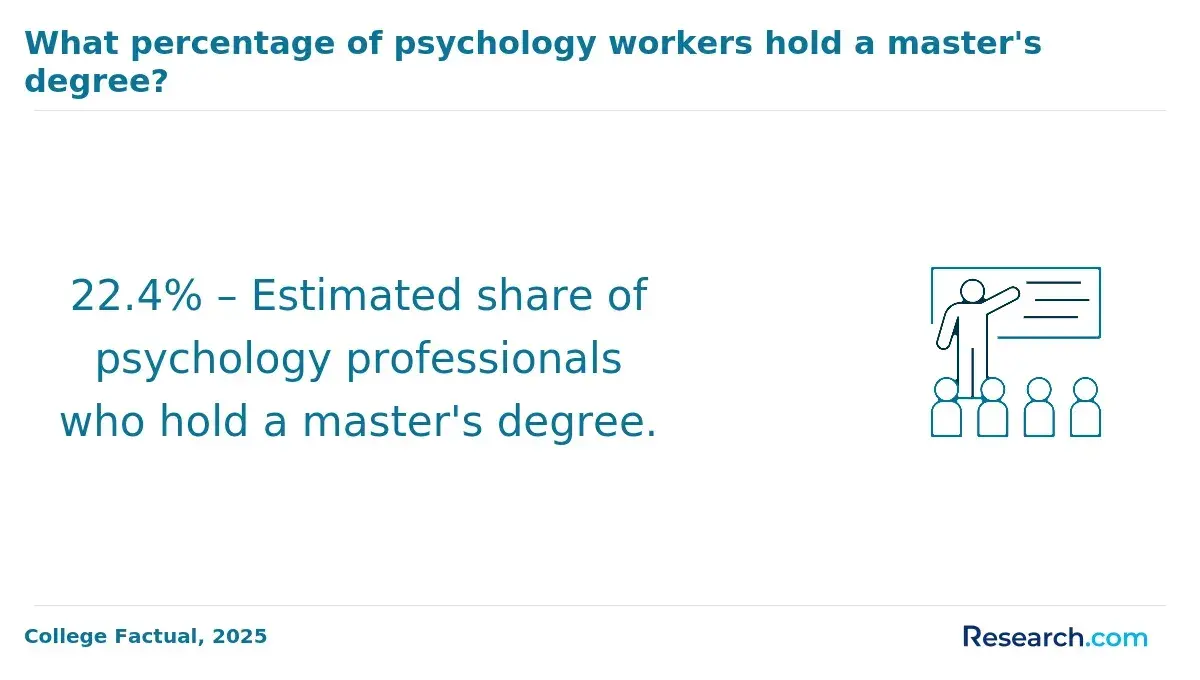
There is also a measurable earnings difference by education level. Psychologists with doctoral degrees make $20,349 more than those with master’s degrees. The most commonly held degree among psychologists is the Bachelor’s degree, with 47% of psychologists holding one, while only 23% of Psychologists hold a doctorate degree. For licensure planning, the key takeaway is that degree attainment across the occupation does not change Rhode Island’s doctoral requirement for licensed psychologist practice.
Rhode Island Licensure Application and Renewal Process
Rhode Island licensure is not a single-step application. It is a staged process that begins with choosing the right doctoral program and continues through supervised practice, examinations, documentation, approval, and renewal. Applicants should verify requirements directly with the Rhode Island Board of Psychology before making enrollment, internship, or relocation decisions.
License Application Process
- Complete the required doctoral education. Applicants must earn a doctoral degree in psychology, such as a Psy.D. or Ph.D., from a regionally accredited institution. The completed program should meet standards set by the American Psychological Association or an equivalent accrediting body.
- Finish supervised postdoctoral experience. Rhode Island applicants typically need 3,000 hours over 2 years of post-doctoral supervised practice. At least 1,500 hours should involve direct client contact.
- Pass the national psychology examination. Candidates must pass the Examination for Professional Practice in Psychology, widely known as the EPPP, which is administered through the Association of State and Provincial Psychology Boards.
- Pass Rhode Island’s jurisprudence examination. This state-focused exam confirms that applicants understand Rhode Island laws, regulations, ethics expectations, and professional responsibilities governing psychology practice.
- Submit the licensure application. Applicants must provide required documentation, which may include official transcripts, supervised experience verification, EPPP scores, examination records, and other materials requested by the Board.
- Wait for Board review and approval. Do not assume you are authorized to practice independently until the state has issued the appropriate license.
The most difficult part of Rhode Island licensure is usually not the form itself; it is completing a qualifying doctoral program and documented supervised practice. Students should ask programs early how internship placement, practicum documentation, postdoctoral supervision, and state licensure preparation are handled.
Renewal Process
- Complete continuing education. Rhode Island requires 24 hours of continuing education every two years, according to one cited requirement in this guide. Because continuing education rules can change and may include topic-specific expectations, verify the latest rules with the Rhode Island Board of Psychology.
- File the renewal application before expiration. Licensed psychologists must submit renewal materials on time and confirm that they remain in good professional standing.
- Pay required renewal fees. Fees support administrative processing and must be paid as directed by the Board.
- Keep your records. Maintain proof of continuing education, ethics training, and professional development in case of audit or Board review.
Missing a renewal deadline can create avoidable problems, including late penalties, interruptions in practice authority, or additional administrative review. Build renewal dates into your calendar, keep CE certificates organized, and check Board communications regularly.
Financial Aid and Scholarships for Psychology Students in Rhode Island
Psychology training can be expensive because the full licensure path often includes undergraduate study, possible master’s-level preparation, a doctoral program, internships, postdoctoral supervised practice, exam costs, and licensing fees. A smart funding plan should compare total cost, debt burden, assistantship availability, transfer credit, living expenses, and the likelihood that the program supports your intended licensure pathway.
Funding Options to Compare
| Funding Source | How It Can Help | What to Check Before Relying on It |
| Institution-specific scholarships | Schools such as Brown University and the University of Rhode Island may offer scholarships, grants, or aid packages based on merit, financial need, or institutional priorities. | Application deadlines, renewal rules, minimum GPA, whether awards apply to undergraduate or graduate study, and whether funding changes after the first year. |
| State-funded grants | The Rhode Island Student Loan Authority provides low-interest loan programs and financial counseling. Rhode Island residents at in-state institutions may also qualify for the Rhode Island State Grant Program. | Residency rules, income limits, enrollment requirements, and whether funds are grants, loans, or counseling resources. |
| National scholarships and fellowships | APA scholarships, research grants, and fellowships may support students in clinical, counseling, school psychology, or research-focused areas. | Eligibility by degree level, membership requirements, research focus, faculty sponsorship, and award competitiveness. |
| Employer tuition assistance | Students working in education, healthcare, social services, or behavioral health may receive partial or full support for additional study. | Service obligations, grade requirements, reimbursement timing, approved schools, and whether doctoral study is covered. |
| Loan forgiveness or repayment programs | Public Service Loan Forgiveness and the National Health Service Corps Loan Repayment Program may help graduates who meet service and employment conditions. | Eligible employer type, loan type, qualifying payments, service site requirements, and federal program rules. |
Students comparing programs should review cost alongside outcomes, licensure alignment, field placement support, and financial aid availability. A useful starting point is the Research.com guide to the best colleges for psychology in Rhode Island, which can help identify institutions with psychology offerings and student support resources.
Cost-Control Questions to Ask Before Enrolling
- Does the school publish total program cost, not only cost per credit?
- Are assistantships, stipends, research roles, or tuition remission available?
- Will transfer credits reduce your time to completion?
- Does the doctoral program help students secure practicum, internship, and postdoctoral placements?
- Does the program’s training model match the licensure requirements in Rhode Island?
- What are the estimated costs for exams, applications, background checks, supervision, and continuing education?
List of Top Psychology Programs in Rhode Island for 2027
The following Rhode Island psychology programs can help students begin the academic pathway toward graduate study, research, human services, or psychology-related careers. Undergraduate psychology degrees do not by themselves qualify graduates for independent psychologist licensure, but they can provide essential preparation for doctoral programs.
| School | Location | Format | Tracks/Concentrations | Cost per Credit |
| Brown University | Providence, RI | On-Campus | Bachelor of Science in Psychology, Bachelor of Arts in Psychology | $2,189 |
| University of Rhode Island | Kingston, RI | On-Campus | Bachelor of Science in Psychology, Bachelor of Arts in Psychology | $511 (In-State), $1,112 (Out-of-State) |
| Salve Regina University | Newport, RI | On-Campus | Bachelor of Arts in Psychology | $1,474 |
| Rhode Island College | Providence, RI | On-Campus | Bachelor of Arts in Psychology | $357 (In-State), $863 (Out-of-State) |
| Providence College | Providence, RI | On-Campus | Bachelor of Arts in Psychology | $1,866 |
Brown University
Providence, RI
Brown University offers an undergraduate Psychology concentration designed for students who may pursue research, teaching, clinical psychology, or other psychology-related fields. The curriculum examines behavior across cognitive, neural, developmental, social, and abnormal psychology perspectives. Students complete foundational coursework such as Introduction to Psychology, Research Methods in Psychology, and Statistics in Psychology, along with core classes and electives.
- Format: On-Campus
- Program Length: 4 Years
- Tracks/Concentrations: Bachelor of Science in Psychology, Bachelor of Arts in Psychology
- Cost per Credit: $2,189
- Required Credits to Graduate: 120
- Accreditation: New England Commission of Higher Education
University of Rhode Island
Kingston, RI
The University of Rhode Island offers both Bachelor of Science and Bachelor of Arts options in psychology. The BS pathway is structured for students who may continue into graduate study and places more emphasis on areas such as math and statistics. The BA pathway is more humanities-oriented and gives greater attention to theory and critical analysis. Both options are housed in the University of Rhode Island Psychology Department and allow students to build a broad psychology foundation while choosing coursework aligned with their interests.
- Format: On-Campus
- Program Length: 4 Years
- Tracks/Concentrations: Bachelor of Science in Psychology, Bachelor of Arts in Psychology
- Cost per Credit: $511 (In-State), $1,112 (Out-of-State)
- Required Credits to Graduate: 120
- Accreditation: New England Commission of Higher Education
Salve Regina University
Newport, RI
Salve Regina University offers a Bachelor of Arts in Psychology that can prepare students for graduate study or careers connected to clinical psychology, counseling psychology, social work, education, law, and related fields. The program follows American Psychological Association guidelines for undergraduate education and encourages students to combine classroom study with research and fieldwork. Students interested in the intersection of psychology and justice systems may also review possible jobs with criminal psychology degree.
- Format: On-Campus
- Program Length: 4 Years
- Tracks/Concentrations: Bachelor of Arts in Psychology
- Cost per Credit: $1,474
- Required Credits to Graduate: 120
- Accreditation: New England Commission of Higher Education
Rhode Island College
Providence, RI
Rhode Island College offers a Bachelor of Arts in Psychology that introduces students to psychological theory, history, research methods, and major subfields such as developmental, social, cognitive, and abnormal psychology. The curriculum also includes research methodology and applied statistics, and students are encouraged to strengthen classroom learning through internships and research participation.
- Format: On-Campus
- Program Length: 4 Years
- Tracks/Concentrations: Bachelor of Arts in Psychology
- Cost per Credit: $357 (In-State), $863 (Out-of-State)
- Required Credits to Graduate: 120
- Accreditation: New England Commission of Higher Education
Providence College
Providence, RI
The AB Psychology Program at Providence College gives students a broad grounding in psychological science and applied psychology. Coursework emphasizes psychological theory, research methods, critical thinking, ethical practice, and cultural competence. Students may also pursue research, internships, and field experiences that support either graduate school preparation or entry into psychology-adjacent careers.
- Format: On-Campus
- Program Length: 4 Years
- Tracks/Concentrations: Bachelor of Arts in Psychology
- Cost per Credit: $1,866
- Required Credits to Graduate: 120
- Accreditation: New England Commission of Higher Education
How to Choose a Rhode Island Psychology Program
The best psychology program is not always the most famous or the least expensive. It is the one that prepares you for your next step, whether that is doctoral admission, research employment, human services work, counseling graduate school, school psychology, or another mental health pathway.
| If Your Goal Is... | Prioritize Programs With... | Ask This Before Enrolling |
| Doctoral psychology admission | Research methods, statistics, faculty research labs, honors thesis options, strong recommendation opportunities | How many students go on to graduate psychology programs? |
| Clinical or counseling psychology | Abnormal psychology, developmental psychology, fieldwork, ethics, trauma-informed electives | Does the program help students find supervised experience or mental health internships? |
| School psychology | Child development, learning, assessment, education-related placements | Can I complete coursework or fieldwork connected to K-12 settings? |
| Forensic or criminal psychology | Courses in abnormal psychology, law, assessment, social behavior, and ethics | Are there internships with courts, correctional agencies, victim services, or justice-related organizations? |
| Organizational psychology | Statistics, research design, personnel psychology, business electives, data analysis | Can I combine psychology with business, HR, analytics, or management coursework? |
How Can You Specialize in Substance Abuse Counseling in Rhode Island?
Substance abuse counseling is a focused mental health pathway for professionals who want to support clients dealing with addiction, recovery, relapse prevention, co-occurring disorders, and behavioral change. It may appeal to psychology students who want direct client contact but do not necessarily want to complete the full doctoral psychology licensure route.
Specialization usually requires targeted coursework, supervised experience, and credentials tied to addiction counseling standards. Because requirements differ from psychologist licensure, students should compare both pathways before choosing a degree. For a more detailed route, review Research.com’s guide on how to become a substance abuse counselor in Rhode Island.
How Long Is Psychology School?
The time required depends on your target role. A typical pathway begins with a four-year undergraduate degree. Many students then pursue a master’s degree before entering a doctoral program, although this depends on the doctoral program’s admissions structure. Doctoral programs required for licensure in Rhode Island generally add four to seven years of graduate study and supervised practice.
| Stage | Typical Timeframe | Purpose |
| Bachelor’s degree | 4 Years | Builds foundational psychology knowledge and prepares students for graduate study or entry-level roles |
| Master’s degree | Varies by program | May strengthen preparation for doctoral study or lead to related mental health careers |
| Doctoral program | Four to seven years | Provides advanced clinical, research, assessment, and professional training |
| Postdoctoral supervised practice | 2 years | Helps applicants complete supervised experience expected for Rhode Island licensure |
For a broader explanation of timelines across psychology degrees, see How long is psychology school?
Internships and Practice Opportunities for Psychology Students in Rhode Island
Practical experience matters for both graduate school applications and long-term licensure planning. Undergraduate students, master’s students, and doctoral trainees should look for supervised settings that match their career goals and expose them to ethical, evidence-based practice.
- Clinical internships: Students may observe or support licensed professionals in hospitals, mental health clinics, community agencies, or private practice settings. Experiences can include intake support, assessment observation, treatment planning exposure, and client care procedures.
- School-based placements: Students interested in child, adolescent, or school psychology can gain experience in K-12 settings, where they may learn about counseling support, behavioral assessment, educational interventions, and student mental health services.
- Research internships: Students considering Ph.D. programs or academic careers should seek research assistant roles involving study design, data collection, data analysis, literature reviews, and research ethics.
- Community mental health placements: Community agencies can expose students to case management, crisis response, group support, referral systems, and the realities of serving diverse populations with limited resources.
Internships also help students test assumptions. A student who enjoys psychology coursework may discover that clinical work, research, assessment, school services, or organizational consulting is the better fit after hands-on exposure.
Is Military Psychology a Viable Career Path in Rhode Island?
Military psychology can be a viable specialty for psychologists interested in trauma, resilience, leadership, operational stress, family adjustment, assessment, and service member mental health. In Rhode Island, this pathway may connect with broader military, veteran, healthcare, or community service networks, though students should research specific local opportunities before choosing the specialty.
Military psychology typically requires strong clinical training and may involve additional competencies related to military culture, post-traumatic stress, deployment cycles, and interdisciplinary care. Students who want to explore military-connected routes can start with Research.com’s guide to joining the military with a psychology degree.
Exploring Online Psy.D. Programs for Licensure in Rhode Island
An online or hybrid Psy.D. can appeal to working adults, students with family responsibilities, or applicants who cannot relocate easily. However, psychology licensure is state-regulated, and online format alone does not guarantee eligibility. Rhode Island applicants should verify accreditation, supervised placement support, internship requirements, residency expectations, and whether the program’s training model satisfies Rhode Island Board expectations.
When an Online Psy.D. May Make Sense
- You need schedule flexibility. Online coursework may help students continue working while completing didactic requirements.
- You can attend required residencies. Many doctoral programs still require in-person intensives, skills labs, practicum preparation, or clinical training activities.
- You have access to local supervised placements. Rhode Island applicants must plan for supervised practice, and online students should confirm how field placements are arranged.
- The program is properly accredited. Accreditation is critical for licensure mobility, internship competitiveness, and employer acceptance.
Online Psy.D. Program Features to Verify
| Feature | Why It Matters for Rhode Island Licensure |
| Accreditation | Many online Psy.D. programs are accredited by the American Psychological Association, and applicants should confirm whether the specific program meets Rhode Island expectations. |
| Hybrid or residency requirements | In-person components may be required for assessment training, clinical skills, faculty evaluation, or professional socialization. |
| Field placement support | Students need supervised practicum, internship, and postdoctoral pathways that can support the 3,000-hour supervised practice expectation. |
| Specialized tracks | Clinical psychology, forensic psychology, or industrial-organizational psychology tracks may align with different career goals, but not all tracks lead to the same licensure outcomes. |
| Cost and debt | Online format may reduce commuting or relocation costs, but doctoral tuition and fees can still be substantial. |
Graduates of appropriately structured Psy.D. programs may pursue licensure, clinical practice, community mental health, organizational consulting, academic roles, or assessment-focused positions depending on training and state approval. To compare program structures, costs, and outcomes, review Research.com’s guide to psyd online programs.
What Are the Licensure Considerations for Social Workers in Rhode Island?
Social work is a separate mental health profession from psychology, with its own board, degree expectations, supervised experience standards, examinations, and continuing education rules. It can be a better fit for students who want to combine counseling, advocacy, case management, community systems, and social services rather than pursue doctoral psychology licensure.
Applicants usually need an accredited social work degree at the appropriate level, supervised fieldwork or clinical hours, and a qualifying national examination. Because social work licenses vary by level and scope, students should match their degree plan to the exact credential they want. For a detailed explanation, review Research.com’s guide to what degree do you need to be a social worker in Rhode Island.
Continuing Education and Professional Development for Psychologists in Rhode Island
Licensure is not the endpoint of professional development. Rhode Island psychologists must keep learning to maintain competence, renew their license, adapt to changes in practice standards, and serve clients ethically. Continuing education may cover ethics, assessment, evidence-based treatment, cultural competence, supervision, telehealth, risk management, trauma, or specialty practice areas.
State-Mandated Continuing Education Requirements
One section of this guide cites 24 hours of continuing education every two years, while another cited figure states that the Rhode Island Board of Psychology requires licensed psychologists to complete 20 hours of CE every two years. Because continuing education rules are regulatory requirements and may change, psychologists should verify the current number of hours, approved topics, documentation rules, and renewal deadlines directly with the Rhode Island Board of Psychology before renewing.
Approved Continuing Education Providers
Continuing education should come from approved or recognized providers. The American Psychological Association is a major accreditor of psychology CE programming, and local universities, professional associations, conferences, workshops, and online seminars may also offer qualifying options. Psychologists should keep proof of completion and confirm approval status before paying for a course.
Professionals interested in broader workplace or organizational practice may also consider advanced study options such as an affordable online master's in organizational psychology, although degree enrollment and CE compliance serve different purposes.
Professional Development Beyond Minimum CE
- Professional associations: Groups such as the Rhode Island Psychological Association and the APA can provide education, networking, advocacy updates, and professional resources.
- Supervision and consultation groups: Peer consultation can help psychologists work through complex cases, ethical dilemmas, documentation issues, and treatment planning.
- Research and publishing: Psychologists in academic or research-connected roles may strengthen their expertise through studies, journal articles, conference presentations, and university collaborations.
- Specialty training: Areas such as forensic assessment, neuropsychology, child psychology, trauma treatment, telehealth, and school mental health may require focused professional development.
What Are the Requirements for Other Mental Health Professions in Rhode Island?
Psychology is only one route into mental health work. Rhode Island also licenses or recognizes other professions with different education levels, scopes of practice, supervision rules, and career outcomes. Comparing these paths early can save time and money, especially if your main goal is counseling, family therapy, school-based services, addiction treatment, or behavioral intervention rather than independent practice as a psychologist.
| Profession | Typical Focus | When It May Be a Better Fit Than Psychology Licensure |
| Marriage and Family Therapist | Couples, families, relational patterns, systemic therapy | You want a therapy career focused on family systems and do not want the full doctoral psychology route. Review MFT license in Rhode Island. |
| Licensed Professional Counselor | Individual and group counseling, assessment within scope, treatment planning | You want a counseling career that may require graduate education but not a psychology doctorate. |
| Social Worker | Clinical care, advocacy, case management, community systems | You want to blend mental health support with social services and client advocacy. |
| Behavior Analyst | Applied behavior analysis, behavioral intervention, skill-building | You want to work with behavior change in clinical, educational, or developmental contexts. |
| Substance Abuse Counselor | Addiction, recovery, relapse prevention, co-occurring concerns | You want specialized addiction treatment work and a potentially different credentialing route. |
What Are the Steps to Become a Licensed Counselor in Rhode Island?
Licensed counseling is a distinct path from licensed psychology. Candidates generally complete a graduate counseling program or closely related accredited program, gain supervised clinical experience, and pass required examinations that address ethical practice, assessment, and evidence-based counseling. The specific sequence depends on the credential sought and current state board requirements.
Students comparing counseling and psychology should consider time to licensure, tuition cost, scope of practice, supervision availability, and whether they want to conduct psychological testing or focus primarily on counseling. For a route-focused overview, see Research.com’s guide to the shortest path to become a counselor in Rhode Island.
What Are the Specific Requirements for LPCs in Rhode Island?
The Licensed Professional Counselor pathway in Rhode Island usually requires graduate-level counseling education, supervised clinical hours, qualifying examinations, adherence to ethical standards, and continuing education after licensure. Because LPC rules are separate from psychologist licensure rules, psychology students should not assume one credential automatically qualifies them for the other.
For a detailed requirement-by-requirement explanation, consult Research.com’s guide to Rhode Island LPC license requirements.
What Are the Pathways for Behavior Analysts in Rhode Island?
Behavior analysts use applied behavior analysis to assess behavior, design interventions, measure progress, and support skill development across educational, clinical, developmental, and organizational settings. This route may appeal to students interested in autism services, developmental disabilities, school-based interventions, or measurable behavior change.
The pathway typically includes specialized graduate-level coursework, supervised fieldwork, and certification examinations. Students should confirm how Rhode Island recognizes or regulates behavior analysis practice and whether board certification is required for their target role. For step-by-step guidance, review how to become a BCBA in Rhode Island.
What Role Do Mentorship and Peer Support Networks Play in the Licensure Process?
Mentorship can make the Rhode Island licensure process more manageable. Experienced psychologists, supervisors, faculty advisors, and peer groups can help students understand exam timing, documentation requirements, postdoctoral supervision, ethical practice, career fit, and mistakes to avoid. This support is especially valuable because licensure rules are technical and delays often happen when applicants misunderstand documentation or supervision requirements.
Peer networks can also help students compare related paths, such as counseling, school psychology, and social work. If you are considering counseling credentials as part of a broader mental health career plan, review how to become an LPC in Rhode Island.
What Are the Emerging Opportunities in Specialized Psychology in Rhode Island?
Specialization can help psychologists stand out in a small labor market. Areas such as school psychology, forensic psychology, telehealth-supported therapy, trauma-informed care, child and adolescent mental health, substance use treatment, organizational consulting, and assessment services may create opportunities for professionals with focused training.
Students should choose specialties based on evidence of demand, training availability, supervision access, and personal fit. For example, those interested in student mental health, learning, assessment, and school-based intervention may want to explore how to become a school psychologist in Rhode Island.
What Are the Licensing Opportunities for Criminal and Forensic Psychologists in Rhode Island?
Criminal and forensic psychology combines psychological expertise with legal, correctional, investigative, and court-connected settings. Professionals in this area may work with competency questions, risk assessment, correctional mental health, victim services, expert testimony, or treatment planning for justice-involved populations.
Students pursuing this specialty should build strong foundations in assessment, ethics, abnormal psychology, law, documentation, and courtroom communication. They should also seek internships or supervised experiences connected to courts, correctional agencies, forensic clinics, or legal advocacy organizations. For a focused pathway, review how to become a criminal psychologist in Rhode Island.
Common Mistakes to Avoid When Planning Psychology Licensure in Rhode Island
| Mistake | Why It Can Hurt You | Better Approach |
| Choosing a program without checking licensure alignment | A degree may be legitimate but still fail to meet Rhode Island expectations for psychologist licensure. | Ask the program and the Rhode Island Board of Psychology how the curriculum supports licensure. |
| Focusing only on tuition | Fees, living costs, internship costs, exam fees, supervision, and lost income can change affordability. | Calculate total cost of attendance and likely debt before enrolling. |
| Assuming online programs are automatically accepted | Online format does not guarantee accreditation, field placement quality, or licensure eligibility. | Verify accreditation, residency requirements, internship support, and Rhode Island approval expectations. |
| Waiting too long to plan supervised experience | Postdoctoral hours and direct client contact requirements can delay licensure if not documented correctly. | Track hours carefully and confirm supervisor qualifications before starting. |
| Relying only on rankings | Rankings may not show fit, licensure outcomes, faculty mentorship, or placement quality. | Use rankings as one input, then compare accreditation, outcomes, support, and cost. |
| Assuming salary figures are guaranteed | Salary varies by setting, specialization, experience, and employer. | Compare multiple sources and review local job postings for your target role. |
| Ignoring related mental health careers | Psychologist licensure is lengthy and may not be necessary for every counseling or behavioral health goal. | Compare psychology, counseling, social work, MFT, BCBA, and substance abuse counseling before committing. |
Licensure Is Essential for Independent Psychology Practice in Rhode Island
A Rhode Island psychology license represents more than a professional credential. It is the legal authorization to practice independently as a psychologist and signals that the practitioner has met state expectations for education, supervised experience, examination, ethics, and continuing competence. For students, the most important decision is to reverse-engineer the pathway: start with the role you want, confirm the license required, choose the right degree, document experience carefully, and keep renewal obligations current.
Psychology can lead to meaningful work in clinical care, schools, research, assessment, consulting, and specialized practice. It is also a demanding educational investment. Before enrolling in any program, compare cost, accreditation, licensure outcomes, faculty support, internship access, and whether a different mental health profession would help you reach your goals faster or with less debt.
Key Insights
- Rhode Island psychologist licensure is a doctoral-level pathway. Applicants typically need a Psy.D. or Ph.D. in psychology, supervised postdoctoral experience, the EPPP, Rhode Island’s jurisprudence exam, and Board approval.
- Supervised experience is a major planning requirement. Rhode Island applicants should prepare for 3,000 hours over 2 years of post-doctoral supervised practice, including at least 1,500 hours of direct client contact.
- Salary data should be interpreted carefully. This guide cites a mean annual wage of $131,310, a Rhode Island salary range from $54,057 to $183,390, and an older summary figure of $92,780 with top earners at $139,980. Always check source dates and occupation categories when comparing earnings.
- Continuing education requirements must be verified with the Board. One cited requirement is 24 hours every two years, while another cited figure is 20 hours every two years. Use the Rhode Island Board of Psychology as the final authority.
- Undergraduate psychology programs are starting points, not licensure endpoints. Brown University, University of Rhode Island, Salve Regina University, Rhode Island College, and Providence College offer psychology pathways that can support graduate preparation.
- Online Psy.D. programs require extra due diligence. Confirm accreditation, residency obligations, practicum and internship support, and Rhode Island licensure compatibility before enrolling.
- Psychology is not the only mental health route. Counseling, social work, MFT, BCBA, substance abuse counseling, school psychology, military psychology, and forensic psychology may better match certain goals, timelines, and budgets.
Related Articles for Nearby States
- 2027 Massachusetts Psychology Licensure Requirements – How to Become a Psychologist in Massachusetts
- 2027 Connecticut Psychology Licensure Requirements – How to Become a Psychologist in Connecticut
- 2027 New York Psychology Licensure Requirements – How to Become a Psychologist in New York
- 2027 New Jersey Psychology Licenure Requirements – How to Become a Psychologist in New Jersey
- 2027 Vermont Psychology Licensure Requirements – How to Become a Psychologist in Vermont
- 2027 New Hampshire Psychology Licensure Requirements – How to Become a Psychologist in New Hampshire
- 2027 Pennsylvania Psychology Licensure Requirements – How to Become a Psychologist in Pennsylvania
- 2027 Delaware Psychology Licensure Requirements – How to Become a Psychologist in Delaware
- 2027 Maine Psychology Licensure Requirements – How to Become a Psychologist in Maine
- 2027 Maryland Psychology Licensure Requirements – How to Become a Psychologist in Maryland
References:
- BLS. (2024, May). Occupational Employment and Wage Statistics. Area: Rhode Island. U.S. Bureau of Labor Statistics. https://data.bls.gov/oes/#/area/4400000
- BLS. (2025, August 28). Psychologists: Occupational Outlook Handbook. U.S. Bureau of Labor Statistics. https://www.bls.gov/ooh/life-physical-and-social-science/psychologists.htm
- Brown University. (n.d.). Psychology. brown.edu. https://bulletin.brown.edu/the-college/concentrations/psyc
- Brown University. (n.d.). Undergraduate Admission Undergraduate tuition and fees. brown.edu. https://admission.brown.edu/tuition-aid/tuition-fees
- Bryant University. (2025). Rise of Psy.D. programs in Rhode Island: meeting mental health needs through local training. browndailyherald.com. https://www.browndailyherald.com/sponsored/article/2025/09/rise-of-psyd-programs-in-rhode-island-meeting-mental-health-needs-through-local-training
- Providence College (n.d.). Program: Psychology ACALOG ACMSTM. providence.edu. https://catalog.providence.edu/preview_program.php?catoid=34&poid=1644&returnto=1259
- Rhode Island College. (n.d.). Psychology B.A. and minor. ric.edu. https://www.ric.edu/department-directory/department-psychology/psychology-undergraduate-programs/psychology-ba-and-minor
- Salve Regina University. (n.d.). Psychology. salve.edu. https://catalog.salve.edu/undergraduate/academic-programs/psychology
- University of Rhode Island. (n.d.). BA BS Psychology Programs Curriculum. uri.edu. https://web.uri.edu/psychology/academics/b-a-b-s-program/curriculum
- World Population Review. (2026). Cost of Living Index by State 2026. worldpopulationreview.com. https://worldpopulationreview.com/state-rankings/cost-of-living-index-by-state
- Zippia. (2025, January 8). Psychologist demographics and statistics in the US. zippia.com. https://www.zippia.com/psychologist-jobs/demographics
- ZipRecruiter (2026, March 4). Psychologist Salary in Rhode Island. ziprecruiter.com. https://www.ziprecruiter.com/Salaries/Psychologist-Salary--in-Rhode-Island
Other Things You Should Know About Rhode Island Psychlogy Licensure Requirements
To become a licensed psychologist in Rhode Island, you typically need to hold a doctoral degree in psychology, either a Doctor of Psychology (Psy.D.) or a Doctor of Philosophy (Ph.D.) in Psychology. Some candidates may also hold a master's degree before pursuing their doctoral studies.
To become a licensed psychologist in Rhode Island in 2027, candidates must complete 1,500 hours of supervised professional experience. This experience is typically gained during a one-year internship or postdoctoral work, supervised by a licensed psychologist.
To become licensed in Rhode Island, you must submit an application to the Board of Psychology, show proof of completing a doctoral program in psychology, finish 1,500 hours of supervised practice, and pass the Examination for Professional Practice in Psychology (EPPP).


