2027 Online MSW Programs Without the GRE: How to Compare Your Options

Co-Founder and Chief Data Scientist
Choosing an online MSW program is often less about whether you can take the GRE and more about whether the program will actually move you toward licensure, field experience, and the social work role you want. For career changers, working adults, and applicants with strong human services experience, a no-GRE admissions path can remove an unnecessary delay without reducing the need to evaluate program quality carefully.
This guide explains how online MSW programs without GRE requirements work, what admissions committees review instead, how to confirm accreditation, what the curriculum and fieldwork typically include, and how to compare cost, completion time, career outcomes, and licensure fit before applying.
Key Things You Should Know
- Many accredited online MSW programs in 2026 waive the GRE requirement to increase accessibility, reflecting a 40% rise since 2024 in test-optional offerings.
- Comparing programs involves assessing accreditation, clinical placement support, and specialization options, as these directly impact licensure and career advancement.
- Tuition varies widely, with public universities offering average costs of $15,000 annually, while private institutions may exceed $30,000, influencing financial planning for students.
What Are Online MSW Programs Without GRE?
Online MSW programs without GRE requirements are master’s in social work programs that do not require Graduate Record Examination scores as part of the admissions file. Instead of using a standardized test as a screening tool, these programs evaluate whether applicants are academically prepared, professionally motivated, and suited for graduate-level social work training.
This admissions model has become common. By 2025, about 92% of CSWE-accredited online MSW programs waived the GRE, an increase from 75% in 2020. For many applicants, especially those balancing work, caregiving, or a career change, this reduces time and cost barriers while allowing them to focus on the parts of the application that better reflect social work readiness.
No-GRE does not automatically mean easier or less rigorous. Admissions committees commonly review undergraduate GPA, official transcripts, recommendation letters, personal statements, resumes, volunteer or paid human services experience, and evidence of writing ability. Some schools may also consider prior graduate coursework, professional licensure, or substantial experience in social services.
Applicants should distinguish between two policies:
- GRE not required: The program does not ask any applicant to submit GRE scores.
- GRE waiver available: The program may waive the GRE only if the applicant meets conditions such as a minimum GPA, relevant work experience, or prior graduate study.
Before applying, confirm whether the program is fully GRE-free or waiver-based, and check whether it requires a writing sample, interview, prerequisite coursework, or additional documentation. Applicants comparing the best online MSW degrees no GRE needed should prioritize accreditation, field placement support, curriculum alignment, and licensure preparation over admissions convenience alone.
Students planning for advanced social work education beyond the MSW can also review accredited DSW programs as a later step in long-term career planning.
Do MSW Programs Require the GRE for Admission?
Most online MSW programs no longer require the GRE. A 2025 report from CSWE found no meaningful link between GRE results and outcomes such as retention or licensure exam pass rates, and 48 out of 52 traditional online MSW programs have eliminated the GRE requirement.
For applicants, this means the admissions process for many online social work programs now places more weight on academic history, professional readiness, writing ability, and demonstrated commitment to social work values. A strong personal statement, relevant work or volunteer experience, and persuasive recommendations can matter more than a test score.
Some programs may still request or accept GRE scores in limited situations. Competitive dual-degree programs, accelerated tracks, specialized concentrations, or applicants with weaker academic records may encounter different expectations. In some cases, GRE scores are optional and may be submitted only if they strengthen the overall application.
Use this quick comparison when reviewing admissions policies:
| GRE Policy | What It Usually Means | What Applicants Should Do |
| GRE not required | No applicant needs to submit GRE scores. | Focus on GPA, experience, recommendations, and the personal statement. |
| GRE waiver available | The school may waive scores if you meet specific criteria. | Ask admissions whether your GPA, work history, or prior coursework qualifies. |
| GRE optional | Scores are not required but may be considered. | Submit scores only if they clearly improve your application. |
| GRE required | Scores must be included for admission review. | Confirm deadlines and minimum expectations before applying. |
Applicants should always verify the current policy on each school’s official admissions page because requirements can vary by track, concentration, and applicant background. If the policy is unclear, contact admissions directly and ask whether GRE scores are required, optional, or waived for your profile.
Students who want to limit costs while avoiding the GRE can compare online MSW programs affordable enough to fit their budget and career goals.
How to Find Accredited Online MSW Programs Without GRE?
The safest way to find online MSW programs without GRE requirements is to start with accreditation, then review admissions policies. For MSW students in the U.S., CSWE accreditation is the central quality marker because it affects licensure eligibility, employer recognition, and field education standards.
Begin by confirming that the program is accredited by the Council on Social Work Education. Then review the school’s admissions page for language such as “GRE not required,” “GRE waived,” or “test scores optional.” Be careful with vague wording. A program may advertise flexible admissions but still require GRE scores for certain applicants, tracks, or dual-degree options.
A practical search process looks like this:
- Verify CSWE accreditation. Do not rely only on marketing pages or third-party listings.
- Check the specific online MSW track. Traditional, advanced standing, part-time, and accelerated options may have different requirements.
- Review field placement rules. Online coursework is only one part of the degree; supervised field education must be available where you live.
- Confirm state licensure fit. If you plan to become a clinical social worker, verify whether the program supports the education requirements for your state.
- Ask admissions direct questions. Confirm whether the GRE is fully waived or conditionally waived based on GPA, experience, or prior graduate study.
Accredited online MSW degrees with no GRE can be especially useful for working professionals because they reduce the time spent preparing for a standardized exam. The National Association of Social Workers notes graduates entering the workforce from no-GRE programs typically do so 3.2 months faster than those requiring the GRE.
Still, speed should not be the only factor. Compare prerequisite coursework, tuition, technology format, clinical versus macro concentration options, faculty support, and the strength of field placement coordination. If you may move after graduation, ask how the degree supports licensure reciprocity or mobility across states.
Students who want a shorter completion path can also review the fastest online MSW options and compare them with standard and part-time formats.
No-GRE MSW programs typically require a bachelor’s degree from an accredited institution and a minimum GPA, often between 2.5 and 3.0. The GRE may be removed, but applicants still need to show they can handle graduate writing, research, fieldwork, ethics, and practice-based coursework.
Common admission requirements include:
- Official transcripts: Schools review undergraduate GPA, degree completion, and relevant coursework in areas such as psychology, sociology, statistics, human development, or social work.
- Letters of recommendation: Most programs request two to three letters from faculty, supervisors, or professionals who can speak to your academic ability, ethics, maturity, and service orientation.
- Personal statement: This should explain why you want an MSW, what populations or practice settings interest you, and how the program fits your career goals.
- Resume or CV: Relevant employment, internships, volunteer work, advocacy, case management, counseling support, or community service can strengthen the application.
- Field placement documentation: Some programs require background checks, immunization proof, or other materials because field agencies may have compliance requirements.
Requirements can differ by enrollment track. Traditional MSW applicants usually complete the full program sequence. Advanced standing applicants with a BSW may be able to bypass some foundational coursework. International students may need language proficiency scores, credential evaluations, or additional documentation.
Applicants should also consider whether the program values paid human services experience, volunteer work, leadership, or prior clinical exposure. In states with a strong licensure focus, programs may ask for interviews or more detailed documentation of relevant experience. With projected job growth at 7% from 2023 to 2033, choosing a program with transparent admissions and licensure expectations can help applicants avoid delays later.
To make a stronger no-GRE application, explain your readiness directly. Do not simply state that you want to help people. Use the statement and resume to show specific experience, populations served, ethical awareness, and a realistic understanding of social work practice.
Applicants seeking no gre requirements for online msw programs may also compare the easiest MSW online program options, while still checking accreditation, fieldwork, and licensure alignment.
Online MSW programs commonly take 2 to 3 years to complete, but the timeline depends on enrollment status, prior social work education, course load, and field placement scheduling. Full-time students often finish in about two years, while part-time students may take three or more years. Some accelerated formats can shorten completion time to around 18 months.
The main program formats include:
- Standard full-time MSW: Usually requires approximately 60 credit hours and lasts about 24 months.
- Part-time MSW: Designed for working adults and may extend from 3 to 4 years with a lighter course load.
- Advanced standing MSW: Available to qualified students with a bachelor’s in social work and may take 1 to 1.5 years through credit transfers or waived foundational coursework.
Field education is often the factor that determines whether a timeline is realistic. Many programs require 900 to 1,200 supervised clinical hours, and these hours cannot simply be skipped because the program is online or no-GRE. Students must complete approved fieldwork in settings that meet program and, when applicable, state licensing standards.
When choosing a timeline, consider more than the graduation date. Accelerated programs may help you enter the workforce sooner, but they can be difficult for students working full time or managing family responsibilities. Part-time programs may cost more over time in fees or delayed earnings, but they can reduce burnout and make field placement more manageable.
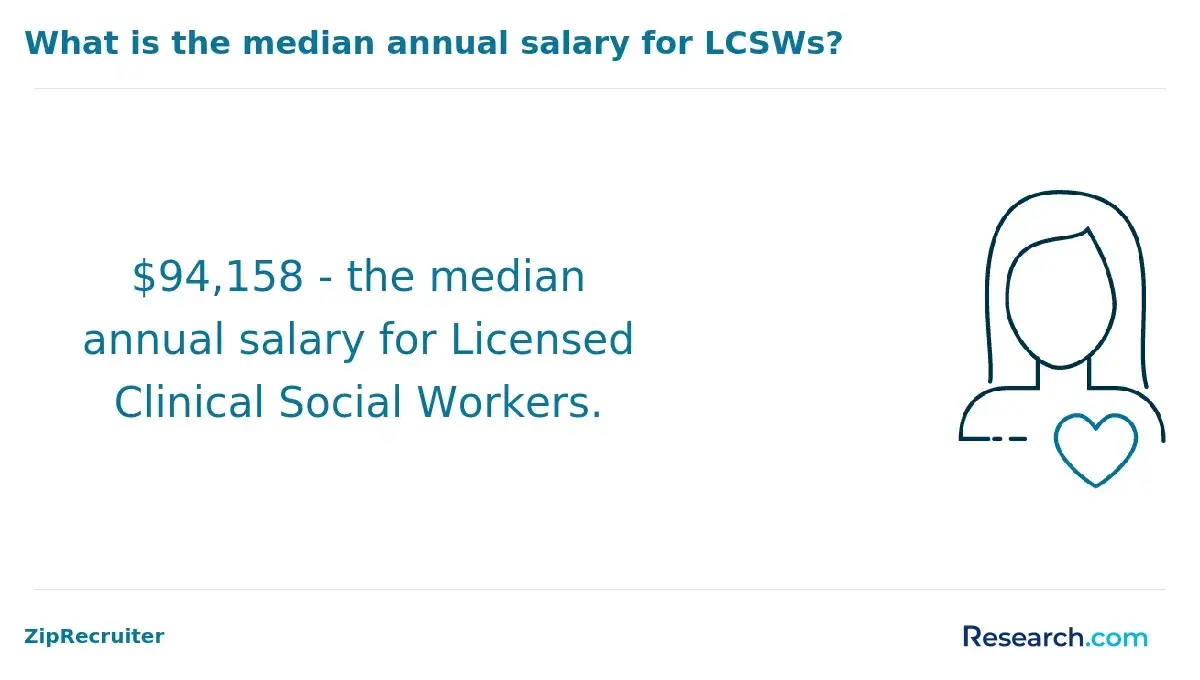
According to the Bureau of Labor Statistics Occupational Outlook Handbook, the median annual salary for licensed clinical social workers reached $92,000, reflecting a 12% increase from previous years. Finishing sooner may allow earlier entry into advanced roles, while a slower timeline may make sense if it helps you maintain employment and complete fieldwork successfully.
Online MSW programs without a GRE requirement generally cover the same graduate-level social work competencies as campus programs. The curriculum is designed to prepare students for ethical practice, assessment, intervention, advocacy, policy analysis, research use, and supervised field experience.
Core coursework often includes human behavior in the social environment, social welfare policy, research methods, diversity and social justice, ethics, assessment, and practice with individuals, families, groups, organizations, and communities. Many programs also include content in mental health assessment, substance abuse interventions, child welfare, trauma-informed care, gerontology, crisis intervention, and evidence-based practice.
Specializations or concentrations help students align the degree with career goals. Common options include:
- Clinical social work: Focuses on assessment, diagnosis, psychotherapy, treatment planning, and practice with individuals, families, and groups.
- Macro social work: Emphasizes community organizing, policy advocacy, program development, nonprofit leadership, and systems change.
- Integrated or advanced generalist practice: Combines direct practice, policy, organizational leadership, and community-based intervention.
Field education is the applied core of the MSW. Online programs usually coordinate with approved local agencies so students can complete supervised practice near where they live. Strong field placement support is especially important for online students because finding an appropriate placement independently can be difficult in some regions.
Graduates of no-GRE online MSW programs have shown a 245% return on investment within five years, surpassing the 180% average for campus-based programs, according to a 2025 Georgetown University Center on Education and the Workforce analysis. When comparing programs, use that kind of outcome data carefully and look at what drives value: licensure preparation, field quality, graduation rates, tuition, and employment pathways.
A good curriculum should do more than list attractive electives. It should clearly connect coursework, field education, specialization options, and licensure preparation to the type of social work you plan to practice.
Tuition for online MSW programs without GRE requirements varies widely by institution type, residency status, credit requirements, and program length. Public universities generally have lower per-credit rates, often ranging from $300 to $600 per credit hour. Since a typical MSW requires between 30 and 60 credits, total tuition at public institutions can range from $9,000 to $36,000.
Private universities tend to charge higher tuition, often between $800 and $1,200 per credit hour, which can bring total tuition to $24,000 to $72,000. Some programs publish a fixed total tuition instead of a per-credit rate, which can make budgeting easier, but students should still ask what is included.
When comparing costs, look beyond the headline tuition figure. Important cost questions include:
- Are online students charged additional technology, distance learning, or field placement fees?
- Does the program charge different rates for in-state and out-of-state students?
- Can advanced standing reduce the number of credits required?
- Are scholarships, grants, assistantships, or employer tuition reimbursement available?
- Will part-time enrollment increase total fees over time?
Financial aid can meaningfully change the net cost. Applicants should complete required aid forms early, ask about scholarships for online students, and check whether their employer offers tuition benefits. Some funding opportunities may not be advertised prominently on general admissions pages.
Cost should also be weighed against outcomes. For example, the University of Kentucky's no-GRE online MSW program reported a 98% licensure pass rate in 2025, the highest among similar programs per CSWE accreditation data. A lower-cost program is not always the better choice if it provides weak field support or poor licensure preparation, and a higher-cost program should be able to justify its price through support, outcomes, and fit.
An MSW degree can lead to careers in clinical practice, healthcare, schools, child and family services, nonprofit leadership, policy, research, advocacy, and community development. The right path depends on your concentration, field placements, state licensure requirements, and whether you want direct client practice or systems-level work.
Common MSW career paths include:
- Licensed clinical social worker: Provides therapy, assessment, and treatment support for clients facing mental health, trauma, substance use, family, or life-transition challenges.
- Healthcare social worker: Helps patients and families navigate care plans, discharge needs, chronic illness, medical systems, and access to services.
- School social worker: Supports students dealing with behavioral, emotional, family, attendance, or crisis-related concerns.
- Child and family social worker: Works with children, parents, foster care systems, adoption services, and protective services.
- Community or macro social worker: Develops programs, leads advocacy campaigns, evaluates services, and works on policy or organizational change.
- Nonprofit or agency administrator: Manages programs, staff, budgets, grants, compliance, and service delivery.
MSW graduates may also work in geriatric care, hospice, correctional facilities, domestic violence services, housing programs, veterans services, crisis response, research, and grant writing. Students who want clinical roles should choose programs with strong clinical coursework and field placements. Students interested in policy or leadership should look for macro practice, administration, research, and program evaluation options.
Data from OnlineMSWPrograms.com shows advanced standing MSW tracks have a 94% completion rate, 15% higher than traditional tracks, highlighting their effectiveness in preparing for supervisory roles.
Before enrolling, connect the program’s field placements and concentration options to your intended career. An MSW can be broad, but licensure and employer expectations are specific.
The salary outlook for MSW graduates is supported by demand in healthcare, behavioral health, schools, child and family services, and community agencies. According to the U.S. Bureau of Labor Statistics, clinical social workers earn around $67,000 annually, while the median wage for social workers is approximately $60,000.
Licensure is one of the most important factors affecting salary. Becoming a Licensed Clinical Social Worker can open access to clinical roles, supervisory opportunities, private practice pathways, and higher-paying positions in some settings. In 2025, 87% of no-GRE online MSW graduates qualified for LCSW licensure in 45 states without extra testing, according to the Association of Social Work Boards mobility report.
Pay also varies by employer, location, specialization, and experience. Urban healthcare systems, large agencies, and specialized clinical settings may offer higher compensation. Rural or nonprofit roles may pay less but can sometimes come with loan forgiveness opportunities, broader responsibilities, or faster advancement into leadership.
Students should review licensure requirements early because supervised hours, exams, title rules, and clinical eligibility vary by state. A program that is affordable and convenient may still be a poor fit if it does not support the license or role you want. Combining licensure with experience typically yields annual salary increases over 5%.
How to Choose the Best No-GRE Online MSW Program?
The best no-GRE online MSW program is not simply the one with the easiest application. It is the program that is accredited, affordable enough for your situation, realistic for your schedule, strong in field placement support, and aligned with your intended license and career path.
Start with CSWE accreditation. Without the right accreditation, you may face problems with licensure eligibility and employer recognition. Then compare curriculum structure, concentration options, faculty expertise, student support, field placement coordination, and outcomes such as graduation, licensure, and employment indicators.
Use these questions to evaluate fit:
- Accreditation: Is the online MSW program CSWE-accredited?
- Licensure alignment: Does the curriculum support the education requirements for the state where you plan to practice?
- Field placement: Will the program help secure placements near you, or are you expected to find your own?
- Program format: Are classes synchronous, asynchronous, or hybrid, and will that work with your schedule?
- Track options: Does the school offer traditional, part-time, full-time, accelerated, or advanced standing routes?
- Cost: What is the full estimated tuition and fee total, and what aid is available?
- Career fit: Does the program prepare students for clinical practice, macro practice, school social work, healthcare, or leadership?
- Student support: Are advising, writing help, technology support, licensure guidance, and career services available to online students?
Field placement support deserves close attention. Research shows 75% of MSW programs will use AI-driven placement matching to enhance job placement rates by 22% for online graduates, according to NASW's 2025 report. Ask how placements are selected, how far students may need to travel, what happens if a placement falls through, and whether the program has partners in your region.
Also review alumni outcomes, licensure pass rates, and student feedback. Speaking with current students or graduates can reveal whether the program’s flexibility, advising, and field support match what the admissions materials promise. A no-GRE policy can make applying easier, but the best choice is the program that helps you graduate, qualify for your intended role, and manage the financial and practical demands of the degree.
Other Things You Should Know About Social Work
Online MSW degrees from accredited institutions without GRE requirements are generally respected by employers if the program is properly accredited by the Council on Social Work Education (CSWE). Employers focus on accreditation status and relevant field experience over GRE scores. It is important to graduate from an accredited program to meet licensing and employment standards.
Most online MSW programs require at least 900 field education hours, and advanced standing programs often require about 600 hours. Placements must meet Council on Social Work Education standards, and many schools arrange local, supervised field sites for online students.
The cost difference between online MSW programs with and without GRE requirements is usually minimal or non-existent. Tuition rates depend more on the institution's prestige, type (public vs. private), and program length rather than GRE requirements. Applicants should consider all costs including fees, books, and commuting for field placements.
- Best Online Master's Programs For Social Work 2025 https://www.psychology.org/social-work/best-masters-programs/
- Best Online MSW Programs - No GRE Required https://www.onlinemastersdegrees.org/best-programs/social-work-msw/no-gre/
- Explore MSW programs with no GRE requirement | edX https://www.edx.org/masters/online-msw-programs/online-msw-programs-no-gre
- Fully Online MSW Programs – No Campus Visits Required (100% Online) https://www.masterofsocialwork.com/faqs/fully-online-msw-programs
- Master of Social Work https://online.howard.edu/msw/
- Social Work Masters Prerequisites: Discover 7 Critical Pieces - Prereqcourses https://www.prereqcourses.com/social-work-masters-prerequisites/
- MSW Program Length: 1-4 Year Timeline Guide for 2025 https://www.socialworkdegrees.org/faq/how-long-does-it-take-to-complete-a-msw-program
- Social Work Salaries - How Much Do Social Workers Make? https://www.onlinemswprograms.com/careers/social-worker-salaries/
- MSW Career Outlook https://www.kysu.edu/academics/college-as/school-of-social-work/careers/msw-career-outlook.php
- Online Master of Social Work https://socialwork.pacific.edu/programs/online-msw-programs