2027 No-Residency Online MSW Programs: What to Expect

Co-Founder and Chief Data Scientist
Choosing an online MSW is not just a question of convenience. For many future social workers, the real decision is whether they can earn a licensure-oriented graduate degree without leaving a job, relocating, or attending campus residencies. No-residency online MSW programs are designed for that situation: coursework is delivered online, while required field education is completed in an approved setting near the student.
This guide explains how no-residency MSW programs work, what accreditation matters, what admissions committees usually expect, how long these programs take, and how to evaluate cost, curriculum, career options, salary potential, and job outlook. It is written for working adults, career changers, caregivers, rural students, and BSW graduates comparing flexible pathways into professional social work.
Key Things You Should Know
- No-residency online MSW programs in 2026 offer flexible learning for working professionals, with 85% of programs accredited by CSWE, ensuring quality education regardless of location.
- Most programs require virtual field practicums, enabling students to gain real-world experience remotely while meeting licensure eligibility for clinical and macro practice.
- Tuition varies widely, averaging $550 per credit, but financial aid and employer tuition reimbursement options improve accessibility for diverse socioeconomic backgrounds.
What are no-residency online MSW programs?
No-residency online MSW programs are Master of Social Work programs that do not require students to travel to campus for orientations, intensives, weekend residencies, or other in-person academic sessions. Students complete their courses online and complete required field placements in approved agencies, clinics, schools, hospitals, or community organizations near where they live.
The phrase “no residency” does not mean “no fieldwork.” Social work is a practice profession, so accredited MSW programs still require supervised field education. The difference is that the hands-on experience is arranged locally instead of through campus-based attendance.
What makes a program truly no-residency?
- All classroom coursework is online. Lectures, discussions, assignments, exams, advising, and faculty meetings are handled through digital platforms.
- No mandatory campus visits are required. Students are not expected to attend on-campus orientations, skills labs, or short-term intensives.
- Field education is completed locally. The school approves and supervises placements that meet program and licensing-related expectations.
- Student support is remote-accessible. Advising, library services, writing help, career services, and technical support should be available online.
These programs are especially useful for working professionals, parents, caregivers, military-connected students, rural learners, and students who live far from a university with an MSW program. They can also help career changers enter the field without putting their current income or location at risk.
Before applying, confirm whether the program is actually no-residency rather than “mostly online.” Some online MSW programs still require short campus visits, in-person skills weekends, or regional intensives. Students who want a fully remote academic format should ask the admissions office directly and review the program handbook, not just the marketing page.
Students planning long-term advancement in social work may also want to compare master's-level options with later doctoral pathways, including DSW schools.
How do no-residency MSW programs work?
No-residency MSW programs combine online coursework with supervised field education in the student’s local area. The academic portion is completed through a learning management system, video conferencing tools, online discussion boards, digital readings, recorded lectures, simulations, group projects, and faculty feedback. The field portion is completed through approved social work practice sites.
Most programs use a mix of synchronous and asynchronous learning. Synchronous courses require students to log in at scheduled times for live class sessions. Asynchronous courses allow students to complete lectures, readings, discussions, and assignments within weekly deadlines. Many students prefer programs that clearly state how much live attendance is required before they enroll.
Typical online MSW learning components
| Program component | How it usually works | What students should verify |
| Online classes | Courses are delivered through recorded lectures, live video sessions, readings, assignments, and discussions. | Ask how many courses require live attendance and whether sessions are offered outside standard work hours. |
| Field placement | Students complete supervised practice hours at an approved local agency or organization. | Confirm who finds the placement: the school, the student, or both working together. |
| Faculty advising | Students meet with faculty or advisors through video calls, email, phone, or online portals. | Ask how quickly advisors respond and whether field-placement support is dedicated or general. |
| Peer interaction | Students collaborate through discussion boards, group assignments, live seminars, and case-based activities. | Look for structured interaction, since isolation can be a challenge in fully online programs. |
| Technical support | Students use a computer, reliable internet, and school-supported software platforms. | Check whether support is available during evenings or weekends if that is when you study. |
The field placement process is one of the most important parts of a no-residency MSW. A strong program should explain how placement sites are approved, what happens if a placement falls through, whether evening or weekend placements are possible, and how the program ensures that supervision meets professional expectations.
The 2023-2024 Council on Social Work Education Annual Survey highlighted 1,471 MSW students identified as first-generation master's degree pursuers, underlining the role flexible graduate pathways can play in expanding access to social work education.
Students comparing programs should look beyond convenience. A no-residency format is valuable only if the program provides clear field-placement procedures, consistent faculty access, strong student support, and transparent expectations. Cost-conscious applicants can also review affordable MSW programs while comparing structure and accreditation.
What accreditation should no-residency MSW programs have?
No-residency MSW programs should hold accreditation from the Council on Social Work Education (CSWE). For students in the United States, CSWE accreditation is the key program-level credential because it signals that the MSW curriculum, faculty qualifications, field education, and assessment processes meet national standards for social work education.
Institutional accreditation is also important because it applies to the college or university as a whole. However, institutional accreditation does not replace CSWE accreditation for an MSW program. A university can be institutionally accredited while a specific social work program lacks the specialized accreditation students may need for licensure pathways.
Why CSWE accreditation matters
- Licensure eligibility: Most states use CSWE-accredited MSW education as a foundation for social work licensure.
- Field education standards: CSWE-accredited programs must include structured, supervised practice experience.
- Employer confidence: Many employers prefer or require graduates from accredited social work programs.
- Transfer and doctoral options: Accreditation can affect future educational mobility and advanced study.
Students should verify accreditation directly through official CSWE listings rather than relying only on a school’s promotional language. Pay close attention to whether the exact program format you plan to enter is covered. If a school offers both campus-based and online options, confirm that the online no-residency pathway is included under the accredited MSW program.
Online programs may offer synchronous or asynchronous formats, but accreditation expectations still apply to field education. Students should expect practicum requirements comparable to on-campus programs, even when no campus residency is required.
Students focused on accelerated completion should still prioritize accreditation. Graduates in online structures are 27% more likely to have enrolled full-time compared to in-person peers, supporting faster degree attainment without removing the need for academic and practicum rigor.
State licensing rules can vary, so applicants should check the social work licensing board in the state where they plan to practice. Some states have specific rules for field supervision, clinical hours, background checks, or exam eligibility. Students comparing faster options can review accelerated lcsw programs, but accreditation and licensing alignment should remain the first filter.
Admission requirements for online MSW programs typically include a bachelor’s degree from an accredited institution, official transcripts, a resume or CV, letters of recommendation, and a personal statement. Many programs look for a minimum GPA around 3.0, though expectations vary by school and applicant pool.
Admissions committees usually want evidence that applicants understand the social work profession, can handle graduate-level writing and analysis, and are prepared for field education. Strong applications connect the applicant’s background to social work values, client service, advocacy, community engagement, or policy interests.
Common application materials
- Official transcripts: Programs review prior coursework, GPA, degree completion, and academic readiness.
- Resume or CV: Include employment, volunteer work, internships, military service, community work, and human services experience.
- Letters of recommendation: Most schools request two or three letters from professors, supervisors, or professionals who can speak to your readiness.
- Personal statement: This should explain your motivation, career goals, preparation for social work, and fit with the program.
- Prerequisite coursework: Some programs require or recommend coursework in psychology, sociology, statistics, human development, or related areas.
- Background checks or health records: These may be needed because field placements often involve work with clients or vulnerable populations.
Applicants with a Bachelor of Social Work may qualify for advanced standing tracks, which can shorten the MSW timeline. These tracks are generally intended for students whose BSW education meets the program’s recency, accreditation, and GPA expectations. Applicants without a BSW usually enter a traditional MSW pathway.
Relevant work experience can strengthen an application, but it is not always required. Volunteer service, crisis-line work, case management support, school or healthcare experience, advocacy projects, and community-based roles can all help demonstrate commitment. Career changers should explain clearly why they are moving into social work and how their prior experience will transfer.
International applicants may need to submit TOEFL or IELTS scores to demonstrate English proficiency. They may also need transcript evaluations and additional documentation, depending on the school.
The appeal of online access is reflected in outcomes from some institutions: nearly 98% of Columbia University School of Social Work's online msw graduates were employed or pursuing further education within one year. Applicants still need to evaluate whether the degree aligns with their goals, costs, and licensing plans. For broader career context, review whether is social work a good career before committing to the application process.
No-residency MSW programs usually take between 18 and 36 months, depending on whether the student enrolls full time, part time, or in an accelerated format. Students with a qualifying BSW may be able to pursue advanced standing, while students without a BSW generally complete a longer traditional MSW pathway.
Program length is shaped by several factors: total credits, fieldwork schedule, term structure, course load, transfer or advanced standing eligibility, and whether the school allows continuous enrollment. Credit requirements for these programs typically range from 30 to 60 credits.
Common completion timelines
| Enrollment format | Typical pace | Best fit |
| Accelerated | About one year in some options | Students who can handle an intensive schedule and complete field requirements without major work-hour conflicts. |
| Full time | Often around 18 months or more | Students who want faster completion and can commit significant weekly time to classes and fieldwork. |
| Part time | Often two to three years | Working adults, caregivers, and students who need a more sustainable weekly workload. |
Fieldwork is often the limiting factor. Even when coursework is flexible, practicum hours require scheduled time at an approved placement site. Students working full time should ask whether placements can be completed during evenings or weekends, although availability depends on the agency and type of practice.
Many no-residency online MSW programs allow students to complete practicum or fieldwork hours near home, which can reduce disruption and eliminate delays tied to relocation. However, local placement availability varies, especially in rural areas or highly specialized practice areas.
Costs per credit generally fall between $455 and $513 for in-state students, according to Intelligent.com Best One-Year MSW Programs. Because program length affects total tuition, fees, and lost work time, students should compare the full timeline and not just the advertised completion speed.
The curriculum in no-residency MSW programs combines social work theory, research, policy, ethics, practice methods, and supervised field education. The academic content is delivered online, but the curriculum should prepare students for the same professional competencies expected in campus-based MSW programs.
Core courses often cover human behavior, social welfare policy, clinical practice methods, research, and ethics. Students may also study assessment, intervention planning, diversity and oppression, trauma-informed practice, macro practice, program evaluation, and professional documentation.
Common curriculum areas
- Human behavior and the social environment: How individuals, families, groups, communities, and systems influence development and well-being.
- Social welfare policy: How laws, institutions, benefits, and public systems shape client outcomes and service access.
- Practice methods: Skills for working with individuals, families, groups, organizations, and communities.
- Research and evaluation: How to interpret evidence, assess programs, and apply data-informed decision-making.
- Ethics and professional practice: Boundaries, confidentiality, mandated reporting, cultural humility, and professional responsibility.
- Field education: Supervised practice in an approved setting where students apply classroom learning with real clients, programs, or communities.
Many programs offer specialized tracks such as clinical social work, community organization, or policy advocacy. Students interested in therapy or mental health practice should look closely at clinical coursework and field-placement options. Students interested in leadership, systems change, or nonprofit work may prefer macro, policy, or administration-focused options.
Students complete supervised field placements locally, typically requiring 900 to 1,200 hours. This practical experience is central to professional preparation and should be treated as a major part of the degree, not an add-on.
Online learning may include synchronous lectures, interactive discussions, recorded modules, case simulations, role-play assignments, research projects, and multimedia content. Strong programs create regular opportunities for feedback, skills practice, and faculty interaction.
Career outcomes can vary by role, location, licensure, and experience. Social workers holding an MSW earn approximately 25% more than those with only a BSW. Graduates from no-residency Columbia MSW programs report median salaries about 8% above the national average, according to Burning Glass Technologies and U.S. Bureau of Labor Statistics data.
No-residency online MSW programs typically cost between $20,000 and $60,000 for the full degree. The final price depends on the school, public or private status, credit requirements, tuition model, fees, transfer or advanced standing eligibility, and how long the student remains enrolled.
Tuition is often charged per credit hour, averaging $800 to $1,500, though some schools use flat-rate pricing per semester or year. Flat-rate pricing may help students who take heavier course loads, while per-credit pricing may be easier for part-time students to manage.
Accelerated options, such as those offered by Simmons University, tend to be on the higher end due to their rigorous coursework and specialized focus areas. A higher price is not automatically a better value, so students should compare accreditation, placement support, licensure alignment, graduation requirements, and student services.
Costs to include in your budget
- Tuition per credit and total credits required
- University, technology, distance learning, and student services fees
- Books, software, supplies, and required subscriptions
- Transportation costs for local field placements
- Background checks, immunizations, or compliance documentation for practicum sites
- Licensing exam fees after graduation, where applicable
- Reduced work hours during intensive coursework or field placement terms
Financial aid, scholarships, payment plans, employer tuition reimbursement, and public-service-related benefits may reduce out-of-pocket costs. Students should request a full cost-of-attendance estimate from each school and ask whether online students pay different fees than campus students.
Graduates from accelerated no-residency MSW programs, like those at Simmons, can expect a salary premium around 25% higher than BSW holders entering direct practice, highlighting the potential return on investment. These figures are supported by data reported by Fortune Education via Simmons University. Individual outcomes still depend on licensure, location, employer type, specialization, and experience.
The most useful cost comparison is not the cheapest tuition number. It is the total cost of earning an accredited degree that supports your intended license, career path, and timeline.
An MSW degree can lead to clinical, direct-service, administrative, policy, advocacy, and community practice roles. The right path depends on the student’s concentration, field placements, state licensure, work experience, and professional interests.
Graduates often work in hospitals, mental health clinics, schools, child welfare agencies, substance abuse programs, government offices, community nonprofits, veterans services, aging services, correctional settings, and private or group practices. Some roles require clinical licensure, while others focus on case management, program coordination, advocacy, or leadership.
Common MSW career paths
| Career path | Typical focus | Important considerations |
| Clinical social worker | Assessment, therapy, treatment planning, and mental health support. | Usually requires post-graduate supervised experience and clinical licensure. |
| Medical social worker | Helping patients and families navigate illness, discharge planning, care coordination, and resources. | Healthcare experience and interdisciplinary communication skills are valuable. |
| School social worker | Supporting students, families, attendance, behavior, crisis response, and school-community connections. | State education or school social work requirements may apply. |
| Child welfare social worker | Family support, safety planning, foster care, permanency, and protective services. | Work can be demanding and may involve court systems and crisis response. |
| Substance abuse or behavioral health social worker | Supporting clients with addiction, co-occurring disorders, recovery, and treatment access. | Specialized training and licensure can improve mobility. |
| Policy advocate or program administrator | Designing, evaluating, funding, or improving social programs and public systems. | Macro practice, research, grant writing, and leadership skills are useful. |
Becoming a Licensed Clinical Social Worker (LCSW) can improve access to clinical roles and may increase earning potential. However, licensure requirements vary by state and typically include an accredited MSW, supervised post-graduate hours, and a licensing exam.
The median salary for LCSWs is over $60,000, with experienced clinicians and managers earning above $90,000. Salary and advancement depend heavily on setting, location, licensure, specialization, and years of experience.
Prospective students should choose field placements strategically. A placement in a hospital, school, mental health clinic, policy organization, or child welfare agency can help build the experience and references needed for the student’s intended career path.
The salary outlook for MSW graduates varies by location, license level, employer, specialization, and years of experience. Entry-level roles typically offer between $50,000 and $60,000 annually, while mid-career social workers often earn from $65,000 to $75,000. More advanced positions, such as clinical supervisors or program directors, can exceed $85,000 depending on the employer.
Licensure is one of the biggest salary differentiators. Specialized licensure, including Licensed Clinical Social Worker (LCSW) credentials, enhances earning potential by 15-25% compared to non-licensed professionals. Clinical licensure can also open access to therapy roles, supervisory positions, and some private practice opportunities.
Factors that affect MSW salaries
- Location: Urban areas may offer higher salaries but also higher living costs and more competition.
- Employer type: Hospitals, government agencies, nonprofits, schools, and private practices often have different pay structures.
- Licensure: Clinical credentials can expand role options and compensation potential.
- Specialization: Mental health, healthcare, substance abuse, leadership, and program administration may offer stronger salary growth in some markets.
- Experience: Supervisory, clinical, grant management, and program evaluation experience can support advancement.
Online no-residency MSW programs have grown in popularity among international students; approximately 625 enrolled in U.S. programs recently, benefiting from flexible study options. Students planning to work outside the United States should check how the degree is recognized in their target country or region.
Rural or underserved areas may offer lower pay but sometimes provide incentives such as loan forgiveness. Students should compare salary potential with total program cost, licensure requirements, and the cost of living in the area where they plan to work.
What is the job outlook for social workers?
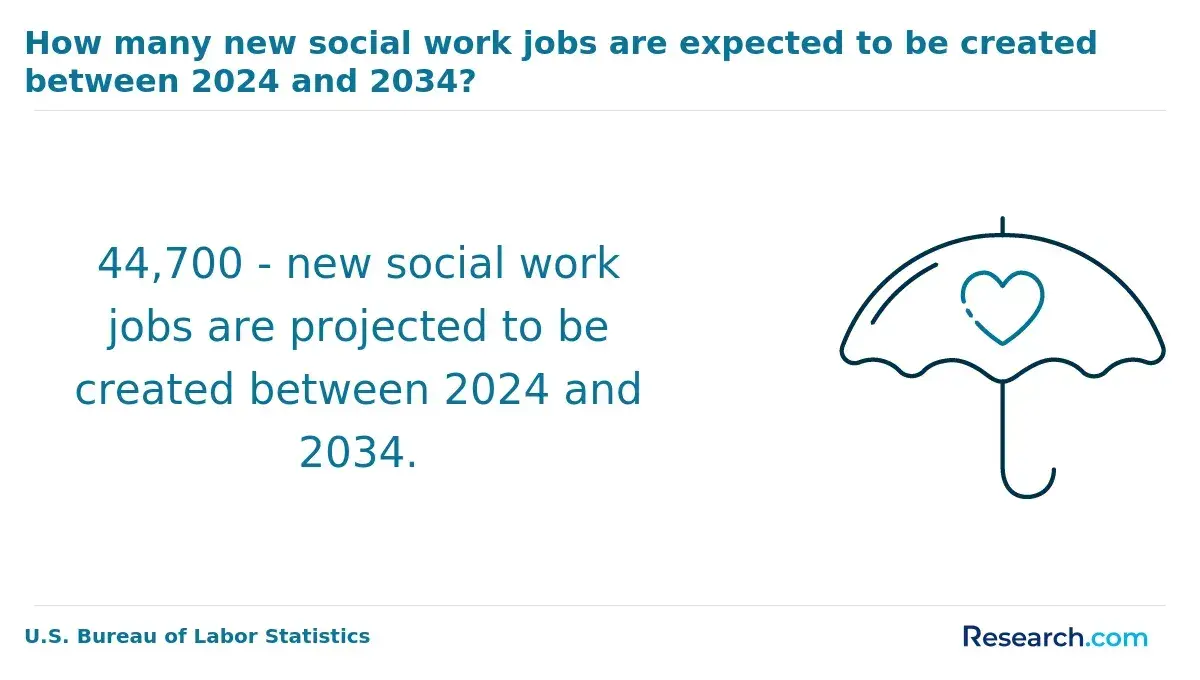
The job outlook for social workers is strong, with employment projected to grow 12% from 2024 to 2034, outpacing many other professions. Demand is connected to needs in mental health, healthcare, child welfare, aging services, substance abuse treatment, and community-based support.
Clinical social workers who address mental health and substance abuse are especially in demand. Healthcare systems, schools, public agencies, community organizations, and social service providers continue to need professionals who can assess needs, coordinate care, support families, manage crises, and connect clients with resources.
Where demand is strongest
- Healthcare: Hospitals, clinics, rehabilitation centers, nursing care facilities, and integrated care teams.
- Mental health and substance abuse: Counseling centers, behavioral health agencies, crisis programs, and treatment facilities.
- Child and family services: Child welfare agencies, family support programs, foster care organizations, and youth services.
- Schools: Student support services, behavioral intervention, family engagement, and crisis response.
- Government and nonprofits: Case management, policy implementation, benefits navigation, advocacy, and program administration.
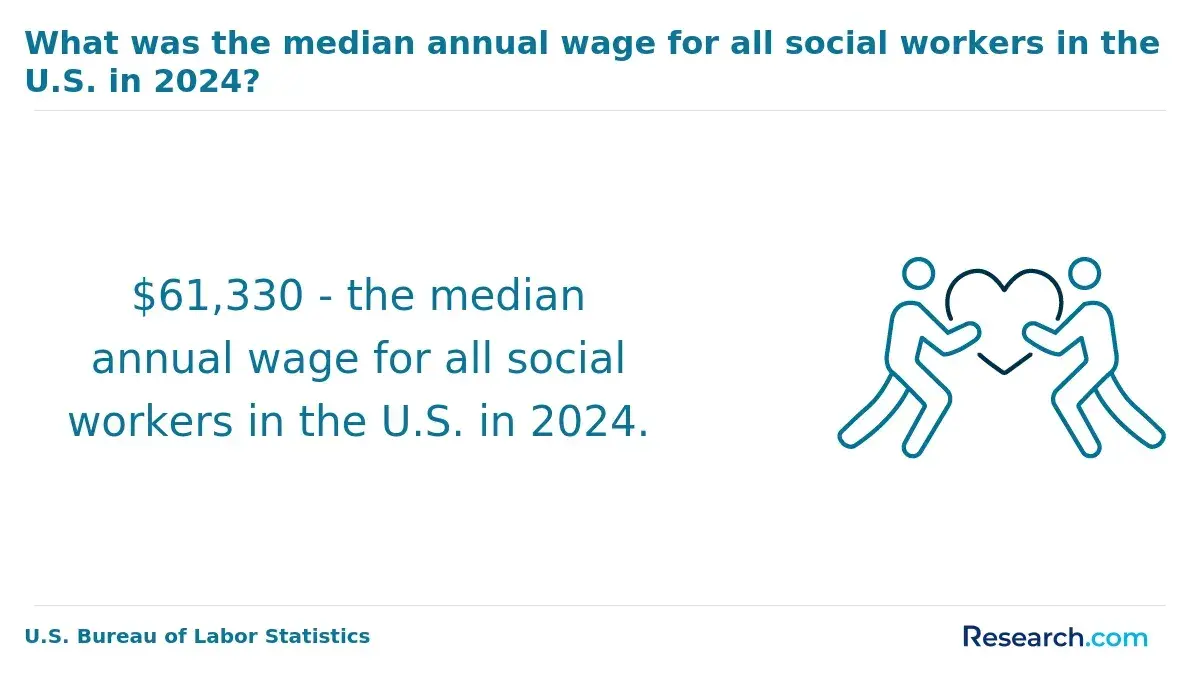
Salaries typically average around $62,000 annually but vary by location and specialty. Job prospects are generally stronger for graduates with an accredited MSW, relevant field placements, post-graduate supervised experience, and licensure progress.
For students using no-residency programs, the key is to plan early. Choose placements that match your target career, understand your state’s licensing rules, and build references during field education. Flexibility can make the degree accessible, but career outcomes still depend on accreditation, supervised experience, and a clear professional strategy.
Other Things You Should Know About Social Work
Yes, most online MSW programs, including no-residency options, require a field practicum or internship to complete the degree. This hands-on training is mandatory to meet accreditation standards and provides practical experience in real-world social work settings. Students usually arrange local placements near their home or work area.
After earning an MSW, most states require passing a licensure exam to practice as a licensed clinical social worker (LCSW) or equivalent. Requirements vary by state, but exams generally cover ethical practice, clinical skills, and social work theories. Passing the exam is essential for independent practice and client services.
Most programs require a reliable laptop, high-speed internet, a webcam, and a microphone for synchronous classes, video advising, and virtual field supervision. Students usually also need access to Zoom, a learning management system, and secure software for submitting assignments and internship documents.
- Applying to your Master of Social work with no experience https://www.mswhelper.com/blog/applying-to-your-master-of-social-work-with-no-experience
- Social Work Careers https://socialworklicensemap.com/social-work-careers/
- Accredited Master of Social Work (MSW) Programs (2026 Update) - MasterofSocialWork.com https://www.masterofsocialwork.com/
- Social Work Salaries - How Much Do Social Workers Make? https://www.onlinemswprograms.com/careers/social-worker-salaries/
- Social Worker Salary and Jobs in Social Work https://teach.com/online-ed/social-work-degrees/online-masters-social-work/salary-and-career-outlook/
- MSW Career Outlook https://www.kysu.edu/academics/college-as/school-of-social-work/careers/msw-career-outlook.php
- Master of Social Work- Non-social work degree https://socialwork.ucalgary.ca/future-students/master-social-work/msw-entry-routes/non-social-work-degree
- 25 Most Affordable MSW Programs 2025 | Complete Cost Guide https://www.socialworkdegrees.org/most-affordable-msw-programs
- Online Master’s in Social Work Programs https://onlinecounselingprograms.com/online-counseling-degrees/cswe-accredited-online-msw-programs/
- Social Work Master's Degree Prerequisites https://www.psychology.org/social-work/masters/