2027 Medical Social Work Careers: Hospitals, Clinics, and Care Systems

Co-Founder and Chief Data Scientist
Medical social work is for people who want to work at the intersection of healthcare, mental health, family support, insurance systems, and community resources. The career is not limited to bedside counseling. In hospitals, clinics, hospice programs, rehabilitation centers, and care systems, medical social workers help patients solve the nonmedical problems that often determine whether treatment succeeds: transportation, housing instability, financial stress, caregiver burnout, discharge planning, grief, and access to follow-up care.
This guide explains what medical social workers do, which degrees and licenses matter, how online and accredited programs fit into the path, and what salary and job outlook data suggest about the field. It is designed for prospective students comparing BSW, MSW, and doctoral options, as well as working professionals considering a move into healthcare social work.
Key Things You Should Know
- Medical social work employment in hospitals and clinics is projected to grow 13% from 2024 to 2034, driven by aging populations and increased chronic illness management.
- Effective communication and interdisciplinary collaboration are essential skills, as social workers help patients navigate treatment plans and access community resources.
- The median annual salary for medical social workers was approximately $62,000 in 2024, with higher wages in large healthcare systems and urban centers.
What is medical social work?
Medical social work is a healthcare-focused area of social work that helps patients and families manage the social, emotional, financial, and practical challenges that come with illness, injury, disability, aging, or end-of-life care. These professionals work as part of interdisciplinary teams that may include physicians, nurses, case managers, therapists, chaplains, and community service providers.
In practice, medical social workers assess a patient’s psychosocial needs, identify barriers to treatment, support families during difficult decisions, and connect patients with services that make recovery or long-term care more realistic. Their work can include arranging transportation, coordinating home care, helping with insurance issues, locating housing resources, preparing discharge plans, and supporting patients after a new diagnosis.
Where medical social workers work
- General medical and surgical hospitals
- Outpatient clinics and community health centers
- Hospice and palliative care programs
- Rehabilitation facilities
- Long-term care and skilled nursing facilities
- Oncology, pediatrics, geriatrics, transplant, emergency, and intensive care units
The role requires clinical judgment, knowledge of healthcare systems, strong communication skills, and the ability to advocate for patients without overstepping medical or legal boundaries. Medical social workers often support people during high-stress moments, so crisis intervention, grief counseling, cultural responsiveness, and ethical decision-making are central to the work.
Healthcare social workers earned a median annual salary of $68,090 as of May 2024, with those in the top 10% making over $100,870. Pay varies by setting, location, experience, licensure, and specialization, so salary data should be used as a planning benchmark rather than a guarantee.
Professionals who want to move into advanced research, leadership, teaching, or policy roles may compare doctoral options, including the best online PhD social work programs.
What education is required for medical social work careers?
Most medical social work careers require formal social work education, and the level of degree you need depends on the role. A Bachelor of Social Work (BSW) can qualify graduates for some entry-level case management, patient support, or community resource roles. However, clinical positions in hospitals, behavioral health units, hospice, and many outpatient care settings commonly require a Master of Social Work (MSW), especially when the role involves assessment, counseling, treatment planning, or independent practice.
An MSW is also the standard educational foundation for clinical licensure. Students should prioritize programs accredited by the Council on Social Work Education (CSWE), because accreditation is typically required for licensure eligibility and signals that the program meets accepted professional standards.
Common education paths
| Education level | Typical use in medical social work | Important limitation |
| BSW | Entry-level case management, discharge support, resource coordination, and community-based patient services | Usually not enough for independent clinical practice |
| MSW | Clinical healthcare roles, hospital social work, palliative care, behavioral health integration, and preparation for licensure | Licensure still requires supervised experience and exams after graduation |
| Postgraduate certificate or continuing education | Specialization in areas such as gerontology, pediatrics, oncology, palliative care, or trauma-informed practice | Does not replace the degree required for clinical licensure |
| DSW or PhD | Leadership, teaching, research, policy, program evaluation, or advanced practice development | Usually not required for entry into medical social work practice |
Students comparing flexible graduate options can review MSW online programs affordable, but affordability should be weighed alongside accreditation, field placement support, faculty experience, licensure outcomes, and access to healthcare-focused internships.
Licensure requirements vary by state. In many states, becoming a Licensed Clinical Social Worker (LCSW) requires an MSW from a CSWE-accredited program, 2,000 to 3,000 hours of supervised clinical experience, and a national exam. Requirements can differ in title, hours, supervision rules, and renewal standards, so students should check the social work board in the state where they plan to practice.
Medical social work programs may also include training in electronic health records, interdisciplinary communication, healthcare ethics, discharge planning, and social determinants of health. These practical competencies matter because healthcare employers need social workers who can function inside fast-moving clinical teams.
According to the Bureau of Labor Statistics, general medical and surgical hospitals employed 45,010 healthcare social workers, representing 0.79% of healthcare employment, with an annual mean wage of $76,520. Students who complete field placements in hospitals, clinics, hospice, or integrated care settings are often better prepared for these roles than those with only classroom exposure.
How do I become a licensed medical social worker?
There is usually no single nationwide license called “licensed medical social worker.” Instead, medical social workers typically earn the clinical social work license recognized by their state, often the Licensed Clinical Social Worker (LCSW) or an equivalent title. That license allows qualified professionals to provide clinical services within the limits of state law and employer policy.
The standard route begins with an MSW from a Council on Social Work Education (CSWE) accredited program. A bachelor’s degree may help you enter the field, but it typically does not qualify you for independent clinical roles. After graduation, candidates complete supervised clinical hours, usually between 2,000 and 4,000 hours, over two to three years, depending on state regulations.
Candidates then take the Association of Social Work Boards (ASWB) clinical exam, which assesses knowledge used in clinical assessment, diagnosis, ethics, treatment planning, and professional practice. After passing the required exam and meeting state-specific rules, applicants apply to their state social work board for licensure.
Typical steps to become licensed
- Earn a CSWE-accredited MSW degree.
- Complete supervised clinical experience required by your state.
- Pass the ASWB clinical exam or the exam required by your jurisdiction.
- Submit a licensure application to your state social work board.
- Meet background check, documentation, ethics, and supervision verification rules.
- Renew the license by completing continuing education as required.
Licensed professionals often work in hospitals and outpatient care centers, where healthcare social workers earned a mean annual wage of $74,240 in 2023. Earnings depend on setting, region, licensure level, specialization, and years of experience.
For professionals who may move across state lines, the ASWB's endorsement program can support licensure portability, but it does not eliminate the need to meet each state’s requirements. Maintaining a license commonly requires completing 20-40 hours of continuing education every two years focused on clinical skills and ethics.
For updated earnings by location, compare lcsw pay by state.
A medical social work curriculum combines core social work theory with healthcare-specific preparation. Students learn how illness affects individuals, families, and communities, and how social workers can intervene ethically within complex care systems.
Foundational coursework often includes human behavior, social welfare policy, ethics, research methods, diversity, and practice with individuals, families, groups, organizations, and communities. Healthcare-focused study then builds on that foundation with courses and field experiences tied to patient care.
Common curriculum areas
- Clinical assessment and intervention: Evaluating mental health, trauma, chronic illness, grief, coping, family dynamics, and safety concerns in medical populations.
- Healthcare systems and policy: Understanding hospitals, clinics, insurance processes, discharge systems, managed care, public benefits, and barriers to access.
- Social determinants of health: Addressing poverty, housing instability, transportation, food insecurity, discrimination, and other conditions that shape health outcomes.
- Case management and discharge planning: Coordinating services so patients can transition safely from hospital to home, rehabilitation, hospice, or long-term care.
- Crisis intervention and grief counseling: Supporting patients and families during medical emergencies, sudden diagnoses, traumatic injury, death, or end-of-life planning.
- Legal and ethical practice: Applying rules related to confidentiality, patient rights, informed consent, mandated reporting, documentation, and professional boundaries.
- Evidence-based practice and research: Using data and current research to evaluate interventions, improve programs, and support patient-centered care.
Field education is essential. Students should look for placements in hospitals, outpatient clinics, hospice organizations, rehabilitation facilities, behavioral health programs, or community health agencies. These settings help students practice communication with medical teams, documentation, resource coordination, and crisis response under supervision.
With employment growth projected at 10% through 2033-one of the highest in social work fields-this specialized education prepares students for evolving roles that require both direct practice skills and systems-level thinking.
What roles do medical social workers play in hospitals?
In hospitals, medical social workers help patients move safely through the healthcare system. They assess psychosocial needs, reduce barriers to treatment, coordinate discharge plans, support families, and connect patients with community resources after they leave the hospital. Their work can affect patient safety, recovery, satisfaction, and readmission risk.
Hospital social workers often enter a case when a patient’s medical plan depends on nonmedical support. A patient may need home health services, transportation to follow-up appointments, medication access, housing assistance, caregiver support, rehabilitation placement, hospice referral, or help understanding insurance coverage. The social worker helps identify the problem, coordinate options, and advocate for a practical plan.
Common hospital responsibilities
- Psychosocial assessment: Evaluating family support, housing, finances, safety, coping, mental health, substance use concerns, and barriers to care.
- Discharge planning: Coordinating transitions to home, rehabilitation, skilled nursing facilities, hospice, or community services.
- Crisis intervention: Supporting patients and families after trauma, diagnosis, sudden decline, death, or major treatment decisions.
- Resource connection: Linking patients to benefits, transportation, housing programs, food assistance, caregiver support, and follow-up care.
- Patient advocacy: Helping patients understand rights, communicate preferences, and participate in care decisions.
- Interdisciplinary collaboration: Working with doctors, nurses, case managers, therapists, and discharge planners to align medical and social needs.
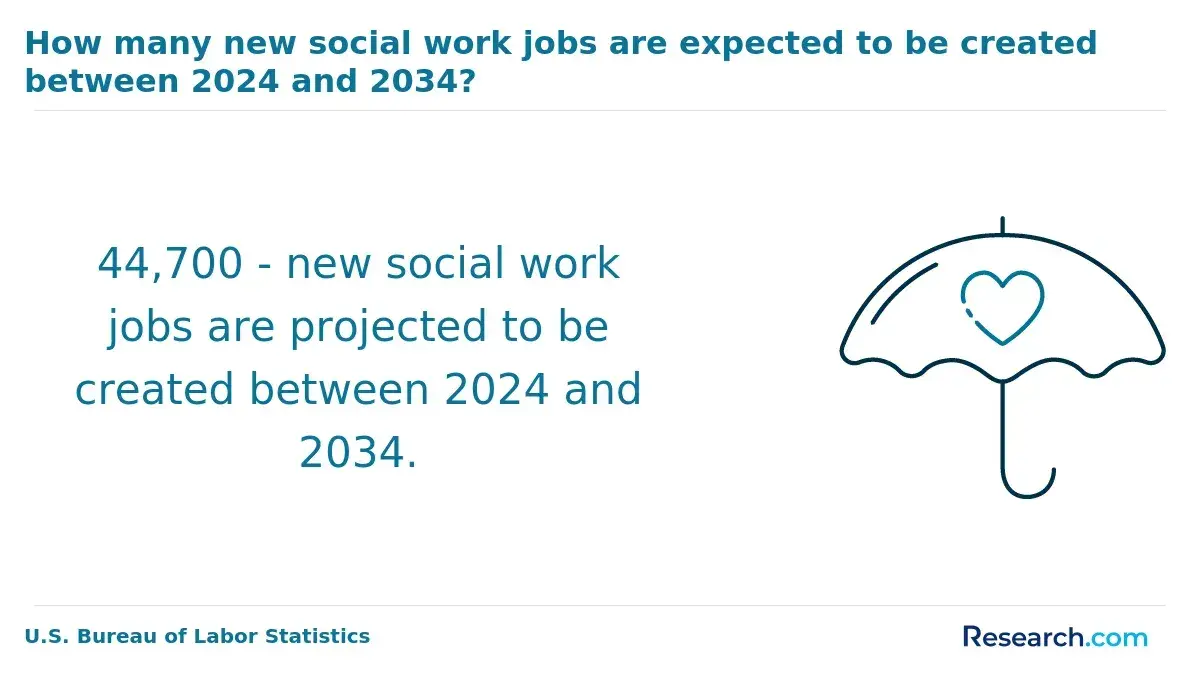
As hospitals adopt integrated care models emphasizing social determinants of health, demand for medical social workers grows, particularly in primary care and community health centers connected to hospitals. According to CareersinPsychology.org, citing BLS 2024-2034 projections, hospital readmission penalties and integrated care initiatives drive this expansion.
The role can be demanding. Hospital social workers often manage complex caseloads, urgent timelines, ethical dilemmas, and emotionally difficult conversations. It can also be highly meaningful work for professionals who want to help patients navigate both medical crises and the real-world conditions that shape recovery.
Other Things You Should Know About Social Work
Medical social workers need strong communication and interpersonal skills to effectively support patients and healthcare teams. They must be adept at crisis intervention, assessment, and counseling while maintaining empathy and cultural sensitivity. Organizational abilities and knowledge of healthcare systems are also critical to coordinate resources and services efficiently.
Medical social workers frequently navigate ethical issues such as patient confidentiality, informed consent, and balancing patient autonomy with safety concerns. They may encounter conflicts between institutional policies and patient needs, requiring sound judgment and adherence to professional codes of ethics. Maintaining boundaries and advocating for vulnerable populations are ongoing challenges in this field.
Medical social workers work closely with doctors, nurses, therapists, and case managers to create holistic care plans. They provide psychosocial assessments and connect patients with community resources, facilitating communication between patients and the healthcare team. This collaboration helps ensure comprehensive treatment that addresses both medical and social factors impacting health.
Most hospital social work jobs require a state social work license, usually an LSW or LMSW for entry-level roles and an LCSW for independent practice. Many employers also prefer a CSWE-accredited MSW, and some require supervised clinical hours before full licensure.
- Best Affordable Master's Degree In Social Work https://www.psychology.org/social-work/best-affordable-masters-programs/
- Licensed Clinical Social Worker - Florida Board of Clinical Social Work, Marriage & Family Therapy and Mental Health Counseling https://floridasmentalhealthprofessions.gov/licensed-clinical-social-worker/
- Best Online Clinical MSW Programs, Updated for 2026 https://www.onlinemswdegrees.org/clinical-online-msw
- Best Online Master's Of Social Work https://www.socialworkdegreecenter.com/
- High-demand social work roles in 2026: trends and opportunities https://socialwork.pacific.edu/blog/high-demand-social-work-roles-2026-trends-and-opportunities
- How to Become a Licensed Social Worker https://onlinecounselingprograms.com/mental-health-careers/how-to-become-licensed-social-worker/
- What does a Healthcare Social Worker do? Career Overview, Roles, Jobs | NASW https://joblink.socialworkers.org/career/healthcare-social-worker
- Online Social Work Major | SUNY Plattsburgh https://www.plattsburgh.edu/programs/social-work-major-online.html
- Online Social Work Degrees https://www.onlinemswprograms.com/online-social-work-degrees/
- Medical Social Worker - Explore Healthcare Careers - Mayo Clinic College of Medicine & Science https://college.mayo.edu/academics/explore-health-care-careers/careers-a-z/medical-social-worker/