2027 Questions to Ask Before Enrolling in an Online MSW Program

Co-Founder and Chief Data Scientist
An online MSW can be a practical path into clinical practice, community leadership, healthcare, school social work, policy, or nonprofit administration—but only if the program meets the requirements that matter for your state, career goal, schedule, and budget. The most important decision is not simply whether to study online. It is whether the program is accredited, whether it can place you in appropriate field education near you, whether the curriculum matches your intended specialization, and whether the total cost makes sense for your expected career path.
This guide explains the questions prospective students should ask before enrolling in an online Master of Social Work program. It covers accreditation, CSWE standards, admissions, program length, curriculum, cost, career options, salary expectations, and job outlook so you can compare programs with less guesswork and avoid choices that may limit licensure or employment later.
Key Things You Should Know
- Accreditation by the Council on Social Work Education (CSWE) is essential for licensure eligibility and employment prospects after completing an online MSW program in 2026.
- Field placement opportunities remain mandatory, with 900 hours typically required, so verifying local and virtual options before enrollment is crucial for graduation and licensure.
- Tuition costs for online MSW programs vary widely, averaging between $15,000 and $45,000, making financial aid and payment plan availability key considerations for prospective students.
What is an online MSW program?
An online MSW program is a graduate-level social work degree delivered primarily through digital learning platforms. Students complete academic coursework remotely while also meeting field education requirements through supervised placements. The online format is designed for students who need more flexibility because of work, caregiving, relocation limits, military service, or a career change.
Most online MSW programs combine asynchronous coursework, such as recorded lectures and discussion boards, with synchronous sessions, such as live seminars, skills labs, or group activities. Depending on the school, students may enroll full time, part time, or in an accelerated track. Many programs also offer concentrations in areas such as clinical social work, community organizing, healthcare, child and family services, school social work, or policy advocacy.
The most important distinction is accreditation. Accredited online MSW programs are typically required for licensure and are often expected by employers. The Council on Social Work Education (CSWE) accredits programs that meet professional education standards, with 225 accredited programs enrolling over 55,000 students nationwide. Before applying, students should confirm that the online option has the same accreditation status as the institution’s campus-based MSW, if one exists.
Field education is another major factor. Even when classes are online, MSW students must complete supervised practice hours in approved agencies or settings. Some schools arrange placements near the student’s residence, while others expect students to identify potential sites with school approval. A few programs may require limited on-campus residencies, intensives, or skills weekends.
Questions to ask before choosing an online MSW
- Is the program CSWE-accredited?
- Does the program meet licensure requirements in the state where you plan to practice?
- How are field placements arranged for online students?
- Can you complete field education near your home or workplace?
- Does the curriculum support your intended specialization?
- What academic, technical, advising, and career services are available to online students?
Students who plan to continue beyond the master’s level may also want to compare doctorate of social work programs. For most MSW applicants, however, the first priority is choosing an accredited program that supports field placement, licensure eligibility, and realistic career goals.
Is accreditation essential for online MSW programs?
Yes. Accreditation is one of the first things to verify when evaluating an online MSW program. A CSWE-accredited degree signals that the program meets professional standards for curriculum, faculty qualifications, field education, assessment, and preparation for social work practice. More importantly, most U.S. states require graduation from a CSWE-accredited program to qualify for social work licensure exams.
Choosing a non-accredited MSW can create serious problems. You may complete coursework and pay tuition but later discover that the degree does not qualify you for licensure, clinical supervision pathways, public-sector jobs, or employer reimbursement. This risk is especially important for students seeking clinical roles, because licensure rules are strict and vary by state.
Accreditation also affects the value of your financial investment. Tuition for online MSW programs varies widely, from $25,000 at Florida State University for in-state students to $125,000 at Columbia University. Regardless of price, students should not assume that a higher-cost program automatically offers better licensure alignment, stronger field support, or better career outcomes. The first filter should be accreditation; the next should be fit.
Career outcomes can also depend on licensure and specialization. Salaries after graduation typically range from $61,330 to $69,480, but actual earnings depend on role, location, employer, experience, and whether the graduate earns clinical licensure. An accredited degree helps protect eligibility for those next steps.
How to verify accreditation before applying
- Confirm that the program is fully accredited by the CSWE.
- Ask whether the online pathway is included under the program’s accreditation.
- Check whether the degree meets licensure education requirements in your state.
- Ask how accreditation standards shape field placement and supervision.
- Review whether faculty qualifications align with professional accreditation expectations.
Students comparing cost-sensitive options should review affordable online MSW programs and then verify accreditation directly with the school and relevant licensing board. Accreditation does not guarantee a perfect program, but without it, the degree may not support the professional outcomes most MSW students need.
What are CSWE accreditation standards for MSW degrees?
CSWE accreditation standards are designed to make sure MSW programs prepare students for competent, ethical, and evidence-informed social work practice. These standards apply to both online and campus-based programs. An online format does not reduce the academic or professional expectations; accredited online MSW programs must demonstrate that distance learners receive education and field preparation comparable to on-campus students.
CSWE standards focus on core professional competencies. These include ethical and professional behavior, engagement with diversity and difference, human rights and social justice, research-informed practice, policy practice, assessment, intervention, and evaluation. Programs must show that students are not only exposed to these topics but are assessed on their ability to apply them in practice.
Field education is central to accreditation. Students must complete supervised practice experiences that connect classroom learning with real agency work. For online students, this makes placement support especially important. A strong program should have clear procedures for approving agencies, selecting field instructors, monitoring student progress, and resolving placement problems.
Faculty quality is another part of accreditation. Programs must show that instructors are appropriately qualified and engaged in social work education, research, practice, or professional service. Online programs must also provide adequate learning technology, advising, library access, disability support, and student services for remote learners.
Many online MSW students enter graduate school with substantial work experience. In fact, 54% have six or more years of work history before enrollment versus 23% of in-person students. This makes flexible scheduling and adult-learner support important, but it does not remove the need for rigorous academic and field expectations.
What applicants should look for in a CSWE-accredited online MSW
- Clear documentation of CSWE accreditation status.
- Transparent field placement policies for online students.
- Curriculum aligned with current social work competencies.
- Faculty with relevant credentials and practice or research expertise.
- Advising and technical support designed for remote learners.
- Licensure guidance for the state where the student plans to work.
Students seeking a shorter path should still prioritize accreditation and field quality when comparing accelerated MSW online programs. A faster program is only useful if it preserves the education, supervision, and licensure preparation required for professional practice.
Admission requirements for online MSW programs usually include a bachelor’s degree from an accredited institution, official transcripts, a personal statement, letters of recommendation, and evidence that the applicant is prepared for graduate-level study. A bachelor’s degree in social work is helpful, especially for advanced standing options, but many regular MSW pathways admit students from other academic backgrounds.
Many programs look for a minimum GPA of 3.0, although some schools may consider applicants with slightly lower GPAs if they have relevant work experience, strong recommendations, or a compelling personal statement. Applicants should not rely only on the stated GPA threshold. Schools often review the full file, including academic trend, writing ability, professional maturity, and understanding of social work values.
The personal statement is especially important. It should explain why the applicant is pursuing social work, what populations or issues they hope to serve, how their experience has prepared them, and why the program’s structure or specialization fits their goals. Generic statements are a common weakness. A stronger essay connects lived experience, professional exposure, ethical awareness, and specific career direction.
Most programs require two or three letters of recommendation. Strong recommenders include professors, supervisors, volunteer coordinators, or human services professionals who can discuss the applicant’s reliability, judgment, communication skills, and readiness for graduate study. Some programs may also require prerequisite coursework in areas such as human behavior, social welfare policy, statistics, or research methods, particularly for applicants without a social work background.
Interviews may be required for some programs, especially competitive, clinical, or advanced standing tracks. These interviews often assess communication skills, emotional readiness, professional boundaries, and understanding of social work ethics.
Regular standing vs. advanced standing
Regular standing is generally intended for applicants who do not already hold a BSW from an accredited program. Advanced standing is typically designed for qualified BSW graduates and may reduce the number of credits or time required. Applicants considering advanced standing should ask whether their undergraduate degree, GPA, field performance, and graduation date meet the school’s criteria.
Flexibility is a major reason students choose online MSW programs. Only 27% of online MSW graduates were enrolled full-time, showing that many students use part-time study to balance school with work and family responsibilities. Applicants should consider whether their preferred pace will affect financial aid, field placement scheduling, and time to licensure.
Students concerned about selectivity may compare options using an easiest MSW program resource, but admissions flexibility should not replace accreditation, field support, and licensure alignment as the main decision criteria.
An online MSW program generally takes 1.5 to 3 years to complete, depending on enrollment status, prior education, field placement timing, and whether the student chooses a traditional, part-time, advanced standing, or accelerated format. Full-time students commonly finish in about two years. Part-time students may take three years or more, which can be more realistic for those working or managing caregiving responsibilities.
Accelerated programs may shorten completion to 12-18 months, but they are not automatically easier or better. A compressed schedule usually means heavier weekly reading, more frequent assignments, and less flexibility around field education. Students should ask whether an accelerated format allows enough time for supervision, skill development, and licensure preparation.
Field placement is often the factor that determines whether a student can finish on schedule. Even if coursework is fully online, field education requires reliable availability during agency hours. Students who work full time should ask whether evening, weekend, or employer-based placements are possible, but they should not assume these options are guaranteed.
Some programs offer distinctive placement options. For example, USC's online MSW program offers global field placements and unique services like VAC military support, granting flexible and specialized practicum experiences beyond typical domestic options. Placements involving international agencies or military-affiliated clients may affect scheduling and total time to degree.
Questions that clarify time to completion
- What is the expected time to degree completion for full-time and part-time enrollment?
- Does the program offer advanced standing or accelerated options?
- How many hours per week should students expect to spend on coursework?
- How are field placements arranged, and what flexibility exists in location and scheduling?
- Can students complete field education while employed full time?
- What happens if a placement is delayed, changed, or unavailable in the student’s area?
- Does the program provide support for special populations like military veterans?
Choosing a shorter program can save time, but only if the schedule is sustainable. Students should compare program length with workload, field placement requirements, employment obligations, and licensing plans before committing.
The online MSW curriculum typically covers the knowledge and skills needed for direct practice, clinical work, community practice, policy advocacy, research, and leadership. While course titles vary by school, accredited programs are built around professional social work competencies and supervised field education.
Common foundational courses include human behavior in the social environment, social welfare policy, social work ethics, diversity and oppression, research methods, assessment, and generalist practice. These courses help students understand individuals, families, groups, organizations, and communities within social, cultural, economic, and political systems.
Advanced coursework depends on the program’s concentration. Students interested in clinical practice may study diagnosis, assessment, evidence-based interventions, trauma-informed practice, substance use, family therapy, crisis intervention, and mental health treatment. Students focused on macro practice may study program evaluation, community organizing, policy analysis, nonprofit management, grant writing, and organizational leadership.
Field education remains a core part of the curriculum. Students apply classroom concepts in agencies, schools, hospitals, clinics, community organizations, government offices, or other approved settings. Online students should pay close attention to how placements are secured, how supervision works, and whether the school has experience supporting students in their state or region.
Programs also emphasize cultural competence, social justice, advocacy, and ethical decision-making. Many curricula incorporate case studies, simulations, role-playing, group projects, and digital practice tools so students can develop communication and problem-solving skills in realistic scenarios.
The University of North Carolina's online msw exemplifies these standards, maintaining consistency with its on-campus program in rigor and faculty involvement. Graduates are equally prepared for both direct practice and leadership positions (UNC School of Social Work announcement, July 2023).
Curriculum factors to compare
- Whether the program offers a concentration that matches your career goal.
- How field placements are arranged and approved near your location.
- Whether clinical courses align with your state’s licensure expectations.
- How much live interaction students have with faculty and peers.
- Whether electives support your target population, such as children, veterans, older adults, families, or people with behavioral health needs.
- How the program teaches current policy frameworks, evidence-based practice, and digital service delivery.
A strong curriculum should do more than satisfy degree requirements. It should build a coherent path from coursework to field practice, licensure eligibility, and the type of social work role the student intends to pursue.
Online MSW programs often range from $15,000 to $50,000 in total tuition, but the final cost depends on institution type, residency status, credit requirements, program length, and fees. Public universities usually offer more affordable rates, especially for in-state students, with annual tuition between $7,000 and $15,000. Private institutions typically charge $20,000 to $30,000 per year. Some programs bill by the credit hour, with fees from $500 to $1,500.
Students should compare total program cost rather than only the per-credit price. A lower per-credit rate may still lead to a higher total cost if the program requires more credits or charges significant fees. Online students may also pay technology fees, distance learning fees, books, background checks, travel for residencies, field placement expenses, and licensing exam costs. Additional expenses may add $1,000 to $3,000 over the length of study.
Financial aid can reduce out-of-pocket cost. Eligible students may use federal aid, scholarships, grants, assistantships, military education benefits, employer tuition reimbursement, or payment plans. However, aid policies can vary by enrollment status, especially for part-time students. Applicants should confirm whether online students have access to the same scholarships and institutional funding as campus students.
Cost should be evaluated alongside career outcomes and licensure preparation. Research from the CSWE Online vs. In-Person Workforce Data Brief 2018 indicates no significant difference in employment outcomes between online and in-person MSW graduates, highlighting online programs' value without sacrificing career prospects. That does not mean every online program offers equal value; field support, accreditation, completion rates, and licensure preparation still matter.
Cost questions to ask each school
- What is the estimated total tuition for the full online MSW?
- Are online students charged different tuition or fees than campus students?
- What additional costs should students expect for books, technology, residencies, placement requirements, or licensing exams?
- Do scholarships and financial aid apply equally to online students?
- How does part-time enrollment affect financial aid eligibility?
- Are there tuition discounts for in-state students, military-affiliated students, public employees, or partner organizations?
- Can field placement requirements be completed without leaving current employment?
The best-value program is not always the cheapest one. It is the accredited program that offers a manageable total cost, dependable field placement support, realistic scheduling, and a clear route toward the student’s intended career.
An MSW degree can lead to careers in clinical practice, healthcare, schools, child welfare, behavioral health, corrections, policy, community development, and program administration. The right path depends on the student’s specialization, state licensure rules, field placements, and post-graduate supervised experience.
Many MSW graduates pursue clinical social work. Licensed clinical social workers may provide therapy, assessment, diagnosis-related services, crisis intervention, and treatment planning, depending on state law and licensure level. Specializations like trauma-informed care, included in programs such as Simmons University's online MSW, respond to increasing demand for advanced clinical expertise. Clinical roles may be available in hospitals, mental health agencies, substance use treatment centers, private practices, community clinics, and integrated care settings.
Other graduates work in schools, child welfare agencies, correctional systems, veterans services, housing organizations, hospice programs, public health departments, or nonprofits. School social workers support students and families by addressing attendance, behavior, crisis response, special education needs, and connections to community resources. Child welfare social workers respond to abuse, neglect, family preservation, foster care, and permanency planning. Correctional social workers may support rehabilitation, reentry, mental health care, and case management.
MSW graduates can also move into macro-level roles. These include policy analyst, community organizer, program manager, grant writer, nonprofit administrator, advocacy director, or evaluation specialist. These roles may not always require clinical licensure, but they often value field experience, research skills, policy knowledge, and the ability to work across systems.
Common MSW career paths
- Licensed clinical social worker
- Mental health or substance use social worker
- Healthcare or hospital social worker
- School social worker
- Child and family social worker
- Correctional or reentry social worker
- Veterans or military family social worker
- Community organizer or policy advocate
- Program manager or nonprofit administrator
- Social work researcher or evaluator
Students interested in clinical practice should review state-specific licensure requirements before enrolling. Job growth in healthcare and social assistance is projected at about 12% over the next decade, according to the U.S. Bureau of Labor Statistics. To make the most of an MSW, students should choose field placements, electives, and supervision opportunities that match the population and setting where they want to work.
What is the job outlook for MSW graduates?
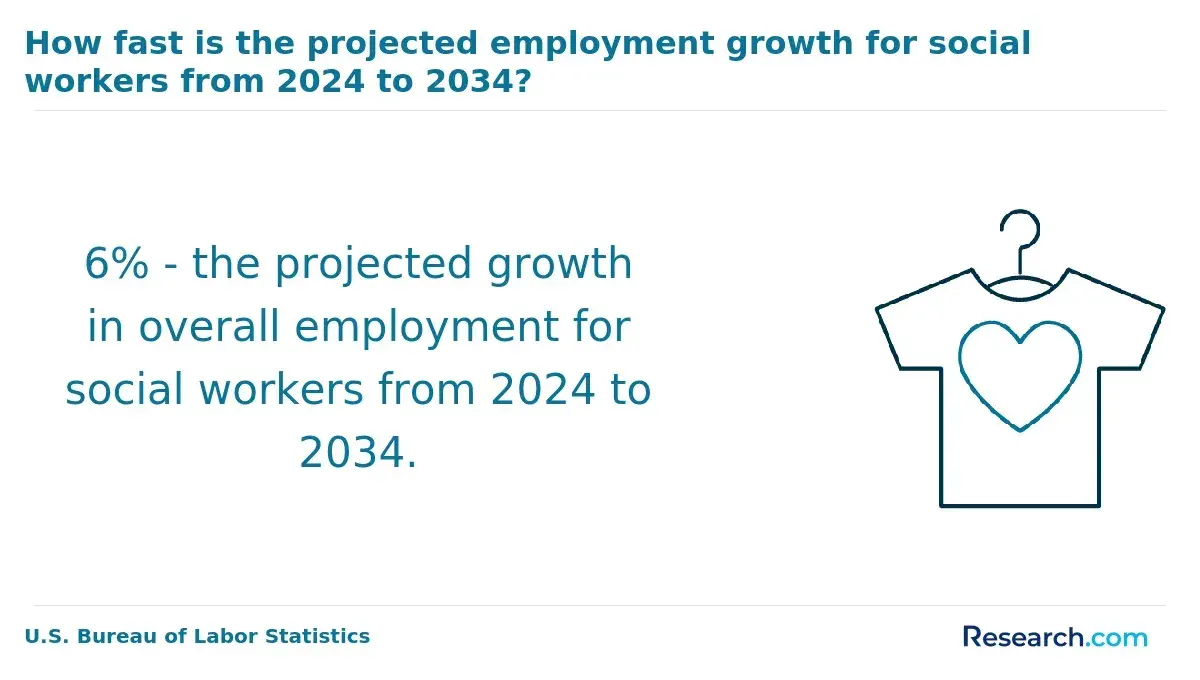
The job outlook for MSW graduates is strong, especially for those prepared for healthcare, mental health, substance abuse, child welfare, and aging-related services. The U.S. Bureau of Labor Statistics projects 13% employment growth for social workers through 2034, which is faster than many other fields. Demand is shaped by community need, public funding, healthcare access, behavioral health shortages, and state licensure rules.
Opportunities vary widely by specialization and location. Clinical social workers with LCSW credentials often have stronger demand in therapy, behavioral health, integrated healthcare, and private practice settings. Graduates focused on macro practice may find opportunities in government agencies, nonprofits, advocacy organizations, public health programs, and policy research. Rural and underserved areas may have different hiring needs than large metropolitan markets.
Online MSW programs can expand access to the profession for students who cannot relocate or attend campus full time. The CSWE Online vs. In-Person Workforce Data Brief 2018 highlights that online students are more likely to be African-American (28% vs. 23%) and less likely to be male (5% vs. 10%), enriching professional networks and cultural competence, qualities highly valued by employers.
Still, an MSW alone does not automatically produce the best job outcome. Employers may look for relevant field placement experience, licensure progress, crisis response skills, documentation ability, interdisciplinary teamwork, language skills, and familiarity with evidence-based interventions. Students should use the program strategically by selecting placements and electives that match their target job market.
How to improve employability during an online MSW
- Choose field placements connected to your intended specialization.
- Confirm the program provides licensure guidance for your state.
- Ask about career services, employer partnerships, and alumni networks.
- Build experience with documentation, assessment, case management, and interdisciplinary collaboration.
- Track post-graduate supervision requirements early if you plan to pursue clinical licensure.
- Review local job postings before choosing electives or a concentration.
Prospective students should evaluate programs through both an academic and labor-market lens. The strongest online MSW choice is one that meets accreditation standards, supports field education, prepares students for licensure where needed, and connects clearly to real hiring demand in the student’s chosen area of practice.
Other Things You Should Know About Social Work
Ensuring that an online MSW program's curriculum is updated for 2027 is crucial. Check that the coursework covers emerging social issues, integrates technology in practice, and stays aligned with new research and policies. Up-to-date programs enhance student preparedness for contemporary social work challenges.
An online MSW program should be accredited by the Council on Social Work Education (CSWE) for graduates to meet licensure education requirements in most states. CSWE accreditation also supports eligibility for supervised practice and the ASWB exam, which many state boards require before issuing an LCSW license.
Field placements in MSW programs usually involve supervised, hands-on experience in agencies such as hospitals, schools, mental health clinics, or community organizations. These placements provide practical learning opportunities essential for developing clinical and professional skills. The duration and setting vary depending on the program's focus and requirements.
Online MSW programs typically partner with local agencies to arrange field placements near a student's location. Students receive guidance from faculty advisors and on-site supervisors to ensure compliance with program standards. Many programs use virtual meetings and online platforms for regular check-ins and support throughout the field experience.
- Social Work Salaries https://www.socialworkers.org/careers/career-center/kickstart-your-job-hunt/social-work-salaries
- 8 Career Paths You Can Pursue with a Social Work Degree https://www.sacredheart.edu/news-room/news-listing/8-career-paths-you-can-pursue-with-a-social-work-degree/
- WHAT - Translation in Polish - bab.la https://en.bab.la/dictionary/english-polish/what
- All CSWE Accredited Online MSW Programs (2025 Update) https://www.masterofsocialwork.com/online-msw-programs
- How Long Does it Take to Complete an MSW Program? Online or Campus https://www.onlineeducation.com/social-work/faqs/how-long-is-an-msw-program
- Your Guide to Choosing an Online Master of Social Work Program https://onlinedegrees.keuka.edu/blog/online-msw-worth-it
- Full-time online MSW programs https://www.onlinemswprograms.com/online-social-work-degrees/full-time-online-msw-programs/
- Most Affordable Online MSW Programs: Review Low-Cost Options https://www.degreesforgood.org/online-degrees/social-work-programs/masters-msw/most-affordable/
- Accreditation | CASWE-ACFTS https://caswe-acfts.ca/our-activities/accreditation/
- CSWE Accreditation Requirements and Standards https://lumivero.com/resources/blog/cswe-accreditation/