2027 Career Paths for MSW Graduates in Child Welfare and Family Services

Co-Founder and Chief Data Scientist
Changing into child welfare or family services with an MSW is a serious career decision, especially if your undergraduate background or current job is outside social work. The field offers direct practice, clinical, supervisory, advocacy, and policy roles, but it also comes with high caseloads, legal responsibility, emotional stress, and state-specific licensing rules.
This guide explains what MSW graduates can do in child welfare and family services, what employers typically look for, how salaries and job outlook vary, and how to choose a program that supports licensure, field placement, and long-term career mobility. It is designed for prospective MSW students, current social work students, and career changers comparing education pathways into child protection, foster care, adoption, family preservation, and related services.
Key Things You Should Know
- MSW graduates in child welfare and family services in 2026 find expanding roles due to a 12% projected job growth, driven by increasing demand for child protection and family support services.
- Specialization in trauma-informed care and family advocacy enhances employment prospects, with 65% of employers prioritizing candidates skilled in evidence-based intervention methods.
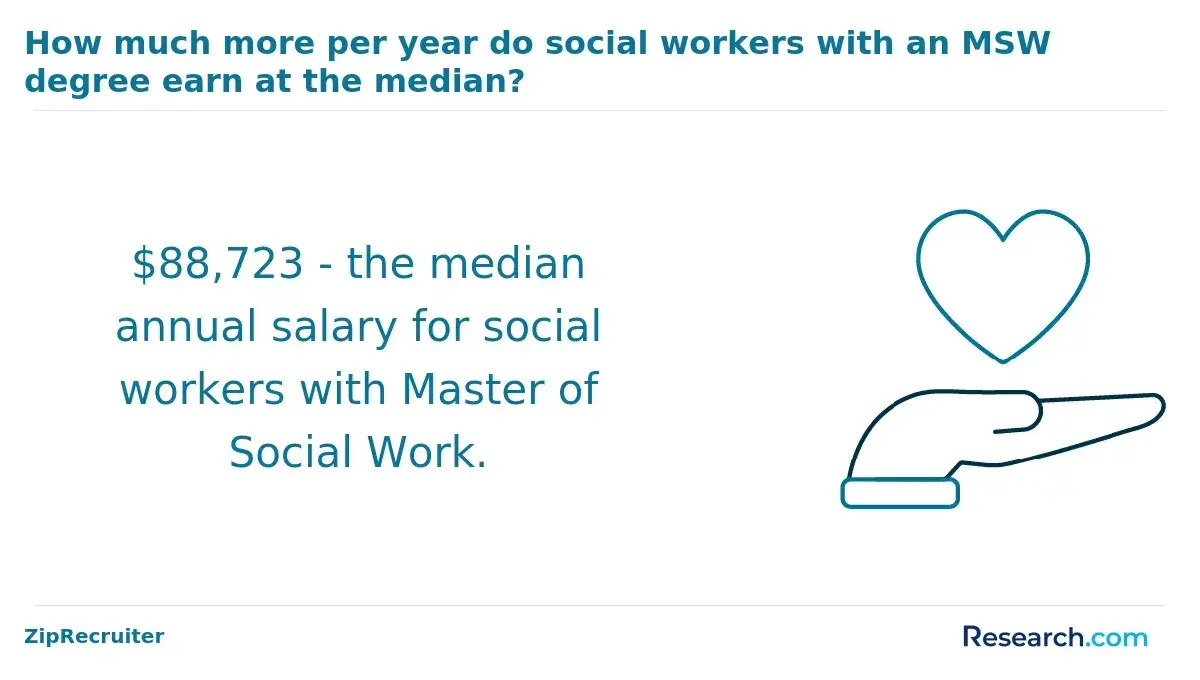
- Advanced licensure, such as LCSW, significantly boosts salary potential, with median annual wages reaching approximately $58,000 for child welfare professionals nationwide.
What are common career paths for MSW graduates in child welfare?
MSW graduates in child welfare usually work where child safety, family stability, and court-involved services intersect. Common employers include public child protective services agencies, foster care and adoption organizations, family preservation programs, community nonprofits, juvenile justice programs, hospitals, schools, and behavioral health providers that serve children and caregivers.
The most common entry and mid-level paths include casework, permanency planning, foster care services, adoption services, family reunification, and child protection. These roles require more than compassion. They require risk assessment, legal documentation, crisis response, service coordination, and the ability to work with families under stress and sometimes under court order.
Common child welfare roles for MSW graduates
- Child welfare case manager: Coordinates services for children and families, monitors safety plans, documents progress, and works with courts, schools, therapists, and caregivers.
- Child protection specialist: Assesses allegations of abuse or neglect, evaluates immediate risk, and recommends safety interventions.
- Foster care social worker: Supports children in foster placements, works with foster parents, and helps maintain stability while permanency goals are pursued.
- Adoption and permanency specialist: Helps children move toward safe, legally permanent homes through reunification, guardianship, kinship care, or adoption when appropriate.
- Family preservation specialist: Provides intensive support intended to keep children safely at home when risks can be reduced without removal.
- Juvenile justice social worker: Connects youth involved in the justice system with counseling, rehabilitation, education, and family support services.
- Clinical social worker: Provides therapy to children, parents, and families affected by trauma, neglect, family conflict, substance use, or domestic violence, subject to state licensure rules.
- Program supervisor or policy advocate: Oversees teams, improves service delivery, trains staff, evaluates programs, or works on child welfare reform.
Career fit depends heavily on setting. Public child welfare agencies often provide broad experience and structured training, but they may involve high caseloads and crisis-driven work. Nonprofit and private agencies may offer narrower service models, such as foster care licensing, adoption, or family therapy. Clinical roles may provide deeper therapeutic work but generally require post-MSW supervised hours and clinical licensure.
Graduates should also enter the field with realistic expectations. A recent study highlights that more than 90% of graduates perceive the public child welfare system as broken and crisis-prone. That does not mean the work lacks value; it means resilience, supervision, ethical judgment, and advocacy skills are essential for staying effective and avoiding burnout.
When comparing opportunities, evaluate the quality of supervision, caseload expectations, safety protocols, training in trauma-informed care, support for licensure, and whether the agency has a clear approach to family engagement and permanency planning. For professionals interested in advanced research, teaching, or leadership roles later, exploring online social work doctoral options may be a useful next step.
What jobs can MSW holders pursue in family services?
MSW holders can pursue family services jobs that focus on preventing harm, stabilizing households, strengthening parenting capacity, and connecting families with practical and clinical support. These roles may or may not involve formal child protective services cases. Some positions are preventive and community-based, while others are tied to court orders, foster care, reunification, or adoption.
Family services jobs commonly open to MSW graduates
- Family service coordinator: Helps families access mental health care, housing support, food assistance, school services, disability services, financial resources, and parenting programs.
- Family preservation worker: Provides short-term, intensive support to reduce safety risks and avoid child removal when safe to do so.
- Reunification specialist: Works with parents, children, courts, and agencies to support safe return home after foster care placement.
- Foster care supervisor: Oversees foster care casework, supports staff, reviews safety and permanency planning, and helps ensure compliance with agency and state requirements.
- Adoption specialist: Prepares families and children for adoption, coordinates documentation, and supports post-adoption adjustment.
- Family therapist: Provides counseling for family conflict, trauma, grief, behavioral concerns, and attachment-related challenges, depending on licensure.
- Parent educator: Teaches parenting strategies, child development, safety planning, and family communication skills.
- Domestic violence or substance use family services social worker: Supports families where safety concerns intersect with addiction, coercive control, trauma, or legal involvement.
The distinction between child welfare and family services matters when choosing jobs. Child welfare roles are often more investigative, regulatory, and court-connected. Family services roles may focus more on prevention, resource navigation, counseling, education, and voluntary family support. Many careers blend both.
Workforce demand remains significant. Maryland's local departments employed 50 Title IV-E MSW holders in 2023, while the total need topped 1,144 child welfare workers and supervisors according to JCR - Child Welfare Caseload Data 2023. This gap illustrates why MSW graduates with relevant field experience, licensure preparation, and child welfare training can be competitive candidates in both government and nonprofit settings.
To improve employability, candidates should build skill in trauma-informed care, safety planning, mandated reporting, documentation, case management software, multidisciplinary teamwork, cultural humility, and family-centered practice. Clinical roles often require an LCSW or a comparable state credential, while case management and program roles may allow MSW graduates to work under supervision while pursuing licensure.
Applicants comparing schools for this path can review affordable MSW programs and look closely at field placement options, not tuition alone.
What is the job outlook for MSW graduates in child welfare?
The job outlook for MSW graduates in child welfare remains strong through 2026 because public agencies, nonprofits, and community programs continue to need workers who can assess safety, support families, coordinate services, and help children reach permanency. Demand is shaped by caseloads, turnover, funding, state policy, and the ongoing need for child protection and family support.
An MSW can provide an advantage over a bachelor’s degree for specialized, supervisory, clinical, policy, and program leadership roles. Career opportunities for MSW graduates in family services are also supported by workforce demographics: the field is predominantly female (83%) and mostly aged 40 or younger (62.3%). Although many caseworkers hold a bachelor's degree, MSW graduates may be better positioned for roles requiring advanced assessment, clinical knowledge, supervision, or program coordination.
Factors that improve job prospects
- Relevant field placement: Internships in child protective services, foster care, adoption, schools, juvenile justice, or family preservation give employers evidence of readiness.
- Licensure progress: Graduates who understand LMSW, LCSW, or equivalent state requirements can move more quickly into eligible roles.
- Specialized training: Certificates or coursework in trauma care, substance abuse counseling, family therapy, domestic violence, or child welfare policy can strengthen applications.
- Documentation and legal readiness: Child welfare agencies value candidates who can write clear case notes, prepare court documentation, and communicate professionally with attorneys, judges, and multidisciplinary teams.
- Emotional resilience: Retention depends on supervision, boundaries, workload management, and the ability to work ethically in high-pressure situations.
Job availability can fluctuate with government budgets and policy reforms, but the underlying need for child safety, family stabilization, and permanency services keeps the field relevant. Students who want a faster route into or through graduate study may compare accelerated online MSW programs, while confirming that the program still provides adequate field education and licensure preparation.
MSW child welfare and family services professionals typically earn between $45,000 and $70,000 annually, with pay varying by location, employer type, role, licensure, and experience. Entry-level positions in public agencies or nonprofit organizations often start around $45,000 to $50,000, while experienced social workers, licensed clinicians, and supervisors can earn upwards of $65,000 to $70,000.
Salary expectations should be tied to the actual job description. A frontline case manager, a foster care supervisor, and an independently licensed clinical social worker may all work with children and families, but their pay structures, legal responsibilities, and credential requirements can differ substantially.
What affects pay in child welfare social work?
- Geographic location: Urban centers and states with higher cost of living may offer salaries closer to the upper range, while rural areas may offer lower salaries but sometimes include benefits such as loan forgiveness programs.
- Employer type: Government agencies often use structured pay grades. Nonprofits and private agencies may vary more in salary but may offer flexible schedules, specialized training, or mission-specific experience.
- Licensure: Clinical credentials can increase access to therapy, assessment, supervisory, or leadership roles.
- Specialization: Experience in foster care case management, family reunification, adoption, child advocacy, or trauma-informed clinical care can support advancement.
- Supervisory responsibility: Roles that include staff oversight, compliance review, program management, or court coordination may pay more than entry-level casework.
The annual survey of social work programs reports that 19 MSW programs offer dedicated child welfare certificates with 426 students enrolled, reflecting continued interest in targeted preparation for this field. A certificate does not guarantee higher pay, but it may help candidates show specialized readiness for agencies that prioritize child welfare training.
Prospective students looking for a streamlined graduate pathway can compare online MSW options for applicants without a BSW. When estimating return on investment, include tuition, fees, unpaid or low-paid field placement hours, licensure exam costs, supervision requirements, and realistic local salary ranges.
When negotiating, emphasize concrete qualifications: child welfare field placement, Title IV-E experience if applicable, trauma-informed care training, court documentation experience, crisis response skills, relevant certificates, bilingual ability, and progress toward licensure.
For most social work careers, including child welfare and family services, the key program-level accreditation is from the Council on Social Work Education (CSWE). CSWE accreditation indicates that an MSW program meets professional education standards for social work practice, including ethics, assessment, intervention, policy, research, diversity, and field education.
Accreditation is not a formality. Many states require graduation from a CSWE-accredited program for social work licensure, and many public child welfare employers prefer or require degrees from accredited programs. Attending an unaccredited program can create serious barriers to licensure, public agency employment, clinical practice, and long-term mobility across states.
What to verify before enrolling
- Current CSWE accreditation status: Confirm the program’s status directly, especially for newer, online, or branch-campus programs.
- Accreditation applies to your format: Traditional, advanced standing, part-time, and online tracks should all fall under the institution’s approved MSW structure.
- Licensure alignment: Check whether the curriculum meets the educational requirements for LMSW, LCSW, or equivalent credentials in the state where you plan to practice.
- Field education quality: For child welfare careers, field placements should include relevant agencies such as child protective services, foster care, adoption, family preservation, schools, behavioral health, or juvenile justice.
- Child welfare preparation: Look for coursework or certificates in trauma-informed care, family systems, child welfare policy, mandated reporting, permanency planning, and culturally responsive practice.
Licensure is separate from accreditation. A CSWE-accredited MSW may satisfy the educational requirement, but graduates still usually need to pass a licensing exam, complete supervised experience for clinical practice, and meet state-specific requirements.
Program quality also matters for retention. According to the study Perceptions and Considerations of Master's Level Social Work Graduates with a Child Welfare Specialization, around 70% of MSW graduates felt that negative impressions of public child welfare influenced their career choices and retention. Strong programs should prepare students not only for technical competence, but also for the realities of agency practice, secondary trauma, ethical conflict, and policy constraints.
MSW admission requirements vary by school, but most programs require a bachelor’s degree from an accredited institution, transcripts, a personal statement, letters of recommendation, and evidence that the applicant is prepared for graduate-level social work study. Applicants do not always need a bachelor’s degree in social work, but those with a BSW from an accredited program may qualify for advanced standing tracks at some schools.
Many programs expect a minimum 3.0 GPA on a 4.0 scale, though some may review applicants with lower grades if they show strong professional experience, academic improvement, compelling recommendations, or readiness for graduate work. Applicants without a social work background may need prerequisite coursework in areas such as human behavior, social science, statistics, or social welfare policy, depending on the program.
Common MSW application components
- Bachelor’s degree: Usually required from an accredited college or university.
- Official transcripts: Used to verify degree completion, GPA, and prerequisite preparation.
- Personal statement: Should explain why social work, why the program, and how the applicant understands ethical practice, service, diversity, and professional responsibility.
- Letters of recommendation: Usually two or three, preferably from academic, professional, or service supervisors who can evaluate readiness for graduate social work education.
- Resume or CV: Highlights paid work, volunteer experience, internships, leadership, advocacy, and human services exposure.
- Relevant experience: Many schools value service or work experience in social service settings, typically between 100 and 300 hours when documented experience is requested.
- Interview: Some programs use interviews to assess communication skills, maturity, motivation, and fit for professional social work training.
- GRE scores: Some programs require them, but many now waive them based on academic history or relevant experience.
For applicants interested in child welfare, the personal statement should be specific without sounding unrealistic. Strong applications show awareness of mandated reporting, trauma, poverty, racism, family separation, court involvement, and the ethical tension between child safety and family preservation. Admissions committees generally look for maturity, not savior language.
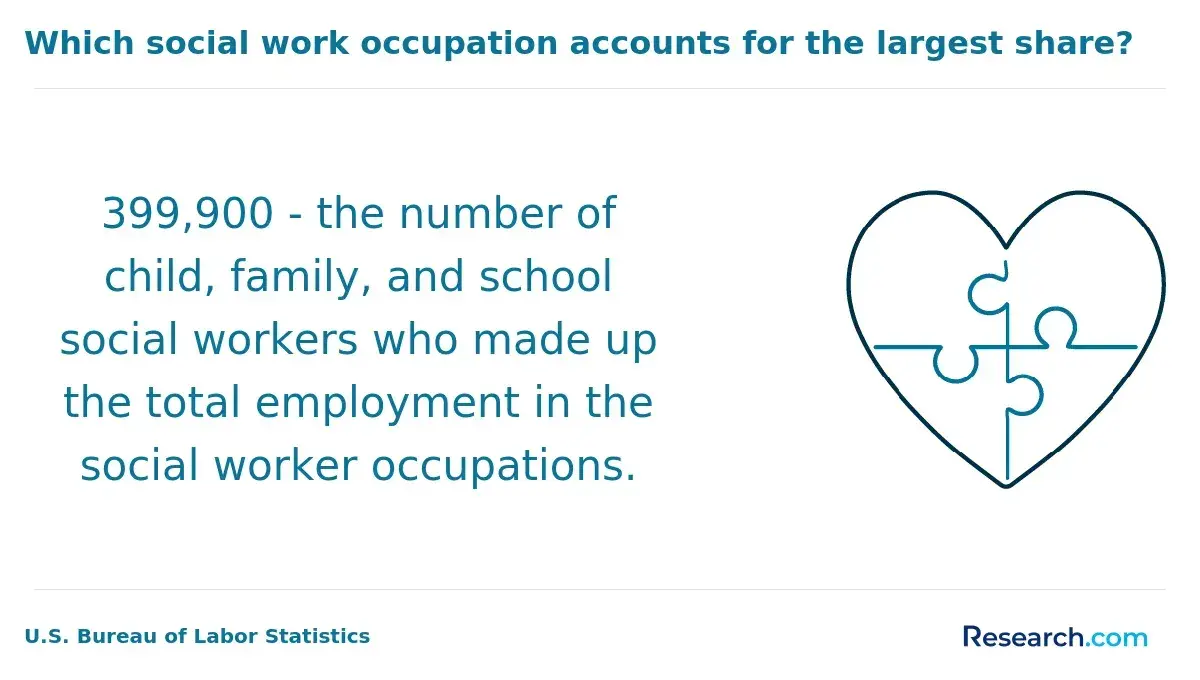
The Bureau of Labor Statistics reports a mean annual wage of $57,950 for child, family, and school social workers. Because compensation can be modest compared with graduate education costs, applicants should prioritize programs with strong field education, licensure guidance, child welfare partnerships, and career services that improve employment options after graduation.
MSW programs usually take two years for full-time students. Part-time options may take three or more years, while accelerated tracks may take 12 to 18 months. Program length depends on enrollment status, whether the student qualifies for advanced standing, field placement requirements, specialization choices, and the school’s academic calendar.
Cost varies widely. Public universities typically charge between $15,000 and $30,000 annually for in-state students, while private schools can range from $30,000 up to $60,000 per year. Total expenses often range from $30,000 to over $120,000, not including additional costs such as books, fees, commuting, technology, fieldwork-related expenses, licensure preparation, and licensing exams.
Typical MSW timelines
| MSW format | Typical time to complete | Best fit |
| Full-time traditional MSW | Two years | Students who can manage intensive coursework and field placement on a standard timeline. |
| Part-time MSW | Three or more years | Working adults, caregivers, and students who need a slower pace. |
| Accelerated MSW | 12 to 18 months | Students prepared for a demanding schedule, often with prior social work preparation or closely related experience. |
Ways students commonly manage cost
- Federal loans, grants, and scholarships provide financial aid options.
- Employer tuition assistance programs can reduce costs.
- Public university tuition may be lower for in-state students.
- Part-time study may allow students to keep working, though it can extend the time before full MSW-level employment.
- Child welfare-focused funding or workforce partnerships may be available at some schools, but students should review service commitments carefully.
Popular specializations include child welfare, aging/gerontology, and addictions. These areas rank high for career advancement, as highlighted in The State of Social Work Education 2022-2023. A child welfare specialization can be valuable, but students should ask whether it adds required courses, special field placements, certificate fees, or scheduling constraints.
The best financial decision is not always the cheapest program. Compare total cost, accreditation, field placement quality, licensure support, local employer reputation, graduation requirements, and whether the program structure allows you to complete required field hours without leaving paid work prematurely.
An MSW curriculum with a child welfare focus prepares students to assess child safety, support families, navigate legal systems, and coordinate services across agencies. The coursework usually combines generalist social work foundations with specialized training in child development, family systems, trauma, child protection law, foster care, adoption, permanency planning, and ethical decision-making.
Core areas in a child welfare-focused MSW curriculum
- Child development and family dynamics: How children develop in family, school, community, and cultural contexts.
- Trauma-informed care: How abuse, neglect, removal, domestic violence, grief, and instability affect children and caregivers.
- Risk and safety assessment: How to evaluate immediate danger, protective factors, caregiver capacity, and child well-being.
- Safety planning and case planning: How to build practical plans that address risk while supporting family strengths.
- Permanency planning: How agencies work toward reunification, guardianship, kinship care, adoption, or other permanent arrangements.
- Child welfare law and policy: How courts, statutes, agency rules, and federal or state policies guide practice.
- Case management and service coordination: How to connect families with mental health care, substance use treatment, housing, education, benefits, and parenting support.
- Cultural competence and ethics: How to practice responsibly with diverse families while managing power, bias, confidentiality, and mandated reporting duties.
- Interdisciplinary collaboration: How to work with schools, courts, healthcare providers, therapists, law enforcement, foster parents, and community agencies.
Field education is central. Supervised placements allow students to practice interviewing, documentation, crisis intervention, court preparation, team meetings, and service planning under professional guidance. For child welfare students, the field placement may be the most important part of the program because it shows whether the student can apply classroom learning in complex, emotionally charged situations.
Specialized coursework may also cover adoption, foster care policy, kinship care, domestic violence, parental substance use, child and adolescent mental health, juvenile justice, and program leadership. Students preparing for supervisory or policy roles should look for classes in administration, evaluation, budgeting, workforce development, and advocacy.
By 2023, data showed children reunified from foster care usually achieved permanency within 12 months. That underscores why MSW-trained professionals need strong assessment, timely documentation, family engagement, and court communication skills. Delays in decision-making can affect children’s stability, family relationships, and permanency outcomes.
Graduates should leave a strong child welfare curriculum able to prepare legal documentation, present case information clearly, participate in multidisciplinary team meetings, communicate with families respectfully, and make recommendations that balance safety, permanency, and well-being.
Licensing requirements for MSW child welfare practice depend on the state, the employer, and whether the role is clinical, case management, supervisory, or administrative. In many states, the first post-MSW credential is a Licensed Master Social Worker (LMSW) or equivalent license. This credential often allows supervised social work practice, including child welfare case management and some non-independent clinical functions.
To provide independent clinical services, most states require a Licensed Clinical Social Worker (LCSW) or equivalent credential. That path usually involves completing 2,000 to 4,000 additional supervised hours beyond the MSW, passing the required Association of Social Work Boards (ASWB) exam, and meeting state-specific supervision and continuing education rules.
Licensing and credential steps to plan for
- Graduate from a qualifying MSW program: In most cases, this means a CSWE-accredited program.
- Apply for the appropriate state license: Requirements vary, so students should check the state social work board where they plan to practice.
- Pass the relevant ASWB exam: The exam level depends on the license being pursued.
- Work under supervision if required: Clinical licensure generally requires supervised post-MSW practice hours.
- Complete child welfare or agency-specific training: Public agencies may require additional onboarding, safety, legal, documentation, and family-centered practice training.
- Maintain the license: Continuing education often includes ethics, trauma-informed care, cultural competence, mandated reporting, and clinical practice topics.
Some states offer specialized child welfare credentials or require additional coursework in family-centered practice. These requirements respond to the complexity of the field, including concerns such as the high number of children under 12 entering foster care being placed in institutions rather than family settings.
Public child welfare agencies may hire MSW graduates into specific roles while they pursue licensure, but clinical authority is usually limited until the required credential is earned. Nonprofit agencies may also employ non-licensed MSWs under supervision, depending on state law and job duties. A license generally improves access to clinical assessments, supervision, leadership, and policy roles.
Because rules differ by jurisdiction, prospective social workers should review their state social work licensing board before choosing a program or accepting a role. Planning for the ASWB exam within the first year following graduation can help graduates stay competitive and avoid delays in employment or advancement.
How to choose the best MSW program for child welfare careers?
The best MSW program for child welfare careers is one that is accredited, affordable enough for your realistic salary outlook, aligned with licensure in your target state, and connected to strong child welfare field placements. A program’s reputation matters, but the practical details matter more: where you will intern, who will supervise you, what child welfare coursework is available, and whether graduates move into the roles you want.
Prioritize programs with specialized courses in child welfare, family services, trauma-informed care, family preservation, child protection law, foster care, adoption, substance use, domestic violence, and culturally responsive practice. Also look for schools partnered with agencies involved in preventive child welfare, particularly those responding to policy shifts like Maryland's family-centered policy and Alternative Response implementation.
These initiatives reshape service delivery by consolidating in-home caseloads and increasing demand for graduates skilled in prevention (JCR - Child Welfare Caseload Data 2023).
What to compare before choosing a program
- CSWE accreditation: Confirm that the program meets the educational standard commonly required for licensure and professional social work employment.
- Child welfare curriculum: Look for depth, not just one elective. The program should cover policy, assessment, safety planning, permanency, trauma, and family systems.
- Field placements: Ask whether placements are available in child protective services, foster care, adoption, family preservation, kinship care, schools, juvenile justice, or Alternative Response systems.
- Licensure support: Strong programs explain LMSW, LCSW, supervision, ASWB exams, and state-specific rules before graduation.
- Faculty expertise: Faculty with current child welfare practice, research, policy, or agency leadership experience can provide better mentorship.
- Schedule format: Online, hybrid, evening, part-time, and accelerated formats can help working students, but field placement hours may still require daytime availability.
- Cost and funding: Compare total tuition, fees, travel, unpaid field placement demands, and any service obligations tied to scholarships or child welfare stipends.
- Graduate outcomes: Ask where recent graduates work and whether the school has relationships with public agencies and family services organizations.
Key questions for prospective students include:
- Does the curriculum cover in-depth child welfare policy and intervention training?
- Are field placements aligned with state or local reforms?
- How successful is the program in placing graduates in preventive or Alternative Response roles?
- Does the program offer licensure and career guidance matching child welfare employment demands?
As Maryland's preventive child welfare services expand, choosing an MSW program closely connected to modern service models can improve employability and professional impact. The strongest choice is the program that prepares you for both the mission and the realities of the work: legal accountability, family engagement, trauma exposure, ethical judgment, and sustained advocacy for children and families.
Other Things You Should Know About Social Work
MSW graduates in child welfare and family services need strong communication, empathy, and critical thinking skills. They must be able to assess family dynamics, make informed decisions under pressure, and work collaboratively with other professionals. Cultural competence and ethical judgment are also crucial to effectively support diverse populations.
In 2027, MSW graduates in child welfare and family services can explore roles like child welfare specialist, family case manager, or family service coordinator. They may work within government agencies or non-profits, focusing on support services, advocacy, and ensuring the welfare of children and families.
Yes, MSW graduates can advance by gaining experience, obtaining specialized certifications, or pursuing leadership roles such as supervisors or program managers. Many agencies encourage continuing education and provide pathways to policy, research, or administrative positions. Advancement often requires strong case management skills and proven outcomes.
Many public child welfare agencies require or prefer a state social work license, and supervisory roles often call for the Licensed Master Social Worker or Licensed Clinical Social Worker credential. In 2027, candidates should check state board rules, supervised practice hours, and any required jurisprudence exam before applying.
- Accredited Master of Social Work (MSW) Programs (2026 Update) - MasterofSocialWork.com https://www.masterofsocialwork.com/
- how https://sjp.pl/how
- How to Become a Child Welfare Social Worker https://socialwork.tulane.edu/blog/child-welfare-social-worker/
- Explore Social Work https://www.socialworkers.org/Careers/NASW-Career-Center/Explore-Social-Work
- Child Welfare Social Worker Salary (May 2026) | NASW https://joblink.socialworkers.org/salary/child-welfare-social-worker
- Examining the Significant Role of a Child Welfare Social Worker | UMass Global https://www.umassglobal.edu/blog-news/child-welfare-social-worker
- Social Work Masters Prerequisites: Discover 7 Critical Pieces - Prereqcourses https://www.prereqcourses.com/social-work-masters-prerequisites/
- Child Welfare Social Work Programs: MSW Guide & Careers https://www.socialworkdegrees.org/program/child-welfare
- Become a Child and Family Social Worker https://socialworklicensemap.com/social-work-careers/child-family-social-worker/