2027 MSW Careers in Immigration and Refugee Services

Co-Founder and Chief Data Scientist
Working in immigration and refugee services requires more than goodwill. Clients may be navigating asylum claims, family separation, trauma, language barriers, housing instability, employment needs, healthcare access, and public benefits systems at the same time. For career changers and students from related fields, the main question is whether an MSW provides the right preparation for this work and what roles it can realistically lead to.
A Master of Social Work can be a strong pathway into immigrant and refugee support because it combines direct practice, policy, advocacy, ethics, field education, and, when pursued through the right program, preparation for state social work licensure. This guide explains what MSW careers in immigration and refugee services involve, what education is typically required, how programs prepare students, what admissions committees look for, how online and campus formats compare, and what to expect in terms of jobs, salary, and demand.
Key Things You Should Know
- The 2026 demand for MSW professionals in immigration and refugee services is projected to grow by 12%, driven by increased federal funding and expanded community programs.
- Specialized skills in trauma-informed care, cultural competence, and legal advocacy are essential, reflecting diverse client needs and complex immigration policies.
- Median annual salaries range from $55,000 to $70,000, with higher wages in metropolitan areas and non-profit organizations focused on immigration and resettlement services.
What are MSW careers in immigration and refugee services?
MSW careers in immigration and refugee services focus on helping immigrants, refugees, asylum seekers, undocumented individuals, and mixed-status families stabilize their lives while navigating complex legal, social, and mental health challenges. These roles sit at the intersection of case management, trauma-informed care, systems advocacy, and community-based support.
MSW-trained professionals do not replace immigration attorneys. Instead, they help clients understand available resources, coordinate services, prepare for appointments, manage crises, address trauma, and connect with legal, healthcare, housing, education, and employment support. In many settings, they work closely with lawyers, interpreters, medical providers, school personnel, and resettlement agencies.
Common responsibilities in this field
- Assessing client needs related to safety, housing, food access, healthcare, employment, education, and family stability.
- Providing culturally responsive counseling or referrals for trauma, grief, depression, anxiety, and adjustment stress.
- Coordinating services for newly arrived refugees, asylum seekers, and immigrant families.
- Helping clients access public benefits, community programs, school services, and medical care when eligible.
- Advocating with agencies, schools, hospitals, and community organizations to reduce barriers to care.
- Documenting client needs and outcomes for nonprofit, government, healthcare, or grant-funded programs.
Where MSW immigration and refugee specialists work
- Refugee resettlement agencies and immigrant-serving nonprofits.
- Legal aid organizations and immigration advocacy groups.
- Hospitals, community health centers, and mental health clinics.
- Schools, family service agencies, and child welfare organizations.
- Government and public service agencies that serve immigrant communities.
- International relief, human rights, and community development organizations.
Field experience matters heavily in this career path. Internships or field placements in immigrant services, refugee resettlement, legal aid, community health, or trauma-focused programs can make a graduate far more competitive than coursework alone. Multilingual ability, cultural humility, strong documentation skills, and self-care practices are also important because the work can involve high caseloads and exposure to traumatic client histories.
The 2025 ASWB Social Work Workforce Study reports over 463,000 licensed social workers in the U.S., with more than 93% holding master's degrees. That figure shows how central graduate-level preparation has become in professional social work, especially in specialized areas such as immigration and refugee services.
Students who later want to move into advanced practice, teaching, executive leadership, or systems-level roles may also compare doctoral pathways such as a DSW social work online degree after gaining MSW-level experience.
What degree and education is required for these roles?
The most common educational requirement for advanced immigration and refugee social work roles is a Master of Social Work from a program accredited by the Council on Social Work Education (CSWE). CSWE accreditation is important because it is widely tied to social work licensure eligibility and employer recognition. A non-accredited program can create serious barriers for graduates who want licensed clinical or professional social work roles.
Some entry-level refugee resettlement or community service jobs may accept a bachelor's degree, including a BSW, psychology, sociology, criminal justice, public health, or related background. However, an MSW is usually the stronger credential for clinical work, supervision, program leadership, policy roles, and jobs that require independent assessment, treatment planning, or licensure.
Typical education path
- Bachelor's degree: A BSW can qualify students for advanced standing MSW tracks at some schools. Other undergraduate majors may still qualify for regular MSW admission.
- CSWE-accredited MSW: The core credential for many advanced social work roles in immigration and refugee services.
- Relevant field placement: Practicum experience with immigrant-serving agencies, legal aid, refugee resettlement, community health, or trauma programs is especially valuable.
- State licensure: Many clinical roles require licensure as a clinical social worker, commonly referred to as LCSW, although titles and requirements vary by state. This usually involves supervised clinical hours and passing a state exam.
- Continuing education: Training in trauma-informed care, immigration policy, ethics, public benefits, language access, and cross-cultural practice can strengthen long-term employability.
Coursework that is especially relevant includes human behavior, social policy, social welfare systems, clinical assessment, community practice, research methods, trauma-informed care, multicultural practice, and ethics. Some programs also offer certificates or concentrations connected to immigrant and refugee services, global social work, human rights, or trauma practice.
Bilingualism and cultural competence can be major advantages. Employers often value candidates who can communicate with clients in Spanish, Arabic, or other languages used by local immigrant communities. Language skill alone is not a substitute for professional social work training, but it can improve client trust, reduce service barriers, and expand job options.
Compensation varies by role, location, employer funding, and licensure. Refugee caseworker salaries vary widely due to regional and agency funding differences, with averages near $43,871 and ranges from $18,000 to $84,000 according to ZipRecruiter. This range is one reason students should compare program costs, licensure outcomes, and career goals before enrolling. Those seeking lower-cost pathways can start by reviewing the cheapest MSW online programs.
How do MSW programs prepare students for immigration work?
MSW programs prepare students for immigration and refugee work by combining social work theory, supervised field education, policy analysis, ethics, and direct practice skills. The strongest programs do not treat immigration as a narrow legal topic. They teach students to understand how migration, displacement, poverty, racism, trauma, language access, documentation status, family separation, and public policy shape client well-being.
Key forms of preparation
- Legal and policy literacy: Students may study the social impact of asylum processes, family reunification, detention, deportation risk, refugee resettlement, and eligibility for services. MSW graduates are not immigration lawyers, but they need enough policy knowledge to make appropriate referrals and avoid harmful advice.
- Trauma-informed practice: Programs teach students how persecution, violence, forced migration, detention, loss, and resettlement stress can affect mental health and family functioning.
- Cultural humility: Students learn to avoid assumptions, work through interpreters, respect different family systems, and adapt practice to each client's context.
- Case management: Training often includes assessment, service planning, documentation, crisis response, referral coordination, and outcome tracking.
- Advocacy and systems work: Students learn how to advocate for clients within schools, hospitals, agencies, courts, and community systems while staying within ethical and legal boundaries.
- Interdisciplinary collaboration: Immigration and refugee work often requires coordination with attorneys, healthcare providers, educators, interpreters, housing providers, and community leaders.
Field education is usually the most important part of preparation. A placement in a refugee resettlement agency, immigrant rights nonprofit, legal clinic, hospital, school, or community health program gives students supervised exposure to real client needs and organizational constraints. Students should ask prospective MSW programs how field placements are assigned, whether immigration-focused placements are available, and whether online students can complete practicum hours near where they live.
Some MSW programs offer certificates or specializations related to immigrant and refugee services, global social work, public policy, or trauma. These can help students build a clearer professional identity, but the practical value depends on the quality of coursework, field placement options, faculty expertise, and local employer connections.
Data from the Wurzweiler School of Social Work indicates that 71% of recent MSW graduates received pay raises shortly after completing programs with this focus. Students comparing career outcomes should also consider regional salary variation; reviewing the highest paying state for social workers can help clarify how location affects earning potential.
MSW curricula for immigration and refugee services usually combine generalist social work foundations with specialized training in trauma, policy, cultural responsiveness, advocacy, and field practice. The goal is to prepare graduates to serve clients ethically and effectively without oversimplifying immigration-related needs into either legal issues or mental health issues alone.
Common curriculum areas
- Immigration law and policy context: Students may examine asylum, refugee resettlement, family reunification, detention, deportation risk, and the policy systems that shape client access to services.
- Refugee resettlement practice: Coursework may address arrival support, housing, employment, school enrollment, healthcare access, benefits navigation, and community integration.
- Cultural competence and cultural humility: Students learn to work across language, religion, race, ethnicity, nationality, gender, family structure, and migration experience.
- Trauma-informed care: Courses often cover the psychological effects of persecution, war, forced migration, detention, violence, family separation, and prolonged uncertainty.
- Clinical assessment and intervention: Students develop skills for screening, treatment planning, crisis intervention, and referrals while considering cultural and linguistic context.
- Community organizing and advocacy: These courses prepare students to work with nonprofits, coalitions, legal teams, schools, and health systems to improve access and reduce barriers.
- Ethics and confidentiality: Students study informed consent, documentation risks, mandated reporting, interpreter use, client autonomy, and the limits of social work practice in legal matters.
- Public benefits and service eligibility: Training may cover how clients access housing, food, healthcare, employment, and family services when eligible under program rules.
- Research and program evaluation: Students learn to assess whether programs are effective, culturally appropriate, and responsive to community needs.
Field internships connect these topics to practice. Placements in legal aid offices, resettlement agencies, community clinics, schools, or immigrant-serving nonprofits allow students to learn documentation standards, referral systems, client engagement, and interdisciplinary teamwork under supervision.
Ethics deserves special attention in this field. Social workers must avoid giving legal advice beyond their competence, protect sensitive client information, use qualified interpretation when needed, and understand how records may affect clients. They also need to balance urgent practical needs with respect for client self-determination.
Graduates with specialized training may qualify for roles with stronger responsibility and compensation. Immigration caseworkers averaged $47,881 annually, with top earners reaching $103,500 according to ZipRecruiter 2023 data. Students asking whether is social work a hard major should understand that immigration-focused MSW study can be demanding because it requires policy knowledge, emotional resilience, field hours, and strong ethical judgment.
Admission requirements for MSW programs with immigration and refugee service options are similar to standard MSW admissions, with added value placed on cross-cultural experience, service work, language skills, and a clear commitment to vulnerable populations. Requirements vary by school, so applicants should verify each program's current criteria before applying.
Common admission requirements
- Bachelor's degree: Applicants generally need a completed bachelor's degree from an accredited institution. A BSW is helpful but not always required.
- Relevant academic background: Degrees in social work, psychology, sociology, criminal justice, public health, political science, international studies, or related fields may be useful.
- Minimum GPA: Many programs expect a minimum undergraduate GPA of 3.0, though some accept GPAs as low as 2.7 when applicants show strong professional experience or other evidence of readiness.
- Recommendation letters: Applicants typically submit two to three recommendation letters from professors, supervisors, or professionals who can speak to academic ability, ethics, communication, and service orientation.
- Personal statement: Most programs require an essay explaining motivation for social work, relevant experience, interest in immigrant and refugee communities, and career goals.
- Resume or CV: Schools often ask for work, volunteer, internship, research, and community service experience.
- GRE: Standardized tests like the GRE are becoming less common but may still be requested by some programs.
- Background checks and health records: Background checks and immunization records may be required before enrollment or field placement.
Experience can make a major difference. Volunteering or working with refugee resettlement agencies, immigrant rights organizations, shelters, community health clinics, schools, crisis lines, legal services, or public benefits programs helps applicants show that they understand the demands of the field. Admissions committees tend to look for maturity, ethical awareness, cultural humility, and realistic expectations, not just passion.
Language proficiency in Spanish, Arabic, or other languages spoken by immigrant communities can strengthen an application, especially when paired with relevant service experience. Applicants should describe language ability honestly and distinguish between conversational fluency, professional proficiency, and interpreter-level skill.
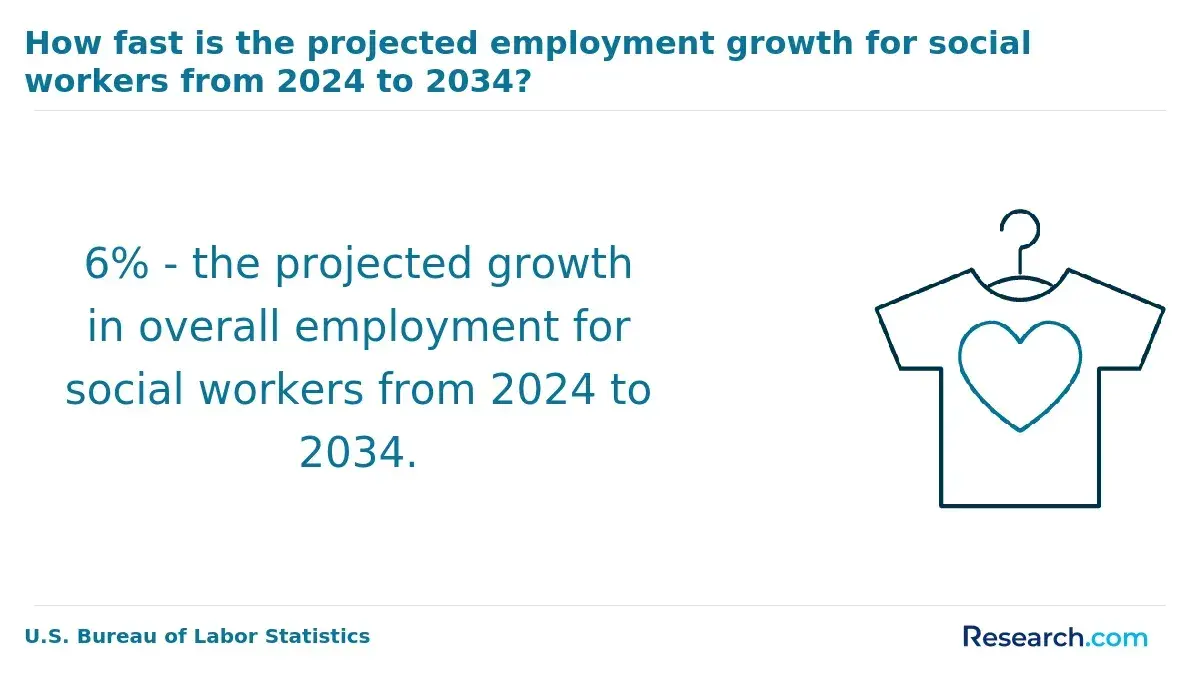
The Bureau of Labor Statistics projects a 10% job growth for social workers from 2021 to 2031, faster than the average for all occupations. For students targeting immigrant and refugee services, meeting admissions requirements is only the first step; choosing a program with strong field placement support is equally important.
MSW programs related to immigration and refugee services are available in online, campus-based, and hybrid formats. The best choice depends on where you live, whether you need to keep working, how much structure you prefer, and whether the program can place you in a relevant field setting.
Online MSW programs
Online MSW programs can be a practical option for working adults, parents, military-connected students, and people who do not live near a university with a strong social work program. Courses may be asynchronous, live online, or a mix of both. Students may study immigration policy, trauma-informed care, cultural humility, social work ethics, research, and clinical or macro practice through virtual platforms.
The main advantage is flexibility. The main risk is field placement quality. Online students should confirm how the school helps secure practicum sites, whether immigration-focused placements are available in their area, and whether the program meets licensure requirements in the state where they plan to practice.
Campus-based MSW programs
Campus programs offer in-person instruction, easier access to faculty, peer networks, student services, and local agency partnerships. They can be especially useful in cities with large immigrant communities, legal aid organizations, hospitals, and refugee-serving nonprofits. Students who learn best through face-to-face discussion or want close campus connections may prefer this format.
Hybrid MSW programs
Hybrid programs combine online coursework with scheduled in-person classes, intensives, or field activities. This format can work well for students who need flexibility but still want direct engagement with faculty and classmates. It may also help students build professional networks while reducing commuting or relocation demands.
How to compare formats
- Accreditation: Confirm CSWE accreditation before comparing convenience or cost.
- Licensure fit: Make sure the curriculum and field hours align with your state's requirements if you plan to pursue licensure.
- Field placement support: Ask who finds placements, how competitive they are, and whether immigrant- or refugee-serving agencies are available.
- Schedule: Consider whether synchronous classes, evening courses, or weekend requirements fit your life.
- Local opportunity: A campus program may be stronger if it has established agency partnerships; an online program may be better if it lets you train in the community where you plan to work.
Given that 14% of the U.S. population are immigrants, with many public school children from immigrant families, social workers in immigration-related settings need strong preparation for complex, high-need practice. Format matters, but accreditation, field education, faculty expertise, and licensure alignment matter more.
Most MSW programs take two years for full-time students in a traditional track. Students with a BSW from a qualifying program may be eligible for accelerated one-year tracks, often called advanced standing. Part-time programs commonly take three or more years, which can be helpful for students who need to keep working while completing coursework and field hours.
Typical timelines
- Traditional full-time MSW: Generally two years.
- Advanced standing MSW: Accelerated one-year tracks may be available for students with relevant prior coursework, usually a qualifying BSW.
- Part-time MSW: Often three or more years, depending on course load and field placement scheduling.
- Online or hybrid MSW: Timeline varies by school, but students still need to complete required field education.
Costs vary widely by institution type, residency status, program format, and financial aid. In-state tuition at public universities typically ranges from $10,000 to $30,000 per year, while private schools often exceed $40,000 annually. Online MSW programs may reduce relocation and commuting costs, but they are not automatically cheaper. Students should compare total program cost, not just per-credit tuition.
Costs to include in your budget
- Tuition and university fees.
- Books, technology, and course materials.
- Field practicum expenses, including transportation, background checks, and required health records.
- Lost income or reduced work hours during field placements.
- Licensure exam preparation and application fees after graduation.
- Continuing education costs after entering the profession.
Internships and field placements are often unpaid, which can create financial pressure. Before enrolling, ask whether the program offers stipends, paid field placement options, scholarships, graduate assistantships, employer tuition support, or flexible placement schedules.
The social work field supports approximately 302,000 licensed professionals, with 74% holding at least a master's degree, according to the ASWB Social Work Workforce Study Series Report 2. For immigration and refugee services, advanced education can be especially valuable because the work often involves complex policy environments, interdisciplinary coordination, and agencies connected to systems such as United States Citizenship and Immigration Services (USCIS).
CSWE accreditation should be treated as a non-negotiable factor for students who want licensure or broad employment options. A lower-cost program is not a good value if it does not support your licensure path, field placement needs, or career goals in immigration and refugee services.
An MSW can lead to direct service, clinical, advocacy, policy, program management, and research roles in immigration and refugee services. Job titles vary by employer, funding source, and licensure requirements, so students should read job descriptions carefully rather than relying on titles alone.
Common job options
- Immigration case manager: Coordinates services, referrals, documentation, and support plans for immigrant clients and families.
- Refugee resettlement specialist: Helps newly arrived refugees access housing, employment, healthcare, education, benefits, and community resources.
- Clinical social worker: Provides trauma-informed mental health care to immigrants, refugees, asylum seekers, and families affected by displacement, when properly licensed.
- Family services social worker: Supports immigrant children and families in schools, child welfare agencies, community programs, or family service organizations.
- Community outreach coordinator: Builds trust with immigrant communities, organizes education sessions, and connects clients with services.
- Policy advocate: Works on immigration reform, access to services, public benefits, language justice, housing, healthcare, or child and family policy.
- Program coordinator or program director: Oversees staff, grants, reporting, service delivery, and partnerships for immigrant- or refugee-serving programs.
- Research or evaluation specialist: Studies program outcomes, community needs, policy effects, or service gaps affecting immigrant and refugee populations.
Direct service roles often involve helping clients navigate housing, employment, healthcare, school enrollment, social services, and referrals to legal support. Clinical roles may focus on trauma, depression, anxiety, grief, adjustment, family conflict, and the psychological effects of displacement. Macro roles may involve policy analysis, coalition-building, grant-funded program development, and community organizing.
According to the CSWE Survey of 2017 SW Grads, 71% of new MSWs work in positions requiring an MSW or social work license. That is important for students considering immigration and refugee services because many of the more specialized roles expect graduate-level training, licensure eligibility, or both.
Some graduates also pursue roles connected to juvenile and family services for immigrant children, healthcare systems serving multilingual populations, or federal agency environments such as Department of Homeland Security social service divisions. Licensing as a clinical social worker can expand options for providing evidence-based therapy, but licensure rules vary by state and should be reviewed early.
The salary outlook for MSW careers in immigration and refugee services depends on location, employer type, licensure, role level, language skills, and years of experience. Nonprofit direct service jobs may pay less than government, healthcare, clinical, or leadership positions, but they can provide highly relevant experience for advancement.
Entry-level social workers earn between $50,000 and $60,000 annually. With several years of specialized experience, salaries typically range from $65,000 to $85,000. Government agencies and international relief groups often provide higher base salaries and better benefits compared to some nonprofits.
Specialized roles such as clinical social workers or program directors in refugee resettlement agencies frequently command salaries above $90,000. Social workers who combine immigration expertise with policy advocacy, legal-service collaboration, program administration, bilingual communication, or mental health training may be better positioned for higher-paying roles.
Factors that can improve earning potential
- Licensure: Clinical licensure can open access to therapy, supervisory, and higher-responsibility positions.
- Experience with high-need populations: Fieldwork and employment in refugee resettlement, trauma services, legal aid partnerships, or community health can strengthen a resume.
- Bilingual or multilingual skills: Language ability can increase value in agencies serving specific immigrant communities.
- Program leadership skills: Grant management, supervision, reporting, and evaluation experience can support advancement.
- Location: Metropolitan areas with large immigrant populations may offer more openings and stronger wage competition.
- Professional network: Networking and alumni connections like the Wurzweiler MSW network, spanning 7,000+ professionals in 60+ countries, can support mentorship, referrals, and job leads.
Students should weigh salary against debt, unpaid field placement demands, and the cost of licensure. The strongest financial strategy is to choose an accredited program with strong placement support, pursue relevant internships, build licensure eligibility if clinical work is the goal, and develop skills that employers can clearly use.
What is the job demand for MSW immigration specialists?
Job demand for MSW immigration specialists is supported by the continuing need for professionals who can address trauma, resettlement, family stability, public benefits access, healthcare navigation, language barriers, and policy-related service gaps. Demand is not limited to one job title. It appears across nonprofits, healthcare, schools, government programs, legal-service partnerships, and community organizations.
Master's-level social workers make up 30.18% of the licensed workforce nationwide, totaling 163,957 individuals, according to the ASWB Social Work Workforce Study Series Report 2. This shows that MSW-level professionals represent a substantial part of the licensed social work labor force and are positioned for both direct practice and systems-level roles.
Demand is especially relevant in roles that combine micro and macro skills. Immigration-focused social workers may provide case management to individual families while also improving referral systems, training staff on cultural responsiveness, coordinating with legal providers, or advocating for better access to services.
Drivers of demand
- Growing immigrant populations needing specialized mental health and social services.
- Expanded federal and state funding for refugee resettlement programs.
- New immigration policies increasing the need for specialized case management.
- Ongoing need for bilingual and culturally competent social workers in healthcare, education, legal aid, and family service settings.
- Complex client needs involving trauma, housing instability, employment, documentation concerns, family separation, and access to benefits.
Students who want to improve their employment prospects should seek field placements in immigration-focused settings, build strong documentation and case management skills, learn the boundaries between legal and social work practice, and pursue licensure if clinical work is part of their career plan. Specializing in immigration and refugee services can lead to meaningful work, but the best opportunities usually go to graduates who combine compassion with practical training, supervised experience, cultural humility, and policy awareness.
Other Things You Should Know About Social Work
Cultural competency is essential in this field as it enables social workers to effectively understand and respond to the diverse customs, beliefs, and languages of immigrant and refugee populations. Social workers must build trust and communicate sensitively to provide appropriate support. Training and ongoing education in cultural competence help professionals avoid misunderstandings and bias.
Social workers in this area find employment in non-profit organizations, government agencies, international aid groups, and community health centers. These employers offer services such as case management, counseling, legal advocacy, and resettlement assistance. Working environments may vary from direct client interaction to policy development roles.
No single federal agency licenses MSW practice in this field; licensure is set by each state’s social work board. Immigration cases often involve the U.S. Citizenship and Immigration Services, the Office of Refugee Resettlement, and the Executive Office for Immigration Review, which shape documentation and advocacy work.
- START YOUR MIGRATION JOURNEY WITH A CAREER IN SOCIAL WORK https://www.fortuneimmigration.com/post/start-your-migration-journey-with-a-career-in-social-work
- MSW Curriculum Breakdown - MSW Degrees in Austin https://www.mswdegreeaustin.com/msw-curriculum-breakdown/
- We’re recruiting Social Workers across the UK -Campaign Closed - Home Office Careers https://careers.homeoffice.gov.uk/news/naabsocialworkerapr25
- Social Work Masters Prerequisites: Discover 7 Critical Pieces - Prereqcourses https://www.prereqcourses.com/social-work-masters-prerequisites/
- How to Become an Immigration Social Worker in 2026 https://mastersinsocialworkonline.org/careers/immigration-social-worker/
- Finding Your Pace in College: What Learning Format is Right for You? https://www.onlinecolleges.me/resources/learning-formats/
- How Long Does it Take to Become a Social Worker? https://socialworklicensemap.com/become-a-social-worker/how-long-does-it-take/
- How to Immigrate to Canada as a Social Worker - Canada Immigration and Visa Information. Canadian Immigration Services and Free Online Evaluation. https://immigration.ca/how-to-immigrate-to-canada-as-a-social-worker/
- High-demand social work roles in 2026: trends and opportunities https://socialwork.pacific.edu/blog/high-demand-social-work-roles-2026-trends-and-opportunities
- Master of Social Work Curriculum | University of Nevada, Reno https://onlinedegrees.unr.edu/blog/master-of-social-work-curriculum