2027 Online Ed.D. in Leadership and Learning in Organizations: Degree Fit for Leaders Tackling New Managers Struggling to Lead Former Peers
Audited and Verified:
Our Editorial and Data Verification Process
Research.com uses government datasets, official education statistics and primary institutional information to support its career and degree guides. Our review process checks factual accuracy, occupational definitions, source dates and the requirements associated with the credentials discussed.
How This Article Was Fact-Checked
Our editorial team verifies salary estimates, employment projections, education requirements and program information against original data providers and official organizations. Salary figures are checked against the relevant occupational definitions and reporting periods. Information about licensure, accreditation and required in-person training is reviewed separately.
Fact-checked and verified on:

Co-Founder and Chief Data Scientist
A promotion can change a team's relationships overnight. A new manager may now assign work, give feedback, and make decisions affecting people who were recently peers. If you develop leaders or oversee this transition, an online Ed.D. in Leadership and Learning in Organizations might seem like a way to build a better approach. But a doctorate is a substantial investment, and the team may need help sooner.
This guide explains what to address now, what doctoral study could add, and how to decide whether the degree fits your responsibilities and goals.
Key Things You Should Know
- Start with the management transition, not a degree application. Clarify the new manager's authority, provide coaching, and examine how the organization handles promotions before treating strained relationships as a training problem.
- An Ed.D. fits a broader responsibility. It can help an experienced leader design, implement, and evaluate leadership development across an organization; it is usually excessive for someone who needs immediate help supervising one former peer group.
- Career pay is not a degree payoff. The US Bureau of Labor Statistics reports a 2025 median annual salary of $133,000 for training and development managers, but that occupation's median does not predict an Ed.D. graduate's salary or promotion.
What is an online Ed.D. in Leadership and Learning in Organizations?
An Ed.D. is a practice-oriented doctorate. In this field, leadership concerns how people make decisions and guide change; organizational learning concerns how employees develop capabilities and how organizations retain and use knowledge. Online delivery allows much of the academic work to happen remotely, although individual programs may require live meetings or campus visits.
The exact title, curriculum, and final project vary by university. Some programs emphasize workplace learning and organizational change; others focus more heavily on education systems. An applicant seeking to improve manager transitions should inspect the actual coursework and applied-project requirements rather than rely on the words "leadership" or "learning" in a program name.
A guide to choosing an Ed.D. concentration can help frame that comparison, but a course topic is not necessarily a formally awarded concentration.
Is an online Ed.D. in Leadership and Learning right for new managers leading former peers?
Usually not as the first response to a struggling new manager. Former peers must adjust to a changed decision-making relationship, while the manager must learn to set expectations and give fair feedback. Weak role definitions, inconsistent promotion practices, workloads, or incentives may also contribute. Training in difficult conversations will not, by itself, correct an unclear reporting structure.
Before committing to a doctorate, use a short diagnostic sequence. It distinguishes a manager's skill gap from an organizational problem that needs a different decision-maker.
- Define the difficulty: Identify observable issues, such as delayed decisions or unclear work assignments, without assuming colleagues' motives.
- Check the transition: Confirm who communicates the manager's authority, evaluates performance, resolves disputes, and supports the manager.
- Choose a proportionate response: Consider supervisor coaching, a structured transition plan, feedback practice, or changes to promotion and accountability processes.
- Review the result: Use appropriate, confidential measures such as decision timeliness, role clarity, and manager retention; do not treat a favorable workshop survey as proof of better team performance.
An Ed.D. becomes more relevant if you are responsible for developing many managers, have authority to improve the transition system, and want to investigate which practices work in your setting. The academic benefit is learning to diagnose organizational conditions, design an intervention, and evaluate it responsibly - not acquiring a quick script for a difficult conversation. If your scope is one team, coaching, mentorship, or a focused leadership program is likely the more direct investment.
What careers can an online Ed.D. in Leadership and Learning prepare you for?
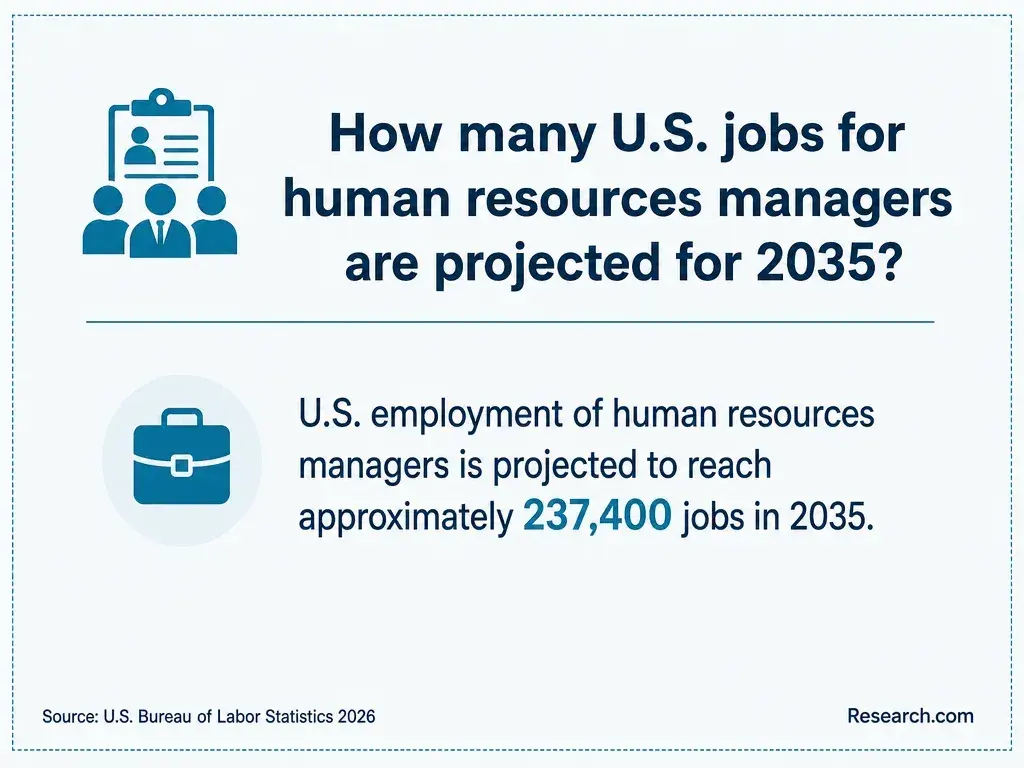
For someone already working in learning and development, talent development, or organizational leadership, the degree may support more complex responsibilities: building manager-development programs, evaluating workforce initiatives, or leading change across teams. It can also inform organizational consulting. Employers will still look for evidence of implementation, collaboration, and management experience; the doctorate does not confer a director or executive position.
The roles below use related skills but are not interchangeable. Compare their day-to-day work with your existing experience before treating an Ed.D. as a career-switching credential.
| Role | Relevant work | Experience that still matters |
| Training and development manager | Oversees learning strategy, staff, and programs | Managing people, budgets, and training delivery |
| Organizational development consultant | Diagnoses organizational issues and supports change | Client work, facilitation, and credible evidence use |
| Talent or leadership development leader | Builds manager-development and succession practices | Working with executives, HR partners, and operating teams |
The Bureau of Labor Statistics projects 10.1% US employment growth for management analysts from 2025 to 2035. That outlook describes a broad occupation that includes organizational consulting; it does not establish demand for Ed.D. graduates specifically. Build experience and a portfolio of authorized projects alongside any degree.
For the former-peer transition, the most useful curriculum connects adult learning and leadership development with organizational diagnosis, change implementation, and applied evaluation. A strong sequence would help you identify what a new manager needs to learn, distinguish that need from a flawed promotion process, design support with stakeholders, and assess whether the support changes workplace practice.
Look beyond course titles. Ask whether students practice interviewing stakeholders, interpreting organizational evidence, designing manager learning that transfers to work, and communicating limitations to decision-makers. Quantitative, qualitative, or mixed-methods courses may support this work, but exposure to a method does not make someone an expert evaluator.
Program requirements, elective availability, and the form of the final dissertation or applied project must be confirmed with each school.
If you hope to study employees you supervise, academic approval and workplace permission are separate issues. Ask the program how it handles research review, consent, confidentiality, and power differences before assuming that workplace access makes a project feasible.
Online study can let a working leader remain in a job and investigate problems in a familiar organization. Campus-based study may make in-person collaboration easier. Neither format guarantees access to an appropriate project site, close faculty guidance, or a manageable schedule.
Compare required live class times, group meetings, campus convenings, and expectations during the final project - not just whether lectures are online. Travel and time away from work can change the financial comparison. Resources on online Ed.D. affordability and degree planning can help organize the options, but request each program's current attendance rules and full cost estimate before deciding.
Requirements vary. Programs may ask for a completed graduate degree, transcripts, recommendations, a statement of purpose, and evidence of relevant professional experience. Some assess research preparation or interview applicants. An education master's degree, a managerial title, or a fixed number of years in leadership is not a universal requirement.
If your proposed focus is new managers leading former peers, describe your actual responsibility for leadership development or organizational decisions. Explain a problem you can examine without claiming to know its cause or promising access to confidential employee data. Ask admissions which experience qualifies, whether your prior coursework meets eligibility rules, and whether any credits would separately apply toward the doctorate. Eligibility and transfer credit are different decisions.
Completion time depends on the program's course sequence, enrollment pace, required meetings, and dissertation or applied-project milestones. An advertised fast track may assume uninterrupted enrollment and timely project approvals - conditions that can be difficult to maintain while managing people and working with an organizational partner.
Ask for the published curriculum and a sample progression plan. Then check when methods courses and project approvals occur, what happens if your employer or role changes, and how long students may take to finish. Education doctorate duration comparisons can orient your search, but the school's requirements for your entry term control your plan.
There is no reliable single price for this degree category. Compare each school's required credits with its tuition structure, then add mandatory fees, technology, books, any campus travel, and costs of continuing enrollment while finishing the project. A lower advertised tuition rate may not produce the lower total cost if completion takes longer or requires travel.
Employer assistance deserves a separate check: determine whether it covers doctoral study, requires a minimum grade or continued employment, and pays upfront or reimburses you later.
Financial aid eligibility and availability also vary. For a starting point, review evaluating aid eligibility for higher education leadership doctorates, then obtain written terms from the institution and your employer. Compare that investment with the cost of coaching or targeted manager development if immediate team performance is the goal.
A broadly focused leadership and learning Ed.D. does not inherently require a teaching license, and earning one does not automatically grant educator licensure or a professional certification. Admissions and credential outcomes depend on the specific program. A degree designed for school administration may have different entry or licensure conditions from one centered on workplace learning.
If a regulated education role is your goal, request the program's licensure disclosure and confirm eligibility with the relevant state authority. If your goal is developing managers in a business, nonprofit, healthcare organization, or public agency, examine employer expectations for leadership experience and functional skills rather than assuming a teaching credential is necessary.
How can you choose an accredited online Ed.D. in organizational leadership?
Verify the institution's current accreditation status and the exact degree it awards. Institutional accreditation speaks to the institution; it does not establish that a program has a particular specialization, meets school-administrator licensure requirements, or produces a specific career outcome.
For this leadership challenge, make program fit the deciding factor. Request the required curriculum, online attendance schedule, final-project rules, faculty-support model, and total-cost estimate. Ask whether an applied project can address manager transitions, who must approve the site and data access, and what happens if your organizational partner changes.
Use affordable doctoral education in organizational leadership to identify options for closer review, not as a substitute for verifying each school's current policies.
Choose the Ed.D. if you want sustained responsibility for improving leadership development across an organization and can use doctoral-level inquiry in that work. If you chiefly need to become effective with your former peers now, prioritize supervised management practice and focused support first.
Other Things You Should Know About EdD Leadership
Disclose the relationship to the appropriate supervisor or HR partner and ask how evaluations should be handled under organizational policy. Do not assume friendship either requires recusal or has no bearing on perceived fairness.
Explain the new boundary without revealing confidential information. Be consistent about what can be shared with the whole team and ask a supervisor for guidance when the boundary is unclear.
Possibly, but supervisory power can complicate voluntary participation and confidentiality. Obtain the program's research-review guidance and the employer's permission before collecting or using feedback for academic work.
Address specific work expectations and decisions rather than labeling resistance as an attitude problem. If responsibilities or authority remain disputed, involve the person who owns the reporting structure.
- Cost of Attendance (Budget) | 2025-2026 Federal Student Aid Handbook https://fsapartners.ed.gov/knowledge-center/fsa-handbook/2025-2026/vol3/ch2-cost-attendance-budget
- Maximizing the Impact and ROI of Leadership Development | nih.gov https://pmc.ncbi.nlm.nih.gov/articles/PMC11505461/
- Careers Leaders Can Pursue with an Ed.D. | Peabody Online | VU-EDU https://peabodyonline.vanderbilt.edu/edd-in-organizational-learning/edd-careers/
- What's the Difference Between Asynchronous and Synchronous Learning? | Ohio State Online https://online.osu.edu/content-hub/blogs/whats-the-difference-between-asynchronous-and-synchronous-learning/
- 9 Tips for New Managers to Succeed | Northeastern University Graduate Programs https://graduate.northeastern.edu/knowledge-hub/new-manager-tips/
- Why Managers Need Leadership Development Too | Gallup.com https://www.gallup.com/workplace/328460/why-managers-need-leadership-development.aspx
- New to Management: Training Individual Contributors to Become Managers - ERC https://yourerc.com/blog/new-to-management-training-individual-contributors-to-become-managers/