2027 Online MBA Course Requirements & Core Curriculum

Co-Founder and Chief Data Scientist
An online MBA is a major investment of time, money, and career focus, so the first question is not simply whether you can get admitted. It is whether you meet the academic expectations, understand the workload, and can use the curriculum to move toward a specific professional goal. Most online MBA programs are built for working adults, but they still require graduate-level writing, quantitative reasoning, teamwork, and steady participation.
This guide explains the typical online MBA admission requirements, application materials, personal statement expectations, core course structure, electives, credit hours, completion timelines, and technology needs. Use it to compare programs more carefully, identify gaps in your preparation, and decide which curriculum best fits your career plans.
Key Benefits of Learning About Online MBA Course Requirements & Core Curriculum
- Knowing the course requirements and core curriculum helps you plan your education path and ensures you meet all prerequisites, positioning you for a smooth admission and academic experience.
- Understanding the curriculum highlights the skills and knowledge you will gain, which can prepare you for high-demand roles such as business manager, financial analyst, marketing director, or operations leader.
- Awareness of the program’s outcomes can inform career expectations, including the median salary for MBA graduates, which often ranges from $90,000 to $130,000 depending on industry and experience.
- Learning about the online format shows the flexibility and convenience of earning an MBA remotely, allowing you to balance work, personal life, and education while advancing your career.
What are the minimum educational requirements for an online MBA?
The minimum educational requirement for an online MBA is typically a bachelor’s degree from an accredited institution. Most programs accept applicants from many undergraduate majors, not only business. A degree in business, economics, accounting, finance, or a related field may make the transition easier, but it is usually not the only acceptable background.
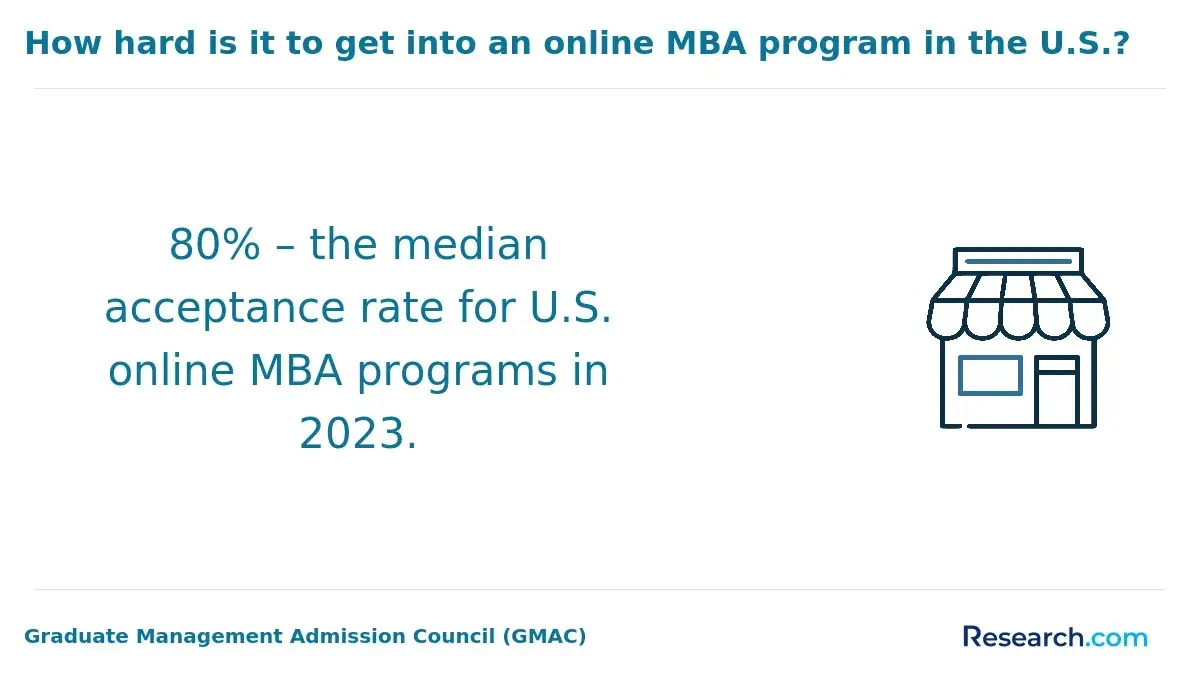
Many schools also review undergraduate performance. Some programs may require a minimum GPA, often around 2.5–3.0, depending on the school’s selectivity. A lower GPA does not always end an application, but applicants may need to strengthen other parts of the file through professional experience, a strong statement of purpose, recommendations, or prerequisite coursework.
Applicants without prior business coursework may be asked to complete foundation courses before starting the core MBA curriculum. These are often in subjects such as accounting, finance, economics, statistics, or quantitative methods. The purpose is to make sure students can handle graduate-level business analysis rather than slow down once core courses begin.
What admissions committees usually look for beyond the degree
- Accredited undergraduate education: Schools generally expect official proof that the bachelor’s degree was completed at an accredited institution.
- Academic readiness: Transcripts are reviewed for writing, quantitative, and analytical preparation.
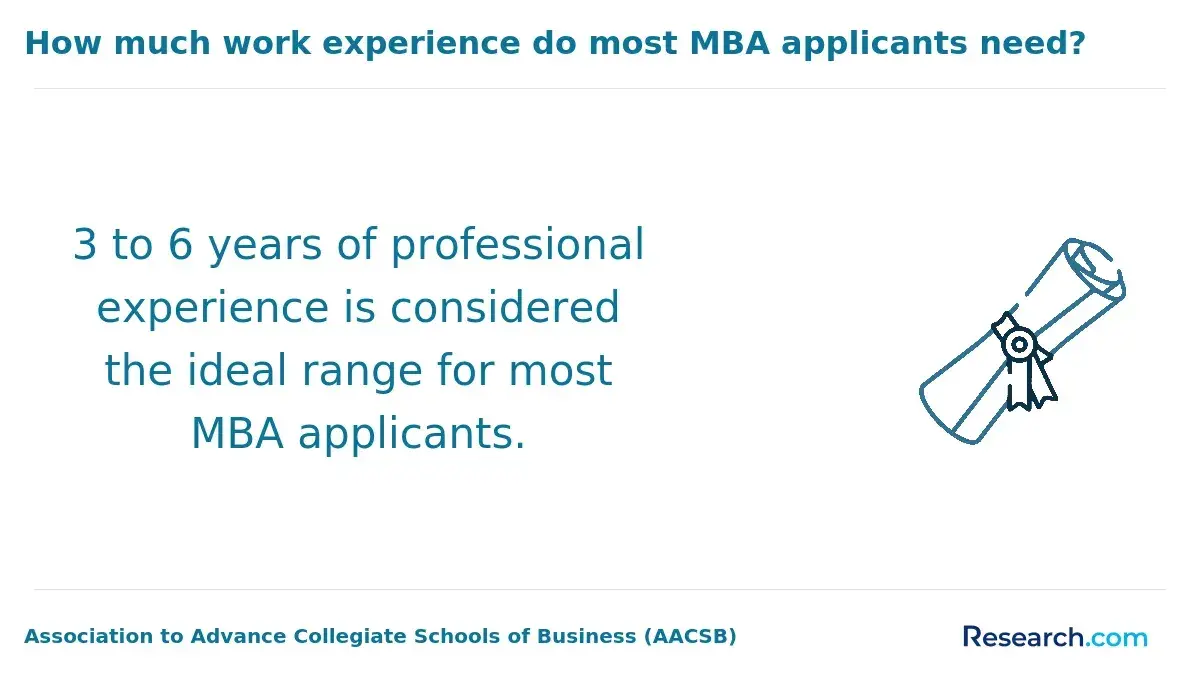
- Professional maturity: Many online MBA programs value work experience because class discussions often rely on real workplace examples.
- Clear goals: Applicants should be able to explain why an MBA is the right next step, not just why they want a graduate credential.
What documents do I need to apply for an online MBA?
Online MBA applications usually require documents that prove academic eligibility, show professional readiness, and explain why the program fits your goals. Requirements vary by school, so always confirm the checklist for each program before submitting.
- Academic transcripts: Official transcripts from all colleges or universities attended, including proof of a completed bachelor’s degree.
- Resume or CV: A focused record of professional experience, leadership responsibilities, promotions, measurable achievements, and relevant technical or business skills.
- Personal statement or statement of purpose: A written explanation of your career goals, reasons for pursuing an MBA, and fit with the program.
- Letters of recommendation: Usually 2–3 letters from supervisors, professors, or professional contacts who can speak to your performance, judgment, leadership potential, and readiness for graduate study.
- Standardized test scores, if required: GMAT or GRE scores may be requested, though many online programs are now test-optional.
- Proof of English proficiency for international students: TOEFL or IELTS scores may be required if applicable.
- Application form and fee: A completed online application and the submission fee required by the program.
Some programs may also request an interview, a video introduction, a writing sample, or a portfolio. Treat these extra requirements seriously. They are often used to evaluate communication skills, motivation, professionalism, and fit for online learning.
How to avoid common application delays
- Request transcripts early, especially if you attended more than one institution.
- Give recommenders enough time and provide them with your resume, goals, and deadline.
- Check whether test scores are required, optional, or waived under specific conditions.
- Use the same name and contact information consistently across all documents.
- Proofread the personal statement for program-specific details before submitting.
How do I write a compelling online MBA personal statement?
A strong online MBA personal statement connects your past experience, current skills, and future goals into one clear argument: you are ready for graduate business study, and this specific program is a practical fit. Avoid broad claims such as wanting to “become a better leader” unless you explain what that means in your industry, role, or career path.
Start with your professional direction. Explain the problem you want to solve, the role you are preparing for, or the business skills you need to develop. Then use specific examples from your work, leadership, academic, or community experience. Admissions committees respond better to evidence than to general ambition. Describe decisions you made, results you influenced, teams you led, or challenges you learned from.
The best statements also show that you have researched the program. If you are comparing affordable online MBA programs, do not focus only on price. Mention curriculum fit, delivery format, specializations, faculty expertise, networking opportunities, student support, or flexibility for working adults when those details genuinely apply.
What to include in an effective personal statement
- Your career goal: Identify the function, industry, leadership path, or entrepreneurial objective you are pursuing.
- Your reason for choosing an MBA: Explain why graduate business training is necessary for your next step.
- Evidence of readiness: Use examples that show leadership, analytical thinking, communication, resilience, or ethical judgment.
- Fit with the program: Connect your goals to specific features of the online MBA.
- Online learning readiness: Show that you can manage time, collaborate virtually, and complete demanding work while balancing other responsibilities.
Common mistakes to avoid
- Submitting a generic essay that could apply to any school.
- Repeating the resume instead of explaining the meaning behind your experience.
- Overstating accomplishments without evidence.
- Writing only about personal motivation without connecting it to career outcomes.
- Ignoring the online format and the discipline it requires.
End with a forward-looking statement about the contribution you hope to make after earning the MBA. Keep the tone professional, direct, and authentic.
Core courses in an online MBA program give students a shared foundation in the major functions of business. These courses are usually required because managers must understand how finance, operations, marketing, people, data, and strategy work together when making decisions.
- Accounting and finance: Managerial and financial accounting, corporate finance, budgeting, valuation, investment analysis, and financial decision-making.
- Marketing: Marketing strategy, digital marketing, brand positioning, customer analysis, consumer behavior, and market research.
- Operations and supply chain management: Production systems, process improvement, logistics, supply chain strategy, quality management, and operational efficiency.
- Economics and statistics: Microeconomics, macroeconomics, business analytics, forecasting, and decision-making using statistical tools.
- Organizational behavior and leadership: Leadership development, human resources management, team dynamics, negotiation, communication, and organizational change.
- Strategy and ethics: Strategic management, competitive analysis, corporate governance, business ethics, and responsible decision-making.
These courses are designed to build practical judgment, not just technical knowledge. For example, a finance course may teach capital budgeting, but the leadership and ethics courses help students evaluate how a financial decision affects employees, customers, and long-term organizational trust.
How core MBA courses build management skills
| Core area | What students learn | Why it matters in management |
| Accounting and finance | How to read financial statements, evaluate costs, and make investment decisions | Managers need to justify decisions with financial evidence |
| Marketing | How customers behave and how organizations compete for attention and loyalty | Business growth depends on understanding markets and value propositions |
| Operations | How goods, services, processes, and supply chains are designed and improved | Efficient operations affect cost, quality, and customer satisfaction |
| Analytics and statistics | How to interpret data and reduce uncertainty in decisions | Leaders increasingly rely on evidence-based decision-making |
| Leadership and organizational behavior | How people work in teams, respond to change, and perform under different leadership styles | Strategy fails without effective execution by people |
| Strategy and ethics | How to assess competition, set direction, and make responsible choices | Senior decisions require both business logic and ethical judgment |
Many programs add electives or specialization courses after the core so students can align the degree with a career goal such as entrepreneurship, healthcare, technology management, finance, or supply chain management.
Core courses are required classes that every MBA student must complete. They create a common foundation in accounting, finance, marketing, operations, leadership, analytics, strategy, and ethics. These courses are especially important in online MBA programs because students often come from different professional and academic backgrounds.
Electives are courses students choose based on career goals or interests. They allow you to customize the MBA after you complete, or while you are completing, the required foundation. Common elective areas include entrepreneurship, healthcare management, digital marketing, finance, technology management, and supply chain management.
| Category | Core courses | Electives |
| Purpose | Build essential business knowledge for all students | Customize the degree toward a career path or interest |
| Requirement | Mandatory | Chosen from approved options |
| Typical subjects | Accounting, finance, marketing, operations, leadership, strategy, ethics | Entrepreneurship, healthcare management, digital marketing, finance, supply chain management |
| Career value | Shows broad management preparation | Signals specialization or deeper expertise |
When comparing programs, look at both the core and the electives. A strong core is useful if you want broad leadership preparation, while targeted electives matter more if you are trying to move into a specific function or industry. Students seeking flexible admissions options may also compare the best online MBA programs without GMAT requirements, but admissions flexibility should be weighed alongside curriculum quality, accreditation, student support, and career fit.
How to choose electives wisely
- Choose electives that support a specific role, industry, or skill gap.
- Avoid picking only familiar subjects; use electives to expand your marketable skills.
- Check whether electives are offered regularly or only in certain terms.
- Look for applied projects, simulations, or case-based courses if you want practical experience.
- Consider whether a formal concentration appears on the transcript or diploma, if that matters for your goals.
The typical credit hour requirement for an online MBA ranges from 30 to 60 credit hours, depending on the program’s structure and whether it is full-time, part-time, or accelerated. Most standard programs require around 36–48 credit hours, which usually include core courses, electives, and any required capstone or experiential learning projects.
Each course generally carries 3 credit hours, so completing a 36-credit-hour program usually involves taking 12 courses, though exact numbers can vary by school. Programs with specializations, dual-degree options, prerequisites, residencies, or expanded capstone requirements may require additional credits.
What credit hours mean for workload
Credit hours are not just a graduation requirement; they also affect cost, pacing, and weekly workload. A shorter program may be faster and less expensive, but it may offer fewer electives or less time for applied projects. A longer program may provide more specialization options, but it can increase total tuition and extend the time needed to finish.
| Program structure | Typical credit pattern | Best fit |
| Accelerated or condensed online MBA | May offer fewer credit hours with a more intensive pace | Students who can handle a heavier weekly workload |
| Standard online MBA | Often around 36–48 credit hours | Working professionals who want balance between structure and flexibility |
| Specialized or dual-degree option | May require additional credits | Students who need deeper expertise or credentials beyond the general MBA |
Before enrolling, review the full degree plan rather than relying only on the advertised credit total. Confirm how many credits are required for core courses, electives, prerequisites, concentrations, and capstone work.
The time it takes to complete the core curriculum of an online MBA typically ranges from 12 to 24 months, depending on the program format and the student’s pace. Full-time online MBA students often finish the core courses in about 12–18 months, while part-time students who balance work and study may take closer to 18–24 months.
Accelerated tracks or condensed semesters can allow students to complete the core curriculum faster, sometimes in under a year. However, faster does not always mean better. Compressed schedules can be demanding because MBA courses often require reading, discussion posts, group projects, exams, presentations, and applied assignments within shorter terms.
Factors that affect your completion timeline
- Enrollment status: Full-time students usually move faster, while part-time students spread courses across more terms.
- Course availability: Some core courses may be offered only during certain sessions or in a recommended sequence.
- Work and family obligations: A sustainable pace is important for students balancing employment, caregiving, or travel.
- Prerequisite requirements: Students without a business background may need foundation courses before core MBA work.
- Program format: Asynchronous courses offer more scheduling flexibility, while synchronous sessions require attendance at set times.
When evaluating a timeline, ask the school for a sample degree plan for both full-time and part-time students. This helps you see how the core curriculum, electives, and capstone fit together before you commit.
What technology do I need to succeed in an online MBA program?
To succeed in an online MBA program, you need reliable technology that supports live sessions, recorded lectures, exams, data analysis, presentations, and group work. Technical problems can quickly affect participation and deadlines, so it is best to prepare before classes begin.
- Computer or laptop: Use a dependable device with enough processing power, memory, and storage to run the learning platform, video conferencing software, spreadsheets, presentation tools, and business applications.
- High-speed internet connection: Stable broadband or fiber internet is important for live classes, video lectures, online exams, file uploads, and group meetings.
- Webcam and microphone: Clear audio and video are often needed for synchronous sessions, interviews, presentations, and team discussions.
- Learning management system access: Become comfortable with platforms such as Blackboard, Canvas, Moodle, or proprietary university systems for accessing course materials, submitting assignments, viewing grades, and tracking deadlines.
- Productivity and collaboration tools: Programs may use Microsoft Office, Google Workspace, Zoom, Slack, Trello, or similar tools for projects, presentations, communication, and shared documents.
- Security and backup: Antivirus software, secure Wi-Fi, strong passwords, and cloud storage help protect files and reduce the risk of losing important work.
Practical setup tips before the first term
- Test your webcam, microphone, and internet speed before orientation or the first live class.
- Create a quiet workspace for exams, presentations, and group meetings.
- Learn how to export, save, and back up files in multiple formats.
- Check whether the program requires specific software for statistics, accounting, analytics, or proctored exams.
- Keep a backup plan, such as mobile hotspot access or an alternate location with reliable internet.
The technology itself does not need to be complicated, but it must be dependable. In an online MBA, preparation and consistency often matter as much as the tools you use.
Other Things You Should Know About Online MBA Course Requirements & Core Curriculum
The course requirements for an online MBA in 2027 typically include core subjects like finance, marketing, operations, and strategy. Additional requirements may involve electives tailored to specific career goals, as well as a capstone project that synthesizes learning into a real-world business challenge.
Internships are generally not a mandatory part of the 2027 Online MBA Core Curriculum. However, many programs encourage experiential learning through optional internships or projects tailored to individual career goals.
- Onlinemba.com. (n.d.). MBA degree salaries: Guide to highest paying concentrations. Retrieved from https://www.onlinemba.com/rankings/best-online-mba/highest-paying/
- Seattle University Albers School of Business and Economics. (2024). Requirements for an MBA: What you need to know before applying. Retrieved from https://www.seattleu.edu/business/online/albers/blog/requirements-for-an-mba/
- Southeastern Oklahoma State University. (2025). MBA salary guide: Average earnings by industry & what you can earn. Retrieved from https://online.se.edu/programs/business/mba/salary-expectations-by-industry/
- University of Georgia Terry College of Business. (n.d.). Online MBA admissions requirements. Retrieved from https://www.terry.uga.edu/mba/online/admissions/