2027 Online Healthcare Administration Degrees With Capstone Support for Working Adults

Co-Founder and Chief Data Scientist
Choosing an online healthcare administration degree is a career and budget decision, especially if you work full time and need a program that ends with a practical capstone rather than a traditional thesis. The stakes are high: the U.S. Bureau of Labor Statistics reported a May 2024 median annual wage of $117,960 for medical and health services managers.
This guide explains formats, accreditation, costs, timelines, capstone expectations, career paths, and red flags so you can judge whether this degree fits your schedule, goals, and return-on-investment expectations.
Key Things You Should Know
- Online healthcare administration degrees are usually built for nonclinical leadership roles, and the strongest programs connect coursework to a capstone project that solves a real healthcare operations, quality, finance, or policy problem.
- For career planning, use the BLS May 2024 median annual wage of $117,960 for medical and health services managers as a labor-market benchmark, not a guaranteed outcome for every graduate.
- Working adults should compare accreditation, transfer-credit rules, asynchronous access, capstone support, employer tuition benefits, and total cost before prioritizing speed or rankings.
What is an online healthcare administration degree with a capstone, and how does it work?
An online healthcare administration degree prepares students to manage the business, operational, financial, compliance, and people-centered functions of healthcare organizations. Unlike clinical degrees, it usually does not train you to diagnose or treat patients. It focuses on how hospitals, clinics, long-term care organizations, physician practices, insurers, public health agencies, and health technology companies operate.
A capstone is the culminating academic project. Instead of only taking exams, students apply what they learned to a defined healthcare management problem, such as reducing patient no-show rates, improving staffing workflows, analyzing revenue-cycle delays, developing a compliance training plan, or designing a quality-improvement dashboard. For working adults, a capstone can be especially useful because it may let you connect schoolwork to your current employer or professional goals.
The degree level matters because it affects admissions requirements, career positioning, and the complexity of the capstone. The table below shows how common online healthcare administration pathways differ, so you can match the credential to your starting point.
| Degree option | Best fit | Typical capstone focus | Common next step |
| Associate degree | Students seeking entry-level administrative roles or a transfer pathway | Introductory project on healthcare office procedures, patient access, or billing workflows | Transfer into a bachelor's program or apply for front-office healthcare roles |
| Bachelor's degree | Working adults who want supervisory, coordinator, or analyst roles | Operational improvement, healthcare finance, compliance, quality, or patient-services project | Move into department coordination, practice management, or graduate study |
| Master's degree or MHA | Professionals targeting management, strategy, policy, or executive-track roles | Applied leadership project using data, policy analysis, financial modeling, or organizational change | Pursue management roles, fellowships, consulting, or senior administrative positions |
| Graduate certificate | Professionals with a degree who need targeted healthcare management knowledge | Short applied project, sometimes embedded in a final course | Add healthcare context to an existing business, nursing, public health, or IT background |
A healthcare administration degree may overlap with business, public health, health informatics, and operations management, but the healthcare-specific context is the key difference. If you want a broader management foundation before specializing, an online business administration degree may be worth comparing against a healthcare-focused bachelor's program.
How do online healthcare administration programs support working adults balancing school and full-time jobs?
The best online programs for working adults are designed around predictable scheduling, frequent advising, and applied assignments that do not require students to pause their careers. The most important distinction is whether the program is asynchronous, synchronous, or hybrid. Asynchronous courses allow students to complete weekly work on their own schedule, while synchronous courses require live attendance at set times.
Support matters because adult learners often face work travel, caregiving, shift changes, and uneven study time. Look for practical features that reduce friction before you enroll.
- Asynchronous weekly modules: These are usually better for full-time workers than required live lectures, especially for students in healthcare settings with variable shifts.
- Part-time enrollment options: A slower pace can protect your GPA and prevent burnout, even if it extends the completion timeline.
- Dedicated adult-learner advising: Advisors should help map transfer credits, course sequencing, financial aid deadlines, and graduation requirements.
- Capstone coaching: Strong programs provide milestones, faculty feedback, topic approval, research guidance, and project templates instead of leaving students to design the final project alone.
- Career services for online students: Resume reviews, virtual employer events, interview preparation, and alumni networking should be available without requiring campus visits.
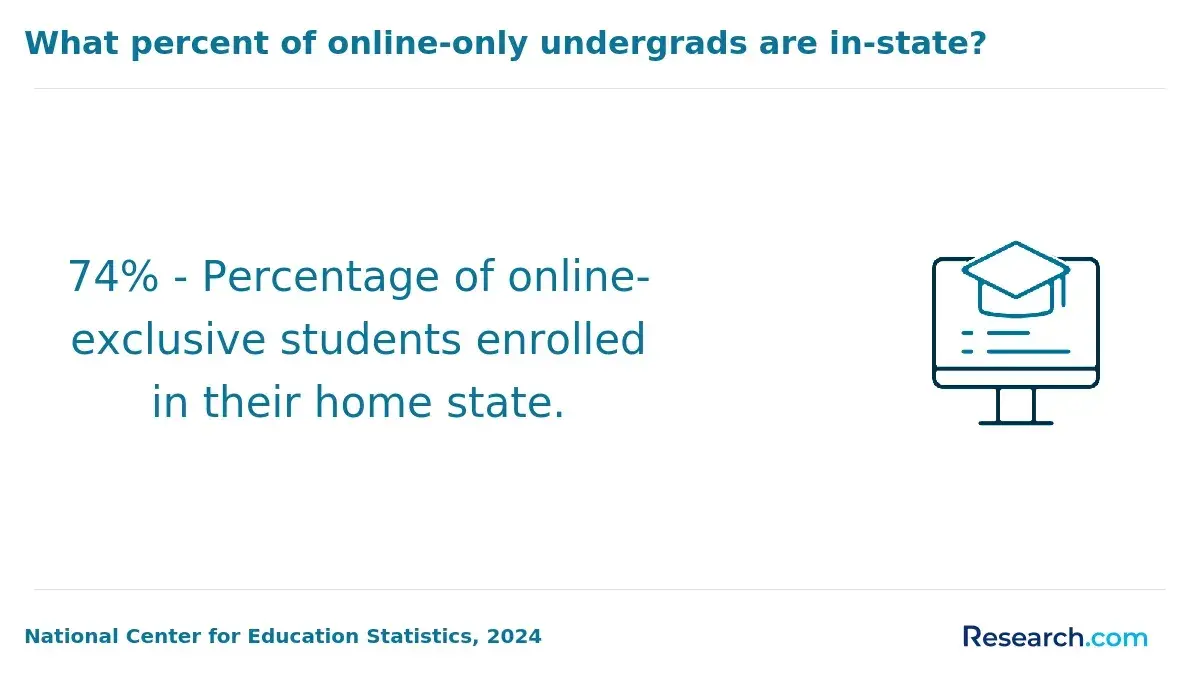
According to the National Center for Education Statistics, postsecondary institutions continue to serve large numbers of students taking at least some distance education courses, a pattern reinforced by flexible enrollment expectations after the pandemic. For working adults, this means more choice, but also more variation in quality; convenience should be weighed against advising depth, faculty access, and measurable student support.
What should you look for in accreditation and program quality for online healthcare administration degrees?
Accreditation is the first quality filter. At minimum, the school should hold institutional accreditation from an accreditor recognized by the U.S. Department of Education or the Council for Higher Education Accreditation. This affects federal financial aid eligibility, transfer credit acceptance, employer recognition, and graduate-school options.
Programmatic accreditation is also useful, especially at the graduate level. The Commission on Accreditation of Healthcare Management Education is a major programmatic accreditor for many master's-level healthcare management programs. Not every reputable bachelor's program will have programmatic accreditation, but every reputable school should be transparent about institutional accreditation, curriculum, faculty qualifications, outcomes, and student support.
Use the following quality indicators to separate strong online healthcare administration programs from programs that are merely convenient.
- Transparent accreditation status: The school should clearly identify its institutional accreditor and any healthcare management programmatic accreditation.
- Healthcare-specific faculty experience: Faculty should include professionals with experience in healthcare finance, hospital operations, compliance, quality improvement, informatics, or policy.
- Documented capstone process: The program should explain how capstone topics are approved, how faculty supervision works, and whether employer-based projects are allowed.
- Outcome transparency: Ask for graduation rates, retention rates, job-placement support, licensure disclosures if relevant, and examples of graduate employers.
- Transfer and credit-for-prior-learning policies: Adult learners should know before enrolling how prior college credit, military training, certifications, or workplace learning may count.
Be careful with programs that avoid direct accreditation answers, pressure you to enroll quickly, advertise unrealistic salary outcomes, or cannot explain how online students receive advising and capstone support. A reputable program should make the enrollment decision easier to verify, not harder.
How do online healthcare administration degrees compare with campus programs in flexibility and outcomes?
Online and campus healthcare administration programs can cover similar academic content, but they differ in delivery, networking style, scheduling, and student experience. The right choice depends less on prestige alone and more on how well the format matches your work schedule, learning preferences, and target roles.
The comparison below highlights the practical trade-offs working adults should consider before choosing between online and campus study.
| Factor | Online healthcare administration degree | Campus healthcare administration degree |
| Schedule flexibility | Often strongest for full-time workers, especially with asynchronous courses | Better for students who can attend classes at fixed times |
| Networking | Relies on virtual events, discussion boards, alumni platforms, and workplace-based projects | Offers more in-person interaction with faculty, classmates, and local employers |
| Capstone access | Can be completed remotely, often using public data, employer projects, or virtual collaboration | May offer more local partnerships, in-person presentations, or campus-based project teams |
| Learning style | Works best for self-directed students who can manage deadlines independently | Works best for students who benefit from face-to-face structure and campus routines |
| Career outcomes | Depends on accreditation, experience, networking, and employer recognition rather than format alone | Depends on the same factors, with possible advantages in local employer relationships |
Online study is often the better fit if you already work in healthcare, cannot relocate, or need to study around family and job responsibilities. Campus study may be better if you are early in your career, want in-person mentoring, or need a structured environment to stay engaged.
Outcomes are not determined by delivery format alone. Employers usually care more about the school's credibility, your healthcare experience, leadership skills, analytical ability, and whether you can show concrete results from internships, projects, or your capstone.
What courses, capstone projects, and practical experiences are included in healthcare administration curricula?
Healthcare administration curricula combine business fundamentals with healthcare-specific rules, systems, and operating challenges. At the bachelor's level, courses tend to introduce management, finance, human resources, ethics, and healthcare systems. At the master's level, students usually go deeper into strategy, analytics, policy, leadership, and organizational performance.
Most programs include a mix of core courses and applied assignments. Common course areas include the following because they map directly to administrative responsibilities in healthcare organizations.
- Healthcare systems and policy: How U.S. healthcare is financed, regulated, organized, and evaluated.
- Healthcare finance and reimbursement: Budgeting, revenue cycle, payer mix, cost control, and financial decision-making.
- Quality improvement and patient safety: Methods for improving care processes, reducing errors, and measuring outcomes.
- Healthcare law, ethics, and compliance: Privacy, fraud and abuse rules, risk management, and ethical leadership.
- Human resources and organizational behavior: Staffing, labor relations, team performance, conflict management, and leadership communication.
- Health informatics and analytics: Data systems, dashboards, electronic health records, reporting, and technology-enabled decision-making.
The capstone usually asks students to define a problem, review evidence, analyze data or operations, recommend a solution, and present results. In stronger programs, capstone support begins before the final term, so students can choose a realistic topic, secure approvals, and gather appropriate information. Students comparing online MHA programs should pay close attention to whether the capstone is a supervised applied project, a consulting-style project, a portfolio, or an exam-based final requirement.
Practical experience can also appear through internships, practicums, simulations, case competitions, or employer-based projects. If you already work in healthcare, ask whether your workplace can serve as the setting for applied assignments. If you do not, prioritize programs with virtual project options, local practicum support, or strong career services for career changers.
What are typical admission requirements for online healthcare administration programs for adult learners?
Admission requirements vary by degree level and school selectivity, but adult-friendly programs often evaluate more than recent academic performance. They may consider transfer credits, professional experience, military training, certifications, personal statements, and evidence that the applicant can manage online study.
The table below summarizes common requirements by credential level. Use it to identify what you may need to prepare before requesting transcripts or starting an application.
| Program level | Common admission requirements | Adult-learner considerations |
| Associate degree | High school diploma or GED, placement assessment, application form | May be a lower-cost starting point if you have few or no college credits |
| Bachelor's degree | High school diploma or transfer credits, transcripts, minimum GPA, personal statement in some programs | Transfer-friendly programs can shorten the timeline for students with previous college coursework |
| Master's degree | Accredited bachelor's degree, transcripts, resume, statement of purpose, references, possible minimum GPA | Some programs prefer healthcare or management experience but may accept career changers |
| Graduate certificate | Bachelor's degree, transcripts, resume, short statement of goals | Can be useful for professionals testing the field before committing to a full master's degree |
Before applying, collect official transcripts from every college attended, not just the school where you earned your most recent degree. This matters because transfer evaluations can affect cost, time to completion, and course sequencing.
Adult learners should also ask about admissions flexibility. Some online programs have rolling starts, multiple terms per year, test-optional policies, and provisional admission pathways. Flexibility can be helpful, but it should not replace quality controls; a credible program will still set clear academic expectations.
How long do online healthcare administration degrees take, and what do they cost?
Time to completion depends on degree level, transfer credit, enrollment intensity, and whether the program uses traditional semesters or accelerated terms. Working adults often finish more successfully when they choose a pace they can sustain rather than the fastest advertised timeline.
As a broad planning framework, these are common timelines for online healthcare administration credentials.
- Associate degree: About two years full time, or longer part time.
- Bachelor's degree: About four years full time from the start, but transfer students may finish faster depending on accepted credits.
- Master's degree: Often one to three years, depending on course load and capstone structure.
- Graduate certificate: Often several months to one year, depending on credit requirements.
Cost varies widely by public or private institution, residency rules, transfer credit, technology fees, books, and whether tuition is charged by credit, term, or subscription period. For a national benchmark, the College Board's 2024 Trends in College Pricing and Student Aid reported average published tuition and fees of $11,610 for in-state students at public four-year institutions and $43,350 at private nonprofit four-year institutions for 2024-25. Online program prices may be lower, similar, or higher, so use published tuition only as a starting point.
When comparing total cost, include the expenses that are easy to miss.
- Tuition charged per credit or per term
- Online learning, technology, graduation, transcript, and assessment fees
- Books, software, proctoring, database access, or simulation tools
- Travel costs for any required residencies, orientations, practicums, or presentations
- Lost income if the program requires reducing work hours
- Interest costs if you use loans instead of employer benefits, grants, or cash payments
The smartest cost strategy is to reduce the number of credits you must pay for. Ask each school for a written transfer-credit estimate, confirm whether prior learning can be evaluated, and compare employer tuition reimbursement rules before enrolling. A cheaper program is not always the best value if it offers weak advising, poor capstone support, or limited employer recognition.
What healthcare administration careers can you pursue with an online degree?
An online healthcare administration degree can support several nonclinical career paths, especially when paired with healthcare experience, analytical skills, and leadership ability. Entry-level graduates may start in coordination or analyst roles, while experienced professionals may use the degree to move into department management or broader operations leadership.
The table below outlines common roles and how they usually connect to healthcare administration training. Job titles vary by employer, so read postings carefully rather than relying on title alone.
| Career path | Typical responsibilities | Degree level often preferred |
| Healthcare administrative coordinator | Coordinate schedules, records, reports, patient access workflows, and department communication | Associate or bachelor's |
| Practice manager | Manage daily operations, staffing, billing workflows, patient experience, and vendor relationships in a medical office | Bachelor's |
| Quality improvement specialist | Track performance measures, support process improvement, prepare reports, and help teams implement quality initiatives | Bachelor's or master's |
| Revenue cycle analyst | Review claims, denials, reimbursement trends, billing processes, and financial performance indicators | Bachelor's or master's |
| Healthcare operations manager | Oversee workflows, staffing plans, budgets, service-line performance, and cross-functional improvement projects | Bachelor's or master's |
| Health services manager | Lead departments, programs, facilities, or service areas within healthcare organizations | Master's often preferred for advancement |
Healthcare administration is also becoming more data-driven. AI-assisted scheduling, automated coding tools, predictive analytics, and digital patient engagement platforms are changing administrative work. That does not eliminate the need for managers, but it raises expectations for graduates to understand data quality, privacy, workflow design, and ethical technology use.
If your long-term goal is broader operations leadership beyond healthcare, you may also compare healthcare administration with an MBA operations management pathway. The healthcare degree offers stronger industry context, while the MBA route may offer more portability across sectors such as logistics, manufacturing, consulting, and service operations.
What salary ranges and job outlook can graduates in healthcare administration expect?
Salary outcomes in healthcare administration vary by role, degree level, experience, employer type, geography, and management scope. A new graduate in an entry-level coordinator role should not expect the same compensation as a hospital department director or senior health services manager.
The strongest national benchmark is the BLS category for medical and health services managers. BLS data reported a May 2024 median annual wage of $117,960 for this occupation. Use that figure as a midpoint for established management roles, not as a promise for graduates immediately after finishing a degree.
The outlook is also favorable compared with many occupations. The BLS projects employment for medical and health services managers to grow much faster than average over the 2023-2033 period, driven by an aging population, expanding healthcare services, and the need to manage data, staffing, compliance, and costs. For students, this suggests real demand, but competition may still be strong for leadership roles at large hospitals and health systems.
To improve your earning potential, focus on capabilities employers can verify. Useful signals include supervisory experience, revenue-cycle knowledge, quality improvement projects, healthcare analytics, budgeting, compliance familiarity, and a capstone that demonstrates measurable operational thinking.
A healthcare administration degree is most valuable when it turns your experience into evidence: a stronger resume, a credible capstone, leadership examples, and skills that match the jobs you want.
How can you choose a reputable healthcare administration program that fits your career goals?
Choosing a program should start with your target role, not a school ranking. A student aiming for practice management may need different coursework and internship support than someone targeting healthcare analytics, long-term care administration, or executive leadership.
Use this step-by-step process to compare programs in a practical way.
- Define your target role: Identify three job postings you would want after graduation and list the degree level, skills, software, and experience they request.
- Verify accreditation: Confirm institutional accreditation and, for graduate healthcare management programs, check whether programmatic accreditation is relevant to your goals.
- Compare capstone support: Ask for examples of recent capstone topics, faculty involvement, project timelines, and whether employer-based projects are allowed.
- Calculate total cost: Include tuition, fees, transfer credits, books, loan interest, travel, and any lost work hours.
- Evaluate adult-learner support: Look for evening advising, online library access, tutoring, writing support, career services, and flexible enrollment options.
- Check career alignment: Review electives, internship options, employer relationships, alumni outcomes, and whether the curriculum includes analytics, finance, compliance, and leadership.
- Ask about technology expectations: Confirm whether courses require live attendance, proctored exams, specialized software, webcam monitoring, or group meetings at fixed times.
Common mistakes include choosing the cheapest program without checking transfer policies, assuming every online degree has the same employer value, overlooking capstone requirements until the final term, and enrolling in a healthcare administration program when a different field would better match the goal. For example, someone more interested in facilities development, job-site coordination, or built-environment project management may want to compare healthcare operations programs with the cheapest construction management degree options before committing.
A good fit should be clear in writing: accredited institution, relevant curriculum, realistic schedule, transparent costs, strong student support, and a capstone structure that helps you prove readiness for the next career step.
Other Things You Should Know About Healthcare Administration
Many students enter from business, customer service, military, public health, insurance, or administrative backgrounds. Clinical experience can help you understand care delivery, but nonclinical students can still build credibility through internships, healthcare-focused projects, and entry-level administrative roles.
An online healthcare administration degree in 2027 typically doesn't require earning certifications, though it offers an advantage. While not mandatory for graduation, adding a certification may enhance job prospects by demonstrating specialized knowledge and skills to potential employers.
Some roles can be remote or hybrid, especially in revenue cycle, data analysis, compliance, insurance operations, project coordination, and health technology. Patient-facing operations and facility leadership roles are more likely to require on-site work.
It can be a strong option for career changers who want mission-driven management work without becoming clinicians. The transition is easier if you can connect prior experience in leadership, finance, operations, analytics, customer service, or compliance to healthcare employer needs.
References
- Healthcare Management vs. Healthcare Administration | University of Phoenix https://www.phoenix.edu/articles/healthcare/healthcare-management-vs-healthcare-administration.html
- How to Balance Working Full Time and Going to School https://www.onlineu.com/resources/going-to-college/working-full-time-and-going-to-school
- Healthcare Admin Careers & Salary Guide Australia https://medtrain.com.au/healthcare-admin-careers/
- Can I Earn a Health Care Management Degree if I Work Full-Time? - Healthcare Management Degree Guide https://www.healthcare-management-degree.net/can-i-earn-a-health-care-management-degree-if-i-work-full-time/
- Health Policy and Administration Salary and Job Outlook | CUNE https://www.cune.edu/news/health-policy-administration-jobs-salary
- Healthcare Administration Associate vs Bachelor’s Degree https://campus.edu/blog/healthcare/healthcare-administration-associate-vs-bachelors-degree
- Online Bachelor of Science in Health Care Management | Illinois College https://www.ic.edu/healthcare-mgmt/online
- Health Administration: Online Degrees and Careers https://www.publichealthonline.org/healthcare-administration/online-degree-programs/
- Home https://www.husson.edu/online/blog/2023/07/tips-for-balancing-work-and-college
- Who Accredits MHA Programs? https://www.mhaonline.com/faq/who-accredits-online-mha-programs