2027 How Employers Are Changing Hiring Criteria for Oceanography Graduates in the AI Era

Co-Founder and Chief Data Scientist
A prospective oceanography graduate preparing to enter the workforce may soon realize that earning a degree alone no longer guarantees a competitive edge. The rapid integration of artificial intelligence (AI) across industries means employers increasingly expect candidates to demonstrate skills beyond traditional knowledge. According to a 2024 report from the U. S. Bureau of Labor Statistics, over 45% of jobs now require at least moderate AI literacy, reflecting a significant shift in workforce demands.
This transformation forces oceanography students and early-career professionals to rethink their career strategies. Hiring managers prioritize adaptability, data analysis, and interdisciplinary skills alongside domain expertise. This article examines how employers are evolving their hiring criteria for oceanography graduates, emphasizing AI literacy and transferable skills. It also explores strategies students can adopt to stay relevant and thrive in the AI era.
Key Things to Know About the Changing Hiring Criteria for Oceanography Graduates in the AI Era
- Employers increasingly expect oceanography graduates to integrate AI-driven data analysis tools, which redefines competency beyond traditional fieldwork, making proficiency in machine learning frameworks critical for applied research roles.
- AI literacy combined with transferable skills like coding and statistical modeling now distinguishes candidates, as 67% of hiring managers in environmental sciences prioritize interdisciplinary expertise to enhance predictive accuracy.
- Graduates who combine domain knowledge with AI adaptability outperform peers, reflecting a 2024 study showing a 30% higher retention rate in tech-integrated oceanography roles, underscoring evolving market demands.
- Key Things to Know About the Changing Hiring Criteria for Oceanography Graduates in the AI Era Key Things to Know About the Changing Hiring Criteria for Oceanography Graduates in the AI Era
- How Is AI Changing What Employers Look for in Oceanography Graduates? How Is AI Changing What Employers Look for in Oceanography Graduates?
- Which AI Skills Are Employers Expecting Oceanography Graduates to Have? AI Skills
- Which Human Skills Are Employers Looking for in Oceanography Graduates? Human Skills
- How Are AI Tools Changing Daily Work in Oceanography Careers? AI Workplace Tools
- How Are Employers Evaluating Oceanography Candidates Beyond Academic Credentials? Hiring Criteria
- How Are Oceanography Degree Programs Adapting to AI? AI Curriculum
- Which Industries Are Changing Hiring Expectations Most for Oceanography Graduates? AI and Industry Expectations
- How Is AI Changing Career Growth for Oceanography Professionals? AI and Career Growth
- How Should Oceanography Students Prepare for AI-Driven Hiring? Career Preparation
- How Should Students Choose a Oceanography Program for the AI Era? How Should Students Choose a Oceanography Program for the AI Era?
How Is AI Changing What Employers Look for in Oceanography Graduates?
AI-driven skills employers seek in oceanography graduates increasingly focus on the ability to collaborate with advanced technologies rather than merely executing traditional tasks. In practice, this means candidates must not only grasp oceanographic concepts but also skillfully apply AI tools to analyze complex marine data sets and refine predictive models. For example, a recent NOAA-backed initiative tasked recent graduates with integrating machine learning algorithms to improve coastal erosion forecasts, demonstrating how employers value practical expertise in leveraging AI for impactful environmental solutions. This transition reflects a broader employer expectation for graduates to act as intermediaries who enhance AI output with scientific judgment and contextual understanding.
Employer expectations for oceanography graduates in the AI era now prioritize interdisciplinary fluency alongside a growth-oriented mindset. According to a 2024 report from the U.S. Bureau of Labor Statistics, more than 65% of ocean-related roles require proficiency in AI-driven data analysis, making programming skills and familiarity with AI frameworks indispensable. Yet, the role of human insight remains decisive-hiring managers emphasize adaptability and ethical awareness, recognizing the importance of responsible AI application in vulnerable marine ecosystems. This evolving skill set underscores ongoing learning as essential; graduates who can continuously update their AI competencies while upholding domain expertise are best positioned for success.
For students seeking a competitive edge, balancing technical AI knowledge with soft skills is crucial. Engaging with resources that offer accelerated pathways to enhance analytical capabilities, such as the cheapest online EdD programs focused on data-driven disciplines, supports this aim. In this way, future oceanography professionals prepare to meet the dual challenge of managing sophisticated AI tools and contributing thoughtful, ethical perspectives that machines cannot replicate, aligning with the nuanced demands of contemporary environmental science roles.
Which AI Skills Are Employers Expecting Oceanography Graduates to Have?
The integration of artificial intelligence into oceanographic research is reshaping employer expectations for new graduates. Beyond foundational knowledge in marine science, employers now prioritize candidates who demonstrate practical AI competencies that enhance data analysis and environmental modeling. This shift signals a demand for interdisciplinary skills that bridge oceanography with advanced computational techniques. Graduates from accredited online colleges who develop these proficiencies are better positioned to contribute to data-intensive projects like ecosystem monitoring or climate prediction models. The following five AI skills are increasingly vital for oceanography graduates aiming to meet employer expectations.
- Machine Learning Application: Employers seek graduates capable of implementing machine learning algorithms to identify patterns in oceanographic data, such as predicting algal blooms or tracking marine species migration. Mastery involves hands-on experience with supervised and unsupervised learning techniques using real environmental datasets, which students can acquire through project-based coursework or internships.
- Data Mining and Cleaning: Oceanography datasets are often large, complex, and noisy. Effective data mining skills allow graduates to extract relevant information and prepare datasets for AI modeling. This competency reduces errors and improves predictive outcomes, emphasizing the importance of programming skills in Python or R to automate data preprocessing tasks.
- Predictive Modeling: Developing accurate predictive models is fundamental to forecasting oceanic phenomena such as sea level changes or storm impacts. Employers expect graduates to understand model validation and parameter tuning, ensuring reliability in decision-support contexts. Building this skill involves working with simulation tools and AI frameworks like TensorFlow or PyTorch tailored to marine environments.
- Geospatial AI Analytics: Integrating AI with geospatial analysis enables real-time tracking and mapping of oceanographic variables, critical for climate change research. Proficiency in combining GIS tools with AI-driven analytics improves environmental monitoring effectiveness. Students should focus on learning spatial data manipulation and AI model deployment specific to geospatial datasets.
- Programming with AI Libraries: Practical fluency in programming languages favored in AI-especially Python with libraries such as TensorFlow, PyTorch, or Scikit-learn-is a baseline expectation. These skills allow graduates to automate workflows and implement AI solutions efficiently. Strengthening this skill requires continual practice beyond classroom theory, including participation in coding bootcamps or open-source projects.
Which Human Skills Are Employers Looking for in Oceanography Graduates?
Artificial intelligence is increasingly automating repetitive tasks in oceanography, such as data sorting and pattern detection, but this shift heightens the necessity for human capabilities that machines cannot replicate. As AI accelerates routine processes, employers prioritize skills that add nuanced understanding, ethical judgment, and effective collaboration to complement technology. These uniquely human abilities enable professionals to ask insightful questions, interpret complex ecological patterns, and communicate results with clarity and empathy. In a work environment where AI handles large datasets, oceanography graduates who cultivate these skills strengthen their value. The following human-centered skills have become essential for success in this AI-influenced landscape.
- Critical Thinking and Complex Reasoning: AI can analyze data quickly but lacks the capacity for deep contextual analysis and hypothesis generation. Graduates need to interpret AI outputs critically, identifying limitations and exploring broader environmental implications. Developing this skill involves engaging in interdisciplinary coursework and applied research projects that challenge assumptions.
- Adaptability and Lifelong Learning: Rapid advancements in AI tools demand continual skill renewal. Oceanography professionals must embrace changes in technology, update their knowledge, and integrate new methods into practice. Actively participating in workshops, online courses, and cross-disciplinary collaborations strengthens adaptive capacity.
- Effective Communication: Translating AI-generated findings into accessible, actionable insights is vital for policymakers, stakeholders, and the public. Mastery of both written and verbal communication ensures scientific data influences decisions meaningfully. Practicing presentations, scientific writing, and audience-specific messaging enhances this skill.
- Emotional Intelligence (EQ): The ability to navigate interpersonal dynamics, demonstrate resilience, and foster inclusive teamwork cannot be replicated by AI. Employers value emotional intelligence for maintaining productive collaborations in diverse, high-pressure contexts. Developing EQ requires self-reflection, feedback engagement, and experience in team-based settings.
- Interdisciplinary Synthesis: Combining oceanographic knowledge with computer science, environmental policy, and ethics enables holistic problem-solving. This skill helps professionals evaluate AI outputs against ecological realities and societal needs. Cultivating it involves cross-sector internships, collaborative research, and integrated curricula.
One recent graduate recalled the urgency of reconciling AI-driven data anomalies during a coastal impact assessment. Faced with conflicting model projections, they hesitated before convening a multidisciplinary team. Through candid dialogue and careful communication, the group integrated ecological expertise with machine insights to guide local conservation policy. This experience underscored how emotional intelligence and interdisciplinary synthesis, alongside technical skills, proved vital for impactful, trustworthy outcomes in an AI-enhanced oceanography career.
How Are AI Tools Changing Daily Work in Oceanography Careers?
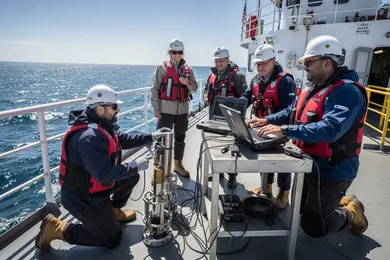
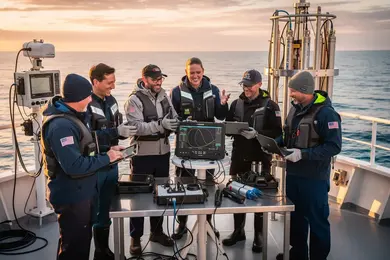
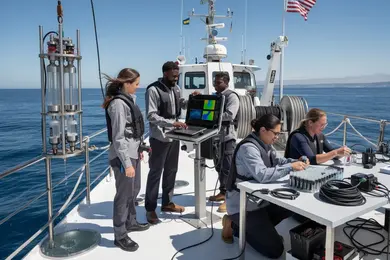
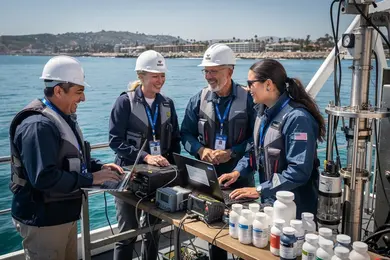
Artificial intelligence is reshaping daily workflows in oceanography by automating labor-intensive tasks such as data cleaning and anomaly detection. This automation allows researchers to redirect their focus toward interpreting complex datasets collected from satellites and underwater sensors, which enhances productivity and insight generation. According to the 2024 Workforce Technology Report from the National Oceanic and Atmospheric Administration, over two-thirds of oceanography professionals now employ AI-driven platforms to handle large-scale data, enabling more timely and precise climate and ecosystem modeling. For instance, an oceanographer analyzing environmental sensor data can rely on AI algorithms to quickly identify subtle trends that would take significantly longer to detect manually, improving responsiveness in environmental monitoring and marine resource management.
The integration of AI tools is also altering the skill set employers seek, increasingly emphasizing proficiency in computational methods and AI software such as Python libraries and TensorFlow. This shift means that oceanography roles are evolving from routine data processing toward tasks that demand stronger critical thinking, creativity, and cross-disciplinary collaboration with data scientists and software engineers. The U.S. Bureau of Labor Statistics highlights that contemporary job descriptions prioritize AI literacy and the capacity to supervise and validate AI-generated outputs, underscoring the ethical and judgment responsibilities that come with this technology. As a result, professionals are expected to balance the management of automated tools with nuanced decision-making to address real-world oceanographic challenges effectively.
How Are Employers Evaluating Oceanography Candidates Beyond Academic Credentials?
Employers evaluating oceanography candidates increasingly prioritize evidence of practical experience and interdisciplinary skills over traditional academic metrics. Recent data from the National Science Foundation highlights that strong proficiency in AI and data analysis skills in oceanography recruitment now outweighs GPA or institutional prestige in many cases. For example, candidates who present portfolios showcasing internships, research projects involving AI applications, or certifications in data science demonstrate a more direct readiness for modern environmental research challenges. This approach reflects the growing complexity of oceanographic work, where integrating AI with domain knowledge is crucial for analyzing vast datasets from autonomous underwater systems and satellite imagery.
Beyond technical competence, soft skills such as problem-solving ability, adaptability, collaborative teamwork, and effective communication have become essential in this interdisciplinary landscape. Hiring managers at NOAA and major marine research centers emphasize these traits because successful projects often require coordination across computer science, engineering, and policy fields. Oceanography graduates who cultivate these abilities alongside AI literacy address not only technical demands but also ethical and data privacy concerns relevant to current environmental research. This holistic evaluation signals a shift toward valuing candidates' real-world capabilities and their potential to innovate within AI-driven scientific ecosystems.
For prospective students or early-career professionals, understanding how employers assess oceanography candidates beyond academic credentials offers a strategic advantage. Engaging in interdisciplinary coursework, practical AI-focused projects, or relevant certifications can markedly improve career prospects amid evolving recruitment trends. Investing in these areas complements technical knowledge with demonstrable experience, which recruiters prioritize when assessing readiness for the field's demands. Those interested might also explore pathways such as most affordable online MBA programs to broaden managerial and analytical skills that complement scientific expertise within environmental sectors.
How Are Oceanography Degree Programs Adapting to AI?
Oceanography degree programs are shifting to embed artificial intelligence within their curricula in response to growing employer demand for graduates proficient in AI applications. According to a 2024 National Science Foundation report, over 60% of earth science departments have formally integrated AI and machine learning into their coursework, reflecting a broader recognition that graduates must navigate vast, complex marine datasets with advanced computational tools. Programs balance this by emphasizing not only programming and data analysis skills but also the ability to convert AI-driven insights into practical environmental policies and strategies, reinforcing essential domain expertise alongside technical fluency.
This curricular evolution requires institutions to forge stronger interdisciplinary ties, often collaborating with computer science departments to keep pace with swift advancements in AI methodologies. Students face the challenge of allocating sufficient time to mastering AI techniques while maintaining foundational oceanographic knowledge and fieldwork experience, which remain vital for many roles. Many programs address this tradeoff by expanding project-based learning and partnering with industry to offer internships, where students can apply AI to real-world environmental monitoring-72% of graduates involved in such internships reported improved job placements within six months, according to the American Geophysical Union's 2024 survey.
Beyond technical skill acquisition, programs increasingly emphasize ethical AI use and the cultivation of lifelong learning habits to prepare students for continual innovation in this evolving field. This integration reflects a strategic realignment aimed at producing professionals who are not only data-savvy but also capable of interpreting AI outputs within ecological and policy contexts. Such training equips graduates to meet employer expectations for innovative problem-solving in marine science, balancing computational expertise with the nuanced understanding needed to address intricate oceanographic challenges.
Which Industries Are Changing Hiring Expectations Most for Oceanography Graduates?
The rate at which artificial intelligence integrates into different industries heavily shapes how employer expectations shift for oceanography graduates. Some sectors move faster due to their reliance on complex data analytics and real-time environmental insights, while others adopt AI more cautiously. Consider a recent graduate weighing job offers from renewable energy and maritime security firms. Although both seek oceanographic expertise, the specific AI competencies favored differ radically-compelling the candidate to carefully evaluate where their skills align best. Below are five industries experiencing the most significant shifts in hiring criteria driven by AI and related technologies.
- Renewable Energy: Companies in offshore wind and tidal power increasingly require oceanography graduates to deploy AI for optimizing environmental monitoring and resource management. A 2024 International Renewable Energy Agency survey found that over two-thirds of employers prioritize candidates with proficiency in AI applications for remote sensing and forecasting, making mastery of these tools vital for job seekers.
- Marine Biotechnology: This sector increasingly leverages AI to automate data collection and predictive modeling for ecosystem health assessments. Hiring managers expect graduates to blend traditional oceanographic methods with skills in AI-enhanced data analytics to accelerate research and innovation.
- Environmental Consulting: Consulting firms now demand expertise in AI-driven geographic information systems (GIS) to accurately evaluate climate impacts and marine ecosystems. Oceanography graduates must show competence in both domain knowledge and sophisticated AI software use to remain competitive.
- Defense and Maritime Security: The application of AI for rapid ocean data processing, threat detection, and cybersecurity is transforming hiring priorities. Employers look for interdisciplinary skills, such as programming and geospatial intelligence, emphasizing a hybrid of oceanographic insight and technical prowess.
- Academic and Research Institutions: While slower to change, universities and research centers steadily integrate AI into oceanographic research. Proficiency in machine learning model development and data visualization is increasingly seen as essential for future researchers, demanding that graduates complement classic training with AI fluency.
One recent oceanography graduate found the evolving landscape less straightforward than anticipated. Initially drawn to offshore renewable energy for its high demand in AI skills, they hesitated upon learning maritime security roles required a more diverse technical toolkit, including cybersecurity and programming. Balancing these insights, the graduate prioritized gaining Python coding and machine learning experience through additional courses before committing to a sector. This process highlighted how understanding nuanced industry differences in AI adoption can clarify career decisions, reducing uncertainty in an otherwise competitive job market.
How Is AI Changing Career Growth for Oceanography Professionals?
The pace of AI adoption varies considerably across industries, influencing how dramatically hiring expectations for oceanography graduates are evolving. Some sectors, driven by urgent environmental monitoring needs or expansive data analysis demands, integrate AI more rapidly, while others adopt technology at a steadier rate due to regulatory constraints or slower operational shifts. These differences shape the skill sets employers prioritize, requiring graduates to tailor their expertise accordingly. Understanding which industries are transforming most swiftly helps prospective and current oceanography professionals align their preparation with market demands.
Industries changing hiring expectations most for oceanography graduates include:
- Environmental Monitoring: This sector heavily relies on AI to analyze satellite data and sensor networks for real-time ecosystem assessments. Employers seek graduates skilled in machine learning and automated data interpretation to improve predictive accuracy regarding marine biodiversity and climate impacts.
- Marine Robotics: Companies developing autonomous underwater vehicles increasingly integrate AI for navigation and data collection. Oceanography graduates with coding skills and AI model development experience are more competitive for roles optimizing robotic exploration efficiency.
- Energy and Offshore Resources: The oil, gas, and renewable energy industries demand AI competencies to model ocean conditions impacting infrastructure. Candidates with proficiency in big data frameworks and environmental simulations have an edge in environments where safety and precision are paramount.
- Government Research Agencies: Agencies such as NOAA accelerate AI use in environmental forecasting and policy modeling. Oceanographers with demonstrated experience in AI-driven research or collaborative projects stand out, reflecting the growing career development for oceanography professionals with artificial intelligence.
- Climate Science and Conservation NGOs: Organizations focused on conservation increasingly require AI expertise to analyze large-scale environmental datasets. Graduates adept at integrating AI tools contribute to innovative conservation strategies, aligning with workforce transformation trends highlighted in recent reports.
For students pursuing an oceanography degree, actively developing AI-related skills is crucial. Engaging in internships or research projects applying AI to ocean sciences expands opportunities and enhances job market outcomes. Those seeking flexible study options might explore programs listed as the best degree for remote work, enabling them to gain relevant expertise while balancing other commitments.
How Should Oceanography Students Prepare for AI-Driven Hiring?
Preparing for AI-driven hiring in oceanography demands more than completing a traditional degree-it requires an integrated skill set combining technical proficiency, AI competencies, and essential human-centered abilities. As the U.S. Bureau of Labor Statistics and the National Science Foundation reported in 2024, over 65% of oceanography-related roles now mandate familiarity with AI tools and data analytics. This shift means students must advance beyond core scientific knowledge to develop practical skills that reflect this new hiring landscape. The following strategies offer actionable steps to align career preparation with employer expectations.
- Develop Programming Expertise: Mastering programming languages like Python and R is critical for handling large environmental datasets and building AI algorithms. Early hands-on coding experience enables students to contribute to predictive modeling and computational projects, enhancing their relevance for AI-centric roles.
- Integrate Interdisciplinary Learning: Combining ocean science coursework with computer science or statistics boosts analytical capabilities and deepens understanding of AI applications in marine environments. Interdisciplinary training signals adaptability, a prized trait in evolving technical fields.
- Gain Practical AI Exposure: Engage with internships or research projects that apply AI for ocean trend predictions, providing real-world experience interpreting complex datasets. This bridges theory with practice and sharpens problem-solving skills critical for employers.
- Cultivate Soft Skills: Adaptability, critical thinking, and collaborative communication remain vital as multidisciplinary teams increasingly embed AI tools into workflows. These human-centered skills ensure graduates can effectively navigate evolving project demands.
- Seek Ethical and Governance Training: Completing certifications or workshops on AI ethics and data governance distinguishes candidates committed to responsible technology use-an emerging priority recognized in oceanography hiring.
For students exploring diverse academic paths, programs such as the best online associates in criminal justice illustrate how embracing interdisciplinary and skills-focused education aligns with market needs. Preparing oceanography graduates for AI job market challenges means cultivating a hybrid expertise that goes well beyond foundational science.
How Should Students Choose a Oceanography Program for the AI Era?
Choosing an oceanography program today demands more than assessing reputation or tuition costs. The rapidly evolving role of artificial intelligence in environmental research means students must prioritize programs that actively integrate AI competencies and practical applications. According to a 2024 National Science Foundation report, over 65% of STEM-focused programs have updated their curricula to include AI-driven data analysis and machine learning, making such skills essential for future oceanographers. Selecting a program without considering its AI integration risks leaving graduates underprepared for employer expectations in a tech-driven job market. Below are key factors to evaluate when choosing an oceanography program for the AI era.
- Curriculum Integration: Programs should offer interdisciplinary courses combining oceanographic fundamentals with AI, data science, and programming. This blend equips students to handle complex datasets and modeling tasks critical for modern research.
- Hands-On Experience: Look for partnerships with industry or research institutions that provide internships or projects involving AI tools. Practical exposure deepens understanding and develops marketable skills.
- Faculty Expertise: Instructors experienced in applying AI to oceanography can mentor students on cutting-edge methodologies, improving the relevance and rigor of training.
- Ethical AI Training: The program should address responsible AI use and data privacy, reflecting increasing employer emphasis on technology ethics highlighted by the Oceanographic Society's 2024 report.
- Long-Term Adaptability: Evaluate whether the program fosters continual learning and adaptability to evolving AI technologies, ensuring graduates remain competitive as tools and methods advance.
References
- Deep Dive: Impact AI on Marine Ecology - Amazinum https://amazinum.com/insights/deep-dive-ais-impact-on-marine-ecology/
- An Unofficial Guide to Prepare for a Research Position Application https://pub.sakana.ai/Unofficial_Guide/
- Will AI Replace Marine Biologist Jobs? | JobZone Risk https://jobzonerisk.com/roles/marine-biologist
- Graduate Jobs, AI and the Human Skills Employers Still Need | Camp America | Camp America https://www.campamerica.co.uk/blogs/graduate-job-ai-will-never-replace
- The Complete Guide to AI Recruitment in 2026 - Hiroo https://www.hiroo.co/blog/the-complete-guide-to-ai-recruitment-in-2025
- Will AI replace recruiters? - SuperyachtNews https://www.superyachtnews.com/operations/the-changing-landscape-of-crew-recruitment
- Schmidt Marine https://jobs.schmidtmarine.org/companies/national-oceanography-centre/jobs/63838796-ai-research-software-engineer
- The AI Skills Employers Are Looking for in 2026 https://www.calmu.edu/the-ai-skills-employers-are-looking-for-in-2026
- MBZUAI https://mbzuai.ac.ae/news/ai-for-ocean-health-how-mbzuai-is-helping-preserve-marine-ecosystems/
- How Artificial Intelligence is Transforming Ocean Conservation and Marine Research https://www.oceanologyinternational.com/london/en-gb/blog/articles/how-artificial-intelligence-is-transforming-ocean-conservation-and-marine-research.html
Other Things You Should Know About Oceanography
Employers increasingly value candidates who combine deep oceanography expertise with a practical grasp of AI tools, but this balance is tricky. Over-specializing in AI without solid domain knowledge risks marginalization, while too narrow a focus on traditional oceanography methods may limit adaptability. Early-career professionals should prioritize cultivating strong foundational oceanography skills first, then selectively acquire AI competencies that enhance analysis and modeling within their subfield, ensuring both relevance and versatility.
Graduates proficient in AI may excel at data-intensive tasks but often lack hands-on experience critical for interpreting complex marine systems in situ. Employers must weigh the immediate value of advanced computational skills against potential knowledge gaps in traditional fieldwork. In practice, many hiring managers prefer a hybrid profile or look to supplement AI-heavy hires with team members who have extensive field experience, suggesting graduates should seek internships or projects that blend both aspects to maximize employability.
While AI streamlines processing and pattern recognition, traditional data collection remains vital, especially for validating AI models and understanding environmental context. Employers expect graduates to maintain competence in field sampling and observational methods alongside proficiency in AI. The recommendation for students is to not deprioritize these hands-on skills, as their absence can limit a candidate's ability to critically assess data quality and model assumptions, which are essential for credible scientific outcomes.
Incorporating AI skills increases the academic workload, often requiring students to learn programming, machine learning theory, and data analytics on top of rigorous scientific coursework. This intensification may force students and programs to make tough choices about curriculum breadth versus depth. Institutions and students benefit from prioritizing integrative projects that merge oceanography and AI rather than treating them as siloed subjects, because this approach mirrors real-world complexities and better prepares graduates for the hybrid demands of employers.