2027 Retail Management Transfer Credit Trends: How Schools Are Adapting for Adult Learners

Co-Founder and Chief Data Scientist
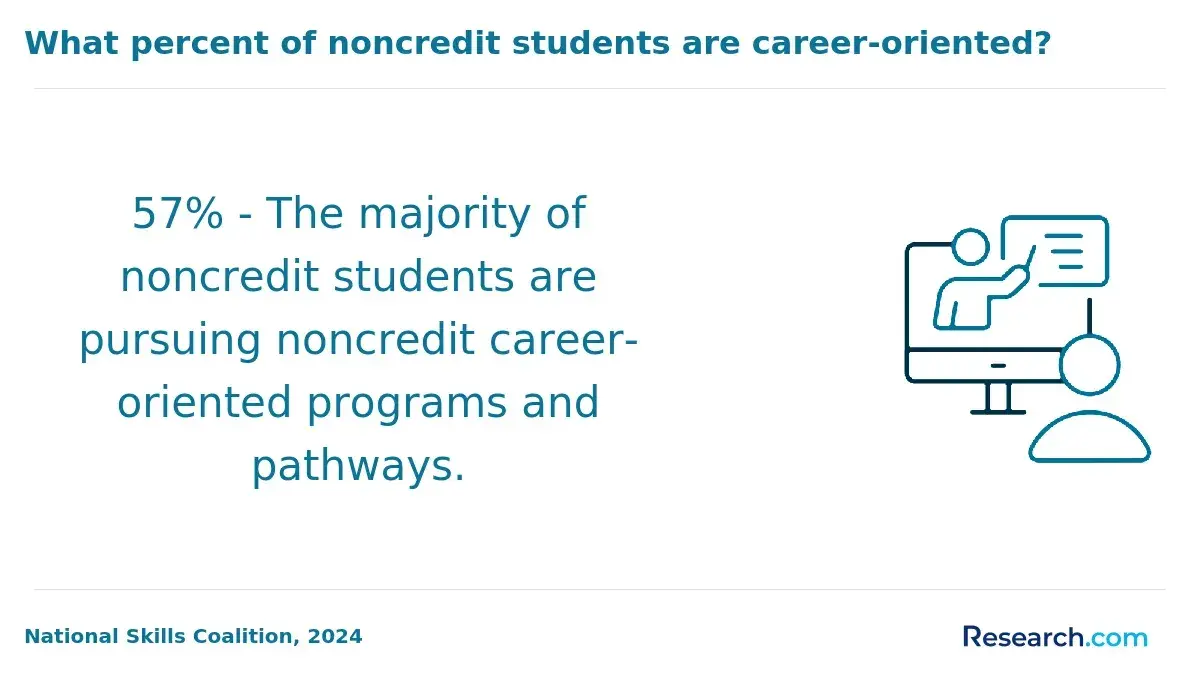
After serving in the military, Sarah expected most of her prior business coursework to transfer seamlessly toward a retail management degree. Instead, she discovered that less than 60% of her credits matched her new institution's curriculum requirements, forcing her to invest additional semesters and tuition. A 2024 study by the National Student Clearinghouse Research Center found that only 57% of transfer credits are accepted by receiving institutions nationwide, reflecting ongoing challenges in cross-institutional credit mobility and inconsistent prior learning assessments. This trend complicates degree completion timelines and affordability for adult learners aiming to leverage previous education toward retail management.
This article will explore how schools are adjusting transfer credit policies and flexible pathways to help students make efficient, cost-effective progress in retail management programs.
Key Things to Know About Retail Management Transfer Credit Trends for Adult Learners
- Institutions increasingly accept military and workforce credits, reflecting practical competency over traditional coursework, yet adult learners must evaluate potential tradeoffs in foundational retail theory coverage employers expect.
- Expanded credit recognition for prior learning streamlines degree completion but often excludes niche retail certifications, requiring targeted advising to avoid credit loss and align with employer skill demands.
- Technology-enabled transcript reviews expedite credit evaluations, reducing administrative delays and costs; however, variability in evaluation timing can affect adult learners' enrollment decisions and financial planning.
- Key Things to Know About Retail Management Transfer Credit Trends for Adult Learners Key Things to Know About Retail Management Transfer Credit Trends for Adult Learners
- How Are Retail Management Programs Changing Transfer Credit Policies for Adult Learners? Evolving Adult Transfer Policies
- Why Are More Retail Management Schools Accepting Credit for Prior Learning and Work Experience? Prior Learning Credit Benefits
- How Do Retail Management Colleges Evaluate and Award Transfer Credits Today? Transfer Credit Evaluation Process
- Which Alternative Credits Are Most Commonly Accepted by Retail Management Programs? Accepted Alternative Credits
- How Are Retail Management Schools Improving Transfer Pathways for Community College Students? Improved Community College Pathways
- How Can Transfer Credits Help Retail Management Students Graduate Faster? Accelerating Degree Completion
- How Much Money Can Students Save Through Retail Management Transfer Credit Opportunities? Cost Saving Through Transfers
- How Are Retail Management Programs Supporting Military Students and Workforce Learners Through Transfer Credits? How Are Retail Management Programs Supporting Military Students and Workforce Learners Through Transfer Credits?
- What Transfer Credit Innovations Are Shaping the Future of Retail Management Education? What Transfer Credit Innovations Are Shaping the Future of Retail Management Education?
- How Can Adult Learners Maximize Transfer Credits in a Retail Management Program? Maximizing Your Transfer Credits
How Are Retail Management Programs Changing Transfer Credit Policies for Adult Learners?
Transfer credit policies in retail management programs are evolving to better align with the needs of adult learners, working professionals, and military-affiliated students by broadening credit acceptance and incorporating prior learning assessments. This shift often materializes through expanded agreements with community colleges and alternative education providers, fostering credit mobility but also requiring careful scrutiny of institutional residency rules and credit applicability to core competencies. For instance, a military veteran transferring certifications and training credits may find that although a growing share of programs recognize workplace experience, some still limit credit counting toward elective rather than required retail management courses, potentially extending time-to-degree and affecting course sequencing decisions.
These programs frequently streamline transcript evaluation processes using automated systems and standardized frameworks, allowing more flexible transfer credit options for working professionals in retail management while reducing administrative delays. According to data from the National Student Clearinghouse Research Center, over 75% of institutions have formalized articulated agreements, decreasing credit loss and making earlier professional and military credits count toward degree completion. However, students must remain vigilant about institutional caps on credits accepted and varying policies across schools, especially when comparing public and private options or moving from community colleges to four-year programs, as these decisions directly influence affordability, access, and efficient educational trajectories, elements critical for adult learners balancing career and study commitments. This real-world complexity underscores the value of consulting reliable resources like cheapest online colleges that accept FAFSA in USA to identify programs with transfer-friendly policies aligning with individual backgrounds.
Why Are More Retail Management Schools Accepting Credit for Prior Learning and Work Experience?
The increasing acceptance of credit for prior learning and work experience in retail management programs reflects strategic responses to shifting enrollment challenges and workforce demands rather than mere policy generosity. Institutions are adapting to attract a growing population of adult learners who bring diverse professional backgrounds, including military experience and industry certifications, which can be assessed through competency-based evaluations and portfolio reviews. A Council for Adult and Experiential Learning report from 2024 highlights that schools with prior learning assessment see a 20% higher retention rate among adult students, underscoring how these policies support persistence and degree completion in a competitive postsecondary market. However, schools must balance credit awards with maintaining academic standards, as over-crediting threatens program rigor and employer confidence in credential validity.
For working professionals aiming to shorten time-to-degree, recognizing experiential credits can reduce redundancies in course requirements, but the process often entails detailed documentation and institutional scrutiny that varies widely. Transfer students and military-affiliated learners particularly benefit from flexible credit acceptance, yet they face inconsistent transfer equivalency frameworks that complicate academic planning and may delay graduation timelines. These practical tradeoffs require students to weigh how prior learning recognition aligns with their educational goals and career trajectories while ensuring they acquire sufficiently rigorous competencies to meet employer expectations in retail management roles. Ultimately, expanding credit acceptance signals evolving institutional priorities around accessibility and relevance but demands informed navigation to optimize outcomes.
One adult learner transitioning from a decade in retail operations found that submitting military training records and a professional certification portfolio for credit evaluation was a mixed experience. While the school acknowledged many competencies, the student noted delays caused by shifting institutional policies on allowable credit types and the need for supplementary assessments to qualify for upper-level credit. Though initially skeptical, the student appreciated the eventual reduction in required coursework, emphasizing that clear communication and institutional transparency were crucial for effectively leveraging prior learning in the degree plan.
How Do Retail Management Colleges Evaluate and Award Transfer Credits Today?
Transfer credit evaluation in retail management colleges increasingly serves as a strategic tool shaping enrollment outcomes and student success rather than merely an administrative checkpoint. Institutions weigh accreditation status, course content alignment, and validated prior learning-such as military training or professional credentials-when assessing credit worthiness. For example, a working adult transferring from a regionally accredited community college might face fewer hurdles than one with coursework from a nationally accredited or unaccredited institution, impacting how much credit applies toward core retail management courses versus electives. This differentiation influences how quickly students can progress and minimizes excess tuition expenses, yet it demands careful academic advising to navigate varying residency requirements and upper-division credit policies specific to retail management degrees.
Recent data from the National Center for Education Statistics reveals that nearly 40% of institutions explicitly recognize military service or certified professional experience for credit, reflecting a growing trend toward integrating experiential learning into degree pathways. However, credit acceptance often hinges on program-specific articulation agreements and demonstrated competency aligned with retail management competencies, which can limit transferability for some students and affect mobility between two- and four-year programs. Adult learners must strategically plan course selection and document prior learning thoroughly to optimize degree completion timelines and avoid redundant coursework, balancing flexibility against institutional rigor and employer expectations for foundational management skills in retail environments.
Which Alternative Credits Are Most Commonly Accepted by Retail Management Programs?
Acceptance of alternative credits has evolved into a strategic mechanism for enhancing degree accessibility and expediting completion for adult learners in retail management programs. Rather than simple credit transfer, many institutions evaluate credit for prior learning (CPL) by assessing the relevance and rigor of professional experience, certifications, and specialized training, often constrained by residency requirements and upper-division credit limits. Military training credits, especially those verified through ACE recommendations, are commonly accepted but their applicability hinges on how closely military occupational specialties align with retail management competencies, creating variability in conversion rates that adult learners must navigate carefully when planning their transfer pathways.
Standardized exams like CLEP and DSST are frequently recognized for foundational business and general education credits, though they rarely cover the specialized content critical to retail management degrees. Additionally, programs increasingly acknowledge workforce certifications and competency-based assessments offered by platforms like Sophia Learning and Study.com, though transfer acceptance depends strongly on institutional accreditation and course equivalency evaluations. According to a 2024 National Student Clearinghouse study, only about 45% of submitted alternative credits successfully transfer into retail management programs, underscoring the importance of understanding each school's articulation agreements to optimize transfer credit options for adult learners in retail management programs.
Practical transfer planning must weigh affordability and degree-completion timelines against credit acceptance policies, especially for adult learners balancing work and study. Flexibility in credit recognition can reduce time to degree, but learners should assess how alternative credit aligns with employer expectations and program rigor to avoid credit inflation or redundant coursework. For those comparing pathways, exploring affordable cybersecurity programs alongside retail management options may provide complementary career choices with clear credit articulation routes in evolving industry sectors.
How Are Retail Management Schools Improving Transfer Pathways for Community College Students?
Retail management programs are prioritizing streamlined transfer pathways to address the significant loss of community college credits that often delays degree completion. According to a 2024 report from the National Student Clearinghouse Research Center, about 20% of community college credits fail to transfer effectively, prompting schools to develop clearer articulation agreements and credit evaluation processes. These frameworks not only define how specific associate degree credits apply to bachelor's curricula but also help students anticipate which courses will count, reducing redundant coursework and safeguarding academic momentum. However, students must still navigate institutional variations in credit acceptance, especially for specialized courses, which can impact degree timelines and career progression.
To enhance educational accessibility, many retail management programs integrate prior learning assessments and dual-admission partnerships, recognizing work experience and military training as legitimate credit sources. Dedicated transfer advisors increasingly support this complexity by providing tailored guidance based on real-time credit equivalency data and aligning course selection with labor market demands. These adaptations reduce transfer friction but require students to engage proactively with advisors and articulation details to avoid unexpected setbacks. The result is a more strategic but nuanced transfer process where planning and institutional compatibility directly influence degree attainment and employability prospects.
One community college transfer student in retail management described uncertainty over credit acceptance due to conflicting information from two prospective four-year schools. After careful transcript evaluation through a transfer counselor, the student identified an articulation agreement guaranteeing junior status if specific courses were completed. This clarity allowed the student to adjust course selections to fit the agreement, alleviating earlier concerns about credit loss and enabling a more confident path toward timely graduation.
How Can Transfer Credits Help Retail Management Students Graduate Faster?
Transfer credits can offer retail management students substantial time savings, but their actual impact depends heavily on institutional policies and program-specific requirements. While prior coursework from community colleges often aligns well with general education components, many retail management programs require a substantial amount of upper-division credits completed in residence, limiting the direct applicability of some transferred credits. Students must navigate credit acceptance rates that fluctuate based on articulation agreements and institutional rigor, balancing credit mobility with constraints such as residency rules, course sequencing, and degree applicability to ensure that transferred credits genuinely accelerate progress without triggering unforeseen additional coursework.
Benefits of transfer credit policies for adult retail management students hinge on the effective use of prior learning assessment (PLA), which recognizes professional experience, military training, and certifications as academic credit. This can be critical for working professionals and military-affiliated students who seek to consolidate their experiential learning into formal credits, reducing redundancy and overall time-to-degree. However, PLA acceptance varies widely by institution and program, requiring students to proactively verify how their specific credits and experiences align with retail management degree requirements. Evolving transfer-friendly policies influence enrollment strategies and affordability for adult learners, who often weigh accelerated completion against the quality and relevance of their credits within a structured academic framework. For those interested in broader educational pathways, exploring options like a blockchain masters degree may also inform credit strategies and career planning.
How Much Money Can Students Save Through Retail Management Transfer Credit Opportunities?
Transfer credits can offer substantial cost reductions for retail management students but realizing these savings often depends on institutional policies that vary widely. For example, military-affiliated students may convert training experiences into credit, accelerating degree completion while lowering tuition outlays. Yet, many programs impose transfer limits-typically allowing only 60-75% of credits to be applied-which forces students to complete a core portion of coursework on campus or through the institution itself. This residency requirement can dilute potential savings by requiring enrollment in higher-cost or proprietary courses, complicating budgeting and academic planning.
Community college credits frequently cost significantly less per credit hour than those from four-year universities, making them a strategic option for foundational retail management courses. However, whether these credits transfer depends on course equivalency assessments; failure to match curricular content means retaking classes and absorbing additional tuition. Adult learners and working professionals must also weigh these tradeoffs against experiential or capstone components that often cannot be bypassed, constraining how much time and money credit transfers can realistically save. A 2024 report from the National Student Clearinghouse Research Center highlights how carefully managed credit transfers can shorten time to degree by over a year, translating into thousands saved, but this outcome requires navigating complex and sometimes restrictive transfer frameworks that differ by institution and program.
How Are Retail Management Programs Supporting Military Students and Workforce Learners Through Transfer Credits?
Retail management programs face complex challenges in translating military training and workforce credentials into academic credit that genuinely accelerates degree completion. According to a 2024 report from the American Council on Education (ACE), more than 85% of institutions now evaluate military training for credit, yet the depth and consistency of credit awarded vary widely. For military-affiliated students and working professionals, this inconsistency often means that while some prior learning assessments (PLAs) can reduce tuition and coursework substantially, many still confront significant credit gaps that extend timelines and complicate academic planning.
Transfer articulation agreements linked to organizations like the Defense Activity for Non-Traditional Education Support (DANTES) provide a foundation for smoother credit acceptance, but less than 60% of retail management programs nationally disclose clear military credit policies, forcing some students to navigate unclear or restrictive systems. Additionally, workforce credentials-including certifications and apprenticeships-are increasingly accepted, reflecting retail's practical skill demands, but regional and institutional policy disparities impact how much credit is granted. These policy variations influence degree completion decisions heavily: adult learners must weigh whether their prior experience will translate into meaningful academic credit or if remaining requirements will still require substantial time and financial investment.
What Transfer Credit Innovations Are Shaping the Future of Retail Management Education?
Transfer credit innovations are notably reshaping degree accessibility and mobility for adult learners and transfer students in retail management education by offering more flexible and expedited pathways. AI-assisted transcript evaluations, for example, have cut credit processing times by up to 40% according to a 2024 National Center for Education Statistics report, allowing institutions to make quicker, data-informed decisions on credit applicability. However, smaller programs may struggle with implementing such technology due to resource limitations, which can lead to inconsistencies in credit acceptance that directly impact transfer students' degree completion timelines.
Policies expanding credit for prior learning (CPL), especially for military-affiliated students, further influence how work experience and alternative credentials are valued, enabling some students to bypass lower-division requirements and accelerate graduation. The American Council on Education's estimate that military students can receive credit for up to 30% of their degree requirements highlights a significant shift, though aligning these credits with employer expectations in retail remains a challenge to ensure both academic rigor and market relevance. Initiatives like standardized transfer agreements and emerging digital credentialing enhance credit portability but require careful coordination to maintain educational quality and meet workforce demands. Adult learners should also consider how competency-based education pathways integrated in retail management apply prior skills toward credit, balancing speed with the need for verified mastery. For those evaluating program options, understanding how these transfer innovations translate into actual course equivalencies and employer recognition is critical for long-term career planning and practical degree completion.
Students seeking programs that maximize flexible credit articulation might explore resources specific to their professional or military background, including relevant offerings like asha accredited SLPa programs online, to understand the evolving landscape of technology-driven transfer credit assessment methods for adult learners. These innovations, while promising, require proactive navigation to avoid common pitfalls such as uneven credit acceptance or misalignment with job market demands.
How Can Adult Learners Maximize Transfer Credits in a Retail Management Program?
Maximizing prior learning credits in retail management degree completion requires adult learners to weigh institutional transfer policies against practical academic progress. For example, a student transferring from a community college must assess how articulation agreements or credit for prior learning (CPL) options-such as military service or professional certifications-align with program requirements and quality standards, since nearly 45% of transfer students report credit losses according to the National Student Clearinghouse Research Center (2024). Decisions to accept some credits may speed time-to-degree but could create sequencing challenges if key foundational courses do not transfer or meet employer expectations for current skillsets.
Programs often impose credit transfer limits to preserve curriculum integrity, making upfront transcript evaluation essential for adult learners targeting degree completion in retail management. Using degree mapping tools helps clarify how accepted credits apply to core and elective requirements, preparing students for gaps that might require additional coursework. For those balancing work and study, understanding and leveraging credit for prior learning through portfolio assessments or military transcripts can reduce tuition costs and redundant content. Considering these factors critically impacts educational flexibility, cost efficiency, and alignment with career goals.
Because transfer credit strategies for adult learners in retail management programs are nuanced by institutional variations and evolving acceptance of alternative credit sources, learners must pursue proactive communication with admissions and registrar offices. Exploring programs with articulation agreements and CPL recognition offers an advantage, especially when paired with tools that display credit applicability and outstanding requirements. Adult learners seeking to enroll in online colleges that start soon should prioritize institutions that provide clear guidelines on maximizing transfer credits without compromising academic rigor or long-term employability.
References:
- Want Affordable College Credit? Here’s How to Maximize Savings Without Sacrificing Quality https://www.straighterline.com/blog/affordable-college-credit-maximize-savings
- More Colleges Offering Credit for Prior Work Experience https://www.governing.com/workforce/more-colleges-offering-credit-for-prior-work-experience
- Improving the Experience for Community College Transfer Students https://changinghighered.com/improving-the-experience-for-community-college-transfer-students/
- Improving the Share of Adult Learners at Four-Year Institutions - Ithaka S+R https://sr.ithaka.org/blog/improving-the-share-of-adult-learners-at-four-year-institutions/
- Verifying that you are not a robot... https://www.degreesight.com/news/how-students-can-maximize-their-transfer-credits/
- Retail payment innovations that shape the future of unified shopping experiences - Adyen https://www.adyen.com/knowledge-hub/retail-payment-innovations
- Skills4Retail: Training for Retail's Future https://skills4retail.eu/training-programmes/
- Adult Postsecondary Learners: Reviewing the Data and Evidence https://www.jff.org/idea/adult-learners/
- The Importance of Understanding Transfer Credit Policies https://www.sophia.org/blog/higher-education/understanding-transfer-credit-policies/
- Retail Management https://www.southmountaincc.edu/degrees-certificates/business-entrepreneurialism-management/retail-management-5286-ccl
Other Things You Should Know About Retail Management
Accepting numerous transfer credits can accelerate degree completion but risks diluting program depth, especially in core retail management competencies. Schools must balance credit acceptance against ensuring students gain essential skills aligned with employer expectations, such as merchandising analytics or supply chain strategy. Students should prioritize schools with clear policies that require completion of key retail management courses on-site or through controlled online formats to maintain rigor and job-readiness.
Transferring credits can shorten the timeline and reduce costs, but students often face limited flexibility in course sequencing and may miss out on updated curricula emphasizing current industry technologies or sustainability practices. Starting fresh might offer exposure to innovative content but demands greater time and financial investment. Adult learners should weigh their immediate need for credential completion against long-term career relevance, prioritizing programs that integrate transfer credits without compromising strategic skill development.
Yes, disparities in curriculum focus-such as heavy emphasis on marketing versus inventory management-can leave gaps in critical retail management knowledge. Employers may question the preparedness of graduates whose programs lacked comprehensive coverage of relevant topics, affecting job placement. Adult learners should seek assessments that map prior credits to specific competencies and consider supplementing ambiguous credit transfers with targeted courses to avoid skill deficits that hinder career advancement.
Working professionals must scrutinize whether transferred credits correspond to evolving industry demands, such as integrated e-commerce strategies or data-driven customer insights. Programs that accept broad transfer credits without verifying alignment risk credential inflation, where actual skills do not meet business needs. Prioritizing schools with robust advising and competency-based validation ensures transferred credits support tangible skill gains, thereby enhancing employability and career growth.