2027 Retail Management Career Outcomes by Degree Level Report: Pay, Employment, and Advancement Patterns

Co-Founder and Chief Data Scientist
Choosing the right degree level in retail management can be a critical challenge for working professionals and adult learners aiming to maximize career growth. Many face uncertainty about how an associate, bachelor's, or advanced degree will impact their pay and employment prospects amid shifting industry demands.
A 2024 study by the National Retail Federation highlights that workers with bachelor's degrees experience notably faster job advancement compared to those with lower credentials, reflecting evolving employer preferences for deeper skill sets. This report analyzes pay, employment trends, and promotion patterns across degree levels to help readers make informed decisions about retail management education pathways.
Key Things to Know About Retail Management Career Outcomes by Degree Level
- Associate degrees show quicker labor market entry but often face limited advancement, reflecting an early employment tradeoff where experience accrues more than formal credentialing impacts progression.
- Bachelor's credentials align with employer preferences for managerial roles, indicating workforce trends valuing comprehensive business knowledge, which enhances promotion likelihood and access to diverse retail sectors.
- Master's programs frequently incur higher costs and longer completion times, yet their practical ROI depends on targeted skills acquisition focused on leadership, meaning timing and financial access critically affect net career gains.
- What Career Outcomes Can Students Expect From Each Retail Management Degree Level? Career Outcomes by Degree
- How Much Do Retail Management Graduates Earn by Degree Level? Salary by Degree Level
- Which Retail Management Degree Level Offers the Strongest Employment Prospects? Best Degrees for Employment
- What Entry-Level Jobs Can You Get With a Retail Management Degree? Entry-Level Career Opportunities
- How Do Retail Management Degree Levels Affect Career Advancement and Promotion Opportunities? Career Growth by Degree
- Is a Retail Management Degree Worth It Based on Salary, Employment, and ROI? Salary, ROI, and Value
- How Do Associate, Bachelor's, Master's, and Doctoral Retail Management Degrees Compare? Comparing Degree Levels
- Which Industries and Employers Hire Retail Management Graduates by Degree Level? Which Industries and Employers Hire Retail Management Graduates by Degree Level?
- What Skills, Credentials, and Experience Improve Retail Management Career Outcomes? What Skills, Credentials, and Experience Improve Retail Management Career Outcomes?
- Which Retail Management Degree Level Is Best for Your Career Goals? Choosing the Right Degree
What Career Outcomes Can Students Expect From Each Retail Management Degree Level?
Career outcomes for students in retail management differ markedly by degree level, shaping employment access, leadership potential, and long-term mobility. For example, those with certificates often enter the workforce quickly but face limited pathways beyond frontline or assistant roles, as these credentials typically lack the business breadth necessary for supervisory or strategic positions.
In contrast, associate degrees incorporate foundational business knowledge, improving stability and enabling advancement to supervisory roles; the U.S. Bureau of Labor Statistics (2024) notes that associate degree holders experience about 8% faster employment growth compared to certificate holders, reflecting better employer credential preferences and stronger labor market positioning.
For working adults or military-affiliated students weighing rapid reentry against career trajectory, this tradeoff is critical in deciding whether additional time and credit transfer are worthwhile investments.
Bachelor's degrees in retail management introduce strategic management, marketing, and supply chain concepts, aligning with employer demand for analytical skills and broad cross-functional knowledge in management-track jobs. These programs often include internships that enhance readiness for leadership roles, marking a distinct shift from mid-level supervisory opportunities towards more complex decision-making positions.
Graduate programs further specialize in areas like retail analytics and organizational leadership, catering to professionals targeting district or regional leadership with elevated pay tiers and advancement channels, as confirmed by data from the National Center for Education Statistics (2024).
Doctoral-level credentials, though uncommon, pivot towards academic and high-level consulting roles influencing industry innovation, thereby diverging from traditional retail pathways but offering unique strategic impact for those seeking sector-wide influence.
Adult learners and degree completers should consider how these varying credential levels match their long-term goals versus immediate job placement realities, especially when deciding on program length, transfer credits, and professional alignment. Career-focused learners interested in intersecting fields might also explore opportunities like obtaining an artificial intelligence degree online to enhance analytical capabilities applicable in retail management contexts.
How Much Do Retail Management Graduates Earn by Degree Level?
Income for retail management graduates varies significantly based on credential level, but these differences should be weighed against factors such as job stability, advancement potential, and the time or cost needed to attain higher degrees. Individuals with a bachelor's degree commonly start with median wages in the $48,000 to $55,000 range, reflecting access to supervisory roles or management trainee positions that involve greater strategic responsibilities.
In contrast, certificate or associate degree holders often encounter starting salaries closer to $30,000 to $38,000, largely due to the more limited scope of their roles and higher exposure to part-time or seasonal work.
The U.S. Bureau of Labor Statistics (2024) data underscores how master's holders who combine advanced credentials with experience can command salaries exceeding $60,000, but they typically must invest additional years in education, making this path more accessible to those prioritizing long-term leadership positions or corporate roles in competitive urban markets.
Decisions to pursue advanced retail management education also involve navigating employer expectations and transfer-credit policies that influence completion timeframes and cost-effectiveness.
For instance, many employers explicitly seek bachelor's degrees for managerial candidate pools, but they value proven work experience alongside academic credentials. This means that for working adults, military-affiliated students, or those balancing family commitments, accelerated pathways from certificate or associate credentials to bachelor's degrees can offer a pragmatic route to higher earnings without starting anew.
However, wage premiums tied to degree levels can vary regionally, and premium pay attained through advanced degrees often hinges on the graduate's ability to leverage specialized skills like financial analysis or regional operations oversight, which are not uniformly demanded across the retail sector.
One retail management graduate recalled hesitating initially when choosing whether to extend their studies beyond an associate degree after comparing wage figures and job listings. They found local employers prioritized a bachelor's degree for even entry-level management roles, which justified the extra investment despite the longer timeline and additional costs.
After transferring credits from their certificate program, the graduate appreciated how this approach helped them accelerate their coursework and maintain part-time employment, ultimately leading to a salaried assistant manager position. Still, they noted that understanding real-world hiring preferences and stability prospects was crucial to setting realistic expectations about how much they could earn immediately versus after completing advanced credentials.
Which Retail Management Degree Level Offers the Strongest Employment Prospects?
While certificates and associate degrees in retail management enable quicker entry into supervisory positions, they often confine graduates to roles with limited advancement, especially given employers' increasing preference for credentials signaling leadership and analytical abilities. Many employers view bachelor's degrees as the baseline for managerial positions, reflecting broader training in finance, strategy, and data-driven decision-making.
For example, bachelor's graduates have demonstrated employment rates exceeding 85% within a year of program completion, showing stronger workforce integration where competition is high and wage growth is slower for lower credentials. This dynamic suggests that while shorter programs may appeal to those seeking workforce reentry or immediate employment, they can delay access to senior roles and upward mobility without further education or experience.
Master's degrees in retail management or related business fields often cater to professionals aiming for accelerated progression into specialized or executive roles, where prior experience and networking play critical roles in employment outcomes. Although postgraduate credentials may not significantly improve initial job placement due to these prerequisites, they are associated with faster promotions and higher salary ceilings in established retail environments.
Conversely, doctoral or professional degrees generally steer away from direct retail management careers, focusing instead on research, consultancy, or academic tracks that require strong industry connections. Consequently, prospective students must weigh the tradeoff between entering the workforce early with lower-level credentials and investing in higher degrees that enhance long-term career flexibility but may delay entry and demand supplementary experience.
What Entry-Level Jobs Can You Get With a Retail Management Degree?
Entry-level retail management jobs typically vary significantly in responsibility and advancement potential based on the degree earned. Those with an associate degree often start in roles focused on direct sales or operational support but face limitations in moving beyond initial supervisory positions without additional experience or credentials.
In contrast, bachelor's degree holders frequently access management trainee or assistant managerial roles that serve as structured pathways into leadership, reflecting employers' preference for candidates who combine formal education with demonstrated skills like communication and data analysis.
According to 2024 data from the U.S. Bureau of Labor Statistics, these roles comprise a substantial portion of retail employment but increasingly demand prior retail experience alongside academic qualifications.
Internships and hands-on practicums embedded in retail management programs are crucial for translating theoretical knowledge to applied settings, helping graduates bridge the gap between job listings and actual employer expectations. Certifications in areas such as inventory control or customer relations can sharpen candidates' competitive edge, although licensure remains uncommon in this field.
Employment opportunities can also vary by location, with urban markets offering broader entry-level retail management jobs and rural areas presenting fewer but possibly more stable openings. For those contemplating further study or seeking accelerated career mobility, understanding these distinctions is key, especially as some degree pathways offer more explicit training in emerging retail technologies and sales strategies.
Students weighing options should also consider exploring degree affordability, for instance by evaluating programs like the cheapest online civil engineering degree, to benchmark educational investments against potential returns.
How Do Retail Management Degree Levels Affect Career Advancement and Promotion Opportunities?
The level of education in retail management strongly influences career trajectories, particularly regarding timing and eligibility for supervisory and leadership roles. Recent data from the U.S. Department of Education in 2024 shows that bachelor's degree holders move into mid-level management roles within three to five years at faster rates than those with associate degrees.
While associate degrees facilitate earlier entry into the workforce, they often require more extensive on-the-job experience to meet promotion criteria. Employers increasingly prioritize candidates who possess not only practical retail knowledge but also strategic competencies like data analysis and supply chain management, which are more commonly developed in four-year programs.
For working adults or military-affiliated students with existing experience, advancing through retail management degrees can shorten the time to promotion when coupled with relevant credentials and internship experiences. However, degree attainment alone is insufficient; employers weigh demonstrated management skills and continuing education heavily alongside formal qualifications.
In large retail organizations, bachelor's degrees frequently serve as a baseline screening tool for district supervisor or store manager positions, reinforcing the value of higher academic credentials for internal mobility and leadership readiness.
One retail management graduate faced a common dilemma when deciding whether to pursue a bachelor's after earning an associate degree while working full-time. They hesitated due to the additional time and cost but ultimately recognized that their employer's promotion panel consistently required a bachelor's for district manager eligibility.
Although confident in their frontline skills, the graduate felt uncertain applying for leadership roles without the credential, describing the decision as "a cautious investment in credibility and opening doors that practical experience alone hadn't unlocked." This choice underscored how degree level can shape both opportunity access and personal confidence during mid-career transitions.
Is a Retail Management Degree Worth It Based on Salary, Employment, and ROI?
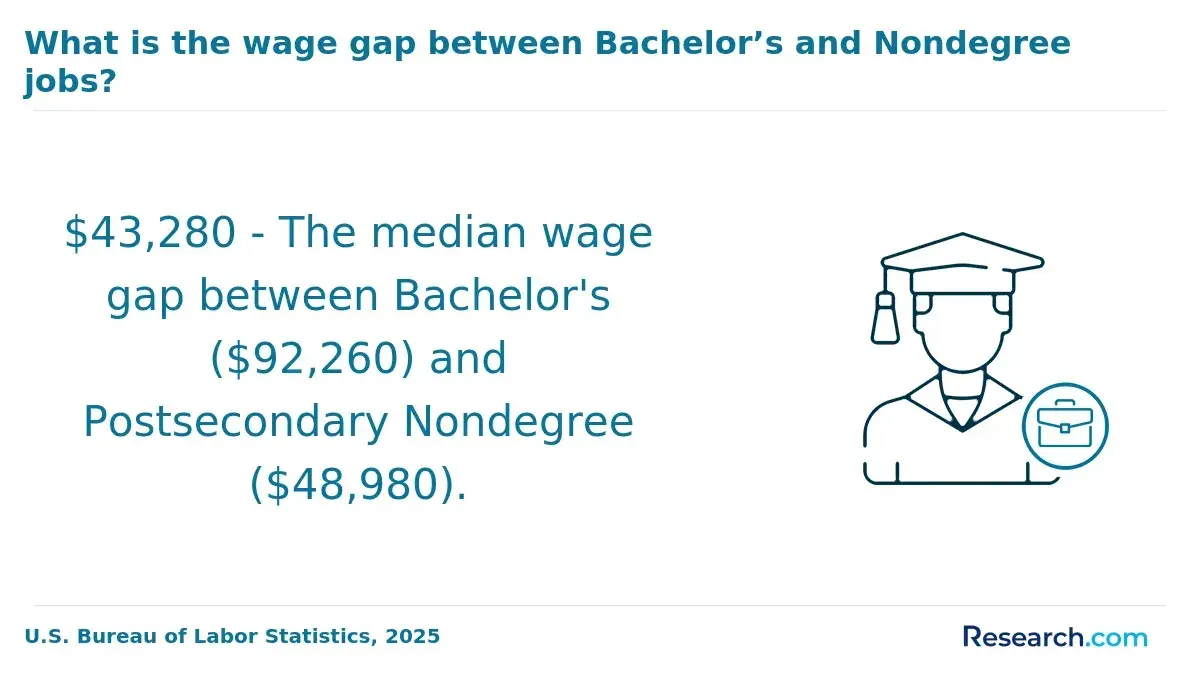
The decision to pursue a retail management degree hinges critically on evaluating salary outcomes, employment prospects, and the return on investment tied to different credential levels. While Bachelor's degree holders tend to earn moderately more than those with associate degrees or certificates, the pay increase is often in the 10-15% range and may not fully offset longer enrollment and higher tuition costs.
For working adults and transfer students, this tradeoff becomes particularly salient: completing a four-year path entails not just financial expense but also opportunity costs from time spent out of the workforce or balancing part-time enrollment.
Retail management degree salary comparisons reveal that while bachelor graduates are more likely to secure leadership roles involving strategic responsibilities, many supervisors advance primarily from experience, not formal education, especially in smaller or regional markets.
Employment stability and career mobility in retail are influenced as much by proven leadership and on-the-job skills as by formal qualifications, affecting real-world value for degree completers. The projected growth in retail management jobs is steady but slower than average, underscoring the need to account for local labor demand and credential relevance.
Prospective students should also consider alternative pathways such as certifications that complement or substitute for a degree in some contexts. Those weighing educational pathways benefit from exploring accelerated online finance degree programs and other flexible options to mitigate costs and enhance credential value.
Employment outcomes and ROI for retail management graduates thus depend heavily on individual circumstances, including prior credits, ability to manage debt, and realistic advancement expectations within their chosen markets.
Employer Confidence in Online vs. In-Person Degree Skills, Global 2024

How Do Associate, Bachelor's, Master's, and Doctoral Retail Management Degrees Compare?
Choosing to pause education at the associate degree level often limits access to higher-tier retail management roles, which increasingly require bachelor's degrees for leadership and strategic responsibilities.
While associate programs offer a faster, lower-cost route into operational positions, those aiming for durable career progression typically encounter a ceiling without further credentials or substantial experience. For example, a worker with only an associate degree may secure entry-level store management but struggle to move into district or corporate leadership without a bachelor's degree or relevant certifications, reflecting employer preferences highlighted in 2024 labor data.
Bachelor's degrees provide broader opportunities by integrating leadership training, strategic management, and credit transfer pathways that facilitate further study or stackable credentials. Data from the National Center for Education Statistics shows these degree holders possess about a 15% higher likelihood of securing management positions than associate graduates, combining practical knowledge and foundational business insight.
Master's programs deepen specialization and prepare professionals for senior roles demanding expertise in areas like supply chain or merchandising, but the time and financial investment involved mean they are best suited for those targeting corporate strategy or resilient positions in competitive markets, which smaller employers may not prioritize.
Doctoral studies remain a niche path focused on academic, consulting, or policy work rather than typical retail operations, offering limited direct impact on employment or pay within mainstream retail sectors.
Those weighing time versus payoff should note that beyond a master's level, the expansion of leadership options narrows considerably. Decisions about advancing education should carefully consider how accrediting institution reputation, credit transferability, and relevant certifications factor into long-term return on investment and job stability, especially for working adults balancing school with employment demands.
Which Industries and Employers Hire Retail Management Graduates by Degree Level?
Employers hiring retail management graduates differentiate strongly by degree level, reflecting the varying demands of operational roles versus strategic leadership positions. Associate degree holders typically enter frontline or supervisory roles within grocery stores, department stores, and general merchandise retailers where practical experience and demonstrated retail operations skills outweigh advanced academic credentials.
In contrast, bachelor's degree graduates are more often recruited for roles involving regional supervision, merchandising coordination, or assistant store management in specialty retail, wholesale trade, and e-commerce sectors. These roles require analytical and financial planning abilities, with a College Scorecard analysis showing bachelor's degree holders earn approximately 15-25% more at entry, highlighting employer expectations for broader competencies and responsibility.
At the master's level, opportunities expand into supply chain optimization, retail analytics, and strategic planning within larger retail corporations and consulting firms, especially in luxury goods and technology-focused retailers. Employers view master's programs as gateways to specialized leadership and upper management in competitive urban markets, a dynamic noted in a recent NCES workforce report.
Doctoral credentials, however, remain largely confined to academic, policy, or research roles rather than direct retail operations. Certificate programs are valued across sectors for targeted skills or specific software proficiencies, supporting project management or promotional advancement.
These distinctions underscore the importance of aligning credential choices with employer screening priorities, where practical business insight and experience often trump formal degrees past the bachelor's-except in regulated or public sector retail contexts requiring higher qualifications.
What Skills, Credentials, and Experience Improve Retail Management Career Outcomes?
Employers in retail management prioritize candidates who combine technical skills with practical experience tailored to their degree level, reflecting a clear linkage between credential depth and role complexity. At the associate degree level, applied experience such as internships, apprenticeships, or military service often offsets limited formal education, with certifications in inventory control or point-of-sale systems acting as strategic enhancers for initial hiring and probation success.
For example, an entry-level candidate with a proven track record managing stock levels during an internship is usually favored over a peer holding only the degree, underscoring the importance of the right competencies beyond classroom learning. These factors critically influence employment access and readiness for frontline supervisory tasks.
Bachelor's degree holders benefit from specialized coursework combined with immersive field placements that sharpen their grasp of supply chain analytics and merchandising nuances. Employers also value early leadership roles and cooperative education as indicators of promotion readiness, which better position graduates to move beyond entry-level roles.
Advanced credentials, including professional certifications and portfolios illustrating project management initiatives, gain relevance for those targeting upper management and strategic positions, improving career mobility and selection prospects in competitive markets.
These patterns illustrate how stacking credentials and relevant experience can systematically enhance retail management credential requirements for career advancement. Adult learners and transfer students must therefore weigh the tradeoff between extending education and accruing applied experience when planning their path.
Across all levels, soft skills such as communication and problem-solving remain non-negotiable for sustaining leadership performance and managing customer relations effectively. For working professionals or military-affiliated students evaluating further education, integrating credentialing opportunities with experiential learning-including practical projects and leadership exposure-forms the backbone of sustained employability.
Candidates exploring non-traditional pathways may find value in cross-disciplinary investments, for instance, pairing retail management education with practical skills development often comparable to those found in online graphic design programs, where applied competencies directly affect job prospects.
Which Retail Management Degree Level Is Best for Your Career Goals?
Choosing the optimal retail management degree level hinges on aligning educational investment with specific workforce outcomes and advancement goals. Associate degrees often cater to those seeking rapid entry into frontline supervisory roles, offering shorter completion times and lower costs but limited upward mobility.
In contrast, bachelor's degrees support broader specialization and prepare graduates for mid- to upper-management positions, with data from the National Center for Education Statistics showing bachelor's degree holders experience roughly a 12% higher employment rate within six months of graduation than associate degree holders.
This difference underscores how employer expectations frequently prioritize higher credentials for leadership track roles, despite increased time and financial commitment.
For working adults, military-affiliated students, or transfer learners, navigating credit transfer and program flexibility is critical to managing opportunity costs during degree progression.
Pursuing graduate-level credentials typically requires a bachelor's as a prerequisite, placing additional emphasis on the bachelor's degree as a gateway to executive roles and specialized career pathways.
While student debt is notably higher for bachelor's graduates compared to those with associate degrees, the potential for promotion and salary growth often justifies this investment. Individuals refining their career strategy should weigh these tradeoffs, considering whether entry-level employment suits immediate financial needs or if long-term advancement justifies further education.
Integrating practical experience, such as internships, also influences outcomes, making program selection pivotal for both employability and skill development. Those examining the best retail management credential for career advancement must consider how degree level intersects with these factors, especially within competitive labor markets.
Additionally, exploring related fields like the online animal science degree paths may provide useful insights into pricing and program structures that impact adult learners. Overall, decision-making demands careful balancing of immediate employability, longer-term mobility, and institutional flexibility to optimize educational returns.
References
- What is a Retail management Degree? | MANCOSA https://www.mancosa.co.za/blog/what-is-a-retail-management-degree-is-it-the-right-course-for-you/
- What can I do with a retail & services management degree? https://gradireland.com/careers-advice/career-ideas/what-can-i-do-retail-services-management-degree
- What is a Retail Manager? - Career Insights | Teal https://www.tealhq.com/career-paths/retail-manager
- Retail manager https://www.candwopportunities.co.uk/careers-directory/retail-manager/
- What Can You Do With a Retail Management Degree? (Careers) https://www.allbusinessschools.com/specialties/retail-management-career/
- Best Entry Level Management Jobs in Retail | Careers at Wegmans https://jobs.wegmans.com/en/entry-level-retail-management-jobs
- Business Administration Degree Salary | UE Amsterdam https://www.ue-amsterdam.com/blog/business-administration-degree-salary-how-much-can-you-earn
- Career development opportunities: better than a promotion https://www.neobrain.io/en/blog/redefining-career-growth-opportunities
Other Things You Should Know About Retail Management
Higher degree levels in retail management, such as master's or doctoral programs, typically demand significantly more time commitment and specialized coursework compared to associate or bachelor's degrees. This can be challenging for working adults who must juggle job responsibilities alongside rigorous study, potentially leading to longer periods of limited work advancement or income stagnation.
For those needing to maintain steady employment, pursuing shorter, more applied programs may offer a better balance, while advanced degrees should be prioritized when the goal is long-term leadership roles requiring deeper strategic acumen.
Employer expectations in retail management increasingly focus on practical skills and relevant industry experience rather than institutional prestige alone. Programs with strong ties to current retail trends, hands-on learning components, and recognized accreditation often provide more direct pathways to employment and advancement than highly ranked but outdated curricula.
Therefore, prospective students should prioritize programs that offer applicable coursework and employer engagement over brand-name recognition to maximize career outcomes.
Bachelor's degrees tend to offer broader foundational knowledge, equipping graduates with versatile skills suitable for multiple retail roles, which can be advantageous for early career exploration.
Conversely, more advanced degrees often focus on specialization, narrowing career options but enhancing expertise in areas like supply chain management or retail analytics. Students uncertain about their specific career path may benefit from a more generalized degree first, while those with clear advancement goals might invest in specialization sooner to align with employer demands for niche expertise.
Master's and doctoral students often encounter heavier theoretical workloads, research obligations, and less immediate applicability of their studies to everyday retail operations. This can delay entry or reintegration into the workforce, limiting short-term income and adding financial strain.
Prospective students should weigh these tradeoffs carefully and consider whether their career trajectory truly demands advanced qualifications or if targeted professional development and experience might yield better immediate returns.