2027 Online Electrical Engineering Degrees With Robotics and Automation Focus

Co-Founder and Chief Data Scientist
Choosing an online electrical engineering degree with robotics and automation focus means balancing accreditation, lab access, cost, and career fit. The timing is strong: the U.S. Bureau of Labor Statistics projects employment for electrical and electronics engineers to grow 9% from 2023 to 2033, faster than the average for all occupations.
This guide is for students, working technicians, military learners, and engineers who want flexible study without giving up technical depth. You will learn how programs differ, what they cost, and how to choose one that supports your robotics or automation goals.
Key Things You Should Know
- Fully online ABET-accredited bachelor's options in electrical engineering exist, but dedicated online "robotics" bachelor's degrees are uncommon; most students build the focus through controls, embedded systems, power electronics, digital signal processing, and mechatronics electives.
- College Board's 2024 tuition benchmark shows average published tuition and fees of $11,610 for in-state public four-year colleges and $43,350 for private nonprofit four-year colleges, so residency status and transfer credit can change total degree cost substantially.
- BLS May 2024 wage data places the median annual wage for electrical engineers at about $111,910, but robotics and automation roles vary by industry, location, graduate education, programming skill, and hands-on project experience.
What is an online electrical engineering degree with a robotics and automation focus?
An online electrical engineering degree with a robotics and automation focus is an engineering program that teaches the electrical, computing, and control systems behind machines that sense, decide, move, and interact with physical environments. The degree may be formally titled electrical engineering, electrical and computer engineering, robotics engineering, automation engineering, or engineering technology, depending on the school and academic level.
At the bachelor's level, the strongest programs usually start with circuit analysis, electronics, signals, electromagnetics, microprocessors, programming, physics, calculus, and differential equations. The robotics and automation focus then comes through courses or projects in feedback control, embedded systems, sensors, actuators, programmable logic controllers, machine vision, power systems, motor drives, and autonomous systems.
It is important to understand the terminology before comparing schools. "Electrical engineering" is typically more theoretical and design-oriented, while "electrical engineering technology" is often more applied and implementation-focused. Both can lead to technical careers, but employers, graduate schools, and professional licensing boards may treat them differently.
If your goal is to design robotic control systems or pursue graduate engineering study, an ABET-accredited engineering degree is usually the safer option. If your goal is industrial maintenance, manufacturing automation, field service, or controls technician work, an engineering technology program may still be practical.
This degree is a good fit for learners who enjoy math, circuits, programming, troubleshooting, and physical systems. It may not be the best fit for students who mainly want software-only artificial intelligence work, product design without advanced math, or broad business management.
Students interested in human movement, wearable devices, or rehabilitation technology may also compare engineering with an online exercise physiology degree if their primary interest is health and performance rather than hardware design.
Use the degree title as a starting point, not the final decision. A robotics-focused electrical engineering program should show clear evidence of relevant coursework, faculty expertise, lab simulations or hardware kits, capstone projects, and employer-aligned outcomes.
How do online electrical engineering programs in robotics compare to campus-based options?
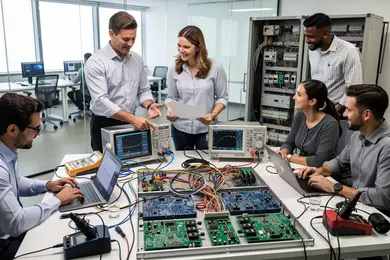
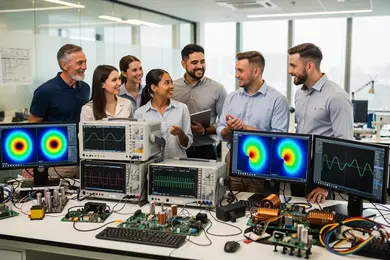
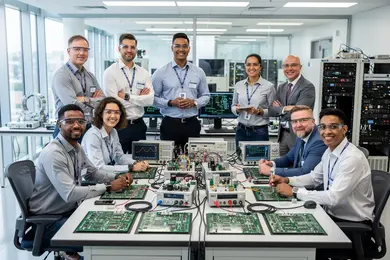
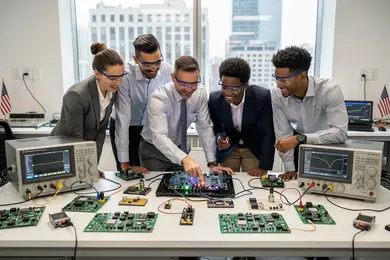
Online electrical engineering programs can be rigorous, but the learning experience is different from a campus-based robotics lab. The best online programs compensate with remote labs, mailed hardware kits, simulation platforms, recorded lectures, live office hours, proctored exams, and project-based assignments.
Campus programs, however, may offer easier access to robotics clubs, machine shops, faculty labs, and in-person team builds.
The table below summarizes the most important differences. Use it to decide whether flexibility or hands-on access matters more for your situation:
| Comparison point | Online robotics-focused electrical engineering | Campus-based robotics-focused electrical engineering | Best fit |
| Schedule | Often asynchronous or hybrid, useful for working adults | More fixed class and lab times | Online for employed students; campus for students who can study full time |
| Hands-on labs | Remote labs, simulations, home lab kits, or short residencies | Dedicated robotics labs, instrumentation, and fabrication spaces | Campus for heavy mechanical prototyping; online for controls, circuits, and embedded systems |
| Networking | Virtual teams, discussion boards, online career services | In-person clubs, competitions, research assistantships | Campus for research immersion; online for career switchers with existing networks |
| Cost control | May save on relocation, commuting, and lost wages | May provide stronger access to campus-funded labs and assistantships | Depends on tuition, residency, aid, and work schedule |
| Employer perception | Strongest when the school is accredited and transcripts do not distinguish modality negatively | Familiar traditional pathway | Either can work when accreditation, projects, and skills are strong |
Choose online study if you need flexibility, already work in a technical role, or can build projects independently. Choose campus study if you want undergraduate research, robotics competitions, fabrication access, or a highly structured environment.
Military-affiliated learners should also compare support services, transfer policies, and deployment flexibility; a focused guide to the best online electrical engineering degree programs for veterans can help identify veteran-friendly options.
The biggest mistake is assuming "online" means either easier or weaker. Program quality depends on accreditation, faculty, lab design, assessment standards, project depth, and how well the curriculum maps to your target role.
Which U.S. schools offer accredited online electrical engineering degrees in robotics and automation?
Dedicated online electrical engineering degrees that are explicitly branded as robotics or automation programs are limited in the U.S. In practice, students usually choose an accredited online electrical engineering or electrical and computer engineering program, then use electives, projects, certificates, or graduate study to specialize in robotics and automation.
The table below highlights U.S. schools with online engineering options that can support robotics or automation interests. Always verify current accreditation, state authorization, modality, and course availability directly with the school before applying:
| School | Online program example | Accreditation note | Robotics or automation relevance | Decision note |
| Arizona State University | Online Bachelor of Science in Engineering in Electrical Engineering | ABET-accredited engineering bachelor's program | Circuits, signals, electronics, embedded systems, and controls-related preparation | Strong option for students who want an ABET online bachelor's pathway |
| University of North Dakota | Online Bachelor of Science in Electrical Engineering | ABET-accredited engineering bachelor's program | Power, electronics, controls, and systems topics applicable to industrial automation | Useful for students seeking a traditional EE curriculum in a distance format |
| Stony Brook University | Online Electrical Engineering bachelor's degree completion pathway | Institutionally accredited; verify current ABET status for the specific pathway | Upper-division EE courses can support embedded and systems-focused interests | Best for transfer students with completed lower-division requirements |
| University of Colorado Boulder | Online Master of Science in Electrical Engineering | Institutionally accredited graduate degree; ABET does not generally accredit master's programs in the same way | Embedded systems, power electronics, photonics, and related technical depth | Good for learners who already have technical preparation and want modular graduate study |
| Missouri University of Science and Technology | Online graduate programs in electrical engineering | Institutionally accredited graduate study | Controls, power, communications, and systems topics can align with automation goals | Better suited to engineers seeking advanced specialization than first-time undergraduates |
| Worcester Polytechnic Institute | Online graduate robotics engineering options | Institutionally accredited graduate study | Direct robotics curriculum combining electrical, mechanical, and computing topics | Best for students who want robotics as the primary graduate focus rather than a pure EE degree |
When comparing schools, do not stop at the program name. A strong robotics and automation pathway should include clear evidence of controls, sensors, embedded computing, motors, power electronics, machine vision, and project work. For bachelor's programs, ABET accreditation is especially important if you may pursue professional engineering licensure or a traditional engineering graduate degree later.
Ask admissions advisors for the current course rotation before enrolling. Some online electives are offered only once per year, and a robotics-related course that looks attractive in the catalog may not be available when you need it.
What admission requirements do online electrical engineering programs with robotics specialization have?
Admission requirements depend on degree level. Bachelor's programs usually evaluate high school preparation, transfer credits, math readiness, and science coursework. Graduate programs usually evaluate prior engineering or computing coursework, undergraduate GPA, professional experience, recommendation letters, and whether the applicant has enough math and systems background to succeed.
Most robotics-focused electrical engineering pathways are mathematically demanding. Before applying, check whether you have completed or can place into the prerequisite sequence.
Schools commonly expect preparation in the following areas:
- Calculus-based physics, especially electricity and magnetism.
- Calculus I through III, plus differential equations or linear algebra for advanced controls and signal processing.
- Introductory programming, often in C, C++, Python, MATLAB, or a similar technical language.
- Basic circuits, digital logic, and electronics for transfer or graduate applicants.
- Lab readiness, which may include access to a computer that can run simulation, CAD, or programming environments.
For undergraduate applicants, transfer credit can be the biggest admissions and cost factor. Community college courses may satisfy general education, calculus, physics, or introductory programming requirements, but engineering credits are often reviewed more carefully. A course titled "electronics" at one institution may not match the lab depth or theory expected by another.
Graduate applicants should pay close attention to prerequisite gaps. A student with a computer science degree may be strong in programming but need circuits and signals. A mechanical engineering graduate may understand dynamics and controls but need electronics and embedded systems. A technician with extensive PLC experience may need additional math before entering a master's program.
Use this application checklist before you submit materials:
- Confirm whether the specific online program is ABET-accredited if you are applying to a bachelor's engineering degree.
- Ask for a written transfer credit evaluation before committing, especially if you have community college, military, or international credits.
- Review the robotics-related electives and verify when they are actually offered online.
- Ask whether labs require mailed kits, campus visits, remote access windows, or specialized software licenses.
- Compare prerequisite policies with your background so you do not enter a program that adds unexpected semesters.
A common red flag is an admissions process that makes the program sound easy without discussing calculus, physics, circuits, or lab expectations. Robotics and automation can be exciting, but the academic foundation is still serious electrical engineering.
What courses and concentrations are included in a robotics and automation electrical engineering curriculum?
A robotics and automation electrical engineering curriculum combines electrical hardware, control theory, sensing, computing, and system integration. The exact course names vary, but the strongest pathways prepare students to understand both the physical machine and the software that controls it.
The table below groups common course areas by the skill they develop. This helps you judge whether a curriculum is truly relevant to robotics or simply a general electrical engineering degree with one automation elective:
| Curriculum area | Typical courses | Why it matters for robotics and automation |
| Electrical foundations | Circuit analysis, electronics, electromagnetics, digital logic | Builds the base needed to design and troubleshoot robotic hardware |
| Controls and systems | Feedback control, dynamic systems, linear systems, state-space methods | Supports motion control, stabilization, tracking, and automated process control |
| Embedded computing | Microcontrollers, embedded systems, real-time systems, firmware | Connects sensors, processors, actuators, and communication buses |
| Signals and sensing | Digital signal processing, sensor systems, instrumentation, machine vision | Helps robots interpret measurements from cameras, encoders, lidar, and industrial sensors |
| Power and motion | Power electronics, electric machines, motor drives, energy conversion | Prepares students to work with motors, drives, battery systems, and industrial equipment |
| Automation applications | PLC programming, industrial controls, robotics, mechatronics, manufacturing systems | Connects theory to factories, warehouses, utilities, and autonomous platforms |
Students should also look for project-based learning. A valuable capstone might involve building a mobile robot, programming a robotic arm, designing a motor controller, integrating machine vision, or automating a small industrial process. Employers often want evidence that you can debug real systems, not just pass exams.
Software skills are increasingly important. Python, C/C++, MATLAB, Simulink, ROS, LabVIEW, PLC ladder logic, and CAD or simulation tools may appear across different programs. If your interests lean more toward AI modeling, analytics, or autonomous decision systems than hardware design, comparing this pathway with a data science degree can clarify whether you want to build machines, analyze data, or do both.
Do not assume every robotics curriculum is equally electrical. Some are more mechanical, some are software-heavy, and some emphasize industrial automation. The right concentration depends on whether you want to work with factory controls, autonomous vehicles, power systems, robotics hardware, medical devices, aerospace systems, or smart infrastructure.
How long do online electrical engineering degrees with robotics focus take to complete?
Completion time depends on degree level, transfer credit, course load, prerequisite readiness, and whether the program uses semesters, quarters, or self-paced modules. Electrical engineering is sequential, so students cannot always accelerate simply by taking more courses. Calculus, physics, circuits, electronics, signals, and controls often build on one another.
The table below provides practical time expectations. Use it as a planning guide, not as a guarantee, because lab availability and elective rotation can affect actual completion time:
| Pathway | Typical full-time timeline | Typical part-time timeline | Best for |
| Bachelor's degree from first year | About 4 years | 5 to 7 years | Students starting college or changing direction early |
| Bachelor's degree completion | 2 to 3 years after transfer prerequisites | 3 to 5 years | Community college transfers or technicians with prior credits |
| Master's in electrical engineering | 1.5 to 2 years | 2.5 to 4 years | Engineers seeking advanced controls, embedded systems, or automation roles |
| Graduate certificate | 6 to 12 months | 1 to 2 years | Working professionals who need targeted robotics or automation skills |
| Bridge or prerequisite sequence | Varies by background | Varies by background | Students without full math, physics, circuits, or programming preparation |
Accelerated study works best for students who already have strong math preparation, transferable credits, and a predictable weekly schedule. It is riskier for learners who work full time, have family obligations, or are returning to calculus and physics after several years away.
To create a realistic timeline, map the curriculum before enrolling:
- Identify every prerequisite chain from calculus through controls, electronics, and capstone.
- Check whether required labs are offered every term or only during specific sessions.
- Ask whether robotics and automation electives rotate annually or less frequently.
- Decide how many technical courses you can complete while maintaining grades and project quality.
- Build in time for internships, portfolio projects, certification exams, or employer-sponsored training.
The most common timeline mistake is overloading the first term. A slower start can protect your GPA and give you time to set up software, learn the online platform, and adjust to engineering problem sets.
What do online electrical engineering degrees in robotics and automation typically cost?
Cost varies widely because online engineering tuition may be charged by credit, semester, residency status, or program type. College Board's 2024 national benchmark reported average published tuition and fees of $11,610 for in-state students at public four-year institutions and $43,350 at private nonprofit four-year institutions.
These figures are not robotics-specific, but they show why residency, institution type, and transfer credit can have a major impact on total cost.
Online students should compare total program cost, not just tuition. Engineering programs may require lab kits, software, proctoring, textbooks, hardware, travel for short residencies, or stronger computer equipment. Financial aid, employer tuition assistance, military benefits, scholarships, and transfer credits can reduce out-of-pocket cost.
- Public in-state bachelor's pathway: often the lowest-cost option when the student qualifies for resident tuition and transfers credits efficiently.
- Public out-of-state online bachelor's pathway: may be higher unless the school offers a flat online tuition rate.
- Private nonprofit bachelor's pathway: may have higher published tuition but can be offset by institutional aid.
- Online master's pathway: total cost depends heavily on credit count, engineering tuition rate, and whether the student receives employer reimbursement.
- Graduate certificate: usually lower total cost than a full master's degree, but narrower in scope and less powerful as a credential.
ROI depends on more than school price. A lower-cost program that lacks accreditation, has weak lab support, or does not offer relevant electives may be a poor investment. A more expensive program may be reasonable if it provides strong faculty access, employer recognition, project depth, and a path into higher-value roles.
Before enrolling, ask each school these cost questions:
- What is the total estimated cost to complete the degree with my transfer credits?
- Are online students charged in-state, out-of-state, or separate distance-learning tuition?
- Which lab kits, software licenses, hardware, or proctoring fees are required?
- Can I pause or reduce course load without losing scholarships or cohort access?
- What percentage of credits must be completed at the institution to graduate?
A common mistake is choosing the lowest per-credit tuition without checking how many credits will actually transfer. Losing a semester of transfer credit can erase the savings from a cheaper advertised rate.
What careers can graduates of robotics-focused electrical engineering programs pursue?
Graduates can pursue roles across manufacturing, aerospace, automotive, utilities, medical devices, logistics, defense, semiconductor, energy, and smart infrastructure employers. Robotics and automation work is interdisciplinary, so job titles may not always include the word "robotics."
Many roles are listed under controls, embedded systems, electrical design, test engineering, systems engineering, or automation engineering.
The table below connects common career paths with responsibilities. This can help you choose electives and projects that match the roles you want:
| Career path | Typical responsibilities | Helpful preparation |
| Robotics engineer | Designs, integrates, tests, or improves robotic systems and subsystems | Controls, embedded systems, sensors, motors, programming, capstone robotics projects |
| Automation engineer | Automates industrial processes, production lines, and monitoring systems | PLC programming, industrial controls, instrumentation, networking, safety systems |
| Controls engineer | Develops feedback systems for machines, drives, vehicles, or process equipment | Control theory, dynamic systems, MATLAB/Simulink, motor control, field testing |
| Embedded systems engineer | Builds firmware and hardware interfaces for devices and machines | C/C++, microcontrollers, real-time systems, electronics, debugging tools |
| Electrical design engineer | Designs circuits, boards, power distribution, and electrical subsystems | Electronics, PCB design, power systems, CAD tools, standards compliance |
| Test or validation engineer | Develops test plans, validates hardware, and analyzes failures | Instrumentation, signal processing, statistics, lab methods, documentation |
A bachelor's degree can support entry-level engineering roles if it is appropriately accredited and technically rigorous. A master's degree may help with advanced controls, autonomy, research and development, or specialized robotics work. A certificate may be enough for experienced engineers or technicians who need targeted skills, but it usually does not replace a full engineering degree for design engineering roles.
Build a portfolio while studying. Useful evidence includes code repositories, control simulations, circuit designs, robotics videos, lab reports, PLC demos, sensor integration projects, and capstone documentation. For many employers, a clear project portfolio can help translate online coursework into proof of hands-on ability.
Students who discover they are more interested in technical documentation, digital knowledge systems, archives, or information organization than engineering design may consider a different graduate pathway such as an MLIS, especially for roles involving data stewardship, technical libraries, or research information services.
What salary ranges and earning potential exist in robotics and automation engineering roles?
Salary depends on job title, industry, location, degree level, clearance requirements, software skill, and hands-on experience. Robotics and automation roles may be classified under several BLS categories rather than one single occupation, so wage data should be used as a benchmark rather than a precise prediction for an individual graduate.
BLS May 2024 wage data reported a median annual wage of about $111,910 for electrical engineers. That figure is useful because many robotics and automation roles rely on electrical engineering fundamentals, but actual offers may be higher or lower depending on whether the role is focused on manufacturing support, embedded software, defense systems, power electronics, or research and development.
The table below shows how related roles can differ. Use these categories to compare career direction, not to assume a guaranteed outcome:
| Role category | Relevant salary context | What can raise earning potential |
| Electrical engineer | BLS May 2024 median annual wage was about $111,910 | Power electronics, controls, embedded systems, industry experience, PE licensure when relevant |
| Electronics engineer | Often overlaps with sensors, communications, hardware, and defense systems | RF systems, embedded hardware, test automation, security clearance, advanced degree |
| Mechanical engineer in robotics | May work on actuators, structures, thermal systems, and machine design | Mechatronics, CAD, dynamics, controls, manufacturing experience |
| Software or embedded developer | Can command strong compensation when the role requires real-time or autonomy expertise | C/C++, robotics middleware, perception, safety-critical systems, cloud-connected devices |
| Industrial automation specialist | Often tied to manufacturing, utilities, logistics, or process industries | PLC platforms, SCADA, industrial networking, troubleshooting, travel flexibility |
For ROI, compare expected debt with realistic entry-level opportunities in your region. A student already working as a technician may see value through promotion into controls or automation engineering. A new student may need internships and project experience before qualifying for higher-paying design roles.
Avoid assuming that "robotics" automatically pays more than general electrical engineering. Employers pay for scarce, useful skills: reliable systems design, debugging under constraints, programming, safety awareness, documentation, and the ability to integrate electrical, mechanical, and software components.
How is the job outlook and industry demand for robotics and automation electrical engineers?
The outlook is favorable but uneven across industries. BLS projects 9% employment growth for electrical and electronics engineers from 2023 to 2033, which suggests steady demand for professionals who can design and improve electrical systems. Robotics and automation demand is also supported by manufacturers, logistics firms, utilities, defense contractors, medical device companies, and technology employers seeking productivity, safety, and reliability improvements.
Several current trends influence the value of this degree. AI is increasing interest in autonomous systems, but physical robots still need sensors, power electronics, embedded controls, safety systems, and validation.
Reshoring and advanced manufacturing initiatives are raising attention on industrial automation. Aging infrastructure and energy transition projects also create demand for engineers who understand controls, power systems, monitoring, and smart equipment.
Employer expectations are becoming more hybrid. A competitive candidate often needs both electrical engineering fundamentals and practical software skills. That does not mean every student must become an AI researcher, but it does mean programming, data logging, simulation, and system integration are increasingly important.
To prepare for the market, take these steps while enrolled:
- Choose electives in controls, embedded systems, sensors, power electronics, machine vision, or industrial automation based on your target role.
- Complete at least one portfolio project that shows a working system, not just a written report.
- Learn one low-level language such as C or C++ and one analysis language such as Python or MATLAB.
- Seek internships, co-ops, technician-to-engineer pathways, or employer-sponsored projects.
- Track job postings in your region and note which tools, platforms, and certifications appear repeatedly.
Red flags include programs with no clear lab plan, no robotics-related electives, limited faculty interaction, unclear accreditation language, or career claims that sound guaranteed. The strongest choice is usually a program that combines recognized accreditation, rigorous engineering content, relevant projects, and enough flexibility to let you keep building experience while studying.
Other Things You Should Know About Electrical Engineering
Yes. Many 2027 online electrical engineering programs require a home lab kit for circuit testing, microcontrollers, and basic robotics work. Students may also need a digital multimeter, solderless breadboard, and a Windows laptop that can run simulation software such as MATLAB or MATLAB Simulink.
Students in an online electrical engineering program with a focus on robotics and automation in 2027 typically require a reliable computer with solid processing power, high-speed internet, and access to specific software tools like MATLAB or LabVIEW. Specialized equipment might be needed for virtual labs.
Some bachelor's programs allow beginners, but you should expect to learn programming early. Robotics and automation students benefit from starting Python, C, or C++ before enrollment because coding appears in embedded systems, simulations, data analysis, and controls projects.
Yes. Online students can pursue local internships, remote technical projects, employer-sponsored assignments, summer co-ops, or part-time roles. The key is to start early with career services and build a portfolio that proves hands-on ability outside the virtual classroom.
References
- Online Electrical Engineering Degrees - BSEE, MSEE https://www.onlineengineeringprograms.com/electrical
- Bachelor of Engineering (Automation and Robotics) - School of Advanced Technology https://www.algonquincollege.com/sat/program/bachelor-of-automation-and-robotics/
- Electrical Engineering https://www.ualberta.ca/en/undergraduate-programs/bachelor-of-science-in-electrical-engineering-electrical-engineering.html
- Masters of Science in Robotics in USA https://www.admitworld.com/Admitworld/masters_of_science_in_robotics
- The 11 Best Degrees in Robotics for 2026 (Expert Picks) - AI Degree Center https://aidegreecenter.org/degrees-in-robotics/
- Engineering Technology: Electrical, Automation and Robotics https://www.letu.edu/academics/engineering/electrical-engineering-technology.html
- Automation and Robotics in Electrical Engineering https://www.nietnibs.com/blog/automation-and-robotics-in-electrical-engineering/
- American University of Ras Al Khaimah Introduces Robotics Concentration in https://study-in-uae.com/blog/american-university-of-ras-al-khaimah-introduces-robotics-concentration-in-electrical-engineering-to-meet-uae-automation-demand/
- What Are The Top 10 Careers in Robotics in 2026? | NEIT https://www.neit.edu/blog/careers-in-robotics
- Are Robotics Engineers in Demand? | Blog | Control Freaks Ltd https://www.controlfreaksltd.co.uk/are-robotics-engineers-in-demand/