
2027 North Dakota Nursing License Requirements

Co-Founder and Chief Data Scientist
If you want to work as a nurse in North Dakota, the license is the gatekeeper: without it, you cannot legally practice as an RN, LPN, or advanced practice nurse in the state. The process can feel confusing because it combines education rules, clinical-hour documentation, NCLEX testing, background checks, renewal deadlines, compact-license rules, and fees. It also matters financially, since North Dakota nurses have an annual mean salary of $79,190, but applicants still need to plan for application costs, exam fees, fingerprinting, and continuing education.
This guide explains how North Dakota nursing licensure works in practical terms. You will learn which license fits your career goal, what documents you may need, how endorsement and compact practice work, how renewal is handled, what mistakes delay applications, and how to compare education and certification options before investing more time or money.
Quick answer: North Dakota nursing license basics
- Regulator: Nursing licenses are handled by the North Dakota Board of Nursing, which sets eligibility rules and enforces state nursing standards.
- Exam requirement: RN candidates take the NCLEX-RN, while practical nursing candidates take the NCLEX-PN.
- Education requirement: Applicants must graduate from an accredited or approved nursing program. Nursing education includes classroom learning and supervised clinical practice, with a minimum of 1,000 hours of supervised clinical practice referenced for applicants.
- Application method: Candidates generally apply online through the North Dakota Board of Nursing system and submit required documentation such as transcripts, clinical-hour proof, license verification when applicable, and criminal background check materials.
- Typical fee: The North Dakota nursing licensure application fee is typically around $100, with separate costs for the NCLEX and background checks.
- What is a North Dakota nursing license, and why do nurses need one?
- Which nursing licenses are available in North Dakota?
- What are the North Dakota nursing license requirements?
- How do you apply for a nursing license in North Dakota?
- When do North Dakota nurses renew their licenses?
- What should nurses know about living and working in North Dakota?
- Can compact-license nurses work in North Dakota?
- How do out-of-state nurses get licensed in North Dakota?
- How can you prepare for the North Dakota nursing licensing exam?
- What continuing education and certification options help North Dakota nurses?
- How should nurses compare affordable online nurse practitioner programs?
- What mistakes commonly delay North Dakota nursing licensure?
- What are the requirements to become an LPN in North Dakota?
- Which additional certifications can strengthen a nursing career in North Dakota?
- How long does it take to become an RN in North Dakota?
- What are the pathways for nurse midwives in North Dakota?
- How can someone become an LVN in North Dakota?
- What resources can help North Dakota nursing students?
- What financial aid options are available for nursing students in North Dakota?
- How can direct entry MSN programs help North Dakota nurses?
- How can nurse practitioners advance in North Dakota?
- What trends are influencing nursing in North Dakota?
What is a North Dakota nursing license, and why do nurses need one?
A North Dakota nursing license is the state-issued authorization that allows a person to practice nursing within North Dakota. It confirms that the nurse has met required education, examination, background-check, and professional standards. The North Dakota Board of Nursing is the state agency responsible for licensing, regulation, discipline, and credential verification.
The license is necessary because nursing involves direct patient care, medication administration, clinical judgment, documentation, and coordination with physicians and other health professionals. State licensing helps ensure that only qualified individuals use protected nursing titles and provide nursing services.
| Why licensure matters | What it means for patients and nurses |
| Public safety | Licensure limits nursing practice to individuals who have completed required training and passed competency testing. |
| Professional standards | The licensing process defines the education, testing, ethics, and scope-of-practice expectations for nurses in North Dakota. |
| Accountability | A license gives the Board authority to investigate complaints and take disciplinary action when practice standards are violated. |
| Career mobility | Because North Dakota participates in the Nurse Licensure Compact, eligible nurses may gain broader practice flexibility through a multistate license. |
For nurses who later want to move into advanced practice, leadership, or doctoral-level roles, licensure is also the foundation for future credentials. If you are comparing long-term earnings by credential, Research.com also explains how much do DNPs make a year.
Which nursing licenses are available in North Dakota?
North Dakota recognizes several nursing license categories. The right choice depends on the level of care you want to provide, how much time you can spend in school, whether you want independent or advanced clinical responsibilities, and whether you plan to pursue graduate education later.
| License type | Typical education path | Common responsibilities | Best fit for |
| Licensed Practical Nurse (LPN) | Practical nursing program, often about one year | Basic bedside care, vital signs, patient assistance, and support under RN or physician supervision | Students who want a faster entry into nursing and are comfortable with a more limited scope of practice |
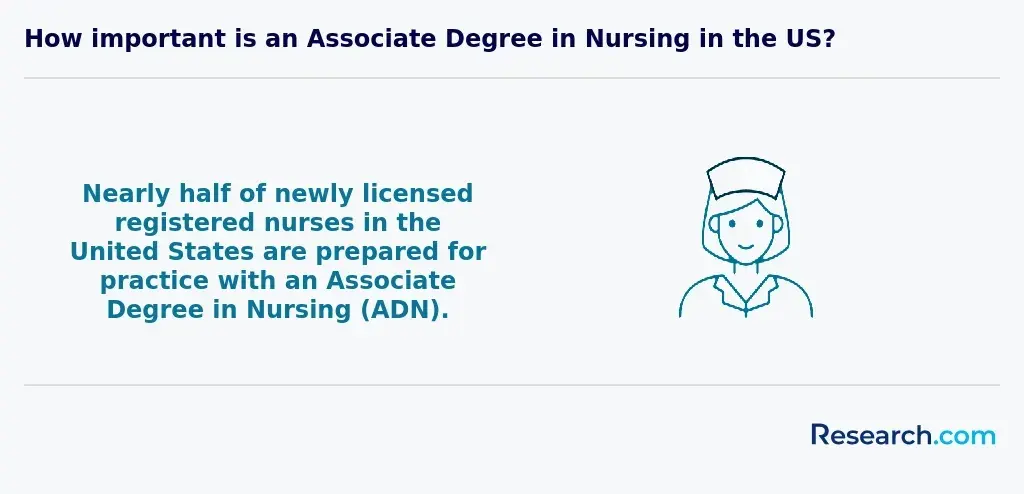
| Registered Nurse (RN) | Associate Degree in Nursing (ADN) or Bachelor of Science in Nursing (BSN) | Care planning, medication administration, patient monitoring, education, documentation, and team coordination | Students seeking broader clinical responsibility and more career mobility |
| Advanced Practice Registered Nurse (APRN) | Graduate nursing degree, typically a master's degree in nursing | Advanced assessment, diagnosis, treatment management, specialty care, and role-specific advanced practice | RNs who want to become nurse practitioners, clinical nurse specialists, nurse anesthetists, or nurse midwives |
APRNs include Nurse Practitioners, Clinical Nurse Specialists, Nurse Anesthetists, and Nurse Midwives. Demand for advanced nursing roles has increased nationally; the number of NPs in the U.S. grew from approximately 91,000 to 190,000 between 2010 and 2017.
If your goal is to move from RN practice into bachelor’s-level preparation more quickly, compare fast track RN to BSN online programs carefully. Look for accreditation, clinical expectations, transfer-credit policies, and whether the program fits your work schedule.
What are the North Dakota nursing license requirements?
To qualify for a North Dakota nursing license and join the state’s workforce of 10,350 nurses, applicants must satisfy education, identity, clinical practice, testing, and background-check requirements. Exact documentation can vary by license type and application pathway, so candidates should always confirm current instructions with the North Dakota Board of Nursing before submitting materials.
- Valid Social Security Number: Applicants must have a valid U.S. Social Security Number for a North Dakota nursing license or permit.
- Approved nursing education: Candidates must complete a nursing program accredited by the North Dakota Board of Nursing or recognized by another state board. Programs usually include didactic coursework, lab training, and clinical instruction and may lead to an associate degree, bachelor’s degree, or practical nursing credential.
- Clinical experience: A total of 500 clinical hours is mandated, giving students supervised experience in healthcare settings before independent licensure.
- Licensing exam: RN applicants must pass the NCLEX-RN. Practical nursing applicants take the NCLEX-PN. The exam is designed to evaluate whether candidates can practice safely at entry level.
- Background screening: Applicants must complete the required criminal history process, including fingerprinting when required.
Some applicants may qualify for a temporary permit while the Board processes their application. A temporary permit can help employers onboard candidates sooner, but it should not be treated as a substitute for full licensure, and applicants should track its expiration carefully.
How do you apply for a nursing license in North Dakota?
The North Dakota application process is easier when treated as a document-management project. Before applying, gather every required record, confirm that names match across documents, and check whether your application is by exam, endorsement, renewal, or advanced practice authorization.
- Create a North Dakota Nurse Portal account: Start by using the state’s online licensing system. This portal is used for applications and related licensing tasks.
- Request official transcripts: Transcripts must come directly from the nursing school or an authorized third-party service. Personal copies are generally not accepted.
- Verify existing licenses: Applicants with prior or current nursing licenses must complete license verification through the required national verification process.
- Complete the Criminal History Record Check: The CHRC process may require forms, fingerprint cards, approved fingerprinting vendors, and payment of required fees to the state Attorney General.
- Document recent practice or education: Applicants must show at least 400 hours of nursing practice within the past four years or provide evidence of recent qualifying educational activity.
- Monitor application status: Do not assume the file is complete after submission. Check for missing transcripts, unread messages, background-check delays, or exam-verification issues.
Applicants may be eligible for a temporary permit while the background check is being completed. This permit is nonrenewable and does not authorize practice in other states.
If your long-term plan includes graduate education, compare tuition, clinical placement support, and accreditation before enrolling. Research.com’s guide to the cheapest online nursing master's programs can help you evaluate cost-conscious options.
When do North Dakota nurses renew their licenses?
North Dakota nursing licenses must be renewed every two years. Renewal is usually less complex than initial licensure, but missed deadlines, incomplete continuing education, or failure to report required legal or disciplinary information can create problems.
| Renewal item | Why it matters | What to do early |
| Continuing education | CE helps nurses stay current with clinical practice, technology, regulations, and patient-safety expectations. | Track completed courses throughout the renewal cycle instead of waiting until the deadline. |
| License status review | Nurses must maintain a clear and accurate licensing record. | Confirm that no disciplinary, address, or employment-status issues need attention. |
| Criminal or disciplinary disclosure | New charges, convictions, or board actions may need to be reported. | Read the renewal questions carefully and answer truthfully. |
| Career planning | Renewal is a good time to decide whether to add certifications or pursue advanced education. | Compare DNP, MSN, certificate, and specialty options before your next cycle begins. |
Nurses considering doctoral study can review easiest online DNP programs, but “easy” should not be the main selection factor. Accreditation, faculty support, clinical fit, and state authorization matter more than convenience alone.

What should nurses know about living and working in North Dakota?
Nursing in North Dakota is shaped by rural healthcare needs, smaller communities, and facilities that may operate with lean staffing. Many nurses work in hospitals, clinics, long-term care settings, public health organizations, and rural facilities where patients may have limited access to specialty care.
The work can be professionally rewarding because nurses often build strong relationships with patients and communities. It can also be demanding. Rural nurses may need to manage broad responsibilities, respond quickly to changing patient conditions, and work with fewer on-site resources than nurses in large urban medical centers.
| Factor | What nurses should expect | Decision tip |
| Rural practice | Broader responsibilities and close patient relationships are common. | Ask employers about staffing ratios, orientation, emergency protocols, and mentorship. |
| Weather and commuting | Harsh winters can affect travel and scheduling. | Plan transportation, housing location, and backup commute options before accepting a role. |
| Cost of living | North Dakota has a relatively low cost of living, with housing costs below the national average and manageable daily expenses. | Compare salary with local housing, transportation, childcare, and loan payments. |
| Career growth | Advanced practice and specialty roles may require additional education and certification. | Review the cost and timeline before committing to graduate school. |
If your goal is advanced practice, budgeting matters. Research.com’s guide on how much does it cost to become a nurse practitioner in North Dakota can help you estimate education and credentialing expenses.
Can compact-license nurses work in North Dakota?
Yes. North Dakota participates in the Nurse Licensure Compact, which allows eligible RNs and LPN/VNs to practice in multiple compact states using one multistate license. The NLC was enacted in 2000 and currently includes 39 states. North Dakota joined the NLC in 2015.
To practice through the compact, a nurse must hold a valid multistate license and meet compact eligibility requirements. These include completing an approved nursing education program, passing the NCLEX-RN or NCLEX-PN, and completing a criminal background check.
- Choose compact practice if: you plan to work across state lines, accept travel nursing assignments, provide eligible telehealth services, or respond to temporary staffing needs in other compact states.
- Do not assume compact coverage if: you hold only a single-state license, your primary state of residence is not aligned with compact rules, or the state where you want to work is not covered by the compact.
- Verify before working: compact rules can affect telehealth, travel assignments, and relocation decisions, so confirm your status before accepting a position.
How do out-of-state nurses get licensed in North Dakota?
Nurses who already hold a license in another U.S. state may be able to obtain a North Dakota license by endorsement. This pathway is designed for nurses who have already passed the required licensing exam and are seeking authorization to practice in North Dakota.
- Submit an endorsement application: The application must show that the nurse has a current, active license in another state.
- Verify credentials: Applicants may need license verification, nursing education records, and evidence of work history or practice activity.
- Complete the background check: A criminal background check is required to evaluate eligibility and protect patient safety.
- Address foreign-education requirements if applicable: Nurses educated outside the U.S. may need credential evaluation through an approved organization such as the Commission on Graduates of Foreign Nursing Schools (CGFNS), and some may need to pass the NCLEX-RN.
Endorsement applicants should not resign from a current job or begin North Dakota practice until they confirm that they have the correct authorization, temporary permit, or license status.
How can you prepare for the North Dakota nursing licensing exam?
NCLEX preparation should start before graduation, not after application submission. The exam tests clinical judgment, safety, prioritization, pharmacology, care coordination, and foundational nursing knowledge. A structured study plan is more effective than last-minute review.
- Review the Board’s licensing instructions: Use the North Dakota Board of Nursing website to confirm current application, testing, and background-check steps.
- Use NCSBN exam resources: The National Council of State Boards of Nursing provides NCLEX information, study guidance, and practice resources for NCLEX-RN and NCLEX-PN candidates.
- Build a study schedule: Divide content areas by week, include practice questions, and reserve time for reviewing rationales.
- Join a study group: Peer review can help clarify difficult topics and keep you accountable.
- Use professional support: Organizations such as the North Dakota Nurses Association can provide networking, continuing education, and mentorship opportunities.
- Simulate test conditions: Practice timed questions so you can manage stress and decision-making on exam day.
| Common NCLEX prep mistake | Better approach |
| Memorizing facts without practicing clinical judgment | Use questions that require prioritization, delegation, and patient-safety reasoning. |
| Studying only preferred topics | Identify weak areas using practice-test analytics and review them repeatedly. |
| Waiting to apply until after graduation paperwork is complete | Track application steps early so transcript, authorization, and testing delays do not surprise you. |
| Ignoring test anxiety | Practice timed exams, sleep planning, and exam-day logistics in advance. |
What continuing education and certification options help North Dakota nurses?
Continuing education helps North Dakota nurses maintain licensure, improve patient care, and prepare for specialty or leadership opportunities. The best CE choices are not always the most convenient ones; they should match your role, patient population, employer requirements, and career plan.
- Clinical CE: Useful for bedside nurses who need current training in medications, chronic disease management, safety, wound care, emergency response, or specialty practice.
- Technology-focused CE: Helpful for nurses working with electronic health records, telehealth, remote monitoring, and quality reporting.
- Leadership CE: Strong fit for charge nurses, nurse managers, preceptors, and nurses preparing for administrative roles.
- Certification preparation: Valuable when a specialty credential can support advancement in critical care, emergency nursing, informatics, public health, or advanced practice.
If you are still mapping your entry into the profession, Research.com’s guide on how to become a nurse in North Dakota can help connect licensure steps with education planning.
How should nurses compare affordable online nurse practitioner programs?
Online nurse practitioner programs can be a practical option for working North Dakota nurses, especially in rural areas where campus access is limited. However, affordability should be evaluated alongside accreditation, clinical placement expectations, state authorization, faculty access, and board-certification preparation.
| Program factor | Why it matters | Question to ask |
| Accreditation | Accreditation can affect certification eligibility, employer acceptance, and transfer options. | Is the program properly accredited for graduate nursing education? |
| Clinical placements | NP students must complete supervised clinical experiences. | Does the school help secure placements in North Dakota, or must students find their own preceptors? |
| Total cost | Tuition is only one expense; fees, travel, books, and certification costs also matter. | What is the full estimated cost through graduation and certification? |
| Schedule flexibility | Working nurses need realistic pacing. | Can the program be completed part time without delaying clinical progression? |
| Specialty fit | NP preparation must align with your intended population focus. | Does the curriculum match the patient population you want to serve? |
To compare cost-conscious options, review Research.com’s guide to the cheapest online acute care nurse practitioner programs.
What mistakes commonly delay North Dakota nursing licensure?
Most licensing delays are preventable. Applicants often run into problems because they submit incomplete forms, assume transcripts were sent, misunderstand endorsement rules, or overlook background-check timing.
| Mistake | Why it causes problems | How to avoid it |
| Choosing a program without checking approval or accreditation | Graduation from the wrong program can affect licensure eligibility. | Verify program status before enrolling, not after finishing coursework. |
| Focusing only on tuition | NCLEX fees, background checks, uniforms, books, travel, and lost work hours add to the real cost. | Build a full budget before choosing a school. |
| Submitting unofficial transcripts | Boards typically require official records sent directly from the school or approved service. | Order official transcripts early and confirm receipt. |
| Assuming online programs automatically meet North Dakota requirements | State authorization and clinical rules can vary. | Ask the school directly whether it meets North Dakota licensure requirements. |
| Ignoring endorsement and compact differences | A compact privilege, single-state license, and endorsement license are not the same thing. | Confirm which authorization you need before accepting work. |
| Waiting on background checks | Fingerprinting and CHRC processing can slow final approval. | Complete required background-check steps as soon as allowed. |
Healthcare licensing varies by profession. If you are comparing regulated health careers, Research.com also explains how to become a licensed pharmacist in North Dakota.
What are the requirements to become an LPN in North Dakota?
To become an LPN in North Dakota, you must complete an accredited practical nursing program that includes classroom instruction and supervised clinical training. After graduation, you must pass the NCLEX-PN and satisfy state background and health-screening requirements.
This path is often attractive to students who want to enter nursing faster than the RN route. However, LPNs have a more limited scope of practice than RNs and usually work under RN or physician supervision. Before choosing this path, compare your long-term goals: if you eventually want broad care-planning responsibilities, supervisory roles, or graduate nursing options, an RN pathway may provide more flexibility.
For a focused step-by-step explanation, see What are the requirements to become a LPN in North Dakota?
Which additional certifications can strengthen a nursing career in North Dakota?
Additional certifications can help nurses move into specialty practice, improve employability, and demonstrate commitment to a focused area of care. The best credential depends on your setting and goals. For example, a rural emergency department nurse may benefit from emergency or trauma-related training, while a nurse interested in operations may focus on informatics, quality improvement, coding, or care coordination.
- Clinical specialty certifications: Useful for nurses in critical care, emergency care, pediatrics, oncology, perioperative care, or long-term care.
- Leadership and management credentials: Helpful for nurses pursuing charge nurse, supervisor, or manager responsibilities.
- Informatics and documentation training: Valuable as healthcare systems rely more on electronic records, analytics, and remote-care tools.
- Revenue-cycle knowledge: A medical billing and coding certification in North Dakota may support nurses interested in documentation accuracy, compliance, case management, or administrative roles.
How long does it take to become an RN in North Dakota?
Becoming a registered nurse in North Dakota usually takes two to four years, depending on the education route. An Associate Degree in Nursing typically takes two years, while a Bachelor of Science in Nursing generally takes four years.
- ADN route: Often faster and can lead to RN licensure after passing the NCLEX-RN.
- BSN route: Usually longer but may support broader advancement options and employer preferences.
- Post-graduation step: All RN candidates must pass the NCLEX-RN before licensure.
- Additional requirements: North Dakota requires a criminal background check and proof of clinical experience as part of the licensing process.
Some nurses later pursue accelerated advanced degrees or specialized graduate pathways, including options such as 1 year NP programs. These programs should be evaluated carefully for accreditation, clinical placement, workload, and state eligibility.
What are the pathways for nurse midwives in North Dakota?
Nurse midwives are advanced practice nurses who specialize in reproductive, prenatal, birth, postpartum, and newborn care. In North Dakota, this pathway requires graduate-level nursing education, advanced clinical preparation, and certification aligned with nurse-midwifery practice.
Prospective nurse midwives should look for accredited graduate programs with strong clinical placement support and coursework in maternal health, neonatal care, pharmacology, assessment, and evidence-based practice. Because this role involves advanced practice authority and specialty certification, applicants should verify program eligibility before enrolling.
Research.com provides a more detailed guide to the educational requirements for a nurse midwife in North Dakota.
How can someone become an LVN in North Dakota?
North Dakota commonly uses the LPN title rather than LVN, but the practical nursing pathway is similar in concept: complete an approved practical nursing program, pass the NCLEX-PN, meet background-check requirements, and maintain the license through renewal and continuing education rules.
If you are searching using the LVN term because you are moving from another state, confirm how North Dakota classifies your credential and whether you need endorsement, compact privilege, or a new application. For more detail, see how to become an LVN in North Dakota.
What resources can help North Dakota nursing students?
Nursing students in North Dakota should use more than a school catalog when planning their education. The strongest preparation combines an approved nursing program, NCLEX readiness, clinical experience, financial planning, and professional networking.
- Board resources: Use the North Dakota Board of Nursing for licensure rules, application instructions, renewal information, and scope-of-practice updates.
- School advising: Ask nursing advisors about NCLEX pass preparation, clinical-site availability, student support, and transfer-credit policies.
- Professional organizations: Groups such as the North Dakota Nurses Association can help students connect with practicing nurses, continuing education, and policy updates.
- Program comparison tools: Review the best nursing schools in North Dakota to compare education options before committing to a program.
- Career services: Use resume support, mock interviews, employer fairs, and alumni networks before graduation.
What financial aid options are available for nursing students in North Dakota?
Nursing school costs can include tuition, fees, books, uniforms, supplies, transportation, exam fees, background checks, and lost work time during clinical rotations. Financial planning should begin before enrollment because aid deadlines may arrive earlier than program deadlines.
| Financial assistance option | How it can help | What to verify |
| Scholarships and grants | These awards can lower tuition costs and may be based on academic performance, financial need, or nursing career goals. | Eligibility rules, deadlines, renewal conditions, and whether funds apply to fees or only tuition. |
| Federal and state financial aid | Students may qualify for Pell Grants, Federal Supplemental Educational Opportunity Grants, and state aid for qualifying students. | FAFSA requirements, enrollment minimums, satisfactory academic progress, and award limits. |
| Loan forgiveness programs | North Dakota participates in federal loan forgiveness opportunities such as Public Service Loan Forgiveness, which forgives remaining student loan debt for nurses in qualifying public service roles after 10 years of payments. | Employer qualification, repayment-plan rules, full-time requirements, and documentation. |
| Work-study programs | Some schools offer healthcare-related work-study roles that help students earn money while gaining experience. | Whether work hours fit clinical schedules and whether positions are available to nursing students. |
Do not choose a nursing program based only on advertised tuition. Ask for the full cost of attendance, estimated clinical travel expenses, NCLEX preparation costs, graduation fees, and whether scholarships are renewable.
How can direct entry MSN programs help North Dakota nurses?
Direct entry MSN programs can offer a faster graduate pathway for students who already hold a non-nursing bachelor’s degree or for nurses seeking a structured route into advanced education, depending on the program model. These programs may combine foundational nursing content with graduate-level preparation, but they are intensive and require careful vetting.
Before applying, confirm whether the program leads to RN eligibility, advanced practice preparation, or both. Also verify accreditation, clinical placement expectations, state authorization for North Dakota students, NCLEX preparation when applicable, and whether the degree aligns with your intended license or certification.
For a comparison of accessible options, review Research.com’s guide to the easiest MSN program.
How can nurse practitioners advance in North Dakota?
Nurse practitioners in North Dakota can strengthen their careers by combining clinical specialization, leadership development, continuing education, and strategic networking. Advancement may involve moving into a high-need specialty, taking on preceptor or administrative responsibilities, earning additional certifications, or pursuing doctoral education.
- Clarify your target role: Decide whether you want more autonomy, a specialty practice, leadership, education, rural health work, or administrative responsibility.
- Choose credentials intentionally: Add certifications that match your patient population and employer needs rather than collecting unrelated credentials.
- Build rural and telehealth competence: North Dakota’s healthcare landscape rewards nurses who can manage access challenges and use digital care tools effectively.
- Network within the state: Professional events and employer-sponsored workshops can lead to mentorship, clinical partnerships, and leadership openings.
- Compare in-state program options: If you need graduate or post-graduate preparation, review nurse practitioner programs in North Dakota.
What trends are influencing nursing in North Dakota?
North Dakota nursing is being shaped by rural access needs, telehealth growth, digital records, remote patient monitoring, and rising expectations for specialized credentials. These trends affect how nurses deliver care, document outcomes, communicate with patients, and maintain competency.
- Telehealth and remote monitoring: Nurses increasingly support patients outside traditional in-person visits, especially in rural areas.
- Electronic health record fluency: Accurate documentation, data review, and care coordination are now central nursing skills.
- Flexible education: Working nurses are looking for online and hybrid programs that support career growth without requiring relocation.
- Specialty preparation: Employers may value nurses who can demonstrate focused expertise in high-need clinical areas.
- Workforce mobility: Compact licensure can help nurses respond to staffing needs and pursue multistate opportunities.
For nurses who want flexible education while remaining employed, Research.com compares top online nursing programs in North Dakota.
Key Insights
- North Dakota licensure is mandatory for legal nursing practice. The Board of Nursing controls licensing, renewal, discipline, and credential verification.
- Your license type should match your career goal. LPN pathways can be faster, RN pathways offer broader scope, and APRN roles require graduate education.
- Documentation matters as much as eligibility. Missing transcripts, incomplete background-check steps, or unclear license verification can delay approval.
- North Dakota is a compact state. Eligible nurses with a valid multistate license may have practice flexibility across compact states, but compact privilege and endorsement are not the same thing.
- Renewal happens every two years. Nurses should track continuing education, license status, and disclosure requirements throughout the cycle.
- Rural practice creates both opportunity and pressure. Nurses may gain broad experience and strong community ties, but they should ask employers about staffing, orientation, emergency support, and winter commuting expectations.
- Program choice affects licensure and ROI. Always verify accreditation, clinical placement support, state authorization, total cost, and exam preparation before enrolling.
- Career advancement should be strategic. Certifications, MSN or DNP study, and NP specialization are most valuable when they align with patient needs, employer demand, and North Dakota practice requirements.
Related Articles for Nearby States
- 2027 South Dakota Nursing License Requirements
- 2027 Minnesota Nursing License Requirements
- 2027 Montana Nursing License Requirements
- 2027 Nebraska Nursing License Requirements
- 2027 Wyoming Nursing License Requirements
- 2027 Iowa Nursing License Requirements
- 2027 Wisconsin Nursing License Requirements
- 2027 Colorado Nursing License Requirements
- 2027 Kansas Nursing License Requirements
- 2027 Illinois Nursing License Requirements
References:
- Nazareno, J., Yoshioka, E., Adia, A., Restar, A., Operario, D., & Choy, C. (2021). From Imperialism to Inpatient Care: Work Differences in Characteristics and Experiences of Filipino and White Registered Nurses in the United States and Implications for COVID-19. Gender, Work and Organization. Wiley.
- ndbon.org (26 Jul 2024). Important Update: Licensing System Now Live. ndbon.org
- U.S. Bureau of Labor Statistics. (2023, September 6). Licensed practical and licensed vocational nurses. Retrieved February 16, 2024, from BLS.
Other Things You Should Know About North Dakota Nursing License Requirements
To obtain a nursing license in North Dakota in 2027, applicants must complete a state-approved nursing program, such as an Associate Degree in Nursing (ADN) or a Bachelor of Science in Nursing (BSN), followed by passing the NCLEX-RN exam.
Practicing as a Registered Nurse (RN) without a valid license in North Dakota is illegal and can lead to penalties such as fines, potential criminal charges, and disqualification from future licensure. It is essential to obtain and maintain a valid RN license to practice legally in 2027.
In 2027, North Dakota requires registered nurses to complete 12 contact hours of continuing education for each renewal period to maintain their nursing license. These education hours ensure that RNs remain informed about the latest advancements and practices in the nursing field.





