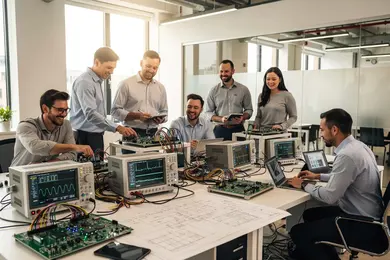
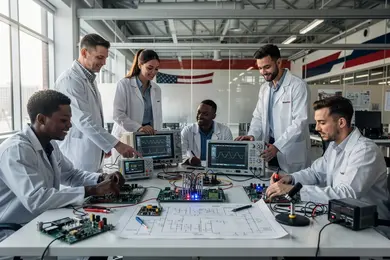
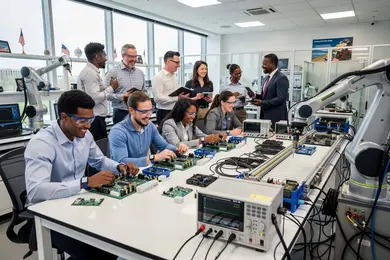
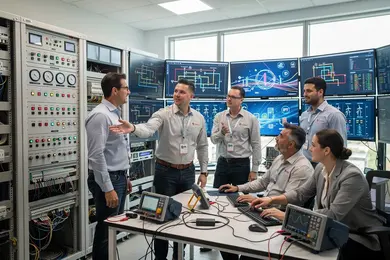
2027 Best Online Electrical Engineering Degrees for Students Who Want Advancement Without Relocating

Co-Founder and Chief Data Scientist
Choosing an online electrical engineering degree is often a career-advancement decision, not just a school search. The U.S. Bureau of Labor Statistics reports that electrical and electronics engineers had a median annual wage of $118,780 in May 2024, making program quality, accreditation, and specialization especially important.
This guide is for working adults, transfer students, military learners, and engineers who want stronger credentials without relocating. You will learn how online programs compare, what they cost, which formats fit different goals, and how to avoid expensive enrollment mistakes.
Key Things You Should Know
- The strongest online electrical engineering choices are usually ABET-accredited bachelor's programs for first-time engineers and flexible master's programs for professionals targeting power systems, embedded systems, communications, semiconductors, or controls.
- BLS data shows electrical and electronics engineers had a $118,780 median annual wage in May 2024, but salary outcomes vary by industry, location, security clearance, licensure, graduate education, and hands-on project experience.
- College Board's 2024 pricing data shows published tuition and fees averaged $11,610 for in-state public four-year students and $43,350 at private nonprofit four-year institutions, so online students should compare total cost, not only per-credit tuition.
What is an online electrical engineering degree and how does it compare to campus programs?
An online electrical engineering degree is a college program that teaches the design, analysis, testing, and improvement of electrical and electronic systems through remote coursework. Students typically study circuits, electronics, electromagnetics, signal processing, digital systems, controls, power systems, and engineering mathematics.
In well-designed programs, lectures, simulations, coding assignments, group design work, and exams are delivered online, while labs may use mailed kits, remote instrumentation, local proctoring, short campus residencies, or approved transfer courses.
The main difference is not the academic subject matter; it is the delivery model. A reputable online program should lead to the same type of credential as its campus counterpart, but students must be more deliberate about lab access, faculty support, accreditation, scheduling, and employer recognition.
The table below summarizes the practical trade-offs that matter most when deciding between online and campus electrical engineering study:
| Factor | Online electrical engineering degree | Campus electrical engineering degree | Best fit |
| Schedule | Often asynchronous or evening-friendly, with deadlines instead of daily attendance | Usually fixed class times and in-person lab blocks | Online fits working adults; campus fits students who can study full time in one location |
| Labs | May use simulation software, remote labs, home lab kits, or limited residencies | Uses on-campus labs, equipment, and direct supervision | Campus is stronger for students who want frequent hands-on equipment access |
| Networking | Requires intentional outreach through virtual teams, faculty office hours, and professional societies | Offers easier access to clubs, labs, career fairs, and peer groups | Online students should choose programs with active advising and employer connections |
| Relocation | Usually not required, although occasional campus visits may apply | Typically requires living near the institution | Online is better for students who cannot move or leave employment |
| Credential value | Depends heavily on accreditation, curriculum, assessments, and institutional reputation | Also depends on accreditation, outcomes, faculty, and industry ties | Neither format is automatically superior; quality signals matter more than modality |
Online study can be a strong option if you are disciplined, comfortable with technical software, and able to complete labs without constant in-person supervision. Campus study may be better if you are new to engineering, need close academic structure, or want daily access to equipment, research labs, and student engineering organizations.
Which online electrical engineering degrees are best for advancing your career remotely?
The best online electrical engineering degree depends on where you are starting and what advancement means for you. A first-time engineering student usually needs an accredited bachelor's degree, while a practicing engineer may get more value from a master's degree, professional engineering-focused program, or targeted graduate certificate.
If you want to compare schools directly, an online electrical engineering degree ranking can be a useful starting point, but it should not replace your own review of accreditation, labs, curriculum fit, employer outcomes, and total cost.
The table below compares common online electrical engineering credential types by goal, student profile, and career use:
| Degree or credential | Who it is best for | Career advancement value | Important caution |
| Online Bachelor of Science in Electrical Engineering | Students who want to become engineers and do not already hold an engineering bachelor's degree | Builds the core engineering foundation often expected for entry-level electrical engineering roles | ABET programmatic accreditation is especially important if licensure may matter later |
| Online bachelor's completion program | Transfer students with calculus, physics, general education, or engineering technology credits | Can reduce time to completion and total cost if credits transfer cleanly | Some technical credits may not transfer, especially if they came from non-accredited or older programs |
| Online Master of Science in Electrical Engineering | Engineers seeking advanced technical depth in areas such as power, communications, controls, or electronics | Can support movement into senior engineering, research-adjacent, systems, or specialized design roles | Applicants usually need a strong math and engineering background |
| Online Master of Engineering in Electrical Engineering | Working professionals who want applied technical leadership rather than a thesis-heavy research path | Often useful for product development, systems engineering, engineering management support, or industry specialization | May be less research-oriented than an MS, so check thesis and project options |
| Online graduate certificate | Engineers who need a focused skill upgrade without committing to a full degree | Can help with targeted areas such as power electronics, embedded systems, or signal processing | Usually not a substitute for a bachelor's degree when a job requires an engineering degree |
For most career changers, the bachelor's degree is the safer long-term credential because it covers the engineering fundamentals employers expect. For current engineers, the master's degree usually offers better advancement leverage because it adds specialization without repeating undergraduate coursework.
How can you verify that an online electrical engineering program is properly accredited?
Accreditation is one of the most important quality checks for an online electrical engineering degree. Institutional accreditation shows that the college or university meets broad academic and administrative standards. Programmatic accreditation, especially from ABET for engineering bachelor's programs, signals that the engineering curriculum has been reviewed against discipline-specific standards.
Use the steps below before applying or paying an enrollment deposit. They help you confirm whether a program is legitimate, recognized, and aligned with your career plans:
- Confirm institutional accreditation through the school's official accreditation page and the U.S. Department of Education-recognized accreditor named there.
- Check whether the exact electrical engineering program, not just the university, has ABET accreditation if you are pursuing a bachelor's degree and may seek Professional Engineer licensure later.
- Verify whether the online version and campus version share the same accreditation status, curriculum requirements, and diploma wording.
- Ask the engineering department how labs are completed, assessed, and documented for online students.
- If licensure matters to you, contact your state engineering board to confirm how it treats online degrees, ABET status, experience requirements, and exams.
Be careful with programs that advertise "engineering" but award an engineering technology degree if your goal is a traditional electrical engineer role. Engineering technology programs can be valuable, but they often emphasize application and implementation more than advanced theory and may be treated differently by employers or licensing boards.
Common red flags include unclear accreditation language, pressure to enroll quickly, no named faculty, no lab explanation, vague transfer policies, and a curriculum that skips calculus-based physics or core circuit theory. If a school cannot clearly answer accreditation questions in writing, keep looking.
What admission requirements do online electrical engineering bachelor's and master's programs have?
Admission requirements vary by institution, but electrical engineering programs are usually more math-intensive than many online degrees. Schools want evidence that students can handle calculus, physics, programming, and technical problem-solving, especially when courses are delivered remotely.
The table below outlines common requirements by program level so you can estimate how prepared you are before applying:
| Program type | Common academic requirements | Common application materials | Preparation issue to watch |
| Online bachelor's degree | High school diploma or equivalent; algebra, trigonometry, precalculus, chemistry, and physics may be expected or recommended | Application, transcripts, possible test scores, personal statement, and placement assessment | Students weak in math may need prerequisite courses before calculus-based engineering work |
| Online bachelor's completion program | Prior college credit, often including calculus, physics, general education, or introductory engineering coursework | College transcripts, transfer credit evaluation, application, and sometimes a minimum GPA | Transfer credits may not apply the way you expect, especially for labs and upper-division engineering courses |
| Online master's degree | Bachelor's degree in electrical engineering or a closely related field; some programs admit other STEM graduates with prerequisites | Transcripts, resume, statement of purpose, recommendations, and sometimes GRE scores | Applicants without signals, circuits, electronics, or advanced math may need bridge courses |
| Online graduate certificate | STEM bachelor's degree or relevant professional background, depending on the school | Short application, transcripts, and sometimes resume or department approval | Certificates may assume graduate-level math and engineering fluency from the first course |
Before applying, request a written prerequisite review if your background is in physics, computer science, engineering technology, mathematics, or another engineering branch. Many strong candidates are admitted with conditions, but prerequisite gaps can add time and cost.
Applicants can improve readiness by taking the following steps before enrollment:
- Refresh calculus, differential equations, linear algebra, and calculus-based physics before the first engineering term.
- Build basic programming comfort in tools commonly used in engineering coursework, such as MATLAB, Python, C, or circuit simulation software.
- Collect syllabi from prior technical courses so the school can make a more accurate transfer or prerequisite decision.
- Ask whether online students follow the same course rotation as campus students, because limited course availability can delay graduation.
How long do online electrical engineering degrees take and what do they typically cost?
Program length depends on your starting credits, course load, lab requirements, and whether courses are offered every term. A full bachelor's degree commonly takes about four years of full-time study, while transfer-friendly completion pathways may take less. Online master's programs often take one to three years, depending on whether you study full time or part time.
Cost varies widely, so compare tuition, fees, software, hardware, lab kits, exam proctoring, travel for residencies, and the opportunity cost of reducing work hours. College Board's 2024 data reported these average published tuition and fee benchmarks for four-year institutions:
- $11,610 for in-state students at public four-year institutions.
- $30,780 for out-of-state students at public four-year institutions.
- $43,350 at private nonprofit four-year institutions.
Those figures are not online electrical engineering prices, but they give useful context: an online program is not automatically cheaper unless it offers lower tuition, avoids relocation, accepts transfer credits, or lets you keep earning income while enrolled.
Similar cost comparisons are useful in other remote, lab-influenced fields as well; for example, students evaluating an animal science degree online also need to look beyond tuition and account for hands-on requirements.
The table below highlights cost factors that are easy to miss when comparing programs:
| Cost factor | Why it matters | Question to ask |
| Per-credit tuition | It is the base cost, but not the full cost | Is online tuition the same for in-state and out-of-state students? |
| Engineering course fees | Technical programs may charge additional fees for labs, software, or computing resources | Are engineering fees included in the advertised tuition estimate? |
| Transfer credits | Accepted credits can shorten the program and reduce total cost | How many prior credits apply to the major, not just electives? |
| Lab kits and equipment | Online labs may require hardware, components, meters, or shipping | What equipment must I buy, rent, or access locally? |
| Residency travel | Some programs require short campus sessions for labs or exams | How many visits are required, and when are they scheduled? |
| Employer tuition assistance | Working engineers may reduce out-of-pocket cost through benefits | Does the program's calendar and accreditation meet employer reimbursement rules? |
A lower-cost program can be a smart choice if it is accredited, transfer-friendly, and aligned with your target specialization. An accelerated program can also be valuable, but only if you can realistically handle the workload; compressing circuits, electromagnetics, and advanced math into a heavy schedule can lead to withdrawals that erase the time savings.
What core courses and specializations are offered in online electrical engineering programs?
Online electrical engineering curricula usually begin with math, science, and engineering fundamentals before moving into advanced systems. Bachelor's programs are broader because they prepare students for entry-level engineering work, while master's programs go deeper into a chosen specialty.
Most reputable programs include some version of the following core areas. These subjects matter because they are the technical foundation behind power grids, electronics, robotics, communications, sensors, aerospace systems, and computing hardware:
- Calculus, differential equations, linear algebra, probability, and engineering statistics.
- Calculus-based physics, electromagnetics, and semiconductor fundamentals.
- Circuit analysis, electronics, digital logic, microprocessors, and embedded systems.
- Signals and systems, communications, control systems, and digital signal processing.
- Power systems, energy conversion, power electronics, and electric machines.
- Engineering design, technical communication, ethics, safety, and capstone projects.
Specializations should match your advancement goal. A power systems track fits utilities, renewable energy integration, grid modernization, and industrial power. Embedded systems fits devices, robotics, automotive systems, defense electronics, and Internet of Things products.
Communications and signal processing fit wireless systems, radar, audio, imaging, and aerospace applications. Controls and automation fit manufacturing, robotics, process control, and autonomous systems.
AI is also changing the field, but it does not replace the need for engineering fundamentals. Electrical engineers increasingly use machine learning for signal processing, predictive maintenance, chip design support, sensor fusion, and automation. If your long-term goal is advanced AI research rather than engineering application, a different path such as a PhD in data science online may be worth comparing after you establish the right technical foundation.
When reviewing a curriculum, do not choose a specialization only because it sounds current. Choose it because it maps to real job descriptions you would apply for, uses tools you want to work with, and builds a portfolio or capstone project you can explain to employers.
What are the most common career paths for graduates of online electrical engineering degrees?
Graduates of reputable online electrical engineering programs can pursue many of the same roles as campus graduates, provided they have the required technical preparation, lab experience, projects, and, when relevant, licensure eligibility. Employers typically care about your degree level, accreditation, skills, project evidence, internship or work history, and ability to solve engineering problems.
The table below summarizes common career paths and the kind of work each role usually involves:
| Career path | Typical responsibilities | Helpful preparation | Advancement direction |
| Electrical engineer | Designs, tests, and improves electrical systems, components, and equipment | ABET-accredited bachelor's degree, circuits, power, controls, lab projects | Senior engineer, lead engineer, systems engineer, project engineer |
| Electronics engineer | Works on electronic circuits, sensors, devices, instrumentation, and communications hardware | Electronics, embedded systems, signal processing, PCB design exposure | Hardware design lead, product engineer, R&D engineer |
| Power systems engineer | Analyzes generation, transmission, distribution, protection, and grid reliability | Power systems, power electronics, energy conversion, utility standards | Grid planning, protection engineer, renewable integration specialist |
| Controls engineer | Designs automation and feedback systems for machines, processes, robotics, or vehicles | Control theory, programming, instrumentation, robotics, industrial systems | Automation lead, robotics engineer, systems architect |
| Embedded systems engineer | Develops hardware-software systems inside devices, vehicles, industrial equipment, or consumer products | Microcontrollers, C or C++, digital systems, real-time systems, sensors | Firmware lead, IoT engineer, product systems engineer |
| Systems engineer | Coordinates requirements, interfaces, testing, risk, and integration across complex technical systems | Broad engineering knowledge, communication, modeling, documentation | Technical program leadership, architecture, engineering management |
Entry-level candidates should focus on projects, internships, co-ops, undergraduate research, or military technical experience because a degree alone may not show enough applied ability. Working professionals should connect coursework to current job responsibilities and build evidence of advancement, such as design reviews, patents, process improvements, system upgrades, or technical leadership.
Students who want licensure should understand that the Professional Engineer pathway usually involves an accredited engineering degree, the Fundamentals of Engineering exam, qualifying work experience, and the Principles and Practice of Engineering exam. Requirements vary by state, so confirm rules early rather than assuming every online degree will be treated the same way.
What salary ranges and earning potential can electrical engineers expect over time?
Electrical engineering can offer strong earning potential, but salaries are not guaranteed by the degree. Pay depends on specialization, degree level, location, industry, clearance requirements, licensure, experience, overtime rules, and whether the role is closer to design, testing, manufacturing, utilities, defense, semiconductors, or software-adjacent systems.
The clearest national benchmark is the U.S. Bureau of Labor Statistics' May 2024 wage data. It reported a median annual wage of $111,910 for electrical engineers and $127,520 for electronics engineers, except computer. This means the middle worker in each occupation earned that amount nationally, not that every graduate should expect it immediately after finishing school.
The table below explains how earning potential commonly changes as responsibilities increase:
| Career stage | Typical profile | What usually affects pay movement |
| Entry level | New bachelor's graduate, junior engineer, test engineer, design support role, or rotational engineer | Internships, ABET background, lab skills, location, industry, and ability to use engineering tools |
| Early career | Engineer who owns defined components, test plans, documentation, or subsystem analysis | Project delivery, troubleshooting ability, software and simulation skills, and exposure to regulated systems |
| Midcareer | Engineer responsible for larger systems, customer requirements, design reviews, or cross-functional coordination | Specialization, graduate education, licensure, security clearance, and leadership of complex projects |
| Senior or lead level | Technical lead, principal contributor, systems architect, project engineer, or engineering manager | Business impact, technical authority, people leadership, patents, standards knowledge, and high-stakes domain expertise |
To evaluate return on investment, compare the total cost of the degree with the roles you can realistically pursue after graduation. A low-cost accredited bachelor's program may offer strong long-term value for a new engineer. A higher-cost master's program may be worthwhile for a working engineer if it directly supports advancement into a better-paid specialty or leadership track.
How is the job market and industry demand for electrical engineers in the United States?
The U.S. job market for electrical and electronics engineers is supported by several long-term needs: grid modernization, renewable energy integration, semiconductors, advanced manufacturing, electric vehicles, aerospace, defense systems, telecommunications, medical devices, and automation.
Demand is not uniform across every city or employer, so students should match their specialization to hiring patterns in the regions or remote-friendly industries they are targeting.
BLS projections show employment for electrical and electronics engineers is expected to grow 9% from 2023 to 2033, which is faster than the average for all occupations.
For students, the practical takeaway is that the field has a favorable national outlook, but competition can still be strong for desirable design roles, remote-friendly positions, and employers requiring specialized tools or clearances.
Current industry trends are changing what employers look for in candidates. Online students can improve competitiveness by building skills that connect electrical engineering fundamentals to modern systems:
- Power and energy employers increasingly need engineers who understand grid reliability, power electronics, renewable integration, protection, and electrification.
- Semiconductor and electronics employers value circuit design, verification, device physics, embedded systems, and testing experience.
- Automation and manufacturing employers look for controls, robotics, sensors, programmable logic controllers, and industrial communication skills.
- Aerospace and defense employers often prioritize systems engineering, signal processing, radar, secure hardware, documentation discipline, and eligibility for clearance-sensitive work.
- AI-enabled engineering workflows are increasing demand for engineers who can use simulation, data analysis, automation, and machine learning tools without losing sight of physical system constraints.
Remote advancement is possible, but fully remote entry-level electrical engineering jobs are less common than remote software roles because many projects involve hardware, labs, facilities, field sites, classified environments, or manufacturing lines.
A realistic strategy is to use online education for the degree while gaining hands-on experience through local employers, internships, co-ops, maker labs, military technical work, or employer-sponsored projects.
How should you choose a reputable online electrical engineering program that fits your goals?
Choosing the right program starts with your target outcome. A student trying to become an entry-level electrical engineer should prioritize accredited bachelor's preparation and labs. A working engineer seeking promotion should prioritize specialization, faculty expertise, course scheduling, employer reimbursement compatibility, and projects that connect to current work.
Use this decision process before committing to a program. It will help you compare schools in a way that goes beyond rankings or marketing claims.
- Define your target role first, such as power systems engineer, embedded systems engineer, electronics engineer, controls engineer, or technical lead.
- Check whether the degree level matches that role, because a certificate may help with upskilling but usually will not replace an engineering bachelor's degree.
- Verify institutional accreditation and, for bachelor's programs, whether ABET accreditation applies to the exact program you will complete.
- Review the lab model in detail, including equipment, simulations, residencies, local site approvals, and how practical work is assessed.
- Compare total cost, including fees, lab kits, software, transfer credit loss, travel, and time away from work.
- Ask for course rotation details so you know whether required classes are offered often enough for your timeline.
- Evaluate student support, including engineering advising, tutoring, faculty office hours, career services, disability services, and veteran or employer benefit support.
- Look for evidence of outcomes, such as employer partnerships, capstone examples, internship support, graduate school placement, licensure exam preparation, or alumni roles.
The same disciplined comparison can help if you are weighing engineering against other online graduate or professional paths, such as MLIS programs. The right choice is not the program with the most convenient format; it is the one that matches your career goal, budget, academic background, and required credential standards.
Before enrolling, ask admissions and the engineering department direct questions and keep written answers. Important questions include whether the diploma says "online," how exams are proctored, what software licenses are included, whether internships are supported for distance learners, how many students complete the program part time, and what happens if a required course is not offered when you need it.
Common mistakes include choosing based only on tuition, ignoring ABET status, assuming all credits transfer, underestimating math intensity, overlooking lab requirements, and enrolling in a specialization that does not match local or target-industry hiring. A reputable program should welcome detailed questions because serious engineering students are expected to think carefully before investing time and money.
Other Things You Should Know About Electrical Engineering
Usually, yes. Many programs require a reliable laptop or desktop that can run simulation, programming, CAD, or data analysis tools. Before enrolling, ask for the current hardware and software list because engineering applications may not run well on basic tablets or older computers.
Most programs are not fully self-paced. Many use asynchronous lectures with weekly deadlines, while some require live sessions, proctored exams, group meetings, or scheduled lab activities. Working students should check time zone expectations and required meeting times before registering.
It can, especially if the experience involved electronics, avionics, power systems, communications, radar, maintenance, or technical supervision. However, schools vary in how they award credit, so veterans should request a formal transfer evaluation and ask whether military credits apply to major requirements or only electives.
Most programs require a laptop, simulation software, and a webcam for proctored exams, while upper-division labs may use mail-order kits or remote lab access. ABET-accredited programs also expect documented lab work, usually through hands-on assignments completed before graduation.
References
- What Can You Do With an Electrical Engineering Degree? https://www.onlineu.com/resources/college-planning/what-can-you-do-with-electrical-engineering-degree
- Online Electrical Engineering Degree | Programs And Career Options https://www.learnhowtobecome.org/best-online-bachelors-in-electrical-engineering-degree-programs/
- Despite a sluggish job market, studying electrical engineering offers good prospects https://www.vde.com/en/press/press-releases/electrical-engineering-job-market-studies
- Job Market Trends for Electrical Engineers | Vista Projects https://www.vistaprojects.com/job-market-trends-for-electrical-engineers/
- Is Your Online Degree Legitimate? How to Verify Private University Approval https://matchtocollege.com/blog/verify-private-university-online-degree-approval