2027 Most Affordable Online MSN/MBA Dual Degree Programs

Co-Founder and Chief Data Scientist
Nurses who are ready to move beyond bedside or unit-level leadership often face a practical question: is an online MSN/MBA dual degree worth the time, cost, and workload? For registered nurses who want to lead departments, manage budgets, improve healthcare operations, or compete for executive roles, the combined Master of Science in Nursing and Master of Business Administration can be a strong option because it develops both clinical leadership and business decision-making skills.
This guide focuses on affordable online MSN/MBA dual degree programs for 2025 and explains how to compare them in a realistic way. You will learn what these programs include, how much they may cost, how long they typically take, which schools offer lower-cost options, what admissions requirements to expect, and which career paths may open after graduation. It also covers accreditation, financial aid, clinical expectations, online learning trade-offs, and common mistakes to avoid before enrolling.
According to the Bureau of Labor Statistics, medical and health services managers earn a median salary of $110,680, and demand is projected to grow 28% by 2032. Those figures make healthcare leadership appealing, but a dual degree is still a major investment. The best choice depends on your RN background, career goals, budget, schedule, employer support, and whether the program is properly accredited.
Quick answer: Is an affordable online MSN/MBA dual degree a good choice?
An affordable online MSN/MBA dual degree can be a good choice for experienced nurses who want to qualify for leadership, administration, operations, consulting, or executive-track roles in healthcare. It is usually most valuable for RNs who already know they want to manage people, budgets, strategy, quality improvement, or healthcare systems rather than focus only on direct clinical practice.
- Best fit: RNs pursuing roles such as chief nursing officer, director of nursing operations, healthcare administrator, clinical operations manager, or health services manager.
- Main advantage: The MSN builds advanced nursing leadership expertise, while the MBA adds finance, strategy, operations, analytics, and organizational management skills.
- Typical outcome: Graduates may pursue leadership positions related to medical and health services management, a field associated with a median salary of $110,680 according to the Bureau of Labor Statistics.
- Why online: Online delivery can make it easier for working nurses to continue earning income while completing graduate coursework.
- Main caution: Cost, accreditation, practicum requirements, transfer credit policies, and career support vary widely by school.
What can I expect from an affordable online MSN/MBA dual degree program?
An online MSN/MBA dual degree combines graduate-level nursing leadership education with business administration training. Instead of completing two separate master’s degrees one after the other, students follow an integrated plan that usually shares selected credits across both programs. This can reduce duplication and may shorten the total time compared with earning the degrees separately.
The MSN side typically emphasizes nursing leadership, evidence-based practice, healthcare policy, population health, informatics, quality improvement, and systems-level care. The MBA side usually covers finance, accounting, organizational behavior, strategic management, marketing, analytics, operations, and project management. Many programs end with a capstone, practicum, internship, or applied leadership project that asks students to solve a real healthcare business or nursing administration problem.
Tuition varies significantly. Programs in this guide range from about $29,000 to over $75,000, depending on tuition rate, credit requirements, institutional fees, transfer credits, residency rules, and whether students receive employer assistance or scholarships. Online courses may be asynchronous, live online, hybrid, or offered in accelerated terms. Before enrolling, students should confirm whether any campus visits, clinical placements, immersion weekends, or synchronous class sessions are required.
| Program feature | What it usually means for students | Why it matters |
| Dual-degree structure | Students complete MSN and MBA requirements through one coordinated plan of study. | Can save time compared with earning two separate graduate degrees. |
| Online delivery | Coursework may include asynchronous modules, live virtual meetings, discussion boards, projects, and exams. | Working nurses need to know whether the schedule fits rotating shifts or full-time employment. |
| Practicum or capstone | Students may complete a leadership project, administrative practicum, or applied healthcare business project. | These experiences can help translate coursework into workplace results. |
| Accreditation | Programs may hold nursing, business, and institutional accreditation. | Accreditation affects credibility, transferability, employer recognition, and eligibility for some aid options. |
| Total cost | Tuition may range from about $29,000 to over $75,000 among listed programs. | The lowest tuition is not always the lowest total cost once fees, travel, and materials are included. |
Where can I work with an online MSN/MBA dual degree?
An online MSN/MBA dual degree can prepare nurses for leadership positions in hospitals, health systems, outpatient networks, long-term care organizations, public health agencies, insurance companies, consulting firms, nonprofit healthcare organizations, and healthcare technology or operations companies. The degree is especially relevant for roles that require clinical judgment and business accountability at the same time.
Graduates may work on staffing models, quality improvement projects, patient safety initiatives, service-line budgets, care coordination, compliance, strategic planning, or operational redesign. Some move into executive leadership, while others specialize in informatics, consulting, population health, revenue cycle, or practice management.
The Bureau of Labor Statistics projects employment for medical and health services managers to grow 28% from 2022 to 2032, much faster than average. That growth reflects ongoing demand for leaders who can manage complex healthcare organizations, but individual hiring outcomes still depend on location, experience, employer needs, professional network, and previous leadership accomplishments.
How much can I make with an online MSN/MBA dual degree?
Pay varies by role, region, employer type, years of experience, scope of responsibility, and whether the graduate moves into executive leadership. The Bureau of Labor Statistics reports an average salary for medical and health services managers of $110,680 per year. Some senior roles, including Chief Nursing Officer and other healthcare executive positions, can pay well over $150,000 annually.
Entry-level leadership roles may start around $80,000, while nurses with 5–10 years of experience, strong operational results, and relevant certifications may see higher compensation over time. Large hospital systems, urban markets, specialized service lines, and executive-level positions often offer higher salaries than smaller facilities or rural settings, although cost of living and job competition also differ.
The MSN/MBA does not guarantee a specific salary. It can, however, help demonstrate readiness for roles that require budget ownership, people management, strategic planning, and clinical credibility.
- Most Affordable Online MSN/MBA Dual Degree Programs for 2027
- How Long Does an Affordable Online MSN/MBA Dual Degree Take?
- Online vs. On-Campus MSN/MBA Programs
- Average Cost of an Affordable Online MSN/MBA Dual Degree
- Financial Aid Options for Online MSN/MBA Students
- Admission Requirements and Prerequisites
- Common MSN/MBA Courses
- Available Specializations
- How to Verify Accreditation and Program Quality
- Challenges to Expect in an Online MSN/MBA Program
- Questions to Ask Before Enrolling
- How Online MSN/MBA Programs Support Long-Term Career Growth
- Flexible Clinical and Practicum Options
- How to Choose the Best Affordable Online MSN/MBA Dual Degree Program
- Career Paths for MSN/MBA Graduates
- Job Market for Online MSN/MBA GraduatesAdditional MSN/MBA considerations
List of the Most Affordable Online MSN/MBA Dual Degree Programs for 2027
How do we rank the programs?
This ranking uses data from trusted education sources, including the Integrated Postsecondary Education Data System (IPEDS), Peterson's, College Scorecard, and the National Center for Education Statistics. These sources support comparisons involving school characteristics, costs, program structure, and institutional quality.
Rankings should be used as a starting point rather than the only decision factor. A program that ranks well may still be a poor fit if it lacks the specialization, clinical format, employer recognition, or schedule you need. For more information about how Research.com evaluates programs, review our methodology page.
| Rank | School | Credits | Estimated cost | Accreditation listed | Best-fit student |
| 1 | Purdue University Global | 88 credits | $420/credit (MSN) and $485/credit (MBA); approx. $36,960 total | CCNE, ACBSP, HLC | Nurses who want a career-focused program with short modules and transfer credit flexibility. |
| 2 | Midway University | ~60 credits (30 MSN + 30 MBA) | $485/credit; approx. $29,100 total | SACSCOC, ACEN | RNs seeking one of the lower listed tuition totals and a direct route into leadership training. |
| 3 | Carlow University | 60 credits | $675/credit; approx. $40,500 total | HLC, CCNE | Nurses interested in ethical leadership, interdisciplinary work, and community-focused healthcare. |
| 4 | Spring Arbor UniversitySpring Arbor RN-to-MSN–MBA program information | ~63 credits | ~$752/credit; approx. $47,376 total | HLC, CCNE | RNs seeking an RN-to-MSN–MBA route with a Christian worldview and mission-driven leadership focus. |
| 5 | Liberty University | 60 credits | $545–$565/credit; approx. $33,000–$34,000 total | SACSCOC, CCNE | Students who want online flexibility, biblical integration, and optional MBA specialization choices. |
| 6 | Johns Hopkins University | ~32 credits (track-dependent) | $1,995/credit; approx. $64,529 total | CCNE, AACSB | Highly qualified healthcare professionals targeting executive, innovation, or global health leadership roles. |
| 7 | Miami University | 75 credits (33 MSN + 42 MBA) | $795/credit (MSN) + $995/credit (MBA) | HLC, CCNE, AACSB | Students who want leadership or family nurse practitioner track options with a hybrid structure. |
| 8 | Drexel University | ~82 credits | $1,069–$1,306/credit; approx. $87,658 total | MSCHE, AACSB, CCNE | Nurses interested in applied learning, innovation, healthcare management, informatics, and employer connections. |
| 9 | University of Mary | 60 credits | ~$570/credit; approx. $34,200 total | HLC, CCNE | Nurses drawn to servant leadership, Catholic healthcare systems, and values-centered administration. |
| 10 | UNC Greensboro | ~60 credits | Varies by residency—see program page | SACSCOC, AACSB, CCNE | Nurses interested in health management, public health systems, policy, and government-related roles. |
1. Purdue Global
Purdue University Global offers an MSN–MBA path designed for working professionals who want to combine advanced nursing preparation with business administration. Its short six-week modules may appeal to students who prefer accelerated pacing. The curriculum emphasizes interprofessional collaboration, healthcare team leadership, and applied management skills. Students should review transfer credit policies carefully because accepted credits can affect total cost and time to completion.
- Required Credits to Graduate: 88 credits
- Cost: $420/credit (MSN) and $485/credit (MBA); approx. $36,960 total
- Accreditation: CCNE, ACBSP, HLC
2. Midway University
Midway University’s online MSN/MBA is structured for RNs who want to develop nursing leadership ability and business fluency without leaving the workforce. Coursework includes evidence-based practice, analytics, leadership, and healthcare-focused management. Its listed tuition makes it one of the lower-cost options in this guide, although students should still confirm fees, materials, and any practicum-related expenses.
- Required Credits to Graduate: ~60 credits (30 MSN + 30 MBA)
- Cost: $485/credit; approx. $29,100 total
- Accreditation: SACSCOC, ACEN
3. Carlow University
Carlow University blends graduate nursing education with business coursework in budgeting, marketing, operations, and organizational leadership. The program’s emphasis on ethics and social justice may suit nurses who want to lead in community health, nonprofit healthcare, or mission-oriented organizations. Online delivery supports students who need flexibility while remaining employed.
- Required Credits to Graduate: 60 credits
- Cost: $675/credit; approx. $40,500 total
- Accreditation: HLC, CCNE
4. Spring Arbor University
Spring Arbor University offers an RN-to-MSN–MBA pathway for nurses who want to connect clinical experience with business leadership training. Students study topics such as strategic management, healthcare policy, and advanced nursing concepts through a Christian worldview. This route may be useful for RNs who want an accelerated graduate pathway into faith-based, mission-driven, or values-centered healthcare leadership.
- Required Credits to Graduate: ~63 credits
- Cost: ~$752/credit; approx. $47,376 total
- Accreditation: HLC, CCNE
5. Liberty University
Liberty University’s online MSN–MBA combines nursing leadership, healthcare ethics, business operations, and biblical perspectives. Students who want to work in Christian healthcare organizations, nonprofit leadership, or global mission-related health settings may find the structure aligned with their goals. The program is designed so students can work toward both degrees at the same time in about three years, with optional MBA specializations available.
- Required Credits to Graduate: 60 credits
- Cost: $545–$565/credit; approx. $33,000–$34,000 total
- Accreditation: SACSCOC, CCNE
6. Johns Hopkins University
Johns Hopkins University offers a selective MSN–MBA experience connected with the Carey Business School. The program is designed for healthcare professionals who are aiming for senior leadership, innovation, and systems-level influence. Because it includes both online and on-campus components, students should evaluate travel, scheduling, and networking expectations before applying.
- Required Credits to Graduate: ~32 credits (track-dependent)
- Cost: $1,995/credit; approx. $64,529 total
- Accreditation: CCNE, AACSB
7. Miami University
Miami University offers a hybrid MSN–MBA that integrates clinical training and business principles. Students may choose nursing pathways such as leadership or family nurse practitioner (FNP), which can broaden post-graduation options. Because the program includes 75 credits and different MSN and MBA tuition rates, applicants should calculate total tuition carefully before committing.
- Required Credits to Graduate: 75 credits (33 MSN + 42 MBA)
- Cost: $795/credit (MSN) + $995/credit (MBA)
- Accreditation: HLC, CCNE, AACSB
8. Drexel University
Drexel University’s MSN–MBA is built around applied learning, healthcare management, innovation, and business education. Students may be interested in its connections to informatics, health startups, policy environments, and employer networks. Because the listed cost is higher than many options in this guide, applicants should consider employer reimbursement, scholarship opportunities, and the value of Drexel’s professional connections.
- Required Credits to Graduate: ~82 credits
- Cost: $1,069–$1,306/credit; approx. $87,658 total
- Accreditation: MSCHE, AACSB, CCNE
9. University of Mary
University of Mary provides a faith-based MSN–MBA that emphasizes servant leadership, applied healthcare strategy, and moral responsibility. The program may fit nurses pursuing leadership in Catholic health systems or other values-driven organizations. Its online design gives working professionals access to graduate study while maintaining mentoring and academic support.
- Required Credits to Graduate: 60 credits
- Cost: ~$570/credit; approx. $34,200 total
- Accreditation: HLC, CCNE
10. UNC Greensboro
UNC Greensboro offers an MSN–MBA in health management for nurses interested in systems improvement, organizational behavior, policy, and healthcare administration. The program may be especially relevant for students interested in public health systems, state or federal health roles, or collaborative leadership across healthcare organizations. Applicants should review residency-based tuition and any on-campus expectations before applying.
- Required Credits to Graduate: ~60 credits
- Cost: Varies by residency—see program page
- Accreditation: SACSCOC, AACSB, CCNE
How long does it take to complete an affordable online MSN/MBA dual degree program?
Most affordable online MSN/MBA dual degree programs take 2.5 to 4 years to complete. The exact timeline depends on your starting credential, transfer credits, course load, term structure, and whether you enroll full time or part time. Nurses entering through an RN-to-MSN/MBA pathway may need more time than students who already hold a BSN.
Many programs require around 60 to 75 total credit hours, although some listed programs fall outside that range. Accelerated programs may use 6- or 8-week sessions, while others follow standard semesters. Students comparing multiple professional options, including a psychometrician career path, should consider not only program length but also the type of credential employers expect in the target field.
| Enrollment path | Typical timeline | When it makes sense |
| Full-time BSN-to-MSN/MBA | About 2.5 to 3 years | Best for students who can handle a heavier course load and want to advance quickly. |
| Part-time BSN-to-MSN/MBA | Often 3+ years | Useful for nurses balancing full-time work, family responsibilities, or variable shifts. |
| RN-to-MSN/MBA | May be closer to 4 years | Appropriate for RNs who do not yet have a BSN but want a bridge into graduate study. |
| Transfer-credit-friendly pathway | Potentially shorter | Best for students with eligible graduate credits, prior MBA coursework, or accepted nursing credits. |
Before enrolling, ask whether the program has year-round starts, required course sequencing, maximum time limits, and policies for taking breaks. A flexible calendar matters if your nursing schedule changes or if your employer requires overtime.
How does an affordable online MSN/MBA dual degree program compare to an on-campus program?
An affordable online MSN/MBA program usually offers more scheduling flexibility than an on-campus program. This is one of the main reasons working nurses choose online study. Similar to the cheapest online RN to BSN to MSN programs, online MSN/MBA pathways can allow nurses to continue working while completing coursework and any required leadership or clinical components.
However, online is not automatically better. Campus-based programs may offer stronger in-person networking, easier access to faculty, structured peer interaction, and local employer relationships. Hybrid programs can provide a middle ground, but they may require travel or periodic campus attendance.
| Factor | Online MSN/MBA | On-campus MSN/MBA | Decision tip |
| Schedule | Often asynchronous or designed for working professionals. | Usually follows fixed class times. | Online may be better if you work full time or rotating shifts. |
| Cost | May reduce commuting, relocation, and some campus-related expenses. | May involve commuting, housing, parking, or relocation costs. | Compare total cost, not tuition alone. |
| Networking | Requires intentional virtual networking and group participation. | Provides more face-to-face interaction. | Campus may help if you value local connections and in-person mentorship. |
| Practicum | May allow local placements or applied projects at your workplace. | May use established local partner sites. | Ask who arranges placements and whether your employer can qualify. |
| Learning style | Requires self-direction, time management, and comfort with technology. | Provides more structure and immediate classroom interaction. | Choose the format that matches how you stay accountable. |
Accredited online programs are expected to meet the same academic standards as comparable campus offerings. The better question is not whether online or campus is universally superior, but which format best matches your schedule, learning style, budget, and career network.
What is the average cost of an affordable online MSN/MBA dual degree program?
The average cost of an affordable online MSN/MBA dual degree program typically ranges from $20,000 to $45,000 in total tuition. Traditional on-campus options can cost upwards of $60,000 or more. Many affordable online programs charge between $400 and $700 per credit hour, and most dual degree programs require about 50 to 70 credit hours.
Cost comparisons should include more than the posted per-credit tuition. Add technology fees, nursing program fees, business school fees, books, background checks, travel for immersions, clinical placement expenses, graduation fees, and any lost income if you reduce work hours. Students comparing healthcare leadership with other advanced professional paths, including those researching how to become a neurologist, should evaluate the long-term return on investment, not just the degree price.
| Cost item | Why it can change the final price | Question to ask |
| Tuition per credit | Dual degrees may charge different rates for MSN and MBA courses. | Are nursing and business credits billed at the same rate? |
| Required credits | More credits can make a lower per-credit program more expensive overall. | How many total credits will I personally need after transfer review? |
| Fees | Online, technology, clinical, and graduation fees may add to tuition. | What is the full program cost including mandatory fees? |
| Residency rules | Public universities may charge different rates based on residency. | Is online tuition the same for in-state and out-of-state students? |
| Employer assistance | Tuition reimbursement can reduce out-of-pocket cost. | Does my employer cover graduate nursing, MBA coursework, or both? |
| Transfer credits | Accepted credits can reduce time and cost. | How many credits can I transfer, and are there expiration limits? |
Some schools offer flat-rate tuition or online student pricing, while others charge different rates by course type. Always request a personalized cost estimate before applying.
What are the financial aid options for students enrolling in an affordable online MSN/MBA dual degree program?
Students in affordable online MSN/MBA dual degree programs may use several funding sources, including federal loans, scholarships, grants, employer tuition assistance, military benefits, and payment plans. The right mix depends on school eligibility, enrollment status, employer policies, and personal finances.
Federal Financial Aid
Graduate students can complete the Free Application for Federal Student Aid (FAFSA) to determine eligibility for federal aid. Common graduate aid options include:
- Direct Unsubsidized Loans (up to $20,500 per year)
- Graduate PLUS Loans (to cover remaining costs)
Before borrowing, compare projected monthly payments with likely post-graduation earnings. Leadership salaries can be strong, but debt still matters.
Scholarships and Grants
Many universities offer scholarships for graduate nursing students, business students, online learners, or working healthcare professionals. Awards may be based on academic performance, financial need, service background, leadership potential, or employer affiliation. Students can also search for:
- External scholarships from nursing and healthcare organizations
- State-based grants or aid programs
Employer Tuition Assistance
Healthcare employers may reimburse tuition for nurses preparing for leadership roles. Ask whether the benefit applies to both MSN and MBA courses, whether grades affect reimbursement, and whether you must remain employed for a certain period after completing the degree.
Military and Veteran Benefits
Students with military service may qualify for VA education benefits or school-based military tuition discounts. Confirm benefit eligibility with the school’s veterans services office before enrolling.
Ways to reduce total cost
- Request a transfer credit evaluation before committing.
- Ask whether your employer has preferred school partnerships.
- Compare total program cost instead of per-credit tuition alone.
- Choose part-time enrollment if it helps you keep employer benefits and full-time income.
- Avoid borrowing for optional expenses that can be covered through savings or reimbursement.
What are the prerequisites for enrolling in an affordable online MSN/MBA dual degree program?
Most online MSN/MBA dual degree programs require applicants to have a nursing background, a bachelor’s degree, an active RN license, and evidence of academic readiness for graduate study. Requirements vary, so students should confirm both the nursing school and business school admissions standards. Other advanced healthcare degrees, such as the cheapest online masters in mental health counseling, also use field-specific admissions criteria that affect eligibility.
Applicants typically need a BSN, a valid RN license, and some clinical experience. Similar to applicants researching affordable online women's health nurse practitioner DNP programs, MSN/MBA candidates should expect schools to review academic record, professional experience, goals, and readiness for advanced practice or leadership study.
Common prerequisites
- Bachelor of Science in Nursing (BSN): Most programs expect a BSN from an accredited school, although some offer RN-to-MSN/MBA routes.
- Active RN License: Applicants generally need a current, unencumbered U.S. Registered Nurse license.
- Work Experience: Some programs prefer or require 1–2 years of nursing experience, particularly for leadership-focused tracks.
- Minimum GPA: A 3.0 GPA is commonly required, though some programs consider lower GPAs with conditions or additional documentation.
Additional application materials
- Letters of Recommendation: Often from supervisors, faculty, or professional mentors who can comment on leadership potential.
- Personal Statement or Essay: Usually explains career goals, reasons for pursuing both degrees, and readiness for graduate study.
- Resume or CV: Documents nursing experience, leadership roles, certifications, committee work, and education.
- Test Scores: Some schools may request GRE or GMAT scores, but many affordable programs have waived this requirement.
| Applicant profile | What to check before applying |
| BSN-prepared RN | Confirm GPA minimums, RN license rules, required work experience, and whether GMAT or GRE scores are waived. |
| RN without a BSN | Look for RN-to-MSN/MBA bridge options and ask how undergraduate bridge credits are billed. |
| Experienced nurse manager | Ask whether workplace leadership projects can satisfy practicum or capstone requirements. |
| Career changer within healthcare | Confirm whether the program requires current direct patient care or accepts broader healthcare experience. |
What courses are typically in an affordable online MSN/MBA dual degree program?
An affordable online MSN/MBA dual degree program includes graduate nursing courses and MBA courses. The goal is to prepare nurses to lead care teams, manage business functions, analyze systems, and make decisions that balance patient outcomes with organizational performance.
This interdisciplinary structure is similar in concept to an affordable online biochemistry degree in that students combine technical knowledge with broader applied skills. Some prospective students also compare leadership-oriented clinical fields with areas such as psychology specialties, where advanced expertise and organizational insight can both matter.
Common MSN courses
- Advanced Nursing Practice: Builds skills in evidence-based care, advanced clinical reasoning, and systems-level nursing decisions.
- Healthcare Policy and Ethics: Examines laws, regulations, advocacy, ethics, and policy issues that affect healthcare delivery.
- Nursing Leadership and Management: Prepares students to supervise teams, guide change, and lead clinical departments.
- Health Informatics: Covers healthcare data, patient care technology, information systems, and digital tools used in clinical leadership.
Common MBA courses
- Financial Management: Teaches budgeting, accounting, financial analysis, and resource planning for organizations.
- Organizational Behavior: Explores motivation, team dynamics, leadership styles, conflict, and workplace culture.
- Marketing and Strategic Planning: Focuses on positioning, growth strategy, service delivery, and competitive planning.
- Operations and Project Management: Covers process improvement, workflow design, implementation, and efficiency.
| Skill area | MSN contribution | MBA contribution |
| Leadership | Clinical supervision, professional nursing standards, care quality. | Organizational strategy, change management, executive communication. |
| Finance | Resource use in care delivery and staffing. | Budgets, financial statements, cost analysis, forecasting. |
| Quality improvement | Evidence-based practice and patient safety. | Process improvement, project management, performance metrics. |
| Technology | Health informatics and clinical data use. | Analytics, operational systems, digital transformation strategy. |
Most programs include a capstone, practicum, or applied project. Strong projects often connect directly to a student’s workplace, such as reducing readmissions, improving staffing efficiency, redesigning patient flow, or evaluating a service-line budget.
What types of specializations are available in an affordable online MSN/MBA dual degree program?
Specializations help students align the dual degree with specific career goals. Not every school offers formal concentrations, but many allow students to choose electives or MBA tracks that support a target role.
Common specialization areas
| Specialization | Typical focus | Good fit for |
| Nursing administration | Staffing, clinical leadership, quality, compliance, and department management. | Nurses aiming for director, manager, or chief nursing officer tracks. |
| Healthcare management | Healthcare operations, strategy, finance, and organizational leadership. | Students targeting health services manager or administrator roles. |
| Informatics | Data systems, electronic health records, analytics, and technology-enabled care. | Nurses interested in digital health, quality metrics, or information systems leadership. |
| Family nurse practitioner | Advanced clinical practice combined with business training. | Students who want both clinical provider preparation and management skills where available. |
| Quality and patient safety | Performance improvement, risk reduction, outcomes measurement, and process redesign. | Nurses who want to lead quality departments or system improvement initiatives. |
| Healthcare finance or operations | Budgeting, cost control, service lines, workflow, and resource allocation. | Students interested in executive, operations, or consulting roles. |
Choose a specialization based on the job you want after graduation, not just the course titles that sound interesting. If your goal is nursing executive leadership, nursing administration or healthcare management may be more relevant than a general MBA elective path. If your employer is investing in digital transformation, informatics or analytics coursework may add more value.
How can I verify the accreditation and quality of an affordable online MSN/MBA dual degree program?
To verify quality, check accreditation at three levels: institutional accreditation, nursing accreditation, and business accreditation. Institutional accreditation confirms the school meets broad academic standards. Nursing accreditation, such as CCNE or ACEN, helps validate the MSN component. Business accreditation, such as AACSB or ACBSP, signals that the MBA curriculum meets recognized business education standards.
Do not rely only on a school’s marketing page. Confirm accreditation through the accreditor’s website and ask the program directly whether the specific MSN/MBA pathway is covered. Review graduation rates, student support, faculty qualifications, practicum placement policies, alumni outcomes, and employer partnerships. If you are comparing different nursing pathways, including online direct entry MSN programs for non-nurses, make sure each pathway fits your prior education and licensure status.
| Quality check | What to verify | Why it matters |
| Institutional accreditation | The university is accredited by a recognized institutional accreditor. | Can affect financial aid eligibility, transfer credit, and employer recognition. |
| Nursing accreditation | The MSN component lists recognized nursing accreditation. | Supports credibility of graduate nursing preparation. |
| Business accreditation | The MBA component lists business accreditation where applicable. | Can strengthen the value of the business credential. |
| Faculty background | Faculty have healthcare leadership, nursing, business, or research experience. | Experienced faculty can connect theory to real administrative problems. |
| Student outcomes | The school can share graduation, retention, employment, or alumni leadership examples. | Outcomes help you judge whether students complete and use the degree successfully. |
| Practicum support | The school explains how placements or applied projects are approved. | Practicum confusion can delay graduation. |
What potential challenges should I expect with an affordable online MSN/MBA dual degree program?
An online MSN/MBA is demanding because students must handle graduate nursing work, business coursework, leadership projects, and often full-time employment. The workload can be especially difficult for nurses with rotating shifts, family responsibilities, or unpredictable staffing demands.
Students may also face challenges with online collaboration, group projects, time-zone differences, technology requirements, and limited in-person networking. If you are comparing this path with other advanced online nursing degrees, such as the most affordable online psychiatric mental health nurse practitioner programs, consider whether you want a leadership/business pathway or a more clinically specialized practice pathway.
| Common challenge | Why it happens | Better approach |
| Underestimating workload | Dual-degree students take both nursing and business graduate courses. | Ask for a sample weekly workload and speak with current students if possible. |
| Choosing based only on tuition | Low tuition may not include fees, travel, clinical costs, or longer completion time. | Request a full cost sheet and personalized degree plan. |
| Weak networking | Online students may not naturally build relationships unless they are intentional. | Attend virtual events, join professional groups, and connect with faculty early. |
| Practicum delays | Students may misunderstand who arranges sites or approvals. | Clarify placement responsibility before enrollment. |
| Technology stress | Online learning requires stable internet, video tools, learning platforms, and digital collaboration. | Test technology requirements and create a dedicated study system before classes begin. |
What critical questions should I ask before enrolling?
Before enrolling, ask questions that connect the program to cost, accreditation, graduation timeline, career outcomes, and your specific leadership goals. A program can be affordable and still be the wrong fit if it lacks the concentration, practicum format, support services, or employer reputation you need. Students comparing alternatives, such as nurse practitioner programs for non-nursing majors online, should also confirm whether their long-term goal is clinical practice, administration, or both.
| Question to ask | Why it matters |
| Is the university institutionally accredited, and are the nursing and business components separately accredited? | Accreditation affects credibility, aid eligibility, and employer confidence. |
| What is the total program cost after fees, books, travel, and required residencies? | Per-credit tuition can hide other costs. |
| How many credits will I personally need after transfer credit review? | Your actual cost and timeline may differ from the advertised estimate. |
| Are classes asynchronous, live, hybrid, or scheduled at fixed times? | Working nurses need a format that fits real work schedules. |
| Who arranges the practicum, capstone, or leadership project? | Placement requirements can affect graduation timing. |
| What leadership roles do graduates obtain? | Career outcomes show whether the program aligns with your goals. |
| Does the school provide career coaching, alumni networking, and executive mentoring? | Support services can help translate the degree into advancement. |
| Can my employer’s tuition benefit be used for both MSN and MBA coursework? | Some reimbursement policies treat nursing and business courses differently. |
How do online MSN/MBA programs enhance long-term career success?
Online MSN/MBA programs can support long-term career growth by helping nurses build a broader leadership profile. Instead of being prepared only for clinical supervision, graduates learn how to interpret budgets, lead teams, evaluate operations, communicate with executives, manage change, and connect patient care goals with organizational strategy.
Career support can make a meaningful difference. Look for programs that offer personalized career counseling, active alumni networks, mentorship, virtual career fairs, leadership development workshops, and employer connections. Some nurses may later combine leadership preparation with specialized clinical interests, including pathways such as affordable women's health nurse practitioner programs online, depending on career goals and licensure requirements.
- Short-term value: Builds confidence for nurse manager, director, project lead, or operations roles.
- Mid-career value: Supports transitions into service-line leadership, healthcare administration, consulting, informatics, or quality improvement.
- Long-term value: Can strengthen readiness for executive responsibilities involving strategy, budgets, compliance, staffing, and system-wide performance.
Do affordable online MSN/MBA dual degree programs offer flexible clinical options?
Many online MSN/MBA programs include a practicum, capstone, applied leadership project, or clinical-administrative experience rather than traditional bedside clinical rotations. Flexibility varies by school. Some programs allow students to complete projects at their current workplace, while others require approved sites, preceptors, or specific leadership settings.
Students with extensive nursing experience should not assume that clinical or practicum requirements will be waived. Some programs may adjust requirements based on prior experience, but others require all students to complete the same applied learning components. If you are comparing programs with lighter clinical structures, such as RN to BSN no clinicals, remember that graduate leadership programs may still require field-based projects to demonstrate advanced competency.
- Ask whether practicum hours are required and how many.
- Confirm whether your current workplace can be used as a project site.
- Find out whether the school helps secure placements or expects students to locate their own.
- Check whether any in-person intensives, residencies, or simulations are mandatory.
- Request examples of recent capstone or leadership projects completed by students.
How to choose the best affordable online MSN/MBA dual degree program
The best affordable online MSN/MBA program is not necessarily the cheapest one. It is the program that offers credible accreditation, manageable cost, realistic scheduling, useful specializations, strong faculty support, and career outcomes that match your goals. If you are specifically interested in administration, our guide on how to become a health services manager can help you understand the broader career path.
Step-by-step selection process
- Define your target role. Decide whether you want to become a nurse manager, director, CNO, administrator, consultant, informatics leader, or operations executive.
- Check accreditation first. Confirm institutional, nursing, and business accreditation before comparing tuition.
- Calculate the full cost. Include tuition, fees, books, travel, practicum expenses, technology, and any lost income.
- Request a transfer credit review. Your final credit requirement may be lower if the school accepts prior coursework.
- Compare course delivery. Review asynchronous, synchronous, hybrid, and campus requirements.
- Evaluate practicum logistics. Ask how placements are approved and whether your current employer can be used.
- Review career services. Look for coaching, alumni connections, executive mentoring, and employer partnerships.
- Talk to admissions and current students. Ask direct questions about workload, faculty responsiveness, and support.
Common mistakes to avoid
| Mistake | Why it can hurt you | Better decision |
| Choosing only by lowest tuition | The program may have higher fees, fewer transfer credits, weaker support, or limited career alignment. | Compare full cost and value. |
| Ignoring accreditation | Employer recognition and aid eligibility may be affected. | Verify all accreditation claims independently. |
| Assuming online means self-paced | Some online courses have live sessions, deadlines, and group work. | Ask for the weekly schedule and course format. |
| Overlooking practicum requirements | Placement problems can delay graduation. | Clarify site approval and preceptor expectations early. |
| Relying only on rankings | A ranked program may not fit your specialization, state, employer, or schedule. | Use rankings as one tool, not the final answer. |
| Assuming salary outcomes are guaranteed | Pay depends on experience, location, employer, and role scope. | Compare job postings and alumni outcomes in your region. |
What career paths are available for graduates of affordable online MSN/MBA dual degree programs?
Around 22.1% of healthcare managers have a master's degree. Graduates of affordable online MSN/MBA dual degree programs can pursue roles that combine clinical expertise, leadership, operations, and business strategy. These roles are found in hospitals, integrated health systems, physician groups, long-term care organizations, insurance companies, consulting firms, nonprofits, and healthcare technology environments.
Many graduates move into nurse executive, healthcare consulting, operations, and administrative roles. Others may start with a smaller leadership credential, such as an affordable nursing leadership graduate certificate online, before deciding whether a full dual degree is necessary.
| Career path | Typical responsibilities | Why the MSN/MBA helps |
| Chief Nursing Officer (CNO) | Oversees nursing operations, staffing strategy, care quality, compliance, and executive nursing leadership. | Combines nursing credibility with budget, strategy, and organizational leadership skills. |
| Healthcare Administrator | Manages policies, budgets, operations, staffing, and services in healthcare facilities. | The MBA supports business operations, while the MSN supports clinical systems understanding. |
| Nurse Manager or Director | Leads nursing teams, manages schedules, supervises performance, and ensures standards are met. | Strengthens people management, quality improvement, and financial decision-making. |
| Clinical Operations Manager | Improves workflows, patient flow, productivity, and clinical service delivery. | Builds process improvement, analytics, and healthcare operations skills. |
| Health Services Manager | Plans and coordinates services for departments, service lines, or larger health systems. | Prepares graduates to align clinical needs with organizational goals. |
| Medical Practice Manager | Runs the business operations of physician practices, including billing, staffing, compliance, and patient experience. | Provides business training grounded in healthcare realities. |
| Healthcare Consultant | Advises organizations on strategy, efficiency, cost reduction, compliance, or operational improvement. | Dual expertise helps consultants communicate with both clinicians and executives. |
| Informatics Nurse Leader | Uses data, health technology, and clinical systems to improve care delivery and outcomes. | Connects nursing practice, analytics, technology adoption, and organizational change. |
For advancement, students should build measurable leadership experience during the program. Examples include leading a staffing redesign, improving a quality metric, managing a budget project, implementing a workflow change, or presenting a business case to leadership.
What is the job market for graduates of affordable online MSN/MBA dual degree programs?
The job market for MSN/MBA graduates is tied closely to demand for healthcare leaders who can manage clinical quality, budgets, staffing, regulations, patient experience, and operational efficiency. Healthcare organizations increasingly need leaders who understand both patient care and business constraints.
Key job market trends
- High demand: According to the U.S. Bureau of Labor Statistics, jobs for medical and health services managers are projected to grow 28% from 2022 to 2032, much faster than average.
- Leadership opportunities: Hospitals, health systems, outpatient centers, and long-term care facilities need nurse leaders who can improve care delivery while managing complex regulations and financial pressure.
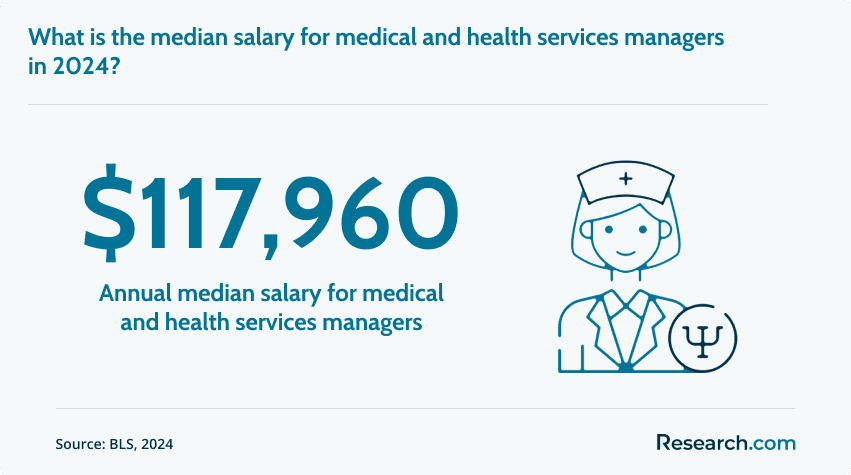
- Competitive salaries: Many leadership positions may pay $100,000 or more annually, depending on role, experience, location, and employer. The median salary of medical and health services managers stood at $117,960 in 2024.
- Career flexibility: Graduates may work in hospitals, outpatient centers, insurance companies, consulting firms, nonprofit organizations, or administrative departments.
- Preferred credentials: Employers may value the MSN/MBA combination because it bridges clinical expertise and organizational strategy.
| Trend | What it means for MSN/MBA students |
| Healthcare systems are becoming more complex | Leaders must understand finance, quality, compliance, technology, staffing, and patient outcomes. |
| Data and AI tools are expanding in healthcare | Nurse leaders need enough informatics and analytics knowledge to evaluate workflows, performance dashboards, and technology adoption. |
| Employers expect measurable leadership impact | Students should document projects, outcomes, savings, quality improvements, or team results during the program. |
| Competition for executive roles remains strong | The degree helps, but experience, networking, certifications, and proven results also matter. |
Overall, the dual degree can support entry into high-growth healthcare management roles, but graduates should not wait until graduation to build leadership evidence. Promotions often go to candidates who can show real operational results.
Here’s what graduates have to say about affordable online MSN/MBA dual degree programs
-
: "
“My affordable online MSN/MBA dual degree helped me step into hospital unit leadership with more confidence. The workload was challenging, but the online format let me keep working while I developed stronger business and nursing leadership skills.” Justine
"
-
: "
“The dual degree gave me the language of both clinical care and executive decision-making. Within a year, I moved from bedside nursing into a leadership role, and the combination of nursing and business coursework made that transition possible.” Hannah
"
-
: "
“I was concerned about paying for graduate school, but lower tuition and financial aid made the program manageable. After finishing, I felt better prepared to lead changes that affect entire healthcare systems.” Tina
"
Key insights
- An affordable online MSN/MBA dual degree is best for nurses who want leadership, administration, operations, consulting, or executive-track roles rather than a purely clinical advanced practice path.
- Program costs vary widely. The guide includes options from about $29,000 to over $75,000, so students should compare full cost, not only per-credit tuition.
- Accreditation matters. Look for institutional accreditation plus nursing accreditation such as CCNE or ACEN and business accreditation such as AACSB or ACBSP where applicable.
- Most programs take 2.5 to 4 years, with timelines affected by RN-to-MSN pathways, part-time enrollment, transfer credits, and practicum or capstone requirements.
- Online programs can be flexible, but they are not always self-paced. Confirm live session requirements, group work expectations, campus visits, and practicum logistics before enrolling.
- Career outcomes are strongest when students pair the degree with measurable leadership experience, such as budget work, quality improvement, staffing projects, informatics initiatives, or operational redesign.
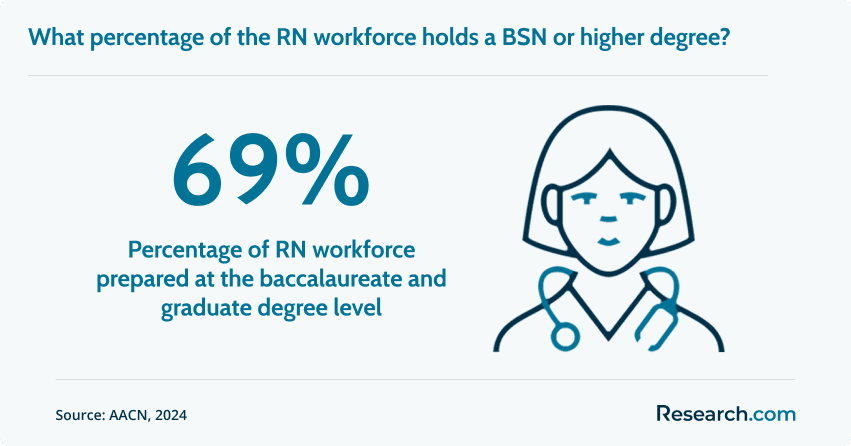
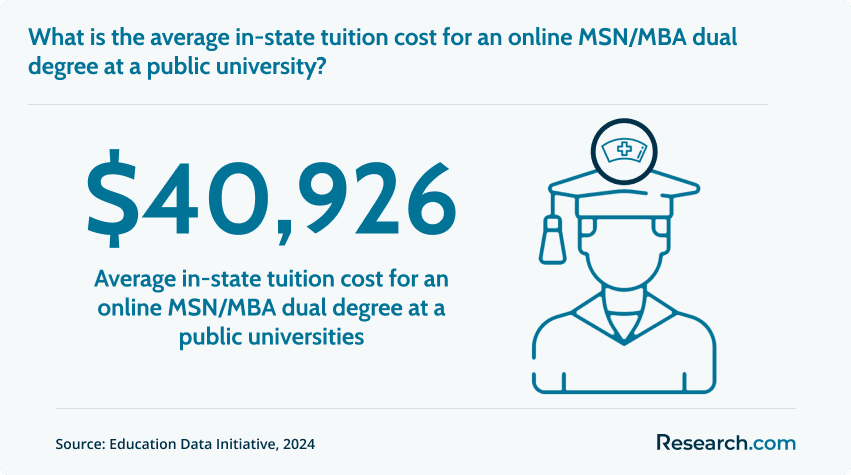
- According to key findings, 69% of the RN workforce is prepared at the baccalaureate or graduate degree level, and the average in-state tuition for an online MSN/MBA dual degree at a public university is $40,926.
- Employment for medical and health services managers is projected to grow 29% from 2023 to 2033, compared to 6% for other management roles and 4% for all occupations.
- The median annual salary for medical and health services managers in 2024 is $117,960.
- Among healthcare managers, 53% hold a bachelor's degree, while 22.1% have a master’s degree.
References:
- American Association of Colleges of Nursing. (2024). Accelerated programs fact sheet. American Association of Colleges of Nursing.
- Education Data Initiative. (2024). Cost of online education vs traditional education. Education Data Initiative.
- U.S. Bureau of Labor Statistics. (2024). Medical and health services managers. Occupational Outlook Handbook. U.S. Bureau of Labor Statistics.
- Zippia. (2024). Health care manager education. Zippia.
Other Things You Should Know About Affordable Online MSN/MBA Dual Degree Programs
Yes. MSN coursework should come from a school accredited by the CCNE or ACEN, and the MBA should come from a business school holding AACSB accreditation. Programs meeting both standards are more likely to satisfy state nursing boards and employer credential checks in 2027.
To enroll in a 2027 affordable online MSN/MBA dual degree, applicants typically need a bachelor's degree in nursing or business and a current RN license. Some programs may also require two years of clinical experience. Check specific program requirements for details.
Many institutions, such as the University of Texas and Ohio State University, offer affordable online MSN/MBA dual degree programs in 2027. Each program's cost varies, but these universities provide competitive tuition rates that are among the lowest nationally.