2027 Accredited Online Radiology Technician Degree Programs With No GRE or GMAT Requirements

Co-Founder and Chief Data Scientist
Choosing an online radiology technician degree is harder when "no GRE or GMAT" is advertised without explaining accreditation, clinical requirements, or licensure fit. The field remains attractive: the U.S. Bureau of Labor Statistics reports a 2024 median pay of $78,980 for radiologic and MRI technologists, with faster-than-average projected growth.
This guide is for future and current imaging professionals comparing accredited online or hybrid programs. You will learn which program types usually skip graduate exams, what admissions factors replace them, and how to judge cost, quality, and career value before applying.
Key Things You Should Know
- Most online radiology technician degrees that do not require the GRE or GMAT are undergraduate associate, bachelor's completion, or imaging science programs; the GMAT is rarely relevant, and the GRE is generally not used for entry-level radiography admission.
- Accreditation and clinical eligibility matter more than test requirements: students seeking initial radiography licensure should verify JRCERT accreditation or ARRT-recognized eligibility pathways before enrolling.
- BLS data lists 2024 median pay of $78,980 for radiologic and MRI technologists, so the strongest programs are those that combine no-test admissions with clinical access, credential preparation, transfer credit, and affordable total cost.
Which Accredited Online Radiology Technician Degree Programs Do Not Require the GRE or GMAT?
Accredited online radiology technician programs with no GRE or GMAT requirements are usually not traditional "fully online" first-time radiography programs. Entry-level radiologic technology education requires supervised clinical training, so programs are commonly campus-based, hybrid, or designed as online degree-completion options for already credentialed radiologic technologists.
The table below summarizes common accredited online or hybrid pathways where GRE or GMAT scores are typically not part of undergraduate admission. Always confirm current requirements directly with the school, because admissions policies, clinical-site rules, and state authorization can change.
| Program type | Typical credential | GRE or GMAT requirement | Best fit | Accreditation or eligibility focus |
| Hybrid associate in radiologic technology | Associate degree | Usually not required | Students seeking first-time radiography eligibility | Institutional accreditation plus JRCERT accreditation or an ARRT-recognized pathway |
| Online bachelor's completion in radiologic sciences | BS, BAS, or BSRS | Usually not required | ARRT-registered technologists who already completed clinical training | Institutional accreditation; professional credentials may be required for admission |
| Online imaging sciences degree | Bachelor's completion degree | Usually not required | Working imaging professionals in radiography, CT, MRI, sonography, or radiation therapy | Institutional accreditation and recognition of existing professional certification |
| Online health sciences degree with imaging concentration | Bachelor's degree completion | Usually not required | Technologists seeking leadership, education, or advanced modality preparation | Institutional accreditation; concentration may not replace licensure education |
| Graduate healthcare leadership or administration program | Master's degree | Often waived or test-optional, but varies | Radiology professionals moving into management | Institutional and programmatic accreditation relevant to administration, not radiography licensure |
Examples of schools that have offered online radiologic sciences, imaging sciences, or degree-completion options for credentialed imaging professionals include Weber State University, Oregon Institute of Technology, Boise State University, Northwestern State University of Louisiana, Midwestern State University, and AdventHealth University. These programs are generally designed for students who already hold a radiologic technology credential, so the key question is not only "Is there no GRE?" but "Am I eligible for admission and will this degree support my credential or career goal?"
If you are starting from scratch, be cautious with any school that promises a completely online radiology technician degree with no in-person clinical experience. Radiography is a patient-care field, and students must learn positioning, radiation safety, image evaluation, and equipment use under supervision. Students exploring nearby healthcare alternatives may also compare shorter entry routes such as the fastest way to become a medical assistant, but those programs lead to different duties and credentials than radiologic technology.
Why Have Accredited Online Radiology Technician Degree Programs Eliminated GRE and GMAT Requirements?
Radiology technician programs have largely eliminated GRE and GMAT requirements because those exams do not measure the most important predictors of success in hands-on imaging education. Radiologic technology depends heavily on anatomy knowledge, patient communication, clinical judgment, technical precision, radiation protection, and professionalism.
Another reason is degree level. Most radiology technician programs are undergraduate programs, and undergraduate admissions rarely use GRE or GMAT scores. The GRE is more common in graduate school admissions, while the GMAT is mainly associated with business programs. For radiologic sciences, admissions committees usually get better evidence from college GPA, science prerequisites, healthcare experience, certifications, and clinical readiness.
Online education trends have also changed admissions. Schools serving working adults increasingly use holistic review because applicants may have strong professional records but limited time or incentive to prepare for standardized tests. For imaging professionals who already hold ARRT credentials, a test score adds little compared with proof of licensure, registry status, and prior clinical training.
There is also an access issue. Test fees, prep materials, and exam scheduling can delay applications. Removing the GRE or GMAT can reduce friction for military students, rural students, career changers, and working technologists seeking degree completion. However, no-test admissions do not mean no standards; they simply shift attention to evidence that is more directly tied to the program's curriculum and clinical expectations.
What Admissions Criteria Matter Most Without GRE or GMAT Scores?
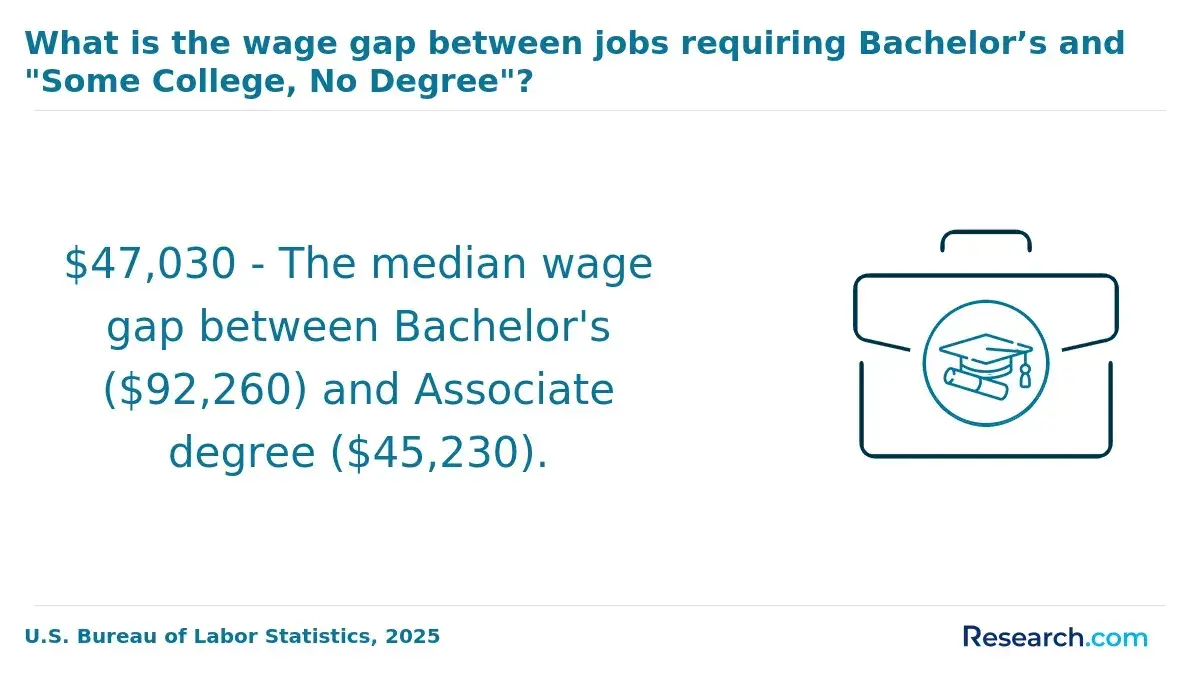
When GRE and GMAT scores are not required, admissions committees usually focus on whether the applicant can handle science-heavy coursework, meet clinical standards, and complete the program without disrupting patient safety or site requirements. This is especially important for entry-level radiography programs, where limited clinical placements can make admissions competitive.
Applicants should expect schools to weigh several non-test factors. These criteria help programs judge preparation more directly than a graduate exam would.
- College GPA and prerequisite grades: Anatomy and physiology, medical terminology, physics, math, and communication courses may carry more weight than overall GPA.
- Completion of required prerequisites: Missing prerequisites can delay admission even if the program does not require test scores.
- Healthcare exposure: Volunteer work, patient-care employment, shadowing, or imaging department experience can show that the applicant understands clinical realities.
- Professional certification: Bachelor's completion programs often require ARRT registration or another approved imaging credential before enrollment.
- Personal statement or essay: Strong applicants explain why radiologic technology fits their goals and how they will manage online coursework and clinical expectations.
- References: Programs may prefer recommendations from science instructors, supervisors, imaging professionals, or clinical mentors.
- Background check, immunizations, and drug screening: These are often required before clinical placement and may affect whether a student can continue in the program.
For applicants who lack direct healthcare experience, the best strategy is to show readiness through prerequisites, observation hours, and a clear understanding of patient-care work. If you are still deciding between imaging and other healthcare paths, a healthcare administration degree online accredited may fit better if your goal is operations, policy, billing, or management rather than direct imaging practice.
Are No-GRE or No-GMAT Online Radiology Technician Degree Programs Easier to Get Into?
No-GRE and no-GMAT programs are easier to apply to, but they are not automatically easier to get into. The absence of a standardized test can save time and money, but admissions may still be selective because clinical placements, lab capacity, faculty supervision, and hospital affiliation agreements limit class size.
The practical difference is where the competition moves. Instead of competing through test scores, applicants compete through grades, prerequisites, healthcare exposure, professionalism, and readiness for clinical work. In some associate-level radiography programs, a strong anatomy and physiology grade may matter more than an applicant's general academic profile.
It also helps to distinguish three admissions terms that schools may use differently. The table below explains how each policy affects your application strategy.
| Admissions policy | What it usually means | How applicants should respond |
| Test-free | GRE or GMAT scores are not accepted or not considered | Focus entirely on GPA, prerequisites, experience, references, and essays |
| Test-optional | Scores may be submitted but are not required | Submit scores only if they clearly strengthen a weaker academic record |
| Test-waiver available | Scores are required unless the applicant meets waiver criteria | Ask about waiver rules tied to GPA, prior degree, credential, or work experience |
If scores are optional, submitting them usually makes sense only when they add new evidence of academic strength. For most radiologic technology applicants, strong science coursework, a polished application, and relevant experience will be more persuasive than an unrelated graduate exam.
Does Skipping the GRE or GMAT Affect Academic Quality or Accreditation?
Skipping the GRE or GMAT does not, by itself, reduce academic quality or accreditation. Accreditation is based on institutional standards, curriculum, faculty qualifications, student support, learning outcomes, and, for radiography programs, clinical education quality. It is not based on whether applicants submit graduate exam scores.
The quality question should be reframed: is the program properly accredited for your goal? For students seeking first-time radiography eligibility, programmatic accreditation from the Joint Review Committee on Education in Radiologic Technology is often the clearest signal that the curriculum and clinical structure meet professional expectations. Some programs may also follow ARRT-recognized eligibility routes, but students should verify this directly before enrolling.
For bachelor's completion programs, institutional accreditation is essential, and the program may require applicants to already hold an ARRT credential. In that case, the degree may support advancement, modality specialization, leadership, or graduate study, but it may not be the credential that first qualifies you to sit for a radiography registry exam.
Students should verify quality before applying by checking a few concrete indicators. These steps matter more than whether the school has removed a test requirement.
- Confirm the institution is accredited by an agency recognized by the U.S. Department of Education or CHEA.
- For entry-level radiography, check whether the specific program is JRCERT-accredited or otherwise meets ARRT eligibility requirements.
- Ask whether online students receive clinical placement support or must secure their own approved site.
- Review credential exam pass rates, completion rates, and job placement information when available.
- Confirm that the program is authorized to enroll students in your state and that it meets any state-specific licensure expectations.
Employers generally care more about credential eligibility, clinical competence, professionalism, and certification than whether a student submitted a GRE or GMAT score. A no-test policy is not a red flag; lack of clear accreditation, clinical structure, or licensure transparency is.

Which Students Benefit Most From Online Radiology Technician Degree Programs Without GRE or GMAT Requirements?
No-GRE and no-GMAT radiology technician degree programs are most useful for students whose qualifications are better shown through coursework, credentials, or work history than standardized exams. This often includes working adults and current healthcare employees who need a flexible path without pausing their careers for test preparation.
These students tend to benefit the most from no-test admissions because the policy removes an unnecessary barrier while still allowing the school to evaluate readiness.
- Credentialed radiologic technologists: ARRT-registered professionals can often enter online bachelor's completion programs using their existing credential and transfer credits.
- Career changers with strong science grades: Applicants with completed prerequisites may be competitive even without healthcare employment history.
- Working healthcare employees: Medical assistants, CNAs, phlebotomists, and LPNs may already understand patient care and clinical professionalism.
- Rural students: Online coursework can reduce travel, although clinical placement still requires an approved local or regional site.
- Military and veteran students: Prior medical training, discipline, and documented experience can strengthen an application.
- Adults returning to school: No-test policies can make reentry faster when applicants have been away from formal testing for years.
Students who want direct patient care but are not sure radiologic technology is the right fit may also compare nursing pathways. An LPN 6 month program can lead to a different clinical role focused on bedside care, medication support, and nursing-team responsibilities rather than diagnostic imaging.
Some students should be more cautious. If you need heavy academic support, cannot attend in-person clinical rotations, or are choosing the program only because it avoids a test, the degree may not be the right investment. Radiologic technology requires physical stamina, patient positioning, attention to safety, and comfort working around imaging equipment in clinical environments.
How Do Tuition and Financial Aid Compare for No-GRE Online Radiology Technician Degree Programs?
No-GRE online radiology technician programs are not automatically cheaper, but they can reduce application-related costs by removing exam registration, test preparation, and retesting expenses. The bigger financial question is total cost of attendance: tuition, fees, clinical travel, uniforms, health requirements, books, imaging markers, background checks, and lost work time.
College Board's 2024 pricing data lists average published tuition and fees of about $4,050 for in-district public two-year students and $11,610 for in-state public four-year students. This gives applicants a benchmark: associate-level radiography at a community college may be more affordable, while online bachelor's completion programs may offer better flexibility for already credentialed technologists.
The table below compares common cost drivers by program type. Use it to estimate the real price of attendance rather than focusing only on whether a program has no test requirement.
| Cost factor | Hybrid associate radiography program | Online bachelor's completion program | Why it matters |
| Tuition structure | Often lower at public community colleges | Often priced per credit for upper-division coursework | Program level and transfer credits can change total cost significantly |
| Clinical expenses | Usually substantial because clinicals are required throughout training | May be lower if the student already completed clinical credentialing | Travel, parking, immunizations, and compliance fees can add up |
| Transfer credit | May accept general education courses | May award credit for prior radiography education or certification | More accepted credits can shorten time to completion |
| Financial aid | May qualify for federal aid if the school and program are eligible | May qualify, depending on enrollment status and institutional eligibility | Students should complete the FAFSA and ask about program-level aid |
| Work flexibility | Limited by clinical rotation schedule | Often stronger for working technologists | Lost wages can be a major hidden cost |
Before enrolling, ask the financial aid office for a full program cost sheet and ask the department whether any clinical fees are billed outside tuition. Students considering broader science-based preparation for healthcare, research, or graduate study may also compare online biology degrees, but those programs do not replace accredited radiography clinical training.
What Career Outcomes Can Graduates Expect From No-GRE Online Radiology Technician Degree Programs?
Career outcomes depend on the credential the program leads to, not on the GRE or GMAT policy. Entry-level radiography graduates typically pursue radiologic technologist roles in hospitals, outpatient imaging centers, urgent care settings, physician practices, orthopedic offices, and surgical environments. Bachelor's completion graduates may use the degree to pursue modality advancement, education, supervision, applications training, or healthcare leadership.
The BLS reports 2024 median pay of $78,980 for radiologic and MRI technologists and projects faster-than-average employment growth for the occupation. For students, the meaning is practical: imaging remains a stable healthcare pathway, but salary varies by state, modality, employer, shift, credential, and experience.
Graduates may consider several career directions after completing the appropriate education and certification requirements. The best path depends on whether the program is entry-level or a degree-completion option.
- Radiologic technologist: Performs diagnostic X-ray imaging while positioning patients, following radiation safety procedures, and working with physicians and imaging teams.
- CT technologist: Uses computed tomography equipment, often requiring additional training and certification beyond radiography.
- MRI technologist: Performs magnetic resonance imaging and follows strict screening and safety protocols.
- Mammography technologist: Specializes in breast imaging and patient communication during sensitive exams.
- Radiology department supervisor: Coordinates staffing, quality control, compliance, and workflow in imaging settings.
- Clinical instructor or educator: Supports student training, competency evaluation, and curriculum delivery.
Students who already work in imaging and want advanced clinical authority may eventually consider graduate nursing or provider pathways, although these are separate from radiologic technology. For example, online MSN PMHNP programs prepare nurses for psychiatric-mental health practice, not imaging, and require nursing licensure before admission.
Employers are unlikely to evaluate a graduate negatively because the program did not require a GRE or GMAT. They are more likely to ask whether the applicant is licensed or certified, clinically competent, reliable with patients, and trained on relevant equipment.
What Common Application Mistakes Reduce Admission Chances to No-GRE Online Radiology Technician Degree Programs?
The biggest mistake is assuming that no GRE or GMAT means the application is low-stakes. In radiologic technology, the most competitive parts of the application are often prerequisites, clinical readiness, and proof that the student understands the profession.
Applicants can improve their chances by avoiding mistakes that signal poor preparation. These errors are common because many students focus too heavily on the no-test feature and not enough on the program's real selection criteria.
- Ignoring accreditation: Do not apply until you understand whether the program supports ARRT eligibility, state licensure, or only degree completion.
- Missing prerequisites: A strong application can still be delayed or denied if anatomy, physiology, math, or medical terminology requirements are incomplete.
- Submitting a generic essay: A vague statement about wanting to help people is weaker than a specific explanation of your imaging experience, readiness, and career plan.
- Underestimating clinical logistics: Online coursework does not remove the need for in-person labs, rotations, health documentation, and schedule flexibility.
- Applying without confirming state authorization: Some online programs cannot enroll students from every state or place them in every clinical market.
- Choosing the cheapest program without checking outcomes: Low tuition is valuable only if the program supports completion, certification, and employability.
- Assuming test waivers are permanent: Admissions policies can change, so confirm the current catalog and application cycle requirements.
A stronger application connects your academic record, patient-care exposure, and career goals. If you lack experience, consider shadowing an imaging department, completing missing prerequisites with high grades, and asking admissions staff how accepted applicants typically demonstrate readiness.
How Should Students Compare Accredited Online Radiology Technician Degree Programs Without GRE or GMAT Requirements?
The best no-GRE or no-GMAT program is not the one with the fewest application steps. It is the one that matches your starting point, supports your credential goal, fits your schedule, and offers a realistic total cost. A current radiologic technologist seeking a bachelor's degree should evaluate programs differently from a first-time student seeking initial radiography eligibility.
Use the following process before applying. It will help you compare admissions flexibility alongside academic quality and career value.
- Define your goal first: Decide whether you need initial radiography eligibility, a bachelor's completion degree, advanced modality preparation, or leadership preparation.
- Verify accreditation and eligibility: Confirm institutional accreditation and, for entry-level radiography, whether the program meets JRCERT or ARRT-related expectations.
- Check online format honestly: Ask which courses are online, which labs are in person, and how clinical placements are assigned or approved.
- Compare admissions standards beyond tests: Review GPA minimums, prerequisite grades, credential requirements, interviews, essays, and healthcare experience expectations.
- Estimate full cost: Include tuition, fees, transfer credits, clinical travel, compliance costs, equipment, and potential lost work hours.
- Ask for outcomes: Request available completion rates, credential exam pass rates, job placement information, and graduate satisfaction data.
- Evaluate student support: Look for advising, tutoring, clinical coordination, technology support, and help for working adults.
- Confirm state fit: Make sure the program can enroll you and that it aligns with your state's licensing or certification expectations.
When comparing final options, ask admissions counselors direct questions: "Will this program make me eligible for ARRT certification?", "Can I complete clinicals near my home?", "How many transfer credits will I receive?", "What is the total cost after fees?", and "What happens if I cannot secure a clinical site?" Clear answers are a stronger sign of program quality than a simple no-test admissions label.
Other Things You Should Know About Radiology Technician
Many people use the terms interchangeably, but "radiologic technologist" is the more precise professional title. It generally refers to trained imaging professionals who perform diagnostic imaging exams and meet certification or licensure requirements.
Usually no. Didactic courses may be online, but entry-level radiography training requires in-person labs and supervised clinical rotations with patients and imaging equipment.
Many entry-level radiography programs take about two years at the associate level. Bachelor's completion programs for already credentialed technologists vary because transfer credits and prior clinical education can shorten the timeline.
Yes, most programs require some math or applied physics because students must understand exposure factors, image quality, radiation safety, and equipment operation. Requirements vary by school, so check the prerequisite list before applying.
References
- GNTC Radiologic Technology graduates achieve 100% licensure pass rate and job placement | GNTC https://www.gntc.edu/022219-radiology/
- Radiology Tech School: Programs, Costs, and How to Choose (2026 Guide) | Tesla MR Institute https://teslamr.com/guides/radiology-tech-school/
- Radiologic Technology - Ogeechee Technical College https://www.ogeecheetech.edu/academics/radiologic-technology
- Accredited Radiologic Technology School | Training Program for Rad Techs https://www.gurnick.edu/programs/radiologic-technology-track-a/
- Radiologic Technology Degree (AAS) - Academics https://www.ncmissouri.edu/academics/radiologic-technology-degree/
- Radiologic Technology Associates https://an.edu/programs/associates/radiologic-technology-associates/
- Limited Licensed Radiology Tech Certification - Your Path to a Rewarding Healthcare Career https://www.americanalliedhealth.com/blog-posts/certifications/limited-licensed-radiology-tech-certification
- AAS in Radiologic Technology https://www.northeastcollege.edu/programs/undergraduate/a-a-s-radiologic-technology
- Radiography AS https://www.fdu.edu/program/as-radiography/
- Radiologic Technology https://www.century.edu/programs/radiologic-technology/