
2027 How to Become a Nurse in Louisiana

Co-Founder and Chief Data Scientist
Becoming a nurse in Louisiana means choosing the right education path, meeting state licensing rules, passing the correct NCLEX exam, and planning for renewal requirements after you are licensed. The process is manageable, but it is easy to lose time or money if you enroll in the wrong program, misunderstand compact licensure, or assume an online option automatically meets Louisiana requirements.
This guide is for future LPNs, RNs, APRNs, career changers, international nurses, and current healthcare workers who want a clear path into Louisiana nursing. You will learn the main nursing license types, education options, application steps, exam requirements, career outlook, online program considerations, bridge pathways, and common mistakes to avoid before you commit to a school or career move.
Quick answer: How do you become a nurse in Louisiana?
To become a nurse in Louisiana, you generally need to complete an accredited nursing program, apply through the appropriate Louisiana nursing board, pass the NCLEX-PN for LPN practice or the NCLEX-RN for RN practice, complete fingerprinting and a criminal background check, and maintain your license through renewal and continuing education. RNs usually enter through an Associate Degree in Nursing (ADN) or Bachelor of Science in Nursing (BSN), while LPNs complete a practical nursing program. Advanced Practice Registered Nurses need graduate-level nursing education and national certification in their specialty.
Key things to know before starting nursing school in Louisiana
- Louisiana has faced serious nursing workforce pressure. One cited projection expected the state to face a deficit of over 14,000 registered nurses by 2025, driven by healthcare demand, retirements, and an aging population.
- The average salary for registered nurses in Louisiana is approximately $65,000 per year, though pay can differ by city, employer type, experience, and specialty.
- Employment opportunities for nurses in Louisiana are expected to grow by 12% over the next decade, reflecting continued need across hospitals, outpatient care, long-term care, home health, and community settings.
- The standard RN path requires graduation from an accredited ADN or BSN program followed by successful completion of the NCLEX-RN. LPN candidates complete a practical nursing program and take the NCLEX-PN.
- Students should compare financial aid, employer tuition support, scholarships, loan repayment programs, and sign-on or continuing education benefits before deciding how to pay for nursing school.
- Steps to becoming a nurse in Louisiana
- Educational requirements for Louisiana nurses
- Types of nurses who can practice in Louisiana
- Louisiana nursing licensing requirements
- Nursing license types available in Louisiana
- Compact nursing practice in Louisiana
- Practicing nursing without a license in Louisiana
- Current state of nursing in Louisiana
- Career transition options for allied healthcare professionals
- Louisiana nursing job outlook
- Education pathways for prospective nurses
- Non-clinical nursing career options
- Certifications that can strengthen a nursing career
- Advantages of online nursing education
- Continuing education and license renewal
- Scholarships and financial aid for nursing students
- Nursing compared with other healthcare careers
- RN-to-nurse practitioner transition
- RN-to-BSN completion speed
- LVN and LPN advancement options
- Advanced nursing roles in Louisiana
What are the steps to becoming a nurse in Louisiana?
The Louisiana nursing path depends on the license you want, but most candidates move through the same basic sequence: choose a role, complete approved education, apply for licensure, pass the NCLEX, and keep the license active after approval.
- Choose your nursing role first. Decide whether you want to become an LPN, RN, or APRN. LPN programs are shorter and lead to supervised practical nursing work. ADN and BSN programs prepare graduates for RN licensure. APRN roles require graduate education and specialty certification.
- Enroll in an accredited or state-approved program. LPN candidates typically complete a one-year practical nursing diploma program. RN candidates usually complete either a two-year ADN or a four-year BSN. If you plan to pursue advanced practice, confirm early that your undergraduate preparation will support future graduate admission.
- Complete clinical and classroom requirements. Nursing programs combine theory, skills labs, simulations, and supervised clinical experiences. Clinical placement policies matter, especially for online or hybrid programs.
- Apply for licensure. Candidates submit the required application, education documentation, fees, photo, and background check materials to the appropriate Louisiana nursing authority.
- Pass the NCLEX. LPN applicants take the NCLEX-PN. RN applicants take the NCLEX-RN. Passing the correct exam is required before independent licensed practice.
- Meet background check and fingerprinting requirements. Louisiana requires criminal background review as part of the licensing process. Start this step early because processing time can affect your start date.
- Maintain your license. After licensure, nurses must renew periodically and meet continuing education or competency requirements. Nurses with prescriptive authority may have additional pharmacotherapeutics education expectations.
Some nurses use short-term credentials to strengthen their résumé while progressing toward a degree. These should be treated as career add-ons rather than substitutes for licensure. If you are comparing supplemental healthcare credentials, review quick healthcare certifications that pay well and confirm whether each credential is relevant to your target nursing role.
| Goal | Typical education route | Licensure exam | Best fit | Important trade-off |
| LPN | One-year practical nursing diploma program | NCLEX-PN | Students who want a faster entry into hands-on patient care | Scope of practice and advancement options are more limited than RN roles |
| RN through ADN | Two-year Associate Degree in Nursing | NCLEX-RN | Students seeking a relatively direct RN pathway | Some employers may prefer or encourage BSN completion later |
| RN through BSN | Four-year Bachelor of Science in Nursing | NCLEX-RN | Students who want broader preparation in leadership, public health, and evidence-based practice | Usually requires more time before initial RN licensure than an ADN |
| APRN | Master’s degree or higher from an accredited nursing program | National specialty certification plus state recognition requirements | Experienced RNs seeking advanced clinical responsibility | Requires graduate admission, advanced coursework, and a larger academic investment |
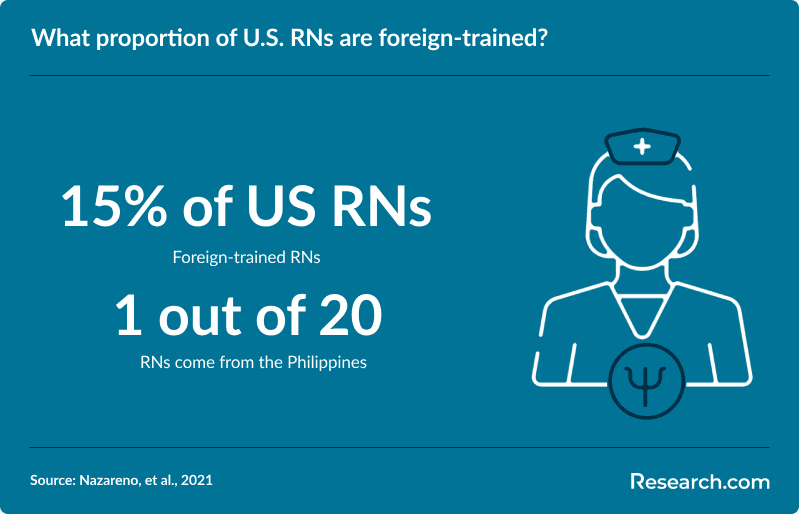
Louisiana nursing is also part of a broader national workforce shaped by migration and international education. Foreign-trained RNs comprise 15% of the US RN workforce, with 1 out of 20 RNs coming from the Philippines, as shown below.
What are the educational requirements for becoming a nurse in Louisiana?
Louisiana nursing education requirements vary by license level. The most important rule is simple: do not choose a program until you confirm that it is approved or accredited in a way that supports Louisiana licensure and your long-term career goals.
- Licensed Practical Nurse (LPN): LPN candidates complete a practical nursing program that generally takes about one year. These programs focus on basic nursing care, medication administration within scope, patient monitoring, and support for RNs and physicians.
- Registered Nurse through ADN: ADN programs usually take two years and prepare graduates for the NCLEX-RN. They are common at community colleges and can be a practical option for students who want to enter RN practice sooner.
- Registered Nurse through BSN: BSN programs typically take four years and include nursing science, clinical care, public health, leadership, research, and healthcare policy. Many employers value BSN-prepared nurses because the curriculum is broader than entry-level clinical training alone.
- Advanced Practice Registered Nurse (APRN): APRN candidates need a master’s degree in nursing or higher and must meet specialty-specific education and certification standards. RNs comparing graduate options may want to review the shortest online MSN programs, but speed should not outweigh accreditation, clinical placement quality, and Louisiana eligibility.
Career changers who already hold a bachelor’s degree in another field may consider accelerated or direct-entry options. Some students compare the shortest direct entry MSN programs for non-nurses, but these programs require careful review because admission standards, clinical requirements, and licensure outcomes vary.
| Program type | What to verify before enrolling | Why it matters |
| Campus-based LPN, ADN, or BSN | State approval, accreditation status, NCLEX preparation, clinical site access | These factors affect licensure eligibility and readiness for entry-level practice |
| Online or hybrid nursing program | Whether clinical placements are available in Louisiana and whether the program satisfies state requirements | Online coursework does not eliminate the need for approved clinical experiences |
| Bridge program | Transfer credit policy, schedule flexibility, employer recognition, and licensure alignment | Bridge programs can save time only if prior credits and credentials are accepted |
| Graduate APRN program | National accreditation, specialty certification eligibility, advanced pharmacology and pathophysiology coursework | APRN authorization depends on meeting advanced practice education and certification standards |
Accreditation is not just an academic label. It can affect NCLEX eligibility, transfer options, graduate school admission, employer acceptance, and financial aid access. Before applying, ask the school directly whether graduates are eligible for the Louisiana license you plan to seek.
What types of nurses can legally practice in Louisiana?
Louisiana recognizes several nursing roles, each with a different scope of practice, education requirement, and licensing process. The main categories are RNs, LPNs, and APRNs.
- Registered Nurses (RNs): RNs assess patients, administer medications, coordinate care, educate patients, supervise some staff, and communicate with physicians and other providers. RNs must complete an accredited nursing program, pass the NCLEX-RN, and obtain licensure through the Louisiana State Board of Nursing. According to the LSBN, as of 2023, there are over 70,000 licensed RNs in Louisiana.
- Licensed Practical Nurses (LPNs): LPNs provide practical nursing care under the supervision of RNs and physicians. They must complete a state-approved practical nursing program and pass the NCLEX-PN. The LSBN reports that there are approximately 20,000 licensed LPNs in the state. LPNs who want to expand their scope can compare 6 month LPN to RN program options, while confirming whether any accelerated timeline is realistic for their credits and state requirements.
- Advanced Practice Registered Nurses (APRNs): APRNs include nurse practitioners, clinical nurse specialists, nurse anesthetists, and nurse midwives. They need graduate nursing education and national certification in a specialty. APRNs may diagnose, treat, prescribe, and perform advanced clinical functions within Louisiana’s scope-of-practice rules.
The right role depends on how quickly you want to enter the workforce, how much autonomy you want, your budget, and whether you plan to move into leadership or advanced practice later.
What are the licensing requirements for nurses in Louisiana?
Louisiana nursing licensure requires proof that you completed the correct education, passed the required exam, and meet the state’s background and application standards. The details differ by LPN, RN, and APRN status, but the core requirements are similar.
- Approved nursing education: LPN applicants complete a practical nursing program. RN applicants complete an ADN or BSN from an accredited nursing program. APRN applicants complete graduate-level nursing education that matches the specialty they intend to practice.
- Application and documentation: Applicants submit a licensing application, proof of education, a recent photograph, and the required fee. As of 2023, the application fee for an RN license is approximately $100, while the fee for an LPN license is around $75.
- Fingerprinting and background check: Applicants must complete fingerprinting and background review through the Louisiana State Police and FBI process. Associated costs are typically around $50.
- NCLEX exam: LPN candidates take the NCLEX-PN, while RN candidates take the NCLEX-RN. The exam fee is approximately $200.
- Renewal after licensure: Nurses renew their licenses every two years and must meet applicable continuing education or competency requirements.
| Licensing item | Who it applies to | Cost or timing detail stated | Decision tip |
| RN license application | RN applicants | Approximately $100 as of 2023 | Budget for this separately from school tuition and NCLEX costs |
| LPN license application | LPN applicants | Around $75 as of 2023 | Check the current board fee before submitting |
| Fingerprinting and background check | All applicants | Typically around $50 | Start early because processing can delay licensure |
| NCLEX exam | LPN and RN applicants | Approximately $200 | Ask programs about NCLEX preparation and graduate pass outcomes |
| License renewal | Licensed nurses | Every two years | Track renewal deadlines and continuing education documentation |
The 2022 NCLEX pass rates, as reported by the National Council of State Boards of Nursing in 2024, show that US-educated candidates achieved a pass rate of 79.9%. Repeat test-takers had a pass rate of 43.74%, while international test-takers achieved a pass rate of 43.18%. Breaking down the results by degree level, US graduates with a bachelor's degree demonstrated a higher pass rate of 90.3%, compared to US graduates with an associate's degree, who had a pass rate of 82.8%. These are shown in the graph below.
Before choosing a school, ask for the program’s NCLEX preparation approach, student support services, clinical placement process, and recent graduate outcomes. A lower tuition price is not a bargain if the program does not prepare you to pass the licensing exam.
What types of nursing licenses are available in Louisiana?
Louisiana nursing licenses align with different levels of clinical responsibility. The three main categories are LPN, RN, and APRN.
- Registered Nurse (RN) License: This license is for graduates of approved ADN or BSN programs who pass the NCLEX-RN. RNs provide assessment, care coordination, medication administration, patient education, and clinical decision support across many healthcare settings.
- Licensed Practical Nurse (LPN) License: This license is for graduates of practical nursing programs who pass the NCLEX-PN. LPNs provide basic nursing care under appropriate supervision. Students comparing lower-cost practical nursing options can review affordable online LPN programs, but should verify clinical placement and Louisiana approval before enrolling.
- Advanced Practice Registered Nurse (APRN) License or authorization: APRNs include nurse practitioners, clinical nurse specialists, certified registered nurse anesthetists, and certified nurse midwives. They need graduate education and national certification in their specialty area.
According to the US Bureau of Labor Statistics in 2022, the highest-paying industries for registered nurses (RNs) are government ($85,970), hospitals ($78,070), ambulatory healthcare services ($76,700), nursing and residential care facilities ($72,420), and educational services ($61,780). These figures represent the average annual salary for RNs in each respective industry, and are shown in the graph below.
Louisiana also participates in the Nurse Licensure Compact, which can make practice across participating states easier for qualified RNs and LPNs. If you are comparing the financial return of an ADN pathway, review the average associate degree in nursing (ADN) salary by state as one data point, while remembering that individual pay is never guaranteed.
Can a Compact nurse practice in Louisiana?
Yes. Louisiana is a Nurse Licensure Compact state, which means eligible RNs and LPNs with a multistate license can practice in Louisiana and other compact states, including through in-person and telehealth work, as long as they follow the laws of the state where the patient is located.
A Louisiana nurse who currently holds only a single-state license does not automatically receive multistate privileges. To convert, the nurse must apply through the proper process, declare Louisiana as the primary state of residence, and meet the Uniform Licensure Requirements.
- The conversion process includes submitting a Multistate Conversion Application and completing a federal background check.
- The application fee is $50, plus any applicable state charges, and is non-refundable.
- Processing can take several weeks because approval depends in part on completion of the background check.
A multistate license does not give a nurse permission to practice everywhere. If a nurse wants to work in a non-compact state, that state may require a separate single-state license. Nurses planning travel, telehealth, or cross-border work should verify compact status and state-specific rules before accepting a position.
RNs who want to build credentials beyond multistate mobility may also compare advanced degrees, including the quickest Doctor of Nursing Practice (DNP) degree programs, while checking accreditation, clinical expectations, and APRN eligibility.
Can you practice as a nurse without a license in Louisiana?
No. You cannot legally practice as a nurse in Louisiana without the proper active license. Nursing licensure protects patients by confirming that a person has completed required education, passed the applicable exam, and met the state’s background and professional standards.
- Education is required: Nursing candidates must complete an approved LPN, RN, or APRN pathway that matches the role they intend to practice.
- Examination is required: LPN candidates must pass the NCLEX-PN, while RN candidates must pass the NCLEX-RN.
- Application approval is required: Submitting an application is not the same as being licensed. Wait for official authorization before practicing.
- Background review is required: Fingerprinting and criminal background checks are part of the process.
Practicing without a license can put patients at risk and may expose the individual to disciplinary action, fines, employment consequences, and possible criminal penalties. It can also damage future eligibility for licensed healthcare work. If you are waiting for NCLEX results or license approval, ask employers what duties are legally allowed before you begin any patient-care role.
What is the state of nursing in Louisiana?
Nursing in Louisiana is shaped by high demand, regional workforce gaps, varied cost of living, and strong reliance on hospitals, outpatient centers, long-term care, home health, public health, and rural healthcare facilities. For students, this creates opportunity, but it also makes program choice and location strategy important.
- Workforce demand: Louisiana continues to need licensed nurses across multiple care settings. Demand is influenced by an aging population, complex chronic health needs, and expansion of healthcare services.
- Licensed workforce: Louisiana employs tens of thousands of licensed nurses, including RNs, LPNs, and APRNs. Nursing schools help supply new graduates, but regional shortages can persist.
- Rural access challenges: Rural areas may struggle more than urban centers to recruit and retain nurses. Students willing to work in underserved areas may find meaningful opportunities, but should compare support, staffing, commute, and career development resources.
- Cost of living: Louisiana can be financially attractive for some nurses because expenses differ from many higher-cost states. However, salary should always be evaluated against rent, transportation, insurance, debt, and local job availability.
- Major employers: Hospitals remain central, but nurses also work in outpatient care, nursing and residential care facilities, schools, government agencies, home health, and community health programs.
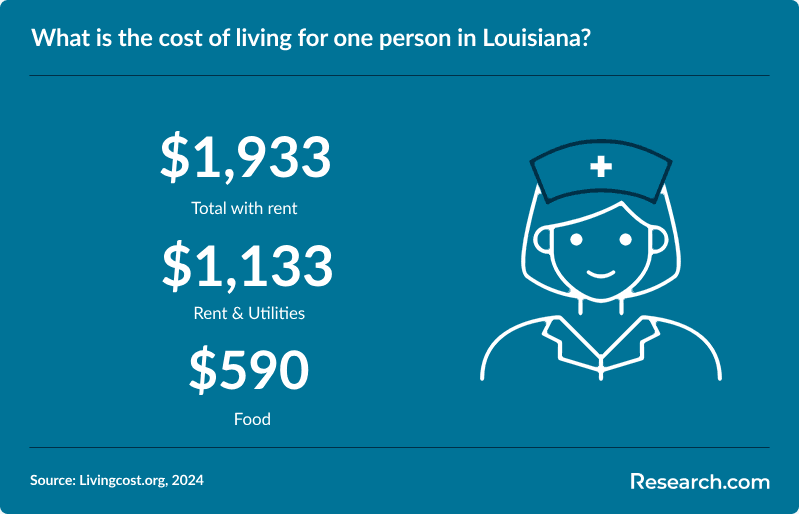
The cost of living in Louisiana for one person is $1,933 per month, which is 1.13 times less expensive than the national average. This breaks down to $800 for living expenses without rent and $1,133 for rent and utilities. Additionally, the average monthly food cost is $590. These are shown in the figure below. Louisiana ranks as the 42nd most expensive state and the 31st best state to live in the United States.
The practical takeaway is to compare job offers by total compensation, not salary alone. A role with slightly lower pay may still be a better fit if it offers tuition reimbursement, strong preceptor support, predictable scheduling, lower commuting costs, or a clear advancement ladder.
What are the career transition options for allied healthcare professionals in Louisiana?
Allied healthcare workers often enter nursing with a useful advantage: familiarity with patients, medical terminology, documentation, infection control, and the pace of clinical environments. However, prior healthcare experience does not replace nursing licensure. It can only help if the right bridge or credit-transfer pathway recognizes that experience.
Medical assistants, nursing assistants, patient care technicians, paramedics, and other healthcare workers should compare state-approved nursing programs that offer flexible scheduling, credit for prior coursework where available, and clear NCLEX preparation. A medical assistant interested in practical nursing, for example, can review medical assistant to LPN options while verifying that the program supports Louisiana licensure.
| Current background | Possible nursing move | What to ask before enrolling |
| Medical assistant | LPN or RN pathway | Will any prior coursework transfer, and are Louisiana clinical placements available? |
| Certified nursing assistant or patient care technician | LPN or ADN program | Does the program offer evening, weekend, or part-time options for working students? |
| Paramedic or emergency care worker | Bridge or ADN pathway where available | How are prior clinical skills evaluated, and what nursing-specific content must still be completed? |
| Experienced LPN | LPN-to-RN bridge | How long is the bridge, what credits transfer, and what is the NCLEX-RN support structure? |
What is the job outlook for nursing in Louisiana?
The nursing outlook in Louisiana remains favorable for candidates who complete licensure requirements and are willing to work in high-need settings. According to the U.S. Bureau of Labor Statistics (BLS), employment for registered nurses (RNs) in Louisiana is projected to grow by approximately 10% from 2020 to 2030. Demand is connected to population aging, preventive care, expanded services, and ongoing patient-care complexity.
The average annual salary for registered nurses in Louisiana is approximately $65,000, compared with a national average of around $75,000. Within the state, pay can be higher in certain metro areas. The New Orleans-Metairie area is cited as one of the top-paying regions for nurses, with average salaries reaching upwards of $70,000. Baton Rouge and Lafayette also offer competitive wages, although generally below New Orleans.
Higher-paying nursing settings in Louisiana may include outpatient care centers, home health care services, and hospitals. Advanced practice roles usually offer higher earning potential than entry-level nursing roles; nurse anesthetists and nurse practitioners can often exceed $100,000 annually, while licensed practical nurses tend to earn lower wages, with average salaries around $45,000.
| Career factor | What it means for Louisiana nurses | How to use it in your decision |
| Location | Metro areas may offer more employers and specialty roles | Compare salary against housing, commute, and scheduling demands |
| Credential level | RN and APRN roles generally offer more scope and advancement than LPN roles | Choose LPN for faster entry or RN/BSN if long-term mobility is the priority |
| Specialty | Critical care, anesthesia, primary care, and advanced practice can change earnings and responsibilities | Build experience before committing to expensive graduate training |
| Employer type | Hospitals, outpatient care, home health, and long-term care differ in pace and benefits | Ask about orientation, staffing ratios, benefits, and tuition support |
What educational pathways should prospective nurses in Louisiana explore?
The best nursing pathway depends on your starting point, budget, timeline, and desired level of responsibility. A high school graduate, a working LPN, a bachelor’s degree holder, and an experienced RN should not evaluate programs the same way.
- New students seeking fast entry: LPN programs and ADN programs may be the most direct routes into licensed nursing work.
- Students aiming for broader RN opportunities: A BSN can provide stronger preparation for leadership, public health, evidence-based practice, and future graduate study.
- Working LPNs: LPN-to-RN bridge programs can expand scope of practice and earnings potential, but only if transfer policies and scheduling fit your life.
- Current RNs: RN-to-BSN programs can help meet employer expectations and prepare for graduate education.
- Future advanced practice nurses: RNs interested in diagnosis, prescribing, and specialty care can compare graduate programs such as the best NP programs in Louisiana.
When comparing programs, prioritize accreditation, board approval, NCLEX support, clinical placement quality, graduation requirements, and total cost. Rankings can be useful, but they should not replace direct questions to admissions staff, nursing faculty, clinical placement coordinators, and financial aid offices.
Can nurses diversify into non-clinical roles while leveraging their healthcare expertise in Louisiana?
Yes. Nurses who want to move away from bedside care can use their clinical judgment in non-clinical or less patient-facing roles. Options may include case management, care coordination, quality improvement, healthcare administration, informatics, utilization review, education, compliance, and medical billing and coding.
These roles can appeal to nurses seeking more predictable schedules, reduced physical strain, or a different type of healthcare impact. However, they still require strong documentation skills, regulatory awareness, communication ability, and comfort with healthcare technology. Nurses interested in administrative revenue-cycle work can review how to become a medical biller and coder in Louisiana to understand one non-clinical transition route.
What nursing certifications can enhance a nurse's career in Louisiana?
Nursing certifications can help demonstrate focused expertise, but they are most valuable when they match your role, employer expectations, and patient population. Common certification areas include critical care, pediatrics, gerontology, emergency nursing, oncology, informatics, leadership, and specialty practice.
Before paying for a certification, ask whether your employer recognizes it, whether it qualifies for a pay differential, whether it supports promotion, and whether you meet the experience requirements. Nurses comparing options can start with nursing certifications online, then verify requirements through the credentialing organization and employer policies.
What are the advantages of online nursing education in Louisiana?
Online nursing education can be useful for working adults, rural students, parents, and nurses returning to school. The main advantages are schedule flexibility, reduced commuting, access to programs outside the immediate area, and the ability to complete some coursework asynchronously.
Online does not mean fully remote for pre-licensure nursing. Students still need clinical learning, skills assessment, and supervised practice. Before choosing an online or hybrid program, confirm whether clinical placements are arranged in Louisiana, whether the program is approved for your intended license, and how skills labs or simulations are handled. Students comparing options can review the best online nursing programs in Louisiana as a starting point, not as the only deciding factor.
| Online nursing benefit | Potential risk | Question to ask the school |
| Flexible coursework | Self-paced study can be difficult without structure | What academic support, tutoring, and faculty access are available? |
| Less commuting | Clinical sites may still require travel | Where are clinical placements located, and who arranges them? |
| Good fit for working nurses | Work schedules can conflict with clinical or intensive requirements | Are there part-time, evening, or weekend options? |
| Access to bridge and completion programs | Transfer credits may not apply as expected | How many credits will transfer before I enroll? |
What are the continuing education and license renewal requirements for nurses in Louisiana?
Louisiana nurses must keep their licenses active by renewing on schedule and meeting applicable continuing education or competency requirements. Renewal is not a formality. Missing deadlines or failing to document required education can interrupt employment and create compliance problems.
Requirements may differ by license type and practice authority. Nurses with prescriptive authority can have additional pharmacotherapeutics-related expectations. Because board rules can change, nurses should verify current requirements directly before each renewal cycle. For a focused overview, review the requirements for nursing licensure in Louisiana.
- Track your renewal deadline well before it arrives.
- Keep certificates and documentation for continuing education activities.
- Choose continuing education that supports your specialty, not just the minimum requirement.
- Confirm whether employer-provided training counts toward renewal.
- Update contact information with the relevant nursing board so notices are not missed.
What scholarship and financial aid options are available for nursing students in Louisiana?
Nursing school costs include more than tuition. Students should budget for fees, uniforms, supplies, textbooks, exams, background checks, transportation to clinical sites, immunizations, technology, and possible reduced work hours during clinical terms.
Louisiana nursing students may find support through scholarships, grants, employer tuition assistance, federal aid, state aid, school-based awards, loan repayment programs, and healthcare facility incentives. Start early because many scholarships have deadlines well before the academic term begins. Students comparing institutions can also review the best nursing schools in Louisiana and ask each school what funding is available specifically for nursing students.
| Funding option | Best for | What to check |
| Scholarships | Students with academic merit, financial need, service goals, or specialty interests | Eligibility, essay requirements, deadlines, and renewal rules |
| Grants | Students who qualify based on financial need or program rules | Whether repayment is required under any condition |
| Employer tuition support | Working healthcare employees and new hires | Work commitments, grade requirements, and repayment clauses |
| Loan repayment programs | Nurses willing to work in shortage or service areas | Service obligation, eligible employers, and tax implications |
| Federal or state loans | Students who need remaining costs covered after gift aid | Total debt, interest, repayment plan, and expected salary after graduation |
How does a nursing career compare to other healthcare career paths in Louisiana?
Nursing is only one route into healthcare. It is a strong choice for people who want direct patient care, flexible entry points, clear licensure structure, and multiple advancement paths. Other healthcare careers may offer different work environments, training models, salary profiles, and regulatory requirements.
For example, pharmacy requires a distinct professional education and licensing pathway. If you are deciding between nursing and pharmacy, review how to become a pharmacist in Louisiana and compare length of training, patient interaction, job settings, debt, salary potential, and day-to-day responsibilities.
| Career path | Typical appeal | Key consideration |
| Nursing | Direct care, broad employment settings, bridge pathways, advancement into APRN roles | Physically and emotionally demanding work, licensure rules, and shift variability |
| Pharmacy | Medication expertise, clinical and retail settings, strong science focus | Different degree requirements, licensing process, and work rhythm |
| Medical billing and coding | Administrative healthcare work with less direct patient care | Requires coding accuracy, payer knowledge, and comfort with documentation systems |
| Allied health roles | Focused technical or support roles with varying training lengths | Advancement may require additional credentials or a move into nursing or another licensed profession |
How do you transition from RN to a nurse practitioner in Louisiana?
To move from RN to nurse practitioner in Louisiana, you need graduate nursing education, advanced clinical training, and national certification in the nurse practitioner population focus or specialty. This is a major step because NPs have expanded responsibility for assessment, diagnosis, treatment planning, prescribing within applicable rules, and ongoing patient management.
- Gain RN experience in a setting related to your future NP focus.
- Choose a population focus, such as family, adult-gerontology, psychiatric-mental health, pediatrics, or women’s health.
- Apply to an accredited MSN, post-master’s, or doctoral NP program.
- Complete advanced coursework in areas such as pharmacology, pathophysiology, and health assessment.
- Complete required supervised clinical hours.
- Pass the relevant national certification exam.
- Apply for Louisiana APRN recognition or authorization according to state requirements.
Prospective NPs should review nurse practitioner education requirements in Louisiana before choosing a program, especially if the program is online or located outside the state.
How fast can I finish an RN to BSN in Louisiana?
RN-to-BSN completion time depends on transfer credits, enrollment status, course sequencing, clinical or practicum expectations, and whether the program is online, hybrid, or campus-based. Nurses with more accepted credits and the ability to study full time can usually finish faster than nurses taking one course at a time while working full shifts.
Speed should not be the only priority. A strong RN-to-BSN program should support writing, evidence-based practice, leadership, population health, and preparation for graduate study. Before enrolling, ask for a transcript evaluation and a written estimate of remaining credits. For planning guidance, review How fast can I finish an RN to BSN?.
What opportunities do LVNs have for career advancement in Louisiana?
Louisiana commonly uses the LPN title rather than LVN, though the terms are often discussed together nationally. If you are an LVN moving to Louisiana or an LPN already working in the state, advancement usually means building toward RN licensure, specialty experience, leadership duties, or additional certifications.
LPN-to-RN bridge programs are a common next step because RN licensure can expand clinical responsibility and open doors to BSN, MSN, and advanced practice education later. LPNs should focus on accredited programs, employer tuition support, transfer credit, NCLEX-RN outcomes, and schedule fit. For role-specific guidance, review how to become an LVN in Louisiana.
What advanced nursing roles can I pursue in Louisiana?
Advanced nursing roles allow experienced nurses to specialize, lead care teams, influence systems, or practice with greater clinical autonomy. Most advanced roles require graduate education, certification, and state authorization.
- Nurse practitioner: Provides advanced assessment, diagnosis, treatment, and ongoing care in a population focus.
- Certified registered nurse anesthetist: Provides anesthesia-related care and requires highly specialized graduate preparation.
- Certified nurse midwife: Focuses on pregnancy, birth, reproductive health, and related care. Learn more about how to become a nurse midwife in Louisiana.
- Clinical nurse specialist: Improves care quality, supports clinical teams, and applies advanced expertise in a specialty area.
- Nurse informaticist: Uses clinical knowledge and technology to improve documentation, data systems, workflows, and patient safety.
- Nurse educator or leader: Teaches future nurses, develops staff, manages units, or leads quality and policy initiatives.
Common mistakes to avoid when becoming a nurse in Louisiana
| Mistake | Why it can hurt you | Better approach |
| Choosing a program without checking approval or accreditation | You may risk licensure, transfer credit, financial aid, or employer acceptance problems | Confirm approval and accreditation before applying |
| Looking only at tuition | Fees, supplies, transportation, exams, and lost work hours can change the real cost | Calculate total cost of attendance and compare aid packages |
| Assuming online means no clinical requirements | Pre-licensure nursing still requires supervised clinical learning | Ask who arranges clinical placements and where they occur |
| Ignoring NCLEX outcomes and support | Graduation does not matter if you are not prepared to pass the licensing exam | Ask about NCLEX preparation, tutoring, and pass-rate transparency |
| Waiting too long to handle fingerprinting or background checks | Licensure approval can be delayed | Start required compliance steps as soon as allowed |
| Assuming compact licensure is automatic | A single-state license does not automatically become multistate | Apply for multistate status if eligible and needed |
| Choosing a degree based only on speed | The fastest option may not fit your schedule, finances, or long-term goals | Balance timeline with accreditation, support, outcomes, and clinical quality |
What should you ask before choosing a Louisiana nursing program?
- Is the program approved for Louisiana nursing licensure?
- What accreditation does the program hold?
- Are graduates eligible for the NCLEX-PN or NCLEX-RN?
- Where are clinical placements located, and who secures them?
- What is the total cost, including fees, supplies, testing, and transportation?
- How many credits will transfer if I already have college coursework?
- Does the program offer part-time, evening, weekend, online, or hybrid options?
- What student support is available for NCLEX preparation?
- What happens if I fail or need to repeat a course?
- Does the school help with scholarships, employer partnerships, or loan repayment resources?
- Will this program support my next step, such as RN-to-BSN, MSN, NP, or DNP study?
What do nurses say about becoming a nurse in Louisiana?
- Working as a nurse in New Orleans has given me a strong sense of purpose. The teamwork among healthcare professionals matters, and patients often bring a deep sense of community into care. Louisiana’s culture also shapes how we communicate with families and build trust. Training connected to institutions such as LSU Health Sciences Center helped prepare me for the responsibility of the role. Teresa
- I became a nurse in Louisiana because I wanted a career with stability and room to grow. As a Licensed Practical Nurse, I have seen how continuing education can open new options over time. The demand for nurses is real, but so is the need to keep learning and stay current with state requirements. Celso
- Nursing in Louisiana feels especially meaningful in rural communities. The need for care can be urgent, and nurses often become a trusted part of patients’ lives. The work is demanding, but serving underserved populations has strengthened my commitment to the profession. Irma
Related Articles for Nearby States
- 2027 How to Become a Nurse in Mississippi
- 2027 How to Become a Nurse in Arkansas
- 2027 How to Become a Nurse in Texas
- 2027 How to Become a Nurse in Alabama
- 2027 How to Become a Nurse in Tennessee
- 2027 How to Become a Nurse in Missouri
- 2027 How to Become a Nurse in Oklahoma
- 2027 How to Become a Nurse in Florida
- 2027 How to Become a Nurse in Kentucky
- 2027 How to Become a Nurse in Georgia
Key Insights
- Louisiana nurses must complete approved education, pass the correct NCLEX exam, complete background checks, and receive official licensure before practicing.
- LPN programs offer faster entry, ADN programs provide a direct RN route, BSN programs offer broader preparation, and APRN roles require graduate education and specialty certification.
- Program approval, accreditation, NCLEX support, and clinical placement quality matter more than speed or tuition alone.
- Louisiana participates in the Nurse Licensure Compact, but a single-state license does not automatically become a multistate license.
- The average RN salary in Louisiana is approximately $65,000, but pay varies by location, employer, specialty, and credential level.
- Online nursing education can be valuable, especially for working adults, but students must verify Louisiana licensure eligibility and clinical requirements before enrolling.
- Current LPNs, allied healthcare workers, and RNs have multiple advancement options, including bridge programs, RN-to-BSN programs, certifications, non-clinical roles, and APRN pathways.
- The safest next step is to confirm state approval and accreditation, compare total program cost, ask about clinical placements, and verify that the program leads to the Louisiana license you want.
References:
- Nazareno, J., Yoshioka, E., Adia, A. C., Restar, A., Operario, D., & Choy, C. C. (2021). From imperialism to inpatient care: Work differences of Filipino and White registered nurses in the United States and implications for COVID‐19 through an intersectional lens. Global Perspectives on Nursing, 1(1).
- U.S. Bureau of Labor Statistics. (2023). Licensed practical and licensed vocational nurses. U.S. Bureau of Labor Statistics.
- Living Cost. (2024). Cost of living & prices in Louisiana: 19 cities compared. Living Cost.
- Louisiana State Board of Nursing. (2024). Louisiana State Board of Nursing. Louisiana State Board of Nursing.
- NurseJournal.org. (2024). Louisiana nurse licensing requirements. NurseJournal.org.
Other Things You Should Know About Becoming a Nurse in Louisiana
To become a registered nurse in Louisiana, you typically need to complete a 2-4 year nursing program, pass the NCLEX-RN exam, and meet state-specific requirements, including background checks. Depending on your chosen educational path, it can take approximately 2 to 4 years.
To become a nurse in Louisiana in 2027, start by earning a degree from an accredited nursing program, either an ADN or BSN. Next, pass the NCLEX-RN exam and apply for licensure through the Louisiana State Board of Nursing. Engage in continued education and renew your license periodically.
Becoming a nurse in Louisiana requires not only a solid educational foundation but also effective preparation for the National Council Licensure Examination (NCLEX). Here are some useful tips and resources to help you succeed in your nursing career in the Pelican State.
- NCLEX Preparation Courses: Enrolling in NCLEX preparation courses can significantly enhance your chances of passing the exam. Many institutions in Louisiana, such as the Louisiana State University Health Sciences Center, offer review courses tailored to the NCLEX. These courses often include comprehensive content reviews, test-taking strategies, and practice questions.
- Study Groups: Joining or forming study groups can provide motivation and support. Collaborating with peers allows for the exchange of knowledge and resources, making complex topics more manageable. Many nursing programs in Louisiana encourage study groups, and local community colleges often have resources to help students connect.
- Practice Tests: Utilizing practice tests is crucial for familiarizing yourself with the exam format and types of questions. Resources like the NCSBN’s official practice exam can be invaluable. Additionally, many nursing schools in Louisiana provide access to practice questions and simulations that mimic the NCLEX environment.
- Time Management: Effective time management is essential for balancing study, work, and personal life. Creating a study schedule that allocates specific times for review, practice tests, and relaxation can help maintain focus and reduce stress. Tools like planners or digital apps can assist in organizing your study time efficiently.
- Professional Organizations: Joining professional organizations such as the Louisiana State Nurses Association (LSNA) can provide networking opportunities, continuing education resources, and access to job postings. Membership often includes newsletters and updates on legislative changes affecting nursing practice inLouisiana.
By leveraging these resources and strategies, aspiring nurses in Louisiana can enhance their readiness for both the NCLEX and their future careers in healthcare.


