2027 Choosing an Online Ed.D. in Leadership and Learning in Organizations Around Anxiety About Live Presentations
Audited and Verified:
Our Editorial and Data Verification Process
Research.com uses government datasets, official education statistics and primary institutional information to support its career and degree guides. Our review process checks factual accuracy, occupational definitions, source dates and the requirements associated with the credentials discussed.
How This Article Was Fact-Checked
Our editorial team verifies salary estimates, employment projections, education requirements and program information against original data providers and official organizations. Salary figures are checked against the relevant occupational definitions and reporting periods. Information about licensure, accreditation and required in-person training is reviewed separately.
Fact-checked and verified on:

Co-Founder and Chief Data Scientist
An online Ed.D. can let you study from home without removing the need to speak in front of others. Live seminars, group briefings, and a final project presentation may be central to a leadership and learning program. If those activities cause anxiety, the decision is not simply whether you can tolerate them: it is whether a particular program offers a workable path to building the communication skills your goals require. This guide shows working professionals what to verify, what support to request, and when a shorter, more targeted option may be the better choice.
Key Things You Should Know
- Online does not mean presentation-free: confirm live attendance, graded speaking, group work, and final oral requirements for the specific program.
- Presentation anxiety need not rule out an Ed.D., but accommodations, practice opportunities, and alternative formats depend on the institution's policies and the assignment's essential requirements.
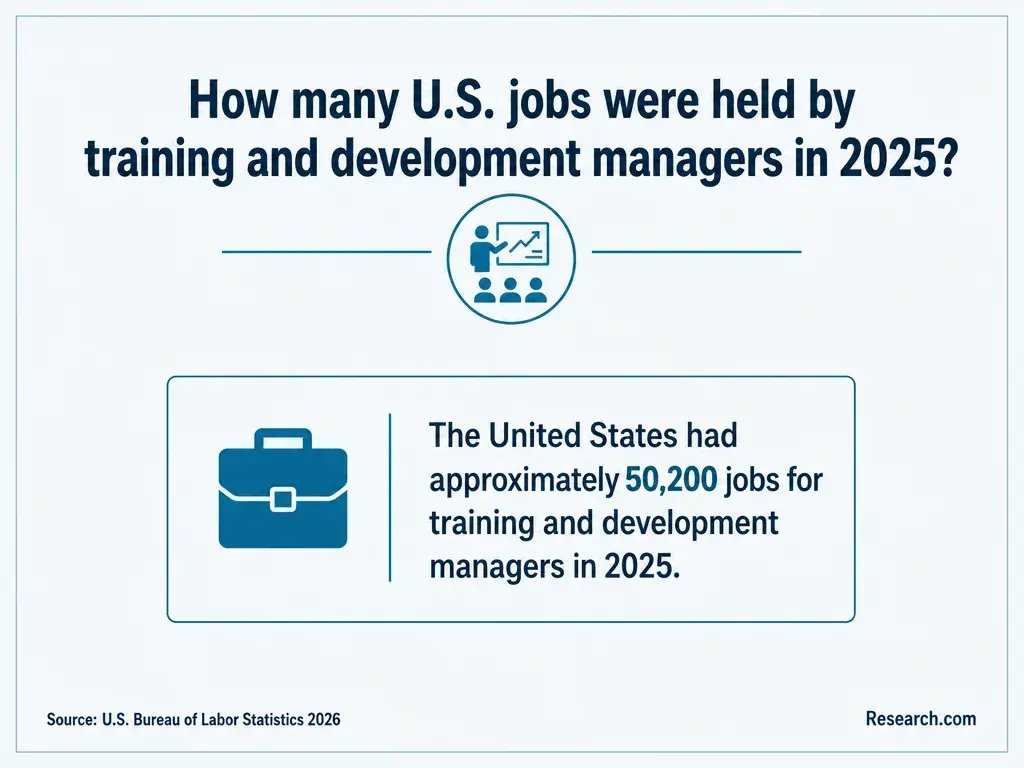
- The U.S. Bureau of Labor Statistics reports a $133,000 median annual salary for training and development managers in 2025; that occupational figure is not an expected salary or return on investment for Ed.D. students.
What is an online Ed.D. in Leadership and Learning in Organizations?
An Ed.D. in leadership and learning in organizations is a practice-oriented doctorate focused on how people learn, how organizations change, and how leaders use evidence to improve work. "Online" describes where much of the instruction occurs, not whether students can complete every activity independently or asynchronously. Degree names and requirements vary by school.
The degree can fit experienced professionals in workplace learning, healthcare, government, nonprofits, business, or education. Someone considering online Ed.D. study connecting organizations and higher education should check whether the curriculum actually addresses their intended setting rather than assuming all organizational leadership programs emphasize university administration.
Unlike a research-oriented PhD, an Ed.D. generally emphasizes applying research to problems of practice. Neither designation tells you how much public speaking a specific program requires. A leadership doctorate also does not, by itself, qualify a graduate for teacher or school-administrator licensure.
How does an online Ed.D. prepare students for live presentations?
Live speaking can serve several purposes: explaining a recommendation to decision-makers, responding to questions about evidence, and collaborating when colleagues disagree. Courses may provide repeated, lower-stakes practice before a culminating presentation, but the sequence and feedback available depend on the program.
The table separates common speaking settings because being comfortable in one does not necessarily make another easy. These are possibilities to investigate, not requirements shared by every Ed.D.
| Possible setting | Communication task | What to verify |
| Live online seminar | Discuss readings or explain a leadership decision | Attendance rules and how participation is graded |
| Team briefing | Present findings or recommendations with classmates | Speaking roles, scheduling, and peer-feedback practices |
| Final project presentation | Explain an applied project and respond to questions | Whether an oral presentation or defense is required and who attends |
A program's final deliverable may be a dissertation in practice, capstone, or another approved project; its written and oral assessments are separate questions. When examining Ed.D. culminating requirements beyond the traditional dissertation, do not assume that "no dissertation" means "no live presentation." Ask for the current handbook and assessment rubric.
Is an online Ed.D. suitable for students with presentation anxiety?
Yes, potentially. Anxiety about presenting is not the same as an inability to lead, study, or conduct applied inquiry. The fit depends on the severity of the anxiety, the program's actual speaking requirements, the support available, and whether developing this skill serves your professional goals.
Look for opportunities to practice in manageable stages: a small-group discussion, a short prepared briefing, feedback, and then a more consequential presentation. Ask faculty how they give feedback and whether students can rehearse. If anxiety substantially affects your participation, contact the university's accessibility or disability services office before enrollment to discuss its documentation process and possible accommodations. An accommodation is determined through that process; it should not be assumed to waive an essential oral requirement. A healthcare professional can help you assess anxiety that is persistent or significantly disruptive.
Also consider the goal behind the degree. If you already have the leadership experience you need and only want to become more comfortable presenting, a coached public-speaking course or supervised practice at work may address the problem more directly and at substantially less commitment than a doctorate.
Confirm that the degree-awarding institution holds accreditation from an accreditor recognized by the U.S. Department of Education. Check the institution and accreditor directly, including any status changes, rather than relying only on advertising. Accreditation matters for the legitimacy of the credential and can affect aid eligibility and how other institutions evaluate coursework.
Institutional accreditation does not establish that a particular Ed.D. offers presentation support, meets a professional certification standard, or prepares graduates for state-regulated school roles. If licensure is your goal, request the program's licensure disclosures and confirm eligibility with the relevant state authority. For this article's central decision, the handbook's participation and oral-assessment rules are as important to review as the accreditation record.
Relevant study may combine adult learning, organizational change, leadership, research methods, and evaluation. Students might learn to diagnose a performance problem, distinguish a training need from a structural problem, assess evidence, and communicate a feasible recommendation. Exact required courses and electives vary.
For a reader concerned about presentations, examine how those skills are assessed. A program that teaches stakeholder communication through supported briefings may help you build confidence while learning the material. One that relies heavily on unstructured, high-stakes speaking may be a poor fit even if its course titles look ideal. Ask whether faculty assess clarity of reasoning, delivery, responses to questions, or all three, and whether feedback arrives before major graded presentations.
Programs set their own entry rules. Common application materials can include prior graduate transcripts, a statement of purpose, recommendations, and evidence of relevant professional experience. Some programs may also request an interview or a proposed organizational problem. An education master's, a particular job title, and a prior publication are not universal requirements.
If an interview is required, ask about its format and purpose; do not treat discomfort with interviewing as proof that you cannot succeed in doctoral study. Applicants returning after specialist-level study should separately check reviewing Ed.S.-to-Ed.D. transition requirements. Coursework considered for admission is not automatically transferred into the doctorate or guaranteed to shorten it.
In your application, describe a real learning or leadership challenge and the decisions you have been responsible for. You can explain an interest in strengthening stakeholder communication without claiming that presentation anxiety is an admissions advantage or inventing workplace results.
There is no dependable single completion time or price for an online leadership Ed.D. Both depend on the program's required credits, tuition structure, enrollment pace, transfer policies, and final-project progression. Request a term-by-term plan and a written estimate for your intended entry term before making a commitment.
Compare tuition and mandatory fees alongside technology charges, books, any required campus travel and lodging, and costs associated with reducing work hours or arranging care. Organizational leadership doctorate tuition comparisons can help identify schools to investigate, but a lower advertised tuition rate may not mean a lower total cost for your schedule.
Presentation requirements can affect the budget, too: live meetings may conflict with paid work, and a required in-person presentation may add travel. Ask what happens financially if you need to repeat a course, slow your pace, or take an approved leave. Verify employer reimbursement terms before counting that support as available funding.
The degree may support advancement in learning and development, organizational development, consulting, nonprofit leadership, or education administration. The work differs: a training manager oversees staff and learning strategy; an organizational consultant analyzes client problems; an education administrator manages institution-specific programs and operations. Hiring usually depends on relevant experience and demonstrated results as well as education.
For an established learning professional, an applied project could provide evidence of needs assessment, evaluation, and communication with stakeholders - if the work can be shared without exposing confidential information. For a substantial career change, the Ed.D. alone may not replace sector knowledge, managerial experience, or a portfolio. If your target role primarily calls for stronger facilitation, seek opportunities to lead briefings and obtain feedback before committing to doctoral study.
There is no reliable salary figure that applies to graduates simply because they hold this degree. Pay depends on occupation, location, sector, responsibilities, and experience. For one relevant benchmark, the U.S. Bureau of Labor Statistics reports a 2025 median annual salary of $133,000 for training and development managers, with projected employment growth of 6.4% from 2025 to 2035. Those figures describe an occupation, not Ed.D. graduates or the effect of earning the degree.
Use the salary range for your actual target role when weighing tuition and time away from work. A doctorate may strengthen a qualified applicant's case, but it does not promise a management appointment, a raise, or recovery of education costs.
How can you choose a reputable online Ed.D. program?
Start with academic and career fit, then test the program's "online" promise against its documented requirements. Request the current handbook, sample course schedule, speaking-assessment rubrics, total-cost estimate, and information about accessibility services. Speak with admissions, a program representative, and - when needed - the accessibility office; each has authority over different questions.
Use these questions to compare programs on the issue most likely to affect your ability to finish:
- Which live classes, team meetings, campus convenings, and oral presentations are mandatory, and when are they scheduled?
- How are speaking assignments assessed, and what rehearsal, faculty feedback, or presentation coaching is available?
- What is the formal accommodation process, and which oral tasks does the program consider essential?
- What happens to enrollment, tuition, and the final project if work demands or health needs require a slower pace?
For a higher education career goal, compare the full financial picture as well as presentation fit; a guide to higher education leadership doctoral costs after financial aid can help frame that review. Make your final choice from written, entry-term-specific answers - not an assumption that online study will let you avoid live speaking.
Other Things You Should Know About EdD Leadership
Often, but rules vary by assignment. Ask whether notes, slides, or a prepared outline are permitted and whether reading a script affects the grading rubric.
Pause, refer to your outline, and resume with your main point. Before a graded presentation, ask the instructor how interruptions are handled so you know the procedure rather than guessing in the moment.
No general rule requires you to share personal health information with classmates. You can ask teammates for a clear speaking plan without explaining why; formal accommodation requests belong with the institution's designated office.
It can help you check timing and clarity, but it does not replace practice responding to questions. Rehearse with a trusted colleague and confirm whether recording any actual class or workplace material is permitted.
- Program Eligibility, Written Arrangements, and Distance Education | 2024-2025 Federal Student Aid Handbook https://fsapartners.ed.gov/knowledge-center/fsa-handbook/2024-2025/vol2/ch2-program-eligibility-written-arrangements-and-distance-education
- ADA Requirements: Testing Accommodations https://www.ada.gov/resources/testing-accommodations/
- What's the Difference Between Asynchronous and Synchronous Learning? | Ohio State Online https://online.osu.edu/content-hub/blogs/whats-the-difference-between-asynchronous-and-synchronous-learning/
- Reasonable accommodations explained | apa.org https://www.apa.org/pi/disability/dart/toolkit-three
- Asynchronous and Synchronous Online Courses | nmsu.edu https://dacc.nmsu.edu/faculty-and-staff/online-quality-assurance/asynchronous-and-synchronous-online-courses.html
- Webinar Minimum Requirements | Information Technology Services (ITS) | Loyola University Chicago https://www.luc.edu/its/dms/webinars/webinarminimumrequirements/
- Commonly Utilized Accommodations - Educational Equity | Plone site https://equity.psu.edu/offices/student-disability-resources/faculty/common-accommodations
- Individual or Group Presentation | IT@UMN https://it.umn.edu/services-technologies/good-practices/individual-or-group-presentation
- Online Presentations - Students | Wharton Knowledge Base https://support.wharton.upenn.edu/help/online-presentations-students
- Leadership Communication Training Program | Berkeley Exec Ed https://executive.berkeley.edu/programs/leadership-communications-program