2027 Online Ed.D. in Leadership and Learning in Organizations Admissions: Showing Leadership Through Cross-Functional Projects
Audited and Verified:
Our Editorial and Data Verification Process
Research.com uses government datasets, official education statistics and primary institutional information to support its career and degree guides. Our review process checks factual accuracy, occupational definitions, source dates and the requirements associated with the credentials discussed.
How This Article Was Fact-Checked
Our editorial team verifies salary estimates, employment projections, education requirements and program information against original data providers and official organizations. Salary figures are checked against the relevant occupational definitions and reporting periods. Information about licensure, accreditation and required in-person training is reviewed separately.
Fact-checked and verified on:

Co-Founder and Chief Data Scientist
A cross-functional project can be compelling evidence for an Ed.D. application - but a project title alone does not show how you led. Admissions reviewers need to understand the organizational problem, the people you brought together, the decisions you influenced, and what you learned from the results.
This guide is for experienced professionals applying to online leadership and learning doctorates. It explains how to turn collaborative work into an accurate, evidence-based application while checking whether a program's requirements and applied-learning expectations fit your experience.
Key Things You Should Know
- Present one or two cross-functional projects as evidence of your decisions, influence, learning, and results - not simply the number of departments involved.
- Separate your contribution from the team's work, and distinguish measured outcomes from estimates or goals; admissions requirements vary by program.
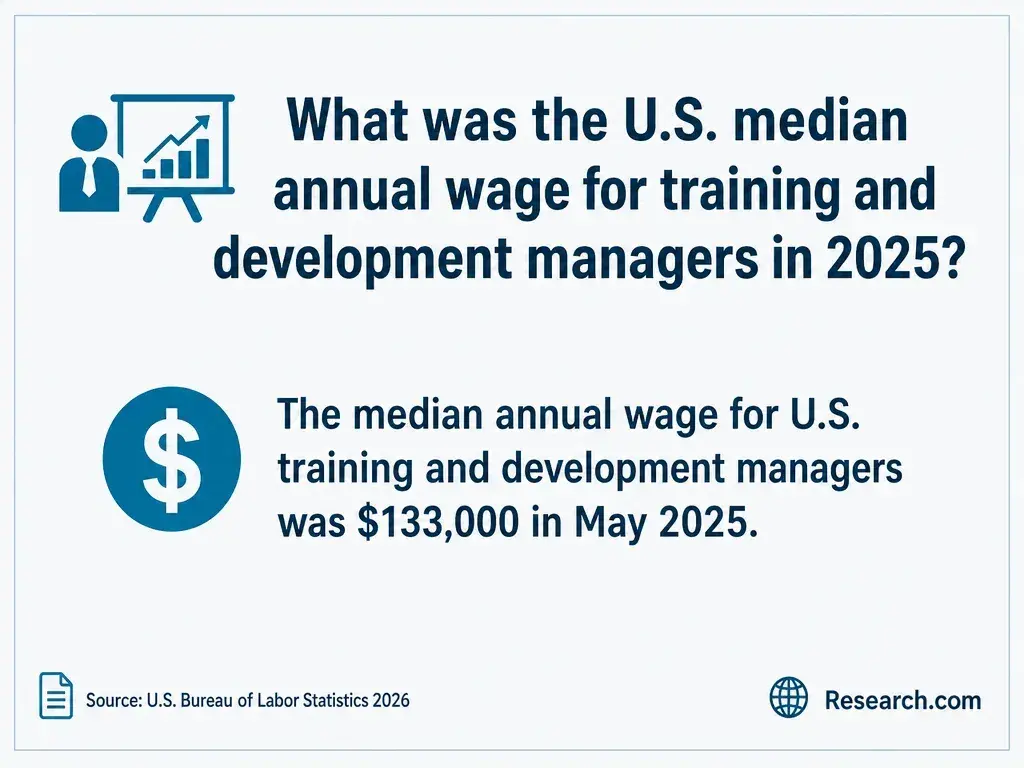
- An Ed.D. can deepen applied leadership and organizational inquiry, but it does not guarantee admission or advancement; the U.S. median annual pay for training and development managers was $133,000 in May 2025, not a projected salary for Ed.D. graduates.
What is an online Ed.D. in Leadership and Learning in Organizations?
An online Doctor of Education in Leadership and Learning in Organizations is a practice-oriented doctorate focused on how people learn, collaborate, and implement change within organizations. The exact title and curriculum vary by institution. Such programs may connect leadership theory, adult learning, organizational development, and applied inquiry to problems in business, healthcare, government, nonprofits, or education.
For an applicant, that focus makes a cross-functional project relevant when it reveals more than coordination. A project that required you to diagnose a performance gap, work across competing priorities, change a learning process, and assess its effects can demonstrate the kind of practice you hope to examine more rigorously in doctoral study.
Check the degree's actual focus and final project rather than assuming every leadership Ed.D. has the same requirements; a guide to understanding different Ed.D. degree formats and focuses can help frame that comparison.
What are the admission requirements for an online Ed.D. in Leadership and Learning?
Requirements are set by each university and can change by entry term. Programs may ask for a qualifying degree or graduate study, transcripts, relevant professional experience, recommendations, a statement of purpose, and an interview. Some specify grades or tests; others do not. An education master's, a senior job title, and a fixed number of management years are not universal requirements.
Read the current admissions page in two passes: first for eligibility, then for competitive evidence. Cross-functional leadership may strengthen the second even when it is not a formal prerequisite. Ask admissions how the program defines qualifying experience and whether your proposed example is appropriate for its application prompts. If you hold an education specialist degree, investigate schools offering online Ed.S.-to-Ed.D. routes, but obtain a written evaluation before assuming those credits satisfy admission rules or reduce doctoral coursework.
How can cross-functional projects demonstrate leadership in an Ed.D. application?
Use a project to show leadership through influence: how you helped people with different responsibilities reach decisions and act on them. This is especially useful for learning and development professionals and emerging leaders whose authority may come from facilitation, evidence, or trust rather than a supervisory title. A training rollout involving operations, HR, and IT, for example, is stronger evidence when you explain why those groups disagreed, what you changed, and how you evaluated implementation.
Build a short evidence record for each candidate project before drafting your statement or résumé. These questions keep the account specific without claiming credit for an entire team's work:
- Problem and scope: What organizational need prompted the project, who was affected, and what was within your authority?
- Your actions: Which decisions did you make or influence, and how did you handle competing goals across functions?
- Learning and evidence: What information guided the work, what outcomes were actually observed, and what remains uncertain?
- Doctoral connection: What unresolved leadership or learning question would you be prepared to investigate more systematically?
Choose depth over a long inventory of committees. If a project missed its target, explain the constraint and the adjustment you made; a credible account of learning can be stronger than an unsupported success claim. Attribute team results to the team, label projections as projections, and use only information you are authorized to disclose. A recommender who observed your decisions across functions may corroborate your contribution more effectively than someone with a senior title who knows the project only indirectly.
Online delivery changes where you participate, not necessarily when or how often. For an applicant hoping to keep leading a cross-functional initiative while studying, live sessions, group meetings, campus convenings, and applied-project deadlines matter more than the online label. Campus-based programs may offer more routine in-person interaction but can require a less compatible commute or relocation.
Compare published schedules and ask current program staff how collaboration works during coursework and the final project. If you are considering a doctorate aimed at higher education leadership, review financial aid for higher education leadership doctoral students alongside attendance and travel requirements; available support and its conditions must be confirmed with each school.
Depending on the institution, coursework may cover leadership and organizational change, adult learning, organizational development, program evaluation, and qualitative or quantitative inquiry. Those subjects can help an applicant move from "I led an initiative" to sharper questions about why participation varied, whether learning transferred to work, or which implementation barriers mattered. Course titles alone do not establish the depth of training, so inspect descriptions, sequencing, and the final-project requirements.
If your main goal is executive decision-making rather than organizational learning, compare the curriculum with business-oriented or shorter leadership-development options before applying. A cost comparison of affordable doctoral education in organizational leadership may identify programs to investigate, but affordability cannot establish that their research training or learning focus matches your proposed work.
Time to completion depends on required credits, enrollment pace, course availability, and the final project. Published timelines may assume steady progress and may not account for a delayed workplace approval or a change in project site. Request the program's expected course sequence and ask what happens if your job or access to organizational data changes.
For cost, obtain an entry-term estimate that separates tuition from fees, required travel, and any continuation charges during final-project work. Then check employer reimbursement limits and whether they depend on grades, continued employment, or repayment after departure. Comparing Doctor of Education programs by affordability is a starting screen, not a substitute for a personalized total-cost estimate. If your immediate goal is to lead better cross-functional projects, an employer-sponsored assignment or targeted methods training may cost less and serve that goal sooner.
Confirm the university's institutional accreditation through the accreditor and the U.S. Department of Education's accreditation records. Then verify the exact degree name, curriculum, online attendance rules, and final-project model in the institution's current catalog. Institutional accreditation does not establish that a program prepares students for a particular license or professional certification.
For this admissions decision, quality also means a workable connection between your leadership experience and the program's academic expectations. Ask who guides applied projects, whether students may study a workplace outside their employer, and what approvals are required before using organizational information. Do not assume an application example automatically becomes an approved dissertation or capstone topic.
The degree may support growth in learning and development management, organizational development, talent development, consulting, or education administration when its coursework complements relevant experience. A cross-functional project is valuable career evidence because these roles often require negotiation, implementation, and evaluation - not just knowledge of leadership concepts.
Match your application story to the role you want. An aspiring training manager should show how a project addressed learning needs and implementation; an organizational consultant should clarify diagnosis, stakeholder trade-offs, and recommendations. Employers may still require sector knowledge, supervisory experience, or a record of delivering results. If you lack those foundations, another substantial project, mentorship, or a focused credential may be a more direct next step than a doctorate.
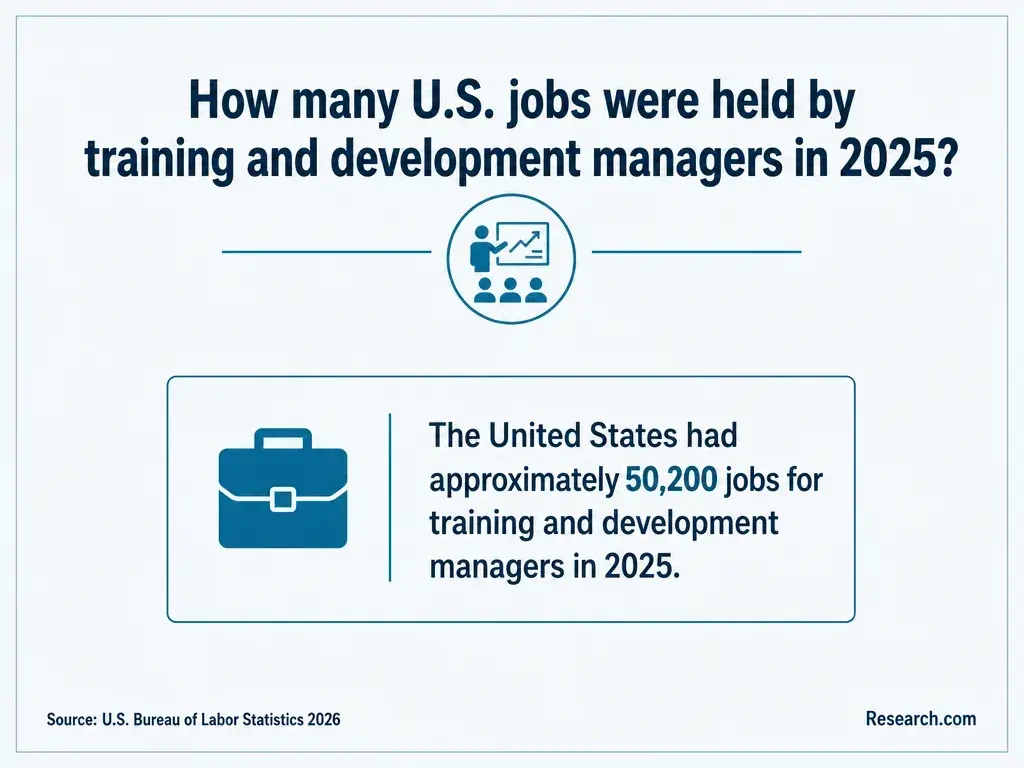
U.S. Bureau of Labor Statistics figures describe occupations, not outcomes for degree holders. Training and development managers had a median annual salary of $133,000 in May 2025, with employment projected to grow 6.4% from 2025 to 2035. Those figures can help you assess a target occupation, but they do not show what an applicant will earn after an Ed.D. or whether the degree is required for a particular opening.
Use job postings in your sector and location to test the investment: compare required experience, preferred credentials, and actual responsibilities with what you already bring. A strong cross-functional record may matter more to an employer than the doctorate alone.
Do Ed.D. graduates need licenses or professional certifications?
Many organizational learning and development roles do not require an educator license solely because the employee holds an Ed.D. Requirements depend on the occupation and jurisdiction, however. School leadership and some other regulated education roles can have separate state-approved preparation and licensure rules; a broadly focused leadership and learning doctorate should not be assumed to satisfy them.
If a specific position is your goal, check its employer requirements and, when applicable, the state licensing authority's rules before enrolling. Professional certifications may be useful for particular learning, project, or change-management roles, but they are separate from the doctoral degree.
Other Things You Should Know About EdD Leadership
Yes, if you can describe your contribution accurately without disclosing restricted information. Check any continuing confidentiality obligations before sharing documents or internal results.
Only if the application permits or requests it. A concise description may be more useful than unsolicited files; remove confidential details from any permitted work sample.
Remote collaboration still counts as meaningful experience. Explain how you coordinated decisions, resolved disagreements, and maintained accountability across teams rather than emphasizing the technology used.
Follow the program's stated reference and verification procedures. Do not presume partners will be contacted or volunteer their names as references without asking them first.
- Change Management: From Theory to Practice - PMC https://pmc.ncbi.nlm.nih.gov/articles/PMC9462626/
- Letters of Recommendation | The Harry S. Truman Scholarship Foundation https://www.truman.gov/apply/advice-guidance/letters-recommendation
- CDC Approach to Program Evaluation https://www.cdc.gov/evaluation/php/about/index.html
- Nursing Professional Development Evidence-Based Practice | nih.gov https://www.ncbi.nlm.nih.gov/books/NBK589676/
- Frequently Asked Questions | Protecting Student Privacy https://studentprivacy.ed.gov/frequently-asked-questions
- Protecting Personal Information: A Guide for Business | Federal Trade Commission https://www.ftc.gov/business-guidance/resources/protecting-personal-information-guide-business
- How Cross-Functional Collaboration Drives Success | umn.edu https://ccaps.umn.edu/story/how-cross-functional-collaboration-drives-success
- Authority and Leadership: A Comparative Analysis | ollusa.edu https://www.ollusa.edu/blog/authority-vs-leadership.html
- Resumes with Impact: Creating Strong Bullet Points | Columbia Career Education https://www.careereducation.columbia.edu/resources/resumes-impact-creating-strong-bullet-points
- Admissions and Application Requirements - UNC Online https://online.unc.edu/online-doctoral-programs/online-edd-organizational-learning-and-leadership/admissions/