2027 Online Ed.D. in Leadership and Learning in Organizations: Degree Fit for Leaders Tackling A Logistics Company Improving Shift-to-Shift Communication
Audited and Verified:
Our Editorial and Data Verification Process
Research.com uses government datasets, official education statistics and primary institutional information to support its career and degree guides. Our review process checks factual accuracy, occupational definitions, source dates and the requirements associated with the credentials discussed.
How This Article Was Fact-Checked
Our editorial team verifies salary estimates, employment projections, education requirements and program information against original data providers and official organizations. Salary figures are checked against the relevant occupational definitions and reporting periods. Information about licensure, accreditation and required in-person training is reviewed separately.
Fact-checked and verified on:

Co-Founder and Chief Data Scientist
When one logistics shift leaves the next with incomplete updates, the consequences can include missed dispatch changes, repeated work, and unresolved safety concerns. A leader facing that problem needs to know whether an online Ed.D. in Leadership and Learning in Organizations would help - or whether a better handoff process would do more, sooner.
This guide is for operations, training, and organizational leaders weighing that decision. It shows how to diagnose the communication gap, what doctoral study could add, and which program and workplace conditions to verify before enrolling.
Key Things You Should Know
- Start with the handoff, not the degree. Determine whether missing information stems from unclear ownership, inadequate overlap time, inconsistent records, or a learning gap; training alone will not fix every cause.
- An Ed.D. fits a broader leadership goal. It may be worthwhile if you want to lead sustained, evidence-informed change across teams or sites, not solely introduce a shift checklist.
- Career pay is not a degree payoff. The US Bureau of Labor Statistics reports a $133,000 median annual salary for training and development managers in 2025; that occupational median does not predict an Ed.D. graduate's salary.
What is an online Ed.D. in Leadership and Learning in Organizations?
An online Doctor of Education in leadership and learning is a practice-oriented doctorate focused on how people learn, how organizations change, and how leaders use evidence to improve work.
The exact degree name and requirements vary by university. Online describes where much of the instruction occurs; it does not necessarily mean self-paced study or no campus visits.
For a logistics leader, relevant study might connect adult learning and leadership theory with an applied question: How can supervisors make critical information usable across shifts, locations, and job roles?
A program may require a dissertation in practice, another applied project, or a different doctoral deliverable. If the project format matters to your decision, compare professional education doctorates with applied projects against each university's actual graduation requirements.
The Ed.D. is not an operations credential. A research-focused PhD is generally a better fit for someone whose main aim is to produce scholarly research, while an MBA or targeted operations training may more directly address business-process and financial management needs.
Is an online Ed.D. right for logistics leaders improving shift communication?
Usually, not for the handoff problem alone. If the goal is to stop information from being lost between today's shifts, test an operational remedy first.
The Ed.D. becomes more compelling when you have responsibility for a wider learning and change problem, for example, helping multiple sites adopt reliable communication practices, evaluating implementation, and developing supervisors who can sustain them.
"Poor communication" is a symptom, not a diagnosis. In a warehouse, fleet operation, or distribution center, a missed update could reflect too little shift overlap, an unclear escalation owner, competing software records, language or accessibility barriers, or a supervisor who has not been prepared to lead a handoff. The possible cause determines the sensible response.
The comparison below separates near-term operational fixes from the broader capability a doctorate might develop:
| What the diagnosis suggests | More direct first response | Potential Ed.D. contribution |
| Updates lack a consistent location or owner | Assign ownership and standardize the handoff record | Study adoption and accountability across teams or sites |
| Staff know the process but lack time to use it | Adjust overlap, staffing, or escalation workflow | Evaluate how implementation constraints affect change |
| Supervisors interpret or teach priorities differently | Coach supervisors and test a shared briefing practice | Design and evaluate leadership development over time |
Before considering the degree as part of the solution, establish a defensible baseline. These steps also reveal whether you have the authority and access needed for applied doctoral work:
- Map what must pass between shifts, such as equipment status, exceptions, dispatch changes, and unresolved safety issues, and identify who receives and acts on each item.
- Review permitted operational records and observe handoffs with appropriate workplace approval; distinguish omitted updates from updates that were recorded but not understood or acted upon.
- Choose a limited test, define measures such as handoff completion and repeated exception work, and check for unintended burdens on staff.
- Ask whether improving one process meets your goal or whether you want to lead and evaluate organizational learning across a larger operation.
Do not treat a before-and-after improvement as proof that a new briefing caused it; volume, staffing, and other changes may also affect results. If this becomes doctoral research, obtain employer authorization for data use and ask the university what ethical review is required before collecting employee information. A workplace improvement effort is not automatically an approved academic project.
What careers can an Ed.D. in Leadership and Learning prepare you for?
For an experienced logistics professional, the most plausible benefit is greater readiness for responsibilities that combine operations, workforce learning, and organizational change. Examples include leading supervisor development, managing training across facilities, or moving into organizational development.
A portfolio showing a well-documented, appropriately authorized improvement effort may be more persuasive to an employer than the degree title alone.
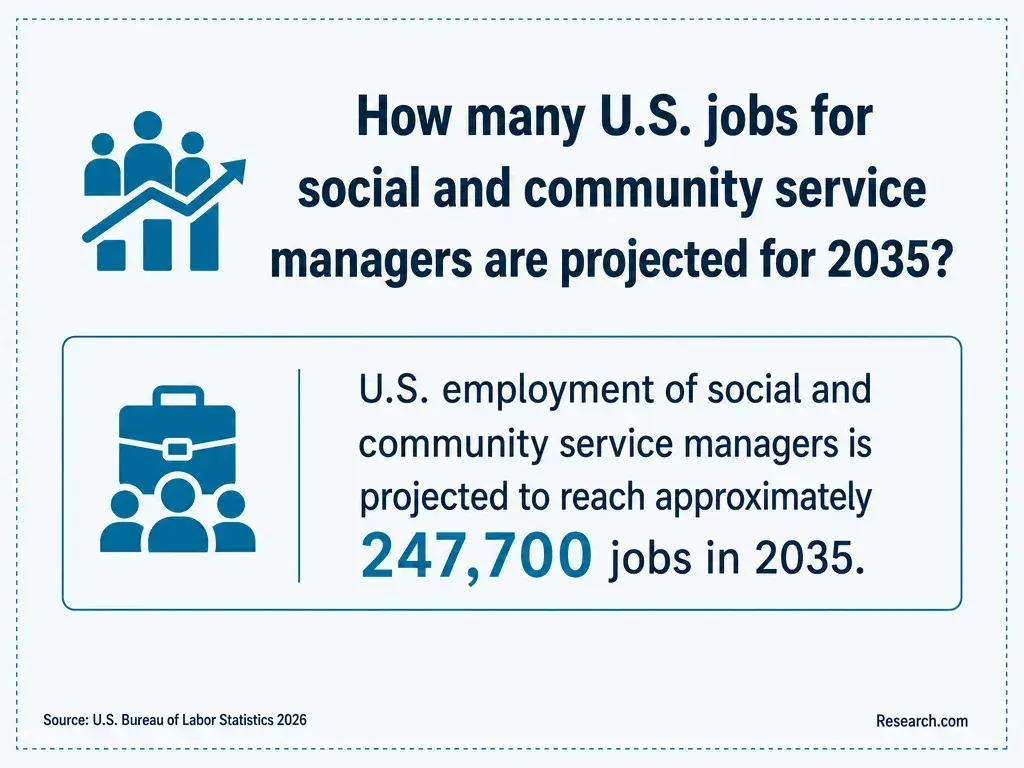
Training and development managers oversee learning programs and staff; management analysts diagnose organizational problems and recommend improvements. Neither role is identical to running a distribution operation, and employers may prioritize demonstrated functional experience.
Moving from logistics into higher education administration would be a larger sector change with different hiring expectations; readers considering that path can separately explore doctoral leadership study for higher education organizations.
If your target is an operations promotion rather than a learning or change role, ask the hiring manager which evidence matters: responsibility for multiple sites, safety and service performance, budget authority, or workforce development. That answer may favor a stretch assignment or employer leadership program over doctoral study.
An online Ed.D. can let a shift-based leader study without relocating, but location flexibility is not schedule flexibility. Live evening classes, group meetings, deadlines, and required campus convenings can conflict with rotating shifts or peak-season work.
A campus-based program may offer more routine in-person contact but demand a commute or a change in work arrangements.
Compare programs on the same terms: required attendance times, travel, faculty access, project supervision, and total cost - not simply whether a school calls its program online. A cost comparison can begin with education doctoral degrees by tuition level, but published tuition alone cannot show the cost of travel, time away from work, or additional terms needed to finish.
For rotating-shift employees, request a sample course schedule and written attendance policy. Also ask what happens if your employer changes your shift or you leave the organization that was expected to host your applied project.
Curricula differ, but relevant subjects may include adult learning, organizational change, leadership, research methods, and program evaluation.
For the handoff problem, the useful sequence is to diagnose how work moves between teams, identify what staff need to learn, implement a feasible change, and evaluate whether practice, not merely satisfaction with training, improves.
Look closely at methods preparation. Interviews or observations could clarify why updates are lost; operational measures could show whether the process is being used. Courses should teach you to interpret both without confusing a small local evaluation with proof of a general solution. Confirm whether the topics you need are required courses, available electives, or only mentioned in program descriptions.
Requirements are program-specific. Schools may evaluate prior graduate study, transcripts, professional experience, recommendations, a statement of purpose, and evidence that an applicant is ready for doctoral inquiry.
A logistics background can be relevant when you can document decisions you led, people you developed, and an organizational problem you can examine honestly; a senior job title alone is not that evidence.
If you hold an Education Specialist degree, online education doctorate routes for Ed.S. graduates may help you identify programs to investigate. Ask each institution separately whether prior study meets admission requirements and whether any credits actually apply toward the doctorate. Those are different decisions, and neither should be assumed to shorten the program.
In an application, describe the shift-handoff challenge as a proposed area of inquiry, not a proven diagnosis. Explain your scope of authority and what workplace access remains subject to employer and university approval.
There is no reliable universal duration or price for an online Ed.D. Completion depends on the required credits, course sequence, enrollment pace, and time needed for the doctoral project. A logistics leader also needs to account for peak operating periods and whether an employer will continue to permit project access.
Request a written, program-specific estimate covering tuition, mandatory fees, required travel, and the cost of continued enrollment if the project takes longer than planned.
Compare those figures with employer reimbursement terms, including eligibility, grade requirements, and any obligation to repay support after leaving. Doctor of Education programs by affordability can provide a starting set of schools, but the least expensive advertised tuition may not produce the lowest total cost for your schedule.
Calculate value against the outcome you actually seek. If a limited handoff pilot and supervisor coaching would solve the immediate problem, a doctorate's substantial commitment needs a separate professional justification.
Confirm the institution's accreditation through the accreditor and the US Department of Education's institutional listings, then verify that the named university actually awards the Ed.D. you are considering.
Institutional accreditation does not establish that a particular curriculum meets an employer's expectations or prepares graduates for a regulated role.
For this logistics use case, examine the program's published curriculum, research oversight, faculty support, and applied-project rules.
Ask the program whether an employer-based project is permitted, who approves the site, and what happens if access to operational or employee data is denied. Get answers for your intended entry term rather than relying on a general description of online study.
A logistics leader generally does not need a professional license to pursue an organizational leadership and learning Ed.D., and the degree itself does not confer an operations certification.
Employers may value separate qualifications for particular safety, transportation, project, or training responsibilities; check the requirements of the specific role rather than assuming the doctorate replaces them.
If you later seek a regulated education position, verify its state requirements independently. A broadly focused leadership Ed.D. should not be presumed to qualify someone for teacher or school-administrator licensure.
What salaries and job outlook can Ed.D. graduates expect?
There is no single salary or job-growth figure for Ed.D. graduates. The closest occupational comparison depends on the work you perform. The US Bureau of Labor Statistics reports a 2025 median annual salary of $133,000 for training and development managers.
That figure describes workers in the occupation, across educational backgrounds; it is not an expected salary after earning this degree.
The BLS projects 10.1% employment growth for management analysts from 2025 to 2035. That outlook may be relevant if you want to move toward organizational consulting, but it does not establish demand for logistics leaders with Ed.D. degrees.
For an internal promotion, compare actual postings and pay bands with the responsibilities you already hold before attributing potential earnings to further education.
Other Things You Should Know About EdD Leadership
Yes. A clearly owned, accessible written handoff and a defined route for urgent exceptions may be more feasible than requiring every shift to meet. Test whether the receiving team can find, understand, and act on the information.
Include their information needs when their work depends on shift updates, but first confirm who controls their schedules, records, and participation. An employer's approval may not cover a separate contractor's data.
Define which exceptions need reporting, focus reviews on process improvement, and limit access to employee-level information. Make clear who can see records and how they will be used.
Ask the program whether it permits another approved organization or a different project design. Do not enroll on the assumption that a course assignment, outside consulting arrangement, or informal workplace access will satisfy doctoral requirements.
- Tool: Handoff | Agency for Healthcare Research and Quality https://www.ahrq.gov/teamstepps-program/curriculum/communication/tools/handoff.html
- Shift-to-Shift Handoff Research: Where Do We Go From Here? | nih.gov https://pmc.ncbi.nlm.nih.gov/articles/PMC3312531/
- Privacy in the Workplace | priv.gc.ca https://www.priv.gc.ca/en/privacy-topics/employers-and-employees/02_05_d_17/
- Change in the Workplace Online & Washington, D.C. | Graduate School USA https://www.graduateschool.edu/courses/understanding-and-implementing-change-in-the-workplace
- Workplace surveillance: A systematic review, integrative framework, and research agenda - ScienceDirect https://www.sciencedirect.com/science/article/pii/S0148296323005714
- 2026 UNC Online EdD in Organizational Learning & Leadership https://online.unc.edu/online-doctoral-programs/online-edd-organizational-learning-and-leadership/
- Leadership Ed.D. - School of Education | Virginia Commonwealth University https://soe.vcu.edu/academics/leadership/leadership-edd/
- What Is a Problem of Practice? | spalding.edu https://online.spalding.edu/blog/what-is-problem-practice
- Careers Leaders Can Pursue with an Ed.D. | Peabody Online | VU-EDU https://peabodyonline.vanderbilt.edu/edd-in-organizational-learning/edd-careers/
- Change Management: Building Sustainable Results | umich.edu https://ope.engin.umich.edu/pe/change-management/