2027 Choosing an Online Ed.D. in Leadership and Learning in Organizations for Leadership in Disability Services Organizations
Audited and Verified:
Our Editorial and Data Verification Process
Research.com uses government datasets, official education statistics and primary institutional information to support its career and degree guides. Our review process checks factual accuracy, occupational definitions, source dates and the requirements associated with the credentials discussed.
How This Article Was Fact-Checked
Our editorial team verifies salary estimates, employment projections, education requirements and program information against original data providers and official organizations. Salary figures are checked against the relevant occupational definitions and reporting periods. Information about licensure, accreditation and required in-person training is reviewed separately.
Fact-checked and verified on:

Co-Founder and Chief Data Scientist
Leading a disability services organization means improving staff practice while protecting the choices, access, and trust of the people it serves. An online Ed.D. in Leadership and Learning in Organizations may help an experienced leader tackle those challenges, but a broadly focused doctorate is not automatically the best preparation. This guide is for nonprofit, public-sector, education, and other disability services professionals weighing that decision. It explains what to look for in coursework and applied research, what the degree can and cannot do for a career, and how to compare its demands with more direct alternatives.
Key Things You Should Know
- Choose an Ed.D. for a substantial leadership or organizational-learning challenge - not as a substitute for disability-services experience, regulatory knowledge, or the qualifications required for a particular job.
- Look for supervised applied research, relevant electives, and a feasible project site; a general organizational leadership curriculum does not necessarily teach disability policy or service delivery.
- The U.S. median annual salary for training and development managers was $133,000 in 2025, but that occupational figure is not a predicted salary for Ed.D. graduates or disability services leaders.
What is an online Ed.D. in Leadership and Learning in Organizations?
An Ed.D. in Leadership and Learning in Organizations is a practice-oriented doctorate concerned with how people learn at work and how leaders improve organizational systems. An online program delivers some or all coursework remotely; it may still require live classes, group work, or campus visits. The precise degree title, curriculum, and final project differ by institution.
For a disability services leader, the value lies less in the credential's wording than in whether the program helps them diagnose a service-delivery problem, work with stakeholders, implement change, and evaluate results responsibly. A general Ed.D. is distinct from a doctorate designed specifically for school administration, and neither should be assumed to confer professional licensure.
How can this Ed.D. prepare leaders for disability services organizations?
The strongest fit is a leader responsible for changing how an organization works - for example, improving staff preparation across community programs or examining why a new service protocol is not being used consistently. Coursework in adult learning can inform training design; organizational change can help address supervision, incentives, and workflow; and evaluation methods can help distinguish implementation problems from assumptions about staff performance.
Disability-specific judgment still matters. A leader must understand the people served, the organization's funding and governance, and the rules applicable to its setting. Depending on the organization, these may include disability nondiscrimination requirements, education obligations, or Medicaid service rules. Training alone cannot fix an inaccessible process, insufficient staffing, or a policy that limits participant choice.
An applied doctoral project could examine a real organizational question, but it requires an appropriately scoped problem, faculty approval, organizational permission, and lawful access to information. Leaders should involve people with disabilities in defining success rather than measuring only what is convenient for administrators. They must also check privacy, consent, and institutional review requirements before collecting or sharing identifiable information.
What careers can you pursue after an Ed.D. in organizational leadership?
For someone already working in disability services, the most plausible benefit is stronger preparation for broader responsibilities: directing staff development, leading program improvement, overseeing evaluation, or managing change across sites. Executive director and agency leadership roles also depend heavily on operational experience, budgets, governance, community relationships, and an employer's requirements. The doctorate alone does not establish readiness for them.
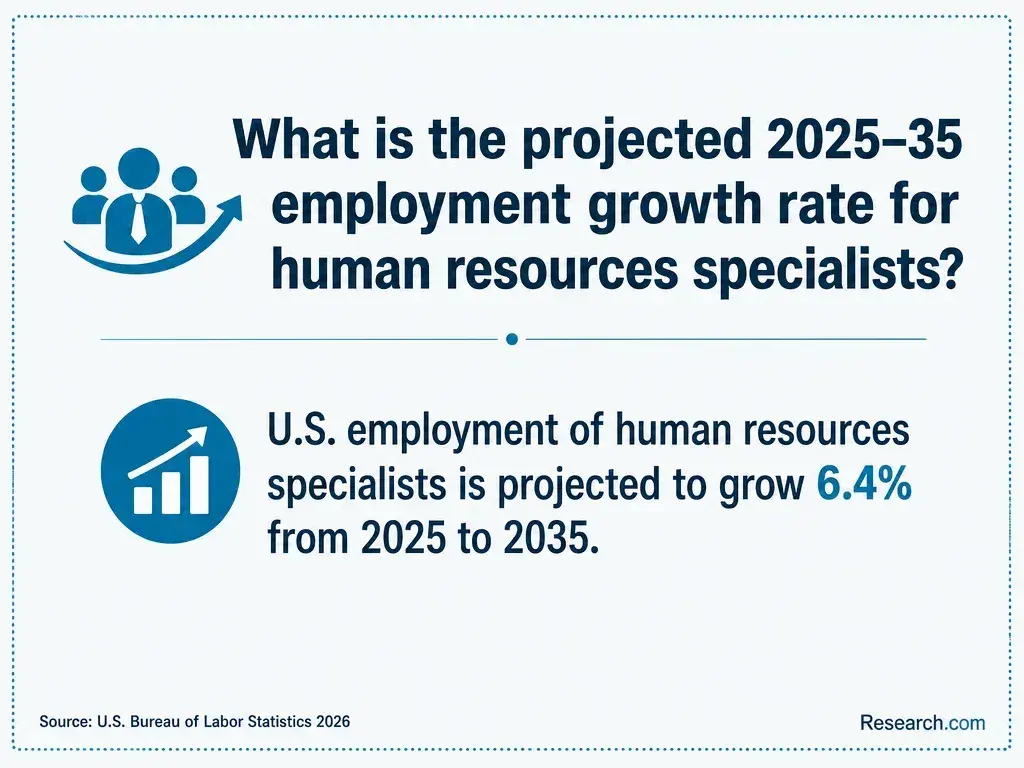
Skills developed in the degree may transfer to organizational consulting or workforce development. The U.S. Bureau of Labor Statistics projects 10.1% employment growth for management analysts from 2025 to 2035. That indicates demand across the occupation, not a forecast of openings in disability services or a guarantee that a graduate can enter consulting without relevant experience.
Before enrolling for career advancement, review actual job postings and speak with hiring managers in your target service setting. Separate positions that require a particular credential from those that chiefly reward demonstrated responsibility for staff, programs, budgets, and outcomes.
Most broadly focused leadership and learning doctorates are not disability services degrees. Compare course descriptions and required experiences rather than assuming the program title covers the field. The most useful curriculum will connect organizational theory to decisions you can influence at work.
For this goal, examine the depth of study in adult learning and training transfer; organizational diagnosis and change; inclusive leadership and stakeholder engagement; qualitative and quantitative methods; and program evaluation. If you need disability policy, accessible communication, person-centered practice, or a particular service model, determine whether those subjects are actually taught, available as electives, or best learned through separate professional development.
Also verify the final deliverable. Some professional education doctorates with applied projects use a capstone rather than a traditional dissertation, but "applied" does not mean an ordinary workplace assignment automatically qualifies. Ask what faculty supervision, organizational access, evidence, and approvals the project requires.
Requirements vary by school. Programs may request a completed graduate degree, transcripts, recommendations, a statement of purpose, and evidence of relevant professional experience. Some evaluate prior research preparation or interview applicants. A background in nonprofit management, public administration, healthcare, education, or another field may be relevant; an education master's is not a universal requirement.
Use the application to show decisions you have made, people you have worked with, and an organizational problem you could investigate without claiming results you have not achieved. If you have prior doctoral coursework, ask admissions whether it affects eligibility and ask the program separately whether any credit can satisfy degree requirements. Applicants returning after completing coursework elsewhere can investigate online Ed.D. options for all-but-dissertation applicants, but previous credits or doctoral standing do not ensure admission, transfer, or a shorter path.
Completion time depends on required credits, course sequencing, enrollment pace, and the final project. Published schedules may assume uninterrupted enrollment and timely project approvals. For a disability services leader, the schedule must also accommodate service demands, stakeholder participation, data permissions, and any employer change during the project.
Compare online Ed.D. degree options by study length only after checking what each timeline includes. Ask whether it covers campus convenings and the full capstone or dissertation process, whether courses run every term, and what happens if an organization cannot provide project access on schedule.
There is no reliable single price for this degree category. Request a written estimate based on the credits you must complete and your intended pace. Compare tuition and mandatory fees alongside technology charges, required travel and lodging, books, and any costs of obtaining accessible participation in required activities. Extra terms needed to finish a project can change the total.
Employer tuition assistance can help, but check its annual limits, approved-program rules, grade requirements, and repayment terms before treating it as available funding. Compare Doctor of Education programs by affordability using estimated total completion cost, not an advertised per-credit price alone. Then weigh that cost against a certificate, mentorship, or a supported improvement project if those would address your immediate leadership gap.
Online study can reduce relocation and routine commuting, which may matter for leaders who cannot leave a service operation. It does not necessarily offer control over class times: live sessions, cohort meetings, group projects, and campus convenings may still be mandatory. Campus-based study may offer more in-person contact, but it can be harder to combine with full-time service leadership.
For either format, ask to see the actual attendance rules, term schedule, accessibility process, and project-support arrangements. A disability services professional should pay particular attention to whether faculty can support research involving service recipients or employees and whether a remote student can obtain timely methods guidance. If your goal is specifically to lead a university disability services office, compare the curriculum and paying for a doctorate in higher education leadership as well; that setting has governance and student-service demands a general program may not emphasize.
Generally, no. Leadership qualifications depend on the employer, the services provided, funding conditions, and any regulated responsibilities attached to the position. An Ed.D. neither replaces required professional credentials nor automatically qualifies someone to direct a school program, provide clinical services, or hold an executive post.
The better choice depends on the capability you need next. An experienced leader facing recurring cross-site learning and change problems may benefit from sustained doctoral study and supervised inquiry. Someone needing service-specific regulatory knowledge may be better served by targeted training. A prospective executive whose main gaps are budgeting, operations, or board relations may gain more from supervised management responsibility, mentorship, or a degree focused on those functions. Check target job descriptions before paying for a credential that employers may not require.
How do you choose an accredited online Ed.D. program?
Start by confirming the institution's accreditation with its recognized accreditor and checking that the advertised award is the actual Ed.D. you would earn. Institutional accreditation is important, but it is not proof of disability-services specialization, professional certification, or eligibility for a regulated role.
Then request the current catalog and speak with the program about the decisions most likely to affect your success. These questions help distinguish a workable program from one that merely sounds relevant:
- Which required courses and available electives address adult learning, organizational change, evaluation, and inclusive practice?
- What exactly is the final project, and can a disability services organization serve as its site under the program's approval rules?
- When must students attend live classes or campus convenings, and what support is available for accessibility and research methods?
- What is the estimated total cost through completion, and how are project delays or leaves handled?
Finally, ask for evidence of student support and outcomes, including how any completion figures are defined. Choose a program only after confirming that its academic requirements, project permissions, schedule, and cost fit your organization and career goal.
Other Things You Should Know About EdD Leadership
Yes, when the organization and program permit it and participation is accessible and voluntary. Agree on meaningful roles, compensation where appropriate, and how participants' views will affect decisions; consultation should not be treated as an endorsement of predetermined findings.
Do not assume so. Ask the organization and program what information may be accessed, deidentified, analyzed, or shared, and whether consent, a data-use agreement, or research review is needed.
Students can contact a university's disability or accessibility office about its accommodation process. Ask early how approved arrangements apply to live sessions, group work, campus visits, and project activities.
Tell your advisor promptly. Whether you can continue, change sites, or revise the project depends on program approval and the permissions attached to the original organization's data and participants.
- Auxiliary Aids and Services for Postsecondary Students with Disabilities | U.S. Department of Education http://www.ed.gov/laws-and-policy/individuals-disabilities/auxiliary-aids-and-services-for-postsecondary-students-with-disabilities
- Leadership academy for excellence in disability services - PMC https://pmc.ncbi.nlm.nih.gov/articles/PMC11062272/
- About IDEA - Individuals with Disabilities Education Act https://sites.ed.gov/idea/about-idea/
- DAPIP | Homepage - Office of Postsecondary Education (OPE) https://ope.ed.gov/dapip/
- Cost of Attendance (Budget) | 2025-2026 Federal Student Aid Handbook https://fsapartners.ed.gov/knowledge-center/fsa-handbook/2025-2026/vol3/ch2-cost-attendance-budget
- Best Practices - Student Disability Services https://disabilities.uchicago.edu/faculty/best-practices/
- What's the Difference Between Asynchronous and Synchronous Learning? | Ohio State Online https://online.osu.edu/content-hub/blogs/whats-the-difference-between-asynchronous-and-synchronous-learning/
- Admissions and Application Requirements - UNC Online https://online.unc.edu/online-doctoral-programs/online-edd-organizational-learning-and-leadership/admissions/
- Cost of Attendance - Texas One Stop https://onestop.utexas.edu/managing-costs/cost-tuition-rates/cost-of-attendance/
- Leadership and Learning in Organizations Online Ed.D. | Peabody College of Education and Human Development https://peabody.vanderbilt.edu/academics/edd-programs/online-leadership-learning-organizations/