2027 Statistics Degree Popularity by Gender, Region, and Degree Level

Co-Founder and Chief Data Scientist
A student considering a statistics degree may find surprising disparities in enrollment patterns across states and institutions, complicating their judgment about program quality and career prospects. For example, data from 2024 reveals that women represent nearly 48% of bachelor's degree recipients in statistics nationally, yet in some regions, female participation dips below 35%. This variation reflects deeper regional economic drivers and differing educational outreach, influencing peer networks and workforce demands. Such trends highlight challenges in assessing the real accessibility and relevance of statistics programs and suggest caution when relying solely on enrollment figures as a marker of opportunity or prestige.
This article examines how statistics degree popularity varies by gender, region, and degree level to guide more informed educational and career decisions.
Key Things to Know About Statistics Degree Popularity by Gender, Region, and Degree Level
- Women earn roughly 45% of statistics bachelor's degrees in the US as of 2024, highlighting persistent gender gaps that could limit employer diversity initiatives despite increased female interest.
- Regions with dense tech industries, like the West Coast, see 30% higher master's enrollment in statistics, signaling localized workforce demands but raising cost and access barriers for out-of-region students.
- Doctoral statistics programs enroll fewer but more research-focused students, implying longer time-to-degree and opportunity costs that may deter those prioritizing faster labor market entry.
- Key Things to Know About Statistics Degree Popularity by Gender, Region, and Degree Level Key Things to Know About Statistics Degree Popularity by Gender, Region, and Degree Level
- How Does Job Market Demand Influence Statistics Degree Popularity? Market Demand and Degree Popularity
- How Does Online Statistics Degree Enrollment Compare to Traditional Campus Programs? Online vs. Campus Enrollment
- What Degree Level Is Most Common Among Statistics Students? Most Common Degree Levels
- How Do Enrollment Trends Differ Between Associate, Bachelor's, Master's, and Doctoral Statistics Degrees? Enrollment Trends by Degree Level
- How Popular Is the Statistics Degree Compared to Other College Majors? Degree Popularity vs. Other Majors
- Why Is the Statistics Degree More Popular in Certain States and Regions? Regional Popularity Drivers
- What Demographic Groups Are Driving Growth in Statistics Degree Programs? Growth by Demographic Groups
- What Is the Future Outlook for Statistics Degree Enrollment by Gender, Region, and Degree Level? What Is the Future Outlook for Statistics Degree Enrollment by Gender, Region, and Degree Level?
- How Have Statistics Degree Enrollment Trends Changed Over the Past Decade? How Have Statistics Degree Enrollment Trends Changed Over the Past Decade?
- Where Is the Statistics Degree Most Popular Across the United States? Geographic Popularity Analysis
How Does Job Market Demand Influence Statistics Degree Popularity?
The job market demand for statistics degrees in the United States significantly influences enrollment patterns, but these patterns are shaped by nuanced factors beyond simple hiring rates. For example, regions with concentrated industries like California's Silicon Valley or Boston's biotech corridor create localized surges in demand that boost participation in graduate-level programs due to employer expectations for advanced quantitative expertise. This concentration also drives a notable rise in master's degree attainment, as many specialized roles require credentials beyond a bachelor's, encouraging students to invest in additional education to remain competitive.
However, this geographic clustering means prospective students in less industry-dense areas might face tradeoffs between relocating for job opportunities or pursuing alternative data-related credentials, such as certificate programs or associates degrees online, which may offer quicker pathways but different labor market outcomes.
Employment trends influencing statistics degree enrollment reveal gender disparities that mirror broader STEM dynamics, with women gradually increasing their share of students yet still underrepresented relative to men in many programs. Labor market signals often shape this participation disparity, as some employers in high-demand sectors consistently prefer candidates with particular advanced skill sets, reinforcing incentives for men to pursue graduate degrees at higher rates.
Meanwhile, the persistent gender gap influences how enrollment growth translates into workforce composition, occasionally slowing progress toward balanced representation in the field. Recognizing these trends allows students and educators to better align program offerings with evolving employer needs while addressing structural barriers that affect degree popularity across different demographics and regions.
How Does Online Statistics Degree Enrollment Compare to Traditional Campus Programs?
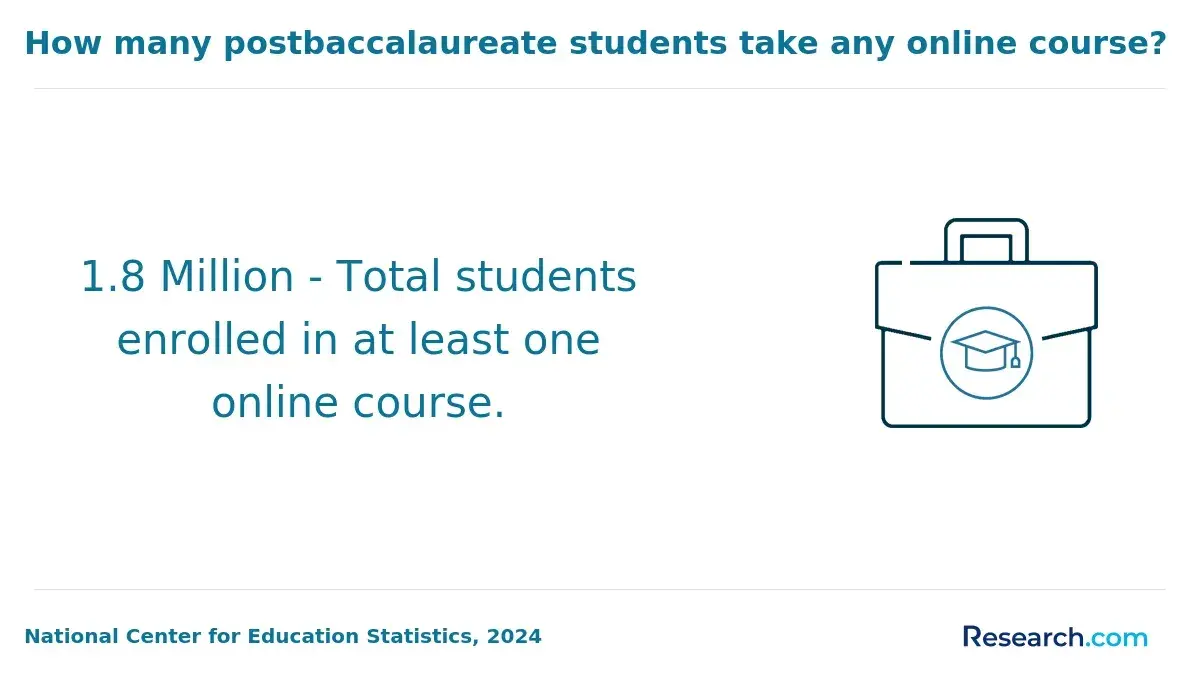
Online enrollment in statistics degree programs has expanded faster than traditional campus-based participation, driven largely by adult learners balancing employment and family responsibilities. Data from the National Center for Education Statistics (NCES) in 2024 reports a 15% increase in online statistics program enrollment over the last two years, compared to just a 3% rise on campus. This growth reflects the modality's appeal to students seeking flexibility, especially those residing in rural or underserved areas where in-person options are limited. However, this increased accessibility comes with tradeoffs: online cohorts often show lower retention rates-around 65% versus 75% for traditional students-highlighting challenges in maintaining engagement without face-to-face interaction in a conceptually demanding field.
Demographically, online statistics programs tend to enroll a higher proportion of non-traditional students, including part-time learners and those over 25, which differs notably from the younger, full-time campus population. This variation influences not only completion patterns but also the kinds of skills and experiences students acquire, with some employers still favoring campus graduates for roles requiring intensive collaboration or research exposure. Accessibility gains through online offerings have broadened participation and degree attainment among populations underrepresented in STEM, yet disparities in internet access and technology remain a barrier for some prospective students. Consequently, the decision between online and campus programs involves balancing convenience and inclusivity against the potential benefits of structured environments and peer networks.
One recently graduated statistics student reflected on choosing an online program after living in a remote area with limited higher education options. Initially skeptical about the popularity and rigor compared to campus programs they heard about through friends, the student valued the flexibility to continue working full-time and appreciated occasional virtual group projects that simulated collaborative learning. While missing the immediacy of in-person interaction, they recognized the tradeoff was necessary given geographic and scheduling constraints. This experience underscores how practical considerations often drive enrollment choices as much as academic or career aspirations in statistics education today.
What Degree Level Is Most Common Among Statistics Students?
The bachelor's degree dominates Statistics education largely because it strikes a balance between accessibility, market relevance, and foundational skill development. Data from the National Center for Education Statistics indicates that around 60% of Statistics degree recipients earn a bachelor's annually, underscoring its role as the primary gateway into both professional employment and graduate education. This prevalence reflects employers' increasing preference for candidates with practical quantitative expertise attainable within a four-year framework, especially as data-driven decision making permeates diverse industries.
Associate degrees in Statistics remain relatively rare, as many two-year programs focus instead on broader math or data science topics that offer versatile but less specialized credentials. Conversely, master's and doctoral programs serve a narrower subset of students aiming for research, advanced technical roles, or academia, where deeper methodological expertise and longer time commitments are justified. The tradeoff for higher degrees often involves smaller cohorts and selective admissions, which reduces enrollment despite their critical importance in specialized career paths.
For current and prospective students, these enrollment patterns imply that choosing a bachelor's degree offers the widest professional viability and flexibility without the higher costs and commitments demanded by graduate study. At the same time, understanding that advanced degrees align more closely with roles requiring specialized analysis or academic research can clarify long-term educational strategies. Expanding online bachelor's programs have also lowered geographic and logistical barriers, further boosting undergraduate accessibility and reinforcing its dominance in the Statistics educational landscape.
How Do Enrollment Trends Differ Between Associate, Bachelor's, Master's, and Doctoral Statistics Degrees?
Enrollment patterns in statistics degree programs reveal important distinctions in how students engage with the field at different academic levels, reflecting varied workforce objectives and access barriers. Associate degrees often draw those seeking rapid, practical entry into regional technical roles, where moderate growth aligns with specific local labor demands emphasizing applied skills over research. In contrast, bachelor's degree programs experience broader growth, driven by diverse demographics and sustained employer demand for versatile quantitative skills across sectors like healthcare and technology; notably, bachelor's completions increased by about 8% from 2020 to 2023 according to the National Center for Education Statistics. These statistics degree enrollment by degree level highlight how bachelor's degrees serve as the principal gateway for a wide array of careers requiring solid foundational expertise coupled with adaptability.
Master's programs, meanwhile, increasingly attract professionals pursuing specialization in analytics or biostatistics, often as a strategic pivot to advance technical competency within competitive job markets. This stage reflects higher female participation and a sharper focus on specialized skills aligned with evolving industry needs. Doctoral enrollments remain limited, concentrated within research-focused universities, and primarily cultivate academic and scientific leaders with longer-term commitments. These regional differences in statistics degree trends emphasize the tradeoffs students face between practical accessibility, program intensity, and career trajectory.
Prospective students navigating these options might also consider alternative pathways, including the best EdD programs online, to expand their educational strategies beyond the traditional statistics degree pathway.
How Popular Is the Statistics Degree Compared to Other College Majors?
The relative popularity of a statistics degree does not straightforwardly correlate with program strength or career success but rather reflects its specialized, niche role within the broader STEM landscape. While statistics programs award significantly fewer bachelor's degrees each year-around 12,000 compared to 50,000-plus in business or psychology-their graduates meet growing demand tied to advanced data analysis needs across sectors such as healthcare, finance, and technology. Enrollment growth in statistics often trails behind computer science but surpasses many social science disciplines, signaling a gradual shift as more industries integrate quantitative analytics into core operations. This restrained popularity can limit program scale, affecting course availability and peer networks, yet it may also provide unique opportunities for focused specialization that align closely with evolving employer expectations for analytical expertise.
Demographic and regional patterns further nuance statistics' appeal; increased female enrollment contrasts with gender imbalances in other quantitative fields, and metropolitan hubs with robust tech and medical sectors show higher concentrations of graduates. According to the National Center for Education Statistics data from 2023-2024, statistics degrees account for roughly 1-2% of STEM bachelor completions, underscoring their niche but growing relevance amid expanding labor market projections forecasting a 33% employment growth by 2032. However, students weighing statistics against more populous majors must consider how program size influences collaborative environments and resource accessibility, as well as how advanced study often becomes critical for unlocking broader career trajectories in data-heavy roles.
One former statistics student recalled feeling ambivalent during their first semester due to relatively small class sizes and fewer peers compared to business or psychology cohorts. Academic advisors highlighted the field's growth potential but acknowledged its less mainstream status, which initially triggered uncertainty about long-term prospects. Over time, the student appreciated how the program's focused community exposed them to specialized skill sets and industry connections rarely found in larger departments, ultimately validating their choice despite initial skepticism about studying a less common major.
Why Is the Statistics Degree More Popular in Certain States and Regions?
The concentration of statistics degree completions in states like California, Massachusetts, and Texas reflects the tangible impact of localized industry demand, not mere student preference. These regions support dense ecosystems of technology, finance, and healthcare research sectors, creating concrete job pathways that incentivize students to pursue and complete statistics degrees. In contrast, northeastern states often showcase statistics degree popularity driven by targeted public policies that encourage STEM workforce development, leveraging the presence of research universities and state funding to increase enrollments and improve employability.
In the Midwest, regional demand for statistics graduates tends to correlate with industrial diversification and the strength of university-industry partnerships fostering applied data science programs. These areas may offer fewer options for specialized studies but still provide viable opportunities linked to agriculture, manufacturing analytics, and government research agencies. Access to quality education remains uneven, and the expansion of online degree programs has begun to mitigate geographical disparities, allowing students from less populous or infrastructurally limited states to participate in statistics education remotely. This shift influences how prospective students evaluate program value and networking potential, balancing local industry presence against virtual learning flexibility.
Such regional variations in degree popularity have practical consequences for students assessing where to study or work. While proximity to industry hubs enhances opportunities for internships and employment, students in underserved areas might explore online options or less recognized programs, including fields connected to ABA-approved paralegal programs, to diversify their skillsets. This complex landscape means that decisions about pursuing a statistics degree intertwine with demographic trends, institutional resources, and labor market realities, shaping graduate outcomes beyond straightforward enrollment metrics.
What Demographic Groups Are Driving Growth in Statistics Degree Programs?
Growth in statistics degree programs is increasingly shaped by the interplay between shifting workforce demands and evolving student demographics, with gender balance and adult learner participation signaling important structural changes. Women now represent nearly half of statistics graduates, a shift that reflects both targeted efforts to diversify STEM and employer demand for varied analytical viewpoints that can enhance organizational problem-solving. However, this rising gender parity also influences classroom dynamics and peer networks, potentially fostering more inclusive learning environments but requiring programs to address diverse career expectations and support mechanisms tailored to different student experiences.
Adult learners, often balancing employment and family commitments, constitute a notable portion of enrollment growth through flexible and online program formats, highlighting practical tradeoffs in course delivery and completion timelines. These non-traditional students typically seek skill updates aligned with regional industry needs-particularly in states such as California, Texas, and New York where sectors like technology, healthcare, and finance drive demand for data-proficient professionals. Consequently, programs in these areas tend to prioritize applied skills and practical outcomes, which can differ from more theoretical curricula in regions with less concentrated economic pull, affecting both the nature of instruction and graduates' job market readiness.
Meanwhile, increasing enrollment among Black, Hispanic, and Native American students-though still below their population shares-signals a gradual broadening of access that hinges on institutional outreach and scholarship support within underserved communities. This trend not only diversifies cohort composition but also compels educators and employers to confront persistent gaps in preparation and retention while adapting pedagogical approaches to varied cultural contexts. Recognizing these nuanced enrollment patterns enables institutions and industry stakeholders to better align program offerings and workforce integration strategies with the realities of a changing student body and labor market landscape.
What Is the Future Outlook for Statistics Degree Enrollment by Gender, Region, and Degree Level?
Statistics degree enrollment is set to experience differentiated growth, shaped significantly by demographic shifts, regional economic factors, and degree level demands. Undergraduate enrollment is anticipated to rise by about 12% through 2030, primarily driven by increased workforce needs for data literacy. However, this growth will not be uniform; Sun Belt states such as Texas and Arizona will see marked increases in program participation due to expanding tech industries and population growth, while some Rust Belt and rural areas may face stagnant or declining enrollment because of economic contraction and fewer educational resources.
Gender dynamics within Statistics programs reveal gradual but incomplete progress toward equity. Women currently earn close to 45% of bachelor's degrees in Statistics and are approaching parity at that level, reflecting the impact of targeted outreach and mentorship. Yet, at the doctoral level, male enrollment remains dominant, exceeding 60%, influenced in part by the longer time commitments and structural challenges that dissuade many women balancing other responsibilities. This persistent gap affects how graduate programs design support systems and could influence future labor market gender composition in highly specialized analytics roles.
The master's degree level shows the strongest alignment with evolving labor market demands, especially in applied fields like healthcare analytics, finance, and artificial intelligence, where practical statistical skills are prized. The expansion of online and hybrid program formats is also reshaping access, mitigating some regional disparities by enabling broader participation beyond traditional campus locations. For prospective students and workforce planners, these enrollment patterns suggest strategic choices must weigh not only degree level but also geographic and demographic factors that will impact academic offerings, peer networks, and employment pathways.
How Have Statistics Degree Enrollment Trends Changed Over the Past Decade?
The substantial rise in statistics degree enrollment across the United States over the past decade reflects more than just increased student interest; it signals shifting labor market dynamics that favor quantitative expertise. Bachelor's degree completions have more than doubled from roughly 4,500 in 2013 to over 9,500 in 2023, illustrating a labor-driven demand for skills relevant to sectors like healthcare, technology, and business analytics. These shifts also coincide with the expansion and differentiation of data science pathways, which have complicated student choices and may influence future degree supply and relevance in professional hiring.
Analyzing changes in gender and regional statistics degree enrollment from 2010 to 2020 reveals narrowing gender gaps alongside persistent demographic imbalances. Female bachelor's recipients grew from 38% to 44%, indicating progress but also highlighting ongoing challenges in STEM equity. Regionally, growth centers in the West Coast and Northeast correlate with tech and healthcare industry presence, suggesting that local labor markets strongly impact program popularity and student recruitment. Educational policies promoting STEM and the rise of online options have broadened access, yet prospective students must weigh how these variations affect program quality and employment outcomes.
Graduate-level enrollment, including master's completions, has increased steadily but less dramatically, underscoring the role of advanced specialization for career progression in quantitative fields. These patterns affect perceptions of degree relevance and availability, especially as students evaluate their pathways amid evolving workforce requirements. Those considering flexible financial options might explore resources like the cheapest tuition online college to balance cost with program accessibility and career ambitions.
Where Is the Statistics Degree Most Popular Across the United States?
Statistics degree popularity clusters notably in states with dense populations and established economic sectors reliant on quantitative analysis, such as technology, finance, and healthcare. This distribution reflects workforce demand and local institutional capacity to support advanced analytical training. For example, urban hubs like California and Massachusetts benefit from a concentration of research institutions and tech companies, creating a reinforcing cycle that attracts students seeking robust curriculum options aligned with regional job markets. Such clustering impacts perceptions of degree value, as proximity to employers often enhances internship and networking opportunities.
Regional variations in statistics degree enrollment also underscore how economic ecosystems shape educational choices; the Midwest, with fewer large analytical industries, sees moderate engagement despite solid program offerings. Conversely, growth in Southern states like Georgia and North Carolina indicates emerging analytics sectors influencing local educational investment. Prospective students analyzing statistics degree popularity by U.S. region should weigh these regional economic and institutional factors carefully, as they significantly affect career pathways and access to relevant professional networks.
Beyond core statistics programs, interdisciplinary fields such as forensic science also draw on statistical expertise, highlighting the importance of industry-specific demands. Those exploring a forensic science career can similarly consider regional educational strengths and workforce patterns when planning their academic trajectory. Understanding the interplay between geography and employment opportunities remains crucial for prospective and current statistics students evaluating long-term outcomes.
References
- Major changes: Gender shifts in undergraduate studies over time https://aibm.org/research/major-changes-gender-shifts-in-undergraduate-studies-over-time/
- Is Online Learning Here to Stay? Trends & Insights for 2026 https://www.calmu.edu/is-online-learning-here-to-stay-trends-insights-for-2026
- College Numbers Down, Degrees Up: Understanding the Post-2010 Enrollment Shift — The Burning Glass Institute https://www.burningglassinstitute.org/bginsights/college-numbers-down-degrees-up-understanding-the-post-2010-enrollment-shift
- 5 Graduate Education Trends to Watch in 2025 https://www.ruffalonl.com/blog/enrollment/5-graduate-education-trends-to-watch-in-2025/
- Which states are the most educated? | USAFacts https://usafacts.org/articles/which-states-are-the-most-educated/
- College Enrollment Statistics [2026]: Total + by Demographic https://educationdata.org/college-enrollment-statistics
- The Deepening Gender Divide in Credentials, 2000–2020: Continuity, Change, and Implications https://www.rsfjournal.org/content/11/1/154
- Educational Attainment Thematic Report 2024 https://www.cso.ie/en/releasesandpublications/ep/p-eda/educationalattainmentthematicreport2024/profileofagesexnationalityandregion/
- The Rise of Data Science and Data Analytics Programs https://encoura.org/resources/wake-up-call/the-rise-of-data-science-and-data-analytics-programs
- Educational attainment in the United States - Wikipedia https://en.wikipedia.org/wiki/Educational_attainment_in_the_United_States
Other Things You Should Know About Statistics
Gender disparities in statistics degree enrollment often reflect deeper structural factors, including mentorship availability and peer community support. Prospective students should weigh programs' demonstrated success in fostering inclusive environments, as female students particularly benefit from targeted support systems and representation. Choosing a program with balanced gender dynamics or active diversity initiatives can improve engagement and retention, which directly affects learning outcomes and networking opportunities crucial for post-graduate success.
Regional differences in program popularity often correlate with local industry demand and employer expectations but do not inherently indicate program quality. However, graduates from high-popularity regions may experience denser professional networks and more internship or job opportunities nearby. Students prioritizing geographic mobility should consider how regional prestige and alumni outcomes align with their career goals rather than enrollment size alone, balancing potential advantages in reputation against the practical realities of relocating.
Master's programs in statistics typically emphasize applied skills and shorter completion times, appealing to those seeking quicker workforce entry. Doctoral programs demand significantly greater commitment, including research proficiency and original contributions, which can lead to academic or specialized research roles but delay full-time employment. Candidates must assess their career trajectory carefully; prioritizing a master's often offers broader industry flexibility, while a doctorate targets niche expertise but at the cost of opportunity time and heavier academic rigor.
Prioritizing gender-balanced programs can enhance collaborative learning and professional mentorship, which can be pivotal in a traditionally male-dominated field like statistics. While geographic convenience reduces living costs and commute-related stress, the benefits of inclusive, supportive academic environments may outweigh logistical inconveniences by fostering better academic performance and long-term career networks. Thus, students valuing supportive peer dynamics and workplace readiness should consider traveling farther to programs with proven gender equity efforts.