2027 Statistics Degree Enrollment Trends by Age Group: Traditional Students vs Adult Learners

Co-Founder and Chief Data Scientist
Enrollment in statistics degree programs reveals a distinct divide shaped by workforce demands and credential dynamics. Traditional students often pursue statistics to meet rising industry expectations for advanced analytics roles, where a 28% projected employment growth by 2030 underscores acute talent shortages. In contrast, adult learners frequently enroll driven by mid-career transitions requiring updated technical skills and certifications responding to rapid tool evolution and credential inflation.
These patterns highlight differing access points and program flexibility needs within the field. The age distribution suggests a bifurcated educational ecosystem, reflecting evolving employer priorities and the profession's adaptation to continuous technological and methodological shifts.
Key Things to Know About Statistics Degree Enrollment Trends by Age Group
- Adult learners enrolling in statistics programs often face longer completion times due to balancing work and study, which may increase overall costs and delay workforce reentry.
- Employers increasingly value younger statistics graduates for tech adaptability but recognize that mature students bring critical domain experience, highlighting a workforce integration tradeoff.
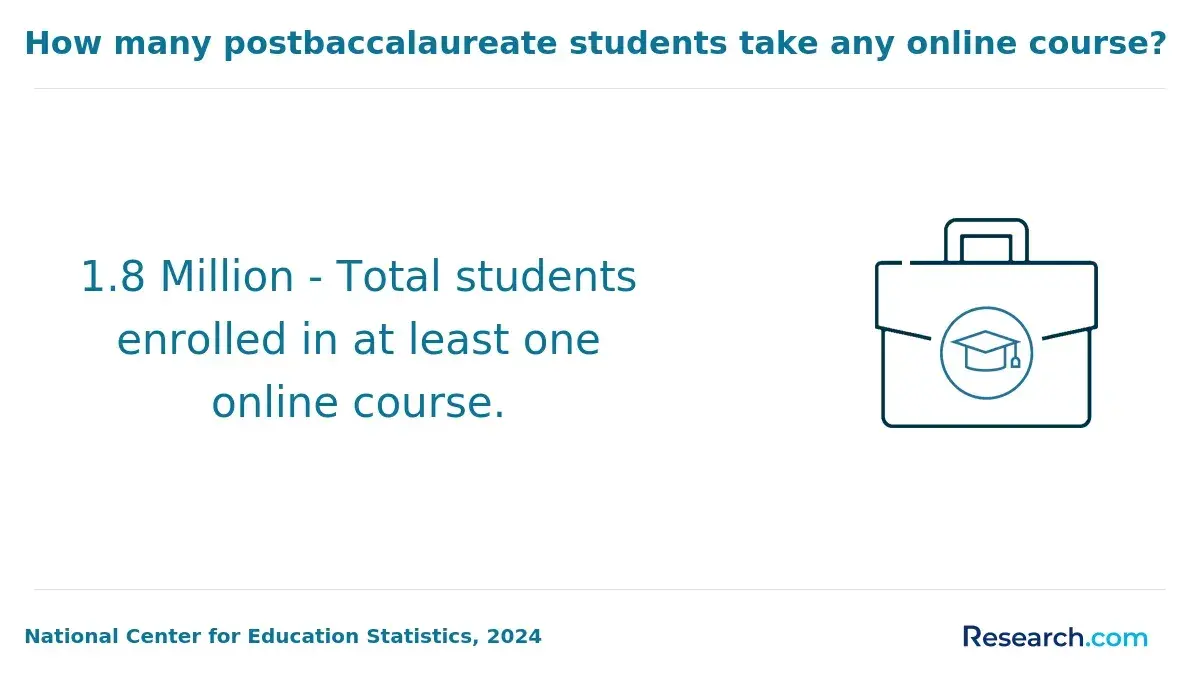
- The 2024 NCES report shows 22% growth in adult statistics enrollment, indicating expanding access yet necessitating program adjustments to accommodate nontraditional pacing and support needs.
- Key Things to Know About Statistics Degree Enrollment Trends by Age Group Key Things to Know About Statistics Degree Enrollment Trends by Age Group
- Which Age Groups Represent the Largest Share of Statistics Students? Students by Age Group
- Why Do Traditional Students Choose Statistics Degree Programs? Traditional Students
- Why Do Adult Learners Return to School for a Statistics Degree? Adult Learners
- How Do Academic Goals Vary Between Younger and Older Statistics Students? Academic Goals by Age Group
- How Do Financial Concerns Differ Between Traditional Students and Adult Learners? Financial Concerns by Age Group
- What Challenges Do Adult Learners and Traditional Students Face While Earning a Statistics Degree? Student Challenges by Age Group
- How Does Age Affect Statistics Degree Student Retention? Age and Student Retention
- Which Statistics Specializations Are Most Popular Among Adult Learners? Top Specializations for Adult Learners
- How Does Age Affect Job Opportunities for Statistics Graduates? Impact of Age in Job Opportunities
- What Do Current Statistics Enrollment Trends Reveal About Future Demand? What Do Current Statistics Enrollment Trends Reveal About Future Demand?
Which Age Groups Represent the Largest Share of Statistics Students?
Statistics programs draw students from diverse life stages, yet enrollment is concentrated primarily among certain age groups due to variations in career timing, financial preparedness, and the structure of educational pathways. The distribution of students across these groups reflects complex workforce entry patterns and higher education dynamics more than mere academic preference.
Enrollment trends also highlight how economic and professional transitions shape who pursues statistics degrees and when.
- Ages 18-24: This group accounts for the largest share of statistics students, largely because traditional undergraduate programs are tailored to their immediate post-secondary trajectory. Many enter these programs directly after high school, driven by employer preferences for a timely, cohesive degree pathway that delivers broad foundational knowledge within a set timeframe.
- Ages 25-34: Representing a growing portion of enrollees, these adult learners often return for upskilling or specialization as part of career pivots or advancement efforts. Their enrollment is frequently part-time or focused on targeted competencies, responding to workforce demands for continuous learning but constrained by competing employment and family responsibilities.
- Ages 35 and above: This segment is smaller and more selective, typically pursuing graduate-level statistics training or certificate programs aligned with niche expertise rather than full-degree paths. Flexibility in delivery format is key, as balancing multiple life roles limits their engagement with traditional campus-based programs.
Overall, the largest demographics in statistics degree programs reflect a system where undergraduate education remains the dominant route for early workforce entry, while adult learners navigate more fragmented or specialized paths. This dynamic is reinforced by employer expectations emphasizing degrees earned within conventional timeframes for many entry-level roles in data analysis.
However, shifting industry patterns toward lifelong learning contribute to gradual increases in enrollment among older age groups, especially in advanced statistics credentials designed for experienced professionals. Resource access disparities also impact enrollment distributions. Traditional students benefit from institutional support like campus resources and community networks that enhance readiness and retention.
Adult learners' preference for flexible, online, or hybrid formats-often necessary for managing external commitments-can limit availability and influence the choice of statistics programs. Such factors emphasize the operational tradeoffs students face when assessing statistics degree enrollment by age group.
For those navigating these options, understanding these age-related enrollment trends alongside workforce realities is crucial for optimizing both educational investment and career outcomes. In this context, programs such as EdD online programs illustrate how accelerated, flexible pathways cater to certain adult learners aiming to integrate advanced statistics skills efficiently.
Why Do Traditional Students Choose Statistics Degree Programs?
Traditional students often gravitate toward statistics degree programs due to a combination of academic curiosity and strategic early career planning. These students recognize the signal value that a statistics degree carries in labor markets increasingly dependent on data-driven decision-making.
For many, choosing statistics reflects an intent to explore quantitative reasoning skills that align with interdisciplinary applications, which supports both their educational interests and a clearer trajectory into specialized fields. According to a 2024 report by the National Center for Education Statistics, approximately 68% of traditional statistics degree seekers cite high employability and career growth as primary motivators, underscoring the pragmatic lens through which many evaluate this field.
Beyond individual interests, university recruitment pathways and guidance counseling significantly shape enrollment patterns in statistics programs for recent high school graduates. Exposure to statistics concepts in secondary education, coupled with early college coursework, provides a tangible foundation that frames statistics not just as an abstract field but as a viable career pathway.
Peer influence and perceptions of job market stability in analytics-focused roles reinforce these program choices, often connecting students to internship opportunities and experiential learning that further bind education to workforce outcomes. This dynamic contributes materially to statistics degree career prospects for traditional students, as institutional structures and early academic experiences collectively amplify both interest and opportunities in this area.
For those seeking to expand their credentials later, more flexible options such as an executive MBA online often become relevant, though these typically attract a different demographic.
Why Do Adult Learners Return to School for a Statistics Degree?
Adult learners pursuing a statistics degree typically do so with targeted professional objectives such as enhancing earning potential, securing promotions, or facilitating career transitions into data-driven sectors. Unlike traditional students, these individuals leverage education as a strategic tool to respond to evolving labor market demands where statistical literacy increasingly dictates job mobility and wage trajectories.
The U.S. Bureau of Labor Statistics projects a 36% growth in data-related jobs through 2032, reflecting heightened industry reliance on analytical skills that many adult learners seek to align with by reentering formal education. Beyond direct career outcomes, factors like employer-sponsored tuition assistance and the expansion of flexible online programs reduce barriers that historically limited adult participation in higher education.
The growing complexity of workplace analytics and credential inflation compel mid-career professionals to update technical competencies regularly, reinforcing a shift toward lifelong learning paradigms. These dynamics are further amplified by sector-specific shifts in healthcare, finance, and technology, driving a demand for employees proficient in statistics to interpret data, implement models, and inform decision-making processes.
The rise in adult learner enrollment influences program structures, encouraging institutions to design curricula suitable for nontraditional students balancing work and family commitments. This trend contributes to diverse classroom environments and peer-learning opportunities that blend practical experience with academic theory, fostering a reciprocal learning ecosystem. Additionally, the prominence of adult learners accelerates the development of scalable online education modalities, reshaping both access and instructional approaches within statistics education.
How Do Academic Goals Vary Between Younger and Older Statistics Students?
Traditional-age statistics students, generally between 18 and 24, tend to approach their studies with the aim of establishing a broad academic foundation, often exploring multiple subfields before specializing. Their priorities typically include mastering theoretical concepts and earning credentials that enable entry into early-career roles or graduate programs. These students usually engage in full-time, campus-based study that emphasizes comprehensive curriculum coverage.
According to a 2024 report by the National Center for Education Statistics, younger students frequently expect a four-year trajectory focused on skill building and exploration, preparing them for workforce entry or immediate continuation in academia. By contrast, adult learners returning to statistics education generally pursue targeted learning aligned with specific workplace demands and career transitions.
Their educational goals often prioritize acquiring actionable skills-such as in biostatistics or business analytics-to enhance job performance or pivot within established professions. A 2024 survey by the American Statistical Association found that nearly 68% of adult statistics students enroll primarily to improve job-related competencies or qualify for data-driven roles in their current industries.
These students typically select flexible, part-time, or online formats that accommodate work and family obligations and demonstrate higher persistence rates due to direct alignment with professional objectives. One adult learner shared that applying for a statistics program during a rolling admissions cycle involved careful timing and preparation. Initially hesitant to submit materials while working full-time, they delayed application until securing references and clarifying career goals.
The flexibility of the program's deadlines allowed them to submit just before an intake closed, but the uncertainty about immediate acceptance meant balancing urgency with thoroughness. This experience underscored how returning students must navigate logistical challenges alongside academic planning, often with greater complexity than their younger counterparts.
How Do Financial Concerns Differ Between Traditional Students and Adult Learners?
Traditional students pursuing a statistics degree often rely on a blend of family support, federal grants, and subsidized student loans to cover tuition, shaping their financial concerns around managing upfront costs while anticipating debt accumulation by graduation. With about 62% of these students receiving some form of financial aid, their enrollment decisions frequently balance the immediate affordability of programs against long-term debt tolerance.
However, as these students are typically younger and financially dependent, their cost considerations also include the value of campus experiences or institutional prestige, which can lead to accepting higher educational expenses despite potential debt burdens. These dynamics illustrate significant differences in tuition funding and financial aid for traditional and adult learners, especially regarding upfront financial commitments and debt management strategies.
In contrast, adult learners face financial pressures driven largely by competing economic responsibilities beyond tuition payments, including family obligations, mortgages, and ongoing employment. Nearly half of adult students finance their education through personal savings or employer tuition reimbursement programs, reducing loan dependence but increasing the immediate liquidity demands inherent in their enrollment choices.
The opportunity cost of lost wages due to reduced work hours or career interruptions paired with the need to maintain employment often shifts adult learners towards programs emphasizing flexible delivery or accelerated timelines. Employer expectations around return on investment, such as certification outcomes or salary growth projections, further influence how adult learners navigate these challenges, reflecting different financial behavior and lifecycle economic priorities than those typical for younger cohorts pursuing a statistics degree.
These contrasting financial realities shape enrollment patterns and program preferences, steering traditional students towards full-time, often on-campus pathways, while adult learners prioritize modular coursework and online options, such as those offered in an online construction management bachelor's degree format reflecting similar flexibility demands in allied fields.
Understanding these differing financial challenges faced by traditional versus adult students clarifies why some adult learners may approach education as a calculated economic investment tightly integrated with workforce participation and opportunity cost tradeoffs, whereas traditional students might tolerate longer time-to-degree with a comparatively higher debt-to-benefit ratio.
What Challenges Do Adult Learners and Traditional Students Face While Earning a Statistics Degree?
Traditional students pursuing a statistics degree typically face challenges tied to academic adaptation and time management within a structured educational environment. Their recent exposure to high school mathematics often gives them a foundational advantage, yet adjusting to the self-directed learning style and the rigor of quantitative coursework can be a significant hurdle.
Many also struggle with balancing course loads alongside early adult social pressures and mental health concerns, which can affect persistence. According to the National Center for Education Statistics in 2024, about 28% of traditional students report difficulty managing these competing demands alongside their studies.
Adult learners encounter a distinct set of obstacles shaped by their life stage and responsibilities outside of school. They often juggle full-time employment, family duties, and academics simultaneously, making efficient time allocation imperative but difficult. Gaps in foundational math skills frequently necessitate remedial coursework, which can prolong completion timelines and increase educational expenses.
Data from the U.S. Department of Education shows that nearly 63% of adult learners cite managing these overlapping responsibilities as a major barrier to earning their degree, emphasizing the need for tailored institutional support mechanisms. To address these divergent challenges, many programs are increasingly adopting flexible learning formats, enhanced advising, and support services designed to accommodate varying student life circumstances.
Institutions that recognize the distinct pressures on adult learners and traditional students alike can better facilitate degree progression by aligning resources with each group's unique time and financial constraints. This adaptive approach is critical in statistics education, where timely acquisition of practical skills directly influences employability and workforce integration.
How Does Age Affect Statistics Degree Student Retention?
Retention among younger statistics students often hinges on their transition into college-level academic rigor and maintaining sustained motivation throughout their studies. Many face challenges adjusting to new learning environments and managing the balance between coursework and social expectations, which can impact persistence. Early engagement with peers and faculty, as well as effective navigation of institutional resources, plays a crucial role in supporting these students.
National Center for Education Statistics data from 2024 indicates that about 62% of first-time, full-time students under 25 complete their degree within six years, highlighting both opportunities and obstacles inherent to this group's academic lifecycle. Older statistics students exhibit different retention dynamics shaped by practical constraints rather than purely academic adjustment.
Their clearer focus on goals is often tempered by competing time demands from employment, caregiving, and financial pressures, which can interrupt continuous enrollment. Furthermore, part-time attendance and reliance on remote instruction modalities may reduce consistent interaction with faculty, impacting persistence. These learners benefit from tailored advising and flexible course structures that accommodate outside responsibilities.
A graduate recalled how the rolling admissions timeline complicated her application process: initially unsure whether to apply immediately or wait for more preparatory courses, she hesitated as deadlines approached. Balancing work commitments and the uncertainty of acceptance led her to delay submitting materials until she was confident in her readiness. This strategic timing, influenced by her adult learner status, ultimately improved her admission outcome but also underscored how age and external pressures shape enrollment decisions and retention trajectories in statistics programs.
Which Statistics Specializations Are Most Popular Among Adult Learners?
Adult learners in Statistics degree programs tend to favor specializations that directly enhance their current roles or facilitate tangible career transitions. These individuals typically seek pathways that integrate practical skills with immediate applicability to workforce demands, enabling salary growth or a shift into more strategic positions. Specializations that reflect real-world problems, leverage existing experience, and correspond with high-growth sectors rank highly among mature students.
This preference reflects a focus on pragmatic, industry-aligned education over purely theoretical study-a key consideration for mid-career professionals balancing work and learning.
- Biostatistics: Many adult learners gravitate toward biostatistics due to expanding opportunities in healthcare analytics and data-driven public health initiatives. Professionals with backgrounds in life sciences often choose this area to leverage prior experience while positioning themselves in a field with sustained employment growth and societal impact.
- Data Analytics: This specialization appeals broadly because it combines statistical analysis with technological tools like machine learning, supporting roles across finance, marketing, and manufacturing. Its versatility and the possibility of remote consulting make it a strategic choice for those aiming to diversify or update their skill set in a rapidly evolving market.
- Applied Statistics: Emphasizing real-world problem solving, applied statistics attracts adult learners balancing job responsibilities with education. The customizable curriculum and use of case studies reflect the experiential knowledge many bring, facilitating direct application of new skills to current or prospective job roles.
- Survey Methodology: Adult learners often choose this specialization to capitalize on prior experience in research or social sciences, focusing on designing and analyzing data collection methods critical to market research, policy analysis, and social program evaluation.
- Business Analytics: This area is preferred by those seeking to transition into managerial or strategic functions. It builds on statistical foundations to enhance decision-making and operational efficiencies, leading to potential leadership opportunities in various industries.
A 2024 analysis by the National Center for Education Statistics found that 62% of students aged 25 and older in statistics-related programs enrolled in applied or industry-focused tracks, underscoring how adult learners prioritize pragmatic over purely theoretical studies. These enrollment trends reflect a consistent pattern among mature students aiming for career reinvention or advancement through workforce-relevant specialization choices in statistics.
For those exploring foundational pathways, even at the undergraduate level, the online bachelor in mathematics degree can provide critical quantitative reasoning skills that support advanced specialization and workforce adaptability in statistics-related fields.
How Does Age Affect Job Opportunities for Statistics Graduates?
Graduates in statistics who enter the workforce early, typically between ages 18 and 24, often benefit from stronger access to entry-level roles and structured internship pipelines that support early-career development. Employers tend to favor these traditional students for positions designed to build foundational skills, as they offer a longer runway for investment and training.
In particular, recent reports from the U.S. Bureau of Labor Statistics indicate that unemployment rates for younger graduates in quantitative roles remain lower at approximately 5.1%, reflecting more favorable hiring patterns in the initial stages of career entry. These dynamics shape hiring outcomes by privileging access to experiential opportunities linked closely with educational timing and early labor market exposure, key factors influencing statistics degree job opportunities by age group.
Conversely, adult learners returning to statistics education mid-career often leverage substantial prior work experience and transferable skills to pursue roles with a greater emphasis on applied knowledge or leadership. While this background can offer advantages in mid- to senior-level positions, hiring biases regarding adaptability or salary expectations sometimes restrict access to entry-level openings.
This segmentation underscores the importance of targeted strategies, where some adult learners pursue specialized niches or benefit from accelerated programs like online degree programs for working adults to balance career transition goals. These factors illustrate how career timing and experience nuances directly affect hiring structure and workforce segmentation in statistics, highlighting the need for tailored approaches to maximize employability and align with employer expectations for diverse candidate profiles.
What Do Current Statistics Enrollment Trends Reveal About Future Demand?
Shifting enrollment patterns in statistics degree programs reflect evolving perceptions of career value and academic interest, especially as more adult learners supplement the traditional college-age population. National Center for Education Statistics data from 2024 shows a 15% rise in adult enrollment, signaling an increased recognition of statistics-related skills beyond entry-level roles.
These trends demonstrate that flexible, applied programs catering to working professionals are influencing the overall profile of students. Consequently, growth in specialized areas like data science and analytics aligns with student demand for practical competencies that address immediate workforce challenges.
These enrollment shifts convey broader labor market dynamics, where employers consistently value advanced data literacy amid technological change and expanding data-driven industries. Workforce shortages in fields reliant on quantitative analysis heighten the importance of adaptable educational pathways, particularly for mid-career upskilling.
The resulting pressure on academic programs encourages both expansion and diversification in curriculum offerings to meet employers' evolving expectations. Ultimately, enrollment behavior in statistics programs serves as a forward-looking indicator of workforce demand, emphasizing continuous education as integral to closing skills gaps and sustaining economic growth.
References
- The Future of the Statistics Major and Career Opportunities in the Data Age - Universitas Negeri Semarang https://unnes.ac.id/the-future-of-the-statistics-major-and-career-opportunities-in-the-data-age/
- Top 5 Reasons Why Adults Go Back to School https://www.georgefox.edu/adult-degree/articles/back-to-school-reasons.html
- AI's Impact on Graduate Jobs: A 2025 Data Analysis | IntuitionLabs https://intuitionlabs.ai/articles/ai-impact-graduate-jobs-2025
- College Enrollment Statistics and Trends: What You Need to Know https://en.uhomes.com/blog/college-enrollment
- Educational Attainment Statistics [2025]: Levels by Demographic https://educationdata.org/education-attainment-statistics
- Adult students present unique challenges for two-year colleges https://www.ruffalonl.com/adult-students-present-unique-challenges-two-year-colleges/
- Student Demographics in Higher Education https://pathify.com/blog/student-demographics-in-higher-education/
- Instagram: age distribution of global audiences 2025| Statista https://www.statista.com/statistics/325587/instagram-global-age-group/
- Declining public school enrollment | Brookings https://www.brookings.edu/articles/declining-public-school-enrollment/
- The Future of Student Demand: Shifting Trends - Gray DI https://www.graydi.us/blog/graydata/the-future-of-student-demand-google-searches-reveal-shifting-trends
Other Things You Should Know About Statistics
Traditional students often follow a full-time, semester-based schedule that promotes quicker completion but can be intense and rigid. Adult learners frequently juggle part-time studies with work and family, which extends time to completion but allows for greater flexibility. Programs that accommodate slower pacing with modular or evening classes tend to see higher retention among adult learners. Those prioritizing rapid degree attainment may favor traditional student paths but risk higher dropout rates if the workload clashes with outside responsibilities.
Employers typically evaluate statistics graduates on technical competencies and applied experience over age, but adults must often demonstrate currency with evolving tools and methods. Traditional students may have advantages through internships and campus career services, while adult learners might face skepticism if they lack recent exposure to industry-specific software or practices. Adult learners should emphasize continual skill updating and direct workplace application to offset potential employer biases related to education recency.
Yes, adult learners tend to gain greater practical value from programs emphasizing real-world projects because these align with their career transitions and immediate work contexts. Such applied experiences facilitate skill transfer and employer recognition. Traditional students may focus more on theoretical foundations and academic progression, which supports further study but may delay workforce impact. Adult learners looking for direct employability gains should prioritize programs with hands-on learning and portfolio development.