2027 Online vs Campus Statistics Outcomes Report: Graduation Rates, Cost, and Career Trade-Offs

Co-Founder and Chief Data Scientist
Adult learners balancing work and prior credits face complex choices between online and campus statistics programs. Transfer credit policies vary widely, with only 56% of institutions fully accepting external credits as of 2024-a decline reflecting increased skepticism about credit equivalency and concerns over degree integrity. This shifts completion timelines, often extending time-to-graduation and inflating costs for transfer students seeking flexible options. Online programs sometimes offer credit recognition advantages but may yield lower graduation rates, at 48%, compared to 62% on campus, highlighting trade-offs in support and academic rigor. This article evaluates these dynamics by comparing graduation rates, total costs, and career impacts to guide informed enrollment decisions.
Key Things to Know About Online vs Campus Statistics Outcomes
- Campus-based statistics programs show a 15% higher graduation rate than online counterparts (NCES, 2024), indicating greater student retention dynamics linked to structured, in-person academic support systems.
- Online statistics degrees often reduce total direct costs by 20-30%, but this saving can extend program duration due to part-time pacing, affecting time-to-employment and skill currency in fast-evolving data fields.
- Employers increasingly value demonstrated applied skills over delivery mode; however, campus graduates benefit from on-site research and networking ease, shaping career trajectories in data-driven industries with nuanced employer biases.
- Key Things to Know About Online vs Campus Statistics Outcomes Key Things to Know About Online vs Campus Statistics Outcomes
- What Are the Biggest Differences Between Online and Campus Statistics Program Outcomes? Online vs Campus Outcomes
- How Do Graduation Rates Compare Between Online and Campus Statistics Programs? Comparing Graduation Rates
- Why Do Online and Campus Statistics Students Have Different Completion Rates? Why Completion Rates Differ
- How Do Online and Campus Statistics Programs Compare on Total Cost? Total Cost Comparison
- What Hidden Costs Should Students Expect in Online vs Campus Statistics Programs? Hidden Program Costs
- How Does Financial Aid Affect the Cost of Online and Campus Statistics Programs? Financial Aid Impact
- Do Online and Campus Statistics Graduates Have Different Career Outcomes? Comparing Career Outcomes
- How Do Employers View Online vs Campus Statistics Degrees? How Do Employers View Online vs Campus Statistics Degrees?
- Which Statistics Degree Format Offers Better Flexibility for Working Adults? Which Statistics Degree Format Offers Better Flexibility for Working Adults?
- How Should Students Choose Between an Online and Campus Statistics Program? Choosing Your Program Format
What Are the Biggest Differences Between Online and Campus Statistics Program Outcomes?
Cost considerations extend beyond simple tuition comparisons, as total expenses for online learners often include technology fees and home office investments that narrow perceived savings. Despite potentially lower advertised tuition, online students can accumulate debt levels comparable to campus peers, influenced by less accessible institutional financial aid and incidental costs. Employer perception also shapes career outcomes; many hiring managers still value internships or practicum experiences commonly integrated into campus curricula, which help develop applied skills and professional networks critical for early statistics career mobility. This dynamic underscores the tradeoff between geographic flexibility and long-term signaling in a field where local connections and experiential learning remain valuable, especially when evaluating online statistics program graduation rate comparisons.
For prospective students weighing these factors, understanding variations in career trajectory outcomes is essential. Campus programs typically embed practical placements assisting immediate workforce integration, while online candidates may need to secure external opportunities independently, influencing both skill development and employment prospects. This divergence impacts early-career trajectory and network building in ways that extend beyond degree completion. Those prioritizing faster entry or cost control might explore a fast track associates degree online as one strategic option, though long-term career readiness in statistics often depends on balancing convenience with structured experiential learning connected to campus environments and employer expectations, making choice of program format a pivotal decision.
How Do Graduation Rates Compare Between Online and Campus Statistics Programs?
Graduation rates in statistics programs differ significantly by delivery mode due to factors beyond just where or how courses are taken. Traditional campus programs often show six-year completion rates near 60% to 65%, reflecting tightly structured pathways, frequent cohort interactions, and easier access to faculty support. Online statistics programs typically present lower rates, around 40% to 50%, which can be attributed to a higher share of part-time students-often working adults balancing employment and family-that impact consistent progression. These discrepancies also relate to diverse student preparedness, transfer credit policies, and pacing flexibility, making raw graduation statistics insufficient to gauge program quality or fit without understanding the underlying student populations and institutional designs.
Online learners in statistics face unique persistence challenges; many navigate asynchronous formats without the same cohort accountability found on campus. Meanwhile, campus-based students benefit from in-person engagement fostering social integration, which research ties to higher retention. However, institutional reporting nuances can further blur direct comparisons, as some online students may pause, transfer, or extend timelines without dropping out entirely, thereby distorting completion metrics. Prospective students must weigh these factors against their personal circumstances, recognizing that an online format's flexibility often comes with increased risk of delayed graduation despite offering critical access to nontraditional learners.
A recent statistics graduate recalled investigating these differences while choosing her path. She hesitated about enrolling online due to concerns over staying on track without cohort support and face-to-face advising, especially since she planned to work full-time and care for family. After reviewing program outcomes and speaking with advisors, she chose a hybrid option that combined evening campus classes with online modules, valuing both structure and schedule adaptability. Her experience highlighted how understanding the interplay between format, student demographics, and support services is essential for realistic expectations around completion in statistics education.
Why Do Online and Campus Statistics Students Have Different Completion Rates?
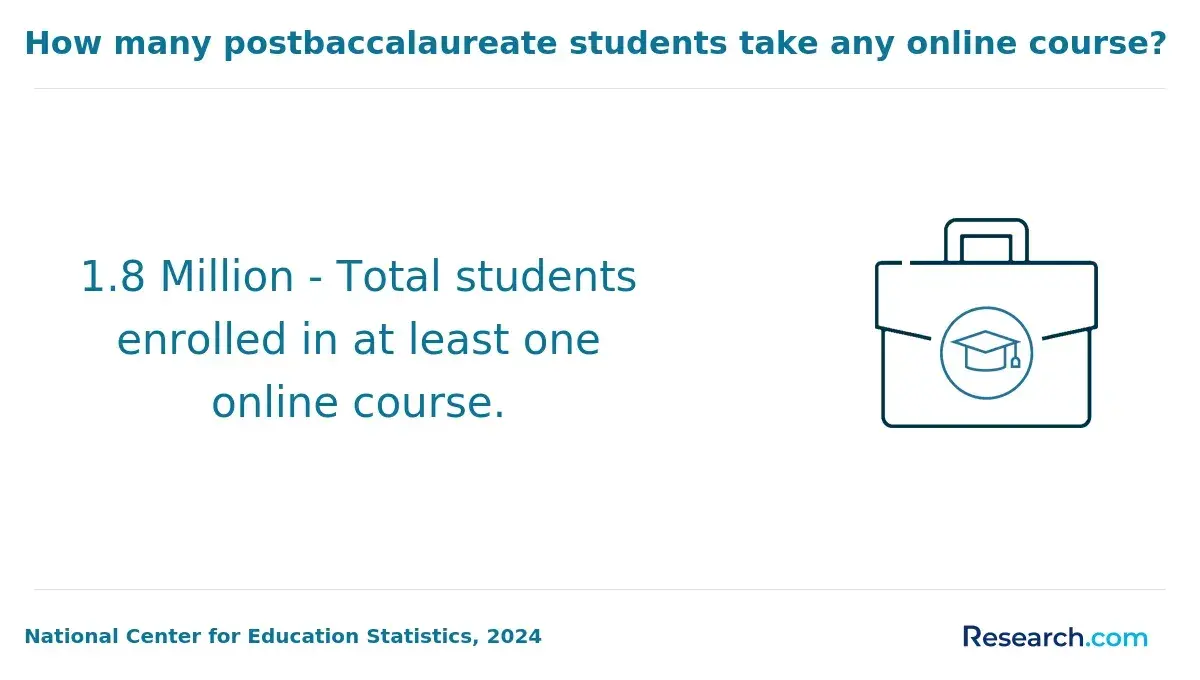
The disparity in graduation rates between online and campus statistics students often stems from differences in enrollment patterns and institutional support rather than instructional quality alone. For example, many online students attend part-time while managing employment and family responsibilities, a factor linked to slower progression and higher stop-out risk. According to the National Center for Education Statistics (2024), roughly 60% of online learners in undergraduate programs are part-time, compared to fewer than 30% on campuses, which correlates with the approximately 40-50% online completion rate versus 62% on-campus rate. This variation underscores how program design-such as cohort scheduling and real-time faculty access-and student circumstances intertwine to impact persistence.
Campus-based students benefit from structured class sequences, peer cohorts, and in-person advising, which can anchor progression through complex material and sequenced courses typical in statistics curricula. Online students often rely on virtual interfaces for support and may face limitations in replicating this interactive environment, resulting in weaker engagement and fewer checkpoints that help maintain steady course completion. For learners juggling external obligations or lacking consistent study routines, these gaps increase the difficulty of maintaining momentum. Thus, prospective statistics students should critically evaluate how their time availability, need for direct academic guidance, and preference for cohort learning environments align with the mode of instruction to realistically estimate their likelihood of timely graduation.
How Do Online and Campus Statistics Programs Compare on Total Cost?
Choosing between online and campus statistics programs requires careful analysis of total costs beyond just tuition rates. While online programs often feature lower per-credit tuition and avoid expenses like housing and commuting, they may include technology fees and necessitate investments in reliable internet or specialized software. Campus programs, conversely, add mandatory fees for facilities and student activities, plus significant living expenses that can inflate the overall cost by 30-40%, according to a 2024 IPEDS report. However, these figures shift when considering financial aid; campus students frequently access more diverse scholarships and need-based assistance, which can narrow disparities in total cost.
For working adults balancing job responsibilities, an online format often allows continuous employment, preserving income while reducing indirect costs-though access to employer tuition support tends to favor accredited, flexible online programs. In contrast, campus attendance might accelerate degree completion but often demands relocation or commuting, impacting time and budget constraints. These financial and logistical trade-offs deeply influence student timelines and debt management strategies. Careful evaluation of average tuition and expenses for online and campus statistics programs helps prospective learners align choices with long-term affordability and career goals, especially when factoring in available financial aid and employer assistance.
For those considering advanced leadership roles linked to statistics expertise, options like a PhD in leadership online demonstrate how flexible, cost-sensitive program designs can complement statistical training while supporting ongoing employment and manageable financial commitments.
What Hidden Costs Should Students Expect in Online vs Campus Statistics Programs?
Hidden expenses beyond tuition significantly affect the true cost of online versus campus-based statistics programs, influencing both student budgets and degree completion timelines. Online students frequently face technology fees-sometimes up to $500 per semester-to cover specialized software and proctoring platforms, costs often underestimated in initial budgeting. Campus enrollees encounter commuting and parking expenditures averaging $15-$20 daily and up to $800 annually respectively, along with housing costs that can exceed $10,000 per academic year in many regions. These factors, combined with potential lost wages due to rigid schedules or commute times, can shift what initially appears to be the more affordable option into a more expensive proposition when viewed holistically.
Course materials and software licensing add another layer of complexity. While online programs may include access to key statistical packages, campus students might need to personally procure software or rely on lab availability, influencing flexibility and potential out-of-pocket expenses. Financial aid also varies by format; data from the National Center for Education Statistics indicates online students often receive less institutional grant support, increasing loan dependency and possibly debt burden post-graduation. These hidden costs not only alter total spending but also affect planning decisions about program length and work-study balance, highlighting the necessity of evaluating all financial and time commitments alongside career goals.
One student recalled initially favoring an online statistics program for its advertised lower tuition but grew uncertain after uncovering fees for mandatory proctoring software and software licenses that were excluded from official estimates. Balancing these against the campus program's housing and commuting costs, they faced difficult trade-offs, especially since the campus option required relocation and limited employment hours due to on-site class times. This experience underscored how overlooked expenses and scheduling constraints could erode perceived savings, making informed cost comparisons a critical part of selecting the right path for their professional objectives.
How Does Financial Aid Affect the Cost of Online and Campus Statistics Programs?
Financial aid markedly shifts the cost comparison between online and campus statistics programs, with nuanced implications for enrollment planning. Campus students often benefit from institutional aid, such as assistantships and need-based scholarships tied to residency and full-time enrollment, which can significantly reduce tuition burdens. In contrast, online learners typically encounter fewer institution-specific grants, partly because many aid packages require on-campus engagement or in-state residency. For example, a working adult pursuing an online statistics degree may rely more heavily on employer tuition assistance or federal aid, which do not always offset additional fees like technology charges or extended program pacing associated with part-time enrollment.
These distinctions mean that prospective students must scrutinize financial aid packages beyond headline tuition costs, especially balancing eligibility restrictions and aid availability within the financial aid impact on online and campus statistics program costs. Since many online students enroll part-time, their federal aid eligibility and borrowing patterns often differ, potentially extending debt repayment timelines relative to full-time campus students. Understanding these trade-offs is essential to evaluating total expenses and borrowing risk, helping students discern whether online or campus attendance offers more realistic value considering personal employment and residency factors.
Given these complexities, students comparing statistics program outcomes and costs should weigh how financial aid benefits apply across formats in the broader context of their career and budget constraints. Exploring resources like the best online data science masters listings can also provide comparative insights into affordability and aid options relevant for online STEM postgraduate study tracks.
Do Online and Campus Statistics Graduates Have Different Career Outcomes?
Employers' perception of online versus campus-based statistics degrees impacts career trajectories as much as program quality itself. While median early career salaries for graduates from both formats align closely-differing by less than 5% according to 2024 College Scorecard data-some specialized sectors and traditional employers continue to favor campus-based credentials, associating them with more rigorous vetting and stronger professional networks. For example, a candidate seeking data analytics roles within highly regulated industries might experience barriers if their internship and alumni connections are limited, which often occurs with online formats lacking embedded local partnerships and face-to-face mentorship.
Access to hands-on experiences such as internships and structured networking opportunities remains a critical factor in long-term career mobility within statistics fields. Campus students are generally better positioned to leverage geographic proximity for internships and sustained relationships with faculty and alumni, which facilitate certification preparation or professional licensure essential for applied statistics roles. Conversely, the flexibility and cost-effectiveness of accredited online programs benefit working adults or those in regions with fewer specialized local opportunities but can come with trade-offs in direct career services and face-to-face interactions that may affect early-stage job placement and ongoing professional advocacy.
Although transcripts typically disclose degree format, accredited online statistics programs meet the same eligibility criteria for certification and licensure as campus degrees, ensuring formal qualification pathways remain open. Students weighing these formats should consider how institutional reputation, network access, and experiential learning intersect with their career goals. Choosing online may suit those prioritizing cost, scheduling flexibility, or national accessibility, while on-campus enrollment often better supports immersive relationship-building and early career guidance crucial in competitive or niche statistical disciplines.
How Do Employers View Online vs Campus Statistics Degrees?
Employer evaluation of online versus campus statistics degrees increasingly centers on institutional accreditation and program quality rather than delivery mode alone. A 2024 survey by the National Association of Colleges and Employers found that about 78% of employers view online degrees from regionally accredited institutions as equally credible to campus degrees, particularly when candidates present demonstrated analytical skills and relevant job experience. However, hiring managers in competitive, data-driven sectors often scrutinize program reputation, the presence of applied learning components such as internships or practicums, and whether transcripts transparently disclose the mode of study, all of which shape perceived value.
Decisions to favor campus graduates tend to emerge when roles emphasize in-person networking or rely heavily on hands-on collaborative experiences that may be more accessible in traditional settings. Conversely, online graduates who engage deeply with employer-partnered projects or cooperative education can offset these limitations, especially in fields with increasing demand across healthcare systems, finance, and technology. The U.S. Department of Education's College Scorecard data reinforces that graduates of accredited online statistics programs achieve comparable employment outcomes to campus peers provided curriculum rigor and faculty qualifications align, underscoring practical equivalence when experiential credentials are robust.
For prospective students balancing work and study, the distinction between online and campus formats translates into trade-offs in scheduling flexibility and professional visibility. Employers familiar with online education are more likely to prioritize the substance of candidates' skillsets and credentials over delivery format, but degree transparency and the strength of experiential opportunities remain pivotal factors. Understanding these real-world hiring dynamics enables learners to align program selection with their career objectives, recognizing that outcomes hinge less on format and more on integrated career-relevant experience and institutional standing.
Which Statistics Degree Format Offers Better Flexibility for Working Adults?
Choosing between campus and online statistics programs fundamentally hinges on how working adults manage scheduling control and real-world obligations. Campus-based formats typically involve fixed class times, commuting, and synchronous participation that can extend graduation timelines for those balancing shift work or caregiving duties. For example, a working parent attending evening campus classes might face challenges aligning unpredictable work shifts with rigid attendance, increasing the risk of stop-outs or slower degree completion. In contrast, flexible online statistics degree programs for working adults often provide asynchronous coursework and more accommodating stop-out policies, which help maintain career continuity without sacrificing academic progress. However, online formats may limit hands-on lab experience and reduce opportunities for face-to-face faculty interaction and cohort networking, which can impact engagement and persistence for some learners.
Cost exposure and long-term workforce outcomes also differ. Campus programs frequently incur additional expenses such as commuting, childcare, and potential lost wages due to fixed schedules, while online learners often avoid these indirect costs. Yet employer support increasingly favors online education, recognizing it as a viable pathway to advanced skills, which affects access and continuation for working adults. Students weighing campus versus online statistics programs flexibility comparison should also consider practical trade-offs, including the availability of hybrid or evening options that blend both models. For prospective students evaluating options, a clear example lies in exploring the easiest online MBA programs to understand how online rigor and flexibility are balanced in advanced degree delivery.
Ultimately, the choice depends on individual scheduling constraints, learning preferences, and career goals. Online programs tend to enable more adaptable pacing and credit retention policies, which align better with the unpredictable demands typical among working adults. Campus-based programs, while offering richer in-person interaction and structure, can introduce significant time costs and logistical challenges, potentially affecting graduation outcomes and total expenses. Thoughtful assessment of these factors is essential for learners seeking a statistics degree that supports sustainable work-study balance over the long term.
How Should Students Choose Between an Online and Campus Statistics Program?
Graduation rates for campus-based statistics programs typically surpass those of online programs, with the National Center for Education Statistics reporting a 6-year completion rate near 62% for traditional formats versus 40-45% for fully online degrees. This disparity often reflects differences in student engagement, academic support, and access to faculty, which can affect course sequencing and overall persistence. For students weighing best online versus campus statistics program outcomes, this gap signals how crucial in-person resources-such as labs, internships, and face-to-face mentoring-remain for many employers, especially in data analytics roles where applied skills and professional networking are valued.
Cost analysis should extend beyond tuition to include living expenses, technology fees, and potential opportunity costs tied to scheduling flexibility. Campus programs generally range from $20,000 to $35,000 annually when factoring housing and fees, while online options might offer savings on relocation but sometimes add hidden expenses like proctoring and tech support. Students pursuing a statistics degree must align their choice with scheduling needs and career goals, recognizing that many employers still place emphasis on hands-on lab experience and in-person career centers. This tradeoff highlights why some working adults or those with caregiving obligations might prioritize flexible asynchronous study, despite potential compromises in networking and field experience access.
Students deciding how to choose between online and campus statistics degrees should weigh these factors alongside broader workforce realities. For example, those targeting roles reliant on robust professional connections or internships within healthcare or tech sectors might find campus formats more directly advantageous. Conversely, students focusing on flexibility can still find value online, especially when enhancing credentials with complementary skills or pursuing cross-disciplinary fields like a geoscience online degree. Ultimately, the decision hinges on balancing total cost, graduation likelihood, and career support against personal circumstances and long-term employability in a competitive market.
References
- In-Person Learning vs. Online Learning: Which Is Right for You? | ACE Blog https://ace.edu/blog/examining-in-person-instruction-from-a-virtual-mindset-what-can-we-improve/
- Online Student Trends and Success Factors - OnlineEducation.com https://www.onlineeducation.com/guide/who-studies-online
- Adult Postsecondary Learners: Reviewing the Data and Evidence https://www.jff.org/idea/adult-learners/
- What Are the Best Online Degree Programs for Working Adults? | University of the People | https://www.uopeople.edu/blog/best-online-degree-programs-for-working-adults/
- Studying Online vs On-Campus: Which Is Better for You? | UNF https://www.unfc.ca/blog/studying-online-vs-on-campus-which-is-better-for-you
- Online college courses are popular, why do they still cost so much? https://hechingerreport.org/as-online-higher-education-hits-a-milestone-why-does-it-still-cost-so-much/
- Online Learning Stats And Facts For 2023 https://www.ncchomelearning.co.uk/blog/online-learning-stats-and-facts-for-2023/
- Online learning statistics: Key trends and industry insights [2025] https://www.wooclap.com/en/blog/online-learning-statistics/
- The State of Flexible Working: Statistics & Trends for 2026 https://archieapp.co/blog/flexible-working-statistics/
- E-learning statistics – learn more about the benefits of distance learning https://www.evionica.com/blog/blog/e-learning-statistics-learn-more-about-the-benefits-of-distance-learning.html
Other Things You Should Know About Statistics
Online programs often limit spontaneous, face-to-face interactions, which can reduce opportunities to develop soft skills like teamwork and real-time problem-solving that are critical in statistics roles. While virtual collaboration tools help, they rarely replicate the immediacy and depth of campus-based discussions, potentially leaving some online graduates less prepared for workplace dynamics requiring close, cross-functional teamwork. For students prioritizing strong interpersonal and group analytical skills, campus programs may offer a practical advantage through richer peer and faculty engagement.
Online programs generally offer more flexibility in scheduling, but this can lead to a more self-directed workload that demands consistent discipline and time management. Because statistics coursework often involves complex quantitative assignments requiring deep focus, students without structured class times may struggle to balance study and work, increasing the risk of burnout or delayed progress. Prospective students working full-time should realistically assess their self-motivation and consider campus options with regular in-person schedules if they need external structure to stay on track.
Campus programs typically provide richer networking opportunities through events, research projects, and informal interactions that can open doors to internships and job referrals. Online students often miss this immediacy and may need to be proactive in leveraging virtual communities or professional platforms. Since statistics careers frequently rely on connections to secure roles in competitive fields like data science or analytics consulting, those valuing strong industry entry points should weigh campus options or supplement online learning with intentional networking strategies.
Faculty mentorship in campus settings tends to be more spontaneous and personalized due to physical proximity, enabling tailored guidance on coursework and career pathways. Online students often interact with instructors mainly through scheduled virtual meetings, which can limit depth of engagement and timely feedback. For learners who benefit from close mentorship-especially when tackling advanced statistical methodologies or research-the campus environment may offer a more immediate and responsive support system to enhance learning outcomes.