
2027 Best Online Natural Sciences Degree Programs

Co-Founder and Chief Data Scientist
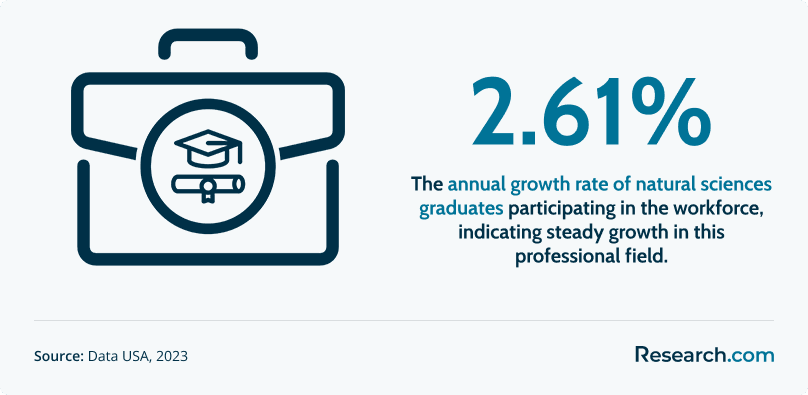
The number of natural sciences graduates in the workforce is growing quickly, rising 2.61% in the last year. This shows the field is active and full of opportunity, but it also means you need a smart plan to stand out. Making the right educational choice is the most critical first step you can take toward a secure career.
That’s why this guide was created by career planning experts. It’s a toolkit designed to guide you about program costs, job opportunities, and quality. We will provide the clarity you need to select the best online natural sciences degree and build a confident future.
What are the benefits of getting an online natural sciences degree?
- An online natural sciences degree prepares you for stable careers in diverse sectors like research, healthcare, and education, allowing you to contribute to vital scientific advancements.
- You can achieve strong long-term earning potential, with experienced natural sciences managers earning a median salary of $157,740.
- An online natural sciences degree offers the flexibility to balance your studies with work and life commitments, letting you learn on your schedule.
What can I expect from an online natural sciences degree?
You can expect a challenging program with a strong focus on foundational science, math, and hands-on lab work. The curriculum is rigorous. It is designed to teach you the process of scientific thinking, not just facts.
You will learn through virtual simulations and at-home lab kits. This requires a great deal of self-discipline and organization. The quality of your education will depend on the school’s accreditation and the technology it uses for its lab components. A strong program will prepare you well for professional or graduate-level work.
Where can I work with an online natural sciences degree?
Graduates find jobs in many different sectors, including research and development, healthcare, education, and government agencies. This degree provides a strong and versatile foundation for your career. It is the key that opens the door to many entry-level science-related positions.
Think of this degree as the essential first step. While it prepares you for immediate employment, it is also the necessary prerequisite for earning the advanced degrees that lead to leadership roles. It gives you a wide range of options to build upon.
How much can I make with an online natural sciences degree?
Your salary will grow as you gain experience and skills. While entry-level jobs have modest starting salaries, the long-term potential is significant. Experienced natural sciences managers, for example, earn a median salary of $157,740.
This earning potential is typically reached after years of experience and, in many cases, requires an advanced degree. The bachelor's degree is the investment that makes this entire career progression possible.
- List of the Best Online Natural Sciences Degree Programs for 2027 List of Programs
- How long does it take to complete an online natural sciences degree program? Completion Time
- How does an online natural sciences degree program compare to an on-campus program? How does an online natural sciences degree program compare to an on-campus program?
- What is the average cost of an online natural sciences degree program? Program Cost
- What are the financial aid options for students enrolling in an online natural sciences degree program? Financial Aid
- What are the prerequisites for enrolling in an online natural sciences degree program? What are the prerequisites for enrolling in an online natural sciences degree program?
- What courses are typically in an online natural sciences degree program? What courses are typically in an online natural sciences degree program?
- What types of specializations are available in an online natural sciences degree program? What types of specializations are available in an online natural sciences degree program?
- How to Choose the Best Online Natural Sciences Degree Program How to Choose the Best Online Natural Sciences Degree Program
- What career paths are available for graduates of an online natural sciences degree program? Career Paths
- What is the job market for graduates with an online natural sciences degree program? Job Market
- Is an online natural sciences degree worth the investment? Is an online natural sciences degree worth the investment?
- Can additional online certifications further boost career prospects? Can additional online certifications further boost career prospects?
Best Online Natural Sciences Degree Programs for 2027
Choosing an online natural sciences degree is not just about finding a school that offers science courses remotely. You need to know whether the program has credible accreditation, whether lab requirements work in an online format, how credits transfer, what the total cost looks like after aid, and whether the curriculum supports your next goal, such as a bachelor’s degree, graduate school, medical school, environmental work, laboratory roles, or science-related management.
This guide is for students comparing online associate and bachelor’s programs in the natural sciences, including working adults, transfer students, career changers, and students who need a flexible path into STEM-related careers. You will find ranked program options, cost and timeline comparisons, admission expectations, common courses, specialization choices, career paths, job-market context, and practical questions to ask before enrolling.
Quick Answer: What Is the Best Online Natural Sciences Degree Path?
The best online natural sciences degree depends on your goal. If you want a lower-cost transfer route, an online associate degree in natural science can help you complete foundational science and general education credits before moving into a bachelor’s program. If you want broader career access or plan to pursue graduate or professional school, a bachelor’s degree is usually the stronger option. For any path, prioritize regional accreditation, transfer policies, lab delivery, advising support, and total net price rather than tuition alone.
| Student Goal | Best-Fit Degree Option | What to Check Before Enrolling |
| Transfer to a four-year science program | Associate of Science in Natural Science | Transfer agreements, course equivalencies, lab science requirements, and advising quality |
| Prepare for graduate school, medical school, or professional programs | Bachelor’s degree in natural sciences with appropriate prerequisites | Biology, chemistry, physics, calculus, statistics, lab access, and pre-professional advising |
| Move into environmental, technical, or analytical roles | Bachelor’s degree with a relevant concentration | Internships, fieldwork options, data analysis courses, and employer connections |
| Study while working full time | Online program with asynchronous courses and strong student support | Course pacing, lab format, academic coaching, tech support, and part-time availability |
How We Rank Online Natural Sciences Degree Programs
Because a degree can require a major financial and time commitment, rankings should be based on transparent information rather than marketing claims. Research.com evaluates programs using established data sources, including the IPEDS database, Peterson's database, the College Scorecard database, and The National Center for Education Statistics. These sources help support comparisons across institutional quality, affordability, student outcomes, and program characteristics. You can review Research.com’s broader ranking approach on the methodology page.
Ranked Online Natural Sciences Degree Programs
1. American Public University System - Bachelor of Science in Natural Sciences
American Public University System offers an online Bachelor of Science in Natural Sciences designed to give students broad scientific preparation while building research, communication, and analytical skills. The program includes at-home laboratory experiences, which can be useful for students who need flexibility but still want practical exposure to scientific methods.
- Program Length: ~4 years
- Required Credits to Graduate: 122
- Cost per Credit: $346.31
- Accreditation: Higher Learning Commission (HLC)
2. West Virginia University - Bachelor’s in Natural Sciences
West Virginia University provides an online bachelor’s program built for students who want a flexible science-based degree, including adults returning to college. Its interdisciplinary structure allows students to study across multiple areas of science while shaping coursework around transfer goals, career plans, or preparation for additional education.
- Program Length: ~4 years
- Required Credits to Graduate: 120
- Cost per Credit: $349 (in-state); $967 (out-of-state)
- Accreditation: Higher Learning Commission (HLC)
3. San Jacinto College - Associate of Science in Natural Science
San Jacinto College offers an Associate of Science in Natural Science that is especially relevant for students planning to transfer into a four-year program. The degree emphasizes observation, scientific reasoning, and problem-solving while preparing students for future study in fields such as medicine, forensics, environmental science, and other STEM areas.
- Program Length: ~2 years
- Required Credits to Graduate: 60
- Cost per Credit: $144 (in-district); $223 (out-of-district)
- Accreditation: Southern Association of Colleges and Schools Commission on Colleges (SACSCOC)
4. University of Pittsburgh - Bachelor of Science in Natural Sciences
University of Pittsburgh features a flexible Bachelor of Science in Natural Sciences that can be adapted to different academic and professional objectives. Students interested in pre-medicine, pre-physician assistant preparation, or related graduate pathways can use the program’s track options to align coursework with future admissions requirements.
- Program Length: 2 to 4 years
- Required Credits to Graduate: 120
- Cost per Credit: $174.71 (in-state); $347.19 (out-of-state)
- Accreditation: Middle States Commission on Higher Education (MSCHE)
5. New Mexico State University - Associate of Science in Natural Science
New Mexico State University offers an Associate of Science in Natural Science focused on core science preparation in a smaller learning environment. The program can work well for students who want affordable foundational coursework before transferring or who need science prerequisites for options such as nursing school.
- Program Length: ~2 years
- Required Credits to Graduate: 60
- Cost per Credit: $89 (in-state); $178 (out-of-state)
- Accreditation: Higher Learning Commission (HLC)
6. University of Alaska Fairbanks - Associate of Science in Natural Science
University of Alaska Fairbanks provides a two-year Associate of Science in Natural Science with a broad emphasis on mathematics and science. The degree is designed primarily as an academic foundation for students who expect to continue into a bachelor’s program after completing lower-division coursework.
- Program Length: ~2 years
- Required Credits to Graduate: 60
- Cost per Credit: $234 (in-state); $800 (out-of-state)
- Accreditation: Northwest Commission on Colleges and Universities (NWCCU)
7. Los Angeles Southwest College - Associate in Science in Liberal Arts: Natural Science
Los Angeles Southwest College offers an Associate in Science in Liberal Arts with a Natural Science emphasis. Students can explore subjects such as biology, chemistry, and physics while developing the ability to apply scientific methods to practical problems. The degree is most useful for students who want a transfer-oriented science pathway.
- Program Length: ~2 years
- Required Credits to Graduate: 60
- Cost per Credit: $46 (in-state); $328 (out-of-state)
- Accreditation: Accrediting Commission for Community and Junior Colleges (ACCJC)
8. Shawnee State University - Associate of Science in Natural Science
Shawnee State University offers an Associate of Science in Natural Science that can support both transfer and entry-level technical goals. The curriculum gives students a base in scientific concepts and practical skills while keeping the pathway flexible for those who later decide to complete a bachelor’s degree.
- Program Length: ~2 years
- Required Credits to Graduate: 60
- Cost per Credit: $313.52 (in-state); $345.84 (out-of-state)
- Accreditation: Higher Learning Commission (HLC)
9. Indiana University - Bachelor of Arts in Natural Science
Indiana University offers a 100% online Bachelor of Arts in Natural Science that combines mathematics, science, and liberal arts coursework. The program is a strong fit for students who want to strengthen quantitative reasoning, data interpretation, and problem-solving skills for analytical roles or further study.
- Program Length: 4 years
- Required Credits to Graduate: 120
- Cost per Credit: $257.23 (in-state); $378.10 (out-of-state)
- Accreditation: Higher Learning Commission (HLC)
10. Oregon State University - Natural Resources B.S.
Oregon State University offers an online Natural Resources B.S. that blends science, resource management, and policy. The program is especially relevant for students interested in conservation, water resources, wildlife management, sustainability, and environmental problem-solving.
- Program Length: 4 years
- Required Credits to Graduate: 180
- Cost per Credit: $384
- Accreditation: Northwest Commission on Colleges and Universities (NWCCU)
How Long Does It Take to Complete an Online Natural Sciences Degree?
A bachelor’s degree in natural sciences commonly requires 120 credits and usually takes about four years of full-time study. An associate degree generally requires 60 credits and can often be completed in about two years. Your actual timeline may be shorter or longer depending on transfer credits, course load, program pacing, lab requirements, and whether you study full time or part time.
Students with previous college coursework should ask for a transfer-credit evaluation before estimating their graduation date. Some programs also consider prior learning or professional experience, which may reduce the number of credits still needed. If you are comparing science options by workload and academic difficulty, Research.com’s guide to the easiest and hardest science majors can help you understand how different STEM paths vary.
| Degree Level | Typical Credits in This Guide | Common Completion Time | Best For |
| Associate degree | 60 | ~2 years | Transfer students, lower-cost starters, and students completing prerequisites |
| Bachelor’s degree | 120 to 122 | ~4 years | Students seeking broader career options, graduate study, or professional school preparation |
| Bachelor’s program with quarter credits | 180 | 4 years | Students in institutions using a quarter-credit system |
Online vs. On-Campus Natural Sciences Degrees: Which Format Is Better?
An online natural sciences degree can carry the same academic value as an on-campus degree when it comes from an appropriately accredited institution. The bigger difference is how you learn: online students need more independence, while campus students get more scheduled face-to-face contact and direct access to physical labs.
| Factor | Online Natural Sciences Program | On-Campus Natural Sciences Program |
| Schedule | Often better for working adults, parents, military students, and learners outside commuting range | Better for students who prefer a fixed weekly routine and in-person accountability |
| Labs | May use virtual labs, mailed lab kits, local lab arrangements, or limited campus requirements | Typically provides direct access to campus laboratories, instruments, and supervised lab sessions |
| Interaction | Relies on discussion boards, video meetings, email, and online office hours | Provides more immediate in-person contact with faculty and classmates |
| Best Fit | Self-directed students who need flexibility and can manage deadlines independently | Students who learn best through live instruction, structured lab work, and campus engagement |
When an Online Natural Sciences Degree Makes Sense
An online program is a practical choice if you need to keep working, care for family, live far from campus, or want access to a program not available locally. Before enrolling, confirm how science labs are handled and whether the online format supports your intended field. This is especially important for specialized programs such as an online physics degree, where lab design and course sequencing matter.
When an On-Campus Program May Be the Better Choice
A campus-based program may be better if you want frequent in-person lab work, direct access to research facilities, close mentoring, or a more immersive college experience. It can also be valuable for students pursuing highly competitive graduate or professional programs that expect extensive research or lab exposure.
How Much Does an Online Natural Sciences Degree Cost?
The cost of an online natural sciences degree depends on the institution, residency status, degree level, fees, course materials, lab supplies, and transfer credits. Annual tuition can range from around $9,596 for an in-state public university to $35,078 for a private institution. However, the sticker price is not always the best measure. Net price, or the amount paid after grants and scholarships, gives a more realistic view of affordability.
Students should also compare the full cost of attendance, not just tuition. Online programs may still charge technology fees, course fees, lab-kit costs, proctoring charges, and graduation fees. At the same time, online study can reduce relocation, commuting, and campus housing costs.
Career earnings vary by role, employer, location, degree level, and experience. Entry-level salaries start around $42,598, increase to an average of $57,915 for mid-career professionals, and reach $70,702 for senior roles. Students considering science programs connected to healthcare may also want to compare natural sciences with the most popular health science majors.
| Cost Factor | Why It Matters | Question to Ask |
| Tuition per credit | This is the base cost of the degree and can vary widely by residency status and school type. | Is the online tuition rate different for in-state and out-of-state students? |
| Transfer credits | Accepted credits can reduce both completion time and total tuition. | How many of my previous credits will apply to this exact degree plan? |
| Science lab costs | Online lab kits, software, materials, or in-person lab requirements may add expenses. | Are lab fees included in tuition or billed separately? |
| Financial aid | Grants and scholarships can substantially lower net price. | What is my estimated net price after aid? |
| Time to completion | Taking longer can increase costs and delay career benefits. | Can I finish on my preferred schedule without losing aid eligibility? |
Financial Aid Options for Online Natural Sciences Students
Online students at accredited institutions may qualify for many of the same financial aid options as campus-based students. The key is to complete the aid process early, compare net price across schools, and understand the repayment implications of any loans.
- Federal grants: After submitting the FAFSA, eligible students may qualify for federal grant aid, such as the Pell Grant, which generally does not need to be repaid.
- Scholarships: Scholarships may be awarded based on academic achievement, financial need, STEM interests, transfer status, military background, or other criteria.
- Federal student loans: Federal loans must be repaid with interest, but they often include borrower protections and repayment options not typically found with private loans.
- Employer tuition reimbursement: Working students should ask their employer whether tuition assistance is available for science, technical, healthcare, or environmental coursework.
- Private loans: Private loans can help close remaining gaps, but students should compare interest rates, repayment terms, and borrower protections carefully before using them.
Admission Requirements for Online Natural Sciences Degree Programs
Admission requirements vary by school and degree level, but natural sciences programs usually expect students to be ready for college-level math and science. Some programs admit students directly into the major, while others require prerequisites before upper-level science coursework.
- High school diploma or GED: Undergraduate applicants generally need proof of high school completion or an equivalent credential.
- Minimum GPA: Many programs set a GPA threshold, often around 2.5, while more selective pathways may expect stronger academic records.
- Science preparation: Biology and chemistry coursework can help students start college science classes with fewer gaps.
- Math preparation: Algebra I and II are important foundations, and some programs may expect higher math readiness depending on the curriculum.
- Community college coursework: Students missing prerequisites may use community college classes to prepare at a lower cost. Some learners also compare adjacent healthcare pathways, including affordable online associate radiology tech programs, when deciding which science-related route fits their goals.
Common Courses in an Online Natural Sciences Degree
Natural sciences programs are interdisciplinary, so students usually study biology, chemistry, physics, mathematics, statistics, and research methods. The goal is to build scientific literacy, quantitative reasoning, and the ability to evaluate evidence.
- General biology: Introduces living systems, including cells, organisms, genetics, evolution, and ecosystems.
- General chemistry: Covers matter, chemical properties, reactions, atomic structure, bonding, and laboratory concepts.
- Physics: Explores motion, forces, energy, electricity, waves, and other principles that explain physical systems.
- Calculus: Builds mathematical tools used to model change, rates, and complex scientific relationships.
- Statistics: Teaches students how to interpret data, evaluate uncertainty, and analyze research results.
- Research methods: Explains how scientific studies are designed, conducted, documented, and evaluated. These reasoning skills can also support work in fields beyond laboratory science, including roles connected to a fast-track public safety degree online.
- Scientific writing: Develops the ability to explain technical ideas clearly for academic, professional, and public audiences.
Natural Sciences Degree Specializations
Specializations help students turn a broad science degree into a more focused academic or career pathway. Availability differs by school, so students should confirm whether a concentration appears on the transcript and whether it includes the courses needed for transfer, graduate school, professional school, or employment.
| Specialization | What It Focuses On | Possible Next Step |
| Biology | Living organisms, cellular systems, ecology, genetics, and life processes | Healthcare preparation, conservation, research support, or graduate study |
| Chemistry | Substances, reactions, materials, lab techniques, and chemical analysis | Pharmaceuticals, laboratory work, or forensic science fields |
| Physics | Matter, energy, motion, mechanics, electricity, and scientific modeling | Engineering-adjacent work, technology, data analysis, or advanced study |
| Geology | Earth systems, rocks, minerals, landforms, and natural processes | Environmental consulting, energy, natural resources, or geoscience transfer pathways |
| Environmental science | Environmental systems, pollution, sustainability, ecology, chemistry, and policy | Environmental technician roles, compliance work, conservation, or sustainability study |
| Bioinformatics | Biology, data analysis, computing, and large biological datasets | Students interested in advanced data-driven biology can explore what you can do with a bioinformatics master's degree. |
| Neuroscience | The brain, nervous system, behavior, cognition, and biological mechanisms | Medical school preparation, research, psychology-related study, or graduate education |
How to Choose the Best Online Natural Sciences Degree Program
The right program should match your academic goal, budget, schedule, and required science preparation. A low tuition rate is helpful, but it should not outweigh accreditation, lab quality, transfer alignment, or graduate-school prerequisites.
- Confirm accreditation first: Regional accreditation helps ensure the institution meets recognized quality standards and that credits are more likely to transfer.
- Map the curriculum to your goal: If you plan to apply to medical school, nursing school, physician assistant programs, or graduate science programs, verify every prerequisite in advance.
- Ask how online labs work: Find out whether labs are virtual, at home, locally arranged, or campus-based. Ask whether any travel is required.
- Request a transfer-credit review: Do not assume previous coursework will count. Ask for a written degree plan showing accepted credits.
- Compare net price, not only tuition: Include fees, books, lab materials, financial aid, and expected time to completion.
- Evaluate online support: Look for academic advising, tutoring, career services, library access, technical help, and faculty availability.
- Ask about outcomes: Request information on graduate pathways, internship access, employer relationships, and how students use the degree after graduation.
Questions to Ask Before You Enroll
| Question | Why It Matters |
| Is the institution regionally accredited? | Accreditation affects transfer, financial aid eligibility, employer recognition, and graduate-school acceptance. |
| Will this degree meet my transfer or professional-school requirements? | Natural sciences degrees vary widely, and missing prerequisites can delay future plans. |
| How are lab courses completed online? | Science degrees require practical learning, and lab format can affect cost, scheduling, and readiness. |
| What is my estimated net price? | The lowest advertised tuition is not always the lowest actual cost. |
| Can I complete the program part time? | Working students need to know whether the program supports a realistic schedule. |
| What career and advising support is available to online students? | Online learners should have access to the same essential support services as campus students. |
Career Paths With an Online Natural Sciences Degree
A natural sciences degree can lead to roles that involve scientific reasoning, data interpretation, environmental analysis, research coordination, technical communication, and problem-solving. Some careers require only a bachelor’s degree, while others require graduate or professional education.
1. Natural Sciences Manager
Natural sciences managers coordinate scientific projects, supervise technical teams, oversee budgets, and help guide research or development work. This path typically requires significant professional experience in addition to science education.
2. Environmental Scientist
Environmental scientists study environmental conditions, evaluate risks, monitor pollution, and help organizations comply with regulations or improve sustainability practices. Students interested in leadership, policy, or sustainability management may later consider a fast-track MBA in environmental management online.
3. Postsecondary Teacher
Teaching science at a college or university generally requires advanced education. Responsibilities may include instruction, curriculum development, student mentoring, laboratory oversight, and research.
4. Software Developer
Science graduates with strong quantitative and coding skills may move into software roles, especially in areas such as scientific modeling, data tools, health technology, environmental systems, or research applications.
5. Physician
A natural sciences bachelor’s degree can provide a strong academic base for medical school when it includes the required biology, chemistry, physics, math, and lab coursework. Students should confirm prerequisites with the medical schools they plan to apply to.
Job Market Outlook for Natural Sciences Graduates
The broader STEM labor market supports continued demand for workers with scientific and technical skills. Science and engineering occupations, including natural science roles, are projected to grow by 12.5%. This growth reflects the importance of scientific expertise in healthcare, environmental work, technology, data analysis, biotechnology, and applied research.
However, the degree alone does not guarantee a specific job or salary. Outcomes depend on the student’s specialization, internships, lab skills, data skills, graduate education, geographic market, and professional experience. Students who want stronger career positioning should pair coursework with practical experience, research projects, technical software skills, and career advising.
Additional education can improve access to specialized or leadership roles in some fields. For example, students comparing public health and science-related pathways may find it useful to review the salary outlook for a master of public health degree.
Is an Online Natural Sciences Degree Worth the Investment?
An online natural sciences degree can be worth it when the program is accredited, affordable after aid, aligned with your career or transfer plan, and structured to support required labs and prerequisites. It may be especially valuable for students who need flexibility and can continue working while studying, which can reduce opportunity cost.
The investment is less attractive if the program does not match your intended graduate or professional-school requirements, has weak lab options, provides limited advising, or costs more than comparable accredited alternatives. Working adults who need flexible and cost-conscious options can also compare schools listed among the most affordable online colleges for working adults.
| An Online Natural Sciences Degree May Be Worth It If... | You May Want a Different Path If... |
| You need an accredited science degree that fits around work or family responsibilities. | You learn best through frequent in-person lab work and live classroom interaction. |
| You have transfer credits that reduce total cost and time. | The school will not confirm how your credits apply before enrollment. |
| The curriculum includes the prerequisites required for your next academic step. | You are pursuing a licensed or professional pathway and the program does not meet prerequisite expectations. |
| The program offers strong advising, lab support, tutoring, and career services for online learners. | Online students receive limited access to faculty, labs, advising, or career resources. |
Graduate Perspectives on Online Natural Sciences Programs
- Charm: "After spending ten years in marketing, I wanted to move into a science-focused career but could not stop working to attend school full time. The online natural sciences program gave me the structure and flexibility I needed, and the faculty support helped me handle the science courses. I now work in a management position at a biotech company, and the degree helped me make that transition."
- Cielo: "When I left the military, I wanted a field where attention to detail and analytical thinking mattered. The online format fit my life because I could study from different locations and stay disciplined with weekly deadlines. That preparation helped me qualify for my role as an environmental compliance specialist with the federal government."
- Mae: "As a parent with two young children, I did not think returning to school was realistic. Online study made it possible because I could complete lectures and assignments after my kids were asleep. I was able to move forward academically without giving up my family responsibilities, and that changed my career options."
Can Online Certifications Improve Career Prospects?
Additional online certifications can strengthen a natural sciences degree when they build specific, job-relevant skills. The most useful credentials are those tied to your target role, such as data analysis, laboratory safety, environmental compliance, geographic information systems, regulatory affairs, project management, or specialized software. A certificate is not a substitute for an accredited degree, but it can help show employers that you have practical capabilities beyond general science coursework.
Students considering graduate-level credentials should compare cost, admission requirements, employer recognition, and whether credits can later apply toward a degree. Research.com’s guide to affordable graduate certificate online programs can help identify lower-cost options.
Common Mistakes to Avoid When Choosing an Online Natural Sciences Program
- Skipping the accreditation check: Accreditation should be verified before applying, especially if you plan to transfer credits, use federal aid, or apply to graduate school.
- Looking only at tuition: Fees, lab kits, books, residency rates, and transfer-credit limits can change the real cost.
- Assuming all online labs are equal: Ask exactly how labs are completed and whether the format supports your future academic or career goal.
- Ignoring prerequisite requirements: Medical, nursing, physician assistant, graduate science, and teacher preparation pathways may require specific courses.
- Relying only on rankings: Rankings are useful starting points, but your best program depends on fit, cost, transfer alignment, and support services.
- Not asking for a written degree plan: Transfer students should get documentation showing which credits apply and what remains to complete.
- Assuming salary outcomes are guaranteed: Pay depends on role, location, experience, specialization, and additional credentials.
References
- Bureau of Labor Statistics. (n.d.-a). Occupational employment and wages, May 2023: Biological scientists. Retrieved from BLS.
- Bureau of Labor Statistics. (n.d.-b). STEM employment projections. Retrieved from BLS.
- Business Research Insights. (n.d.). Life sciences market. Retrieved from Business Research Insights.
- Data USA. (n.d.). Natural sciences. Retrieved from Data USA.
- SalaryExpert. (n.d.). Researcher natural and applied sciences salary, United States. Retrieved from SalaryExpert.
- ZipRecruiter. (n.d.). Natural sciences salary. Retrieved from ZipRecruiter.
Key Insights
- An online natural sciences degree is most valuable when it is accredited, affordable after aid, and aligned with a specific goal such as transfer, graduate school, environmental work, healthcare preparation, or technical roles.
- Associate degrees can be a lower-cost starting point, but students should verify transfer agreements before enrolling.
- Bachelor’s degrees generally provide broader career and graduate-study options, but only if the curriculum includes the right science, math, and lab requirements.
- Online science programs can work well for self-directed students, but lab format is a critical quality factor.
- Net price, not advertised tuition, is the better measure of affordability.
- Career outcomes depend on specialization, experience, technical skills, location, and further education; no degree can guarantee a specific salary or job title.
- Before choosing a program, ask for accreditation details, a transfer-credit review, lab information, total cost estimates, and evidence of student support for online learners.
Other Things You Need to Know About an Online Natural Sciences Degree
Students pursuing an online natural sciences degree in 2027 can secure internships by leveraging school career centers, joining virtual networking events, and contacting organizations directly. Many programs offer resources to connect students with potential internship opportunities.
Yes, an online natural sciences degree can provide numerous job opportunities in 2027. Graduates can pursue roles in environmental science, biotechnology, and healthcare. Many employers now recognize and value the quality of online education, making it a versatile choice for various science-related careers.
In 2027, pursuing an online natural sciences degree offers flexibility, allowing students to balance education with personal and professional commitments. Online programs also often provide access to diverse resources and technology-enhanced learning environments, broadening educational exposure and workforce readiness.


