2027 Online Social Work Degree Programs With Monthly Tuition Payment Plans

Co-Founder and Chief Data Scientist
Online social work students often need a way to spread a semester bill across several paychecks without taking on additional private debt. Monthly tuition payment plans divide an approved balance into scheduled installments, usually within one term.
For context, average published tuition and fees at U.S. public four-year colleges reached $11,610 for in-state students in 2024-25, according to the College Board. This guide helps prospective BSW and MSW students compare payment-plan availability, likely monthly amounts, financial-aid timing, fees, and enrollment terms before choosing a program.
Key Things to Know About Social Work Programs with Monthly Tuition Payments
- Many online BSW and MSW programs offer institution-wide installment plans, but availability, enrollment deadlines, setup fees, and the number of monthly payments can differ by term and student account status.
- Using the 2024-25 average public four-year published tuition benchmark of $11,610, dividing one academic year into 10 equal payments would be about $1,161 monthly before grants, employer benefits, books, and program fees.
- A monthly plan generally spreads an existing tuition balance; it is not financial aid or a long-term loan, and missed installments can lead to late fees, registration holds, or removal from the plan.
Which online Social Work degree programs have monthly tuition payment plans?
Monthly tuition plans are usually administered by a university's student accounts office rather than by the social work department. As a result, an online BSW or MSW student may be eligible when the school offers a general tuition installment plan, even if the social work program page does not advertise it. Availability can change by semester, session length, residency status, and whether a student is receiving employer sponsorship.
The schools below are examples of universities that offer online social work study and have published institutional payment-plan processes. Confirm eligibility directly with the bursar or student accounts office before relying on a plan, especially for accelerated terms and field-placement semesters.
| University and online social work option | Monthly-payment availability | What to verify before enrolling |
| Arizona State University Online BSW | Institutional tuition payment arrangements may be available for eligible account balances. | Plan enrollment period, payment count, setup charge, and whether online-program charges are included. |
| University of Louisville online MSSW | Institutional payment-plan options may be available by academic term. | Whether the plan applies to online graduate tuition, practicum-related charges, and summer sessions. |
| University of Alabama online MSW | Institutional installment-payment options may be available to eligible students. | Required initial payment, automatic-payment rules, and consequences of a failed payment. |
| University of Denver online MSW | Payment arrangements may be available through the university's student billing process. | Eligibility for graduate online students and whether financial aid must post before enrollment. |
Do not treat this list as a guarantee that every cohort, term, or student account qualifies. Ask for the current written plan agreement and a sample billing schedule. If you are comparing related health-focused graduate routes, review cost structures for DNP online programs separately; their clinical requirements and tuition schedules can differ substantially from social work programs.
How much do online Social Work degree programs typically cost?
The total cost of an online social work degree depends on degree level, credit requirements, public or private tuition policy, residency rules, transfer credit, and required field education. A BSW commonly requires about 120 undergraduate credits, while an MSW often requires roughly 30 to 60 graduate credits depending on whether a student has advanced standing from a Council on Social Work Education-accredited BSW.
For a broad U.S. benchmark, the College Board reported average published 2024-25 tuition and fees of $11,610 at public four-year institutions for in-state students and $43,350 at private nonprofit four-year institutions. These figures are not online social work program prices and exclude living costs; use them only to understand why the same monthly plan can produce very different installments.
This illustration shows how the same billed balance changes based on the number of installments. It does not include a setup fee, aid disbursement, or charges outside tuition.
| Term balance after posted aid | 4-payment plan | 5-payment plan | What the comparison shows |
| $3,000 | $750 per payment | $600 per payment | An additional installment lowers the monthly cash requirement but does not reduce tuition. |
| $5,000 | $1,250 per payment | $1,000 per payment | A plan can still be difficult to sustain if the balance exceeds predictable monthly income. |
| $8,000 | $2,000 per payment | $1,600 per payment | Students may need a mix of grants, employer support, savings, and federal loans rather than installments alone. |
Compare each school using its net price after scholarships, grants, employer assistance, and accepted federal loans - not its advertised per-credit rate alone. Students considering administrative career paths may also find it useful to compare healthcare administration online degree costs, but a different degree should be chosen only if it matches the intended role and licensure path.
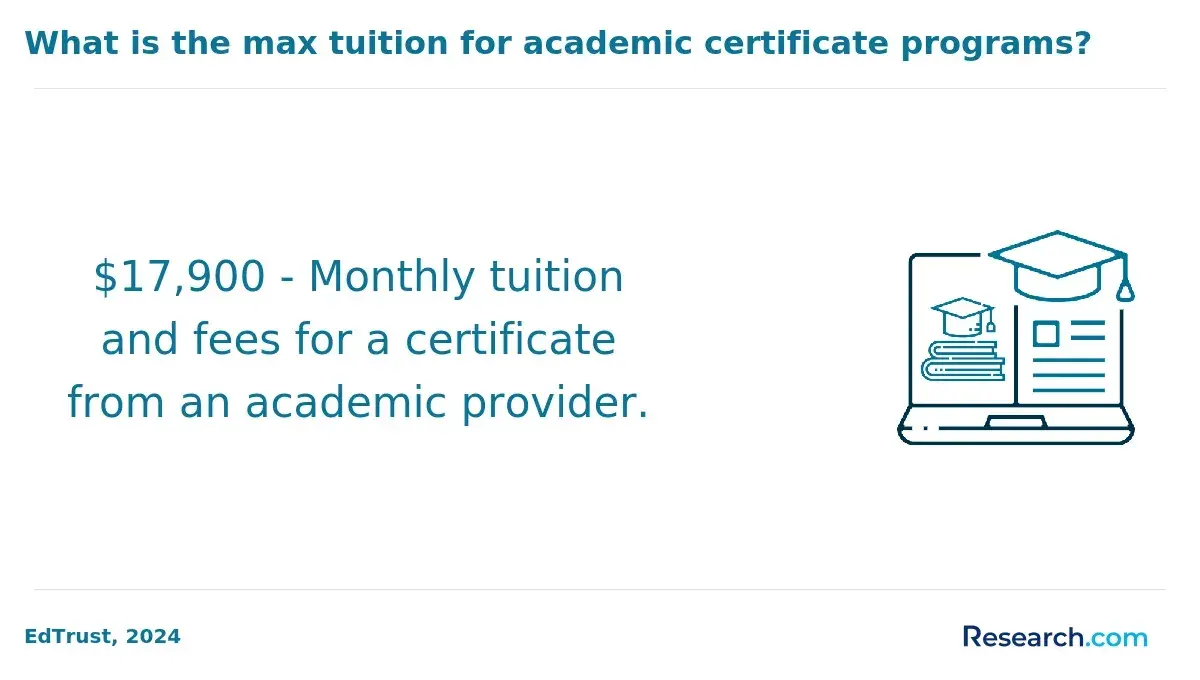
How common are monthly tuition payment plans among Social Work programs?
Monthly plans are common at the institutional level, particularly at colleges that use third-party tuition-management systems or operate multiple billing cycles. They are less consistent at the individual-program level because online social work formats may use standard semesters, accelerated sessions, cohort billing, or separate graduate tuition schedules.
In practical terms, prospective students should expect to find some installment option at many large universities, but should not assume it will be truly monthly or available for every balance. A plan may consist of two, three, four, or more scheduled payments during a semester, and summer terms often allow fewer installments because they are shorter.
Payment flexibility has become more relevant as students compare graduate professional programs with different calendars and clinical requirements. For example, students evaluating behavioral-health pathways should compare the distinct tuition and practicum expectations of a shortest PMHNP certificate program rather than assuming its billing structure will match an online MSW.
When contacting a school, ask whether the plan is available to online students, whether it covers the specific social work program, and whether field-placement terms have special charges. Get answers in writing because a general statement that "payment plans are available" may not explain the actual payment schedule.
Can monthly tuition plans make paying for Social Work degrees more attainable?
Yes, a monthly tuition plan can make a social work degree more attainable when a student has reliable income during the term and needs to match tuition due dates to payroll. It can reduce the need to produce one large payment before classes begin. It does not make the degree less expensive, and it may not solve a funding gap that persists after grants, scholarships, employer assistance, and federal aid are applied.
A payment plan tends to fit students who can realistically cover the remaining balance within one billing period. The following comparison can help identify when it is a sound cash-flow tool and when another funding approach may be safer.
| Situation | Monthly plan may fit | Consider another approach when |
| Student has predictable employment income | Paychecks can cover each scheduled installment without disrupting essential expenses. | Income fluctuates, is seasonal, or depends on overtime that is not guaranteed. |
| Student has a small remaining balance after aid | The plan spreads a manageable gap over the term. | The balance remains too large even after extending payments across the available term. |
| Employer provides tuition reimbursement | The student can bridge the period before reimbursement arrives, if allowed by the employer. | Reimbursement depends on grades, continued employment, or a delayed payment date that creates a cash shortfall. |
| Student is deciding between plan and loan | The plan may avoid loan interest if it can be paid in full during the term. | A federal loan may offer more sustainable repayment timing for an unavoidable longer-term gap. |
Before enrolling, build a term-by-term cash-flow estimate that includes rent, transportation, dependent care, food, and unpaid field-placement time. Social work practicums can limit work hours, so a payment that looks manageable before placement begins may not remain manageable later in the program.
Does monthly payment plans have an effect on the overall cost of Social Work degrees?
A monthly plan normally does not change the tuition rate or the number of credits required for an online social work degree. Its direct cost is usually an enrollment or setup fee, plus possible late, returned-payment, or reinstatement fees. Unlike a student loan, a standard school-managed installment plan generally does not charge interest when the balance is paid within the agreed term, but students must read the agreement to confirm this.
The larger financial risk is indirect: a missed payment can trigger a hold that delays registration, transcript release, graduation processing, or enrollment in the next course. Delayed progression may add costs if it causes a student to repeat a course, lose a scholarship condition, or extend the time needed to finish.
Use this simple process to compare the true cost of two plans:
- Start with the total charges for the term, including tuition and mandatory program fees.
- Subtract only financial aid, scholarships, employer funds, and savings that are confirmed and available for that term.
- Add the plan enrollment fee and any mandatory payment-processing charge.
- Divide the resulting amount by the required number of installments.
- Compare the payment date with dependable monthly income and keep a buffer for a failed or delayed transaction.
Paying tuition upfront can be cheaper if it avoids a plan fee and does not deplete emergency savings. A federal student loan can be more appropriate when the balance cannot be repaid during the term, though borrowing increases the amount repaid over time through interest and may affect future debt capacity.
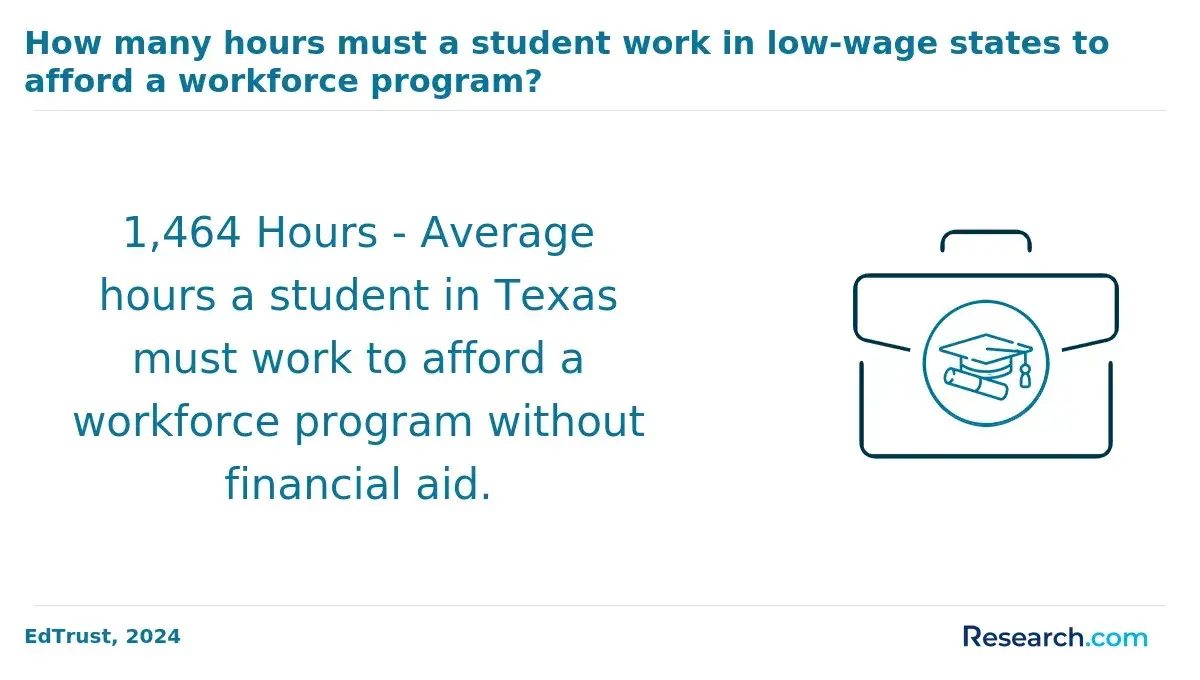
Do monthly payment plans affect your financial aid eligibility for Social Work programs?
Enrolling in a monthly plan does not usually reduce eligibility for federal student aid. Eligibility is determined through factors such as the FAFSA, enrollment level, satisfactory academic progress, cost of attendance, and applicable federal limits - not by whether a student chooses installments. However, the payment plan can affect when the student must pay any portion of the account balance.
Financial aid commonly disburses after enrollment conditions are met and according to the school's schedule. If aid has not posted when plan enrollment opens, a student may need to use an estimated aid amount, make an initial payment, or wait until aid is applied. The school's policy controls the result.
Take these steps before committing to installments:
- Confirm the amount of aid that has been awarded, accepted, and cleared for disbursement.
- Ask whether pending aid reduces the payment-plan balance or whether an initial installment is still required.
- Verify the school's refund and return-of-funds policy if you withdraw, drop below the required enrollment level, or do not begin attendance.
- Keep meeting satisfactory academic progress requirements, since losing eligibility can leave a larger balance due immediately.
Graduate students planning a research or academic nursing route should also evaluate how aid limits and program duration differ for PhD nursing programs online. Federal aid rules are not replaced by a school payment plan, but program cost and borrowing needs can vary considerably.
Is there a deposit required before starting Social Work monthly payment plans?
Often, yes. Schools may require an initial installment, a nonrefundable enrollment fee, or both before activating a tuition payment plan. The required upfront amount varies by institution and may be calculated as a percentage of the unpaid balance or as the first scheduled payment. It is separate from any admissions application fee, enrollment deposit, or tuition deposit required to reserve a place in a cohort.
Do not assume that a payment plan means no money is due before classes start. At some schools, students must enroll by an early deadline to receive the maximum number of installments; enrolling later can require a larger first payment because fewer due dates remain.
Ask the billing office these specific questions before accepting admission:
- What amount is due on the day I enroll in the plan?
- Is the payment-plan enrollment fee refundable if I withdraw before classes begin?
- Does my program require a separate admission, enrollment, or clinical-placement deposit?
- Will pending grants or accepted loans reduce the initial payment?
- What happens if my financial aid disburses after the first payment date?
A written answer is especially important for accelerated online MSW programs, where a short session may leave little time to spread payments across several months.
Are there fees not covered by monthly tuition payment plans for Social Work programs?
Yes. A plan may cover tuition and some mandatory institutional fees while excluding charges that are billed separately, due before placement, or paid directly to an outside provider. Social work students should budget for academic and practicum expenses beyond the installment amount shown in the student account.
The table identifies charges that commonly require separate confirmation. Whether a charge is covered depends on the university and program.
| Potential charge | Often included in the plan? | Why students should check |
| Tuition for registered courses | Usually | This is generally the main balance divided into installments. |
| Mandatory university fees | Sometimes | Technology, student-service, distance-learning, and course fees may be billed differently. |
| Textbooks and course materials | Often no | Books may be purchased separately unless the school uses an inclusive-access billing model. |
| Field education expenses | Sometimes no | Background checks, immunizations, transportation, professional attire, and site requirements may create out-of-pocket costs. |
| Licensure exam and application costs | No | These costs are typically paid after or near graduation and are not tuition charges. |
| Late or returned-payment fees | No | They arise only if payment terms are not met and can increase the total cost. |
Request an itemized term bill and compare it with the payment-plan agreement. Students evaluating other nutrition and wellness professions should similarly examine practicum and materials costs in best dietetics masters programs, where supervised-experience requirements can affect the full budget.
What should you look for in payment plan terms for Social Work programs?
The best payment plan is not necessarily the one with the smallest first payment. Review the entire agreement to determine whether the schedule fits your income, financial-aid timeline, course calendar, and field-placement obligations. Schools may change terms between academic years, so use the agreement for your actual enrollment term.
Focus on the terms below because they determine both affordability and the consequence of a problem payment:
- Payment count and dates: Confirm the number of installments, exact due dates, and whether payments align with your paycheck schedule.
- Initial payment: Identify the deposit, first installment, and setup fee due before the plan begins.
- Covered balance: Verify whether tuition, required university fees, online-course charges, and field-education fees are included.
- Late-payment policy: Ask about late fees, grace periods, account holds, automatic plan cancellation, and reinstatement requirements.
- Automatic withdrawals: Determine whether auto-pay is mandatory, what payment methods are accepted, and what happens when a bank payment fails.
- Financial-aid adjustments: Confirm how additional scholarships, loan changes, dropped courses, or aid reductions change future installments.
- Withdrawal and refund terms: Understand what remains due if you withdraw or are administratively dropped after the term begins.
A common mistake is comparing only the advertised monthly figure. Instead, compare the total billed amount, all plan fees, the final due date, and the school's written consequences for nonpayment. A lower monthly installment can still be risky if a large final payment falls during an unpaid practicum period.
How do you know if online Social Work degrees with monthly payments are right for you?
An online social work degree with monthly payments may be right for you if the program meets your education and licensure goals, the school has appropriate accreditation, and the remaining term balance fits a conservative monthly budget. For social work licensure preparation, confirm that the program's accreditation and curriculum are appropriate for the state where you expect to seek licensure; requirements vary by state and by license level.
A payment plan is usually a good fit when you have stable income, a modest residual balance after aid, and sufficient emergency savings to handle an unexpected payment issue. It may be a poor fit when you need financing beyond the semester, expect a major reduction in work hours for field education, or would need to miss essential bills to make each installment.
Use this final decision sequence before enrolling:
- Verify that the online BSW or MSW supports your intended credential, field education requirements, and state licensure plans.
- Calculate the full term cost, including fees, books, technology, travel, background checks, and practicum expenses.
- Apply confirmed grants, scholarships, employer benefits, and accepted aid to find the actual unpaid balance.
- Request the payment-plan agreement and test every due date against your lowest expected monthly income.
- Compare the plan with paying upfront, employer reimbursement, and federal loan options before selecting the least risky option.
The right choice is the option that lets you stay enrolled without creating an unrealistic short-term cash burden. If the numbers do not work within the school's installment window, consider reducing course load, postponing enrollment, seeking additional aid, or choosing a lower-cost program rather than relying on late payments.
Other Things You Should Know About Social Work
Possibly. Online enrollment alone does not usually prevent participation, but eligibility depends on the university's billing policy, the program's authorization to enroll students in your state, and your account status. Confirm both enrollment authorization and payment-plan eligibility before paying a deposit.
They may cover tuition charged for a field education course, but they usually do not cover personal placement expenses such as transportation, background checks, health clearances, professional clothing, or missed work time. Ask the field education office for a separate cost estimate.
Yes, accepted transfer credits can reduce the number of courses you must pay for, which may lower the balance in future terms. They do not necessarily reduce the cost of the current term, and graduate MSW transfer-credit rules can be restrictive.
Some are, but accreditation must be checked program by program. For U.S. BSW and MSW licensure preparation, verify the program's current Council on Social Work Education accreditation status and review the licensing board requirements in the state where you plan to practice.
References
- 25 Scholarships For Social Work Students | Psychology.org https://www.psychology.org/resources/social-work-scholarships/
- How to Take Advantage of College Tuition Payment Plans Today https://www.edumed.org/financial-aid/tuition-payment-plans/
- What Is a Tuition Payment Plan and How Can You Benefit from One? | NC Assist Loans https://www.ncassist.org/paying-for-college-101/blog/tuition-payment-plan/
- 17 Most Affordable Online MSW Programs: Analyzed for 2025 - Social Work Education Center https://www.socialworkdegree.net/online-msw-programs/most-affordable-online-msw-programs/
- Social Work Scholarships https://socialworklicensemap.com/social-work-resources/social-work-scholarships/
- Online Social Work Degree Programs | Pacific Oaks College https://www.pacificoaks.edu/social-work-degree-programs/
- Master of Social Work (MSW) https://www.chamberlain.edu/academics/online-health-professions-college/master-of-social-work
- 2025 Most Affordable Online Social Work Degrees https://www.onlineu.com/most-affordable-colleges/social-work-degrees
- Most Affordable MSW Programs in California - CaliforniaSocialWorkEDU https://www.californiasocialworkedu.org/most-affordable-msw-programs-in-california/
- Do Colleges have Payment Plans? | Ascent Funding https://www.ascentfunding.com/blog/how-to-secure-and-use-a-college-tuition-payment-plan/