2027 How to Become a Substance Abuse Counselor in New Mexico

Co-Founder and Chief Data Scientist
If you want to become a substance abuse counselor in New Mexico, the main decision is not simply which school to attend. You need to understand which credential fits your career goal, how much education and supervised experience you will need, what the licensing board expects, and whether the salary and job market match your long-term plans. This guide explains the practical path to substance abuse counseling in New Mexico, including education options, LSAA and LADAC licensing steps, supervised experience, costs, salaries, job settings, advancement routes, telehealth trends, and common mistakes to avoid.
Quick Answer: How Do You Become a Substance Abuse Counselor in New Mexico?
In New Mexico, aspiring substance abuse counselors generally begin by completing approved education and addiction-specific training, then apply for the Licensed Substance Abuse Associate (LSAA) credential before pursuing the Licensed Alcohol and Drug Abuse Counselor (LADAC) license. Applicants must be at least 21 years old, submit a licensing application and $75 non-refundable fee, complete required drug and alcohol counseling coursework, pass the required addiction counseling exam, undergo fingerprinting and a background check, and document supervised experience as required by the New Mexico Counseling and Therapy Practice Board.
Key Things You Should Know About Becoming a Substance Abuse Counselor in New Mexico
- Demand is real, especially outside major cities. New Mexico has a reported shortage of substance abuse counselors, and rural communities often face the steepest barriers to behavioral health care access.
- Pay varies by role, license level, and location. The average salary for substance abuse counselors in New Mexico is approximately $47,000 per year based on 2023 U.S. Bureau of Labor Statistics data, while specialized or urban roles may exceed $60,000 annually.
- The long-term outlook is favorable. The BLS projected 22% growth for substance abuse counselors from 2021 to 2031, reflecting broader demand for addiction treatment and mental health services.
- New Mexico’s affordability can affect career value. The state’s cost of living index is 88.4 compared with the U.S. average of 100, which may help counseling salaries go further than they would in higher-cost states.
- Education requirements depend on the credential and job scope. Some substance abuse counseling roles can begin with an associate’s degree and required training, but many employers prefer a bachelor’s degree, and broader counseling roles often require graduate education.
- Supervised practice is central to licensure. New Mexico requirements include substantial supervised experience, including 3,000 hours of supervised experience or client contact depending on the credential path described by state guidance.
- How can you become a substance abuse counselor in New Mexico?
- What is the minimum educational requirement to become a substance abuse counselor in New Mexico?
- What does a substance abuse counselor do?
- What is the certification and licensing process for a substance abuse counselor in New Mexico?
- What legal and ethical considerations must a substance abuse counselor consider in New Mexico?
- How much can you earn as a substance abuse counselor in New Mexico?
- How can substance abuse counselors expand into mental health counseling roles in New Mexico?
- How are digital tools and telehealth shaping substance abuse counseling in New Mexico?
- Can substance abuse counselors expand their scope by pursuing marriage counseling credentials in New Mexico?
- What is the job market like for a substance abuse counselor in New Mexico?
- How can integrating forensic science enhance counseling outcomes in New Mexico?
- How can interdisciplinary credentials enhance my practice as a substance abuse counselor in New Mexico?
- What career and advancement opportunities are available for a substance abuse counselor in New Mexico?
- What is the fastest path to becoming a substance abuse counselor in New Mexico?
- What professional development and continuing education opportunities are available for substance abuse counselors in New Mexico?
- What challenges should you consider as a substance abuse counselor in New Mexico?
- How can pursuing an online counseling degree enhance my career as a substance abuse counselor in New Mexico?
- What professional organizations and networks can support my practice as a substance abuse counselor in New Mexico?
- How can collaborating with school psychologists benefit substance abuse counselors in New Mexico?
How can you become a substance abuse counselor in New Mexico?
The path to substance abuse counseling in New Mexico is a licensing process, not just an academic choice. You need the right coursework, addiction-specific training, documentation, examination, supervised experience, and state approval before practicing independently within the scope of your credential.
| Step | What to do | Why it matters |
| 1. Choose an education pathway | Start with a relevant associate’s, bachelor’s, or graduate program in counseling, psychology, social work, human services, or a related field. | Your degree level can affect eligibility, job options, supervision requirements, and advancement. |
| 2. Complete addiction counseling coursework | Meet the required substance abuse training hours, including 90 clock hours for some associate-level pathways and 276 hours for LADAC preparation. | New Mexico requires specialized training in addiction, counseling methods, ethics, and related practice areas. |
| 3. Apply for the appropriate credential | Many candidates begin with the LSAA credential before moving toward LADAC licensure. | Practicing without the right license can create legal and employment problems. |
| 4. Pass the required exam | Prepare for and complete the required addiction counseling competency examination, including the NCAC level 1 exam referenced in state guidance. | The exam confirms baseline knowledge needed for safe addiction counseling practice. |
| 5. Complete background requirements | Submit fingerprinting and complete a criminal background check as part of the application process. | Behavioral health licensing boards use these steps to protect clients and uphold professional standards. |
| 6. Build supervised experience | Document supervised practice, including requirements such as three years and 3,000 hours of client contact for some degree pathways. | Supervision helps new counselors develop clinical judgment before taking on more responsibility. |
| 7. Apply for jobs and maintain licensure | Seek roles in treatment centers, hospitals, detox programs, community agencies, and behavioral health organizations while completing continuing education. | Licensure is not a one-time task; renewal and continuing education protect your ability to practice. |
Most candidates improve their job prospects by earning at least a bachelor’s degree in psychology, social work, counseling, or a similar field. An associate’s degree can support some entry-level routes, but employers may prefer applicants with more advanced preparation, especially for clinical roles involving treatment planning, documentation, crisis response, and work with co-occurring mental health concerns.
Coursework should not be treated as a box-checking exercise. Addiction counseling requires knowledge of substance use disorders, motivational interviewing, relapse prevention, ethics, assessment, case management, group counseling, trauma-informed care, and cultural responsiveness. New Mexico’s reported level of binge drinking among adults, with over 20% of adults reporting binge drinking, underscores why counselors need both clinical skill and local community awareness.
After meeting education requirements, applicants must submit licensing materials, pay the $75 non-refundable application fee, and provide proof that they meet New Mexico’s requirements. Keep copies of transcripts, course descriptions, supervision logs, exam results, and continuing education certificates. Licensing delays often happen because applicants cannot document what they completed.
Before applying for jobs, prepare a resume that clearly separates education, addiction-specific coursework, supervised hours, internships, volunteer work, clinical skills, and relevant populations served. If you are comparing counseling job markets beyond New Mexico, broader resources such as licensed counselor job opportunities in Arkansas can help you understand how state requirements and employment patterns differ.
New Mexico students often consider institutions such as the University of New Mexico and New Mexico State University for counseling-related preparation. When comparing programs, do not stop at the school name. Ask whether the curriculum supports New Mexico licensing requirements, whether faculty understand addiction counseling credentialing, and whether the program can help students find supervised field placements.
What is the minimum educational requirement to become a substance abuse counselor in New Mexico?
The minimum education route can begin with an associate’s degree in a relevant field such as counseling, human services, psychology, or social work, but the better choice depends on how far you want your counseling career to go. Entry-level addiction support work may be possible with less education, while clinical, supervisory, mental health, or private practice pathways usually require higher credentials.
| Education level | Typical time to complete | Estimated cost noted in source material | Best fit |
| Associate’s degree | About two years | $5,000 to $15,000 | Students seeking an entry point into human services or addiction counseling support roles. |
| Bachelor’s degree | About four years | $20,000 to $50,000 | Candidates who want stronger employment prospects, broader case management options, and preparation for graduate study. |
| Master’s degree | One to three additional years depending on program structure and pace | May exceed $30,000 | Professionals aiming for broader counseling roles, advanced clinical training, or future LPC-related opportunities. |
| PhD | Varies by institution and research requirements | Varies by institution and program | Individuals interested in teaching, research, leadership, or advanced academic work. |
New Mexico’s substance abuse counseling requirements include addiction-specific coursework. Candidates with an associate’s degree are associated with a minimum of 90 clock hours in drug and alcohol counseling, while the LADAC pathway requires 276 hours in areas such as counseling approaches, ethics, and substance abuse treatment. These hours are separate from general education courses and should be verified with the licensing board before enrollment.
Program accreditation matters because employers and licensing boards need confidence that your education meets professional standards. Before enrolling, ask the school whether its coursework is accepted for New Mexico substance abuse counseling credentials, whether online classes count the same as campus-based classes, and whether the program has advisors familiar with LSAA and LADAC requirements.
If you are comparing requirements across states, remember that counseling credentials are state-specific. A program that works well for one state may not automatically meet another state’s rules. For example, reviewing licensed professional counselor careers in Missouri can be useful for comparison, but New Mexico applicants should rely on New Mexico licensing guidance for final decisions.
What does a substance abuse counselor do?
A substance abuse counselor helps people reduce, manage, or recover from harmful substance use. The work blends assessment, counseling, education, relapse prevention, crisis response, documentation, and coordination with other providers. Counselors may work with clients individually, in groups, or with families when appropriate.
Common responsibilities
- Screening and assessing clients to understand substance use patterns, risks, strengths, and treatment needs.
- Creating treatment plans that match the client’s goals, stage of change, support system, and level of care.
- Leading individual and group counseling sessions focused on recovery skills, coping strategies, accountability, and relapse prevention.
- Explaining addiction, treatment options, recovery planning, and community resources to clients and families.
- Tracking progress through notes, treatment plan reviews, referrals, and communication with other professionals.
- Working with physicians, social workers, probation officers, peer support workers, case managers, and mental health clinicians when clients need coordinated care.
Skills that matter most
- Clear communication: Clients need direct, respectful, understandable guidance, especially during stressful moments.
- Empathy with boundaries: Counselors must show compassion without taking over the client’s responsibility for change.
- Clinical judgment: Treatment plans must adjust when risk, relapse, trauma, mental health symptoms, or social instability changes.
- Patience and resilience: Recovery is rarely linear, and counselors need to stay steady through setbacks.
- Cultural competence: New Mexico’s diverse communities require counselors to respect different cultural, family, spiritual, and community perspectives on healing.
One New Mexico counselor described the work this way: “My training gave me a framework, but clients taught me why flexibility matters. Recovery looks different for each person, and good counseling means meeting people with structure, honesty, and respect.”
What is the certification and licensing process for a substance abuse counselor in New Mexico?
The New Mexico Counseling and Therapy Practice Board oversees substance abuse counseling licensure. Candidates should treat board requirements as the controlling source because practicing without an active, appropriate license can expose a counselor to legal and professional consequences.
The usual progression begins with the Licensed Substance Abuse Associate credential. The LSAA is commonly described as a prerequisite step before applying for the Licensed Alcohol and Drug Abuse Counselor license. Both credential levels require applicants to be at least 21 years old.
| Licensing item | Requirement or detail | What applicants should verify |
| Minimum age | Applicants must be at least 21 years old. | Confirm that you meet age requirements before submitting fees. |
| Application fee | $75 non-refundable fee paid by check or money order to the Counseling and Therapy Practice Board. | Use the current board application instructions for payment format and mailing details. |
| Background check | Fingerprinting and a criminal background check are required. | Ask how long processing usually takes so you can plan your timeline. |
| LSAA coursework | At least 90 clock hours of specialized drug and alcohol counseling training. | Make sure your courses are accepted before paying for them. |
| LADAC coursework | 276 clock hours covering topics such as counseling techniques and ethics. | Keep course syllabi, certificates, and transcripts for documentation. |
| Exam | Applicants must pass the national certification examination for addiction counselors, NCAC level 1. | Check registration steps, exam windows, retake policies, and score reporting rules. |
| Continuing education | Continuing education is required to maintain licensure, including ethics training. | Track completed hours and keep proof in case the board requests verification. |
Applications can be delayed when candidates submit incomplete forms, missing transcripts, unclear training records, or supervision documentation that does not match board expectations. Before mailing or uploading anything, review every requirement line by line and keep a copy of the complete packet.
Licenses must also be renewed. The source guidance notes that renewal notices are generally sent in mid-July and that licenses must be renewed by October 31 to avoid expiration. Counselors should not rely only on a renewal notice; it is safer to calendar renewal deadlines and continuing education requirements well in advance.
If you are considering counseling careers in other states, resources such as the licensed counselor career path in Utah can show how credentialing differs. However, New Mexico applicants should always follow New Mexico board rules for LSAA and LADAC decisions.
What legal and ethical considerations must a substance abuse counselor consider in New Mexico?
Substance abuse counseling involves sensitive health information, vulnerable clients, court-related issues, family crises, and relapse risk. Legal and ethical practice is therefore not optional. It is part of competent care.
Legal duties
- Licensure compliance: Counselors must practice within the scope of their credential, such as LSAA or LADAC, and avoid representing themselves as qualified for services they are not licensed to provide.
- Mandatory reporting: Counselors must follow New Mexico law when reporting suspected child abuse or neglect and when responding to credible threats of harm to self or others.
- Documentation: Clinical notes, treatment plans, referrals, and discharge summaries should be accurate, timely, and professional because they may affect care continuity and legal proceedings.
Confidentiality and informed consent
- HIPAA obligations: Counselors must protect client privacy under the Health Insurance Portability and Accountability Act.
- Substance use records: Addiction treatment information may receive additional privacy protections, including those reflected in alcohol and drug abuse patient record rules.
- Limits of confidentiality: Clients should be told, in plain language, when information may have to be disclosed, such as safety risks, court orders, or mandatory reporting situations.
Common ethical risks
- Dual relationships: In small or rural communities, counselors may encounter clients in social, family, school, or community settings. Clear boundaries help protect both client and counselor.
- Cultural assumptions: New Mexico counselors should avoid using a one-size-fits-all recovery model and should consider cultural identity, language, family structure, community history, and spiritual supports.
- Scope creep: Addiction counselors often see trauma, depression, anxiety, domestic violence, and legal issues. They need to know when to treat, consult, refer, or collaborate.
- Federal and state compliance: Counselors should stay informed about New Mexico requirements as well as Substance Abuse and Mental Health Services Administration guidance that affects addiction treatment practice.
The safest approach is to document carefully, seek supervision when cases become complex, and consult the board or an attorney when legal obligations are unclear.
How much can you earn as a substance abuse counselor in New Mexico?
Substance abuse counselors in New Mexico earn an average salary of approximately $47,000 per year, with a median salary around $45,000. Nationally, the average salary is about $51,000 and the median is $49,000, so New Mexico pay is somewhat below the national figure. However, local cost of living, employer type, license level, and advancement opportunities can change the practical value of that salary.
| Career factor | How it can affect pay |
| Experience | New counselors often start lower, while experienced clinicians may qualify for senior, specialized, or supervisory roles. |
| Education | Bachelor’s and graduate training can improve competitiveness, especially for positions involving clinical leadership or co-occurring disorders. |
| Licensure | Advanced credentials such as LADAC, LPC-related qualifications, or other counseling licenses can expand role options. |
| Location | Albuquerque, Santa Fe, and Las Cruces may offer more positions and, in some settings, stronger compensation than smaller markets. |
| Employer type | Hospitals, government programs, rehabilitation centers, nonprofit agencies, and private organizations may structure pay differently. |
Higher-paying roles to consider
- Clinical Director: Leadership roles overseeing treatment programs and staff may earn upwards of $70,000 annually.
- Substance Abuse Program Manager: Program management positions can reach around $65,000.
- Licensed Professional Counselor: With additional licensure, LPCs can earn approximately $60,000 or more.
New Mexico locations with stronger earning potential
- Santa Fe: Demand for behavioral health services and the local economic profile can support higher wages in some settings.
- Albuquerque: As the state’s largest city, Albuquerque offers a wider range of treatment centers, hospitals, agencies, and specialized roles.
- Las Cruces: The city’s growth supports counseling positions across multiple service environments.
Salary should not be evaluated in isolation. Compare total compensation, supervision support, caseload size, benefits, advancement, commute, documentation burden, and continuing education reimbursement before accepting a position.
How can substance abuse counselors expand into mental health counseling roles in New Mexico?
Substance abuse counseling often overlaps with depression, anxiety, trauma, grief, family conflict, and crisis intervention. Counselors who want to treat a broader range of mental health conditions may need additional graduate education and licensure beyond addiction counseling. This route can be worthwhile for professionals who want more clinical autonomy, broader client populations, or advancement into integrated behavioral health settings. For a focused overview, review how to become a mental health counselor in New Mexico.
How are digital tools and telehealth shaping substance abuse counseling in New Mexico?
Telehealth and secure digital tools have become important for counseling access, especially for clients in underserved or rural parts of New Mexico. A substance abuse counseling degree can now support work in environments where remote sessions, electronic records, digital screening tools, and virtual care coordination are part of daily practice.
Telehealth does not remove a counselor’s legal responsibilities. Providers still need informed consent, privacy safeguards, secure platforms, emergency planning, documentation standards, and awareness of whether the client’s location affects service delivery rules. Counselors should also consider whether telehealth is clinically appropriate for each client, particularly when withdrawal risk, suicidality, domestic violence, or unstable housing complicates care.
Can substance abuse counselors expand their scope by pursuing marriage counseling credentials in New Mexico?
Substance use disorders often affect partners, parenting, trust, finances, and household stability. Counselors who add marriage and family therapy preparation may be able to contribute to more integrated treatment plans, especially when family dynamics influence recovery. This path makes the most sense for professionals who want to work with couples, families, parenting issues, or relational patterns tied to substance use. To compare requirements, see marriage counselor education requirements in New Mexico.
What is the job market like for a substance abuse counselor in New Mexico?
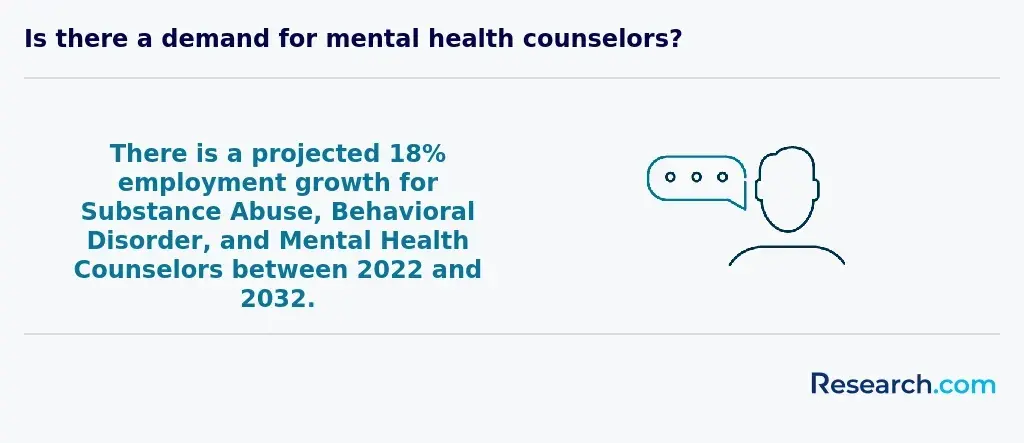
The job market for substance abuse counselors in New Mexico is favorable because treatment demand is high and behavioral health services remain important across public, nonprofit, healthcare, and community settings. The New Mexico Department of Workforce Solutions projects employment of substance abuse counselors to grow by approximately 14% over the next decade.
- Where demand is strongest: Urban areas such as Albuquerque and Santa Fe offer many treatment facilities, while rural areas may have fewer employers but significant unmet need.
- Typical compensation: The average annual salary is around $43,000 in one cited job-market estimate, with entry-level roles starting at approximately $35,000 and experienced counselors earning upwards of $60,000.
- Competition: Established treatment centers may attract many applicants, so candidates with stronger education, supervised experience, bilingual skills, or specialized training may stand out.
- Growth options: Additional preparation in trauma-informed care, dual diagnosis, group counseling, crisis response, and case management can improve advancement potential.
- Local practice context: New Mexico’s cultural diversity makes culturally competent treatment essential, not just preferred.
A counselor who trained in New Mexico summarized the trade-off this way: “The work is meaningful and the need is obvious, but applicants should look closely at pay, supervision quality, and caseload expectations. The best job is not always the one with the fastest offer.”
How can integrating forensic science enhance counseling outcomes in New Mexico?
Some substance abuse counseling cases intersect with courts, probation, custody disputes, impaired driving, workplace testing, or drug-related offenses. Counselors do not need to become forensic scientists to work ethically in these situations, but understanding forensic processes can improve communication with legal and investigative professionals. Counselors interested in cross-disciplinary knowledge can explore how to become a forensic scientist in New Mexico for context on evidence-focused careers.
How can interdisciplinary credentials enhance my practice as a substance abuse counselor in New Mexico?
Interdisciplinary training can help substance abuse counselors respond to complex client needs. Behavioral analysis, family therapy, mental health counseling, social work, school psychology, and forensic-informed practice can all add useful perspectives when used within the counselor’s legal scope. Professionals interested in behavior-focused interventions may compare counseling practice with how to become a behavior analyst in New Mexico.
What career and advancement opportunities are available for a substance abuse counselor in New Mexico?
Substance abuse counseling can lead to several career levels, from direct support roles to clinical leadership. Advancement usually depends on education, license level, supervised experience, performance, and the ability to manage complex cases responsibly.
| Career stage | Example roles | Who it fits |
| Entry level | Substance Abuse Technician, Case Manager | New professionals building experience in treatment environments, client support, resource coordination, and documentation. |
| Licensed direct practice | Substance Abuse Counselor, LADAC, group counselor, outpatient counselor | Counselors prepared to provide structured addiction treatment under the scope of their credential. |
| Mid-level leadership | Clinical Supervisor, Program Coordinator | Experienced counselors who can guide teams, monitor quality, and support compliance. |
| Senior leadership | Director of Substance Abuse Services, Policy Advisor | Professionals interested in strategy, funding, staffing, program design, advocacy, and system-level work. |
| Related clinical paths | Mental Health Counselor, Educator, Trainer | Counselors who want to broaden their scope, teach, train staff, or work across behavioral health specialties. |
Some addiction counselors later move into broader counseling practice. If that is your goal, compare degree and licensure requirements early so you do not take courses that fail to support your next credential. Research.com’s mental health counselor career path can help you compare duties, training, and long-term options.
What is the fastest path to becoming a substance abuse counselor in New Mexico?
The fastest path is usually the one that avoids wasted credits, rejected coursework, and licensing delays. Candidates with prior human services education or related experience may save time through transfer credits, focused addiction counseling coursework, online options, and efficient supervision planning. However, speed should never come at the expense of board eligibility or clinical preparation.
Before choosing an accelerated route, ask whether the program is accepted for New Mexico LSAA or LADAC requirements, whether it provides the exact clock hours needed, whether field placement support is available, and whether prior credits can be evaluated before enrollment. For additional planning ideas, see the quickest way to become a counselor in New Mexico.
What professional development and continuing education opportunities are available for substance abuse counselors in New Mexico?
Continuing education keeps substance abuse counselors current on ethics, evidence-based treatment, relapse prevention, co-occurring disorders, trauma, documentation, cultural responsiveness, and telehealth practice. The source guidance notes that counselors must complete 40 hours of continuing education every two years to maintain licensure, and also references ethics training requirements. Counselors should confirm the current cycle and topic rules directly with the New Mexico Counseling and Therapy Practice Board.
- The New Mexico Counseling and Therapy Practice Board provides the official rules for acceptable continuing education and license renewal.
- The New Mexico Behavioral Health Services Division offers training tied to behavioral health practice and addiction treatment needs.
- The New Mexico Association for Addiction Professionals supports learning through conferences, webinars, networking, and addiction-focused professional development.
- NAADAC provides online continuing education options that may help counselors complete training without travel.
- Universities such as the University of New Mexico may offer workshops or coursework in areas such as motivational interviewing and trauma-informed care.
- The New Mexico Department of Health provides public-health-oriented resources that can strengthen community-based addiction work.
- Peer supervision, clinical consultation, professional journals, and conferences help counselors stay connected to changing practice standards.
How to choose continuing education wisely
- Prioritize courses that meet board rules, not just topics that sound interesting.
- Keep certificates, dates, provider names, and course descriptions in a dedicated renewal file.
- Include ethics regularly, especially if your work involves telehealth, courts, minors, or dual relationships in small communities.
- Choose training that matches your caseload, such as opioid treatment, alcohol misuse, trauma, adolescent counseling, or co-occurring disorders.
What challenges should you consider as a substance abuse counselor in New Mexico?
Substance abuse counseling in New Mexico can be deeply meaningful, but it is not an easy career. Counselors may face high need, complex trauma histories, relapse risk, limited rural resources, administrative pressure, cultural complexity, and emotional strain. Entering the field with realistic expectations helps protect both clients and counselors.
| Common mistake | Why it creates problems | Better approach |
| Choosing a program without checking licensing fit | Courses may not satisfy LSAA or LADAC requirements. | Ask the school and the board how coursework maps to New Mexico rules before enrolling. |
| Looking only at tuition | Books, fees, supervision costs, commuting, unpaid internships, and exam costs can change total affordability. | Compare the full cost of the pathway, not only advertised tuition. |
| Assuming online programs automatically qualify | Online coursework may be convenient, but licensing acceptance depends on content and approval. | Verify accreditation, clock hours, field placement support, and state eligibility. |
| Ignoring supervision quality | Poor supervision can slow skill development and create documentation problems. | Ask about supervisor credentials, availability, feedback style, and caseload expectations. |
| Underestimating burnout | Repeated exposure to crisis, relapse, grief, and family distress can lead to compassion fatigue. | Use supervision, peer consultation, boundaries, time off, and personal support systems early. |
| Assuming salary outcomes are guaranteed | Pay depends on employer, location, experience, license level, and job duties. | Compare job postings, benefits, advancement, and total compensation before committing. |
- High caseloads: Demand for treatment can stretch counselors thin, particularly where provider shortages are severe.
- Cultural responsiveness: New Mexico includes Native American, Hispanic, rural, urban, and other communities with distinct histories and recovery perspectives.
- Regulatory pressure: Licensure, continuing education, confidentiality, and documentation rules require ongoing attention.
- Emotional intensity: Counselors regularly encounter trauma, relapse, family conflict, overdose risk, and grief.
- Stigma: Some clients delay care because of shame, fear, legal concerns, or distrust of treatment systems.
If you want to broaden your preparation for family systems work, comparing options such as affordable online family therapy degrees may help you evaluate adjacent educational pathways. Just be sure any degree you choose aligns with your intended license.
How can pursuing an online counseling degree enhance my career as a substance abuse counselor in New Mexico?
An online counseling degree can help working adults continue their education while maintaining employment, family responsibilities, or supervised practice. It can also prepare counselors for telehealth, electronic documentation, remote collaboration, and evidence-based counseling models. The key is to choose a program based on licensing fit, academic quality, field placement support, and affordability rather than convenience alone. To compare options, review Research.com’s guide to the best online counseling degree programs.
What professional organizations and networks can support my practice as a substance abuse counselor in New Mexico?
Professional networks help counselors stay informed, find supervision, learn about job openings, discuss ethical issues, and build relationships across behavioral health systems. State counseling associations, addiction-focused organizations, university training centers, peer consultation groups, and local behavioral health coalitions can all support career development.
Networking is especially useful in New Mexico because treatment often involves collaboration among counselors, social workers, schools, courts, tribal organizations, healthcare providers, and community agencies. Counselors who want to expand into family-focused care can also review how to become an MFT in New Mexico.
How can substance abuse counselors prevent burnout and maintain mental resilience in New Mexico?
Burnout prevention should begin before burnout appears. Substance abuse counselors need structured supervision, manageable boundaries, realistic caseload expectations, peer support, recovery-oriented hope, and personal routines that restore emotional capacity. Mindfulness, reflective writing, scheduled breaks, exercise, consultation, and time away from crisis work can all help, but they are not substitutes for healthy workplace conditions.
Complex cases involving violence, crime, trauma, or court systems can add emotional and ethical pressure. Counselors who want to understand related psychological work may find it useful to explore how to become a criminal psychologist in New Mexico, especially when thinking about risk, assessment, and interdisciplinary collaboration.
How can collaborating with school psychologists benefit substance abuse counselors in New Mexico?
Collaboration with school psychologists can strengthen early intervention for youth who show signs of substance misuse, emotional distress, academic decline, or family instability. School psychologists understand educational testing, school-based supports, student behavior, and referral systems, while substance abuse counselors bring addiction assessment and recovery planning expertise.
Strong collaboration requires clear consent, confidentiality boundaries, role clarity, referral procedures, and communication plans. Counselors who work with adolescents should understand how school-based professionals are trained and credentialed; Research.com’s overview of New Mexico school psychologist certification requirements can help clarify those roles.
What do substance abuse counselors say about their careers in New Mexico?
- “The work can be difficult, but seeing someone rebuild trust with themselves and their family makes the hard days worth it. New Mexico’s cultural diversity pushes me to listen more carefully and avoid assumptions.” Ysabelle
- “My job depends on collaboration. I work with community groups, treatment teams, and local agencies so clients do not have to navigate recovery alone.” Jermaine
- “The most effective counseling happens when clients feel respected. In my practice, that means combining clinical tools with an awareness of community, tradition, and personal meaning.” Ellen
Questions to Ask Before Choosing This Career Path
- Do I want addiction-specific counseling only, or do I eventually want broader mental health licensure?
- Which New Mexico credential do I need for the jobs I want: LSAA, LADAC, LPC-related licensure, or another credential?
- Will my chosen program provide the 90 clock hours or 276 hours required for my intended pathway?
- How will I complete supervised hours, and who will verify them?
- Can I handle the emotional realities of relapse, trauma, crisis, and long-term recovery work?
- Does the salary range in my preferred city support my financial needs?
- Am I prepared to maintain continuing education and renewal requirements throughout my career?
Key Insights
- New Mexico substance abuse counseling is a regulated career; you need the correct credential before practicing within a counseling role.
- The LSAA is typically the starting credential, while the LADAC supports more advanced addiction counseling practice.
- Education can begin at the associate level for some pathways, but bachelor’s and graduate degrees can improve mobility, competitiveness, and access to broader counseling roles.
- Required addiction training hours matter: 90 clock hours and 276 hours appear in New Mexico credential guidance for different pathways.
- Licensing paperwork is detail-heavy. Keep transcripts, certificates, supervision logs, exam records, and continuing education proof organized from the beginning.
- Average pay in New Mexico is approximately $47,000 per year, but leadership, advanced licensure, and urban opportunities can raise earning potential.
- Telehealth, integrated behavioral health, trauma-informed care, and cultural competence are increasingly important for effective counseling in New Mexico.
- The best program is not always the fastest or cheapest. Choose the option that aligns with New Mexico licensing rules, your career scope, and your long-term financial goals.
Related Articles for Nearby States
- 2027 How to Become a Substance Abuse Counselor in Arizona
- 2027 How to Become a Substance Abuse Counselor in Colorado
- 2027 How to Become a Substance Abuse Counselor in Texas
- 2027 How to Become a Substance Abuse Counselor in Utah
- 2027 How to Become a Substance Abuse Counselor in Oklahoma
- 2027 How to Become a Substance Abuse Counselor in Nevada
- 2027 How to Become a Substance Abuse Counselor in Kansas
- 2027 How to Become a Substance Abuse Counselor in Wyoming
- 2027 How to Become a Substance Abuse Counselor in Nebraska
- 2027 How to Become a Substance Abuse Counselor in California
References:
- Addiction Counselor. (2019, July 23). Become a substance abuse counselor in New Mexico | CADC & LADAC in NM. AddictionCounselor.org. Retrieved November 21, 2024.
- Careers of Substance. (n.d.). Counselor / Clinician. CareersofSubstance.org. Retrieved November 21, 2024.
- Human Services. (n.d.). New Mexico substance abuse counselor certification to become a LADAC in NM. Human Services Edu. Retrieved November 21, 2024.
- NM RLD. (n.d.). Application instructions for licensed substance abuse associate counselor (LSAA) NMAC 16.27.13. Official Website of the New Mexico Regulation & Licensing Department. Retrieved November 21, 2024.
- NMSU Global. (2024, August 28). Substance abuse social worker career outlook. NMSU Global Campus. Retrieved November 21, 2024.
- Public Health Online. (2021, November 18). New Mexico substance abuse counselor certification | LSAA, LADAC requirements in NM. Public Health. Retrieved November 21, 2024.
- Public Health Online. (2021, November 18). New Mexico substance abuse counselor certification | LSAA, LADAC requirements in NM. Public Health. Retrieved November 21, 2024.
- UNM. (n.d.). Substance abuse studies. UNM Continuing Education. Retrieved November 21, 2024.
Other Things You Should Know About Becoming a Substance Abuse Counselor in New Mexico
In 2027, to become a licensed substance abuse counselor in New Mexico, you need a bachelor's degree in a relevant field, complete required supervised hours, pass the National Counselor Examination, and apply for licensure through the New Mexico Counseling and Therapy Practice Board.
To work as a substance abuse counselor in New Mexico in 2027, you typically need a degree in counseling, psychology, or a related field. Generally, a bachelor's degree is the minimum requirement, though advancing in the profession often requires a master's degree and further certification.