2027 Best Online Biomedical Engineering Degree Programs at Nonprofit Universities

Co-Founder and Chief Data Scientist
Choosing an online biomedical engineering degree is difficult because program titles, laboratory expectations, and accreditation status can vary widely. The decision matters: the U.S. Bureau of Labor Statistics reports a $106,950 median annual wage for biomedical engineers and projects 5% employment growth from 2024 to 2034.
This guide helps prospective students compare nonprofit programs by degree level, total cost, online format, academic rigor, and career relevance so they can build a realistic shortlist rather than relying on nonprofit status or rankings alone.
Key Things You Should Know
- For entry-level biomedical engineering roles, a bachelor's degree is typically the starting credential; students should prioritize an appropriately accredited engineering program with required lab and design experiences over a school's nonprofit label.
- The U.S. Bureau of Labor Statistics lists a $106,950 median annual wage for biomedical engineers in May 2024, but pay depends on location, industry, experience, graduate education, and job responsibilities.
- Online biomedical engineering options are more common at the master's level; compare total cost, synchronous requirements, residencies, transfer policies, and career outcomes before deciding whether an online format fits your goals.
What Makes an Online Biomedical Engineering Degree Program at a Nonprofit University Different?
An online biomedical engineering degree combines engineering principles with biology, physiology, medical-device design, imaging, biomaterials, data analysis, and health-care technology. Nonprofit universities include public institutions and private nonprofit institutions. Their nonprofit status means revenue is generally reinvested in institutional operations and mission-related activities, but it does not independently establish academic quality, affordability, or career value.
The most important difference is usually program design rather than institutional tax status. A credible program should clearly explain how online students complete laboratory work, collaborative engineering design, assessments, faculty interaction, and any required in-person experiences. Fully online study can work especially well for experienced engineers pursuing a technical master's degree, while pre-licensure bachelor's students may need hands-on access that a fully remote program cannot provide.
Biomedical engineering is also distinct from adjacent health-care degrees. Students interested in operational health-care leadership rather than device design, biomechanics, or engineering analysis may find a fastest online master's in healthcare administration more aligned with their intended work.
| Program type | Typical student | Common online fit | Main decision point |
| Associate degree or transfer pathway | Student beginning college or preparing to transfer | Often better for foundational math and science than direct biomedical engineering preparation | Confirm transfer articulation into an engineering bachelor's program |
| Bachelor's degree | Future entry-level biomedical engineer | Often hybrid because of laboratories, senior design, and equipment access | Verify programmatic accreditation and experiential requirements |
| Master's degree | Engineer, scientist, or health professional seeking specialization | Frequently available online or in hybrid formats | Match concentration and prerequisites to the desired role |
| Doctoral degree | Research-focused student or future faculty member | Usually requires substantial campus-based research | Assess adviser, laboratory, funding, and dissertation fit |
This comparison shows why "online biomedical engineering degree" can describe very different investments. A student seeking professional engineering preparation should not assume that an online associate pathway, an applied master's program, and a research doctorate lead to the same outcomes.
How Can Students Verify Accreditation for an Online Biomedical Engineering Degree at a Nonprofit University?
Students should verify two separate forms of accreditation: institutional accreditation and programmatic accreditation. Institutional accreditation applies to the university as a whole and is important for federal aid, credit transfer, and graduate-school recognition. Programmatic accreditation evaluates a specific academic program against discipline standards.
For a bachelor's degree intended to prepare students for engineering practice, ABET accreditation is a central consideration. ABET accreditation is program-specific, meaning a university can be institutionally accredited while a particular biomedical engineering program is not ABET-accredited. A master's program may be academically strong without ABET accreditation, particularly when it serves working professionals or students who already hold an engineering bachelor's degree; students should determine whether that structure fits employer expectations and their long-term plans.
Before applying, take these verification steps directly with the university and accreditor:
- Find the university's institutional accreditor in the school's official accreditation disclosure.
- Search the accreditor's official directory for the exact degree name, campus, and delivery location.
- Ask whether accreditation applies to the online pathway, the degree-granting campus, and the expected graduation date.
- Request written clarification if the program is new, under review, or describes accreditation using vague language.
- Confirm whether your intended state, employer, professional engineer pathway, or graduate program has additional expectations.
A common mistake is treating institutional accreditation as proof of engineering accreditation. Another is enrolling in a program described as "accreditation eligible" without understanding whether approval is already in place. Eligibility and candidacy can be meaningful, but they are not the same as current accredited status.
How Rigorous Are Online Biomedical Engineering Degree Programs at Nonprofit Universities?
A well-designed online biomedical engineering degree should be academically demanding. Core coursework commonly includes calculus, differential equations, physics, programming, statistics, biomechanics, biomaterials, bioinstrumentation, medical imaging, systems physiology, and engineering design. Graduate programs may add machine learning, regulatory science, clinical engineering, or advanced signal processing.
Online delivery changes where and when students engage with material, not the expected intellectual level. Rigorous programs use proctored or otherwise authenticated assessments, technical projects, iterative faculty feedback, group design work, research or capstone courses, and structured laboratory alternatives. Those alternatives may include simulations, mailed kits, intensive campus sessions, local approved facilities, or virtual data analysis, depending on the course objective.
| Academic feature | What strong evidence looks like | Why it matters |
| Mathematics and science prerequisites | Published prerequisite sequence and readiness guidance | Shows students can handle quantitative engineering coursework |
| Laboratory learning | Clear explanation of in-person, remote, simulation, or partner-site activities | Prevents surprises about travel and hands-on requirements |
| Capstone or design project | Multistage project with faculty oversight and technical deliverables | Demonstrates applied problem-solving ability |
| Faculty access | Office hours, response-time expectations, and engineering faculty profiles | Supports learning in difficult technical courses |
| Assessment integrity | Published expectations for examinations, projects, and collaboration | Helps employers and graduate schools assess credibility |
Prospective students should review a sample course sequence and ask for details about the most laboratory-intensive classes. A program that cannot explain how students develop practical design and measurement skills may be a weaker fit for someone seeking device-development or research work.
How Much Does an Online Biomedical Engineering Degree Cost at a Nonprofit University?
Tuition is only one part of the cost. Students should compare the full published price of the required credits, mandatory fees, course materials, software, proctoring, travel for residencies, health insurance when applicable, and the income effect of reducing work hours. Public nonprofit universities may offer lower tuition to in-state students, while private nonprofit universities may charge one rate regardless of residence and may award institutional scholarships.
As a broad benchmark, College Board reported average published tuition and fees of $11,610 at public four-year institutions for in-state students and $43,350 at private nonprofit four-year institutions for the 2024-25 academic year. These figures are not biomedical engineering program prices and do not reflect grants, so students should use them only to understand why a program-specific net-cost comparison is essential.
| Cost item | What to compare | Potential trade-off |
| Per-credit tuition | Resident, nonresident, online, and part-time rates | A lower rate may exclude fees or apply only to certain students |
| Required credits | Total credits after transfer evaluation | More transfer credit can reduce cost and time, but may limit course choice |
| Technology and materials | Software, lab supplies, device access, and proctoring charges | Online convenience can carry specialized course expenses |
| Travel and residency costs | Frequency, location, lodging, and transportation | Hybrid learning may strengthen hands-on preparation but add expenses |
| Opportunity cost | Reduced work hours, commuting savings, and time to completion | An accelerated schedule can shorten enrollment but increase weekly workload |
Students considering a health-care career change should also compare alternatives honestly. For example, best accredited medical billing and coding schools online may lead to a shorter and less engineering-intensive route into health-care administration or revenue-cycle work, but it does not prepare students for biomedical engineering roles.
Do not choose solely on advertised tuition. Request a written estimate based on your transfer credits and intended pace, then compare the expected out-of-pocket amount and borrowing need across at least three programs.
What Financial Aid Is Available for an Online Biomedical Engineering Degree at a Nonprofit University?
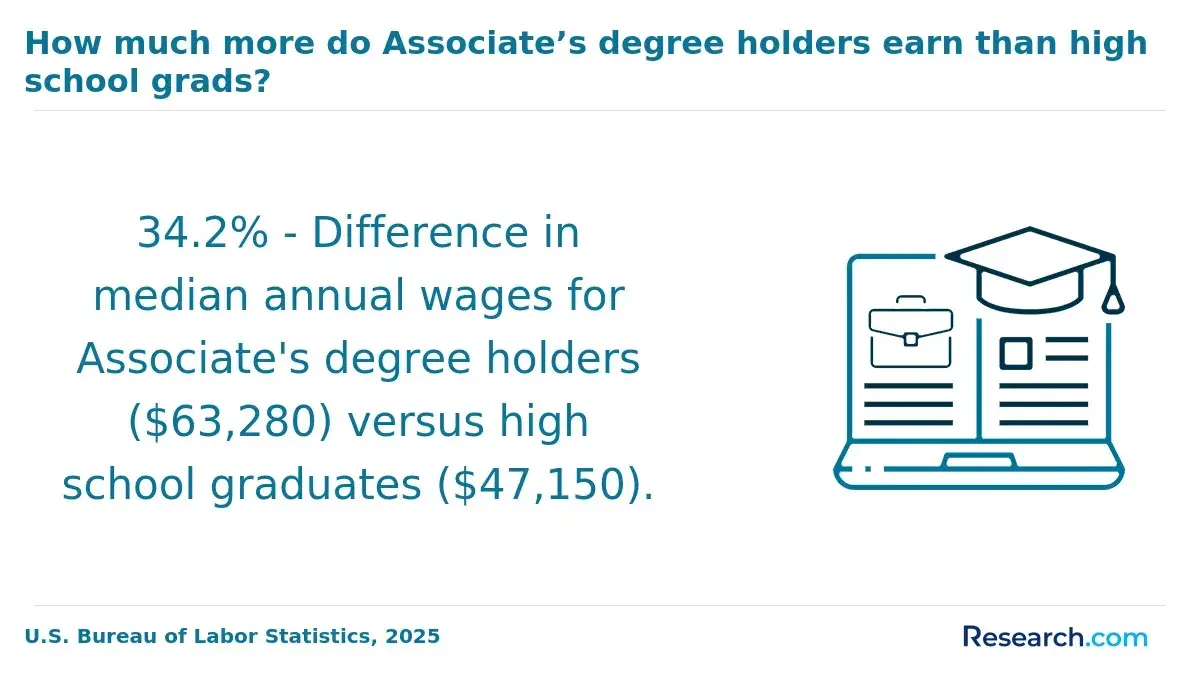
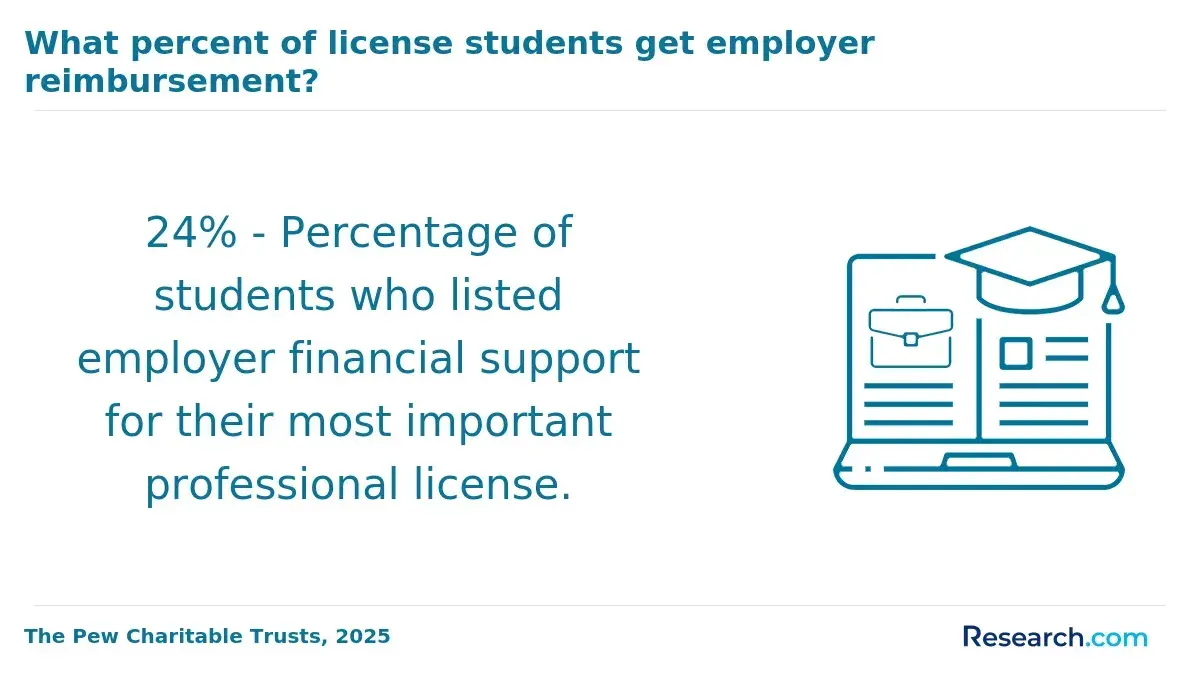
Eligible online students at nonprofit universities may qualify for federal student aid if they meet program and enrollment requirements. Aid can include federal grants for eligible undergraduates, Direct Loans, work-study opportunities where available, state grants, institutional scholarships, private scholarships, veterans' education benefits, and employer tuition assistance. Eligibility, award amounts, and available aid types vary by student and school.
Graduate biomedical engineering students commonly rely on a mix of federal loans, employer support, scholarships, and, in some cases, departmental funding. Online professional master's programs may not offer the assistantships that are more common in campus-based research programs. Students who need substantial funding should ask whether online learners can access scholarships, research roles, or tuition discounts on the same basis as campus students.
Use the following questions to compare aid offers rather than focusing only on the largest stated award:
- Is the scholarship renewable, and what GPA or enrollment level is required to keep it?
- Does the award apply to online students, summer terms, and required fees?
- How much of the offer is grant or scholarship aid versus loans?
- Will part-time enrollment change the award or delay eligibility for future terms?
- Can employer tuition assistance be combined with institutional scholarships?
File the Free Application for Federal Student Aid early, follow each university's financial-aid timeline, and retain written award details. Borrow only after comparing repayment obligations with a plausible career plan; salary data describes occupations broadly and does not predict an individual student's income.
How Flexible Are Online Biomedical Engineering Degree Programs at Nonprofit Universities?
Flexibility varies more by course design than by the word "online." Asynchronous programs allow students to view lectures and complete many assignments on their own schedule within weekly deadlines. Synchronous programs require real-time attendance for lectures, team meetings, examinations, or laboratory sessions. Hybrid programs combine online coursework with campus intensives, clinical-site activities, or supervised laboratories.
Working professionals often benefit most from a part-time master's format with predictable term calendars and asynchronous instruction. However, students should not assume asynchronous means self-paced. Quantitative engineering courses can require frequent problem sets, team collaboration, coding assignments, and scheduled demonstrations.
| Format | Best fit | Potential limitation |
| Fully asynchronous | Working students in compatible time zones with strong self-management skills | May still require group deadlines and approved proctoring windows |
| Scheduled online classes | Students who value live faculty access and cohort interaction | Attendance times may conflict with work or caregiving responsibilities |
| Hybrid with residencies | Students needing hands-on labs or intensive design experiences | Travel, time off work, and location logistics add complexity |
| Accelerated terms | Students with substantial time available each week | Fast pacing can make difficult math and science courses harder to manage |
Ask for a recent syllabus before enrolling. It should reveal live-meeting times, expected weekly workload, laboratory requirements, team-project expectations, and examination procedures. Students seeking a different type of flexible advanced clinical pathway can also review shortest post master's DNP program options, although DNP preparation is distinct from engineering education.
What Student Support Services Do Nonprofit Universities Provide for Online Biomedical Engineering Degree Students?
Online biomedical engineering students need more than general technical support. Strong nonprofit programs typically offer access to engineering faculty, academic advising, library databases, tutoring for mathematics or programming, disability services, career coaching, writing support, and online learning assistance. The best service model is one that is accessible outside standard daytime hours and clearly available to distance learners.
Because biomedical engineering sits between engineering and health care, career support should help students translate technical projects into language employers understand. Look for résumé review, interview preparation, internship guidance, employer events, alumni connections, and support for portfolios that show coding, modeling, device design, data analysis, or quality-systems work.
Students who are deciding between technical engineering work and health informatics should compare curricula carefully. A health information technology associate degree online can support entry into health-data and records-focused roles, but it is not equivalent to the engineering, calculus, and design training expected in biomedical engineering.
Before committing, contact student services with a specific scenario, such as needing evening tutoring or accommodation support for a timed technical exam. The clarity and usefulness of the response can indicate whether the online student experience is well established or merely an extension of campus services.
Do Online Biomedical Engineering Degree Programs at Nonprofit Universities Prepare Graduates for In-Demand Careers?
They can, provided the degree level, curriculum, experiential learning, and prior background match the target role. Biomedical engineers design and evaluate medical devices, improve equipment and systems, analyze biological data, support regulatory documentation, develop imaging or diagnostic technologies, and collaborate with clinicians, scientists, manufacturers, and quality teams. Employers may be medical-device manufacturers, hospitals, research laboratories, pharmaceutical companies, government agencies, and consulting firms.
The U.S. Bureau of Labor Statistics projects 5% growth in biomedical engineering employment from 2024 to 2034. That projection indicates continued demand relative to the occupation, not guaranteed hiring for every graduate. Students can improve alignment by selecting projects and electives connected to a target area such as biomechanics, bioinformatics, medical imaging, biomaterials, rehabilitation engineering, clinical engineering, or quality and regulatory affairs.
| Career direction | Useful preparation | Questions to ask a program |
| Medical-device development | Design controls, prototyping, biomechanics, instrumentation, and capstone work | Are device design and verification activities part of the curriculum? |
| Clinical engineering | Equipment management, safety, systems thinking, and hospital exposure | Does the program offer clinical or health-system projects? |
| Data, imaging, or informatics | Programming, statistics, signal processing, and data ethics | Which languages, tools, and datasets are used in courses? |
| Quality or regulatory roles | Quality systems, risk management, documentation, and regulatory coursework | Are industry standards and compliance concepts taught in applied context? |
| Research and development | Advanced math, laboratory research, publications, and faculty mentorship | Can online students participate in research or complete a thesis? |
AI-enabled imaging, analytics, and device software are increasing the value of students who can evaluate data responsibly while understanding biological and engineering constraints. Still, a curriculum should teach foundational engineering rather than treating AI tools as a substitute for mathematics, validation, ethics, and domain knowledge.
Applicants whose primary goal is advanced nursing practice should consider nurse practitioner online programs instead. Nurse practitioner education leads toward a clinical nursing pathway and has different admissions, licensure, and scope-of-practice requirements than biomedical engineering.
Can an Online Biomedical Engineering Degree From a Nonprofit University Prepare Students for Graduate School?
An online degree from an appropriately accredited nonprofit university can support graduate-school preparation when it includes the prerequisites, grades, faculty relationships, research or project experience, and academic rigor required by the target program. Admissions committees generally evaluate the complete academic record, not delivery format alone. Requirements vary significantly among engineering schools, especially for research-intensive master's and doctoral programs.
A bachelor's degree is generally the most direct preparation for a biomedical engineering master's or doctorate. Students entering from biology, health sciences, computer science, mechanical engineering, electrical engineering, or another field may need additional calculus, physics, programming, chemistry, anatomy, or engineering coursework. A professional master's can support career advancement, while a thesis-based master's or doctoral program is often more appropriate for students seeking research-intensive work.
Applicants should build a graduate-school plan early. They should preserve syllabi, seek substantial faculty feedback, complete a strong technical project, and ask potential graduate programs exactly which prerequisites and admissions materials they require. Students interested in doctoral study should give particular weight to research access, faculty mentorship, and opportunities to produce rigorous written or technical work.
A frequent mistake is choosing a narrow, career-focused online master's while assuming it automatically meets doctoral prerequisites. It may be excellent for industry advancement, but students should confirm research, mathematics, and laboratory expectations before using it as a doctoral stepping stone.
How Should Students Compare the Best Online Biomedical Engineering Degree Programs at Nonprofit Universities?
The best program is the one that meets your specific academic, financial, scheduling, and career requirements. A lower-cost public nonprofit option may offer excellent value for an in-state student, while a private nonprofit program may make sense when it provides a needed specialty, stronger online support, a predictable tuition model, or a schedule that allows continued employment. Neither category is automatically better.
Create a shortlist of three to five programs, then compare only verified information. The criteria below separate meaningful differences from marketing claims.
| Comparison criterion | What to verify | Decision signal |
| Degree and accreditation | Exact degree title, institutional accreditation, and applicable programmatic accreditation | Must support your intended job, licensure pathway, transfer, or graduate-school goal |
| Curriculum | Required math, science, programming, design, laboratory, and specialization courses | Should match the skills used in your target field |
| Total cost | Credits, tuition, fees, travel, materials, and expected aid | Compare net cost and borrowing need, not headline tuition |
| Online structure | Live sessions, residency dates, examinations, group work, and weekly workload | Must fit work, family, location, and learning preferences |
| Transfer and admissions | Transfer-credit evaluation, prerequisite rules, GPA expectations, and deadlines | Determines realistic completion time and entry readiness |
| Outcomes and support | Career services, internships, faculty access, retention information, and alumni evidence | Shows whether the program supports progression beyond enrollment |
Use this final selection process to turn the comparison into an enrollment decision:
- Write down one target outcome, such as entry-level engineering work, a specialized industry role, career advancement, or graduate-school preparation.
- Eliminate programs that lack required accreditation, prerequisites, laboratory access, or schedule compatibility.
- Request a transfer evaluation and itemized cost estimate from each remaining school.
- Compare course sequences against job descriptions or graduate admissions prerequisites for your target path.
- Speak with an admissions adviser and, if possible, a faculty member about online laboratory, capstone, and career-support details.
- Select the program with the strongest documented fit, not simply the lowest price, highest ranking, or most flexible advertising claim.
Red flags include unclear accreditation language, no explanation of lab experiences, pressure to enroll before receiving a written cost estimate, vague claims about employment outcomes, and an inability to explain whether online students receive the same academic support as campus students. A careful comparison protects both your time and your education budget.
Other Things You Should Know About Biomedical Engineering
In 2027, online biomedical engineering programs at nonprofit universities typically require a computer with a high-speed internet connection, specific software packages for simulations and analysis, and a webcam for virtual meetings. Details may vary, so it’s crucial to check exact specifications with the institution.
Possibly, but many engineering roles and graduate programs require additional engineering, mathematics, programming, and physics preparation. A biology degree can be a useful foundation for biomaterials, research, or biotechnology, but it does not automatically replace an engineering curriculum.
Many biomedical engineering roles do not require Professional Engineer licensure. Requirements depend on the job, employer, state, and whether an engineer offers services directly to the public. Students considering licensure should verify state-specific rules and the importance of an ABET-accredited bachelor's degree.
Useful complementary skills include programming, technical writing, statistics, version control, data visualization, teamwork, documentation, and communication with clinical and nontechnical stakeholders. Internships, research, maker projects, and portfolio-ready capstone work can help demonstrate these skills to employers.
References
- The Real World - IEEE Pulse https://www.embs.org/pulse/articles/real-world/
- Tuition and Financial Aid - Financing Your Education | SCIT Southern California Institute of Technology https://www.scitech.edu/admissions/tuition-and-financial-aid
- Best Biomedical Engineering Schools https://www.collegeadvisor.com/resources/best-biomedical-engineering-schools/
- Gannon University Catalog https://graduate.catalog.gannon.edu/programs/MSBME-BME