2027 Online Biomedical Engineering Degree Programs With University Scholarships: Awards, Eligibility, and Net Cost

Co-Founder and Chief Data Scientist
An online biomedical engineering degree can look affordable until fees, enrollment rules, and scholarship limits change the actual bill. This guide is for prospective undergraduate, graduate, transfer, adult, and military students comparing university-funded aid.
For context, the maximum Federal Pell Grant for the 2024-25 award year is $7,395, but Pell eligibility and institutional scholarships are separate. Learn how to identify eligible programs, compare awards, confirm renewal terms, and calculate a realistic net cost instead of relying on advertised tuition or a headline scholarship amount.
Key Things You Should Know
- University scholarships for online biomedical engineering students can range from no institutional award to partial tuition support or, in limited cases, full tuition; the award is useful only if the student meets program, residency, enrollment, and renewal rules.
- A $7,395 maximum Federal Pell Grant for 2024-25 may reduce costs for eligible undergraduates, but it is need-based federal aid rather than a university scholarship and may be adjusted when total aid exceeds allowable costs.
- Compare the multi-year net cost: tuition and mandatory fees minus grants and scholarships, plus books, software, lab intensives, travel, and borrowing costs; the largest advertised award does not automatically create the lowest out-of-pocket price.
Which Online Biomedical Engineering Degree Programs Offer University Scholarships?
Online biomedical engineering options are less standardized than broad online business or nursing programs. Fully online bachelor's programs in biomedical engineering are uncommon because engineering curricula may require laboratory work, design projects, or in-person components. Online master's programs, graduate certificates, and hybrid engineering pathways are more common, but institutional scholarship access varies substantially by campus, degree level, and student status.
Start by separating a university-wide scholarship program from aid that explicitly includes online biomedical engineering students. A school may offer scholarships to degree-seeking online students while excluding fully online students from certain freshman merit awards, departmental engineering awards, or housing-linked grants.
The comparison below shows the program structures most likely to appear in an online biomedical engineering search and the scholarship questions that matter before applying.
| Program format | Typical student | Institutional-aid pattern to verify | Important cost issue |
| Online or hybrid bachelor's completion pathway | Transfer student with calculus, science, or engineering credits | Transfer merit awards may apply, but some require full-time enrollment or campus attendance | How many prior credits transfer and whether required labs add travel costs |
| Online master's in biomedical engineering | Working engineer, scientist, or health professional with a bachelor's degree | Graduate scholarships may be limited; employer tuition assistance can be more common than institutional merit aid | Per-credit tuition, course load, and whether the program charges the same rate for all locations |
| Graduate certificate in biomedical engineering | Professional seeking focused technical skills | Certificates are frequently excluded from university scholarship pools | Whether certificate credits can later apply to a degree |
| Online engineering-adjacent health technology degree | Student interested in healthcare systems, data, or operations rather than device design | Online undergraduate scholarships may be broader than those for graduate engineering programs | Whether the curriculum matches the intended biomedical engineering role |
Ask admissions for a written answer to four points: whether your exact online program is scholarship-eligible, whether the award is university-funded, whether it applies to tuition and mandatory fees, and whether online enrollment changes the amount. A related healthcare pathway may have different aid rules; for example, students considering clinical technology careers can also compare a best accredited medical billing and coding schools online option when their goal is revenue-cycle work rather than biomedical device engineering.
How Much Scholarship Money Can Online Biomedical Engineering Degree Students Receive?
There is no reliable national "standard scholarship amount" for online biomedical engineering degrees. University awards may be fixed annual amounts, per-term grants, percentage tuition discounts, competitive departmental awards, or full-tuition designations. An advertised maximum is not an expected award, and many graduate online programs offer little or no institutional grant aid.
Use award language carefully. "Up to full tuition" describes a ceiling, not a promise; "renewable" means the award may continue only if conditions are met; and "estimated scholarship" can change after financial-aid verification, enrollment changes, or receipt of outside aid.
The following framework helps translate an award notice into a comparable value.
| Award description | What it may cover | What to confirm | Why it can differ from its headline value |
| Annual merit scholarship | Usually tuition, sometimes tuition and mandatory fees | Annual amount, number of eligible years, minimum credit load | It may be prorated for part-time study or end before graduation |
| Departmental engineering scholarship | Often a limited tuition credit | Whether online biomedical engineering students may apply | Funds can be competitive and restricted to a campus or degree level |
| Need-based institutional grant | Tuition and eligible education expenses, subject to the aid package | FAFSA requirement, financial-need review, annual filing deadline | Income, assets, household changes, and enrollment can affect the award |
| Employer or partner discount | Usually a tuition reduction | Employer eligibility, documentation, and stacking restrictions | It may not combine with other university discounts or scholarships |
For a practical comparison, divide the renewable annual scholarship by the number of credits it actually offsets. Then compare that result with total annual tuition and required fees. A smaller renewable award at a lower-priced public institution can be more valuable than a larger one-time award at a higher-priced private institution.
What Are the Eligibility Requirements for Online Biomedical Engineering Degree Scholarships?
Eligibility requirements determine whether an award is realistic, not merely attractive. Universities commonly use admission status, prior academic performance, financial need, residency, enrollment intensity, degree level, and program location to determine eligibility. Online students should not assume that eligibility for admission creates eligibility for every scholarship.
Review these requirements in the scholarship terms and ask the financial-aid office to clarify any item that is not stated for online students.
- Degree and modality: Confirm that the exact online biomedical engineering degree, concentration, or certificate is included rather than only campus-based programs.
- Enrollment status: Check whether the award requires full-time enrollment, a minimum credit count each term, or continuous enrollment.
- Academic record: Merit awards may use high school GPA, transfer GPA, undergraduate GPA, standardized-test policy, or demonstrated academic achievement.
- Financial need: Need-based university grants commonly require a completed FAFSA and may require verification documents.
- Residency and citizenship: Some institutional awards are limited to in-state students, U.S. citizens, eligible noncitizens, or particular service areas.
- Timing: Priority scholarship deadlines may occur before the general admission deadline, especially for first-year and transfer applicants.
- Academic progression: Engineering prerequisites, satisfactory academic progress, and conduct standards can affect continued eligibility.
Biomedical engineering usually requires a strong foundation in mathematics, physics, programming, biology, and design. If your career interests are more clinically focused, compare curriculum and admissions requirements rather than assuming similar health degrees are interchangeable; students exploring advanced clinical practice may also review nurse practitioner online programs, which follow a different professional and financial-aid path.
How Do You Apply for University Scholarships for an Online Biomedical Engineering Degree?
Application processes usually fall into three categories: automatic consideration from the admissions application, a separate university scholarship application, or an application administered by the engineering department. Treat each as distinct until the school confirms otherwise. Missing a priority deadline can remove an otherwise qualified student from consideration.
Use this sequence to avoid relying on incomplete information.
- Identify the exact degree, delivery format, start term, and campus code on the university's scholarship page.
- Submit the admission application early enough for scholarship review and save confirmation of the application date.
- Complete the FAFSA when eligible and when the institution requires it for need-based grants or comprehensive aid review.
- File any separate scholarship application, including essays, recommendation letters, resume, transcripts, or portfolio materials requested.
- Provide transfer transcripts promptly so the university can calculate both admission eligibility and transferable-credit value.
- Read the official award notice for amount, terms, duration, disbursement schedule, and conditions before accepting.
- Request a written net-cost estimate that includes tuition, mandatory fees, expected scholarships, grants, and any required on-campus costs.
A common mistake is applying only for admission and assuming the financial-aid office will automatically consider every scholarship. Another is submitting FAFSA after an institutional priority deadline. Keep copies of deadlines and award terms because scholarship rules can differ by term and student cohort.
Are Scholarships for Online Biomedical Engineering Degree Programs Renewable Every Year?
Some scholarships renew, but renewal is never automatic unless the award terms say so. Renewable aid is institutional funding that can continue for later academic years or terms if the student meets stated conditions. Those conditions often include a minimum cumulative GPA, satisfactory academic progress, continuous enrollment, and a limit on the number of funded semesters or credits.
Before treating an award as multi-year funding, confirm the renewal details below. They are especially important for part-time online students, whose completion timeline may be longer than a traditional four-year or two-year schedule.
| Renewal term | What it means for the student | Question to ask |
| Minimum GPA | The scholarship may be reduced or cancelled if cumulative GPA falls below the stated threshold | Is the GPA reviewed each term or once per academic year? |
| Minimum enrollment | Part-time enrollment may reduce the award or make the student ineligible | How many credits are required in fall, spring, and summer? |
| Maximum duration | Funding can end after a set number of terms, years, or attempted credits | Does the limit include transferred credits, withdrawals, or leave terms? |
| Annual application or FAFSA | Some awards require a new form or updated financial information each year | What is the renewal deadline and what documents are required? |
| Program change rule | Changing majors, delivery formats, or degree levels may end eligibility | Does moving between online and campus study alter the award? |
Do not calculate affordability using four years of aid unless the university confirms the award's duration and your expected pace meets the renewal rules. Build a backup budget for a lower award, a lost scholarship, or an additional term caused by prerequisite sequencing.
Can You Combine an Online Biomedical Engineering Scholarship With FAFSA and Other Financial Aid?
Often, yes. FAFSA can determine eligibility for federal grants, federal student loans, work-study, and many state or university need-based programs. A university scholarship can usually be part of the same aid package, but the school must keep total aid within federal and institutional limits tied to the student's cost of attendance.
For eligible undergraduates, the maximum Federal Pell Grant is $7,395 for the 2024-25 award year. That amount can materially reduce net cost, but it is based on the student's federal aid eligibility and enrollment details, not on the biomedical engineering major alone. Graduate students are not eligible for Pell Grants.
Stacking rules are most favorable when a university confirms that scholarships are additive rather than replacement aid. Review the award letter to see whether outside scholarships, employer benefits, veterans' education benefits, or tuition discounts reduce an institutional grant first.
This matters for students comparing adjacent healthcare routes as well. Professionals pursuing leadership rather than engineering design may explore a fastest online master's in healthcare administration program, but should obtain a separate aid estimate because degree level and institutional policies can change eligibility.
Use the following checks before accepting combined aid.
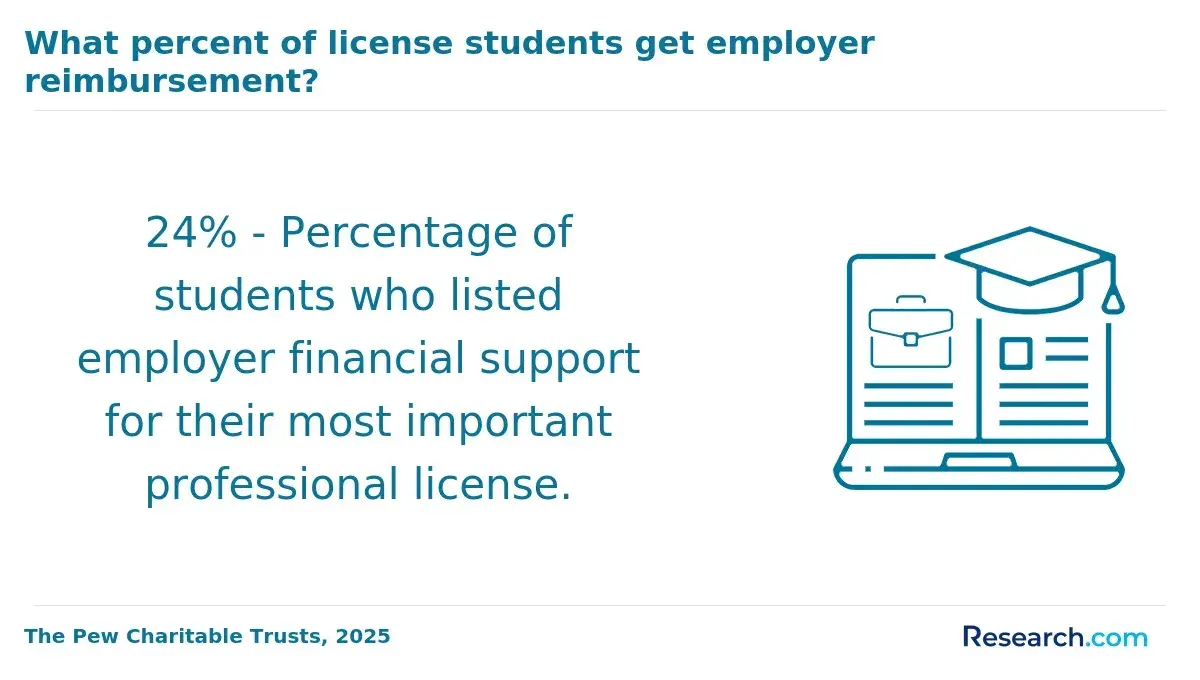
- Verify whether the university scholarship can be combined with Pell Grants, state grants, employer reimbursement, military benefits, and outside scholarships.
- Ask which aid source will be reduced first if total assistance exceeds the school's cost-of-attendance budget.
- Confirm whether loans shown on the award letter are optional borrowing rather than gift aid.
- Report outside scholarships as required and ask whether the university recalculates institutional grant aid after receipt.
- Compare aid by academic year and term because summer enrollment may have separate rules.
How Much Does an Online Biomedical Engineering Degree Cost After Scholarships and Financial Aid?
Net cost is the amount remaining after grants and scholarships, before optional borrowing. It is more useful than tuition alone because online programs can include technology fees, course fees, required software, proctoring, textbooks, lab kits, campus residencies, and travel. Federal loans can pay part of the remaining balance, but loans increase future repayment obligations and are not a reduction in cost.
This hypothetical example shows why students should compare an entire academic year rather than one scholarship number. It is an illustration, not a quoted price or award from a specific university.
| Annual cost and aid item | Program A example | Program B example |
| Tuition and mandatory fees | $18,000 | $24,000 |
| Required books, software, and travel estimate | $1,500 | $800 |
| Total estimated education cost | $19,500 | $24,800 |
| University scholarship | $4,000 | $8,000 |
| Other grants | $3,000 | $3,000 |
| Estimated net cost before loans | $12,500 | $13,800 |
Although Program B has the larger scholarship, Program A has the lower estimated net cost in this example. Repeat this calculation for every year the program may take, adjusting for scholarship renewal, expected tuition changes, transfer credits, and part-time enrollment.
Ask for the university's cost-of-attendance budget and a program-specific billing estimate. Cost of attendance can include living expenses and transportation, while your direct bill may include only tuition and school charges. Both figures matter: one explains aid limits, and the other helps forecast cash payments.
Are There Scholarships for Transfer, Adult, Military, and Other Online Biomedical Engineering Students?
Yes, but availability is school-specific. Transfer, adult, military-affiliated, veteran, employer-sponsored, and returning students may qualify for university scholarships or discounts that do not appear in first-year merit-aid pages. At the same time, some awards exclude students who already hold a degree, study part time, enroll only online, or receive certain tuition benefits.
Transfer students should treat credit evaluation as a financial-aid issue as well as an academic one. A lower per-credit price does not help if few credits transfer and the program takes substantially longer to complete. Confirm whether the scholarship is based on the GPA from all prior coursework, the most recent institution, or only credits accepted by the new university.
Students with military service should ask whether institutional military discounts combine with federal or state veterans' education benefits and whether the program is approved for their benefit. Adult learners should also ask whether an employer partnership, alumni benefit, or workforce scholarship applies to the online modality.
For students who already hold nursing credentials and are considering an advanced clinical route, a shortest post master's DNP program may have different transfer, employer-benefit, and aid rules than a biomedical engineering degree. Compare only programs aligned with your intended role and licensure path.
These groups can improve their comparison by requesting written confirmation of the following items.
- Whether the scholarship is available to online, transfer, second-degree, adult, military, or veteran students in the exact program.
- Whether part-time enrollment changes the amount or renewal eligibility.
- Whether military, employer, or partner discounts can be combined with institutional scholarships.
- How accepted transfer credits affect scholarship duration and time to completion.
- Whether a leave of absence, deployment, or interrupted enrollment preserves the award.
What Is the Difference Between Merit-Based and Need-Based Scholarships for Online Biomedical Engineering Degrees?
Merit-based scholarships are generally awarded for academic achievement, leadership, research, technical accomplishments, artistic achievement, or another performance-based criterion. Need-based scholarships and institutional grants consider financial circumstances, often using FAFSA information and the university's aid methodology. A student may qualify for both, but each award has its own rules.
Merit aid can be especially useful for students with a strong prior GPA who do not qualify for substantial need-based assistance. Need-based aid can be more valuable for students with demonstrated financial need, but it may change when family finances, dependency status, enrollment, or federal aid data changes.
This comparison clarifies the trade-off.
| Feature | Merit-based scholarship | Need-based scholarship or grant |
| Main basis | Academic or other achievement criteria | Demonstrated financial need and institutional policy |
| FAFSA role | May not be required, but some universities still request it | Frequently required for review or renewal |
| Typical volatility | Often tied to GPA, enrollment, and academic progress | May change with financial circumstances and aid-package adjustments |
| Best question to ask | What performance standard keeps the award? | What financial information and annual filing steps are required? |
Do not choose one category in advance. Apply for all university aid for which you are eligible, then compare the renewable value and total net cost. The strongest offer is the one you can realistically retain while completing the degree at your planned pace.
How Should You Compare Scholarship Offers From Online Biomedical Engineering Degree Programs?
Compare official award notices, not promotional pages. The decision should account for academic fit, engineering curriculum, accreditation or program recognition where relevant, required in-person experiences, transfer-credit acceptance, scholarship certainty, and the full cost to finish. Biomedical engineering can lead toward work involving devices, biomaterials, imaging, clinical technology, quality systems, or research, so curriculum fit matters alongside price.
Use the following checklist after each school provides an offer.
- List direct annual charges: tuition, mandatory fees, technology charges, and program-specific course fees.
- Add foreseeable indirect expenses: books, equipment, software, lab kits, proctoring, travel, and required residencies.
- Separate grants and scholarships from loans, work-study, and employer reimbursement.
- Record whether every scholarship is automatic, competitive, one-time, renewable, or conditional.
- Calculate the expected net cost before loans for one year and for the likely full completion timeline.
- Model a conservative scenario in which a renewable award is reduced or lost after the first year.
- Confirm that the degree format supports your intended career, graduate-school, employer, or professional requirements.
- Ask the school to explain any difference between the scholarship advertisement, award letter, and student-account bill.
Red flags include vague language about online-student eligibility, an award letter that lists loans as if they were scholarships, a scholarship with no published renewal standard, and a tuition quote that excludes required fees or residencies. Also be cautious when a school quotes a per-credit rate without confirming how many credits you must take after transfer evaluation.
Students whose interests are closer to healthcare information systems than engineering design may find a health information technology associate degree online pathway more aligned with their goals. In either field, request a written estimate and compare cost to completion rather than selecting a program solely because it promotes a large scholarship.
Other Things You Should Know About Biomedical Engineering
Employer recognition depends more on the university, curriculum, relevant technical skills, project experience, and the role than on online delivery alone. Review whether the program includes design, programming, data analysis, laboratory exposure, or clinical technology experience relevant to your target job.
Some do, particularly programs with hands-on engineering or laboratory requirements. Ask for the complete course sequence and identify any campus visits, proctored assessments, lab intensives, or clinical-site requirements before estimating travel and time costs.
Eligible graduate students may use federal Direct Unsubsidized Loans and, where applicable, Graduate PLUS Loans after filing FAFSA. They are not eligible for Federal Pell Grants. Institutional scholarship availability for online graduate students varies by university.
Confirm the institution's accreditation, then ask whether the specific engineering program has any specialized accreditation or professional-recognition status relevant to your career goal. Requirements can differ for bachelor's and graduate programs, and a school's institutional accreditation does not automatically answer every program-specific question.
References
- Scholarship Opportunities to Fuel Your STEM Journey https://nsbe.org/scholarships/
- The Real World - IEEE Pulse https://www.embs.org/pulse/articles/real-world/
- Biomedical Engineering Scholarships | CBET https://cbet.edu/scholarships/
- Online Biomedical Engineering Degree Programs: Courses & Cost https://www.onlineengineeringprograms.com/biomedical