Research.com is an editorially independent organization with a carefully engineered commission system that’s both transparent and fair. Our primary source of income stems from collaborating with affiliates who compensate us for advertising their services on our site, and we earn a referral fee when prospective clients decided to use those services. We ensure that no affiliates can influence our content or school rankings with their compensations. We also work together with Google AdSense which provides us with a base of revenue that runs independently from our affiliate partnerships. It’s important to us that you understand which content is sponsored and which isn’t, so we’ve implemented clear advertising disclosures throughout our site. Our intention is to make sure you never feel misled, and always know exactly what you’re viewing on our platform. We also maintain a steadfast editorial independence despite operating as a for-profit website. Our core objective is to provide accurate, unbiased, and comprehensive guides and resources to assist our readers in making informed decisions.

2026 How to Become a Speech Language Pathologist in Connecticut: Requirements & Certification

Imed Bouchrika, PhD

by Imed Bouchrika, PhD

Co-Founder and Chief Data Scientist

Table of Contents
  1. How can you become a speech language pathologist in Connecticut?
  2. What is the minimum educational requirement to become a speech language pathologist in Connecticut?
  3. What does a speech language pathologist do?
  4. What is the certification and licensing process for a speech language pathologist in Connecticut?
  5. What ethical and legal guidelines should you observe as a speech language pathologist in Connecticut?
  6. How much can you earn as a speech language pathologist in Connecticut?
  7. What is the job market like for a speech language pathologist in Connecticut?
  8. What Options Are Available for Those Interested in Teaching Roles as a Speech Language Pathologist in Connecticut?
  9. What additional certifications and professional development opportunities are available for SLPs in Connecticut?
  10. How can an online communication disorders degree support your career growth in Connecticut?
  11. What career and advancement opportunities are available for a speech language pathologist in Connecticut?
  12. How can online education enhance your career as a speech language pathologist in Connecticut?
  13. What challenges should you consider as a speech language pathologist in Connecticut?
  14. How can speech language pathologists in Connecticut effectively manage occupational stress?
  15. How can academic partnerships enhance clinical outcomes for SLPs in Connecticut?
  16. What alternative career pathways can complement an SLP career in Connecticut?
  17. Why is interprofessional collaboration important for speech language pathologists in Connecticut?
  18. How is telepractice reshaping speech language pathology services in Connecticut?
  19. What regulatory changes and legal considerations affect SLPs in Connecticut?
  20. How can speech language pathologists integrate mental health support into their practice in Connecticut?
  21. How can school counselors complement SLP practices in Connecticut?

How can you become a speech language pathologist in Connecticut?

The Connecticut pathway is straightforward, but each step must be completed in the right order. Most candidates move from undergraduate preparation to an accredited master’s program, then to the Praxis exam, supervised professional experience, state licensure, and continuing education.

StepWhat you need to doWhy it matters
1. Complete undergraduate preparationEarn a bachelor’s degree and complete prerequisite coursework required by graduate programs.Graduate admission usually depends on your academic record, prerequisite courses, and readiness for clinical training.
2. Earn an accredited master’s degreeComplete a master’s program in speech-language pathology or communicative sciences and disorders. Connecticut options include the University of Connecticut and Southern Connecticut State University. Flexible learners may compare accredited online speech pathology master's programs.An accredited graduate degree is the core academic requirement for state licensure and clinical practice.
3. Pass the Praxis examinationTake the Praxis Examination in Speech-Language Pathology and meet the minimum passing score of 162.The exam verifies entry-level professional knowledge before licensure.
4. Complete supervised professional experienceFulfill at least 1,080 hours of full-time work or 1,440 hours of part-time work under a licensed SLP.This supervised period turns classroom and clinic training into independent practice skills.
5. Apply for Connecticut licensureSubmit the required materials to the Connecticut Department of Public Health, including official transcripts, proof of supervised experience, Praxis scores, and fees.You cannot practice as an SLP in Connecticut without the proper state license.
6. Add school certification if neededIf you want to work in public or certified private schools, complete the educator certification process for the Special Endorsement in Speech-Language Pathology.School employment has requirements beyond the health department license.
7. Maintain your licenseComplete 20 hours of continuing education every two years.Continuing education keeps your license active and helps you stay current with clinical standards.

If you are still comparing this career to related health and education roles, a broader guide on how to become a speech language pathologist can help you understand the national path before narrowing your plan to Connecticut.

Who is this career path best for?

  • Students who want a healthcare or education career centered on communication, language, cognition, voice, fluency, and swallowing.
  • Professionals who are comfortable with graduate-level science, clinical documentation, family communication, and long-term client progress.
  • People who can work patiently with children, adults, families, teachers, physicians, therapists, and caregivers.
  • Candidates who are willing to meet state licensure standards and pursue continuing education throughout their careers.

Who should think carefully before choosing this path?

  • Students who want to enter the workforce quickly without graduate school.
  • People who are not prepared for clinical documentation, caseload management, or licensing rules.
  • Candidates who only compare salaries without factoring in Connecticut’s higher cost of living.
  • Applicants who are considering online programs but have not confirmed clinical placement support and accreditation status.

What is the minimum educational requirement to become a speech language pathologist in Connecticut?

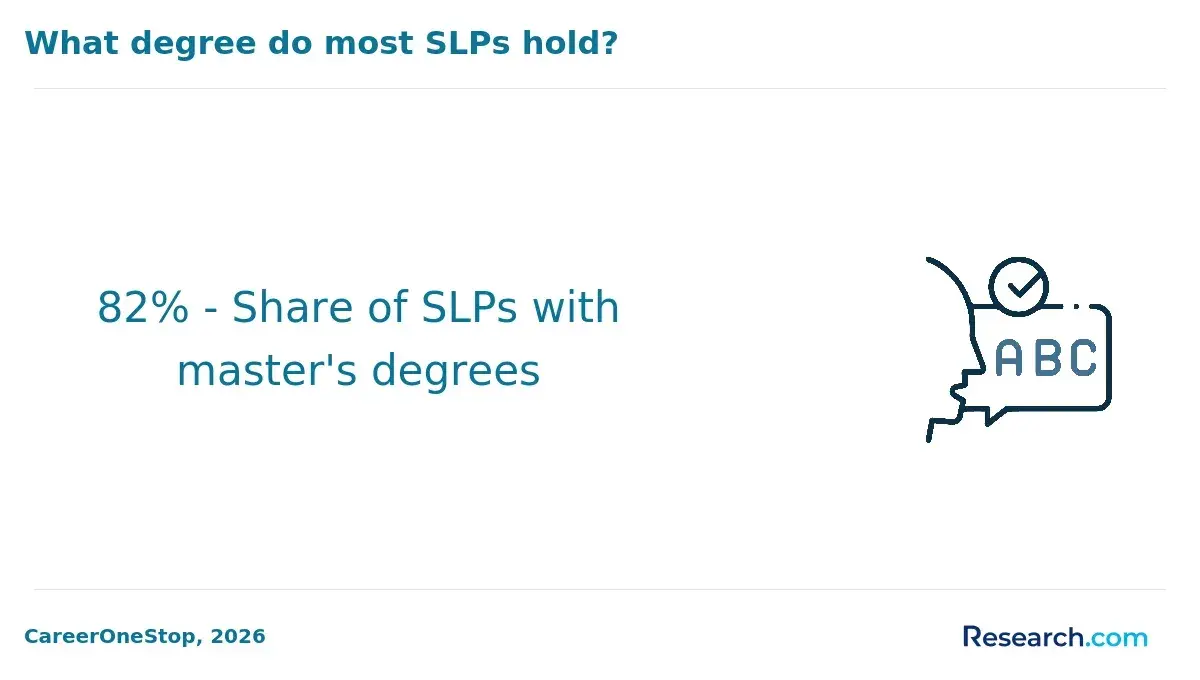
The minimum educational requirement for clinical speech-language pathology licensure in Connecticut is a master’s degree in speech-language pathology, communicative sciences and disorders, or a closely aligned program that meets professional accreditation standards. A bachelor’s degree is normally the entry point for graduate admission, but it is not enough for independent SLP practice.

Most students spend approximately six years in higher education: four years completing a bachelor’s degree and about two years completing a master’s program. Students who want to teach at the college level, lead research, or move into advanced academic roles may consider a doctoral degree, but a doctorate is not required for standard clinical practice.

Graduate programs typically include courses in language development, phonology, neurogenic communication disorders, dysphagia, voice disorders, research methods, assessment, treatment planning, and clinical decision-making. Strong programs also help students build skills in documentation, ethical practice, culturally responsive care, and evidence-based intervention.

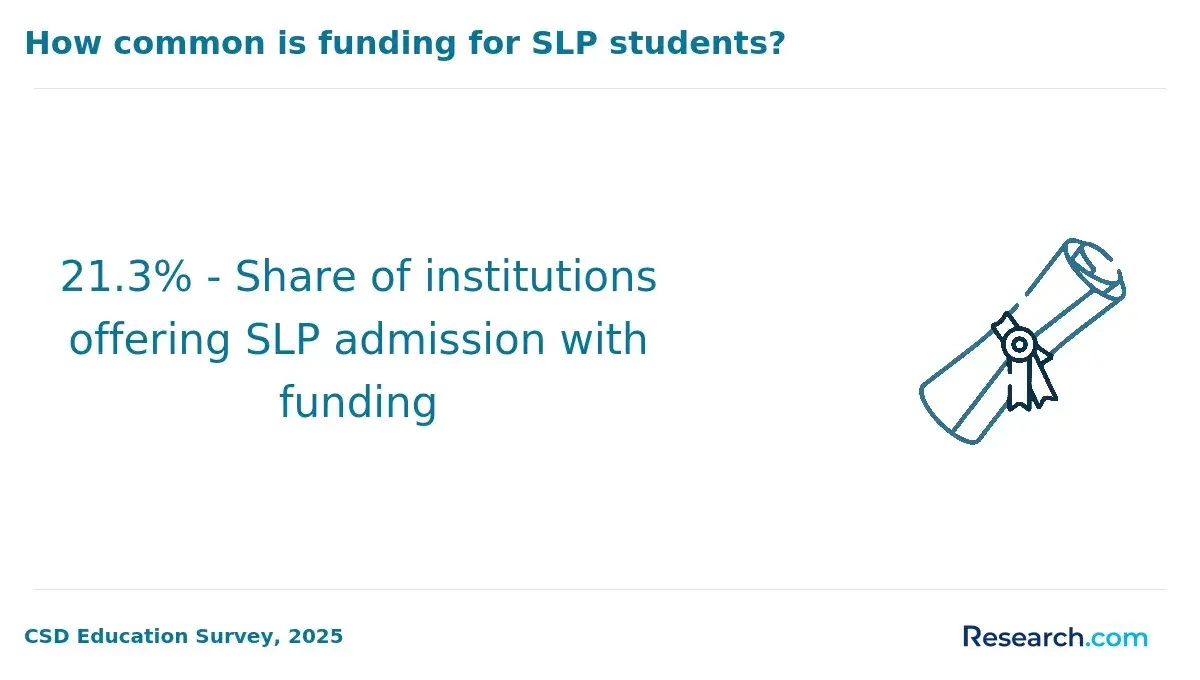
Program cost varies widely. The financial investment for graduate study can range from $20,000 to $60,000 for the entire graduate program, depending on the institution, residency status, delivery format, and fees. When comparing programs, students should look beyond tuition and ask about clinical placement support, assistantships, scholarships, technology fees, travel requirements, and whether additional background checks or health clearances are required.

Accreditation is one of the most important checks. A program accredited by the Council on Academic Accreditation in Audiology and Speech-Language Pathology (CAA) is designed to meet professional standards used for licensure and certification. If you are comparing graduate options, Research.com’s guide to the best SLP master’s programs can help you start your search with program quality in mind.

Education optionBest fitLimitations to consider
Bachelor’s degree in communication disorders or a related fieldStudents preparing for graduate school or exploring the profession.Does not qualify you for independent SLP licensure in Connecticut.
Master’s degree in speech-language pathology or communicative sciences and disordersStudents seeking clinical licensure and standard SLP employment.Requires competitive admission, clinical training, and post-graduate licensure steps.
Doctoral degreeClinicians interested in research, higher education, leadership, or advanced specialization.Usually not necessary for entry-level clinical practice and requires additional time and cost.

What does a speech language pathologist do?

A speech-language pathologist evaluates, diagnoses, treats, and helps prevent communication and swallowing disorders. SLPs work with infants, children, teens, adults, and older adults, and their clients may have speech sound disorders, language delays, fluency disorders, voice disorders, cognitive-communication challenges, social communication needs, or swallowing difficulties.

According to the Bureau of Labor Statistics, SLPs work across schools, hospitals, rehabilitation centers, nursing care facilities, outpatient clinics, private practices, and other settings. Their daily work may include formal assessments, therapy sessions, caregiver education, interdisciplinary meetings, progress documentation, and treatment plan updates.

Work settingCommon responsibilitiesGood fit for SLPs who...
SchoolsEvaluate students, support IEP goals, provide therapy, consult with teachers, and document progress.Enjoy child and adolescent development, education teams, and long-term student support.
HospitalsAssess swallowing, cognitive-communication, voice, and language needs, often after illness, injury, or surgery.Want a medical setting with fast-paced collaboration and complex cases.
Rehabilitation centersSupport recovery after stroke, brain injury, neurological conditions, or other functional changes.Like goal-based therapy and interdisciplinary care planning.
Private practiceProvide specialized therapy, manage client relationships, handle referrals, and sometimes run business operations.Value autonomy, niche specialization, and client-centered service models.
TelepracticeDeliver assessment and intervention remotely using secure digital platforms.Are comfortable with technology, virtual engagement, and remote documentation.

Successful SLPs combine clinical knowledge with strong interpersonal skills. Empathy helps them understand the frustration clients may feel when communication is difficult. Clear communication helps them explain goals to families, teachers, and care teams. Critical thinking supports accurate assessment and treatment choices. Patience matters because progress can be gradual. Adaptability is also essential because no two clients respond in exactly the same way.

  • : "

    “Graduating from the University of Connecticut changed how I understood communication,” one Connecticut SLP explained. “One of my earliest clients was a young child who had difficulty putting his thoughts into words. When he finally found a way to express what he wanted to say, the moment stayed with me. The work is not simply about speech sounds. It is about helping people participate more fully in their lives.”

    "

What is the certification and licensing process for a speech language pathologist in Connecticut?

Connecticut uses a state licensure process through the Department of Public Health. Candidates who want to practice in schools must also complete a separate educator certification process. Because these requirements can overlap but are not identical, it is important to plan early and follow the correct sequence.

RequirementConnecticut licensure or certification detailImportant note
State SLP licenseRequired through the Connecticut Department of Public Health for SLP practice.This applies regardless of whether you work in healthcare, schools, or private practice.
Praxis II examCandidates must pass the Praxis II exam in speech-language pathology.Many students take the exam in the semester before graduation so scores are available on time.
Licensure application feeThe application requires a fee of $200.Applicants also submit required documentation such as transcripts and Praxis II scores.
Letter of AuthorizationAfter approval, the DPH issues a Letter of Authorization so the candidate can begin the Supervised Professional Experience.This letter is especially important for candidates who later apply for school certification.
Supervised Professional ExperienceThe SPE must last at least nine months if completed full-time or eighteen months if completed part-time.The supervisor must hold both ASHA certification and a Connecticut license.
School certificationPublic and certified private school roles require the Initial Educator Teacher Certification with a Special Endorsement in Speech-Language Pathology.The endorsement is designated by code 061.
Renewal feeThe renewal fee for the license is $205.Continuing education requirements must also be met.

Applicants should be ready for fingerprinting and background checks when required by state rules or employers. They should also verify that their supervisor meets all qualifications before beginning supervised professional experience, since the applicant is responsible for confirming eligibility.

The ASHA Certificate of Clinical Competence, commonly known as the CCC, is not the same as state licensure, but it can strengthen mobility and employer confidence. It generally requires an accredited master’s degree, a passing Praxis II score, and completion of a clinical fellowship. Students comparing related graduate pathways may also want to review Research.com’s list of the best speech pathology and audiology degrees.

Practical licensing checklist

  • Confirm that your graduate program meets accreditation and licensure expectations.
  • Ask your program when students typically take the Praxis II exam.
  • Keep copies of transcripts, clinical hour records, supervisor details, and exam score reports.
  • Apply for the DPH process before starting school certification steps if you plan to work in education.
  • Verify all deadlines, fees, and forms directly with Connecticut licensing authorities before submitting materials.

What ethical and legal guidelines should you observe as a speech language pathologist in Connecticut?

SLPs in Connecticut are responsible for protecting client welfare, practicing within their competence, maintaining confidentiality, documenting services accurately, and complying with state and federal rules. These obligations are not separate from clinical care; they shape how assessment, treatment, billing, supervision, and collaboration should be handled.

Legal responsibilities for Connecticut SLPs

  • Hold the required license. Practicing without the appropriate Connecticut Department of Public Health license can create legal and employment consequences.
  • Complete required education. Candidates must complete a master’s program accredited by the Council on Academic Accreditation in Audiology and Speech-Language Pathology (CAA).
  • Complete supervised clinical preparation. A supervised clinical fellowship of at least 36 weeks is required.
  • Pass the required examination. The Praxis Examination in Speech-Language Pathology is part of the licensure pathway.

Confidentiality and informed consent

Confidentiality is central to speech-language pathology. Connecticut SLPs must follow HIPAA requirements when handling health information. In practice, this means securing records, limiting access to client information, using appropriate consent procedures, and avoiding casual disclosure in emails, meetings, or shared workspaces.

  • Protect records. Therapy notes, assessment reports, medical details, IEP information, and family communication should be stored and transmitted securely.
  • Use informed consent. Before sharing client information with another provider, school staff member, or outside party, SLPs must obtain the correct consent from the client or guardian.
  • Be careful with telepractice. Remote service delivery requires attention to privacy, platform security, and documentation standards.

Common ethical decisions

SLPs often make judgment calls that require balancing client choice, clinical evidence, employer policies, and family expectations. A client may decline a recommended treatment. A family may request a service that is not clinically indicated. A school team may disagree about goals. In these situations, SLPs should document reasoning, explain options clearly, respect client autonomy, and stay within professional standards.

  • Respect client preferences. Advocacy does not mean forcing a treatment plan on a client or family.
  • Practice cultural responsiveness. Assessment and intervention should account for language background, cultural norms, and communication differences.
  • Use qualified support personnel appropriately. Delegation should not compromise client needs or legal requirements.
  • Meet reporting obligations. SLPs must follow mandatory reporting laws when abuse or neglect is suspected.

Joining state or professional organizations can help new clinicians interpret rules, find mentorship, and stay informed about practice updates.

How much can you earn as a speech language pathologist in Connecticut?

Speech-language pathologists in Connecticut can earn solid salaries, but the value of a salary offer depends on work setting, experience, location, schedule, benefits, and the state’s higher cost of living. The article’s cited salary figures report that the average salary for SLPs in Connecticut is approximately $85,000 per year, while the median salary is around $82,000. The national average is about $80,000. Experienced Connecticut SLPs may earn upwards of $100,000.

Salary information can vary by source and methodology. Later in this guide, a separate cited figure reports an average annual income of around $102,500 for SLPs in Connecticut. Treat these numbers as comparison points rather than guaranteed outcomes. Your actual compensation may depend on your employer, specialization, caseload expectations, union or district salary schedules, productivity requirements, and benefits package.

FactorHow it can affect earningsQuestions to ask before accepting an offer
Work settingHealthcare and social assistance may offer higher pay for specialized clinical work, while schools may offer predictable schedules and benefits.How are caseload, documentation time, and benefits structured?
LocationHartford, Stamford, and Bridgeport may offer different salary levels because of demand, employer mix, and proximity to larger labor markets.Does the salary match local housing, commuting, and healthcare costs?
ExperienceNew graduates usually earn less than experienced clinicians, supervisors, specialists, and program leaders.Is there a clear salary scale or advancement policy?
SpecializationSkills in dysphagia, AAC, pediatric communication disorders, telepractice, or neurological rehabilitation may improve competitiveness.Does the employer pay for continuing education or specialty training?
BenefitsHealth insurance, retirement contributions, paid leave, tuition support, and CE allowances can significantly affect total compensation.What is the total compensation value beyond base salary?

Before negotiating, compare salary against caseload size, documentation expectations, travel time, supervision duties, productivity targets, and support staff availability. A higher salary may not be the best offer if it comes with unsustainable workload expectations.

What is the median wage of SLPs working part-time?

What is the job market like for a speech language pathologist in Connecticut?

The job market for SLPs in Connecticut is favorable but not effortless. The U.S. Bureau of Labor Statistics projects employment for SLPs to grow by 25% from 2019 to 2029, much faster than the average for all occupations. Connecticut’s need is supported by school services, healthcare demand, increased awareness of communication disorders, and the needs of an aging population.

  • Schools remain a major employer. Many new graduates begin in educational settings, where SLPs support speech, language, social communication, fluency, and IEP-related needs.
  • Healthcare settings offer specialized clinical work. Hospitals, rehabilitation centers, and outpatient clinics may need SLPs with medical knowledge, dysphagia experience, or neurological rehabilitation skills.
  • Urban labor markets can be competitive. Hartford and New Haven may attract many applicants, including graduates from nearby programs.
  • Telepractice is expanding options. Remote service delivery can create flexibility, but it also requires strong technology, privacy, documentation, and engagement skills.
  • Cost of living affects decision-making. Connecticut salaries may look attractive, but candidates should compare take-home pay against housing, transportation, and healthcare costs.
  • : "

    “After graduating from the University of Connecticut, I was encouraged by the number of openings, but I also had to be realistic about living expenses,” one SLP said. “The salary mattered, but so did mentorship, caseload support, and the chance to keep developing professionally.”

    "

How to improve your employability as a new SLP in Connecticut

  1. Build strong clinical references during graduate placements and supervised experience.
  2. Document your experience with pediatric, adult, multilingual, AAC, dysphagia, or telepractice cases when applicable.
  3. Learn how IEP meetings, medical documentation, and insurance-related paperwork differ by setting.
  4. Join professional networks and attend local workshops to learn about openings before they are widely posted.
  5. Ask employers about mentoring for early-career clinicians, especially if the caseload is complex.

What Options Are Available for Those Interested in Teaching Roles as a Speech Language Pathologist in Connecticut?

SLPs who enjoy education may move into school-based service, clinical supervision, adjunct teaching, professional training, or eventually faculty roles. School-based practice requires more than clinical licensure; Connecticut candidates must understand the educator certification process and the Special Endorsement in Speech-Language Pathology.

If you are comparing school-based options, it can help to understand the broader credentialing environment for educators. Research.com’s guide to the types of teaching certificates in Connecticut explains lower-cost routes to teaching credentials and can help SLPs understand how education certification differs from clinical licensure.

What additional certifications and professional development opportunities are available for SLPs in Connecticut?

Additional training can help Connecticut SLPs move into specialized practice areas and remain competitive. Common professional development areas include dysphagia management, pediatric communication disorders, augmentative and alternative communication, autism-focused intervention, fluency, voice, cognitive-communication disorders, bilingual assessment, and telepractice.

Professional development can take the form of state workshops, ASHA learning opportunities, employer-sponsored training, university partnerships, conferences, mentoring, and research participation. SLPs who want to expand into education-related careers can also compare adjacent roles, including guidance on how to become an elementary school teacher in Connecticut.

How can an online communication disorders degree support your career growth in Connecticut?

An online communication disorders program can be useful for students who need flexibility before entering graduate-level clinical training. For example, an online communication disorders degree may help working adults complete foundational coursework while managing job or family responsibilities.

Online study is not automatically the right choice for every future SLP. Students should confirm accreditation where relevant, ask how clinical or observation requirements are handled, check whether credits transfer into graduate programs, and make sure the program aligns with Connecticut licensure expectations. A flexible format is valuable only if it keeps you eligible for the next step.

What career and advancement opportunities are available for a speech language pathologist in Connecticut?

SLPs in Connecticut can build careers in schools, hospitals, rehabilitation centers, outpatient clinics, private practices, universities, telepractice organizations, and administrative roles. One cited salary figure reports an average annual income of around $102,500, reflecting strong demand for qualified SLPs, although actual pay varies by setting and experience.

Career stageCommon rolesHow to advance
Entry levelSchool SLP, clinical fellow, rehabilitation SLP, outpatient clinician.Develop assessment skills, document outcomes, seek mentorship, and complete supervised requirements.
Mid-careerSpecialist clinician, lead SLP, telepractice provider, program coordinator.Build expertise in a specialty area, supervise newer clinicians, and contribute to protocols or service models.
Senior levelClinical manager, department leader, private practice owner, consultant, educator.Gain leadership experience, understand budgeting and compliance, and develop program evaluation skills.
Academic or research pathClinical educator, researcher, faculty member, supervisor.Consider doctoral study, research experience, publication, or university partnerships.

SLPs can specialize in pediatric speech therapy, geriatric care, dysphagia, AAC, neurogenic communication disorders, voice, fluency, bilingual services, or teletherapy. The job outlook remains promising, with a projected growth rate of 21% over the next decade, supported by population aging, awareness of communication disorders, and need for services. Students who want to reduce graduate school cost can compare a cheap online speech pathology master’s program as part of their planning.

Is becoming an SLP in Connecticut worth it?

It can be worth it if you want a licensed clinical career with strong demand, varied settings, and direct client impact. It may be less attractive if you want a low-cost, short training path or if you are not prepared for graduate school, documentation, licensure rules, and emotionally demanding client work. The best way to evaluate ROI is to compare program cost, debt, expected salary, benefits, local living costs, and your preferred setting.

Which metropolitan area has the highest concentration of SLPs?

How can online education enhance your career as a speech language pathologist in Connecticut?

Online education can support SLP career development when it is used strategically. Practicing clinicians may use online courses to study current research, telepractice methods, AAC tools, dysphagia updates, school-based documentation, ethics, or leadership. Aspiring SLPs may use online programs to complete prerequisites or advanced coursework while maintaining employment.

For graduate-level learners, program quality and clinical preparation are the deciding factors. Comparing the best online masters in communication disorders program options can help students identify flexible programs, but they should still confirm accreditation, clinical placement requirements, state authorization, and Connecticut licensing alignment.

What challenges should you consider as a speech language pathologist in Connecticut?

Speech-language pathology can be deeply rewarding, but prospective SLPs should understand the pressures of the job before committing to the field. In Connecticut, common challenges include large caseloads, documentation demands, resource gaps, diverse client needs, and coordination with other providers.

ChallengeWhy it mattersBetter way to prepare
High caseloadsSome SLPs manage caseloads that exceed 40 clients monthly, which can limit planning time and individualization.Ask employers about caseload caps, workload models, meeting time, and support staff.
Administrative burdenProgress notes, therapy documentation, IEP meetings, compliance reports, and billing records can take substantial time.Develop efficient documentation habits early and learn the systems used in your target setting.
Limited resourcesSome schools and clinics may lack updated materials, technology, or staffing support.Ask about materials budgets, testing tools, AAC access, and professional development funds.
Diverse client needsConnecticut SLPs may serve clients from many linguistic and cultural backgrounds.Seek training in bilingual assessment, interpreter collaboration, and culturally responsive therapy.
Non-SLP service confusionFamilies may receive advice from providers without formal SLP training, creating confusion about roles and recommendations.Communicate scope of practice clearly and coordinate with qualified professionals.

Common mistakes to avoid

  • Choosing a program without checking accreditation. Accreditation affects licensure eligibility and employer confidence.
  • Looking only at tuition. Fees, clinical travel, lost income, books, exams, background checks, and living costs can change the real price.
  • Assuming every online program meets Connecticut requirements. Always verify state authorization, accreditation, and clinical placement expectations.
  • Ignoring school certification rules. A DPH license and school certification are separate requirements for many education roles.
  • Assuming salary averages are guaranteed. Pay varies by district, facility, benefits, experience, caseload, and location.
  • Accepting a job without asking about workload. Caseload size, documentation time, supervision, travel, and productivity requirements can shape job satisfaction.

How can speech language pathologists in Connecticut effectively manage occupational stress?

SLPs can reduce burnout risk by treating workload management as part of professional practice rather than an afterthought. Helpful strategies include setting boundaries around documentation time, using employer mental health resources, building peer consultation groups, seeking supervision when cases are complex, and tracking signs of fatigue before they affect care quality.

Stress management also includes career planning. Some SLPs reduce strain by shifting settings, narrowing a specialty, moving into telepractice, taking on supervision, or exploring adjacent education roles. Professionals considering a broader teaching direction may find Research.com’s guide on how to become an English teacher in Connecticut useful for comparing work environments and credentialing expectations.

How can academic partnerships enhance clinical outcomes for SLPs in Connecticut?

Academic partnerships can help SLPs connect research with practice. Collaboration with psychology, education, audiology, neuroscience, and rehabilitation programs may improve assessment design, intervention planning, outcome measurement, and understanding of cognitive-behavioral factors that influence communication.

Connecticut SLPs who work with universities may gain access to research projects, student training, continuing education, and interdisciplinary case consultation. Partnerships with the best psychology schools in Connecticut can be especially useful when clients have overlapping communication, learning, behavioral, or emotional needs.

What alternative career pathways can complement an SLP career in Connecticut?

Some SLPs build interdisciplinary careers by adding knowledge in counseling, behavioral health, literacy, assistive technology, education leadership, or family systems. These complementary skills can be valuable when communication challenges are connected to mental health, family dynamics, school performance, or neurological conditions.

For example, understanding family therapy concepts may help SLPs communicate more effectively with caregivers and coordinate treatment goals. If you are exploring a related counseling field, Research.com’s guide on how to become a MFT in Connecticut explains a separate professional pathway that can complement client-centered care.

Why is interprofessional collaboration important for speech language pathologists in Connecticut?

SLPs rarely work in isolation. In Connecticut schools, they may collaborate with teachers, special educators, school counselors, psychologists, administrators, and families. In medical settings, they may coordinate with physicians, nurses, occupational therapists, physical therapists, audiologists, dietitians, and social workers.

Collaboration helps SLPs address the full context of a client’s needs. A student with a language disorder may also need classroom accommodations and behavioral support. An adult recovering from a stroke may need coordinated swallowing, mobility, cognition, and discharge planning. A child using AAC may need consistent strategies across home, school, and therapy environments.

SLPs who want stronger school partnerships may benefit from understanding special education roles. Research.com’s article on how to become a special education teacher in Connecticut can help clinicians understand how special educators are trained and where collaboration can be most effective.

How is telepractice reshaping speech language pathology services in Connecticut?

Telepractice is changing how SLPs deliver services by making remote assessment, intervention, consultation, and progress monitoring more accessible. It can help clients who face transportation barriers, live far from specialized providers, or need more flexible scheduling. It can also expand employment options for clinicians who are comfortable with digital tools.

However, telepractice is not simply in-person therapy delivered through a screen. SLPs must understand secure communication platforms, privacy rules, caregiver coaching, virtual engagement strategies, documentation requirements, and when remote service is clinically appropriate. Strong digital literacy can be an advantage, and professionals interested in broader information-service careers may also explore how to become a librarian in Connecticut as a comparison point for technology-centered public service roles.

What regulatory changes and legal considerations affect SLPs in Connecticut?

SLPs should regularly review Connecticut licensing guidance, employer policies, payer rules, school regulations, privacy standards, and documentation requirements. Notable areas to monitor include licensure renewal protocols, data privacy obligations, telepractice rules, billing practices, supervision standards, and school certification requirements.

Because regulatory expectations can change, SLPs should not rely only on old program handbooks or informal advice from colleagues. Use state agencies, professional associations, and employer compliance offices for current guidance. SLPs who work in schools may also want to understand related education regulations by reviewing how to become a school psychologist in Connecticut.

How can speech language pathologists integrate mental health support into their practice in Connecticut?

Communication disorders can affect confidence, social participation, school success, employment, and family relationships. While SLPs are not mental health counselors unless separately trained and licensed, they can support clients by recognizing emotional distress, using trauma-informed communication, documenting concerns, and creating referral pathways to qualified mental health professionals.

Practical steps include screening for participation barriers, asking families about communication-related frustration, coordinating with counselors when consent allows, and designing therapy goals that support real-life communication confidence. To understand the training required for a separate counseling profession, see Research.com’s guide to mental health counselor requirements in Connecticut.

How can school counselors complement SLP practices in Connecticut?

School counselors can strengthen SLP work by addressing the social, emotional, academic, and behavioral factors that affect communication. When counselors and SLPs coordinate appropriately, students may receive more consistent support across therapy sessions, classrooms, peer interactions, and family communication.

Collaboration may include referral discussions, participation in student support teams, coordinated IEP-related planning, and shared strategies for communication confidence. SLPs who want to understand this partner role more deeply can review Research.com’s guide on how to become a school counselor in Connecticut.

What do speech language pathologists say about their careers in Connecticut?

  • : "

    Working as an SLP in Connecticut has given me the chance to support children and adults from many backgrounds. Each client brings a different communication goal, and the most meaningful part of the job is seeing those goals turn into better daily participation and quality of life. Bree

    "
  • : "

    Connecticut has offered me strong opportunities to work with schools and healthcare teams. The best outcomes happen when professionals coordinate instead of working in separate lanes. Helping a child express an idea clearly for the first time is still one of the most powerful parts of the profession. Miguel

    "
  • : "

    I value the continuing education culture here. Workshops and conferences help me keep up with research and practical techniques, and that makes my therapy more effective. The field is demanding, but it remains professionally and personally rewarding. Gina

    "

Key Insights

  • Connecticut SLPs need a master’s degree in speech-language pathology or a related communicative sciences field from an accredited program to qualify for licensure.
  • The Praxis Examination in Speech-Language Pathology is required, with a minimum passing score of 162.
  • Supervised professional experience is a major licensing step: candidates must complete at least 1,080 hours full-time or 1,440 hours part-time.
  • Licensure is handled through the Connecticut Department of Public Health, and school-based SLPs also need the Initial Educator Teacher Certification with a Special Endorsement in Speech-Language Pathology.
  • Salary figures for Connecticut SLPs are competitive, with cited averages around $85,000 and another cited figure of around $102,500, but actual value depends on benefits, workload, setting, location, and cost of living.
  • Demand is strong, with cited growth projections of 25% from 2021 to 2031 and 25% from 2019 to 2029, but desirable jobs can still be competitive in major labor markets.
  • Continuing education is required: Connecticut SLPs must complete 20 hours every two years to maintain licensure.
  • The smartest program choice is not always the cheapest or highest ranked. Check accreditation, clinical placement support, licensure alignment, total cost, and whether the program fits your target setting.
  • Before accepting an SLP job in Connecticut, ask about caseload size, documentation time, mentoring, materials, telepractice expectations, certification support, and professional development funding.

References:

  • ASHA. (2023). Annual Workforce Data: 2023 ASHA-Certified Audiologist- and Speech-Language Pathologist-to-Population Ratios. asha.org.
  • ASHA. (n.d.). Connecticut Teacher Requirements for Audiologists and Speech-Language Pathologists. asha.org.
  • BLS. (29 Aug 2024). Speech-Language Pathologists. bls.gov.
  • invocompanies.com (18 Sep 2024). How to Navigate 6 Common Challenges for School-Based Speech-Language Pathologists. invocompanies.com.
  • pmc.ncbi.nlm.nih.gov (29 Aug 2024). Current practices, supports, and challenges in speech-language pathology service provision for autistic preschoolers. pmc.ncbi.nlm.nih.gov.
  • portal.ct.gov (n.d.). Obtaining Connecticut Speech and Language Pathologist Licensure. portal.ct.gov.
  • portal.ct.gov (n.d.). SLPs and their employers must hold paramount the individual needs of clients when determining the appropriateness of a support personnel service delivery model. portal.ct.gov.
  • sacredheart.edu (n.d.). How Many People are Speech-Language Pathologists?. sacredheart.edu.
  • Speech Pathology Graduate Programs. (2024). How to Become a Speech-Language Pathologist. speechpathologygraduateprograms.org.
  • speechpathologygraduateprograms.org (04 Aug 2016). How to Become a Speech Therapist in Connecticut. speechpathologygraduateprograms.org.
  • www1.ctdol.state.ct.us (28 Oct 2024). Occupation Program List. www1.ctdol.state.ct.us.

Other Things You Should Know About Becoming a Speech Language Pathologist in Connecticut

What are the steps to become a licensed speech language pathologist in Connecticut in 2026?

To become a licensed speech language pathologist in Connecticut in 2026, secure a master's degree in Speech-Language Pathology from an accredited program. Complete a 36-week Clinical Fellowship under supervision, pass the Praxis Exam, and apply for a state license through the Connecticut Department of Public Health. Maintain licensure with continuing education credits.

What is the typical duration to complete the requirements to become a licensed speech language pathologist in Connecticut in 2026?

In 2026, the process to become a licensed speech language pathologist in Connecticut typically spans 6-7 years. This includes completing a bachelor's degree (4 years), a master's program in speech-language pathology (2-3 years), and fulfilling clinical fellowship requirements.

Do you need a license to become a speech language pathologist?

To become a speech-language pathologist in Connecticut, obtaining a license is not just advisable; it is legally required. Practicing without a license can lead to serious legal ramifications, including fines, civil penalties, and potential criminal charges. For instance, imagine a professional providing therapy to children with speech delays without the necessary credentials. Not only could this jeopardize the children's progress, but it could also expose the individual to lawsuits and loss of professional reputation.

To navigate the licensing process effectively, consider the following steps:

  • Educational Requirements: Complete a master’s degree in speech-language pathology from an accredited program.
  • Clinical Experience: Accumulate supervised clinical hours, which are essential for hands-on learning.
  • Examination: Pass the Praxis Examination in Speech-Language Pathology, demonstrating your knowledge and competency in the field.

Application: Submit a comprehensive application to the Connecticut Department of Public Health, including proof of education and clinical experience.

Reflecting on the journey to licensure, it becomes clear that each step is not merely a hurdle but a vital component of professional development. The rigorous process ensures that practitioners are well-equipped to support individuals with communication disorders, ultimately fostering a more effective and ethical practice in the field.

What are the educational requirements for becoming a speech language pathologist in Connecticut in 2026?

To become a speech language pathologist in Connecticut by 2026, you'll need a master's degree in speech-language pathology from an accredited institution. Additionally, completing a clinical fellowship and passing the national Praxis exam are required to obtain state licensure.

Related Articles
2026 How to Become a Speech Language Pathologist in Indiana: Requirements & Certification thumbnail
2026 How to Become a Speech Language Pathologist in Oregon thumbnail
Careers JUN 17, 2026

2026 How to Become a Speech Language Pathologist in Oregon

by Imed Bouchrika, PhD
2026 How to Become a Speech Language Pathologist in New Mexico: Requirements & Certification thumbnail
2026 How to Become a Speech Language Pathologist in Idaho: Requirements & Certification thumbnail
2026 Employment Settings for SLPs: Career Paths thumbnail
Careers APR 23, 2026

2026 Employment Settings for SLPs: Career Paths

by Imed Bouchrika, PhD
2026 CCC-SLP Salary and Career Outlook thumbnail
Careers JUN 18, 2026

2026 CCC-SLP Salary and Career Outlook

by Imed Bouchrika, PhD

Newsletter & Conference Alerts

Research.com uses the information to contact you about our relevant content.
For more information, check out our privacy policy.

Newsletter confirmation

Thank you for subscribing!

Confirmation email sent. Please click the link in the email to confirm your subscription.