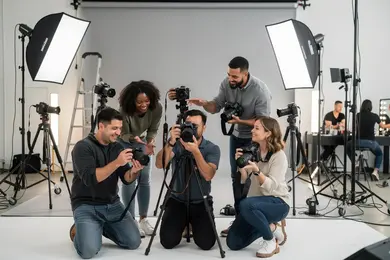
2027 Digital Photography Roles Growing Fast in Ecommerce, Social Media, and Brand Content

Co-Founder and Chief Data Scientist
Choosing a photography career now means understanding more than cameras. U.S. retail ecommerce sales reached about $1.19 trillion in 2024, according to the U.S. Census Bureau, which means brands need more product images, social visuals, short-form assets, and consistent content libraries.
This guide is for students, career changers, freelancers, and veterans comparing digital photography programs. You will learn what these roles involve, which skills matter, how online and campus programs compare, and how to evaluate cost, accreditation, salary potential, and career fit before enrolling.
Key Things You Should Know
- Digital photography is increasingly tied to commerce: U.S. ecommerce represented 16.1% of total retail sales in 2024, making product imagery, lifestyle photography, and fast content production valuable business functions.
- The U.S. Bureau of Labor Statistics projects photographer employment to grow 4% through 2033, with about 13,700 openings per year, but competition is strongest for creative brand and media roles.
- Education choices should match the goal: certificates can support fast portfolio building, associate degrees add technical depth, and bachelor's programs are better for art direction, brand strategy, or leadership paths.
What do digital photographers do in ecommerce, social media, and brand content roles?
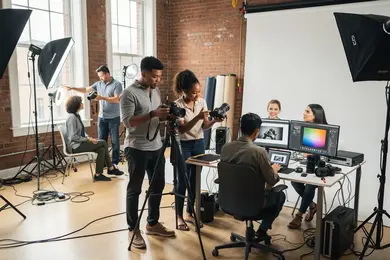
Digital photographers create, edit, organize, and deliver visual assets for commercial use. In e-commerce, that usually means accurate product images that help shoppers understand size, texture, color, and function. In social media, it means fast, platform-ready visuals that fit campaigns and trends. In brand content, it means images that express a company's identity across websites, email, ads, press kits, and internal asset libraries.
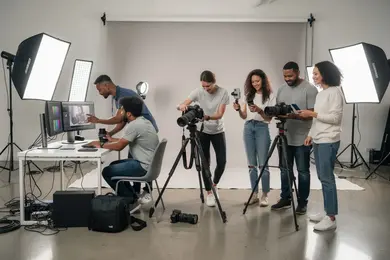
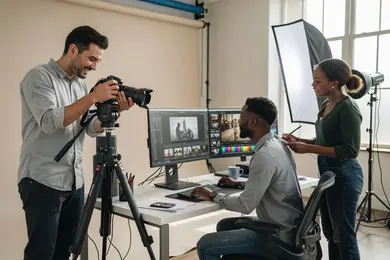
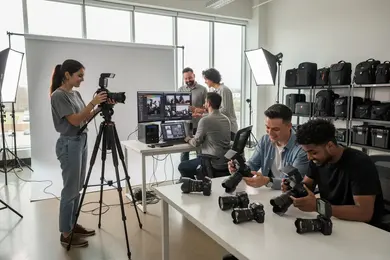
These roles are not limited to pressing the shutter. Many employers expect photographers to plan shoots, light products, direct models, coordinate with marketing teams, retouch images, manage file naming conventions, and deliver assets in formats required by marketplaces, websites, and social platforms.
The table below compares how responsibilities change by work setting. This matters because a student who wants fashion campaigns may need different portfolio samples than someone targeting product photography for an online retailer.
| Work setting | Common assignments | What employers usually look for |
| Ecommerce | Product images, 360-degree views, detail shots, packaging images, marketplace-ready files | Lighting consistency, color accuracy, workflow speed, retouching discipline, file management |
| Social media | Campaign images, short-form visual assets, behind-the-scenes content, influencer collaborations | Platform awareness, quick editing, trend literacy, visual storytelling, brand voice alignment |
| Brand content | Lifestyle campaigns, website imagery, executive portraits, event coverage, content libraries | Creative direction, production planning, collaboration, visual consistency, client communication |
| Agency or studio | Client campaigns, catalog shoots, retouching support, lighting tests, production assistance | Adaptability, studio etiquette, technical competence, ability to follow creative briefs |
For beginners, the practical takeaway is simple: digital photography roles are business-facing creative jobs. A strong portfolio should show not only beautiful images but also the ability to solve a commercial problem, such as making a product easier to evaluate or making a campaign visually consistent.
How is digital photography used to drive online sales and brand engagement?
Digital photography drives online sales by reducing uncertainty. Shoppers cannot touch a product, so images must answer visual questions: What does it look like in use? How large is it? What details matter? Does the color match the description? Good ecommerce photography supports confidence, while poor visuals can increase hesitation and returns.
For brand engagement, photography gives a company a recognizable visual rhythm. Social feeds, product pages, emails, and landing pages all work better when images share consistent lighting, color, composition, and tone. That consistency helps audiences identify the brand even before reading a logo or caption.
A useful commercial photography workflow usually includes several steps. Students and entry-level photographers should practice the full sequence because employers often judge reliability as much as creativity.
- Translate the creative brief into a shot list that identifies products, angles, backgrounds, models, props, and delivery formats.
- Prepare lighting, camera settings, surfaces, color references, and backups before the shoot begins.
- Capture core images first, then create optional lifestyle, social, or campaign variations if time allows.
- Edit for color accuracy, cropping, skin or product cleanup, file size, and platform specifications.
- Export, name, organize, and deliver files so marketers, ecommerce managers, and designers can use them without confusion.
Current content teams also care about speed. AI-assisted masking, background cleanup, automated tagging, and batch editing can reduce repetitive work, but they do not replace the photographer's judgment about lighting, composition, color, and brand fit. The strongest candidates understand how to use automation without letting images look generic or inaccurate.
What skills and software tools do digital photographers need for modern content work?
Modern digital photographers need a blend of creative, technical, and business skills. Camera operation still matters, but the work increasingly depends on how well a photographer manages digital files, collaborates with marketers, adapts content to multiple platforms, and edits efficiently without damaging authenticity.
The table below summarizes the skill groups that appear most often in ecommerce, social media, and brand content work. Use it as a checklist when comparing courses, building a portfolio, or evaluating whether a program is too narrowly focused on fine-art photography.
| Skill area | Why it matters | Common tools or evidence |
| Camera and lighting | Controls sharpness, exposure, mood, texture, and product readability | DSLR or mirrorless systems, studio strobes, continuous lights, modifiers, reflectors |
| Editing and retouching | Prepares images for professional use while maintaining accuracy | Adobe Lightroom, Adobe Photoshop, Capture One, color calibration tools |
| Digital asset management | Keeps large content libraries searchable and usable across teams | File naming systems, metadata, cloud storage, asset management platforms |
| Content strategy | Connects visuals to campaigns, audiences, and conversion goals | Creative briefs, mood boards, shot lists, campaign calendars |
| AI-assisted workflow | Speeds repetitive editing tasks and supports content variation | AI masking, generative fill used carefully, automated tagging, batch processing |
Software skills are especially important because many jobs require photographers to deliver finished assets, not just raw files. A beginner should become comfortable with non-destructive editing, color management, export settings, and version control. These details can determine whether images are usable for a website, marketplace, email campaign, or paid ad.
AI is now part of the broader digital media environment. Photographers do not need to become machine learning engineers, but they should understand when AI editing is acceptable, when it risks misrepresenting a product, and how to disclose or avoid synthetic alterations in commercial contexts. Readers who discover that they are more interested in designing AI systems than using AI tools may compare creative training with an online PhD in artificial intelligence USA.
Common mistakes include over-editing product colors, delivering files without a consistent naming system, building a portfolio with only personal work, and ignoring video or short-form content expectations. A stronger approach is to build small case studies that show the brief, the final images, and how each asset would be used by a real brand.
What education pathways prepare you for careers in digital photography?
There is no single required degree for every digital photography role. Some employers care most about a portfolio, while others prefer formal education for roles that involve production planning, design collaboration, marketing strategy, or team leadership. The best pathway depends on your budget, timeline, prior experience, and target job.
The table below compares common education options. It can help you decide whether you need a short credential, a degree, or a hybrid plan that combines coursework with portfolio projects and internships.
| Pathway | Best fit | Main trade-off |
| Short course or certificate | Career changers, freelancers, assistants, or hobbyists who need focused skills quickly | Lower time commitment, but may provide less career services support and academic depth |
| Associate degree | Students who want technical training, studio practice, and a lower-cost entry point | May be enough for some roles, but advancement can depend heavily on portfolio and experience |
| Bachelor's degree | Students seeking broader creative, business, and leadership preparation | Higher cost and longer timeline, but often stronger for art direction, brand roles, and graduate study |
| Apprenticeship, internship, or studio assistant route | Hands-on learners who can access local studios, agencies, or ecommerce teams | Practical experience can be valuable, but training quality varies widely |
A degree is more likely to be worth it when it helps you build a professional portfolio, access studio equipment, complete internships, learn commercial workflows, and receive feedback from instructors with industry experience. A shorter certificate may make more sense if you already have a degree, need only technical upskilling, or plan to freelance in a narrow niche such as product photography or real estate photography.
Military-connected students should also compare credit for prior learning, Yellow Ribbon participation, transfer policies, and career support. Those looking specifically at photography programs can start by reviewing best military-friendly online photography degrees and then confirming benefits directly with each school.
How do online digital photography programs compare with campus-based options?
Online digital photography programs can work well for students who already have access to a camera, basic lighting, and a space to shoot. Campus-based programs are often stronger for students who need studio access, in-person critique, equipment checkout, and hands-on production experience. Neither format is automatically better; the right choice depends on how you learn and what resources you already have.
The table below compares the practical differences. Pay close attention to equipment, critique quality, and portfolio support because those factors often matter more than whether the course is delivered online or on campus.
| Factor | Online program | Campus-based program |
| Flexibility | Often better for working adults, parents, military students, and freelancers | Usually follows a fixed class and studio schedule |
| Studio access | Depends on the student's home setup or local rentals | May include lighting labs, cycloramas, printers, and equipment checkout |
| Feedback | Can be strong if critiques are detailed, frequent, and visual | Often easier for live demonstrations and immediate technical correction |
| Networking | May rely on virtual communities, local internships, and self-directed outreach | Can offer local studio, agency, and alumni connections |
| Cost control | May reduce commuting or relocation costs | May include additional studio, lab, or materials fees |
Choose online study if you are disciplined, can create regular shooting assignments, and have access to feedback. Choose campus study if you need structure, specialized equipment, or in-person collaboration. A hybrid option can be ideal when it combines online theory with occasional studio intensives.
Some students comparing photography careers also consider adjacent brand roles, such as content marketing, creative strategy, or ecommerce management. If your long-term goal is to lead campaigns rather than produce images, comparing photography tuition with MS in digital marketing degree cost tuition fees can clarify whether a creative, marketing, or combined pathway offers the better fit.
What should you look for in an accredited digital photography program?
Accreditation matters because it can affect credit transfer, financial aid eligibility, graduate school options, and employer confidence. In the U.S., students should first confirm that the institution is accredited by an agency recognized by the U.S. Department of Education or the Council for Higher Education Accreditation. Program-level accreditation may be relevant in some art and design contexts, but institutional accreditation is the first checkpoint.
A strong digital photography program should also prove that it prepares students for current commercial work. That means the curriculum should include lighting, editing, portfolio development, business practices, and digital content workflows rather than only camera basics.
Use the following checklist before applying. These questions help separate programs that sound creative from programs that provide real career preparation.
- Verify institutional accreditation through official accreditation databases, not only the school's marketing pages.
- Ask whether portfolio courses include ecommerce, social media, brand, or commercial assignments.
- Review student work to see whether graduates produce polished, varied, and market-ready portfolios.
- Confirm access to studio equipment, editing software, printing labs, or remote alternatives.
- Ask how internships, freelance projects, alumni networks, and career services are built into the program.
- Check transfer credit rules, especially if you may move from a certificate or associate degree into a bachelor's program.
- Request a full cost estimate that includes tuition, fees, equipment, software, supplies, and portfolio expenses.
Red flags include vague accreditation claims, no visible student portfolio examples, outdated software, limited instructor access, and programs that promise employment or earnings. Veterans and active-duty students comparing multiple online fields should apply the same accreditation and benefits review whether they choose photography or an online cybersecurity degree for veterans.
What courses and specializations are common in digital photography degrees?
Digital photography degrees typically combine visual foundations, technical production, editing, business skills, and portfolio development. Programs may be housed in art, design, communications, or media departments, so course titles and emphasis can vary.
The table below shows common courses and why they matter for ecommerce, social media, and brand content roles. When comparing schools, look for assignments that result in usable portfolio pieces, not only theory or isolated exercises.
| Course or specialization | What students usually learn | Career relevance |
| Digital camera techniques | Exposure, focus, lenses, composition, file formats, shooting modes | Foundation for all photography roles |
| Studio lighting | Light shaping, product lighting, portrait lighting, reflective surfaces, setups | Critical for ecommerce, catalog, beauty, food, and brand shoots |
| Digital imaging and retouching | Color correction, compositing, cleanup, export settings, non-destructive editing | Supports professional delivery and efficient post-production |
| Commercial and product photography | Shot lists, brand guidelines, product styling, marketplace specifications | Directly relevant to online retail and advertising |
| Social media content production | Platform formats, campaign visuals, short-form assets, content calendars | Useful for in-house brand teams and creator-driven work |
| Visual storytelling | Sequencing, mood, narrative, audience, editorial choices | Strengthens brand campaigns and lifestyle content |
| Photography business practices | Contracts, licensing, client communication, pricing basics, workflow management | Important for freelancers and small studio owners |
| Portfolio or capstone | Professional presentation, critique, revision, artist or brand statement | Often the most important evidence for hiring |
Specializations can be useful, but they should not become too narrow too early. A student interested in ecommerce should still learn portraits, lifestyle lighting, and basic video because brands often need mixed content. A student interested in social media should still learn color accuracy and file preparation because platform speed does not excuse poor technical quality.
What are typical admissions requirements, program length, and total costs?
Admissions requirements for digital photography programs vary by school and degree level. Certificates may require only a high school diploma or equivalent, while associate and bachelor's programs typically ask for transcripts, an application, and sometimes a portfolio. Competitive art and design programs may require a stronger creative sample, but many beginner-friendly programs teach foundational skills from the start.
Program length depends on credential type and enrollment pace. A certificate may take a few months to one year, an associate degree often takes about two years of full-time study, and a bachelor's degree commonly takes about four years. Part-time study can make school more manageable, but it increases the calendar time before graduation.
Costs vary widely, so compare total cost instead of tuition alone. College Board's 2024 pricing data reported average published tuition and fees of:
- $4,050 for public two-year in-district colleges in 2024-25
- $11,610 for public four-year in-state colleges in 2024-25
- $43,350 for private nonprofit four-year colleges in 2024-25
Those figures are broad averages, not photography-specific totals. Photography students may also need to budget for a camera body, lenses, memory cards, storage drives, lighting, backdrops, printing, software subscriptions, portfolio hosting, transportation to shoots, and replacement gear. Online students may save on commuting or housing, but may need to buy or rent equipment that a campus lab would otherwise provide.
Before enrolling, ask schools for a full cost of attendance estimate and then compare it with realistic career goals. The federal maximum Pell Grant for the 2024-25 award year was $7,395, which can reduce out-of-pocket costs for eligible students, but it may not cover all expenses. Also ask about scholarships, transfer credits, prior learning credits, work-study jobs, veterans benefits, and whether expensive equipment is required in the first term.
What entry-level and advanced job titles can digital photography graduates pursue?
Digital photography graduates can pursue staff, freelance, agency, studio, and in-house brand roles. Entry-level work often starts with assisting, editing, file management, or junior content production. Advancement usually depends on portfolio quality, reliability, client communication, creative direction ability, and knowledge of how images support business goals.
The table below groups common job titles by career stage. Titles vary by employer, so read job descriptions carefully and compare duties rather than relying on the title alone.
| Career stage | Possible job titles | Typical responsibilities |
| Entry level | Photo assistant, studio assistant, digital tech assistant, junior retoucher, ecommerce photographer | Set up lighting, organize files, assist shoots, edit basic images, follow brand or marketplace specifications |
| Early career | Product photographer, social media content photographer, brand photographer, photo editor | Plan and shoot assignments, edit deliverables, manage small projects, coordinate with marketing or design teams |
| Mid-level | Commercial photographer, content producer, studio manager, senior retoucher, visual content specialist | Lead shoots, manage workflows, maintain visual standards, supervise assistants, support campaign planning |
| Advanced | Art director, creative producer, photography director, content director, brand creative lead | Develop visual strategy, lead teams, approve concepts, manage budgets, align imagery with business objectives |
Freelance paths can grow faster or slower than staff paths depending on the market, niche, referrals, and business skills. Freelancers must handle contracts, licensing, taxes, insurance, client acquisition, and equipment costs. Staff roles may provide steadier income and benefits, but they can also be narrower in creative scope.
A smart entry strategy is to build a portfolio around the job you want. For e-commerce, include clean product sets, scale images, texture details, and consistent color. For social media, include campaign variations and platform crops. For brand content, include a short visual story that shows how images work together across web, email, and social channels.
What salary ranges and job outlook can digital photographers expect today?
Salary outcomes in digital photography vary by location, employer, specialization, portfolio strength, employment type, and whether the role is staff or freelance. National data can help set expectations, but it should not be read as a guarantee for any individual graduate.
The U.S. Bureau of Labor Statistics reports a median annual wage of $42,520 for photographers, with employment projected to grow 4% through 2033. That growth is about as fast as the average for all occupations, but demand is uneven: ecommerce, digital marketing, and brand content can create opportunities, while low-cost stock imagery, smartphone content, and AI-assisted production can increase competition for basic assignments.
The table below puts photography-related roles in context. Use it to understand how responsibilities and pay potential can change as work moves from image production toward creative leadership.
| Role category | Salary context | What can influence earnings |
| Photographers | BLS reported a median annual wage of $42,520 | Niche, market, portfolio, client base, staff versus freelance status, volume of assignments |
| Photo editors and retouchers | Pay varies by employer and may be grouped under media, design, or production roles | Editing speed, color accuracy, software skill, industry specialization, agency or brand experience |
| Content producers | Often combines photography, planning, light video, and campaign coordination | Project management, social platform knowledge, brand strategy, ability to deliver multi-format assets |
| Art directors | BLS reported a median annual wage of $106,500 for art directors | Leadership experience, campaign portfolio, design judgment, industry, employer size, management scope |
The outlook is strongest for photographers who can offer more than a single technical service. Employers increasingly value people who understand brand systems, content calendars, ecommerce requirements, ethical editing, and efficient production. The risk is that routine image capture and basic cleanup can be commoditized. The opportunity is to become the person who can plan, shoot, edit, organize, and explain why a visual asset supports a business goal.
To improve career readiness, build a focused portfolio, document your process, learn licensing basics, ask for critique, and track measurable outcomes when possible. For example, a student project can explain how a product image set would reduce buyer uncertainty, how a social campaign set maintains visual consistency, or how a brand library supports multiple departments.
Other Things You Should Know About Digital Photography
Photographers should secure written model releases, property releases, and clear licensing terms before publishing or selling images. In 2027, U.S. copyright protection starts at creation, but registration with the U.S. Copyright Office is needed to sue for infringement and claim statutory damages.
It can be included if the work shows strong lighting, composition, editing, and content strategy. However, many e-commerce and studio roles still expect experience with mirrorless or DSLR cameras, lighting equipment, and professional editing workflows.
In 2027, digital photography roles are rapidly expanding in ecommerce and social media. Photographers now focus on creating dynamic brand content tailored for digital platforms. Skills in mobile photography and video content have become essential, with photographers often collaborating with digital marketers to enhance visual storytelling in a competitive online environment.
Use contracts, keep original files, add reasonable watermarks when appropriate, and learn basic copyright and licensing terms. For client work, make sure the agreement explains who can use the images, where they can be used, and for how long.
References
- Should you Study Photography at College or are There Better Options Now? https://digital-photography-school.com/should-you-study-photography-at-college-or-are-there-better-options-now/
- Admission Requirements to Study in Poland — 2026 - StudyinEurope.eu https://www.studyineurope.eu/study-in-poland/admission-requirements/
- Photographers: Salary, career path, job outlook, education and more - RaiseMe https://www.raise.me/careers/media-and-communication/photographers/
- Photography in Digital Marketing: Why is it Important? | Artonic https://www.artonicweb.com/learn/photography-digital-marketing/
- The Power of Images in Marketing: How Visuals Drive Sales and Customer Engagement https://www.wedia-group.com/blog/images-in-marketing-strategy
- Photography Course Toronto: Online Training vs In-Person School Comparison https://www.canadianphotographyschool.ca/blog/photography-course-toronto-online-vs-inperson-comparison/
- What is a Photographer? - Career Insights | Teal https://www.tealhq.com/career-paths/photographer
- The Role of Product Photography in Social Media Marketing https://studiopackshots.co.uk/2025/04/02/the-role-of-product-photography-in-social-media-marketing-and-advertising/
- Best Digital Tools for Photography in 2026: Software for Photographers https://www.ievaviphoto.com/journal/best-digital-tools-for-photographers
- 20 Top Digital Marketing Tools Every Professional Photographer Should Use in 2026 https://theimagingprofessionals.com/20-top-digital-marketing-tools-every-professional-photographer-should-use-in-2026/