2027 AI Degree Statistics: Enrollment, Costs, Salaries, and Career Outcomes

Co-Founder and Chief Data Scientist
Many prospective graduate students with unrelated undergraduate degrees face uncertainty when considering a transition into the AI field. Questions about enrollment trends, program costs, expected salaries, and true career outcomes often complicate the decision-making process. Without clear and current data, it is difficult to assess the value and feasibility of pursuing an AI degree, especially through flexible, accredited programs suited for working professionals. This article analyzes enrollment statistics, financial investment requirements, earning potentials, and job market realities to offer a comprehensive overview that guides readers toward informed choices about embarking on an AI career path.
Key Things You Should Know
- Enrollment in AI degree programs surged by 27% in 2025, reflecting growing industry demand and student interest across U.S. universities.
- Average tuition for AI degrees reached $42,000 annually, with public institutions offering lower costs compared to private schools.
- AI graduates report an average starting salary of $95,000, with significant salary growth potential in tech and data science fields.
What do AI degree enrollment trends and demographics look like in the United States?
In the United States, AI degree enrollment trends show a remarkable 38% increase in declared majors at undergraduate programs explicitly labeled Artificial Intelligence, signaling rapid growth in this tech specialization. Most students pursue AI degrees at research-focused universities and technical institutes with strong computer science departments.
Demographics of AI degree students in the United States reveal male students remain the majority, though female enrollment is steadily rising, helping to close the STEM gender gap. Enrollment is higher among urban and suburban populations due to better access to specialized faculty and resources, while international students contribute to diverse and global perspectives on campus.
Prospective students should explore institutions offering tailored AI curricula that combine AI with ethics, data science, or robotics. Being aware of demographic trends helps underrepresented groups find support networks and mentorship. Early applications and strong prerequisite knowledge become increasingly important as competition for available spots grows.
Those considering accelerated options may benefit from programs like the 2 year bachelor degree computer science, which can provide a faster path into AI-related fields. Understanding these patterns assists applicants in choosing programs with the right resources, diversity, and growth potential to advance their AI education and career opportunities.
How much do artificial intelligence degrees cost, and what financial aid can students access?
The cost of artificial intelligence degree programs varies widely between public and private universities. For those starting an AI bachelor's program, median annual tuition at public universities for in-state residents is about $10,037, while private institutions charge around $55,651. Total expenses, including tuition, room, and board, can range from $80,000 to $280,000 over four years, according to sources like DataUSA and College Scorecard. This range emphasizes the financial commitment involved in pursuing an AI degree in the US.
Students seeking to manage artificial intelligence degree costs in the US have several financial aid options:
- Federal grants such as Pell Grants offer need-based funding that does not require repayment.
- State scholarships provide additional support, especially for public university in-state students.
- Institutional scholarships reward academic merit or achievements related to AI.
- Work-study programs enable part-time campus employment to offset expenses.
- Federal student loans come with repayment options but accrue interest and require careful consideration.
Working professionals may reduce expenses through employer tuition reimbursement or research assistantships. It is essential to apply early for aid by completing the FAFSA and to investigate university-specific AI scholarships. Comparing the total cost of attendance, including indirect expenses, is vital for effective financial planning. Additionally, prospective students can explore affordable pathways by reviewing options like engineering degrees online that may offer relevant opportunities within AI education.
What salaries and career outcomes do graduates with AI degrees typically achieve?
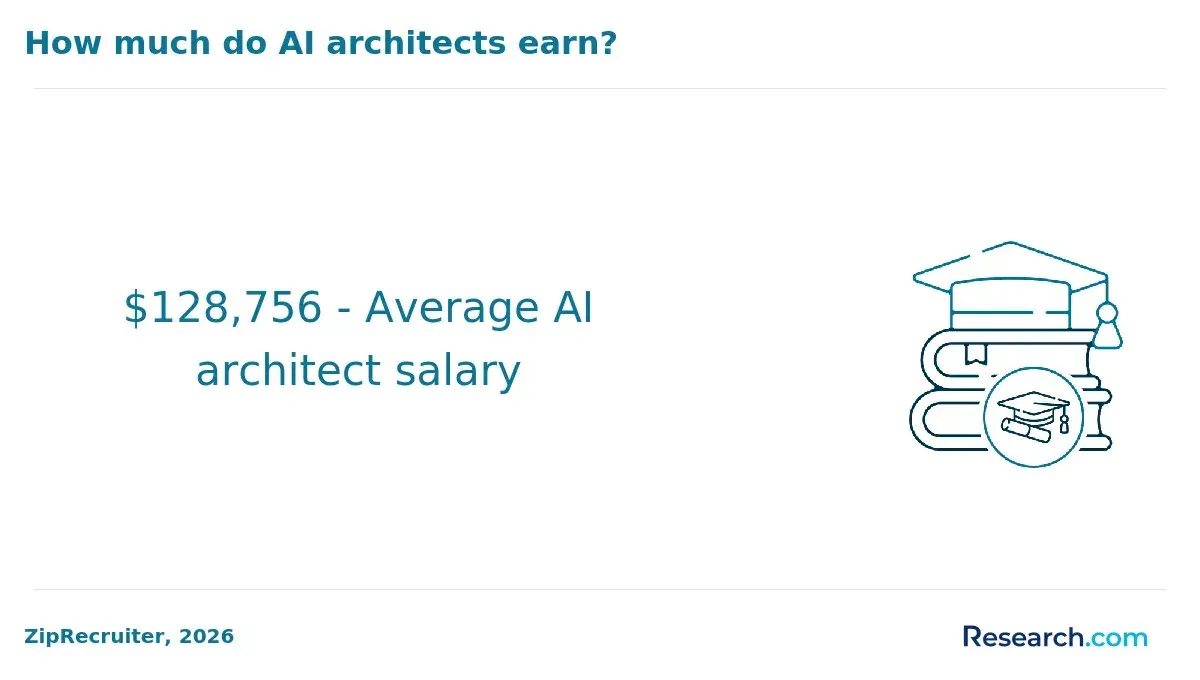
Graduates with AI degrees often see strong career outcomes, with high salary potential and diverse job roles. Entry-level AI engineers report a median starting salary of $95,000 in 2026, with the top 25% earning more than $115,000. This reflects the significant market value of AI skills right after graduation.
Career outcomes for artificial intelligence degree holders vary by geographic location, industry, and role. For instance, AI specialists in tech hubs like Silicon Valley or New York typically earn salaries 10-20% above the national median. Common positions include machine learning engineer, data scientist, AI research analyst, and AI software developer. Salaries increase with technical expertise, project complexity, and leadership responsibilities over time.
Progression often means moving from technical roles to strategic positions such as AI project manager or solutions architect, where salaries can surpass $140,000. Many graduates enhance their prospects by pursuing certifications or advanced degrees in AI-related fields. Key influences on career outcomes include:
- Industry sector: Finance and healthcare AI roles often provide premium compensation.
- Experience level: Salaries typically rise sharply after 3-5 years of practical AI experience.
- Soft skills: Communicating AI insights clearly to non-technical stakeholders improves advancement opportunities.
To maximize initial offers, graduates should gain hands-on experience via internships or project portfolios. Continuous learning and specialization remain essential for sustaining salary growth and career mobility within the AI domain. Prospective students can explore the best online AI degree programs to start building these skills.
These insights provide a realistic view of AI degree graduate salary expectations in North America and outline the strategies useful for long-term career success.
What types of AI degree pathways exist, from certificates to bachelor's and master's programs?
AI degree certificate programs in the United States offer targeted skills in areas like machine learning and natural language processing, typically lasting a few months to a year. These are ideal for professionals seeking rapid upskilling without committing to full degrees. Bachelor's and master's degree options in AI fields provide deeper knowledge, with bachelor's programs usually spanning four years and covering foundational subjects such as algorithms, robotics, and ethics in AI. Master's degrees, lasting one to two years, emphasize advanced theory, research, and specialization areas like computer vision or AI policy, preparing graduates for leadership and research roles.
Median mid-career salaries for AI degree holders average around $165,000. Key roles such as research scientist, ML engineer, AI engineer, and data scientist earn between $114,000 and $142,000 in base pay. Prospective students should reflect on their current experience, time commitments, and career goals when choosing a path. Certificate programs suit working professionals seeking quick skill boosts, while bachelor's degrees provide a broad foundation for newcomers. Master's programs target those aiming for specialized expertise or leadership positions.
For more information on related career paths, explore resources on AI training jobs.
How do online AI degree programs compare with campus-based options in quality and outcomes?
Online AI degree programs now often equal campus-based options in both quality and career outcomes. These programs usually share rigorous curricula designed by the same faculty or through partnerships with leading universities. A key benefit of online degrees is flexibility, making them suitable for working professionals or those unable to relocate. Campus programs, however, offer advantages such as direct access to hands-on labs, face-to-face networking, and in-person mentorship, which can enrich learning and job opportunities.
Employment rates show little difference between the two formats. By 2026, about 85% of AI graduates find jobs within six months, according to Hakia's AI career outcomes analysis, reflecting strong demand for AI skills across the board.
Students should verify accreditation and practical training aspects like machine learning projects or internships. Campus programs often feature specialized AI research labs, while online options may provide virtual labs or industry collaborations. Hybrid models are also an option, blending online coursework with short on-campus residencies.
Cost is another consideration. Online programs tend to be more affordable and save on relocation and commuting expenses. Some campus programs charge more due to their facilities and career services.
What core courses, specializations, and skills are taught in artificial intelligence degree programs?
Degree programs in artificial intelligence build a solid foundation in both theory and hands-on application. Core coursework covers machine learning, data structures, algorithms, computer vision, natural language processing, robotics, and statistics. Mathematics such as linear algebra, calculus, and probability underpin these technical subjects, while programming languages like Python, R, and Java are essential throughout the curriculum.
Many programs offer specializations to deepen knowledge in areas like deep learning, autonomous systems, AI ethics, computational linguistics, and AI in healthcare. Electives may include reinforcement learning, neural network design, and human-computer interaction. These pathways prepare graduates for careers as research scientists, AI software engineers, and data analysts.
Emphasis is placed on practical skills such as designing AI models, data preprocessing, model evaluation, and deployment. Experience with development frameworks like TensorFlow, PyTorch, and OpenCV is often required. Students develop strong problem-solving and critical thinking abilities through labs, projects, and internships.
Given the fast-changing nature of artificial intelligence, continuous learning after graduation is crucial. According to Hakia's AI Salary & ROI report, the average payback period for an AI bachelor's degree is 4.2 years, highlighting the strong career and financial returns in the U.S. job market.
What admission requirements and prerequisites do U.S. AI degree programs commonly expect?
Admission to U.S. artificial intelligence degree programs usually requires a strong academic background in mathematics and relevant skills. Undergraduate applicants generally need a high school diploma with solid grades in algebra and calculus. For master's or doctoral programs, a bachelor's degree in computer science, engineering, mathematics, or related STEM fields is typically required.
Proficiency in programming languages such as Python or Java must often be proven through coursework or practical experience. Standardized test scores, like the SAT or ACT, are common for undergraduate admissions, though many schools have adopted test-optional policies. Graduate applications frequently require GRE scores, letters of recommendation, and a statement of purpose focused on AI or machine learning interests.
Common prerequisites include courses in linear algebra, probability, statistics, discrete math, and sometimes machine learning or data structures. For working professionals and non-traditional students, bridge courses or conditional admission options may be available.
While AI bootcamps provide faster entry into the field, degree holders maintain an advantage in foundational knowledge and long-term career growth. According to the AITalentReport, bootcamp alumni earn a median total compensation of $285,000 after five years-slightly below the $292,000 median for degree graduates. Entry-level base salaries are similar, with $147,000 for bootcamp graduates and $152,000 for degree holders.
How long do AI degrees take to complete, and what schedules suit working adults?
The time required to earn a degree in artificial intelligence varies based on program type and study format. A traditional bachelor's degree typically takes four years of full-time study, while master's programs range from one to two years full-time. Doctorate degrees usually require three to six years, depending on research demands and funding availability.
Working professionals often need flexible options to balance education with careers and family. Part-time study can extend completion by one to three years but offers necessary adaptability. Accelerated master's degrees are available that can be completed in as little as 12 months. Online and hybrid courses further enhance flexibility by allowing students to learn during evenings or weekends.
Examples of flexible programs include:
- Evening or weekend classes for full-time employees
- Online asynchronous courses accessible any time
- Modular or bootcamp-style courses focusing on applied AI skills in 6-12 months
Such options enable ongoing career growth without interruption. The U.S. Bureau of Labor Statistics forecasts a 23-26% rise in roles related to artificial intelligence and information research scientists from 2023 to 2033, far surpassing average job growth rates. Flexible degree paths are crucial to meet this demand and expand accessibility to AI fields.
How strong is the job outlook for AI professionals, and which roles are in highest demand?
The demand for AI professionals continues to grow rapidly as more industries adopt AI technologies. By 2025, 27% of U.S. workers will use generative AI at work, expanding opportunities for people beyond traditional tech roles. Those skilled in developing, implementing, and managing AI systems remain in highest demand, with machine learning engineers, data scientists, and AI software developers leading hiring trends.
Roles in AI ethics, data engineering, and product management also see growth as companies seek responsible and efficient AI integration. Success increasingly depends on practical skills rather than formal degrees, with 52% of AI-skilled STEM workers lacking bachelor's degrees. Demonstrable experience in coding languages like Python or frameworks such as TensorFlow, along with knowledge of natural language processing and AI platforms, is often prioritized.
Key advice for those pursuing AI careers includes:
- Develop hands-on AI programming and data analysis capabilities.
- Earn certifications or complete bootcamps to validate expertise.
- Consider roles that blend AI with business, ethics, or specialized sectors.
- Keep pace with emerging AI tools and applications.
How can students evaluate accredited, reputable AI programs and avoid low-quality options?
Students seeking quality artificial intelligence education should first verify program accreditation through esteemed organizations like ABET or recognized regional accreditors. Accredited programs tend to have curricula aligned with current industry needs, covering essential topics such as machine learning, data ethics, and AI system design. Evaluating faculty credentials and research involvement is vital; educators actively engaged in AI research or collaborating with top industry partners generally offer stronger learning experiences and valuable networking opportunities.
Comparing program outcomes helps prospective students gauge value. Key factors include employment rates, starting salaries, and career advancement statistics published by the institution. Programs with high placement in tech firms or research labs, alongside salaries exceeding national averages, reflect robust career support. Beware of programs with outdated content, scarce hands-on projects, or minimal industry ties, which often leave graduates underprepared for real-world challenges.
A 2025 earnings analysis cited by Yahoo Finance reveals that graduates from popular non-AI majors like psychology may face a negative cost-adjusted lifetime earnings impact of -8%. Conversely, graduate degrees overall provide a +17% earnings increase, highlighting artificial intelligence's position as a high-return field. This supports prioritizing accredited AI programs to enhance long-term financial outcomes.
Students should also weigh total costs against potential benefits. Important indicators of program quality include available financial aid, internship opportunities, and active alumni networks. Direct communication with current students or alumni offers firsthand insights into program reputation and practical challenges.
Other Things You Should Know About Artificial Intelligence
Graduates with artificial intelligence degrees are most commonly employed in technology, finance, healthcare, and automotive industries. These sectors rely heavily on AI for data analysis, automation, and innovation, driving substantial demand for skilled professionals. Additionally, government and research institutions also hire AI specialists for advancing projects involving machine learning and robotics.
In 2027, AI degree specializations can significantly influence career outcomes and salaries. Graduates with specializations in machine learning or natural language processing often command higher salaries and more job opportunities due to industry demand, highlighting the importance of choosing the right focus area within AI education.
Interdisciplinary knowledge is critical in artificial intelligence education because AI integrates concepts from computer science, mathematics, statistics, and domain-specific fields such as biology or economics. Understanding ethics and human-computer interaction is also increasingly emphasized to ensure responsible AI development. This breadth helps graduates design AI solutions that are technically sound and socially responsible.
Students often encounter challenges such as mastering complex mathematical concepts like linear algebra and calculus, which are foundational for AI algorithms. Keeping up with rapidly evolving AI technologies and research can also be demanding. Additionally, practical experience with real-world data sets and computing resources is necessary but sometimes limited depending on the program.
References
- How Online AI Master's Degrees Affect Salary in 2026 https://www.nexford.edu/insights/how-online-ai-masters-degrees-affect-salary
- The AI Talent Race: Top AI Jobs to Watch in 2026 https://www.onwardsearch.com/blog/2026/01/top-ai-jobs/
- Online vs Campus Artificial Intelligence Degree Programs: Complete Comparison https://hakia.com/compare/artificial-intelligence-online-vs-campus/
- How Long Does It Take to Learn AI Completely? https://blog.nobledesktop.com/learn/ai/how-long-do-ai-courses-take
- College Students Weigh AI's Impact on Majors and Careers https://news.gallup.com/poll/704087/college-students-weigh-impact-majors-careers.aspx
- Bachelor in Management and Artificial Intelligence https://www.kozminski.edu.pl/en/programs/undergraduate-programs-bachelor/bachelor-management-and-artificial-intelligence
- Degree Programs in Artificial Intelligence | ComputerScience.org https://www.computerscience.org/degrees/artificial-intelligence/
- The Latest AI in Education Statistics (2026) - Programs.com https://programs.com/resources/ai-education-statistics/
- Artificial Intelligence Degrees: Tuition & Outcomes (2026)… https://www.edsmartdata.com/degrees/artificial-intelligence/
- Here’s How an AI Degree Stacks Up Against Other Options https://www.aidegree.org/blog/comparison-table