2027 Reapplying After SLP Graduate School Rejection: How to Build a Stronger Program Shortlist

Co-Founder and Chief Data Scientist

Reviewed by Rhea Paul, PhD
SLP Education & Research Expert
An SLP graduate school rejection is disappointing, but it can also reveal that your original list, timing, or application strategy needs adjustment - not that you cannot become a speech-language pathologist.
This guide is for applicants rebuilding a stronger shortlist after one or more denials. It explains how to evaluate academic readiness, target programs realistically, verify accreditation and state eligibility, compare online and campus options, and organize a more persuasive reapplication. The goal is a list that is ambitious, financially sensible, and aligned with eventual licensure.
Key Things You Should Know
- Rebuild your list around verified fit: include programs where your cumulative GPA, communication-sciences GPA, prerequisites, clinical exposure, and required materials align with published expectations.
- Apply only to programs with appropriate CAA accreditation status and clear licensure disclosures; a low-cost or flexible program is not a sound choice if it cannot support your intended state pathway.
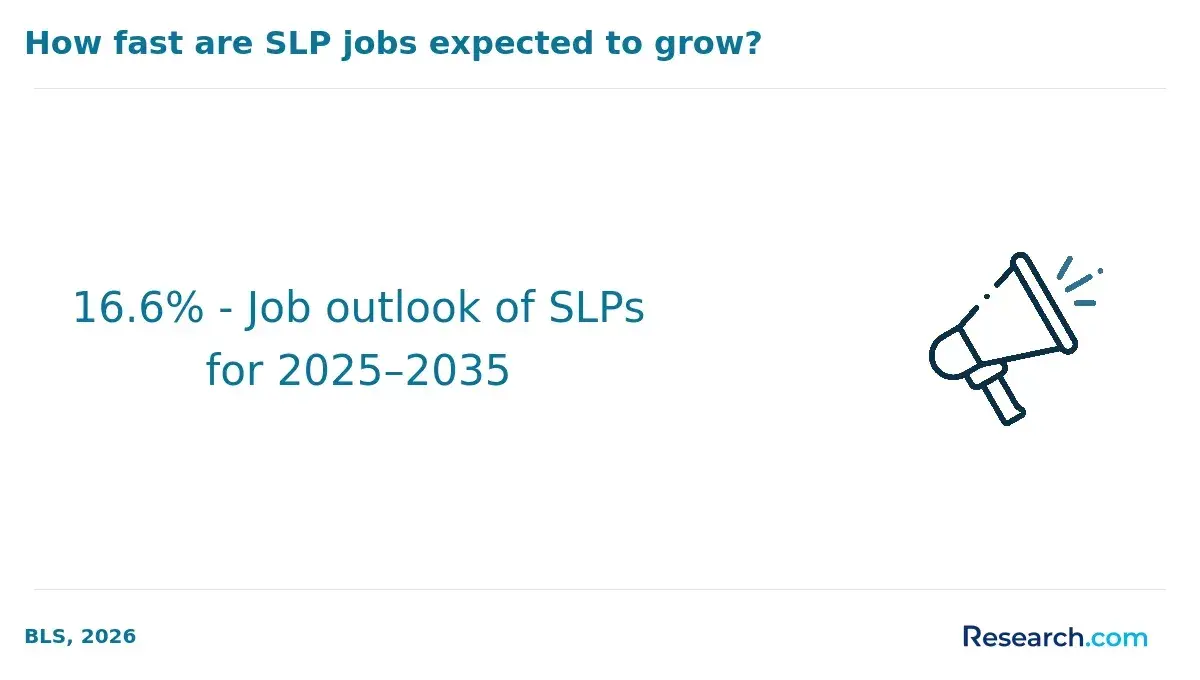
- SLP remains a strong long-term field, with BLS projecting 17% employment growth from 2025 to 2035 and about 12,500 annual openings, but demand does not make graduate admissions automatic.
How should you interpret a speech-language pathology graduate rejection before planning a stronger reapplication strategy?
A rejection is usually a selection outcome rather than a complete assessment of your potential. SLP master's programs often have limited cohort capacity, evaluate applicants holistically, and receive many qualified applications. A denial may reflect a mismatch between your profile and a program's applicant pool, incomplete prerequisite preparation, a weakly differentiated personal statement, limited relevant experience, or an overly reach-heavy list.
Start by separating factors you can change from factors you cannot. You cannot revise a past undergraduate transcript, but you may be able to take upper-level communication sciences and disorders coursework, strengthen a recent academic trend, gain supervised experience, improve essays, and choose programs that evaluate applicants in a way that better fits your record.
Before applying again, request feedback when a program permits it. Many schools cannot provide individualized admissions explanations, so do not interpret a lack of response as a judgment about your future. Instead, compare your application against each school's published requirements and any available admitted-student profile.
| Possible reason for denial | What it may mean | Productive response |
| List was concentrated in highly selective programs | Your record may be viable, but the list did not include enough realistic options. | Add programs with requirements and cohort characteristics that better match your profile. |
| Low cumulative or CSD GPA | Academic readiness may have been a concern, especially in prerequisite-heavy programs. | Consider targeted coursework and explain a documented upward trend where appropriate. |
| Missing or old prerequisites | You may not have met eligibility rules or appeared less prepared than other applicants. | Complete required courses before the stated deadline and retain syllabi if requested. |
| Generic application materials | The committee may not have understood your preparation, goals, or fit. | Use specific examples that connect your experiences to the program's training model. |
| Limited relevant exposure | The application may not have demonstrated informed commitment to the profession. | Seek ethical observation, support, research, education, or healthcare experiences. |
What does a realistic, data-driven SLP program shortlist look like after a first denial?
A stronger shortlist is balanced rather than built around reputation alone. It includes programs that are academically plausible, geographically and financially workable, accredited appropriately, and compatible with your intended state's licensure rules. No program is a true "safety" in SLP admissions, because applicant pools and available seats change each cycle.
Use three categories: aspirational programs where you meet requirements but may be near the lower end of competitive indicators; match programs where your record aligns closely with published expectations; and broader-access options with requirements you clearly satisfy. The purpose is not to lower your standards. It is to reduce the risk that every application depends on the same narrow admissions outcome.
The comparison below shows a practical way to distribute applications. Adjust the number based on your budget, capacity to tailor materials, and whether programs use a centralized application service or separate institutional applications.
| Shortlist category | Typical profile match | How to use it |
| Aspirational | You meet minimums, but published averages or selectivity indicators may be above your record. | Include a limited number when the training model strongly fits your goals. |
| Match | Your academic preparation and experiences align with stated expectations and cohort patterns. | Make this the largest portion of the list. |
| Broader-access | You exceed minimum requirements or bring a profile the program explicitly welcomes. | Use these to diversify risk, while still checking quality and licensure fit. |
| Conditional or leveling pathway | You need prerequisite completion or a structured bridge into graduate study. | Consider only after confirming time, cost, progression rules, and accreditation status. |
Use published facts, not assumptions, to classify each school. Minimum GPA is an eligibility screen, not a prediction of admission. A program that lists a 3.0 minimum may still enroll applicants with substantially stronger records, while another may place greater weight on recent coursework, interviews, bilingual ability, research experience, or service background.
How can you diagnose weaknesses in your original SLP school list and selection criteria?
Audit the prior list before adding new names. If most schools shared the same GPA range, deadline, location, or delivery model, the list may have concentrated risk instead of creating meaningful options. Also review whether you applied only where you wanted to live rather than where your profile and eventual licensure plan had a workable fit.
Answer the following questions for every prior application. Your responses can identify whether the main issue was list construction, application execution, or readiness for graduate-level study.
- Did you meet every prerequisite, observation, GPA, application, and deadline requirement by the school's stated cutoff?
- Were your cumulative GPA, CSD GPA, and recent academic performance reasonably aligned with information the program publishes about admitted cohorts?
- Did your personal statement explain a specific career goal and connect it to that program's curriculum, clinical model, or mission?
- Did recommenders have direct evidence of your academic, professional, or interpersonal readiness for graduate training?
- Did your list include different program types, locations, and admissions approaches rather than versions of the same highly selective choice?
Common mistakes include treating published minimums as typical admitted-student numbers, applying only because a school is well known, and using one generic essay for every application. A better approach is to maintain one core narrative while tailoring each statement to the school's prompts, clinical philosophy, and specific experiences you can genuinely discuss.
Which accreditation and institutional checks are non-negotiable when rebuilding your SLP shortlist?
For a U.S. master's degree intended to lead to clinical SLP practice, accreditation is a central decision criterion. Confirm the program's current status with the Council on Academic Accreditation in Audiology and Speech-Language Pathology, commonly called CAA. A program may be accredited, in candidacy, or operating under another status; those distinctions can affect your educational planning and should never be assumed from marketing language.
Also verify the university's institutional accreditation, the exact degree awarded, and whether the program is authorized to enroll students in your state. This is especially important for distance education, because a university may offer an online program generally while limiting enrollment in particular states.
Your pre-application verification should cover the following items. Save screenshots or PDFs with the date you checked them, because requirements and state disclosures can change.
- CAA accreditation or candidacy status and any published effective dates.
- Institutional accreditation and the graduate degree title.
- Whether the program accepts applicants residing in your state.
- Professional licensure disclosures for the state where you expect to seek initial licensure.
- Clinical education requirements, placement procedures, travel expectations, and student responsibilities.
- Program completion rules, including comprehensive exams, thesis options, minimum grades, and time limits.
- Total estimated educational cost, including fees, travel, background checks, health requirements, and clinical expenses.
Do not equate institutional accreditation with CAA accreditation. Both matter, but they answer different questions. Institutional accreditation concerns the university; CAA status concerns whether the professional program meets specialized educational standards relevant to speech-language pathology preparation.
How do different SLP program types and delivery formats affect your chances on a second try?
Program format can affect both admissions fit and your ability to complete the degree successfully. Traditional campus programs may offer local faculty access and established clinical networks, while hybrid and online programs can expand geographic options. However, online does not mean self-paced, lower cost, easier admission, or free of travel. Many programs use live classes, required campus immersions, and full-time clinical placements.
Applicants seeking flexibility should compare verified scheduling details rather than relying on the word "online." Reviewing online MS SLP programs can help you frame questions about tuition, clinical placement obligations, and required travel, but each school's current disclosures remain the final authority.
| Program type | May fit applicants who | Key trade-off to check |
| Campus-based, full-time cohort | Can relocate or commute and prefer in-person instruction and local cohort structure. | Schedule rigidity and location-dependent clinical assignments. |
| Hybrid program | Need some distance learning but can attend required in-person sessions. | Residency frequency, travel cost, and synchronous attendance requirements. |
| Online or distance program | Need broader geographic access and can manage structured remote coursework. | State availability, placement process, time-zone demands, and clinical travel. |
| Part-time sequence | Need a reduced academic course load before intensive clinical phases. | Longer completion time and whether clinical training remains full-time. |
| Post-baccalaureate or leveling pathway | Have a non-CSD bachelor's degree or missing prerequisites. | Added cost and time before or alongside graduate admission. |
Choose format based on the constraints you can sustain for two or more years, not simply on perceived admissions odds. An applicant with a strong academic profile may benefit from more program choices through distance options, but a program remains a poor fit if its clinical schedule conflicts with caregiving, employment, relocation limits, or state authorization rules.
What GPA, prerequisite, GRE, and experience benchmarks should guide your reapplication targeting for SLP?
Use published program requirements as screening tools, then look for context about competitive applicants. Track cumulative GPA, major or CSD GPA, last-60-credit GPA if a school considers it, and grades in foundational courses such as phonetics, language development, anatomy and physiology of speech and hearing mechanisms, audiology, speech science, and statistics. Requirements differ substantially across institutions.
A lower cumulative GPA is not necessarily disqualifying, particularly when you can document stronger recent coursework. But do not assume that a higher grade in an unrelated class offsets weak performance in core CSD preparation. Targeted academic repair is most useful when it addresses a clearly relevant weakness and produces recent evidence of readiness.
Many schools have changed GRE policies, but policies vary and can be revised. Do not spend time or money preparing for the GRE unless each target program confirms that scores are required, accepted, or helpful. Similarly, observation hours and service activities should support informed career motivation rather than become a race to accumulate unverified hours.
For applicants entering from another major, speech pathology 5 year programs illustrate one structured undergraduate-to-graduate route, although they are generally most relevant before completion of a bachelor's degree. Reapplicants should instead ask whether a post-baccalaureate sequence, individual prerequisites, or a second bachelor's-level CSD program is the most efficient way to close academic gaps.
Focus on evidence that admissions committees can evaluate: strong recent grades, meaningful work or volunteer responsibilities, credible recommendations, reflective writing, and a realistic understanding of clinical practice. Avoid paying for experiences marketed as admissions guarantees.
How can you use past applicant and cohort profiles to match SLP programs to your record?
Applicant and cohort data are useful only when interpreted carefully. Some schools publish average GPAs, entering-class characteristics, enrollment counts, or admissions statistics; others publish little beyond minimum requirements. Use available information to identify fit, not to calculate a guaranteed probability of acceptance.
Create a comparison sheet with the same fields for every program. This prevents a familiar school name, attractive campus, or one appealing statistic from outweighing more important considerations such as clinical placement structure or state eligibility.
| Comparison field | Why it matters | How to interpret it |
| Minimum GPA | Shows eligibility threshold. | Do not treat it as the typical admitted GPA unless the program says so. |
| Published cohort profile | Offers context about enrolled students. | Compare several dimensions, including recent academics and background, when available. |
| Cohort size | Provides context about capacity. | A small cohort can mean fewer seats; it does not alone prove program quality. |
| Prerequisite policy | Determines whether your academic record is complete. | Check required courses, grade minimums, expiration rules, and completion deadlines. |
| Clinical model | Shapes training logistics and graduation feasibility. | Confirm who arranges placements and where travel may be required. |
| Admissions process | Shows what evidence the school emphasizes. | Note interviews, writing prompts, references, CAS processes, and supplemental materials. |
When data are not published, contact admissions with narrow, answerable questions. For example, ask whether a prerequisite can be in progress, whether the program reviews last-60-credit GPA, whether out-of-state distance students are eligible, or whether clinical placements may require travel. Avoid asking staff to predict your admission decision from a transcript alone.
Which SLP programs or pathways may be more forgiving of earlier rejections or nontraditional profiles?
Programs are not "easy" simply because they have a lower published GPA threshold or use holistic review. Every CAA-accredited graduate program requires students to meet rigorous academic and clinical standards. Still, some pathways may be more compatible with applicants who have a non-CSD degree, a documented upward academic trend, substantial related employment, multilingual skills, rural-service interests, or strong recent prerequisite performance.
When researching easiest SLP programs to get into, treat accessibility as a prompt for closer verification rather than a promise. The useful question is whether a school's stated admissions process fairly evaluates the strengths you actually have.
Potentially better-fit pathways include programs with formal leveling options, schools that clearly accept nontraditional applicants, institutions that consider recent academic performance, and programs whose mission aligns with your experience in education, healthcare, disability services, community settings, or underserved populations. Mission alignment must be genuine and supported by your record; it should not be inserted into an essay as a strategy alone.
Be cautious of three red flags: unclear accreditation language, promises of unusually effortless admission, and vague answers about clinical placements or state licensure. A broader-access program should still provide transparent requirements, credible student support, and a realistic path to supervised clinical education.
How should you balance licensure alignment, clinical placements, and consumer protection risks in your new list?
Your shortlist should be built backward from the state where you intend to obtain initial licensure. SLP licensure requirements are set by states and can change. A degree that supports one state's pathway may require additional review, coursework, examinations, or documentation elsewhere. Ask each program for its professional licensure disclosure, then confirm requirements with the relevant state board before enrolling.
Clinical placement details deserve the same attention as admissions criteria. Determine whether the school secures sites, whether students help locate them, whether placements can occur near your home, and whether you must travel or stop working during externships. Schools generally cannot promise a specific site, setting, or commute distance, so plan for uncertainty.
The financial decision should also include career context rather than tuition alone. The U.S. Bureau of Labor Statistics reports a median annual wage of $97,870 for speech-language pathologists in May 2025, but individual earnings vary by setting, experience, geographic area, and work schedule. Use resources on how much do speech language pathologists make as a starting point for career research, not as a guarantee that a particular degree will produce a particular income.
Before accepting an offer, compare the full cost of attendance, likely borrowing, expected completion timeline, clinical travel costs, and state-specific post-graduation steps. A lower tuition figure may not be the lower-cost choice if it requires frequent travel, delays your timeline, or creates barriers to licensure where you plan to practice.
What practical tools can help you track deadlines, requirements, and status across a rebuilt SLP shortlist?
A centralized tracker turns a stressful reapplication into a manageable project. Use a spreadsheet, database, or task-management system, but maintain one source of truth for every requirement. Record the webpage or official document you used and the date you verified it, especially for deadlines, GRE rules, tuition, and state eligibility.
Your tracker should include the fields below. They help reveal missing information before an application fee is paid.
- Program name, degree title, delivery format, campus or residency requirements, and state eligibility.
- CAA status, institutional accreditation confirmation, and state licensure disclosure status.
- Application platform, priority and final deadlines, fee, and transcript processing timeline.
- Minimum GPA, prerequisites, required grades, test policy, observation policy, and interview requirements.
- Recommendation writers, requested date, submission status, and backup contacts.
- Personal statement prompt, word limit, program-specific themes, and revision status.
- Estimated tuition, mandatory fees, travel, clinical requirements, financial aid deadlines, and deposit amount.
- Decision date, waitlist status, acceptance deadline, and questions still awaiting an official answer.
Work backward from the earliest deadline. Give transcript requests, recommender outreach, prerequisite verification, and essay drafting more time than you think they need. Submit early enough to resolve technical issues, but do not sacrifice accuracy for speed. A carefully verified list of fewer programs can be stronger than a large list built on assumptions.
Other Things You Should Know About Speech Language Pathology
Apply again only if your application is stronger and the programs remain a genuine fit. Reusing the same list without improving academic preparation, experience, essays, recommendations, or list balance may repeat the same outcome. Check whether each school's requirements or state eligibility rules have changed.
Additional coursework can help when it addresses missing prerequisites, weak grades in core CSD subjects, or a need to demonstrate recent academic success. Choose accredited college coursework that target programs recognize, and confirm in advance that the course will satisfy their requirement.
Some students work part-time during coursework, but clinical practicum and externship schedules can significantly limit employment. Ask each program about daytime clinical obligations, expected weekly workload, and whether part-time enrollment changes placement timing or program length.
There is no universal number. Apply to enough well-researched programs to include aspirational, match, and broader-access options without weakening your essays, missing deadlines, or creating unaffordable application costs. A balanced, verified list matters more than a large one.
References
- How I Got Into Graduate School (After Being Rejected) https://www.drjenapugh.com/blog/how-i-got-into-graduate-school-after-being-rejected
- Didnt get accepted now what? - Speech-Language... https://forum.thegradcafe.com/topic/64932-didnt-get-accepted-now-what/
- Grad School Application Resource Center https://www.nsslha.org/programs/grad-school-application-resource-center/