2027 SLP Careers in Voice, Fluency, and Accent Modification

Co-Founder and Chief Data Scientist

Reviewed by Rhea Paul, PhD
SLP Education & Research Expert
Imagine a professional from an unrelated field struggling to break into the specialized field of voice, fluency, and accent modification.
Without clear guidance, navigating credential requirements, gaining relevant experience, and understanding career paths can feel overwhelming. Many professionals find it challenging to balance advanced education with existing commitments while meeting licensure standards.
This article explores flexible, accredited routes to transition into SLP careers focused on voice, fluency, and accent modification. It aims to equip readers with practical insights on education options, certification processes, and employment opportunities to successfully pivot into this rewarding domain.
Key Things You Should Know
- Employment for speech-language pathologists (SLPs) in voice, fluency, and accent modification is expected to grow 17% from 2025 to 2035, driven by increasing demand in healthcare and communication services.
- Specialization in voice and fluency disorders requires advanced clinical training, with many professionals pursuing certification to enhance expertise and marketability in 2026.
- Accent modification services are expanding beyond ESL contexts into corporate and social communication settings, reflecting a growing multicultural workforce and global business environment.
What are SLP careers in voice, fluency, and accent modification?
SLP careers in voice therapy and treatment options involve diagnosing and treating communication disorders related to speech clarity, vocal quality, and fluency. Practitioners work with clients to manage voice disorders such as vocal nodules or paralysis, helping restore normal vocal function.
Fluency specialists focus on stuttering and other speech disruptions to improve conversational flow and confidence. Additionally, accent modification specialist roles and opportunities support individuals seeking to alter speech patterns, such as adjusting rhythm, intonation, and pronunciation for better professional or social communication.
These specialists serve diverse groups including actors, teachers, executives, and immigrants. For example, voice therapists assist teachers experiencing vocal strain from prolonged speaking, while fluency clinicians develop tailored strategies to reduce stuttering.
Accent modification often benefits non-native English speakers aiming to reduce regional or foreign accents to enhance clarity in workplace settings.
The Bureau of Labor Statistics projects a 17% job growth for speech-language pathologists from 2025 to 2035, indicating strong demand for clinicians with expertise in voice, fluency, and accent therapy. Prospective professionals should seek advanced training and certification in these areas.
Gaining practical experience through clinical internships focusing on voice disorders or fluency therapy is also essential. Cultural competence and linguistic diversity knowledge further enhance effectiveness in accent modification careers.
Students interested in pursuing these paths can explore online speech pathology programs masters for accessible advanced education options.
What education is required for SLP specialization in voice and fluency?
Specializing in voice and fluency within speech pathology involves graduate-level education, typically a master's degree from a program accredited by the Council on Academic Accreditation (CAA) in Audiology and Speech-Language Pathology.
These SLP graduate programs in voice and fluency specialization include advanced coursework in anatomy, physiology, and neurogenic voice disorders, paired with clinical practicum focused on assessment and treatment techniques.
Certification requirements for voice and fluency speech pathology commonly include obtaining credentials such as the Certificate of Clinical Competence in Speech-Language Pathology (CCC-SLP) awarded by ASHA. Clinicians often pursue specialized training in stuttering modification, resonance therapy, and voice rehabilitation, especially for clients with professional voice demands.
Practical experience through clinical fellowships or residencies focused on voice and fluency cases is essential to build applied skills. Many programs offer electives or specialized clinical rotations, and joining professional groups like the American Speech-Language-Hearing Association's Special Interest Groups enhances expertise.
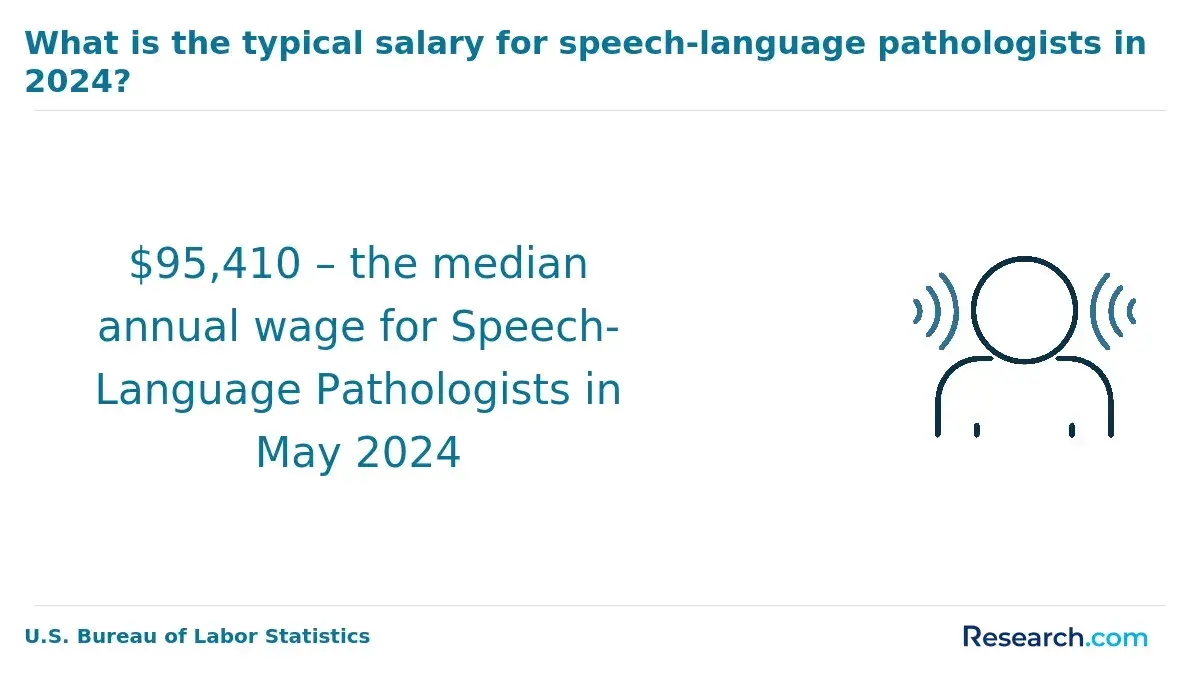
The advanced education and specialization have financial benefits. According to data from the Bureau of Labor Statistics, speech-language pathologists working in nursing and residential care facilities earn a median wage of $106,500, highlighting the demand for skilled voice specialists.
For more detailed insight, see speech pathologist salary with a master's degree.
How do I become a licensed SLP in voice or accent modification?
To become a licensed speech-language pathologist specializing in voice therapy in the United States, you must first earn a master's degree from a program accredited by the Council on Academic Accreditation in Audiology and Speech-Language Pathology (CAA).
This is followed by a clinical fellowship (CF), typically lasting 9 months full-time, where supervised experience in voice disorders or accent modification techniques is gained. Licensure requirements vary by state but always include passing the Praxis examination and completing the CF.
Certification through the American Speech-Language-Hearing Association (ASHA) as a Certificate of Clinical Competence (CCC-SLP) is highly recommended.
For accent modification therapists in the US, additional clinical hours in voice assessment or training in second language acquisition and phonetics are important. Specialization in fluency disorders requires at least 4.8 CEUs (48 hours) every three years focused on fluency topics, following ASHA Specialty Recognition guidelines.
Experience through internships or workshops in dialect coaching, voice therapy, or bilingual speech development strengthens expertise in accent modification. Passion for detailed assessment, cultural sensitivity, and strong communication skills are essential.
Candidates often face challenges finding specialized clinical placements but networking and joining interest groups can help. Those interested in advancing their credentials may explore a speech pathology accelerated program to fast-track education while gaining relevant clinical exposure.
Bachelor's degrees that lead to careers in voice, fluency, and accent modification typically include communication sciences and disorders, linguistics, psychology, or related health sciences. These programs provide foundational knowledge in speech, language development, and auditory processes.
Coursework often covers anatomy and physiology of speech mechanisms, phonetics, and language acquisition, preparing students for graduate study. Many individuals exploring speech pathology bachelor's and master's degree programs also consider options that include clinical and practical experiences.
Master's degrees, usually a Master of Science (M.S.) or Master of Arts (M.A.) in Speech-Language Pathology, are essential for licensure as a speech-language pathologist. Accredited programs include supervised clinical experiences in voice therapy, fluency disorders, and accent modification.
Specializations or electives in bilingualism and multicultural communication are increasingly important as demand rises in diverse communities. Some programs offer bilingual tracks focusing on Spanish and English fluency, equipping graduates to serve broader patient populations.
Accent modification careers especially benefit from expertise in phonetics and second-language acquisition theories. Emphasizing these strengthens practitioners' ability to work effectively with clients from varied linguistic backgrounds.
According to the Bureau of Labor Statistics, Occupational Outlook Handbook from May 2024, opportunities are particularly favorable for speech-language pathologists bilingual in languages such as Spanish, reflecting growing demand across multicultural populations.
Prospective students should verify that graduate programs are accredited by the Council on Academic Accreditation in Audiology and Speech-Language Pathology (CAA) to ensure certification and licensure eligibility.
For those researching options, exploring SLP online programs can provide additional pathways to enter the field.
Voice and fluency speech-language pathology programs equip students with in-depth knowledge of vocal anatomy, speech acoustics, and neurological factors affecting fluency. Coursework covers identifying voice disorders like vocal nodules and muscle tension dysphonia, along with fluency issues such as stuttering and cluttering.
Diagnostic training includes perceptual voice evaluations and instrumental techniques like laryngoscopy and stroboscopy, as well as fluency assessments using frequency counts and severity ratings.
Treatment methods differ by condition: voice therapy focuses on vocal hygiene, phonation exercises, and resonance improvement, while fluency therapy incorporates fluency shaping, stuttering modification, and cognitive-behavioral approaches. Clinical practicums provide hands-on experience with diverse populations, including children with developmental fluency concerns and adults recovering from vocal surgery.
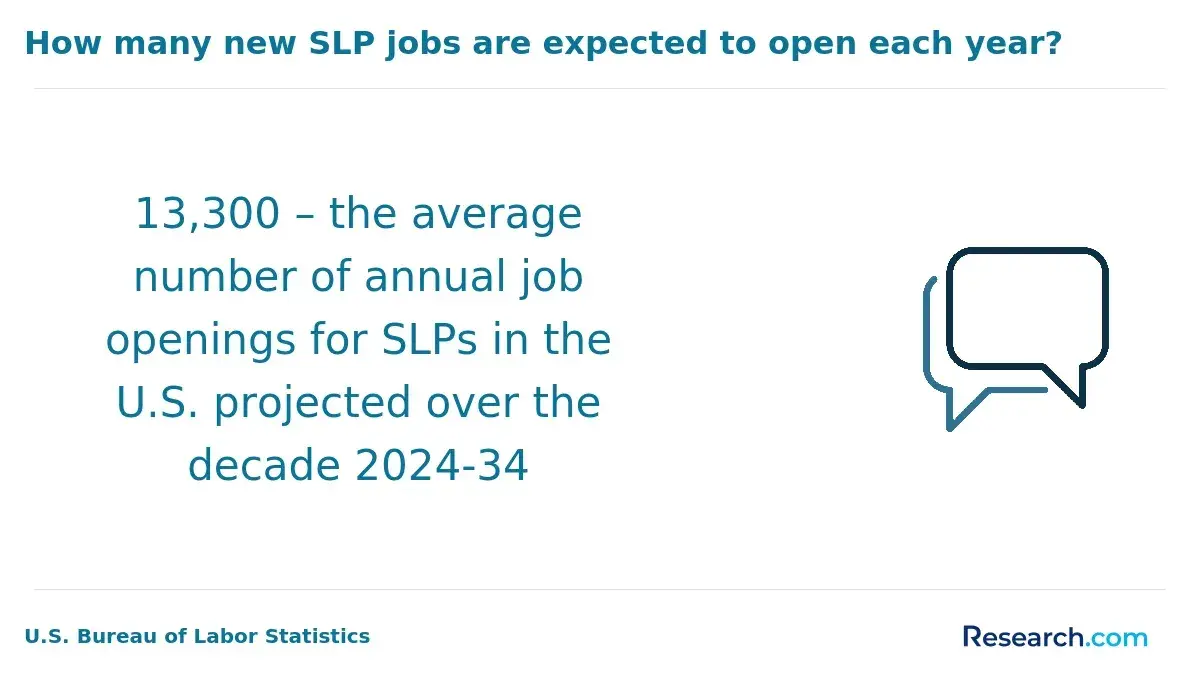
Students also explore advanced biofeedback technologies, ethical practice, cultural sensitivity, and interdisciplinary collaboration, all critical for effective care. The U.S. Bureau of Labor Statistics anticipates about 13,300 job openings for speech-language pathologists annually through 2034, highlighting strong demand driven by retirements and workforce growth.
These programs prepare graduates to enter a competitive job market by combining evidence-based protocols with practical experience, enabling clinicians to address specialized voice and fluency needs confidently.
Top programs for speech pathology careers in voice, fluency, and accent modification offer varied formats to suit different learning needs.
Online options, such as those at the University of Cincinnati and the University of Wisconsin, provide ASHA-accredited curricula designed for working professionals. These programs combine flexible remote coursework with opportunities for local clinical practicum, essential for specialties like fluency and accent modification.
Campus-based programs, including those at Vanderbilt University and the University of Iowa, emphasize hands-on training through extensive in-house clinics and direct mentorship from faculty experts. These settings often provide access to advanced equipment, benefiting students seeking immersive clinical experiences despite a less flexible schedule.
Choosing between online and campus formats largely depends on access to essential clinical facilities critical for developing skills in voice therapy and accent modification. Employers increasingly value comprehensive clinical practicum alongside academic credentials.
According to the ASHA 2025 SLP Health Care Survey Annual Salary Report, median salaries for CCC-SLPs in administrative health care roles reached $114,000, underlining the advantage of advanced specialization often bolstered by research opportunities in campus programs.
Prospective students should consider accreditation, clinical support, and program flexibility. Online learners may leverage local partnerships for clinical hours, while campus students benefit from immediate supervised practice. Both pathways can lead to strong career outcomes aligned with individual goals.
Admission requirements for SLP graduate programs typically include a bachelor's degree in communication sciences and disorders or a related field.
Applicants without this background must often complete prerequisite courses like anatomy, physiology, phonetics, and linguistics. Competitive programs usually expect a minimum undergraduate GPA of 3.0, with some selective schools requiring 3.5 or higher.
Most programs ask for GRE scores, emphasizing verbal reasoning and writing, although some waive this for strong recent academic performance or relevant professional experience. Applicants also need two or three letters of recommendation from instructors or supervisors who can vouch for their aptitude and commitment.
Clinical observation hours, usually between 25 and 50, are another common prerequisite. These documented experiences with licensed speech-language pathologists allow applicants to understand the profession's demands across various settings.
For example, offices of physical, occupational, and speech therapists employ about 26% of SLPs, with an average annual salary of $96,540.
Personal statements detailing career goals and motivation are standard, giving candidates a chance to highlight specialties such as voice, fluency, or accent modification. Some programs conduct interviews to assess communication skills and professionalism. Prospective students should carefully review individual program requirements to tailor their applications accordingly.
The demand for voice fluency speech-language pathologists (SLPs) is projected to grow substantially, with employment expected to increase by 17% between 2025 and 2035.
This surge, adding roughly 40,500 new positions, outpaces many other professions and is largely driven by federal mandates like the Individuals with Disabilities Education Act (IDEA), which expands speech therapy services in schools and healthcare facilities.
High demand exists for specialists addressing fluency disorders such as stuttering, cluttering, and neurogenic stuttering. Settings needing these experts include schools, clinics, and hospitals. Additionally, voice therapy for professions relying heavily on vocal performance, like teachers, broadcasters, and performers, is an expanding niche.
Accent modification is another fast-growing specialty, propelled by globalization and increasing migration. SLPs trained in accent modification assist non-native English speakers in enhancing their communication clarity and effectiveness in social and professional environments. This area frequently overlaps with voice and fluency expertise, broadening career opportunities.
Jobs for fluency SLPs extend beyond traditional education into telepractice, private practice, and corporate consultancy roles. Staying current with evidence-based techniques can secure stable, rewarding employment in this field.
The average salary for speech-language pathologists (SLPs) specializing in accent modification generally ranges from $65,000 to $85,000 annually, influenced by experience, location, and work setting.
This reflects the demand for services that improve clients' clarity in professional and social spheres. Clients often come from business, education, and healthcare fields seeking customized coaching to reduce accents or adjust speech patterns.
SLPs employed in nursing care facilities earn significantly higher wages, with a mean annual salary of $108,640, according to the Bureau of Labor Statistics' Occupational Employment and Wages report from May 2023. Although accent modification services may be less prevalent in nursing homes, this highlights the premium on specialized speech services within healthcare.
Location plays a key role in salary potential. Urban areas with diverse populations and strong corporate sectors, such as California and New York, typically offer salaries at the upper range due to higher demand and living costs.
To boost earning potential, SLPs can pursue certification or additional training in accent modification techniques and cultural competence. Contracting with corporate clients or entering private practice often provides greater flexibility and higher rates.
How to choose an accredited SLP program for these careers?
Accredited speech-language pathology programs are essential for careers specializing in voice, fluency, and accent modification. Accreditation by the Council on Academic Accreditation in Audiology and Speech-Language Pathology (CAA-ASLP) ensures your education meets high standards required for licensure and employment.
Look for programs offering specialized coursework and clinical practicum experiences in voice disorders, fluency interventions, and accent modification techniques.
Faculty qualifications matter. Those engaged in relevant research provide up-to-date, evidence-based training. Strong clinical partnerships with hospitals or multicultural communities enhance hands-on learning opportunities.
Program formats vary, including full-time on-campus, hybrid, and online options. However, confirm that clinically supervised hours are not compromised, as they are mandatory for certification.
Specializing in speech-language pathology is timely and strategic. Choosing an accredited, focused program increases your credentials and readiness for this expanding profession.
Other Things You Should Know About Speech Pathology
An SLP needs a state license and the ASHA Certificate of Clinical Competence in Speech-Language Pathology (CCC-SLP) to practice independently in most settings. For university or school roles, many employers also expect completion of a 400-hour clinical fellowship and passing the Praxis Speech-Language Pathology exam.
Yes, speech pathologists can pursue advanced certifications and continuing education to deepen their expertise. Specialized workshops, courses, and certifications offered by professional associations can enhance clinical techniques in voice therapy, fluency shaping, or accent modification. This ongoing education helps clinicians stay current with best practices and new treatment modalities.
These specialists work in a variety of environments including hospitals, private clinics, rehabilitation centers, educational institutions, and corporate settings. Some also provide telepractice services, expanding their reach to clients remotely. Opportunities exist in performing arts centers and speech coaching for professionals seeking to improve vocal performance.
- U.S. Bureau of Labor Statistics - Speech-Language Pathologists https://www.bls.gov/ooh/healthcare/speech-language-pathologists.htm
- ASHA EdFind - Accredited Speech-Language Pathology Programs https://find.asha.org/ed/
- O*NET OnLine - Speech-Language Pathologists https://www.onetonline.org/link/summary/29-1127.00
- Idaho State University - Master of Science in Speech-Language Pathology (Online/Distance Education) https://www.isu.edu/slp/programs-offered/slp-graduate-program/
- Baylor University - Master of Science in Speech-Language Pathology (Online) https://csd.robbins.baylor.edu/graduate/online-csd-graduate-program
- West Virginia University - Speech-Language Pathology, M.S. - Online https://medicine.hsc.wvu.edu/communications-sciences-and-disorders/speech-language-pathology-ms/future-students/curriculum/online-slp-program/
- University of Wisconsin-Eau Claire - Master of Science in Speech-Language Pathology (Online) https://www.uwec.edu/speech-language-and-hearing-sciences-department/graduate-program/speech-language-pathology-online
- Delaware Valley University - Master of Science in Speech-Language Pathology (M.S.) https://delval.edu/programs/graduate-programs/speech-language-pathology