2027 SLP Clinical Placement Delays: Program Policies That Can Affect Graduation

Co-Founder and Chief Data Scientist

Reviewed by Rhea Paul, PhD
SLP Education & Research Expert
A delayed clinical placement can turn a carefully planned speech-language pathology degree into an extra semester, added living costs, and a later Clinical Fellowship or license application.
This guide is for current and prospective SLP graduate students who need to understand where delays come from, what schools must communicate, and how to compare placement policies before enrolling. You will learn how clinical-hour rules, site capacity, academic standing, state requirements, and escalation procedures can affect your graduation date.
Key Things You Should Know
- ASHA certification standards require at least 400 supervised clinical practicum hours, including 375 direct client-contact hours and 25 guided observation hours; a missed or incomplete placement can therefore delay degree completion.
- A program may arrange sites without guaranteeing a placement by a particular term, and policies involving geographic limits, student priority, background checks, remediation, or site eligibility can determine who is placed first.
- Before enrolling or accepting a delay, obtain the written clinical handbook, confirm the school's expected completion timeline, ask for placement-outcome data, and document how any delay affects financial aid, graduation, state licensure, and Clinical Fellowship timing.
How do SLP clinical placement delays arise from specific graduate program policies and practices?
SLP clinical placement is the supervised practicum experience in which students provide evaluation, treatment, counseling, documentation, and related services under qualified supervision. Programs generally sequence early clinic work, specialty rotations, and full-time externships because students must demonstrate readiness before progressing. A delay occurs when the planned sequence breaks and the student cannot start, complete, or receive credit for a required experience on schedule.
Not every delay reflects poor program management. Hospitals, schools, early-intervention agencies, and private practices may change staffing, discontinue student supervision, restrict access, or require new onboarding steps. Still, the program's written policies determine how much risk the student carries when a site falls through.
The following policy features commonly affect the likelihood and consequences of a delay.
| Policy or practice | How it can delay graduation | What a student should verify |
| Clinical readiness gate | A student cannot begin an externship until specified courses, competencies, or internal-clinic benchmarks are complete. | Exact benchmarks, appeal rights, reassessment timing, and whether failure adds a full term. |
| Placement geographic radius | Limiting sites to a small region can reduce available options, particularly for specialty or medical placements. | Whether travel, relocation, commuting, or out-of-area placements may be required. |
| Student-arranged placement model | Students may spend months finding a site, while the university still must approve the affiliation and supervisor. | Who contacts sites, who executes contracts, and what happens if no approved site is found. |
| Fixed cohort sequencing | A missed fall or spring rotation may not be offered again until the following cohort cycle. | Whether an off-cycle clinical section, summer placement, or alternative site is available. |
| Site onboarding requirements | Late immunizations, drug screens, fingerprints, training modules, or insurance documents can prevent a start date. | Deadlines, costs, renewal rules, and whether a delayed clearance forfeits the placement. |
| Supervisor or site approval | A proposed supervisor may not meet program, state, or ASHA supervision requirements. | How credentials are verified and whether the program can substitute a site quickly. |
Read the clinical handbook rather than relying solely on a recruitment presentation. Terms such as "we place students," "placement support," and "access to a placement network" are not necessarily a guarantee that every student will receive a placement in a particular location or semester.
A common mistake is treating admission as proof that all later clinical requirements are secured. A stronger approach is to ask admissions and the clinical education office separate questions: whether the school guarantees a placement, whether it guarantees timing, and whether it guarantees a placement within a stated commuting distance. Those are materially different commitments.
Which SLP program clinical hour and clock-hour rules can push back a student's graduation date?
For the ASHA Certificate of Clinical Competence in Speech-Language Pathology (CCC-SLP), applicants must complete a graduate degree from a CAA-accredited program, required academic and clinical preparation, a Clinical Fellowship, and the Praxis examination. The supervised clinical practicum component includes at least 400 hours: 25 guided observation hours and 375 direct client-contact hours. Programs may require more than this minimum or impose distribution requirements across age groups, settings, disorders, or service types.
Clock hours matter because a student may be physically present at a site but not earn enough qualifying direct-contact hours. Cancellations, client no-shows, indirect tasks, documentation time, trainings, and some meetings may be educationally valuable without counting as direct client contact for the required total. The program's tracking method and its interpretation of qualifying activity are therefore important.
This comparison separates the widely used certification floor from rules that can create program-specific scheduling pressure.
| Requirement area | Baseline or common rule | Potential graduation impact |
| Guided observation | At least 25 hours are required for ASHA certification. | Students who do not complete observation early may be barred from later practicum courses. |
| Direct client contact | At least 375 hours of the 400 total practicum hours must involve direct client contact. | An externship can end on time yet leave a student short of qualifying hours. |
| Supervision documentation | Hours must be appropriately supervised and documented under applicable standards. | Hours may be rejected if logs, signatures, or supervisor qualifications are incomplete. |
| Program distribution rules | Programs may require experiences beyond national minimums. | A missing pediatric, adult, school, medical, or specialty experience may require an additional placement. |
| Course and competency prerequisites | Programs often require passing grades and demonstrated clinical competencies before advancement. | Repeating one prerequisite can move a student to the next available placement cycle. |
Students considering compressed timelines should distinguish accelerated coursework from accelerated clinical access. An accelerated SLP programs online can reduce the academic calendar in some formats, but a faster published course sequence does not eliminate site onboarding, supervisor capacity, or hour-completion requirements.
To protect the timeline, reconcile your hour log at least monthly with the program's official system. Ask in writing how the program handles a shortfall discovered near the end of a placement, whether make-up hours can occur concurrently, and whether an additional clinical registration carries tuition or fee consequences.
How do university placement guarantees, priority systems, and site contracts affect SLP practicum timing?
A true placement guarantee identifies what the institution promises: usually an approved clinical site necessary to complete the degree, not necessarily a preferred setting, city, population, schedule, or start date. Some programs provide a centralized placement office and assign sites; others expect students to locate prospects while the institution approves affiliations. Hybrid models are common.
Site contracts can be a hidden source of delay. Before a student may begin, the university and provider may need an affiliation agreement addressing liability, supervision, privacy, health requirements, and responsibilities. Contract review may take time, and some large health systems use only existing partner schools. A site's verbal interest is not an approved placement.
When demand exceeds available slots, programs may use a priority system. The policy should say whether priority is based on cohort sequence, graduation eligibility, academic standing, application date, geographic flexibility, prior declined placements, or other criteria. A transparent priority process is not automatically unfair, but students need to know how it works before they make employment, housing, or loan decisions.
Ask the clinical coordinator these questions before committing to a program or accepting a placement:
- Does the program guarantee an approved placement needed for graduation, and does it guarantee a particular semester?
- Who is responsible for identifying sites, contacting them, obtaining contracts, and finding a replacement if a site withdraws?
- What settings and geographic areas have recent students actually received, and how often must students travel or relocate?
- What priority rules apply if there are more eligible students than available placements?
- Can a student decline a site without losing priority, delaying graduation, or incurring additional tuition?
- What written contingency plan applies when an assigned placement is canceled after the term begins?
A red flag is a school that describes a large site network but will not explain its assignment process, timing expectations, geographic reach, or recent placement outcomes. Another is a policy allowing the student to decline only at the cost of moving to the end of the queue, especially if the school has not explained travel expectations in advance.
In what ways do accreditation standards for SLP programs intersect with clinical placement timelines and delays?
The Council on Academic Accreditation in Audiology and Speech-Language Pathology (CAA) accredits eligible graduate education programs. Accreditation is crucial because ASHA certification and many state licensing pathways are built around graduation from a CAA-accredited program. It does not mean that every student is assured a preferred placement at a preferred time.
CAA standards address the program's ability to provide an educational experience with appropriate curriculum, assessment, faculty, resources, and clinical education. Programs must evaluate student progress and ensure that graduates meet required knowledge and skill outcomes. That accountability can lead a program to delay progression when a student has not demonstrated competence; advancing a student prematurely may be inconsistent with the program's responsibility to the public and the profession.
Accreditation status is especially important when a program is new, changing delivery models, or operating at multiple locations. "Accredited," "candidate for accreditation," and "seeking accreditation" are not interchangeable descriptions. A prospective student should verify the program's current CAA status and ask how accreditation status affects the graduating cohort, eligibility for certification, and the availability of clinical education.
Accreditation also does not replace a state licensure review. A CAA-accredited program may be academically sound while a student's preferred state has additional rules concerning coursework, background checks, examinations, supervised post-graduate practice, or school-based credentials.
If a clinical delay appears systemic rather than individual, students should first use the institution's published complaint and academic grievance processes. Concerns about a program's compliance with accreditation standards may be directed through the appropriate CAA complaint process, but accreditation complaints are not a substitute for seeking a time-sensitive individual academic remedy from the university.
How do state licensure and ASHA certification requirements shape minimum clinical experiences and scheduling pressure?
ASHA certification, state professional licensure, and school-based credentials overlap but are not identical. Most practicing SLPs need a state license, and many employers prefer or require the CCC-SLP. A school-based role may also involve a state education credential or education-agency requirements. Students should plan for the jurisdiction where they intend to practice, not assume that a degree alone completes every step.
After the graduate degree and qualifying practicum, ASHA's Clinical Fellowship generally requires at least 36 weeks of full-time professional experience, totaling at least 1,260 hours. A part-time fellowship takes longer because it must still satisfy the required hours and weeks. A graduation delay can therefore cascade into a later fellowship start, later credentialing, and a later job transition.
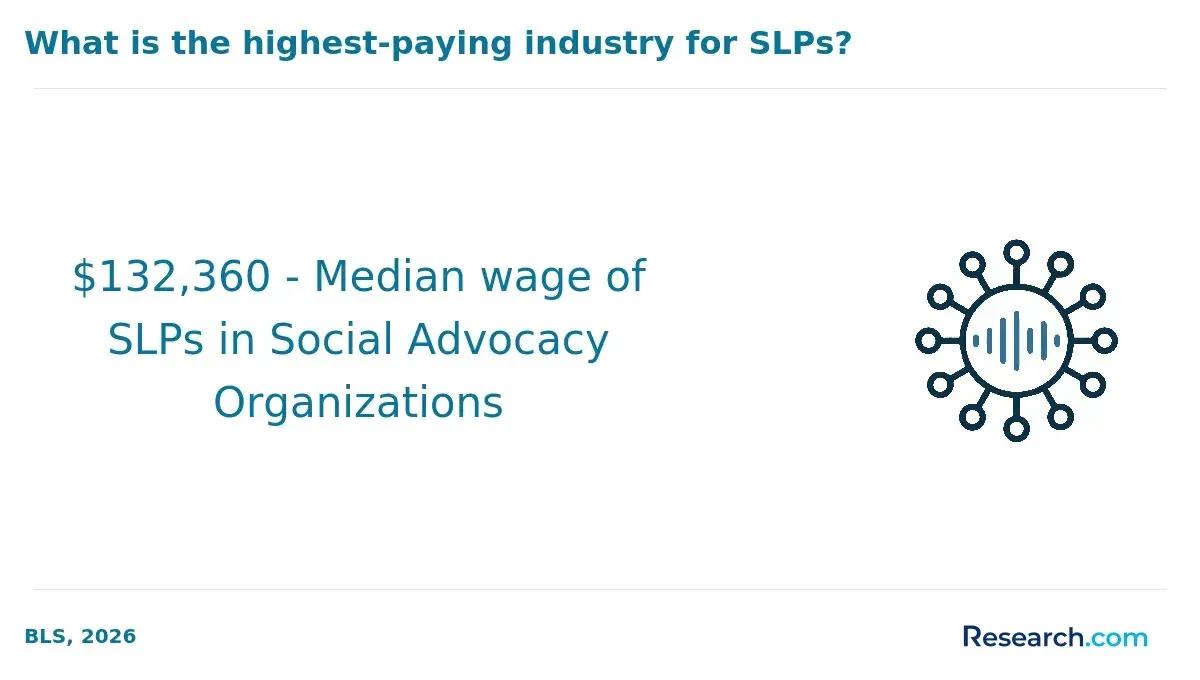
The profession's demand makes timing meaningful, but it does not erase state-specific requirements. The U.S. Bureau of Labor Statistics reports a median annual wage of $97,870 for speech-language pathologists in May 2025 and projects 17% employment growth from 2025 to 2035. Those national figures signal a growing field, not a promised starting salary or immediate job in a particular state. Readers weighing the financial cost of an added semester can compare career contexts through this overview of SLP salary.
Use this planning sequence to avoid discovering a licensing mismatch after clinical placement begins:
- Identify the state or states where you expect to seek initial employment.
- Review the current professional licensing board requirements and, if relevant, the state education agency's school credential rules.
- Compare those rules with the program's professional-licensure disclosures for your state of residence and intended practice.
- Confirm whether the program's practicum design, degree, and post-graduate support align with your planned path.
- Keep copies of clinical logs, supervisor evaluations, transcripts, and clearance documents in case a licensing board requests them.
Online and distance students should take an extra step: confirm both enrollment eligibility and placement eligibility in their home state. State authorization to enroll a resident is not the same as a determination that the curriculum fulfills professional licensure requirements there.
What program policies on part-time status, leaves, remediation, and professionalism can trigger extra clinical semesters?
Clinical sequencing is often designed for a full-time cohort. A part-time option can make graduate school more manageable for caregivers or working students, but it may extend the program by design and can limit access to placements that require daytime, full-week participation. A leave of absence can have similar consequences because a returning student may need to wait for the next available clinical course, site, or cohort opening.
Remediation policies deserve close review. Programs may require a student who does not meet academic, clinical, ethical, attendance, communication, or documentation expectations to complete a remediation plan before resuming clinical work. This can be appropriate when competencies need strengthening, but the policy should clearly state performance expectations, decision-makers, timelines, appeal rights, and whether an extra term is likely.
The practical trade-offs vary by enrollment choice.
| Situation | Why an extra term may result | Question to ask before acting |
| Switching to part-time status | Required clinical courses may be available only in a fixed full-time sequence. | Which clinical courses can be taken part-time, and what is the revised graduation map? |
| Taking a leave of absence | Sites and clinical courses may not be reserved during the leave. | Is readmission guaranteed, and will I return at the same point in the clinical sequence? |
| Repeating a course | A repeated prerequisite may block the next practicum or externship. | Can the course be repeated immediately, and which placement cycle would I miss? |
| Clinical remediation | The student may need additional supervised practice before progression. | What measurable criteria end remediation, and who determines readiness? |
| Professionalism or compliance issue | A site may remove a student or the program may pause placement pending review. | What conduct standards apply, what evidence is considered, and what appeal process exists? |
Cost is not limited to tuition. An added term may affect housing, transportation, health insurance, lost wages, loan borrowing, and the timing of full-time employment. Students comparing lower-cost options should examine both published tuition and the structure that makes on-time clinical progression realistic; guides to the cheapest online SLP programs can be a useful starting point, but affordability should be assessed alongside placement support and state eligibility.
Do not make a leave, reduced-load, or withdrawal decision based only on an informal assurance that you can "pick up where you left off." Request an updated written degree plan showing courses, clinical placements, expected graduation, tuition implications, and any requirements that must be repeated.
How do workforce shortages, school district constraints, and healthcare site capacity contribute to SLP placement bottlenecks?
Clinical education depends on practicing SLPs who can supervise while maintaining patient, student, documentation, and productivity responsibilities. A strong employment market can increase demand for licensed clinicians while reducing the spare supervisory capacity available to host trainees. The BLS projection of about 12,500 openings for speech-language pathologists each year on average from 2025 through 2035 helps explain why sites may prioritize direct service needs even as programs seek more placements.
School districts can face staffing vacancies, caseload pressures, budget limits, calendar constraints, and requirements for student background clearances. Healthcare settings may face productivity demands, fluctuating census, patient-acuity considerations, infection-control procedures, and limits on which clinicians may supervise. Early-intervention providers may operate across wide service areas, making transportation and scheduling difficult for students.
These conditions do not mean clinical education is unavailable. They mean students should evaluate a program's operational response rather than assuming demand automatically creates more training seats. Stronger practices include maintaining diverse site relationships, preparing students early for onboarding, developing contingency placements, monitoring supervisor capacity, and communicating quickly when conditions change.
Technology can help with documentation training, telepractice exposure, scheduling, and remote supervision where permitted, but it is not a universal cure for placement scarcity. Telepractice must still meet program, payer, privacy, supervisor, client, and state requirements. Students should ask whether virtual services count toward the program's requirements and whether telepractice experiences are optional, supplemental, or central to the clinical plan.
For students willing to travel, geographic flexibility can expand options. The trade-off is real: a distant placement can add commuting costs, temporary housing needs, and less time for paid work or family responsibilities. Compare the total burden of travel against the financial impact of waiting for a local slot.
What disclosures about clinical placements must SLP programs provide under consumer-protection and transparency rules?
Disclosure obligations depend on the institution, delivery format, state, and issue involved. In general, federally participating institutions must make specified consumer information available, and institutions offering programs designed to meet professional licensure or certification requirements must provide required disclosures about whether the program meets educational requirements in the student's state. Distance-education students may also have information about state authorization and complaint processes available through the institution.
These disclosure rules do not necessarily require a school to publish every operational detail about clinical placement capacity or guarantee a particular externship. However, students should expect clear, non-misleading information about the program's format, requirements, costs, accreditation status, and professional licensure implications. If marketing suggests a reliable route to graduation but the handbook shifts extensive placement risk to the student, ask the school to reconcile the statements in writing.
Before enrolling, save dated copies of the materials that informed your decision. The following records are especially useful if a concern later needs formal review.
- The clinical education handbook, catalog, student handbook, and progression policies in effect for your cohort.
- Written statements about who arranges placements, expected location or travel requirements, and any timing guarantee.
- Professional licensure disclosures for your state of residence and intended state of practice.
- Estimated tuition, clinical-course charges, health-screening costs, travel costs, and policies for additional terms.
- Emails confirming assigned sites, start dates, canceled placements, required remediation, or revised graduation plans.
Be precise when raising a concern. "I am unhappy with my placement" is different from "the published materials said the university arranges required placements, but I have been told to secure one independently after completing all eligibility requirements." The second statement identifies a verifiable policy question and makes it easier for the institution to investigate.
Consumer-protection remedies are fact-specific. Internal academic appeal channels, institutional complaint procedures, state higher-education agencies, state authorization complaint processes, accreditors, and legal counsel can have different roles. Students facing a serious financial or licensing consequence should obtain individualized advice rather than assuming one complaint route will pause a deadline or produce a particular outcome.
How can current and prospective SLP students audit a program's clinical placement track record before enrolling?
The best time to assess placement risk is before paying a deposit, but current students can conduct the same audit when an assignment appears uncertain. Focus on documented operating practices rather than broad claims about reputation, network size, or online convenience.
Start by comparing schools on the questions that most directly affect completion. A program that is highly selective may have a different clinical capacity profile than a program with broader access; applicants researching the easiest SLP programs to get into should still treat accreditation, clinical sequencing, and placement responsibility as non-negotiable comparison factors.
| Audit category | Evidence to request or review | Why it matters |
| Accreditation and state eligibility | Current CAA status and licensure disclosures for your state. | Protects against enrolling in a program that may not support your certification or licensing path. |
| Placement responsibility | Handbook language stating whether the school, student, or both secure sites. | Shows where the logistical burden and risk sit. |
| Timing and completion | Published program map, clinical sequence, and information on delayed or off-cycle placements. | Clarifies whether one disruption can add a full semester or year. |
| Location and travel | Written policy on commuting radius, relocation, out-of-state placements, and student costs. | Prevents an avoidable mismatch with work, caregiving, or financial constraints. |
| Recent outcomes | De-identified information on placement timing, completion rates, and common settings where available. | Tests whether the stated model works in practice for comparable students. |
| Contingencies and appeals | Policies for site cancellation, remediation, reassignment, grievances, and leaves. | Shows how the program manages foreseeable disruptions. |
Use an organized process rather than relying on a single admissions conversation:
- Download the current catalog and clinical handbook, then highlight policies on eligibility, placement assignment, travel, remediation, dismissal, leaves, and extra-term registration.
- Ask the clinical education office for answers in writing, particularly if you need local placement, part-time study, disability accommodations, or a specific state's licensure pathway.
- Ask whether the program can share recent aggregate information on placement timing and the range of settings used; if it cannot, ask how it monitors capacity and responds to cancellations.
- Compare the written answers with the program's marketing claims and with your own financial, employment, caregiving, and relocation limits.
- Calculate a contingency budget and calendar for at least one delayed term before deciding whether the program's risk profile is acceptable.
Applicants should be wary of two opposite mistakes: rejecting a program solely because it cannot promise a local hospital placement, or enrolling because an advisor says placement "should be fine." A realistic program may disclose travel and uncertainty candidly while having a strong record of helping students complete. The key question is whether its commitments, capacity, and contingency planning fit your circumstances.
What escalation options do students have when SLP clinical delays threaten financial aid, graduation, or licensure timing?
Act early. A student who waits until the scheduled graduation term may have fewer options because clinical sites, course sections, financial-aid adjustments, and degree-audit deadlines may already be fixed. Keep communication professional, factual, and focused on the remedy needed.
Begin with the clinical coordinator or director of clinical education, then follow the chain of responsibility set out in the handbook. Explain your status, completed prerequisites, hours remaining, assignment history, relevant written policy, and specific requested resolution. Examples include a replacement site, a written revised graduation plan, a make-up hour plan, a review of priority status, or an expedited decision on clinical readiness.
When the issue has broader academic or financial consequences, coordinate with other offices rather than assuming the clinical office can resolve everything. The following escalation path is often useful.
- Request a written meeting summary and a timeline from the clinical education office.
- Meet with the program director or department chair if the issue is unresolved, especially when the dispute concerns policy interpretation or progression.
- Contact the registrar or degree-audit office to confirm the exact remaining graduation requirements and the earliest possible conferral date.
- Speak with financial aid about satisfactory academic progress, enrollment changes, aid eligibility, loan limits, and the consequences of an additional term before changing registration.
- Use the formal academic grievance, appeal, accommodation, or student complaint process identified in institutional policy when appropriate.
- If an external complaint route may be relevant, preserve documents and first understand that organization's scope, deadlines, and authority.
Bring documentation, not assumptions. Useful records include the admissions materials, catalog year, clinical handbook, emails, hour logs, course grades, clearance submissions, assignment notices, and notes of meetings. Ask decision-makers to identify the policy language they are applying and whether an exception, substitution, independent study, or alternative placement is permitted.
Financial aid requires particular care. An added clinical semester can alter enrollment status, satisfactory academic progress, cost of attendance, and loan eligibility. Do not withdraw from a course, decline an assignment, or take leave based on verbal advice alone when federal aid, scholarships, employer tuition benefits, or private loans are involved. Obtain written confirmation of the academic and financial effects first.
If a delay affects a planned Clinical Fellowship or job offer, tell the prospective employer only what is necessary and as soon as you have a reliable revised timeline. Employers may be able to adjust a start date, but students should not represent that a degree or license will be completed by a date the institution has not confirmed.
Other Things You Should Know About Speech Language Pathology
Yes. Some programs use a student-assisted or student-arranged model, particularly for distance learners, while others centrally assign sites. The critical issue is the written policy: confirm who is responsible for outreach, contracts, supervisor approval, and finding an alternative if your proposed site is unavailable.
No. Direct client-contact hours and guided observation hours have specific requirements. Activities such as orientation, paperwork, meetings, canceled sessions, and travel may be required by a site but may not count as qualifying direct clinical contact. Use the program's official tracking rules.
Usually not if the remaining hours or competencies are degree requirements. You may need to remain enrolled in a clinical course or complete an additional placement before the university can certify degree completion. Confirm the exact requirement with the registrar and program director.
Not necessarily. A delay can postpone the degree, Clinical Fellowship, licensure application, and employment timeline, but it does not automatically end the path. Resolve the reason for the delay, obtain a written completion plan, and verify all requirements with the relevant program and state licensing board.
References
- Preparing for Practice: How Clinical Placements Shape... https://www.usa.edu/blog/preparing-for-practice-how-clinical-placements-shape-you-as-a-future-speech-language-pathologist/
- Clinical Placements and Graduation Delays https://www.communitycollegereview.com/blog/clinical-placements-and-graduation-delays