2027 Completing SLP Clinical Placements at Your Current Employer: Approval and Supervision Rules

Co-Founder and Chief Data Scientist

Reviewed by Rhea Paul, PhD
SLP Education & Research Expert
Using your current workplace for an SLP clinical placement can reduce commuting and make graduate school more manageable, but paid employment does not automatically become practicum. Your university must approve the site, your work must meet clinical education requirements, and supervision must be independent enough to protect clients and preserve fair evaluation.
This guide explains when employer-based hours may count, what must be documented, and how to verify that a placement supports future certification and state licensure.
Key Things You Should Know
- For ASHA certification, graduate students need at least 400 supervised clinical practicum hours, including 375 direct client-contact hours and 25 observation hours; a job site can count only when the university accepts the activities as practicum.
- ASHA does not individually approve employment-based placements. The CAA-accredited graduate program, placement site, qualified supervisor, and applicable state licensing board determine whether the arrangement is acceptable.
- Separate paid duties from student duties in writing. Hours performed without required supervision, documented competencies, client protections, or university authorization may not count toward graduation, the Clinical Fellowship, or licensure.
What do ASHA and state licensure rules say about SLP clinical hours at your current employer?
ASHA certification standards require graduate students to complete a minimum of 400 supervised clinical practicum hours. At least 375 hours must involve direct client or patient contact, while 25 may be guided clinical observation. The hours must be completed as part of a graduate program that meets Council on Academic Accreditation requirements and must be documented by the program.
ASHA requirements establish a national certification framework, not automatic permission to convert employment into training. State boards may impose additional rules for an initial license, educator credential, temporary license, or school-based role. A state may also define which supervisor licenses are acceptable, whether telepractice hours are permitted, and whether hours must be obtained before graduation.
The distinction below helps explain why verbal approval from a manager is not enough.
| Authority | Primary role | What it means for an employer-based placement |
| Graduate program | Approves sites, supervisors, learning activities, and hour records | The program decides whether work can be structured and counted as practicum. |
| ASHA | Sets certification standards, including practicum-hour expectations | ASHA generally does not preapprove an individual student's site or employment arrangement. |
| State licensing board | Sets legal requirements for professional licensure in that state | Rules may be more restrictive than ASHA standards and can vary by intended practice state. |
| Employer and site | Controls job scope, client access, privacy, insurance, and staffing | The site must permit student status, qualified supervision, and protected learning time. |
Before relying on workplace hours, ask your program's clinical education office to confirm approval in writing and ask the licensing board in the state where you expect to seek licensure whether any state-specific practicum rule applies. This matters especially for students in online or hybrid programs, including those comparing fully online SLP master's programs, because clinical sites and state authorization can differ by student location.
When is it allowed to count paid job duties as graduate SLP clinical practicum?
Paid work can sometimes count as practicum, but only if the duties are intentionally converted into a university-approved educational experience. Payment itself is not prohibited. The practical question is whether the work meets the program's clinical learning objectives and is supervised, evaluated, and documented as student practicum rather than ordinary employment.
An employer-based arrangement is more likely to be acceptable when the student has a defined trainee role, works with appropriate clients, receives required supervision, and completes competencies that the university can assess. It is less likely to be accepted when the employee is functioning independently in a role outside the SLP scope of practice or when the organization cannot accommodate university oversight.
Use these conditions as a screening test before requesting approval.
- The graduate program approves the site, supervisor, client population, activities, and planned hours before the practicum begins.
- The activities involve graduate-level speech-language pathology assessment, intervention, counseling, documentation, or related clinical competencies within the student's authorized scope.
- A qualified supervisor observes, teaches, provides feedback, and evaluates the student at the required frequency.
- The student's clinical hours are recorded separately from payroll, general administrative work, and tasks that do not involve eligible client contact.
- The site agreement addresses confidentiality, liability coverage, emergency procedures, background checks, and access to required records and equipment.
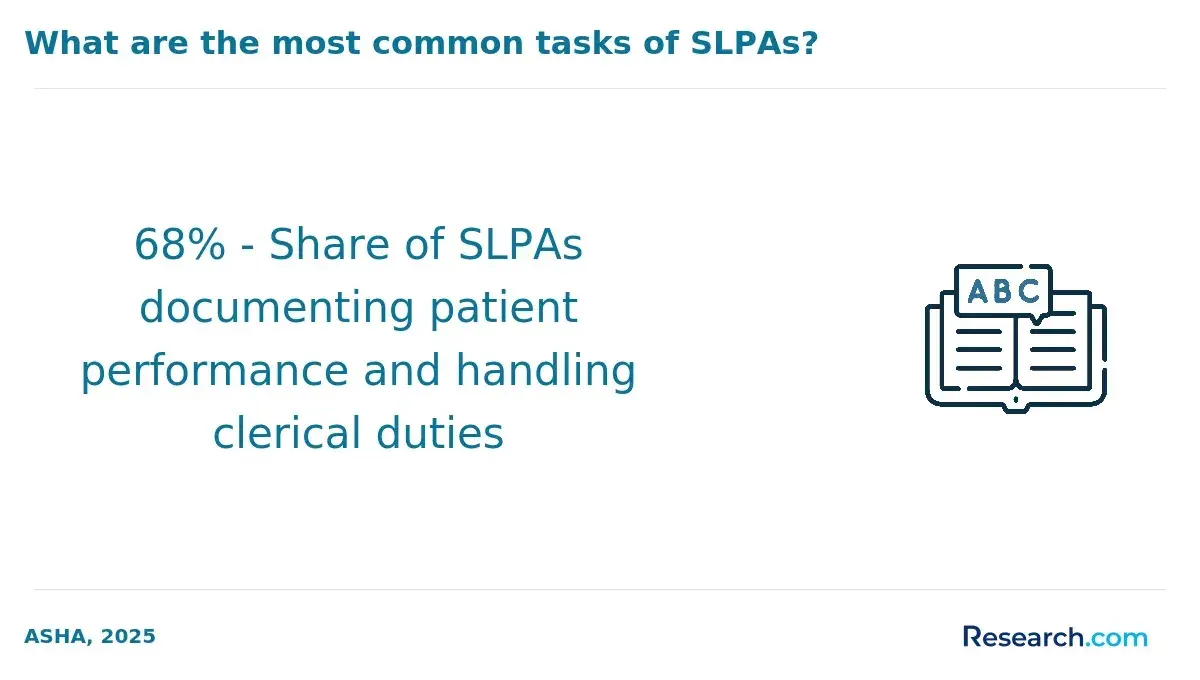
For example, an experienced speech-language pathology assistant who is enrolled in a master's program may have valuable workplace experience, but assistant duties do not automatically satisfy graduate practicum requirements. The university must determine which activities may be counted, under what supervision, and only after the site is approved.
Do not assume an accelerated schedule removes these safeguards. Students considering accelerated speech pathology programs should be particularly cautious: compressed terms can make it harder to replace hours that are later rejected because approval or supervision was incomplete.
How must supervision work when your SLP placement site is also your primary employer?
Supervision must remain clinical and educational even when the site is your employer. The supervisor should be able to observe your work, give corrective feedback, protect client welfare, and evaluate performance honestly. A supervisor who only signs hour logs after the fact is not providing adequate clinical supervision.
Under ASHA certification standards, the supervisor must hold the ASHA Certificate of Clinical Competence in the appropriate area of practice and meet ASHA's supervision preparation requirements. ASHA requires supervisors to have at least nine months of full-time clinical experience after earning certification and to complete at least two hours of professional development in clinical instruction or supervision after certification and before supervising students. Programs, states, and facilities may add stricter qualifications.
ASHA also requires direct supervision of at least 25% of a student's total contact time with each client or patient and 100% supervision of evaluation procedures. The supervisor must provide enough oversight to ensure client welfare, which can require more than the minimum when a case is complex, a student is new to a skill, or a client's condition changes.
The following comparison shows why ordinary line supervision and clinical supervision should not be treated as interchangeable.
| Supervision function | Employment setting | Clinical practicum requirement |
| Primary purpose | Manage productivity, attendance, staffing, and job performance | Develop clinical competence while protecting clients |
| Observation | May be occasional or performance-based | Must meet program and professional supervision requirements |
| Feedback | May focus on workplace expectations | Must address assessment, intervention, ethics, documentation, and professional skills |
| Evaluation | May affect pay, scheduling, or discipline | Must accurately assess academic and clinical competency |
A separate clinical supervisor is often the cleanest model when your manager controls pay, promotion, or discipline. If the same person must serve both roles, the university should determine whether safeguards are sufficient and whether another faculty member or site clinician should participate in competency evaluation.
What approvals are typically required from the university, site, and ASHA for same-employer placements?
A same-employer placement generally needs approval from the university and the clinical site before the student begins counting hours. ASHA does not ordinarily issue individual placement approvals, so a claim that a site is "ASHA approved" should be clarified. A site may host students from an accredited program, but the university remains responsible for determining whether the placement meets its clinical education standards.
Most programs require a clinical affiliation agreement, confirmation of supervisor qualifications, site onboarding, and a written plan for the student's experiences. The employer may also require HR review, a job-description amendment, liability verification, vaccination records, background screening, and client-consent procedures.
Approvals commonly follow this sequence.
- Ask the clinical education coordinator whether the program permits placements at a student's current employer and identify any policy against them.
- Submit the proposed site, supervisor credentials, job description, client population, schedule, and planned duties for university review.
- Have the university and employer complete or confirm the clinical affiliation agreement and any required liability, privacy, or background-check documents.
- Receive written approval before logging hours, then use the program's evaluation and tracking system throughout the placement.
- Confirm that the resulting hours align with the licensing requirements of the state where you plan to practice.
If a program says it cannot approve your employer, ask whether the problem is a contractual issue, supervisor qualification, conflict of interest, insufficient caseload variety, or a blanket policy. The answer identifies whether a different supervisor or department could solve the problem - or whether an external site is necessary.
How should your clinical contract distinguish practicum responsibilities from your regular SLP job?
Your employment documents and clinical affiliation agreement should make it possible to identify exactly which time is paid work, which time is practicum, and which activities may be credited. This protects the student, clients, employer, and university if hours are audited or a licensure application later raises questions.
A useful agreement does not need to eliminate payment, but it should avoid ambiguity. For example, it can state that the student remains an employee for payroll purposes while completing university-directed practicum under a named qualified supervisor during specified shifts.
The agreement or supporting practicum plan should address the following items.
- A separate practicum role description listing eligible clinical tasks, learning objectives, client populations, and excluded duties.
- A schedule identifying the practicum shifts, supervisor availability, planned observation time, and time reserved for feedback or conferences.
- A method for distinguishing practicum records from ordinary work time, including separate hour logs and supervisor verification.
- Clear authority for the clinical supervisor to intervene, alter assignments, or stop a session when client safety or learning needs require it.
- Privacy, documentation, billing, liability, and informed-consent procedures that identify the student's role accurately.
- A statement explaining how academic evaluation is separated from compensation, performance management, promotion, or disciplinary decisions.
Be especially careful with billing and titles. A student should not be represented to clients, insurers, or school districts as independently licensed when they are performing supervised practicum. If your current job title implies independent practice, the site may need a distinct student designation for practicum shifts.
What qualifications and workload limits apply to supervisors overseeing SLP students they also employ?
A qualified supervisor must have the credentials required by the university and, where applicable, the state. For ASHA certification purposes, the supervisor generally needs ASHA certification in the relevant practice area, at least nine months of post-certification full-time experience, and preparation in clinical supervision. A state or university may require an active state license, school credential, additional training, or a more restrictive experience threshold.
There is no single universal caseload number that makes supervision compliant. The decisive issue is whether the supervisor can meet direct-observation requirements, provide timely feedback, review documentation, and ensure client welfare while managing their own clinical and employment responsibilities. High productivity expectations, travel between sites, multiple students, or a large caseload can make a technically eligible supervisor practically unavailable.
Evaluate workload fit using these indicators.
| Supervisor factor | Lower-risk arrangement | Red flag |
| Availability | Scheduled observation and feedback time is protected | Supervisor is routinely off-site or unavailable during client sessions |
| Student load | Number of students permits individualized observation and evaluation | One supervisor is expected to oversee several students without adequate time |
| Employer role | Academic evaluation has independent input | Supervisor alone controls the student's pay, discipline, and grade |
| Caseload complexity | Assignments match student preparation and supervision capacity | Student is assigned complex cases as a staffing substitute |
| Documentation | Observations and feedback are recorded consistently | Hours are approved in bulk without specific supervisory evidence |
Students who are still selecting a speech pathologist degree pathway should ask how each program vets supervisors and handles employer-based placements. Admissions accessibility is less important than enrolling in a program that can arrange compliant clinical education in the states and settings available to you.
How can programs prevent conflicts of interest and power dynamics in employer-based SLP placements?
Employer-based placements can create a conflict when the person assigning work, approving pay, or deciding promotions also controls a student's clinical grade. The student may feel unable to report inadequate supervision or unsafe conditions, while the supervisor may feel pressure to prioritize productivity over training. These risks can be managed, but they should be addressed before the placement starts.
Effective safeguards create more than one reporting path and separate academic judgments from employment decisions where possible. Programs should tell students whom to contact confidentially if supervision falls short, hours are being counted inaccurately, or job consequences are being implied.
Practical safeguards include the following.
- Assign a faculty clinical educator or secondary supervisor to review competency evaluations and resolve disagreements.
- Use periodic university check-ins that occur without the student's manager present.
- Require documented feedback tied to clinical competencies rather than workplace productivity alone.
- Prohibit retaliation for raising concerns about supervision, client safety, discrimination, or inaccurate hour records.
- Maintain a clear process for moving the student to another site if the dual-role arrangement becomes unworkable.
A placement is not a good fit if you cannot safely say no to unsupervised work, request additional observation, or report a discrepancy in your hours. In that situation, an external placement may be less convenient but more defensible for graduation and licensure.
What documentation is needed to prove compliant hours, settings, and competencies at your job site?
Documentation should demonstrate what you did, when you did it, who supervised you, and how the experience advanced clinical competence. Keep records contemporaneously rather than reconstructing them at the end of a term. Programs commonly use their own tracking platform, and that system - not a payroll report alone - should be the primary record of clinical practicum.
A complete file usually includes more than a total-hour figure. It should allow the program to verify direct contact, observation, supervision, client populations, settings, evaluations, treatment, and competency performance.
Maintain the following records in the format your program requires.
- University site approval, affiliation agreement, and written employer-based practicum plan.
- Supervisor credentials, required licenses or certifications, and supervision-training confirmation.
- Daily or weekly hour logs separating direct client contact, observation, indirect activities, and non-creditable employment time.
- Records of direct observation, including dates, clients or de-identified identifiers, activity type, feedback, and supervisor sign-off.
- Midterm and final clinical evaluations tied to program competencies and any remediation plans.
- Evidence that the site met privacy, safety, background-check, immunization, and client-consent requirements.
Do not include protected health information in personal files unless your program specifically directs you to do so through an approved secure system. Use the university's required identifiers and follow the employer's privacy policies. If you later apply for licensure, keep copies of final verification documents because employers and supervisors can change over time.
How do union rules, HR policies, and labor law affect using your workplace for clinical training?
Employment law and workplace policies can affect whether an employer-based placement is feasible even when the university is willing to approve it. Collective bargaining agreements may define job classifications, supervision, workloads, overtime, seniority, assignments, and who may perform specific services. HR policies may also restrict students' access to electronic records, client data, billing systems, or protected treatment spaces.
Payment arrangements deserve careful review. A student may be paid while completing practicum, but the employer should determine how paid learning time is classified, whether overtime rules apply, and whether the student is expected to meet the same productivity standards as a fully credentialed clinician. Universities should not direct students to provide uncompensated labor that primarily replaces regular staff without an educational structure.
Before finalizing the arrangement, discuss these questions with HR, a union representative if applicable, and the clinical education office.
- Does the collective bargaining agreement permit a current employee to hold a supervised student role or modified assignment?
- Will practicum duties change the employee's classification, wages, benefits, overtime eligibility, or productivity expectations?
- Who provides professional and student liability coverage, and does the policy cover the planned duties?
- Can the student access records and technology under privacy rules while being accurately identified as a supervised trainee?
- Do workplace policies permit the university to evaluate the site and receive required student performance information?
These are workplace-specific questions, so neither ASHA standards nor a university affiliation agreement replaces HR or labor review. Get the answer in writing when a policy affects your schedule, pay, classification, or ability to meet clinical requirements.
What steps should SLP students take to verify their employer-based clinical placement will count for licensure?
The safest approach is to verify the placement before you rely on it for graduation planning. This is particularly important because speech-language pathology remains a high-demand occupation: the U.S. Bureau of Labor Statistics projects 17% employment growth from 2025 to 2035 and about 12,500 openings per year on average. Demand does not reduce licensure requirements, however; an avoidable practicum problem can delay entry into the field despite favorable prospects.
Follow this verification sequence and keep written evidence at each stage.
- Identify the state or states where you expect to seek initial licensure, including any school-based credential, and review the applicable board requirements.
- Read your graduate program's handbook for policies on current-employer placements, paid practicums, telepractice, supervisor eligibility, and minimum clinical experiences.
- Provide the clinical education office with your job description, proposed practicum duties, client population, work schedule, supervisor information, and potential conflicts of interest.
- Wait for written university approval and a completed affiliation agreement before counting any hours.
- Confirm that the supervisor's credentials, availability, and supervision training meet university, ASHA, state, and facility requirements.
- Use separate practicum logs, request regular feedback, and compare recorded hours with your plan throughout the term rather than only at the end.
- Save final hour verification and evaluations for future certification and licensing applications.
Career prospects can make the time investment attractive: the May 2025 median annual wage for speech-language pathologists was $97,870, according to the U.S. Bureau of Labor Statistics. That figure is a national median rather than a promise for a particular graduate, employer, or state, but it underscores why protecting the validity of required clinical training is financially important. For broader earnings context, review speech pathologist salary with a masters degree options alongside your state's licensing and employment conditions.
Common mistakes include asking for approval after beginning hours, assuming an SLP assistant role is identical to graduate practicum, relying on payroll records as hour verification, and allowing a supervisor to approve logs without observing clinical work. The better alternative is a written, preapproved plan with ongoing university oversight.
Other Things You Should Know About Speech Language Pathology
Possibly, but not automatically. An SLPA's employment duties count only if the graduate program approves them as supervised practicum activities and they meet applicable ASHA, university, site, and state requirements. Duties performed independently under an assistant scope may not qualify.
An employer can discuss available training options, but your university determines whether the placement is academically acceptable. You should not count hours until the program approves the site and supervisor. If the arrangement creates an unresolved conflict of interest or inadequate supervision, request another placement option.
They may count if your program permits telepractice, the site complies with privacy and state practice requirements, and qualified supervision is provided. Verify rules for the client's location as well as your own, because telepractice regulations and facility policies can vary.
Notify your clinical education coordinator immediately. Hours completed under compliant supervision may remain valid if properly documented, but future hours should not be counted until the university approves a replacement supervisor and updates the placement plan if necessary.
References
- SLP Clinical Fellowship Requirements & Complete Guide 2026 https://www.speechpathologygraduateprograms.org/slp-clinical-fellowship/
- Supervision FAQs - isha https://www.ishail.org/licensure/supervision-faq
- Illinois Administrative Code, Part 1465, Section 1465.35 https://regulations.justia.com/states/illinois/title-68/part-1465/section-1465-35/
- U.S. Department of Labor, Bureau of Labor Statistics. (2026). Speech-language pathologists. Occupational Outlook Handbook. https://www.bls.gov/ooh/healthcare/speech-language-pathologists.htm
- Council on Academic Accreditation in Audiology and Speech-Language Pathology. (2026). Accreditation decisions. American Speech-Language-Hearing Association. https://caa.asha.org/programs/accreditation-decisions/