2027 Best Business Schools in South Dakota – Accredited Colleges & Programs

Co-Founder and Chief Data Scientist
Choosing a business degree in South Dakota is not just a question of which school has the lowest tuition. Students also need to compare accreditation, internship access, online flexibility, concentrations, transfer policies, and how well each program connects to the state’s major industries, including healthcare, agriculture, finance, technology, tourism, and entrepreneurship.
This guide is for prospective undergraduates, working adults, transfer students, and graduate applicants comparing South Dakota business schools and business degree programs. It explains program formats, costs, timelines, career options, accreditation, financing challenges, and practical questions to ask before enrolling. It also highlights why South Dakota can be a practical location for business majors: the South Dakota Department of Labor and Regulation reported a 1.9% unemployment rate as of July 2023, and the state continues to promote a low-cost, business-friendly environment.
By the end, you should be able to narrow your options, understand which type of business credential fits your goals, and avoid common mistakes such as choosing a program without checking accreditation or assuming every online degree has the same career value.
Quick Answer: Are Business Programs in South Dakota Worth Considering?
Yes, South Dakota can be a strong option for business students who want relatively accessible public university options, smaller regional business networks, and career pathways connected to entrepreneurship, finance, management, accounting, healthcare administration, agriculture, tourism, and technology. The best choice depends on your goal: a bachelor’s degree is usually the entry point for many business roles, while an MBA or specialized master’s degree may be more useful for management, consulting, analytics, accounting, or executive-track positions.
Students should compare programs by accreditation, total cost, career services, internship access, online delivery quality, concentration options, and employer connections—not by tuition alone.
Best Business Programs in South Dakota Table of Contents
- Is South Dakota a strong state for business majors?
- What entrepreneurship opportunities can business graduates find in South Dakota?
- How long do business programs take at South Dakota business schools?
- What do South Dakota business programs cost?
- Why is accounting important in South Dakota’s business economy?
- South Dakota business schools offering business programs for 2027
- How do business programs create industry connections?
- How can online business programs broaden career options in South Dakota?
- How can psychology strengthen business leadership?
- How to choose a business program in South Dakota
- How can business skills improve community health services?
- How can certifications improve a South Dakota business career?
- What financing challenges should business students expect?
- Can forensic science skills support business integrity?
- How can business knowledge support healthcare and pharmaceutical careers?
- What other career paths can business graduates pursue?
- What makes a business administration career successful in South Dakota?
- How can legal knowledge strengthen a business degree?
- How can business programs support social impact work?
Is South Dakota a good place for business majors?
South Dakota can be a practical state for business majors who want to study in a lower-cost environment while building connections with regional employers and small-business communities. The state’s lower cost of living, high GDP and personal income growth, and reputation for business-friendly policies may appeal to students interested in management careers, entrepreneurship, accounting, finance, or operations.
The strongest fit is often for students who plan to work in South Dakota or nearby states after graduation. Local internships, alumni networks, and employer relationships can matter more in a regional job market than a school’s name alone. Students aiming for highly specialized national finance, consulting, or technology roles may still find good opportunities, but they should pay close attention to internship pipelines, career placement support, and alumni outcomes before choosing a program.
South Dakota also has momentum as a startup environment. A 2025 report from National Business Capital ranked South Dakota No. 1 among states for starting a new business, citing low costs, growth potential, and favorable startup survival rates. Sioux Falls has also received attention for corporate site selection and business friendliness. For students who want to launch a company, join a small firm, or work in regional economic development, those conditions can make the state especially relevant.
| South Dakota may be a good fit if you... | You may want to compare other options if you... |
| Want a business degree connected to regional industries such as healthcare, agriculture, tourism, finance, or small business. | Need a program with a very specific national recruiting pipeline in investment banking, elite consulting, or major tech hubs. |
| Prefer smaller or mid-sized institutions where faculty access and local networking may be easier. | Want a large metropolitan campus with extensive corporate headquarters nearby. |
| Plan to live or work in South Dakota after graduation. | Are unsure where you want to work and need a school with broad national alumni placement. |
| Are interested in entrepreneurship and lower operating costs for a future business. | Need a concentration that is not offered by South Dakota schools you are considering. |
What are the opportunities for business graduates in South Dakota for entrepreneurship?
Business graduates in South Dakota can find entrepreneurship opportunities in areas such as professional services, agriculture-related ventures, healthcare support, technology services, tourism, hospitality, construction, and community-based small businesses. The state’s tax structure, lower overhead costs, and small-business support ecosystem can make it easier for new founders to test ideas without the same cost pressure found in larger markets.
- Tax advantages: South Dakota’s low-tax environment, including no corporate income tax, can reduce pressure on early-stage businesses.
- Startup support: Organizations such as the South Dakota Center for Enterprise and the Governor’s Office of Economic Development can help founders explore funding, workshops, mentorship, and business planning resources.
- Lower operating costs: A lower cost of living can also mean more manageable office, labor, housing, and personal expenses for new entrepreneurs.
- Industry openings: Healthcare, agriculture, technology, tourism, and business services all create space for graduates who can solve operational, marketing, logistics, or financial problems.
- Local networks: Smaller business communities can make relationship-building more direct, especially for students who complete internships or projects while enrolled.
Before choosing a school with entrepreneurship in mind, ask whether students can work on live business plans, compete in pitch events, access faculty mentors, complete internships with startups, or connect with local chambers of commerce and economic development groups.
Business Program Length at South Dakota Business Schools
Business programs in South Dakota are available at undergraduate and graduate levels, with common fields including accounting, finance, management, marketing, entrepreneurship, business analytics, and general administration. Students comparing business administration programs and courses should look beyond the advertised program length and confirm whether transfer credits, summer terms, online courses, internships, or part-time enrollment will change their completion timeline.
| Credential | Typical time to complete | Best for | Important planning note |
| Bachelor’s Degree (BBA or BSBA) | About four years | Students seeking entry-level or early-career roles in business, management, marketing, finance, sales, or operations. | Most programs include general education, business core courses, electives, and sometimes internships or capstone projects. |
| Master’s Degree (MBA) | Full-time programs usually take 1 to 2 years; part-time programs can take 2 to 3 years. | Working professionals, career changers, and future managers who want broader leadership and strategy training. | Compare online, evening, executive, and full-time formats carefully because flexibility and networking vary widely. |
| Specialized Master’s Program | Usually 1 to 2 years | Students targeting focused roles in finance, accounting, marketing, analytics, supply chain management, or another specialty. | A specialized degree can be valuable when you already know the field you want to enter. |
| Ph.D. in Business or Business Administration | Often 3 to 5 years | Students interested in academic research, university teaching, or high-level research roles. | Expect advanced research methods, faculty mentorship, and a dissertation requirement. |
Graduate business education requires a larger time and financial commitment, but many alumni report that the investment can be worthwhile. A recent survey found that graduate business degree alumni viewed advanced business education as having a positive ROI. Based on recent ZipRecruiter data, the average annual salary for MBA degree holders working in business roles in South Dakota is approximately $189,277 per year.
Salary data should be used as a benchmark, not a guarantee. Actual earnings depend on experience, industry, employer size, location, job function, prior work history, and whether the degree leads to a promotion or career change.
Tuition and Costs of Business Programs in South Dakota
The cost of a business degree in South Dakota depends on the institution, degree level, residency status, delivery format, transfer credits, fees, housing, books, and time to completion. A low per-credit tuition rate can still become expensive if a student loses credits during transfer, takes longer than expected, or pays high technology, online, or program fees.
Undergraduate Programs
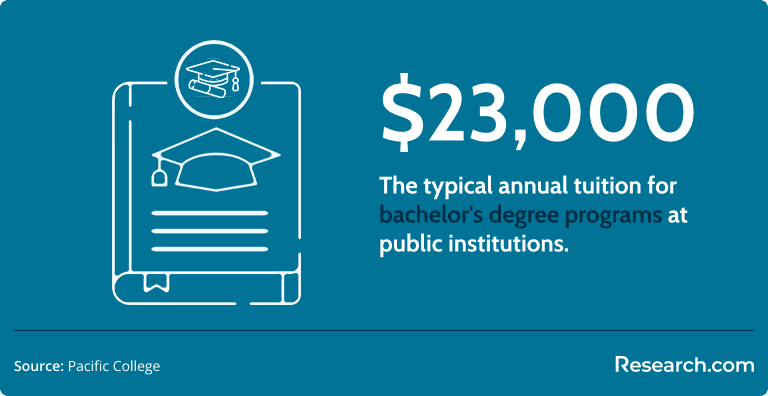
Undergraduate business programs usually combine general education courses with accounting, economics, finance, marketing, management, business law, analytics, entrepreneurship, and capstone requirements. Many programs also use case studies, internships, simulations, client projects, or experiential learning opportunities to connect classroom concepts to business practice. The typical annual tuition for full‑time undergraduates at public four‑year institutions in the United States was about $10,634 for in‑state students in the 2025–26 academic year (EducationData.org, 2025).
| Institution type | Typical tuition range stated for South Dakota programs | What to verify |
| In-state public universities | Around $7,000 to $10,000 or more per year | Mandatory fees, online course fees, housing, meal plans, and whether tuition differs by program. |
| Out-of-state public universities | Around $12,000 to $15,000 or more per year | Residency rules, tuition reciprocity, and whether online students pay a different rate. |
| Private colleges and universities | Around $15,000 to $25,000 or more per year | Institutional scholarships, net price after aid, and total four-year cost. |
Graduate Programs
Graduate business programs in South Dakota are designed for students who want advanced training in leadership, strategy, finance, accounting, analytics, healthcare administration, entrepreneurship, or another professional specialty. MBA programs tend to be broader, while specialized master’s programs are usually more focused on a single field.
Public colleges and universities in the United States typically cost about $11,950 per year for in‑state undergraduate tuition, whereas private nonprofit four‑year colleges average around $45,000 annually in tuition and fees for the 2025‑26 academic year (College Board, 2025). Students should also budget for fees, textbooks, software, housing, commuting, childcare, conference travel, and lost work hours. If affordability is your main concern, compare cheap online college business degree options as well as in-state public programs.
| Graduate option | Typical tuition range stated | When it may make sense |
| MBA Programs | In-state tuition for a full-time MBA at a public university might range from around $10,000 to $20,000 per year, with higher rates possible for out-of-state students. | You want leadership, management, strategy, or career-change flexibility. |
| Specialized Master’s Programs | Tuition may range from around $8,000 to $20,000 per year. | You want a focused credential in a defined area such as finance, marketing, accounting, or analytics. |
Financial aid may include scholarships, grants, loans, assistantships, work-study opportunities, and employer tuition benefits. Always compare the net price after aid, not just the advertised tuition.
The Role of Accounting in South Dakota's Business Landscape
Accounting is one of the most practical business specializations because every organization needs accurate financial records, tax planning, budgeting, compliance, internal controls, and performance reporting. In South Dakota, accounting skills are useful in public accounting firms, small businesses, nonprofits, government agencies, healthcare organizations, banks, farms, and growing startups.
Students who want a career in audit, tax, corporate finance, consulting, or controllership should understand the Certified Public Accountant pathway early. CPA requirements can affect course selection, total credits, exam timing, and whether a bachelor’s degree alone is enough for your goal. If accounting is your target field, review detailed guidance on how to become a CPA in South Dakota.
Accounting knowledge is also valuable for founders and managers who need to understand cash flow, pricing, payroll, tax obligations, risk, and financial sustainability. Even students who do not become accountants can benefit from stronger financial literacy, especially in small-business and entrepreneurial settings.
South Dakota Business Schools Offering Business Programs for 2027
Business credentials can lead to roles across finance, management, sales, operations, analytics, accounting, human resources, and entrepreneurship. According to the U.S. Bureau of Labor Statistics, the median annual wage for business and financial occupations was about $80,920 in May 2024, and overall employment in these occupations is projected to grow faster than the average for all occupations from 2024 to 2034.
The schools below represent notable South Dakota options with business programs at the bachelor’s level. Use this list as a starting point, then confirm current tuition, modality, concentrations, admission requirements, and accreditation directly with each institution before applying.
1. Black Hills State University Bachelor of Science in Business Administration
Black Hills State University offers a business administration degree built around broad business preparation and multiple concentration choices. The program may appeal to students who want a public university option with opportunities to connect coursework to internships, practicums, and faculty-guided learning.
| Category | Program details |
| Program length | 4 years |
| Tracks/concentrations | Accounting; Economics and Finance; Entrepreneurial Studies; Human Resource Management; Business Management; Marketing; Tourism and Hospitality; Professional Accountancy |
| Cost per credit | $253.85 |
| Required credits | 120 |
| Accreditation | Association to Advance Collegiate Schools of Business (AACSB) |
2. Dakota State University Bachelor of Business Administration
Dakota State University is known for technology-oriented education, which can be useful for business students interested in analytics, business systems, digital commerce, or technology-enabled management. Its BBA curriculum covers core business areas while allowing students to pursue targeted tracks.
| Category | Program details |
| Program length | 4 years |
| Tracks/concentrations | Accounting; Business technology; Finance; Management; Marketing |
| Cost per credit | $259 |
| Required credits | 120 |
| Accreditation | Accreditation Council for Business Schools and Programs (ACBSP) |
3. Dakota Wesleyan University Business Administration Degree
Dakota Wesleyan University provides a business administration program with concentrations that may suit students interested in management, finance, agriculture, construction, nonprofit work, sports, or marketing. Its emphasis on ethical and well-rounded business preparation may appeal to students looking for a private college setting.
| Category | Program details |
| Program length | 4 years |
| Tracks/concentrations | Agriculture; Construction Management; Finance; Management; Marketing; Nonprofit Administration; Sports Management |
| Cost per credit | $1,057 |
| Required credits | 120 |
| Accreditation | Association to Advance Collegiate Schools of Business (AACSB) |
4. Northern State University Bachelor of Science in Business Administration
Northern State University offers a business administration degree with online availability and elective options across several business fields. Students who need flexibility should confirm course sequencing, synchronous requirements, internship expectations, and transfer credit policies before enrolling.
| Category | Program details |
| Program length | 4 years |
| Electives | Economics; Finance and Accounting; International Business; Management; Marketing; Management Information Systems |
| Cost per credit | $6,500 |
| Required credits | 120 |
| Accreditation | Accreditation Council for Business Schools and Programs (ACBSP) |
Because listed costs can change and may be presented differently by institution, verify Northern State University’s current tuition and fee structure directly with the school before making a cost comparison.
5. University of South Dakota Bachelor of Business Administration
The University of South Dakota offers undergraduate and graduate business options, including a BBA major, a Business Administration minor, and an Accelerated Business Administration (BBA/MBA) pathway. The BBA major introduces students to accounting, finance, marketing, management, and economics, with room to explore areas such as entrepreneurship, operations management, or health care management.
| Category | Program details |
| Program length | 4 years |
| Tracks/concentrations | none |
| Cost per year | $20,646.10 (in-state), $22,798 (out-of-state) |
| Required credits | 120 |
| Accreditation | Association to Advance Collegiate Schools of Business (AACSB) |
How Do Business Programs Build Practical Industry Relationships?
Strong business programs do more than teach accounting formulas or management theory. They help students meet employers, practice decision-making, and understand how local companies operate. In South Dakota, valuable industry connections often come through internships, class consulting projects, guest speakers, alumni panels, mentorship programs, career fairs, and partnerships with regional businesses.
When comparing programs, ask how many students complete internships, which employers recruit on campus, whether online students receive the same career support, and whether faculty maintain relationships with local organizations. Interdisciplinary exposure can also help students understand business operations in other sectors, including healthcare and wellness. For example, students interested in business roles in health-related organizations may find it useful to understand career pathways such as how to become a nutritionist in South Dakota.
How Can Online Business Programs Expand Your Career Opportunities in South Dakota?
Online business programs can be especially useful for working adults, rural students, military-affiliated learners, parents, and professionals who cannot relocate for school. A well-designed online program can help students continue working while completing coursework in management, finance, marketing, business analytics, entrepreneurship, or leadership.
However, online flexibility should not be the only deciding factor. Students should check whether the program is accredited, whether courses are asynchronous or scheduled live, whether internships are required, how group projects work, and whether online learners can access the same career services as campus students. Applicants interested in graduate-level flexibility may also compare options such as online MBA programs no GMAT.
| Online business program advantage | Potential drawback | Question to ask before enrolling |
| Flexible scheduling for working students | Less spontaneous networking than campus programs | How does the school connect online students with employers and alumni? |
| Ability to study from rural areas | Some courses may require proctored exams or scheduled meetings | Are any campus visits, live sessions, or internship placements required? |
| Potential to keep earning while studying | Time management can be challenging | How many hours per week should students expect per course? |
| Access to programs outside commuting distance | Not every online program has the same accreditation or support | Is the business school accredited by AACSB, ACBSP, or another recognized body? |
How Can Psychological Insights Enhance Business Leadership in South Dakota?
Business leaders manage people, incentives, conflict, culture, customers, and change. Psychology can strengthen those skills by helping students understand motivation, communication, decision bias, consumer behavior, team dynamics, and organizational stress. These topics are relevant in South Dakota workplaces ranging from small businesses to healthcare systems and regional corporations.
Students who want to lead teams, manage human resources, improve customer experience, or work in organizational development may benefit from psychology electives or a minor. To compare related academic options, review the best colleges for psychology in South Dakota and consider how behavioral science could complement a business major.
What To Look For in a Business Program in South Dakota
Business is one of the most common undergraduate fields. According to the U.S. Census Bureau’s 2025 Field of Bachelor’s Degree report, business management and administration was the most common bachelor’s degree field, with 4.8 million degree holders age 25 and older, surpassing other fields. That popularity can be an advantage because the degree is widely understood, but it also means students need to differentiate themselves through internships, technical skills, concentrations, certifications, and strong professional experience.
If you are asking, is business administration a good degree, the answer depends on what you do with it. A business degree is more valuable when paired with clear goals, practical experience, analytical ability, communication skills, and evidence that you can solve real organizational problems.
| Factor to compare | Why it matters | What to ask the school |
| Accreditation | Accreditation signals that the institution or program meets recognized quality standards. | Is the business program accredited by AACSB, ACBSP, or another recognized accreditor? |
| Curriculum and concentrations | The available courses should match your career goal, whether that is accounting, finance, marketing, analytics, entrepreneurship, or management. | Which concentrations are offered, and how often are upper-level courses available? |
| Faculty background | Faculty with industry experience, research expertise, or strong teaching records can improve the learning experience. | Who teaches the core business courses, and what professional experience do they bring? |
| Internships and projects | Employers often value applied experience, not just completed coursework. | Are internships required or optional, and which employers have recently hosted students? |
| Career services | Resume help, interview coaching, employer events, and job-search support can affect outcomes. | Do business students have a dedicated career advisor or business-specific recruiting events? |
| Class size and advising | Students often need guidance on sequencing, internships, graduate school, and career strategy. | How many students does each advisor support, and how quickly can students get help? |
| Alumni outcomes | Graduate placement can show whether the program has traction with employers. | Where do recent graduates work, and what roles do they hold? |
| Facilities and technology | Modern business education increasingly uses data tools, collaboration platforms, simulations, and presentation technology. | What software, labs, databases, or analytics tools are available to business students? |
How Can Business Strategies Enhance Community Health Services in South Dakota?
Business graduates can contribute to community health services by improving budgeting, staffing models, outreach planning, grant management, supply purchasing, scheduling, and program evaluation. Nonprofits, public health agencies, clinics, and behavioral health organizations often need professionals who can translate limited resources into measurable community impact.
Students interested in this direction should consider coursework in healthcare management, nonprofit administration, accounting, operations, and data analysis. Understanding frontline care roles can also improve collaboration with clinicians and counselors. For a related professional pathway, see how to become a licensed substance abuse counselor in South Dakota.
How Can Professional Certifications Enhance Your Business Career in South Dakota?
Certifications can help business graduates signal specialized knowledge, especially when they target fields with clear professional standards. Accounting, finance, project management, human resources, analytics, and supply chain management are common areas where credentials may strengthen a resume.
The right certification depends on your career goal. Accounting students should pay close attention to CPA requirements, while project-focused professionals may look for credentials tied to project management or operations. Before investing in any exam, confirm eligibility rules, required education, work experience, continuing education expectations, and whether employers in your target field actually value the credential. For accounting-specific planning, review how to become a CPA in South Dakota.
Challenges of Financing a Business Degree in South Dakota
South Dakota may offer relatively practical education options, but business students still need a realistic financing plan. The true cost of a degree includes tuition, fees, books, technology, housing, transportation, interest on loans, and the opportunity cost of reducing work hours.
- Managing total cost: Tuition is only one line item. Students should build a full budget that includes fees, housing, books, commuting, software, and personal expenses.
- Taking on debt: Loans can make school possible, but they also create repayment obligations with interest. Compare expected monthly payments with realistic early-career earnings.
- Balancing work and school: Working adults may need part-time or online formats, but longer timelines can also increase total costs.
- Finding the right format: Not every South Dakota institution offers every business program online. Students who need distance learning may need to compare in-state and out-of-state options. For broader cost research, use this resource on how much is a business degree online.
| Common financing mistake | Better approach |
| Comparing only sticker tuition | Compare net price after scholarships, grants, employer aid, and transfer credits. |
| Assuming all credits will transfer | Request a written transfer evaluation before committing. |
| Borrowing without a repayment plan | Estimate monthly loan payments and compare them with likely entry-level earnings. |
| Ignoring part-time work options | Ask about paid internships, assistantships, campus jobs, and employer tuition benefits. |
| Choosing the cheapest program without checking quality | Verify accreditation, career services, graduation requirements, and student support. |
A business degree can still be a worthwhile investment, but only when the program, cost, timeline, and career goal are aligned.
Are Forensic Science Skills Relevant to Business Integrity in South Dakota?
Forensic science may seem distant from business, but some of its core habits—evidence handling, investigation, pattern recognition, documentation, and careful analysis—can support business integrity. These skills are relevant to fraud prevention, internal audits, cybersecurity investigations, insurance claims, compliance reviews, and financial misconduct detection.
Business students interested in risk management, accounting, compliance, or corporate investigations may benefit from learning how forensic professionals approach evidence and uncertainty. For a look at a related education pathway, review forensic scientist education requirements in South Dakota.
How Can Business Acumen Enhance Opportunities in South Dakota's Healthcare and Pharmaceutical Industries?
Healthcare and pharmaceutical organizations need business professionals who understand budgeting, compliance, procurement, staffing, patient experience, supply chains, marketing, and operational efficiency. In South Dakota, business graduates may find opportunities in hospitals, clinics, pharmacies, insurers, long-term care providers, medical suppliers, and healthcare nonprofits.
Students aiming for these sectors should combine business coursework with healthcare policy, ethics, data analysis, operations, and regulatory awareness. Understanding clinical licensing requirements can also improve communication with healthcare teams. For example, reviewing pharmacist licensure requirements in South Dakota can help business students better understand the regulated environment in which pharmacy and healthcare organizations operate.
What advanced business degrees can elevate your career in South Dakota?
Advanced business degrees can help professionals move into management, consulting, finance, analytics, operations, entrepreneurship, or executive leadership. The most common option is the MBA, but specialized master’s degrees may be a better fit for students with a clear target field such as finance, accounting, marketing, analytics, or supply chain management.
An MBA in organizational leadership, for example, may fit professionals who want to manage teams, improve organizational culture, lead change, or prepare for broader administrative roles. Online formats can be especially useful for working adults who need to continue earning while studying.
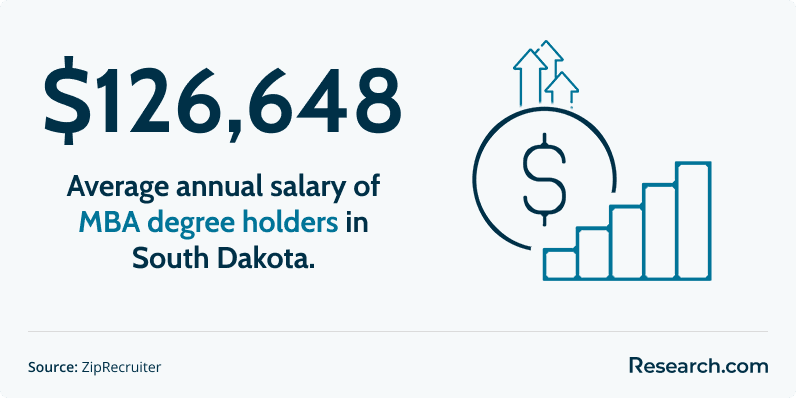
Graduates of advanced business programs may pursue roles such as business consultant, financial analyst, operations leader, healthcare administrator, entrepreneur, or executive manager. The additional credential often leads to higher earning potential, with MBA holders in South Dakota earning an average of $126,648 annually.
Before applying, ask whether the degree is needed for your target role, whether your employer will help pay for it, whether the alumni network is active in South Dakota, and whether the curriculum includes applied projects that match your career direction.
What Other Career Paths Are Available to Business Graduates in South Dakota?
Business graduates are not limited to corporate office roles. The same skills used in budgeting, project management, marketing, data analysis, stakeholder communication, and operations can transfer into government, nonprofits, healthcare, education, real estate, logistics, tourism, and community development.
Urban planning is one example of a field where business skills can be useful, especially in budgeting, public-private partnerships, project coordination, and economic development. Students curious about that direction can explore urban planning schools in South Dakota to understand how planning careers connect to community growth and infrastructure decisions.
What Distinguishes a Successful Business Administration Career Path in South Dakota?
A successful business administration career usually combines a broad business foundation with practical specialization. Employers often look for graduates who can communicate clearly, use data, understand financial trade-offs, manage projects, work with teams, and adapt to changing technology.
In South Dakota, students can strengthen their career path by completing internships, joining student business organizations, building Excel and analytics skills, attending employer events, earning relevant certifications, and choosing electives that match local industries. For a more detailed career map, review the business administration career path and compare possible roles before selecting a concentration.
How Can Legal Knowledge Complement a Business Degree in South Dakota?
Legal knowledge can make business graduates better at contracts, compliance, employment decisions, risk management, negotiations, privacy, real estate transactions, and regulatory strategy. Students who plan to work in entrepreneurship, human resources, finance, healthcare administration, or management can benefit from understanding how law affects daily business decisions.
A business student does not need to become an attorney to gain value from legal coursework. Classes in business law, ethics, employment law, and regulatory compliance can strengthen decision-making. Students interested in legal support roles can also review how to become a paralegal in South Dakota as a complementary career pathway.
How Can Business Programs Drive Social Impact Initiatives in South Dakota?
Business education can support social impact work by teaching students how to design sustainable programs, manage budgets, measure outcomes, build partnerships, and allocate resources effectively. These skills matter in nonprofits, tribal organizations, rural development initiatives, community health programs, housing organizations, and mission-driven startups.
Students interested in community impact should look for programs with nonprofit administration, social entrepreneurship, ethics, public policy, grant writing, or community-based consulting projects. They may also benefit from understanding social service careers, including how to become a social worker in South Dakota.
Business Education and Careers in South Dakota
A business degree can prepare students for a wide range of roles, but the degree alone is not a career plan. Students should connect their coursework to specific skills and industries: accounting for financial reporting, marketing for customer growth, analytics for data-driven decisions, management for team leadership, and entrepreneurship for venture creation. If you are still exploring possibilities, compare what can you do with a business degree to see how different business paths align with your interests.
South Dakota’s economy, low unemployment rate, startup environment, and regional employer networks can make the state a practical place to study business. The strongest outcomes usually come from choosing an accredited program, controlling costs, completing internships, building technical skills, and using career services early—not waiting until the final semester.
Key Insights
- South Dakota can be a strong regional business education market: The state’s 1.9% unemployment rate as of July 2023, lower-cost environment, and business-friendly reputation can benefit students who want local career connections.
- Accreditation should be a first filter: Prioritize programs with recognized institutional and business accreditation, such as AACSB or ACBSP, especially if you plan to pursue graduate school, CPA preparation, or employer-sponsored advancement.
- Program fit matters more than the school name alone: Compare concentrations, online flexibility, internship access, faculty support, career services, and alumni outcomes.
- Costs vary widely: South Dakota business programs may range from lower-cost public options to higher-cost private programs, and students should calculate net price rather than relying on tuition alone.
- Business degrees are broad, so specialization is important: Internships, certifications, analytics skills, accounting preparation, healthcare knowledge, or entrepreneurship experience can help graduates stand out.
- Online programs can work well for adults and rural students: The best online option is not simply the cheapest one; it should provide accreditation, career support, faculty access, and employer relevance.
- Career outcomes are not guaranteed: Salary benchmarks such as $80,920 for business and financial occupations or MBA-related figures are useful, but actual earnings depend on experience, role, industry, and location.
Related Articles for Nearby States
- 2027 Best Business Schools in North Dakota – Accredited Colleges & Programs
- 2027 Best Business Schools in Nebraska – Accredited Colleges & Programs
- 2027 Best Business Schools in Minnesota – Accredited Colleges & Programs
- 2027 Best Business Schools in Wyoming – Accredited Colleges & Programs
- 2027 Best Business Schools in Iowa – Accredited Colleges & Programs
- 2027 Best Business Schools in Montana – Accredited Colleges & Programs
- 2027 Best Business Schools in Colorado – Accredited Colleges & Programs
- 2027 Best Business Schools in Kansas – Accredited Colleges & Programs
- 2027 Best Business Schools in Wisconsin – Accredited Colleges & Programs
- 2027 Best Business Schools in Missouri – Accredited Colleges & Programs
References:
- Conza, A. (n.d.). Report on a South Dakota city recognized for encouraging new business growth. NewsCenter1.tv.
- Pacific College. (n.d.). Overview of how graduate and undergraduate degrees differ. Pacific College.
- South Dakota Department of Labor and Regulation. (n.d.). Labor Market Information Center Labor Market Overview. South Dakota Department of Labor and Regulation.
- U.S. Bureau of Labor Statistics. (n.d.). Business and Financial Occupations: Occupational Outlook Handbook.
- ZipRecruiter. (n.d.). MBA Salary in South Dakota. ZipRecruiter.
- National Business Capital. (2025, January 15). Report ranking South Dakota No. 1 for new business activity. PR Newswire. National Business Capital.
- Sioux Falls Development Foundation. (2025). Business expansion overview for Sioux Falls. Sioux Falls Development Foundation.
- EducationData.org. (2025). Average college cost by state, including tuition and fees for 2025–26. EducationData.org.
- ZipRecruiter. (2026). MBA salary in South Dakota [Data set]. ZipRecruiter.
- College Board. (2025). Trends in College Pricing and Student Aid for 2025–26. College Board.
- U.S. Bureau of Labor Statistics. (2025). Business and financial occupations. U.S. Department of Labor.
- U.S. Census Bureau. (2025, July 9). Field of bachelor’s degree in the United States: 2022. U.S. Census Bureau.
Other Things You Should Know About The Best Business Schools in South Dakota
In 2027, the University of South Dakota and South Dakota State University are prominent accredited institutions offering reputable business programs. Both schools are accredited by the Association to Advance Collegiate Schools of Business (AACSB), ensuring high-quality education standards in business studies.
The cost of business degrees in South Dakota varies. Undergraduate programs at public universities can range from $7,000 to $15,000 per year, while private institutions may charge between $15,000 and $25,000 per year. Graduate programs can cost between $10,000 and $40,000 annually, depending on the institution and residency status.
Financial aid options for business students in South Dakota include scholarships, grants, loans, and work-study programs. Many institutions also offer graduate assistantships that provide financial support and practical experience.
Yes, several institutions in South Dakota offer online business programs. These programs provide flexibility for working professionals and those unable to attend on-campus classes, covering various business disciplines at both undergraduate and graduate levels.
When selecting a business program in South Dakota, consider factors such as accreditation, faculty expertise, internship and networking opportunities, career services, faculty-student ratio, alumni success, and available facilities and resources.
Business graduates in South Dakota have strong career prospects, with opportunities in finance, marketing, management, entrepreneurship, and more. The state's low unemployment rate and supportive economic environment enhance job prospects and potential for career advancement.
In South Dakota, a typical Bachelor’s degree in Business takes around four years to complete, while a Master of Business Administration (MBA) program usually takes about two years. Part-time and online options may extend the duration but offer greater flexibility.