2027 Fastest Accredited Online Nutrition Programs: Accelerated Degrees and Completion Times

Co-Founder and Chief Data Scientist
Choosing a fast online nutrition degree is really a question of speed, accreditation, and career fit. The BLS reports a May 2024 median pay of $73,850 for dietitians and nutritionists, while projected demand remains above average, making program choice more consequential.
This guide is for students comparing accredited online nutrition programs, including bachelor's completion, master's, accelerated-term, and self-paced options. You'll learn what "fastest" actually means, how transfer credits and prerequisites change timelines, and why internships, supervised practice, or RDN requirements can extend graduation beyond the advertised pace.
Key Things You Should Know
- The fastest accredited online nutrition bachelor's paths are usually degree-completion programs: students entering with 60 to 90 transferable credits may finish in about 12 to 24 months, while students starting from zero commonly need closer to 3 to 4 years.
- Accelerated nutrition programs often use 7.5-week, 8-week, or 10-week terms; these shorten calendar time but usually do not reduce the total credit requirement, which is commonly about 120 semester credits for a bachelor's degree.
- Many online bachelor's programs accept up to 75% of degree credits in transfer, but ACEND-aligned dietetics pathways, science prerequisites, residency rules, and supervised practice requirements can limit how much time a student actually saves.
Which Colleges Offer the Fastest Accredited Online Nutrition Programs?
The fastest accredited online nutrition programs are usually not "short" degrees in the sense of requiring fewer academic credits. They are faster because they combine online delivery, short course terms, multiple start dates, generous transfer-credit policies, year-round enrollment, or a degree-completion structure for students who already have college credit.
Before comparing schools, decide whether you want a broad nutrition degree, a dietetics pathway that may support future Registered Dietitian Nutritionist eligibility, or a related wellness, food systems, or health promotion degree. Students comparing affordability alongside speed may also want to review an online nutrition degree guide, because the fastest option is not always the lowest-cost option.
The table below summarizes examples of accredited U.S. colleges with online nutrition-related degrees that may support faster completion for the right student. Advertised speed depends heavily on transfer credits, course availability, enrollment intensity, and whether the program is designed for RDN preparation:
| College | Online nutrition-related program | Accreditation context | Speed factor | Best fit |
| Arizona State University Online | BS in Food and Nutrition Entrepreneurship | Institutionally accredited by the Higher Learning Commission | Uses short online course sessions and accepts transfer credit toward a 120-credit degree | Students interested in nutrition business, food systems, wellness, or graduate preparation, not necessarily direct RDN eligibility |
| Purdue Global | BS in Nutrition | Institutionally accredited by the Higher Learning Commission | Online 10-week terms and a high transfer-credit ceiling can shorten completion for students with prior college work | Adult learners, military students, and transfer students seeking a flexible nutrition bachelor's pathway |
| University of Arizona Online | BS in Nutritional Sciences | Institutionally accredited by the Higher Learning Commission | Online coursework and transfer pathways may reduce time for students entering with general education and science credits | Students seeking a science-based nutrition foundation for health careers or graduate study |
| Kansas State University Online | BS in Nutrition and Health | Institutionally accredited by the Higher Learning Commission | Online format supports working adults and transfer students; pace depends on course sequencing | Students interested in nutrition, health promotion, community wellness, or preparation for advanced study |
| The University of Alabama Online | BS in Food and Nutrition | Institutionally accredited by SACSCOC; dietetics-related accreditation should be verified for the specific pathway | Online access to a dietetics-focused curriculum may help students who need an ACEND-aligned academic route, though completion may be less flexible than non-dietetics tracks | Students considering RDN preparation who need to pay close attention to ACEND, prerequisites, and supervised practice rules |
| University of New England Online | MS in Applied Nutrition | Institutionally accredited by the New England Commission of Higher Education | Graduate-level online nutrition coursework can often be completed faster than a full second bachelor's for students who already hold a degree | Bachelor's degree holders seeking advanced nutrition knowledge without starting another undergraduate program |
For most students, the "fastest" college is the one that accepts the most usable credits toward the exact degree plan, offers required courses frequently, and matches the student's career goal. A non-RDN nutrition bachelor's may be faster and more flexible, while an RDN-oriented pathway may require additional graduate education and supervised practice.
How Long Does It Take to Complete an Accredited Online Nutrition Degree?
Completion time depends on the type of degree and how many credits you already have. In higher education, "completion time" means the calendar time from enrollment to finishing all degree requirements, not just the number of weeks in each class.
The table below gives realistic timeline ranges for accredited online nutrition programs. Use it as a planning tool rather than a promise, because schools can differ in transfer evaluations, prerequisite sequencing, lab requirements, and internship expectations:
| Program type | Typical credits | Fast realistic timeline | More common timeline | What can extend it |
| Online nutrition certificate | Usually fewer credits than a degree | Several months to 1 year | 6 to 18 months | Part-time enrollment or course availability |
| Associate degree in nutrition or related health science | About 60 semester credits | 12 to 18 months with heavy course loads or transfer credit | 2 years | Developmental coursework, lab science sequencing, or part-time study |
| Bachelor's degree-completion program | Usually 120 total credits, with many credits transferred in | 12 to 24 months | 18 to 30 months | Low transfer acceptance, missing science prerequisites, residency credits |
| Full bachelor's degree from scratch | About 120 semester credits | 2.5 to 3 years with year-round full-time study | 4 years | Working full time, limited summer offerings, lab courses, fieldwork |
| Online master's in nutrition | Often about 30 to 45 graduate credits | 12 to 18 months | 18 to 30 months | Capstone, thesis, practicum, or part-time enrollment |
| RDN-oriented pathway | Varies by prior education and program model | Often longer than a non-licensure nutrition degree | Multiple years if graduate coursework and supervised practice are required | ACEND requirements, graduate degree rule, supervised practice placement, state licensure rules |
A short term does not mean less work. A 3-credit nutrition course in an 8-week format may cover the same learning outcomes as a 16-week course, but with roughly double the weekly pace. That can be efficient for focused students and difficult for students balancing work, caregiving, or science-heavy prerequisites.
The most reliable way to estimate your timeline is to request an official transfer evaluation before enrolling. Ask the school for a degree map that shows exactly which courses remain, which terms they are offered, and whether any required course must be completed before another one can begin.
How Do Accelerated and Competency-Based Online Nutrition Programs Work?
Accelerated online nutrition programs compress the academic calendar, not necessarily the curriculum. They may use shorter terms, more frequent start dates, year-round enrollment, heavier course loads, or competency-based models that allow students to move faster when they already know the material.
Students comparing self-paced models should understand how competency-based education differs from a traditional online semester. A broader look at the best accredited self-paced online colleges can help explain why pacing flexibility, faculty access, assessment rules, and tuition structure all matter.
These are the main accelerated formats you are likely to see in online nutrition education, and each affects time to graduation differently:
- Short-term courses: A 7.5-week, 8-week, or 10-week course can help students complete more classes per year, but the weekly reading, assignments, exams, and projects are usually more intense.
- Year-round enrollment: Programs with summer terms or multiple starts can reduce waiting time between courses, especially for students who need to complete prerequisite science or statistics classes.
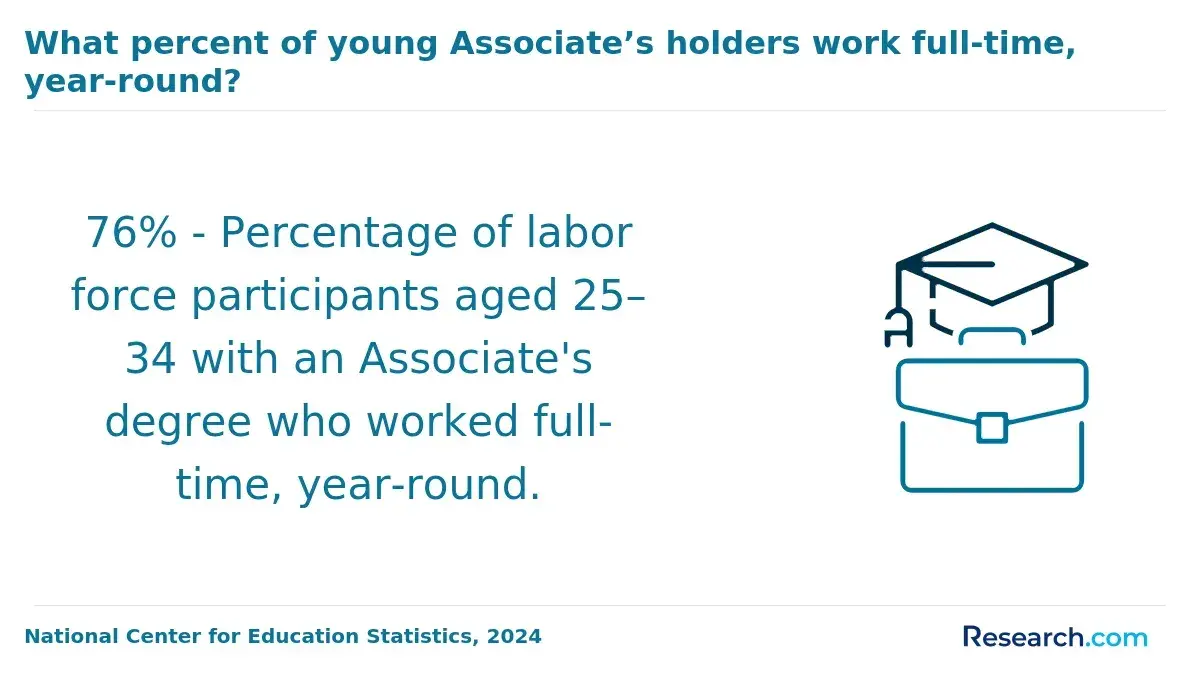
- Degree-completion design: These programs are built for transfer students and may be the fastest bachelor's option for those who already have an associate degree or substantial prior credit.
- Competency-based pacing: Students progress by proving mastery, which may help experienced learners move quickly through familiar content, but not all nutrition programs use this format.
- Stackable credentials: Some schools let students complete a certificate on the way to a degree, which can create short-term career value while the student continues toward graduation.
Competency-based and accelerated programs work best for independent learners who can study consistently without weekly in-person structure. They may be a poor fit if you need frequent live instruction, struggle with compressed deadlines, or are taking multiple lab-heavy science courses at the same time.
What Accreditation Should an Online Nutrition Program Have?
At minimum, an online nutrition degree should come from an institution accredited by an agency recognized by the U.S. Department of Education or the Council for Higher Education Accreditation. Institutional accreditation affects credit transfer, graduate school eligibility, employer confidence, and access to federal financial aid.
Programmatic accreditation matters most if your goal is to become a Registered Dietitian Nutritionist. The Accreditation Council for Education in Nutrition and Dietetics, commonly called ACEND, accredits dietetics education pathways that connect to RDN preparation. A general nutrition, wellness, or food entrepreneurship degree can be legitimate and institutionally accredited without being ACEND-accredited, but it may not meet RDN academic requirements.
The table below shows which type of accreditation to check based on your intended outcome. This distinction is critical because the fastest non-ACEND nutrition degree may not be the right path for dietetics licensure or RDN eligibility:
| Student goal | Accreditation to verify | Why it matters |
| Earn a general nutrition bachelor's degree | Institutional accreditation | Supports degree legitimacy, credit transfer, financial aid eligibility, and graduate admission review |
| Prepare for RDN eligibility | Institutional accreditation plus ACEND-accredited dietetics pathway | RDN preparation requires specific academic and supervised practice standards |
| Apply to graduate school in nutrition or public health | Institutional accreditation and prerequisite alignment | Graduate programs may require biology, chemistry, statistics, anatomy, physiology, or nutrition science prerequisites |
| Work in wellness, coaching, food service, or health education | Institutional accreditation; optional professional certifications may vary | Employer expectations differ by role, and state nutrition practice laws can limit what services non-licensed workers may provide |
A major current rule affects RDN-focused students: the Commission on Dietetic Registration requires a graduate degree for new RDN exam eligibility. That means a fast bachelor's degree alone may not be enough if your end goal is becoming an RDN. You may need an ACEND-accredited graduate program, supervised experiential learning, and state-specific licensure or certification steps.
How Can Transfer Credits and Prior Learning Shorten an Online Nutrition Degree?
Transfer credit is often the single biggest factor in finishing an accredited online nutrition degree quickly. A student entering with an associate degree, completed general education courses, or prior science credits may remove a year or more from the timeline, while a student starting with no college credit cannot usually bypass the core 120-credit bachelor's requirement.
Prior learning credit can also help, but nutrition programs vary widely in what they accept. Schools may award credit for military training, standardized exams, professional certifications, portfolio review, or previous accredited coursework, but upper-division nutrition and dietetics courses are often less flexible.
These credit sources can shorten your degree plan, but only if the school applies them to required categories rather than free electives:
- Community college transfer credits: General education, introductory biology, chemistry, psychology, statistics, and electives may transfer if the grades and course content meet school policy.
- Associate degree block transfer: Some online bachelor's completion programs accept a completed associate degree as a package, which can reduce the number of remaining lower-division requirements.
- Credit by exam: CLEP, DSST, or similar exam credit may satisfy some general education courses, though science labs and upper-level nutrition courses may be excluded.
- Military or workplace learning: American Council on Education credit recommendations, military transcripts, or employer training may help with electives at some schools.
- Portfolio assessment: Adult learners may be able to document college-level learning from work or professional experience, but approval is not automatic and may carry fees.
The table below shows how different transfer-credit levels can affect a 120-credit online bachelor's degree. The timeline assumes the remaining credits are offered online and that the student can enroll continuously:
| Credits accepted | Credits remaining | Possible full-time timeline | Planning note |
| 0 credits | About 120 | 3 to 4 years | Acceleration requires heavy course loads, summer study, or both |
| 30 credits | About 90 | 2.5 to 3 years | Useful head start, but many major and science courses may remain |
| 60 credits | About 60 | 18 to 24 months | Often the strongest fit for bachelor's completion programs |
| 90 credits | About 30 | 12 to 18 months | Fastest if remaining courses are available every term and meet residency rules |
Do not assume all previous credits will transfer. A course can be accredited and still fail to apply to your major if it is too old, too low-level, missing a lab, outside the required subject area, or capped by the school's transfer policy.
What Are the Admission Requirements and Start Dates for Accelerated Online Nutrition Programs?
Admission requirements vary by degree level, but accelerated online nutrition programs usually expect students to be ready for college-level science, writing, and quantitative work. Bachelor's completion programs may require prior college credit, while master's programs typically require a completed bachelor's degree and sometimes prerequisite nutrition or science coursework.
Students comparing healthcare education timelines may notice that short workforce programs and degree programs use the word "accelerated" differently. Guides to healthcare accelerated programs can be useful for understanding the difference between compressed training and a credit-bearing degree, but nutrition bachelor's and master's programs still must meet academic credit requirements.
Most accelerated online nutrition programs review some combination of the following items. Missing one can delay admission or push your first major course to a later term:
- High school diploma or GED: Required for undergraduate admission, unless the student is applying as a transfer with substantial college credit.
- Official transcripts: Needed for admission and transfer evaluation; delays in transcript processing can delay your start date.
- Minimum GPA: Some programs set a general admissions GPA, while dietetics or upper-division nutrition coursework may require a higher threshold.
- Prerequisite courses: Biology, chemistry, anatomy, physiology, statistics, or introductory nutrition may be required before advanced courses.
- Personal statement or resume: More common for graduate nutrition programs, coordinated programs, or competitive dietetics pathways.
- Technology requirements: Online students may need webcam access, proctoring tools, reliable internet, and discipline-specific software.
Start dates can make a major difference. Programs with monthly, bimonthly, or five-to-six annual starts may help students begin quickly, while programs with only fall or spring admission can add months of waiting even if the coursework is online.
Before applying, ask whether the exact courses you need are offered every term. A program can advertise multiple starts but still rotate upper-division nutrition classes only once per year, which can slow graduation for transfer students who enter out of sequence.
How Much Does a Fast Online Nutrition Degree Cost, and Is Financial Aid Available?
A faster online nutrition degree is not automatically cheaper. It can reduce indirect costs such as time away from full-time work, but tuition is often charged per credit, and accelerated students may pay the same total tuition over a shorter period.
For cost context, the College Board's 2024 tuition data reported an average published tuition and fee price of $11,610 for in-state students at public four-year institutions and $43,350 at private nonprofit four-year institutions. Online nutrition students should use those figures only as a broad benchmark because online tuition, transfer credit, fees, and residency rules can change the actual price substantially.
Students comparing healthcare-related degrees may also want to benchmark nutrition costs against an adjacent field, such as the cheapest online healthcare administration degree, especially if their main goal is working in health systems rather than providing nutrition services.
The table below shows the major cost variables that affect accelerated online nutrition programs. Each item can change both total cost and cash-flow pressure while you are enrolled:
| Cost factor | How it affects accelerated students | What to verify |
| Per-credit tuition | Fast completion may compress payment into fewer terms even if total credits stay the same | Tuition per credit for online students and whether rates differ by residency |
| Transfer credits | Accepted credits can reduce total tuition by lowering the number of credits you must take | Maximum transfer limit and how credits apply to the major |
| Fees | Technology, distance learning, lab, proctoring, graduation, or assessment fees can add cost | Full program cost sheet, not just tuition |
| Books and materials | Science and nutrition courses may use textbooks, lab kits, subscriptions, or software | Estimated materials cost by term |
| Fieldwork or supervised practice | RDN-oriented pathways may require placements that affect travel, scheduling, and work hours | Whether placements are arranged by the school or the student |
| Financial aid eligibility | Institutional accreditation and enrollment intensity affect access to federal aid | FAFSA eligibility, satisfactory academic progress rules, and minimum credits per term |
Federal financial aid is generally available only through eligible institutions and programs, and students usually need to maintain satisfactory academic progress. Accelerated students should be especially careful with course withdrawals, because dropping a compressed course can affect aid, pacing, and graduation dates.
Can You Work Full Time While Completing an Accelerated Online Nutrition Degree?
You can work full time while completing an accelerated online nutrition degree, but the fastest timeline may not be realistic if you are also carrying a demanding job. Nutrition programs often include science courses, writing-heavy assignments, diet analysis projects, research papers, and group work that require consistent weekly attention.
The practical trade-off is simple: the more credits you take per term, the faster you may finish, but the less schedule flexibility you have. A full-time student in compressed 8-week courses may need to treat school like a second job.
The table below compares likely pacing options for working adults. It focuses on workload and time-to-degree implications rather than telling every student to choose the fastest option:
| Enrollment pace | Typical course load | Timeline effect | Best fit |
| Part time | 1 course at a time | Slower, but more manageable with full-time work | Students with unpredictable schedules, caregiving duties, or limited study time |
| Moderate accelerated pace | 2 courses per short term when available | Can shorten completion without maximum overload | Organized working adults with steady weekly study blocks |
| Full time year-round | Multiple courses each term plus summer enrollment | Fastest for many students starting with transfer credit | Students who can reduce work hours or have strong support systems |
| Overload pace | Above standard full-time load | May shorten calendar time but raises risk of low grades or withdrawal | Rarely advisable unless the student has prior subject mastery and advisor approval |
If you work full time, a realistic plan is usually better than the shortest advertised plan. Ask admissions or advising staff for sample weekly workload estimates for science courses, upper-division nutrition courses, and capstone requirements before committing to an aggressive timeline.
Are Accelerated Online Nutrition Degrees Respected by Employers and Graduate Schools?
Accelerated online nutrition degrees can be respected when they come from properly accredited institutions and include the coursework expected for the student's goal. Employers and graduate schools usually care less about whether the courses were online and more about accreditation, curriculum quality, grades, prerequisites, experience, and whether the degree matches the role.
The BLS projects employment for dietitians and nutritionists to grow 7% from 2023 to 2033, faster than the average for all occupations. For students, that means nutrition can be a relevant field, but it does not remove the need to choose the correct credential for the work they want to do.
Career changers should compare nutrition with other healthcare routes before enrolling. For example, someone who wants direct patient-care licensure may find that an MA to LPN pathway fits their goals better than a general nutrition degree, while someone drawn to food, wellness, prevention, or dietetics may prefer nutrition.
Use the table below to connect common nutrition-related goals with the education signals employers or graduate programs may review. This can help you avoid choosing a fast program that does not support your intended outcome:
| Goal | What reviewers may look for | Why speed alone is not enough |
| Wellness coach or nutrition educator | Accredited degree, communication skills, behavior-change knowledge, relevant experience | State laws may limit individualized nutrition counseling without licensure |
| Food service, school nutrition, or community health role | Nutrition coursework, food systems knowledge, management or public health exposure | Employers may prefer experience, ServSafe-type credentials, or public program knowledge |
| Graduate nutrition, public health, or allied health admission | GPA, science prerequisites, statistics, letters, accredited bachelor's degree | A fast program that skips needed prerequisites can delay graduate admission |
| Registered Dietitian Nutritionist pathway | ACEND-aligned education, graduate degree requirement, supervised practice eligibility | A general nutrition degree may not satisfy dietetics requirements |
Online format should not be the main concern if the institution is accredited and the curriculum is appropriate. The bigger risk is enrolling in a fast program that sounds nutrition-related but does not meet graduate, licensure, certification, or employer expectations in your target role.
How Should You Compare the Fastest Accredited Online Nutrition Programs?
The best way to compare accelerated online nutrition programs is to build a degree-completion estimate for your own transcript, not for an ideal student in a marketing example. Ask each school to show how your credits apply, which courses remain, and when those courses are offered.
Use the following steps to compare programs in a practical order. This sequence helps you avoid choosing a fast-looking program before confirming that it fits your career goal, budget, and schedule:
- Confirm institutional accreditation through a recognized accrediting agency before reviewing speed, tuition, or admissions promises.
- If you want to become an RDN, verify ACEND alignment and ask how the program connects to graduate education, supervised practice, and exam eligibility.
- Request an official or preliminary transfer-credit evaluation that shows exactly which requirements your prior credits satisfy.
- Ask for a term-by-term degree plan based on your intended course load, including summer terms and any prerequisite sequences.
- Compare total program cost after transfer credit, including tuition, fees, books, technology, labs, proctoring, and fieldwork expenses.
- Check whether upper-division nutrition courses are offered every term or only once per academic year.
- Ask about maximum course loads, withdrawal policies, financial aid pacing rules, and whether compressed courses affect refund deadlines.
- Review career outcomes carefully, but avoid schools that imply a degree guarantees licensure, certification, admission, or a specific salary.
Red flags are especially important in fast degree searches because students may feel pressure to enroll quickly. Watch for these common mistakes before signing an enrollment agreement:
- Assuming accelerated means easier: Shorter terms usually increase weekly workload rather than reduce academic expectations.
- Ignoring accreditation details: Institutional accreditation and ACEND accreditation serve different purposes, and confusing them can derail dietetics goals.
- Counting all transfer credits as useful: Credits that transfer only as electives may not shorten your major requirements.
- Overlooking prerequisites: Chemistry, biology, anatomy, physiology, or statistics sequences can add time if they are missing or outdated.
- Focusing only on advertised completion time: Published timelines often assume full-time, continuous enrollment and the right transfer-credit profile.
- Forgetting state practice laws: Some states regulate who can provide individualized nutrition counseling, regardless of how quickly the degree was completed.
The strongest choice is the fastest accredited program that still preserves your next step. For some students, that means a 12-month master's or a 15-month bachelor's completion plan. For others, a slower ACEND-aligned or science-heavy pathway may be the better long-term decision.
Other Things You Should Know About Nutrition
Usually, no. New RDN exam eligibility requires a graduate degree, completion of ACEND-accredited education requirements, and supervised practice. An online bachelor's can be part of the path, but it must align with dietetics requirements.
They may be accepted if they come from an accredited institution and meet the graduate program's content and lab requirements. Always ask the receiving school before taking online chemistry, biology, anatomy, or physiology courses.
Accelerated online nutrition programs in 2027 typically require between 30 to 60 credit hours, allowing students to complete their degree in as little as 12 to 18 months. These programs often include core courses, electives, and capstone projects tailored for quick completion.
In 2027, the Accreditation Council for Education in Nutrition and Dietetics (ACEND) accredits the fastest online nutrition programs. Accreditation by ACEND ensures that programs meet the quality standards necessary for students to pursue careers as dietitians and nutritionists.
References
- 2025 Most Popular Online Nutrition Degrees https://www.onlineu.com/degrees/nutrition
- Can I Afford to Become a Registered Dietitian Nutritionist (RDN)? — Diversify Dietetics https://www.diversifydietetics.org/ddblog/2023/12/19/can-i-afford-to-become-a-registered-dietitian-nutritionist-rdn
- Top 35 Online Nutrition and Dietetics Programs https://becomeanutritionist.org/top-35-online-nutrition-and-dietetics-programs/
- Find the Best Nutrition Degree Programs https://www.nutritiondegreesonline.org/
- Online RD Programs 2026 | ACEND-Accredited https://www.nutritioned.org/online-rd-programs
- The Nutrition Institute https://www.thenutritioninstitute.com/us/en/accreditations
- Distance Learning Course for Nutritionist | Oxford Learning College https://www.oxfordcollege.ac/news/distance-learning-course-for-a-nutritionist/
- Best Online Master’s Degree Programs in Dietetics for 2025 https://www.onlinemastersdegrees.org/best-programs/nutrition/dietetics/
- Accredited Programmes - Association for Nutrition https://www.associationfornutrition.org/degree-accreditation/accredited-programmes
- Costs and Financial Aid https://www.kumc.edu/school-of-health-professions/academics/departments/dietetics-and-nutrition/academics/online-masters-program/costs-and-financial-aid.html