2027 How to Become a Licensed Pharmacist in Maine

Co-Founder and Chief Data Scientist
Becoming a pharmacist in Maine requires more than finishing a pharmacy degree. You must complete accredited professional education, document supervised training, pass national and law exams, apply through the Maine Board of Pharmacy, and keep your license active through annual renewal and continuing education. For students comparing healthcare careers, out-of-state pharmacists considering Maine, or pharmacy technicians planning their next step, the challenge is knowing which requirements apply and how to avoid expensive delays.
This guide explains the Maine pharmacist licensing path in practical terms: how long it takes, what education is required, what the exams cost, whether online coursework can fit into the process, what pharmacists do day to day, and how salary and job outlook compare with the investment. Published data in 2024 shows that Maine has 2,343 pharmacists, so the profession remains an important part of the state’s healthcare workforce, especially in community pharmacies, hospitals, long-term care settings, and rural care environments.
Quick answer: How do you become a licensed pharmacist in Maine?
To become a licensed pharmacist in Maine, you generally need to earn a Doctor of Pharmacy degree from an accredited pharmacy program, complete at least 1,500 hours of internship training, pass the NAPLEX and MPJE, submit a pharmacist license application to the Maine Board of Pharmacy, complete the required background check, and renew the license each year. Pharmacists must also complete 15 hours of approved continuing education annually to maintain active status.
Key Things You Should Know About Becoming a Licensed Pharmacist in Maine
- You must pass both the NAPLEX and MPJE before you can qualify for pharmacist licensure.
- The Maine application fee is $75, and the required criminal background check, including fingerprinting, costs $21.
- Licensed pharmacists in Maine must complete 15 hours of approved continuing education annually.
- Pharmacists who want to administer medications or immunizations must complete extra training and provide documentation.
- Maine pharmacist licenses renew every year by December 31; late renewal adds a $50 fee.
- What does a licensed pharmacist do?
- How long does the Maine pharmacist licensing path take?
- How can you earn a pharmacy degree in Maine?
- What are Maine’s pharmacist licensure requirements?
- How much should you budget to become a pharmacist in Maine?
- Can you complete pharmacist licensing online in Maine?
- What is a Maine pharmacist’s job description?
- What healthcare careers are similar to pharmacy in Maine?
- What happens if your Maine pharmacist license expires?
- How can interdisciplinary collaboration strengthen a Maine healthcare career?
- Is pharmacy school worth the investment?
- How can pharmacists support substance abuse prevention in Maine?
- What should online pharmacy students know about career requirements?
- What trends are changing pharmacy practice in Maine?
- Can added certifications improve a Maine healthcare career?
- What professional development options are available to Maine pharmacists?
- What financial aid options can pharmacy students in Maine explore?
- Can an out-of-state pharmacist transfer a license to Maine?
- How can pharmacists and registered dieticians work together in Maine?
- How much do licensed pharmacists earn in Maine?
- What is the employment outlook for pharmacists in Maine?
- What career paths can Maine pharmacists pursue?
- What other Maine healthcare careers are worth considering?
What is a licensed pharmacist?
A licensed pharmacist is a healthcare professional authorized to prepare, dispense, monitor, and counsel patients about medications. In Maine, pharmacists work at the intersection of medication safety, patient education, public health, and healthcare team coordination. They do not simply fill prescriptions; they check for interactions, help patients understand treatment plans, support immunization efforts when properly trained, and help prescribers improve medication therapy.
The path to licensure has several required checkpoints. Missing one can delay your application, so it helps to understand the sequence early.
| Licensing step | What it means for Maine applicants | Why it matters |
| Pharm.D. education | Complete a Doctor of Pharmacy degree from an accredited pharmacy school. | This is the professional degree required for pharmacist practice. |
| Internship training | Document at least 1,500 hours of supervised pharmacy internship experience. | Hands-on practice builds clinical judgment, dispensing accuracy, and patient communication skills. |
| Licensure exams | Pass the NAPLEX and MPJE. As of 2024, the NAPLEX fee is $620. | The NAPLEX tests pharmacy competency, while the MPJE evaluates pharmacy law knowledge. |
| Board application | Apply to the Maine Board of Pharmacy and submit required documents. | The Board confirms eligibility, character requirements, education, and exam completion. |
| Ongoing compliance | Follow renewal rules, continuing education requirements, and pharmacy regulations. | Licensure is not a one-time event; it must be maintained to keep practicing legally. |
Pharmacy can offer both clinical responsibility and financial stability. The profession’s median annual salary is approximately $130,000, though actual earnings depend on role, employer, location, and experience. Students who are not ready for a Pharm.D. may first compare foundational options such as the best online pharmacy technician associate programs to decide whether pharmacy work fits their strengths.
How long does it take to become a licensed pharmacist in Maine?
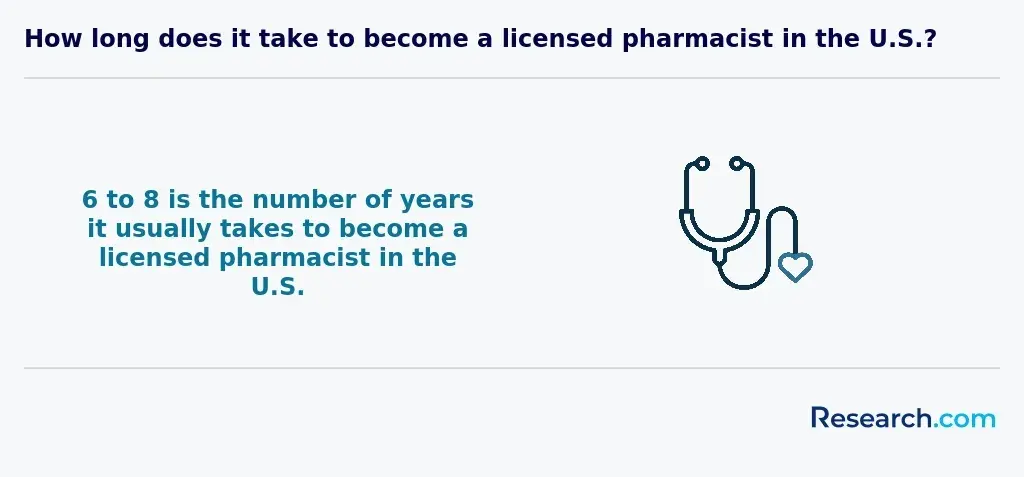
The full path usually takes around 6 to 8 years from the start of college-level preparation to licensure. The exact timeline depends on whether you enter a Pharm.D. program after prerequisite coursework, complete a bachelor’s degree first, study full time or part time, and how quickly you pass the required exams.
Most students complete pharmacy prerequisites before entering the professional Pharm.D. curriculum. The Pharm.D. itself generally takes four years to complete after acquiring a bachelor's degree. After graduation, candidates typically spend several months preparing for the NAPLEX and MPJE, then submit their application and supporting documentation to the Maine Board of Pharmacy.
Applicants should avoid treating the exam and application stage as an afterthought. The pharmacist certification process can involve transcripts, proof of age, verification of good moral character, exam records, and Board review. Processing may take several weeks to a few months, so students planning job start dates should build in extra time.
| Stage | Typical time involved | Decision point |
| Pre-pharmacy or undergraduate preparation | Varies by student and program | Choose prerequisites strategically and confirm they match Pharm.D. admissions requirements. |
| Pharm.D. degree | Approximately 4 years | Verify accreditation and clinical rotation opportunities before enrolling. |
| Exam preparation | Several months | Plan study time for both clinical knowledge and pharmacy law. |
| Application review | Several weeks to a few months | Submit complete documents to reduce avoidable delays. |
How do I get a pharmacy degree in Maine?
To qualify for pharmacist licensure, aspiring pharmacists must complete professional pharmacy education. The typical starting point is at least two years of pre-professional coursework at an accredited college or university, followed by admission to a Doctor of Pharmacy program. Students should confirm prerequisite courses early because pharmacy schools may require specific sequences in chemistry, biology, anatomy, physiology, mathematics, and related sciences.
One major pharmacy education option in Maine is the University of New England (UNE) School of Pharmacy. UNE’s Doctor of Pharmacy program combines pharmaceutical sciences, clinical training, and practical experience designed to prepare students for pharmacy practice in community, health system, industry, and other settings.
- Learning environment: UNE’s pharmacy school includes a 48,000-square-foot building with laboratories and lecture halls that support professional training.
- Experiential education: Students complete clinical rotations and may access global travel courses, allowing them to apply classroom concepts in patient care and healthcare settings.
- Research exposure: Opportunities at the Portland Laboratory for Biotechnology and Health Sciences include work connected to therapeutic discovery and drug metabolism.
Students who want stronger post-graduation options should also consider residency preparation. A post-graduate residency is not always required for every pharmacy role, but it can improve competitiveness for hospital, clinical, specialty, and academic positions. If you are still exploring whether pharmacy is the right healthcare path, reviewing pharmacy technician compensation may help you compare entry-level pharmacy work with the longer Pharm.D. route.
How to choose a pharmacy program
- Confirm ACPE accreditation: Accreditation is essential because licensure depends on completing an approved professional program.
- Ask about rotation sites: Strong clinical placements can expose you to hospitals, community pharmacies, ambulatory care, and underserved settings.
- Compare total cost, not only tuition: Include fees, books, transportation, housing, exam costs, background checks, and lost earnings while studying full time.
- Review residency match support: If you want clinical pharmacy, hospital pharmacy, or a specialty role, ask how the school prepares students for residencies.
- Check licensure support: A good program should help students understand NAPLEX, MPJE, internship documentation, and state application requirements.
What are the requirements to become a licensed pharmacist in Maine?
Maine pharmacist licensure includes education, internship, examinations, application paperwork, background screening, and continuing compliance. After you receive a license, you must keep it active through annual renewal and continuing education. Pharmacists in Maine must complete 15 hours of Board-approved continuing education each year.
| Requirement | Maine expectation | Common mistake to avoid |
| Professional degree | Earn a Pharm.D. from an accredited pharmacy school. | Assuming any healthcare degree can substitute for a Pharm.D. |
| Internship hours | Complete at least 1,500 hours of internship training. | Failing to document supervised hours in the format required by the Board. |
| Exams | Pass the NAPLEX and MPJE. | Studying only clinical material and underpreparing for pharmacy law. |
| Application materials | Submit the required Maine Board of Pharmacy application and supporting records. | Sending incomplete transcripts, missing background check steps, or overlooking deadlines. |
| Continuing education | Complete 15 hours of approved continuing education annually. | Waiting until renewal season to find acceptable CE courses. |
| Annual renewal | Renew each year by December 31. | Letting the license lapse and risking a $50 late fee or practice interruption. |
Continuing education is more than a renewal formality. It helps pharmacists stay current with medication safety, new therapies, patient counseling practices, immunization standards, and regulatory updates. Pharmacists who use continuing education strategically can prepare for expanded clinical responsibilities, management roles, and some of the best paid medical careers in healthcare.
How much does it cost to become a licensed pharmacist in Maine?
The total cost of becoming a pharmacist in Maine can be substantial. Education alone can involve an initial cost of at least $20,000, and tuition can range from $20,000 to over $60,000 per year depending on whether the institution is public or private. Across four years, the total education investment can exceed $100,000 before living expenses and other costs are included.
| Cost item | Amount stated | What to consider |
| Pharmacist license application | $75 | Required whether applying through examination, score transfer, or reciprocity. |
| Criminal background check | $21 | Includes fingerprinting and brings the initial application-related cost to $96. |
| NAPLEX | $620 as of 2024 | Budget for the exam and any preparation materials you choose to use. |
| MPJE | Fees can vary | Check NABP for current pricing before registering. |
| Score transfer application | $75 | Applies when transferring scores or pursuing reciprocity pathways. |
| Pharmacy school tuition | $20,000 to over $60,000 per year | Four years of tuition can exceed $100,000, not including living costs. |
| License renewal | $75 | Required to maintain active licensure. |
| Late renewal | $50 | Applies if renewal occurs after the expiration date. |
| Continuing education | 15 hours per renewal period | Some CE options may carry added costs. |
When estimating return on investment, compare expected debt with likely earnings, preferred work setting, willingness to relocate, and the type of pharmacy role you want. Students who need a faster or lower-cost entry into healthcare may want to compare pharmacy school with quick medical certifications that can lead to paid healthcare roles before committing to a Pharm.D.
The chart below shows the number of pharmacists in the US in recent years, as reported in 2024.
Can I get my pharmacist’s license online in Maine?
You cannot complete every part of pharmacist licensure online because pharmacy training requires supervised practice, clinical rotations, exams, identity verification, and Board approval. However, some accredited Pharm.D. programs may offer online or hybrid coursework, which can make the academic portion more flexible for students balancing work, family, or relocation constraints.
The most important rule is accreditation. If a program is not accredited by the Accreditation Council for Pharmacy Education (ACPE), it may not satisfy the education requirement for licensure. Online convenience should never outweigh licensure eligibility.
| Online or hybrid feature | What it can help with | What still requires careful planning |
| Remote didactic coursework | Allows students to complete some lectures and assignments from a distance. | Students still need strong time management and reliable technology access. |
| Interactive learning tools | May support subjects such as pharmacology, medicinal chemistry, and pharmacy practice. | Simulations do not replace all direct patient care experience. |
| Clinical rotations | Provide real-world pharmacy practice experience. | Rotation sites must be approved and may require travel or placement coordination. |
| Academic and career support | Advising, tutoring, and career services can help students stay on track. | Applicants should ask how the program supports NAPLEX, MPJE, and state licensure steps. |
A Maine pharmacist who completed pharmacy education through a mix of online learning and in-person rotations described the online coursework as convenient but not sufficient by itself. Topics such as drug interactions and patient counseling were easier to understand after direct practice in community pharmacy settings. That experience highlights a key point: online coursework can support the path, but pharmacist competence depends heavily on supervised clinical training.
What is the job description of a licensed pharmacist in Maine?
Licensed pharmacists in Maine are responsible for safe medication use, patient counseling, prescription verification, and compliance with pharmacy regulations. Their exact duties vary by employer, but most roles combine clinical judgment, customer or patient interaction, documentation, and coordination with other healthcare professionals.
- Dispensing medications: Pharmacists review prescriptions, confirm accuracy, identify potential problems, and dispense medications in accordance with law and professional standards.
- Counseling patients: They explain how and when to take medications, discuss side effects, identify possible interactions, and encourage adherence to treatment plans.
- Working with prescribers: Pharmacists may contact physicians, nurse practitioners, and other providers to clarify prescriptions, recommend adjustments, or monitor therapy.
- Providing immunization services: Pharmacists with the proper training and documentation may administer vaccines and support public health efforts.
- Managing inventory: They oversee medication supply, storage conditions, expiration dates, controlled substance procedures, and inventory accuracy.
- Maintaining compliance: Pharmacists keep records, follow state and federal rules, report safety concerns when required, and help ensure pharmacy operations meet legal standards.
Skills Maine pharmacists need
- Medication expertise: Pharmacists must understand drug therapy, dosing, interactions, contraindications, and patient-specific risks.
- Clear communication: Patients may be stressed, confused, or managing multiple conditions, so pharmacists need plain-language counseling skills.
- Attention to detail: Small errors in dosing, labeling, or documentation can create serious safety problems.
- Technology confidence: Modern pharmacy practice depends on electronic health records, dispensing systems, claims tools, and clinical databases.
- Ethical judgment: Pharmacists must balance patient access, legal rules, controlled substance responsibilities, and professional standards.
What other healthcare careers are similar to licensed pharmacists in Maine?
If you are interested in patient care but unsure whether pharmacy school is the right fit, compare pharmacy with other licensed healthcare roles before committing to a long and expensive program. A mental health counselor, for example, does not focus on medication dispensing but does provide ongoing patient support, assessment, treatment planning, and professional care within a regulated field.
Students who are drawn to one-on-one helping relationships, behavioral health, and counseling may want to review how to become a mental health counselor in Maine. Comparing the education requirements, licensure process, daily responsibilities, and patient populations can clarify whether pharmacy, counseling, nursing, dietetics, or another healthcare path is the better match.
| Career direction | Best fit for students who want... | How it differs from pharmacy |
| Pharmacist | Medication expertise, patient counseling, and clinical decision-making around drug therapy. | Requires Pharm.D. education and pharmacist licensure. |
| Mental health counselor | Therapeutic relationships and behavioral health support. | Focuses on counseling rather than medication dispensing. |
| Registered nurse | Direct bedside or clinical care across many settings. | Broader hands-on patient care responsibilities and a different licensing structure. |
| Registered dietician | Nutrition care, chronic disease management, and food-related health planning. | Centers on nutrition therapy rather than medication therapy. |
What do I do if my pharmacist’s license expires in Maine?
If your Maine pharmacist license expires, stop and confirm your status before continuing to practice. Practicing without a valid license can expose you to discipline, fines, and other legal consequences. The next step is to contact the Maine Board of Pharmacy or use the Board’s renewal system to determine whether you qualify for standard renewal or need reinstatement.
- Check your license status: Confirm whether the license is recently expired or has been inactive long enough to trigger additional reinstatement steps.
- Complete the renewal application: Update your personal, employment, and professional information carefully before submission.
- Pay required fees: The standard renewal fee is $75, and late renewal adds a $50 fee after expiration.
- Document continuing education: Be ready to show completion of required continuing education if requested.
- Ask about reinstatement if needed: A longer lapse may require extra documentation and, in some cases, additional steps before you can return to practice.
One Maine pharmacist described discovering a lapse and immediately contacting the Board before returning to normal duties. She completed the online renewal, verified her continuing education, paid the required fees, and waited for confirmation before continuing practice. The lesson is simple: calendar your renewal deadline, keep CE records organized, and address any lapse before it becomes a professional conduct issue.
How can interdisciplinary collaboration enhance my healthcare career in Maine?
Pharmacists increasingly work as part of broader care teams rather than as isolated medication dispensers. In Maine, collaboration can be especially valuable in rural communities where patients may have limited access to specialists. Pharmacists may coordinate with prescribers, nurses, counselors, dieticians, and public health professionals to improve medication adherence, manage chronic disease, reduce duplicative therapies, and identify safety concerns earlier.
If you are interested in healthcare roles that complement pharmacy, it may be useful to explore behavioral health paths such as how to become a marriage and family therapist in Maine. Understanding how different providers support patients can make you a stronger pharmacist, especially when counseling patients whose medication needs are tied to family stress, mental health conditions, or chronic illness.
Is pharmacy school worth it?
Pharmacy school can be worth it for students who are committed to medication-focused patient care, can manage the cost of a professional degree, and are realistic about the competitive nature of some pharmacy roles. The value depends on your expected debt, preferred work setting, residency plans, geographic flexibility, and whether you want a career centered on medications, counseling, and regulatory responsibility.
It may not be the best choice if you want a short training path, dislike chemistry or clinical science, are uncomfortable with high-stakes accuracy, or are unwilling to complete continuing education and annual renewal. For a deeper cost-benefit discussion, review whether pharmacy school is worth it before applying.
Can Pharmacists Support Substance Abuse Prevention in Maine?
Yes. Pharmacists can support substance abuse prevention by counseling patients on safe medication use, identifying possible misuse patterns, checking for drug interactions, promoting secure storage and disposal, and collaborating with other professionals when concerns arise. Their access point is important because patients often visit pharmacies more frequently than other healthcare settings.
Pharmacists are not a substitute for addiction counselors, but they can be part of a prevention and referral network. Professionals interested in the behavioral health side of this work can compare pharmacy with how to become a substance abuse counselor in Maine to understand how clinical counseling and medication safety efforts can intersect.
What are the online pharmacist career requirements?
Online pharmacy students must meet the same licensure expectations as students in campus-based programs. The delivery format does not remove the need for accredited education, supervised clinical training, exam passage, internship documentation, background screening, and Maine Board approval. Students should verify that any online or hybrid Pharm.D. pathway aligns with Maine’s licensure expectations before enrolling.
- Confirm ACPE accreditation before submitting an application deposit.
- Ask where clinical rotations can be completed and whether Maine placements are available.
- Make sure the curriculum prepares students for both the NAPLEX and MPJE.
- Budget for travel if required in-person labs, immersions, or rotations are not local.
- Review the school’s support for state-specific licensing paperwork.
Students comparing virtual pharmacy careers and education formats can use this guide to online pharmacist career requirements as a starting point, but Maine licensure rules should always be confirmed with the Board before making enrollment decisions.
What emerging trends are shaping the future of pharmacy practice in Maine?
Several trends are changing what employers may expect from pharmacists. Telepharmacy can expand access in rural areas, digital health tools can support medication monitoring, and data analytics can help identify adherence problems or safety risks. Pharmacogenomics is also influencing how clinicians think about medication selection for individual patients, although the extent of use varies by setting.
Team-based care is another major shift. Pharmacists who can communicate well with nurses, prescribers, dieticians, behavioral health clinicians, and administrators may be better positioned for expanded roles. If you are comparing healthcare pathways, reviewing how to become a registered nurse in Maine can show how nursing and pharmacy responsibilities overlap in patient education, chronic disease management, and care coordination.
Can complementary certifications boost my healthcare career in Maine?
Additional certifications can help pharmacists demonstrate focused knowledge, but they should be chosen strategically. A certificate is most useful when it supports a defined goal, such as immunization services, medication therapy management, informatics, leadership, compliance, or specialty practice. Random credentials that do not match your work setting may add cost without improving your career options.
Some healthcare professionals also broaden their administrative knowledge through areas such as medical billing and coding in Maine. For pharmacists, this type of knowledge may be useful in managed care, compliance, pharmacy operations, or revenue-cycle-adjacent roles, but it is not a replacement for pharmacist licensure.
What are the professional development opportunities for pharmacists in Maine?
Professional development for Maine pharmacists can include continuing education, employer-sponsored training, association events, residency training, mentorship, specialty certifications, leadership workshops, and clinical updates. Because pharmacists must complete 15 hours of approved continuing education annually, it is smart to choose CE that supports your long-term goals rather than simply selecting the fastest available courses.
Pharmacists interested in advanced clinical teamwork may also compare their role with other advanced healthcare positions, including how to become a nurse practitioner in Maine. Understanding adjacent career paths can help pharmacists decide whether to pursue clinical specialization, management, academia, public health, or another direction.
What financial aid opportunities are available for aspiring pharmacists in Maine?
Pharmacy students should build a funding plan before enrolling because tuition, fees, exam costs, and living expenses can add up quickly. Options may include federal aid, state grants, institutional scholarships, private scholarships, employer support, and loan forgiveness programs connected to service in underserved communities. Eligibility, deadlines, and renewal rules vary, so students should review each funding source directly.
When comparing aid packages, do not look only at the first-year award. Ask whether scholarships renew, whether grades affect eligibility, whether rotations create travel costs, and how much debt graduates typically carry. Students comparing healthcare education costs may find it useful to review funding approaches at the top nursing schools in Maine, since nursing and pharmacy students often face similar questions about clinical training expenses and return on investment.
Can I transfer my pharmacist license from another state to Maine?
Maine provides a pathway for pharmacists licensed in another state, but applicants must submit the required documentation and show that their existing license is active and in good standing. Depending on the pathway, applicants may need to address score transfer, reciprocity rules, continuing education, background checks, and Maine-specific requirements.
Do not assume that an active license in another state automatically authorizes practice in Maine. State boards control licensure separately, and timelines can vary. For a comparison of how state-to-state licensing issues work in another healthcare profession, review Maine nursing licensure requirements.
How Can Pharmacists Collaborate With Registered Dieticians in Maine?
Pharmacists and registered dieticians can work together on chronic disease management, medication-food interactions, diabetes care, cardiovascular risk reduction, obesity-related care, and patient education. The pharmacist brings medication expertise, while the dietician adds nutrition assessment and meal-planning guidance. Together, they can create more practical treatment plans for patients managing multiple conditions.
This collaboration is especially useful when medication effectiveness is influenced by diet, adherence, weight changes, or gastrointestinal issues. Students interested in the nutrition side of healthcare can explore how to become a registered dietician in Maine to compare the training and patient care focus with pharmacy.
How much do licensed pharmacists in Maine make?
Licensed pharmacists in Maine earn an annual mean wage of $133,540, according to the 2024 BLS report. This figure is a useful benchmark, but it should not be treated as a guaranteed salary for every pharmacist. Pay varies by employer, location, experience, specialty, and job responsibilities.
- Location: Pharmacists in larger areas such as Portland and Bangor may see different salary conditions than pharmacists in rural parts of Maine because demand, employer mix, and cost of living vary.
- Experience: New pharmacists often earn less than pharmacists with years of practice, management duties, specialty training, or residency experience.
- Practice setting: Retail, hospital, long-term care, specialty clinic, research, and academic roles can have different pay structures.
- Expanded services: Pharmacists who provide immunizations, consultations, clinical services, or medication therapy management may qualify for roles with different compensation levels.
What is the job outlook for licensed pharmacists in Maine?
Employment of pharmacists is projected to grow by around 5% from 2023 to 2033, which is in line with the average growth rate for all occupations. That projection represents approximately 18,300 new pharmacist positions nationwide over the decade and around 14,200 job openings yearly. Many openings are expected to come from pharmacists retiring or moving into other careers.
In Maine, demand may be shaped by several practical factors:
- Older patient populations: An aging population increases the need for medication management, chronic disease support, and patient counseling.
- Healthcare access needs: Pharmacies can serve as frequent touchpoints for patients, especially in communities with limited provider access.
- Care delivery changes: Immunization services, telepharmacy, medication therapy management, and clinical collaboration are expanding the ways pharmacists contribute.
- Employer competition: Job conditions may differ significantly between retail chains, independent pharmacies, hospitals, long-term care facilities, and specialty employers.
The outlook is stable, but students should be realistic. Strong candidates often distinguish themselves through clinical rotations, residency training when relevant, law and safety knowledge, communication skills, and comfort with pharmacy technology.
What is a licensed pharmacist’s career path in Maine?
A Maine pharmacist’s career path can move in several directions after licensure. Some pharmacists stay in community practice and build long-term patient relationships, while others pursue hospital work, clinical specialization, long-term care, academia, research, or management. Your ideal path should influence your school choice, rotation preferences, residency planning, and continuing education strategy.
| Career path | Typical setting | Best fit for pharmacists who want... |
| Retail or community pharmacist | Chain, grocery, independent, or community pharmacy | Frequent patient interaction, prescription services, counseling, and immunization work. |
| Clinical pharmacist | Hospitals, clinics, ambulatory care, or healthcare teams | Medication therapy decisions, provider collaboration, and condition-specific care. |
| Long-term care or geriatric pharmacist | Nursing homes, assisted living, or consultant pharmacy settings | Complex medication management for older adults and chronic conditions. |
| Hospital pharmacist | Hospitals and health systems | Higher-acuity medication work, IV therapies, surgery support, and critical care coordination. |
| Pharmaceutical research or academia | Universities, laboratories, industry, or clinical research organizations | Teaching, drug development, clinical trials, or scientific investigation. |
The chart below lists the highest-paying industries for licensed pharmacists, as reported by the BLS in 2024.
Are there other career paths in healthcare that I can explore in Maine?
Yes. Pharmacy is only one route into healthcare, and it is not the right match for everyone. If you want patient-facing work but prefer counseling, behavioral health, nursing, nutrition, or administrative healthcare roles, compare requirements before committing to a Pharm.D.
For example, students interested in mental health treatment can review how to become a therapist in Maine. This path differs from pharmacy in training, licensure, and daily work, but it may appeal to students who want to support patients through counseling rather than medication management.
Common mistakes to avoid when pursuing pharmacist licensure in Maine
- Choosing a program without confirming accreditation: Accreditation is central to licensure eligibility, so verify it before enrolling.
- Budgeting only for tuition: Include fees, background checks, exams, books, travel, housing, rotations, renewal fees, and continuing education.
- Ignoring the MPJE until the last minute: Pharmacy law is a separate competency area and needs dedicated preparation.
- Assuming online means fully remote: Even online or hybrid Pharm.D. programs require clinical training and may require in-person components.
- Waiting to track internship hours: Document supervised experience accurately as you complete it.
- Letting renewal deadlines slip: Maine licenses renew each year by December 31, and late renewal adds a $50 fee.
- Assuming salary outcomes are guaranteed: The annual mean wage of $133,540 is a benchmark, not a promise for every role or region.
Questions to ask before choosing pharmacy school
- Is the Pharm.D. program accredited by ACPE?
- How does the program help students complete clinical rotations?
- What is the total four-year cost, including fees and living expenses?
- How does the school prepare students for the NAPLEX and MPJE?
- What support is available for residency applications?
- Can students complete rotations in Maine or in the communities where they want to work?
- What percentage of students complete the program on time?
- How does the school support students who are working, commuting, or studying in a hybrid format?
Here’s What Pharmacists Have to Say About Becoming a Licensed Pharmacist in Maine
“Earning my Maine pharmacist license pushed me harder than I expected. The classroom work was demanding, but the supervised practice and advice from experienced pharmacists helped me connect the science to real patient care. The professional community here is supportive, and that made a difficult process feel manageable.” — Bethany
“Maine’s licensing process required focus and discipline, but it prepared me for the responsibility of practice. I valued the emphasis on patient safety and practical decision-making, especially during rural rotations where pharmacists play a major role in access to care.” — Owen
“Getting licensed in Maine took persistence, but the experience was worth it. Clinical rotations, patient counseling, and mentor feedback helped me develop confidence. The relationships I built during training still influence how I practice today.” — Lila
Related Articles for Nearby States
- 2027 How to Become a Licensed Pharmacist in New Hampshire
- 2027 How to Become a Licensed Pharmacist in Massachusetts
- 2027 How to Become a Licensed Pharmacist in Vermont
- 2027 How to Become a Licensed Pharmacist in Connecticut
- 2027 How to Become a Licensed Pharmacist in Rhode Island
- 2027 How to Become a Licensed Pharmacist in New York
- 2027 How to Become a Licensed Pharmacist in New Jersey
- 2027 How to Become a Licensed Pharmacist in Pennsylvania
- 2027 How to Become a Licensed Pharmacist in Delaware
- 2027 How to Become a Licensed Pharmacist in Maryland
Key Insights
- Becoming a pharmacist in Maine typically takes around 6 to 8 years and requires a Pharm.D., at least 1,500 internship hours, the NAPLEX, the MPJE, and Board approval.
- The Maine application fee is $75, the criminal background check costs $21, and the NAPLEX fee is $620 as of 2024; tuition can range from $20,000 to over $60,000 per year.
- Online or hybrid pharmacy coursework may be possible, but licensure cannot be completed entirely online because clinical rotations and state approval are still required.
- Maine pharmacists must renew annually by December 31 and complete 15 hours of approved continuing education each year.
- The annual mean wage for licensed pharmacists in Maine is $133,540, but salary depends on setting, experience, location, and responsibilities.
- Pharmacy school is most worthwhile for students who want a medication-centered healthcare career and have a clear plan for managing education cost, licensure requirements, and career specialization.
References:
- Bureau of Labor Statistics (BLS). (2024a). 29-1051 Pharmacists. Occupational Employment and Wages, May 2023. BLS pharmacist wage data.
- Bureau of Labor Statistics (BLS). (2024b). Pharmacists. Occupational Outlook Handbook. BLS Occupational Outlook Handbook.
- Bureau of Labor Statistics (BLS). (2024c). Maine. May 2023 State Occupational Employment and Wage Estimates. BLS Maine occupational data.
- California Board of Pharmacy. (2010). Frequently Asked Questions: Becoming Licensed as a Pharmacist in California. California Board of Pharmacy licensing FAQ.
- Maine Professional & Financial Regulation (PFR). (n.d.). Board of Pharmacy - Applications & Forms. Board of Pharmacy. Maine Board of Pharmacy applications and forms.
- Maine Professional & Financial Regulation (PFR). (n.d.). Board of Pharmacy - Licensing - Individual Licenses. Board of Pharmacy. Maine Board of Pharmacy individual licenses.
- Mikulic, M. (2024). Number of pharmacists in the U.S. from 2001 to 2023. Pharmaceutical Products & Market. Statista pharmacist workforce data.
- Pharmacy Workforce Center. (2024). Pharmacy Demand Report (PDR). Pharmacy Demand Report.
- University of New England. (n.d.). Doctor of Pharmacy Degree Program. University of New England Doctor of Pharmacy program.
Other Things You Should Know About Becoming a Licensed Pharmacist in Maine
To become licensed in Maine, pharmacists must pass the North American Pharmacist Licensure Examination (NAPLEX) and the Multistate Pharmacy Jurisprudence Examination (MPJE). These exams assess the candidate's competency and understanding of pharmacy practice and laws.
To become a licensed pharmacist in Maine in 2027, you must earn a Doctor of Pharmacy (Pharm.D.) degree from an accredited program, pass the NAPLEX and MPJE exams, complete state-specific internship hours, and apply for licensure through the Maine Board of Pharmacy.