
2027 Is Pharmacy School Worth It?

Co-Founder and Chief Data Scientist
Choosing a pharmacy school is a high-stakes decision because the path usually requires years of science coursework, a professional Doctor of Pharmacy program, licensing exams, and a major financial commitment. The payoff can be strong: in 2023, the number of licensed pharmacists in the U.S. reached nearly 300,000, and the Bureau of Labor Statistics reported a 2023 median annual wage of $136,030 for pharmacists, with the top 10% earning over $168,650 annually. Still, the degree is not automatically the right choice for every student.
This guide explains how pharmacy school works, what degree options lead to pharmacist licensure, how long the process takes, what admissions committees usually look for, what pharmacists can earn, and how technology, specialization, regulation, and healthcare delivery are changing the profession. It is designed for students comparing healthcare careers, pharmacy technicians considering advancement, career changers, and anyone trying to decide whether a PharmD is worth the investment in 2027 and beyond.
Quick answer: Is pharmacy school worth it?
Pharmacy school can be worth it if you want a licensed healthcare role focused on medications, patient counseling, chronic disease management, and collaboration with physicians, nurses, and other providers. The strongest fit is usually a student who is comfortable with chemistry and biology, willing to complete a PharmD and licensing exams, and interested in clinical decision-making as much as dispensing medications. It may be a weaker fit if you mainly want the fastest healthcare credential, dislike patient-facing work, or are not prepared for the cost and time required.
| Decision factor | What it means for prospective pharmacy students |
| Required degree | A Doctor of Pharmacy (PharmD) is required for pharmacist licensure in the U.S. |
| Typical timeline | The path often takes six to eight years, depending on whether you complete two years of prerequisites or a full bachelor’s degree before pharmacy school. |
| Salary potential | The BLS reported a 2023 median annual wage of $136,030 for pharmacists, with the top 10% earning over $168,650 annually. |
| Admissions reality | Requirements vary by school, but applicants should expect prerequisite science courses, GPA review, recommendations, experience, and sometimes the PCAT. |
| Best fit | Students who want a medication-centered clinical career and are willing to invest in professional licensure. |
| Potential drawback | Tuition, debt, workload, stress, and changing retail pharmacy conditions should be weighed carefully before enrolling. |
Key things to know before applying to pharmacy school
- The PharmD is the standard professional degree. Students who want to become licensed pharmacists in the U.S. generally need to complete a Doctor of Pharmacy program and pass required licensing exams.
- Other pharmacy-related degrees serve different goals. A Bachelor of Science in Pharmacy, master’s degree, PhD in Pharmaceutical Sciences, or pharmacy technician certification may support research, academic, regulatory, technical, or support roles, but they do not replace the PharmD for pharmacist licensure.
- Admissions depend on more than grades. Schools commonly review prerequisite coursework, GPA, healthcare or pharmacy experience, recommendation letters, personal statements, and interviews. Some programs may still require the PCAT.
- Salary is only one part of ROI. Pharmacists can earn competitive wages, but students should compare tuition, fees, living costs, licensing costs, residency or fellowship plans, and expected work setting before borrowing heavily.
- The profession is changing. Automation, telepharmacy, AI-supported drug interaction tools, medication therapy management, and clinical specialization are expanding what pharmacists do while also changing employer expectations.
- What pharmacy degrees are available?
- What do you need to apply to pharmacy school in 2027?
- How much do pharmacists earn in 2027?
- How long does it take to become a pharmacist?
- How competitive is pharmacy school admission in 2027?
- What do students study in pharmacy school in 2027?
- What pharmacy specialties can graduates pursue?
- How satisfied are pharmacists with their careers in 2027?
- Can online advanced education help pharmacists move up?
- What should students know about pharmacy school costs?
- How is technology changing pharmacy practice?
- Can certifications improve pharmacy career options?
- Why do laws and regulations matter for pharmacists?
- Can pharmacists move into healthcare administration?
- Can online healthcare administration programs help pharmacists lead teams?
- How do mentorship and networking support pharmacist career growth?
- Can pharmacists broaden their skills through allied health roles?
- How can biochemistry strengthen pharmacy practice?
- What nontraditional careers can pharmacists consider?
- What is the future demand for pharmacists?
- Can online certificates support long-term pharmacist growth?
- How should you choose a pharmacy school?
What are the different types of pharmacy degrees available?
Pharmacy education includes several academic and credential pathways, but they do not all lead to the same career outcome. The most important distinction is whether a program prepares you for pharmacist licensure, research, administration, teaching, or pharmacy support work.
| Pathway | Best for | Important limitation |
| Doctor of Pharmacy (PharmD) | Students who want to become licensed pharmacists and provide medication-related patient care. | Requires professional school, licensing exams, and often a substantial financial investment. |
| Bachelor of Science in Pharmacy | Students interested in pharmacy-related research, regulatory work, or non-clinical settings where this credential is accepted. | It is less common today and does not serve the same licensure role as the PharmD in the U.S. |
| PhD in Pharmaceutical Sciences | Students focused on drug discovery, pharmacology, medicinal chemistry, laboratory research, or university-level teaching. | It is research-oriented rather than a direct pharmacist practice credential. |
| Master’s in Pharmacy or Clinical Pharmacy | Pharmacists or science graduates seeking focused expertise in pharmacotherapy, clinical pharmacy, management, or health systems. | It usually supplements rather than replaces professional licensure requirements. |
| Pharmacy Technician Certification | People who want a faster entry point into pharmacy operations and medication support work. | Technicians assist pharmacists but do not have the same scope of practice or licensure pathway. |
The PharmD is the clearest route for students who want direct patient-care responsibilities as pharmacists. Students more interested in research, drug development, policy, reimbursement, or healthcare operations may want to compare pharmacy with related healthcare credentials. For example, understanding the cost of medical billing and coding certification can help students evaluate shorter administrative healthcare pathways before committing to a professional doctorate.
What are the basic requirements to get into pharmacy school for 2027?
Pharmacy school admissions requirements vary by institution, so students should never assume that one school’s prerequisites apply everywhere. However, most programs evaluate academic preparation, science readiness, communication skills, professional motivation, and evidence that the applicant understands pharmacy practice.
- Prerequisite coursework. Applicants typically complete at least two to three years of undergraduate study before applying. Common prerequisites include biology, general chemistry, organic chemistry, physics, mathematics, anatomy, physiology, microbiology, and other health-related courses.
- Bachelor’s degree expectations. Some schools accept students after required prerequisite coursework, while others prefer or require a completed bachelor’s degree. Completing a full degree may strengthen preparation but can extend the timeline.
- PCAT policies. Many pharmacy schools still require the Pharmacy College Admission Test, which measures skills in areas such as biology, chemistry, reading comprehension, and quantitative reasoning. Other schools have reduced the role of standardized testing or adopted a more holistic review.
- GPA review. Programs may set minimum GPA standards around 2.5 to 3.0, while more selective schools often expect applicants to be closer to 3.5 or higher, especially in science coursework.
- Pharmacy or healthcare exposure. Work as a pharmacy technician, volunteering, shadowing, internships, or other patient-care experience can help applicants show that they understand the profession.
- Recommendations and essays. Schools often ask for two to three letters from professors, pharmacists, employers, or healthcare professionals, along with a personal statement explaining career goals and fit.
- Interview performance. Interviews help admissions teams assess professionalism, ethical judgment, communication, empathy, and readiness for patient-facing work.
Students comparing multiple clinical healthcare careers may also look at advanced nursing options, such as FNP online programs, to understand how different professional roles compare in scope, timeline, and patient-care responsibilities.
| Application area | What to verify before applying |
| Prerequisites | Confirm each required course, minimum grade, lab requirement, and expiration policy. |
| Testing | Check whether the PCAT is required, optional, waived, or not accepted. |
| Experience | Ask whether the school values paid pharmacy work, shadowing, volunteering, or broader healthcare exposure. |
| Recommendations | Identify who can speak specifically about your science ability, professionalism, and patient-care potential. |
| Licensure alignment | Make sure the program prepares graduates for the licensing exams required in the state where they plan to practice. |
How much can you earn as a pharmacist for 2027?
Pharmacist pay depends on work setting, geography, experience, specialization, schedule, and leadership responsibilities. According to the Bureau of Labor Statistics, the median annual wage for pharmacists in 2023 was $136,030, and the top 10% earned over $168,650 annually. The original salary data also notes that pharmacists working in hospitals may earn as much as $144,460 compared with those in retail settings.
Salary should be interpreted carefully. A median wage does not guarantee that a new graduate will earn that amount, and higher earnings may require experience, residency training, board certification, management responsibilities, or employment in higher-paying industries such as pharmaceutical or research roles.
| Factor | How it can affect pharmacist earnings |
| Practice setting | Hospital, retail, outpatient care, industry, research, government, and managed care roles may pay differently. |
| Specialization | Areas such as oncology, pharmacotherapy, ambulatory care, critical care, and pharmacogenomics may require additional training but can support career advancement. |
| Experience | New graduates, experienced clinicians, pharmacy managers, and directors of pharmacy usually have different compensation profiles. |
| Location | Pay can vary by state, city, employer competition, and cost of living. |
| Credentials | Residencies, fellowships, board certifications, and leadership training may improve competitiveness for advanced roles. |
Students weighing pharmacy against other doctorate-level healthcare paths may also compare salary and responsibility differences with nursing practice careers. Research.com’s guide on what is the highest paid DNP can provide another reference point for healthcare career planning.
How long does it take to become a pharmacist?
The usual route to becoming a pharmacist takes six to eight years, although the exact timeline depends on whether you enter after prerequisite coursework or complete a bachelor’s degree first. Some students also add residency, fellowship, graduate study, or a dual degree for specialized roles.
| Stage | Typical time | What happens during this stage |
| Pre-pharmacy coursework | At least two years | Students complete science, math, and health-related prerequisites required for PharmD admission. |
| Bachelor’s degree route | Four years | Some applicants complete a full undergraduate degree before applying, which can strengthen preparation but lengthen the path. |
| PharmD program | Four years | Students complete classroom, laboratory, simulation, and clinical rotation requirements. |
| Licensing exams | After graduation | Graduates take the North American Pharmacist Licensure Examination and, depending on the state, an exam such as the Multistate Pharmacy Jurisprudence Exam. |
| Optional residency or fellowship | Additional time | Graduates pursuing specialties, academia, research, or competitive clinical roles may complete post-graduate training. |
The fastest path is not always the best path. Students who rush prerequisites without building strong science foundations may struggle in a PharmD program. On the other hand, students who already have strong academic preparation may benefit from schools that accept applicants before a bachelor’s degree is complete.
How competitive is getting into pharmacy school for 2027?
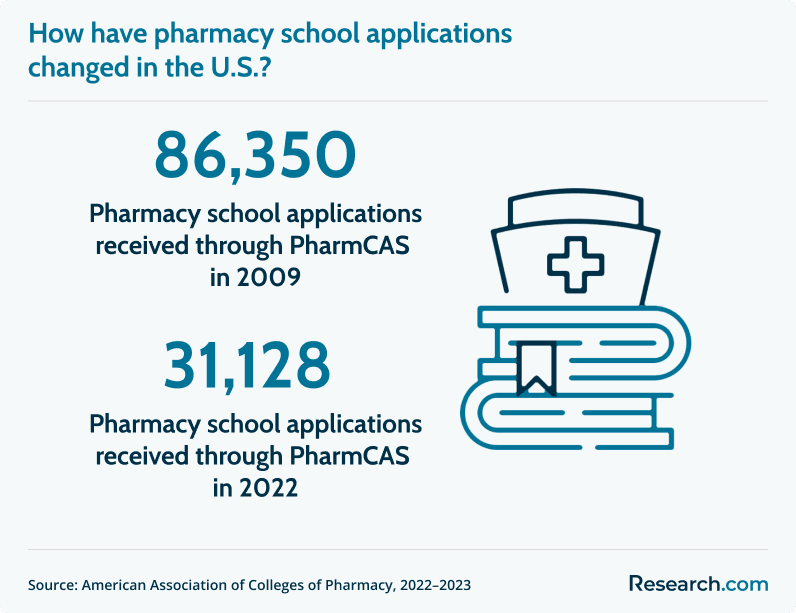
Pharmacy school admission remains selective, but the applicant market has changed. According to recent reporting from Pharmacy Times, applications declined even as new institutions and programs continued to operate. The number of pharmacy school applicants in the 2022-2023 cycle decreased by about 3% from the previous year, continuing a downward trend over several years.
This does not mean students should treat admission as easy. Some programs still accept only 10-20% of applicants, and the average GPA for admitted students often exceeds 3.5. Strong applicants usually combine solid science grades with healthcare exposure, clear motivation, and evidence of communication and ethical judgment.
Some schools have responded to enrollment trends by reviewing applicants more holistically, reducing emphasis on standardized testing, or widening the types of healthcare experience they consider. This is similar to how some graduate programs, including online social work master's programs no GRE, have moved away from requiring standardized tests. For pharmacy applicants, the practical lesson is simple: check each school’s current policy rather than relying on outdated assumptions.
| If your profile looks like this | Best strategy |
| High GPA and strong science grades | Target programs with competitive clinical rotations, residency placement support, and specialty opportunities. |
| Moderate GPA but strong pharmacy experience | Look for holistic-review schools and explain your growth, readiness, and professional exposure clearly. |
| Career changer with healthcare experience | Highlight transferable patient-care, communication, leadership, and problem-solving skills. |
| Limited pharmacy exposure | Shadow pharmacists, work or volunteer in a pharmacy setting, and speak with current students before applying. |
What is the curriculum like in pharmacy school for 2027?
Pharmacy school combines biomedical science, medication science, patient care, law, communication, and supervised practice. The curriculum is designed to prepare students not only to understand drugs, but also to make safe, evidence-based recommendations for real patients.
Core scientific and clinical coursework
- Pharmacology and medicinal chemistry. Students learn how drugs work, how chemical structure affects activity, and how medications interact with body systems.
- Therapeutics. Coursework focuses on choosing, monitoring, and adjusting medication therapy for common and complex health conditions.
- Pharmacokinetics and pharmacodynamics. Students study how the body absorbs, distributes, metabolizes, and eliminates medications and how drug effects vary by patient.
- Pathophysiology. Programs teach the disease processes that pharmacists must understand to recommend appropriate therapy.
- Pharmacy law and ethics. Students learn legal responsibilities, controlled substance rules, dispensing requirements, privacy obligations, and professional standards.
Patient-care and experiential training
- Skills labs and simulations. Students practice counseling, medication reconciliation, immunization techniques, documentation, and clinical decision-making.
- Introductory practice experiences. Early rotations expose students to community, hospital, and health-system pharmacy environments.
- Advanced clinical rotations. Later rotations place students in real practice settings such as hospitals, outpatient clinics, community pharmacies, and specialty care sites.
Interprofessional and prevention-focused learning
Modern pharmacists frequently work with physicians, nurses, dietitians, social workers, and administrators. Pharmacy programs increasingly emphasize team-based care, chronic disease management, immunization services, medication adherence, and patient education. Students who want stronger nutrition knowledge may also compare related programs such as the best online nutrition degree options, especially if they are interested in diabetes care, cardiovascular risk reduction, or lifestyle-focused counseling.
What are the different pharmacy specialties you can pursue after graduation?
Pharmacy graduates are not limited to one type of job. Specialization can shape where you work, the patients you serve, the credentials you pursue, and whether post-graduate residency or fellowship training is advisable.
| Specialty area | Typical focus | Common work settings |
| Clinical pharmacy | Medication therapy management, patient monitoring, and collaboration with care teams. | Hospitals, clinics, specialty practices, and health systems. |
| Community pharmacy | Dispensing, counseling, immunizations, over-the-counter guidance, and adherence support. | Retail chains, independent pharmacies, and community health settings. |
| Hospital pharmacy | Medication safety, IV therapy, sterile compounding, drug interactions, and inpatient therapy management. | Hospitals, academic medical centers, and health systems. |
| Pharmacoeconomics | Cost-effectiveness analysis, formulary strategy, utilization review, and policy support. | Insurers, health systems, pharmaceutical companies, and research organizations. |
| Pharmacy administration | Operations, budgeting, staffing, compliance, quality improvement, and department leadership. | Hospitals, health systems, managed care organizations, and corporate pharmacy settings. |
| Nuclear pharmacy | Preparation and dispensing of radioactive drugs used in imaging or cancer treatment. | Specialized pharmacies, hospitals, and imaging centers. |
| Geriatric pharmacy | Medication optimization for older adults, polypharmacy management, chronic disease support, and safety review. | Long-term care, ambulatory care, hospitals, and consulting roles. |
| Compounding pharmacy | Customized medications, specialized dosage forms, sterile compounding, pediatric doses, and hormone therapy support. | Compounding pharmacies, hospitals, and specialty pharmacies. |
| Pharmacogenomics | Using genetic information to guide drug selection, dosing, and adverse-effect risk management. | Clinical programs, laboratories, academic medical centers, and precision medicine teams. |
The growth of specialization is reflected in the increasing number of BPS-certified pharmacists, which grew from 3,004 in 2008 to 41,802 in 2020. Four of the five largest specialties—pharmacotherapy, ambulatory care, oncology, and critical care—continue to grow at a fast rate. Students interested in behavioral health, developmental services, or interdisciplinary care may also explore adjacent credentials such as BCBA programs online.
What is the job satisfaction level for pharmacists for 2027?
Pharmacist job satisfaction depends heavily on work setting. A pharmacist in a high-volume retail environment may experience the profession very differently from a clinical specialist in a hospital, an oncology pharmacist, a managed care pharmacist, or a pharmacy administrator.
A Pharmacy Times Salary and Job Satisfaction Survey reported generally positive satisfaction among pharmacists while also highlighting concerns about workload, administrative demands, stress, burnout, and long hours. The survey also showed that nearly 70% of pharmacists were satisfied with their work-life balance, and it cited a median annual salary of around $128,000.
| What pharmacists often value | What can reduce satisfaction |
| Helping patients use medications safely and effectively. | High prescription volume, staffing shortages, and limited patient counseling time. |
| Strong science foundation and continuous learning. | Administrative workload and documentation pressure. |
| Opportunities to specialize or move into leadership. | Stress, burnout, long hours, and changing retail pharmacy expectations. |
| Stable professional identity in healthcare. | Debt burden if educational costs are not managed carefully. |
Can advanced online education boost pharmacists' career growth?
Online advanced education can help working pharmacists build specialized clinical, research, informatics, or leadership skills without pausing their careers. An online doctor of pharmacy program may be relevant for professionals comparing flexible PharmD pathways or advanced pharmacy education options. Students should verify accreditation, experiential requirements, state authorization, and licensing alignment before enrolling in any online or hybrid pharmacy program.
What are the cost and financial considerations for pursuing a pharmacy degree?
The cost of pharmacy school includes more than tuition. Students should account for fees, books, technology, lab supplies, health insurance, transportation to rotations, exam preparation, licensing applications, background checks, immunizations, and living expenses during unpaid clinical experiences.
| Cost category | Questions to ask |
| Tuition and mandatory fees | Is tuition charged by credit, term, year, or program? Are professional fees separate? |
| Living expenses | Can you work while enrolled, or will the program schedule make outside employment unrealistic? |
| Clinical rotations | Will you need to relocate, commute long distances, or pay for housing during rotations? |
| Licensing and exams | What are the costs for the NAPLEX, state law exams, applications, and study materials? |
| Borrowing and repayment | What monthly loan payment would be manageable under conservative salary assumptions? |
| Scholarships and aid | Does the school offer merit aid, need-based aid, employer partnerships, or service-based scholarships? |
Students looking for lower-cost or flexible options can compare online and hybrid pathways, including Research.com’s guide to pharmacist school online. Cost should never be the only criterion, however. A cheaper program that lacks proper accreditation, strong rotations, or licensing alignment can become more expensive in the long run.
How has technology transformed the role of pharmacists?
Technology is changing pharmacy practice by automating repetitive tasks, improving medication safety checks, expanding remote access, and giving pharmacists better data for clinical decisions. Automated dispensing systems, electronic health records, telepharmacy platforms, inventory systems, and AI-supported drug interaction tools can reduce manual workload and help pharmacists spend more time on patient care.
Telepharmacy has become especially important for patients in underserved or remote communities. Pharmacists can review prescriptions, counsel patients, coordinate with providers, and monitor therapy without requiring every interaction to occur in person. Digital records also make it easier to identify duplicate therapies, allergy risks, adherence problems, and adverse drug reactions.
The practical career implication is clear: future pharmacists need more than medication knowledge. They must be comfortable with health technology, data interpretation, remote communication, privacy rules, and clinical documentation.
How can additional certifications enhance a pharmacist's career prospects?
Certifications can help pharmacists demonstrate focused competence in areas such as pharmacotherapy, ambulatory care, oncology, critical care, geriatrics, informatics, pharmacogenomics, medication safety, leadership, or healthcare operations. They are most valuable when aligned with a clear role target, not when collected randomly.
Pharmacists interested in reimbursement, compliance, documentation, and healthcare revenue systems may also review career information related to medical billing and coding salary. This type of knowledge can be useful for pharmacists moving toward managed care, administration, consulting, or health-system operations.
How do legislative and regulatory changes impact pharmacy careers?
Pharmacists work in a highly regulated profession. Changes in state scope-of-practice laws, vaccination authority, prescribing protocols, controlled substance rules, reimbursement policies, telehealth rules, and accreditation expectations can alter what pharmacists are allowed to do and how they are paid for services.
Because regulations can differ by state, students should verify whether their intended program and experiential placements align with where they plan to practice. Pharmacists moving into compliance-heavy roles may also benefit from understanding adjacent administrative credentials, including programs from the best medical billing and coding schools.
Can a pharmacist transition to a role in healthcare administration?
Yes. Pharmacists can move into healthcare administration because they understand medication systems, safety protocols, formulary management, patient care workflows, regulatory requirements, and cost control. Common advancement paths include pharmacy manager, director of pharmacy, medication safety officer, clinical program manager, managed care leader, operations director, and executive roles in health systems or pharmacy organizations.
A pharmacist who wants to move into administration should build skills in budgeting, staffing, quality improvement, informatics, compliance, contract management, change leadership, and communication with non-pharmacy executives. An MHA, MBA, leadership certificate, residency with an administrative focus, or health-system management experience may strengthen the transition.
Can online healthcare administration programs enhance pharmacists’ leadership skills?
Online healthcare administration programs can be useful for pharmacists who want to supervise teams, manage budgets, lead quality initiatives, or transition out of strictly clinical roles. These programs may cover finance, policy, operations, population health, human resources, and organizational leadership. Pharmacists comparing affordable leadership pathways can review options such as the cheapest online health science degree, while also checking curriculum fit and employer recognition.
How can mentorship and networking enhance a pharmacist's career?
Mentorship can help pharmacy students and pharmacists make better career decisions because many opportunities are not obvious from course catalogs alone. A mentor can explain residency competitiveness, specialty expectations, board certification timing, job search strategy, workplace culture, and leadership pathways.
Networking also matters. Professional organizations, alumni groups, conferences, preceptors, rotation sites, and faculty relationships can lead to internships, residency interviews, job referrals, research projects, and leadership roles. Pharmacists who want faster movement into administration may pair networking with focused education, such as accelerated healthcare administration online programs.
Can pharmacists diversify their expertise through allied healthcare roles?
Some pharmacists broaden their perspective by learning how allied health professionals support patients before, during, and after medication therapy. This can be especially useful in clinics, community health programs, long-term care, and interdisciplinary teams. Training related to patient intake, vital signs, documentation, care coordination, or front-office workflows can help pharmacists understand the full patient journey.
For pharmacists who want a stronger view of direct clinical support roles, a medical assistant online school can provide context on patient-facing operations, though it should be viewed as complementary training rather than a substitute for pharmacy credentials.
How can a background in biochemistry boost a pharmacist’s clinical effectiveness?
Biochemistry strengthens a pharmacist’s understanding of drug mechanisms, metabolism, enzymatic reactions, molecular signaling, genetic variation, and disease pathways. This foundation is especially useful in pharmacogenomics, oncology, infectious disease, endocrinology, toxicology, and research-oriented roles.
Students who enjoy the molecular side of pharmacy may consider additional coursework or compare options such as a cheap biochemistry online degree. The goal should be strategic: choose biochemistry study if it supports clinical reasoning, research goals, or specialization rather than simply adding another credential.
What alternative career paths can pharmacists pursue?
A PharmD can support careers beyond traditional community or hospital dispensing. Pharmacists may work in pharmaceutical industry, medical affairs, regulatory affairs, pharmacovigilance, clinical trials, managed care, health informatics, pharmacy benefit management, consulting, academia, public health, medication safety, quality improvement, and healthcare technology.
Pharmacists who want administrative or revenue-cycle roles may also investigate healthcare documentation and reimbursement training, including accredited medical billing and coding schools online with financial aid. The best alternative path depends on whether the pharmacist wants to stay patient-facing, move into business operations, conduct research, or work with healthcare data.
What is the future demand for pharmacists?
The future demand for pharmacists is mixed rather than uniformly strong across every setting. According to the U.S. Bureau of Labor Statistics, employment of pharmacists is projected to grow by 5% from 2023 to 2033, which is slower than the average for all occupations. Demand may be stronger in hospitals, outpatient care centers, ambulatory care, specialty pharmacy, and roles tied to medication therapy management.
Several factors continue to support the need for pharmacists: prescription medication use, an aging population, chronic disease management, personalized medicine, medication safety, and the growing complexity of drug therapy. At the same time, automation and pressure in retail pharmacy mean students should think carefully about which practice setting they want to enter.
Students who pursue clinical training, residency experience, board certification, technology skills, or leadership preparation may be better positioned for advanced roles than graduates who rely only on the baseline degree.
Can online certifications enhance overall career growth for pharmacists?
Online certificates can help pharmacists keep pace with new technologies, clinical updates, regulatory changes, and emerging care models. They are most useful when they solve a specific career problem: preparing for leadership, learning informatics, strengthening compliance knowledge, entering managed care, or building expertise in a specialty area.
Pharmacists looking for flexible upskilling options can compare the best online medical certificate programs. Before enrolling, confirm whether the certificate is recognized by employers, whether continuing education credits apply, and whether the content matches your target role.
What Pharmacy School Graduates Have to Say
Graduates often describe pharmacy as a career that combines science, patient service, and lifelong learning. Many value the chance to help people manage chronic conditions, understand complex medications, and improve quality of life through better therapy decisions.
At the same time, experienced pharmacists frequently emphasize that the work setting matters. A hospital, clinic, community pharmacy, pharmaceutical company, or administrative role can offer very different schedules, stress levels, patient interactions, and advancement options. Prospective students should speak with pharmacists in several settings before choosing a program.
What factors should I consider when choosing a pharmacy school?
The best pharmacy school is not simply the most famous, cheapest, closest, or easiest to enter. It is the accredited program that fits your licensure goals, financial limits, learning style, rotation needs, and career direction. Students comparing accessibility can start with Research.com’s guide to the easiest pharmacy school to get into, but admission difficulty should be only one part of the decision.
| Factor | Why it matters | Question to ask the school |
| Accreditation | Accreditation affects licensure eligibility and employer confidence. | Is the PharmD program properly accredited for the licensing path I intend to pursue? |
| Licensure exam support | Graduates must pass required exams to practice. | How does the program prepare students for the NAPLEX and state law requirements? |
| Clinical rotations | Rotations shape experience, networking, and career direction. | Where do students complete rotations, and can I access sites in my desired specialty? |
| Residency and job placement | Career outcomes matter more than marketing claims. | What support is available for residency applications, fellowships, and first jobs? |
| Total cost | Tuition alone does not show the full financial burden. | What is the full estimated cost, including fees, living costs, rotations, and licensing? |
| Online or hybrid format | Flexibility can help, but pharmacy requires hands-on training. | How are labs, simulations, and experiential requirements completed? |
| Faculty and specialization | Faculty expertise can influence research, mentorship, and specialty access. | Which faculty members work in my area of interest? |
| Student support | Pharmacy school is academically demanding. | What tutoring, advising, mental health, and academic support services are available? |
Common mistakes to avoid when choosing a pharmacy school
- Choosing a program without verifying accreditation. Accreditation is essential for licensure preparation and should be checked directly, not assumed from a school’s marketing materials.
- Looking only at tuition. Fees, living expenses, transportation, rotations, exam costs, and lost income can change the real cost dramatically.
- Assuming every online pharmacy program meets licensure requirements. Online and hybrid formats can be legitimate, but students must confirm experiential training and state eligibility.
- Ignoring rotation quality. Clinical placements can influence skills, references, residency competitiveness, and job opportunities.
- Relying only on rankings or acceptance rates. A program that is easier to enter may not be the best fit if it lacks your preferred specialty, location, or support structure.
- Assuming salary outcomes are guaranteed. Reported medians and averages do not account for debt, local job markets, work setting, or career stage.
- Applying without pharmacy exposure. Shadowing or working in a pharmacy helps confirm whether the daily work matches your expectations.
Key Insights
- The PharmD is the main route to pharmacist licensure. Other pharmacy-related degrees may support research, teaching, administration, or technical roles, but they do not replace the professional pathway for licensed practice in the U.S.
- The timeline is significant. Most students should plan for six to eight years, including prerequisite or undergraduate study, a four-year PharmD, and licensing exams; specialized careers may require residency or fellowship training.
- Salary potential is strong but must be weighed against cost. The BLS reported a 2023 median annual wage of $136,030 for pharmacists, but students should calculate debt, fees, licensing costs, and realistic first-job expectations before enrolling.
- Admissions are changing, not disappearing. Applications declined by about 3% in the 2022-2023 cycle, and some schools use more flexible review policies, but competitive programs still value strong science preparation, healthcare experience, and professionalism.
- Career fit depends on work setting. Retail, hospital, outpatient, industry, managed care, research, and administrative pharmacy roles offer different responsibilities, stress levels, schedules, and advancement options.
- Technology is reshaping the profession. Automation, telepharmacy, electronic records, and AI-supported medication tools make digital fluency increasingly important for future pharmacists.
- Specialization can improve long-term options. Growth in board-certified specialties—from 3,004 in 2008 to 41,802 in 2020—shows how pharmacists are moving into more focused clinical and health-system roles.
- The best pharmacy school is the one that matches your licensure, cost, rotation, and career goals. Do not choose based only on prestige, convenience, or acceptance rate.
References:
- American Association of Colleges of Pharmacy. (2025). Academic pharmacy's vital statistics. aacp.org
- CareerOneStop. (2025). Pharmacists. careeronestop.org
- Ignoffo, R.J., Knapp, K., Ellis, W. (2022). Board-certified pharmacy specialties: Growth from 2008 to 2020 and projections to 2025. pubmed.ncbi.nlm.nih.gov
- US Bureau of Labor Statistics. (29 Aug 2024). Pharmacists. bls.gov
- Verstraete, B. (16 Sept 2024). Pharmacy school enrollment in the U.S. is dangerously low — especially in Missouri. ksmu.org
Other Things You Should Know About Pharmacy Schools
As of 2027, the job prospects for pharmacists are influenced by an aging population and expanding healthcare roles. While demand for pharmacists in clinical and community settings remains, competition can be high due to the number of graduates. Evaluating regional demand and potential specializations can enhance employment opportunities.
In 2027, consider factors like the pharmacy job market, tuition costs, and potential salary. Evaluate your interest in healthcare, commitment to extensive education, and the evolving role of pharmacists. Measure these against personal goals to determine if pharmacy school aligns with your aspirations.


