
2027 Easiest Physical Education Degree Programs

Co-Founder and Chief Data Scientist
An associate degree in physical education can be a practical first credential for students who want to work in fitness, coaching, recreation, wellness, or school support roles without committing immediately to a four-year degree. The key question is not whether the program is “easy” in the sense of requiring little effort. A better way to think about it is accessibility: flexible formats, straightforward admissions, manageable timelines, affordable tuition, and clear entry-level career options.
This guide explains what an easy physical education degree program usually includes, how online and campus formats compare, what the degree may cost, which careers it can support, and how to choose a program that fits your schedule, budget, and long-term goals. It also covers accreditation, financial aid, common mistakes, further education options, and current trends affecting physical education and fitness careers.
Quick Answer: Is an Easy Physical Education Degree Worth Considering?
An easy physical education degree is most useful for students who want an affordable, relatively short pathway into fitness, recreation, coaching support, or wellness roles. Most associate programs take two years of full-time study and require about 60 credits. Graduates may pursue jobs such as fitness trainer, recreation worker, physical education assistant, wellness aide, or coaching assistant, although some teaching, therapy, and advanced athletic roles require additional education, certification, or licensure.
| Best fit | What to expect | When to consider another path |
| Students seeking entry-level fitness, coaching, wellness, or recreation work | Courses in anatomy, kinesiology, coaching, fitness training, communication, and health promotion | If your goal is licensed teaching, physical therapy, athletic training, or advanced administration |
| Working adults who need online or hybrid flexibility | Some online coursework, with possible labs, internships, or in-person workshops | If you need extensive hands-on practice and do not have access to local facilities |
| Students planning to transfer into a bachelor’s program later | General education and foundational physical education credits | If the program is not properly accredited or has weak transfer agreements |
What are the benefits of getting an easy physical education degree?
- It can lead to entry-level work. Graduates may qualify for roles such as fitness trainer, recreation coordinator, physical education assistant, wellness support worker, or coaching aide. These jobs can help students gain experience before pursuing a bachelor’s degree or professional certification.
- It provides a faster starting point than a four-year degree. Associate programs are usually shorter and less expensive than bachelor’s programs, making them useful for students who want to test the field before investing more time and money.
- It can support earning potential in fitness and recreation. Professionals with an associate degree in physical education can earn a median salary of $46,480 annually, with additional growth possible through experience, certifications, specialized training, or further education.
- It offers flexible learning options. Many institutions provide online or hybrid associate degree options, which can help students balance coursework with jobs, family responsibilities, military service, or other commitments.
- It builds transferable skills. Students develop communication, leadership, exercise planning, safety awareness, motivational coaching, and group instruction skills that apply across schools, gyms, recreation centers, wellness programs, and community organizations.
What can I expect from an easy physical education degree program?
An associate degree in physical education usually combines general education with introductory coursework in human movement, exercise, coaching, health, and recreation. Full-time students commonly finish in two years, while part-time learners may need longer. The typical program includes about 60 credits, though requirements vary by institution.
Students should expect both classroom-based and applied learning. Common subjects include anatomy, physiology, kinesiology, fitness assessment, coaching principles, first aid, nutrition, sports psychology, and communication. Some programs also include internships, activity labs, field experiences, or supervised practice in schools, gyms, parks departments, or recreation facilities.
Online programs may use virtual anatomy tools, recorded demonstrations, live fitness instruction, discussion boards, and remote assignments. However, physical education is an applied field, so students should check whether an online program requires local fieldwork, campus visits, proctored assessments, or in-person workshops before enrolling.
| Program component | What it usually covers | Why it matters |
| Movement science | Anatomy, physiology, kinesiology, biomechanics, and exercise principles | Helps students understand how the body responds to movement, conditioning, and training |
| Teaching and coaching basics | Lesson planning, coaching methods, safety, motivation, and group instruction | Prepares students to lead activities, support athletes, or assist physical education teachers |
| Health and wellness | Nutrition, fitness assessment, wellness programming, and behavior change | Supports careers in gyms, wellness programs, community health, and recreation settings |
| General education | Communication, psychology, math, and social science courses | Builds the workplace skills needed to communicate with clients, students, families, and teams |
| Applied experience | Labs, internships, workshops, practicums, or local field placements | Gives students supervised practice before entering the workforce |
Where can I work with a physical education degree?
Graduates with an associate degree in physical education usually begin in fitness, wellness, recreation, sports, or school-support environments. The degree can qualify students for entry-level positions, but job eligibility depends on employer requirements, state rules, certifications, and prior experience.
Common workplaces include fitness centers, health clubs, schools, after-school programs, community recreation facilities, youth sports organizations, camps, parks departments, senior centers, corporate wellness programs, and some healthcare-adjacent wellness settings. Graduates often work directly with individuals or groups to encourage physical activity, teach safe exercise techniques, organize activities, or support structured wellness programming.
| Work setting | Possible roles | Important consideration |
| Fitness centers and gyms | Fitness trainer, group exercise assistant, wellness coach, fitness floor staff | Many employers prefer or require personal training or group fitness certification |
| Schools and youth programs | Physical education assistant, after-school activity coordinator, coaching aide | Licensed teaching roles typically require a bachelor’s degree and state certification |
| Recreation departments | Recreation worker, program assistant, sports league coordinator | Experience with scheduling, safety, and group leadership can be valuable |
| Corporate wellness | Wellness program assistant, fitness challenge coordinator, health promotion aide | Employers may value communication skills and knowledge of behavior change |
| Sports organizations | Assistant coach, sports operations assistant, youth program staff | Coaching experience, CPR certification, and sport-specific knowledge may be required |
How much can I make with a physical education degree?
Pay varies by role, employer, location, certification, and experience. Fitness trainers and instructors earn a median annual salary of $46,480, while recreation workers earn around $34,410 annually. Graduates in urban or high-demand regions may see higher wages, although a higher cost of living can reduce the practical value of that increase.
Specialized credentials can also affect earnings. Certified personal trainers can earn upwards of $51,210 annually, with top earners in the field exceeding $80,740. These figures show that an associate degree can be a viable starting point, but students should not assume that the degree alone guarantees a specific salary. In fitness and wellness careers, income often depends on client base, schedule, employer type, certifications, and the ability to retain participants or clients.
| Career area | Salary figure stated | How graduates can improve competitiveness |
| Fitness trainers and instructors | Median annual salary of $46,480 | Earn a reputable certification, gain supervised training experience, and build coaching skills |
| Recreation workers | Around $34,410 annually | Develop program planning, youth supervision, safety, and community engagement experience |
| Certified personal trainers | Upwards of $51,210 annually; top earners exceeding $80,740 | Choose a recognized certification, specialize in a population or training style, and build client retention skills |
- Easiest Physical Education Degree Programs for 2027
- How long does an easy physical education degree take?
- Online vs. on-campus physical education degrees
- Average cost of an easy physical education degree
- Financial aid options for physical education students
- Admissions requirements and prerequisites
- Common courses in physical education associate programs
- Specializations in easy physical education degree programs
- Further education options after an associate degree
- How to choose the right physical education degree program
- Accreditation standards to check before enrolling
- Complementary degrees that may support a physical education career
- Emerging trends in physical education
- When an advanced degree may be worth it
- Career paths for physical education degree graduates
- Creative skills that can strengthen physical education careers
- Job market outlook for physical education graduates
- Pathways from physical education to educational leadership
- Creative integration in physical education programsLeadership pathway reference
- Advanced leadership studies for physical education professionals
- Networking and interdisciplinary partnerships
- Digital user experience in online physical education programsPartnership referenceAdvanced leadership referenceEducational leadership referenceJob market referenceAdditional reference
List of the Easiest Physical Education Degree Programs for 2027
How do we rank schools?
Choosing a degree program requires more than comparing tuition. Students should look at cost, delivery format, academic quality, accreditation, transfer potential, support services, and how well the curriculum matches their goals. Research.com’s ranking process is designed to make those comparisons easier and more transparent. Our ranking methodology uses information from trusted data sources, including the IPEDS database, Peterson’s database (Distance Learning Licensed Data Set), the College Scorecard database, and the National Center for Education Statistics.
| Rank | School | Format and focus | Program details | Best for |
| 1 | Eastern New Mexico University | Hybrid associate degree with online classes and in-person workshops; General Physical Education | Program Length: Two years; Cost per Credit: $180 (in-state), $250 (out-of-state); Required Credits to Graduate: 60; Accreditation: Higher Learning Commission (HLC) | Students who need scheduling flexibility but still want some applied, face-to-face learning |
| 2 | East Carolina University | In-person program focused on Teaching and Coaching | Program Length: Two years; Cost per Credit: $250 (in-state), $890 (out-of-state); Required Credits to Graduate: 60; Accreditation: Southern Association of Colleges and Schools Commission on Colleges (SACSCOC) | Aspiring coaches or education-focused students who prefer campus facilities and direct mentoring |
| 3 | Liberty University | On-campus program with a Coaching and Leadership concentration | Program Length: Two years; Cost per Credit: $390; Required Credits to Graduate: 60; Accreditation: SACSCOC | Students interested in exercise science, coaching, campus activities, and sports leadership |
| 4 | University of Central Florida | Associate program combining classroom instruction and laboratory learning; General Physical Education | Program Length: Two years; Cost per Credit: $212 (in-state), $749 (out-of-state); Required Credits to Graduate: 60; Accreditation: SACSCOC | Students seeking a large-university environment with practical labs and broad physical education coursework |
| 5 | Lamar University | In-person program emphasizing kinesiology and health promotion; General Physical Education | Program Length: Two years; Cost per Credit: $233 (in-state), $633 (out-of-state); Required Credits to Graduate: 60; Accreditation: SACSCOC | Students who want hands-on preparation for employment or transfer into further study |
| 6 | Eastern Oregon University | Hybrid associate degree with online coursework and periodic workshops; Exercise Science | Program Length: Two years; Cost per Credit: $265; Required Credits to Graduate: 60; Accreditation: Northwest Commission on Colleges and Universities (NWCCU) | Students who want flexible study plus faculty support, advising, and internship opportunities |
| 7 | University of Northern Iowa | In-person program focused on Physical Education and Recreation | Program Length: Two years; Cost per Credit: $320 (in-state), $800 (out-of-state); Required Credits to Graduate: 60; Accreditation: SACSCOC | Students interested in schools, recreation centers, sports organizations, and community engagement |
| 8 | Arizona State University | In-person associate program in General Physical Education | Program Length: Two years; Cost per Credit: $540; Required Credits to Graduate: 60; Accreditation: HLC | Students who value campus-based learning, fitness facilities, faculty access, and career services |
| 9 | Southern New Hampshire University | Online program focused on Coaching and Wellness | Program Length: Two years; Cost per Credit: $320; Required Credits to Graduate: 60; Accreditation: New England Commission of Higher Education (NECHE) | Working adults and remote learners who need advising, online community, and flexible scheduling |
| 10 | American Public University | Fully online associate degree with a Sports Management concentration | Program Length: Two years; Cost per Credit: $285; Required Credits to Graduate: 60; Accreditation: HLC | Adult learners seeking an online, career-focused route into sports organization or athletic program support |
How long does it take to complete an easy physical education degree program?
Most full-time students complete an associate degree in physical education in about two years. These programs commonly include approximately 60 credits split between general education requirements and physical education coursework. Students who enroll part time, work full time, or pause between terms may need three or more years to finish.
Some schools offer accelerated options, especially online or hybrid programs. Students comparing accelerated associates degree online pathways may find physical education or related health and fitness programs that can be completed in as little as 18 months through heavier course loads, shorter terms, or summer enrollment.
Timeline also depends on applied requirements. Internships, in-person workshops, activity labs, CPR training, background checks for school placements, and local fieldwork can affect how quickly a student progresses. Before enrolling, ask whether each course is offered every term and whether required hands-on experiences are available near you.
| Enrollment pace | Typical timeline | Who it fits |
| Accelerated | As little as 18 months | Students who can handle intensive schedules and year-round coursework |
| Full time | About two years | Students who want the standard associate degree timeline |
| Part time | Three or more years | Working adults, caregivers, or students balancing multiple responsibilities |
Students who are exploring other accessible health-related fields may also compare admission pathways such as the easiest SLP programs to get into, particularly if they are interested in communication, rehabilitation, or school-based support careers.
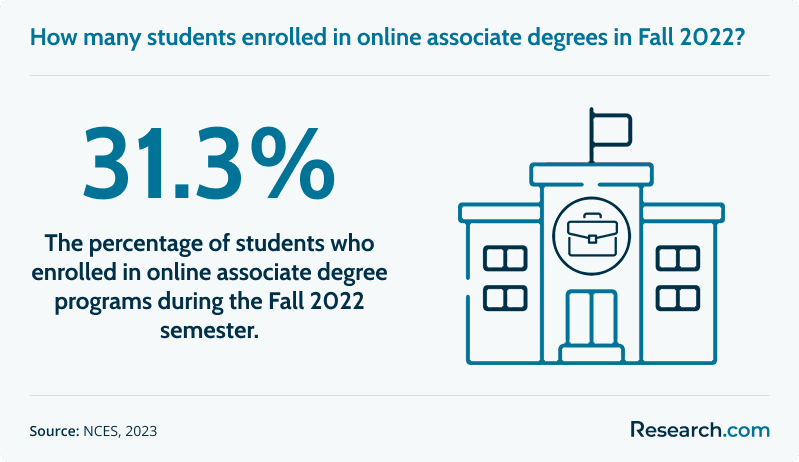
How does an online physical education degree compare to an on-campus program?
Online physical education programs can be a strong option for students who need flexibility, but they are not automatically easier. They often require self-discipline, reliable technology, and the ability to complete physical demonstrations or field assignments independently. Some students also compare physical education with other practical credentials listed among useful associates degrees when deciding how quickly they want to enter the workforce.
Campus programs provide more immediate access to athletic facilities, labs, equipment, coaching clinics, faculty feedback, and peer practice. They may be better for students who learn by doing, need structure, or want regular in-person mentoring. Online programs can work well when the school has strong virtual instruction and clear arrangements for local practicums or internships.
| Factor | Online physical education degree | On-campus physical education degree |
| Schedule flexibility | Usually stronger, especially for working adults | More structured with set class and lab times |
| Hands-on practice | May require local placements, recorded demonstrations, or limited campus visits | Often easier to access through labs, gyms, workshops, and coaching activities |
| Peer interaction | Usually through discussion boards, video meetings, and group projects | More frequent face-to-face collaboration and activity-based learning |
| Technology requirements | Requires dependable internet, video capability, and comfort with online platforms | Less dependent on remote learning tools, though digital assignments may still be required |
| Best fit | Self-directed students with work or family obligations | Students who want structured practice, immediate feedback, and campus resources |
If you are considering a healthcare advancement route rather than a fitness or recreation path, you may also review flexible programs such as the easiest RN to MSN online program to get into, which follows a very different professional and licensure track.
What is the average cost of an easy physical education degree program?
The cost of an associate degree in physical education depends on the school, residency status, delivery format, fees, and whether the student attends full time or part time. Based on the listed programs, tuition ranges from $180 to $540 per credit, with estimated total degree costs between $7,200 and $32,600. Public in-state tuition is usually the lowest-cost route, while out-of-state rates and private institutions often cost more.
Students should compare the full cost of attendance, not only the advertised tuition rate. Online programs may reduce commuting, housing, parking, or relocation expenses, but they can include technology fees, online course fees, books, fitness equipment, background checks, CPR certification, exam fees, or travel for required workshops.
| Cost category | What to check | Why it matters |
| Tuition | Per-credit rate, in-state and out-of-state charges, and required credits | This is the largest direct cost and varies widely by institution |
| Fees | Technology, student services, lab, activity, graduation, and online course fees | Fees can significantly change the real price of attendance |
| Materials | Textbooks, fitness equipment, uniforms, first aid materials, and software | Physical education programs may require practical supplies beyond books |
| Hands-on requirements | Travel, local placement costs, background checks, and CPR certification | Applied learning can add costs, especially for online students |
| Transfer plans | Whether credits apply to a bachelor’s degree later | Lost transfer credits can increase long-term costs |
Students planning to continue into teaching or education leadership may compare lower-cost continuation options such as the cheapest online bachelor's degree in education. Those considering a switch into technical fields can also review the easiest technology degree programs to understand how costs and career outcomes differ across fields.
If your interests are closer to counseling or family support, research the requirements to be a family counselor before choosing a degree, because counseling careers usually involve different graduate education, supervised experience, and licensure expectations.
What are the financial aid options for students enrolling in an easy physical education degree program?
Students in accredited physical education associate programs may be able to reduce out-of-pocket costs through federal, state, institutional, private, and employer-based aid. The amount available depends on financial need, enrollment status, school eligibility, academic progress, and program type.
- Federal aid: Eligible students may qualify for Pell Grants, Direct Subsidized Loans, Direct Unsubsidized Loans, or other federal aid by completing the required federal financial aid process.
- State grants and scholarships: Many states offer funding for residents, especially students attending public in-state institutions or pursuing workforce-related credentials.
- Institutional scholarships: Colleges may award scholarships based on academic performance, financial need, athletics, community service, program of study, or transfer status.
- Private scholarships: Community organizations, fitness associations, youth sports groups, wellness foundations, and local nonprofits may support students entering health and recreation fields.
- Employer tuition assistance: Some gyms, school districts, recreation departments, healthcare organizations, and public agencies offer reimbursement or tuition support for employees.
Apply early and compare net price, not only sticker price. A school with higher tuition may become affordable after grants and scholarships, while a lower-tuition program can become expensive if it offers limited aid or requires costly travel for hands-on work.
What are the prerequisites for enrolling in an easy physical education degree program?
Associate degree admissions are usually more accessible than bachelor’s or graduate admissions, but requirements still vary by school. Most programs expect applicants to show basic academic readiness and the ability to complete college-level coursework.
- High school diploma or equivalent, such as a GED.
- Official transcripts, sometimes with a minimum GPA requirement, often around 2.0 or higher.
- Placement testing or college readiness evaluation in subjects such as English or math, depending on the institution.
- Additional materials such as a personal statement, recommendation letters, or proof of CPR certification, if required by the program.
- Prior coursework in biology, health, physical education, or related subjects, which can be helpful but is not always required.
- Proof of English language proficiency through exams such as the TOEFL or IELTS for international students when applicable.
Students who plan to work with minors, schools, camps, or youth sports programs should also ask whether the program requires background checks, immunization records, liability insurance, or field placement approval.
What courses are typically in an easy physical education degree program?
Physical education associate programs usually include foundational science, fitness, coaching, health, and general education courses. The goal is to help students understand movement, design safe activities, communicate effectively, and support healthy behavior in different populations.
| Course area | Examples of topics | Career relevance |
| Anatomy and physiology | Body systems, muscles, joints, movement, and exercise response | Essential for fitness instruction, coaching, and injury prevention awareness |
| Kinesiology | Human movement, biomechanics, posture, and movement analysis | Helps graduates assess movement patterns and teach safer technique |
| Fitness training | Cardiovascular training, strength training, flexibility, and program design | Supports work as a trainer, group exercise aide, or wellness assistant |
| Coaching fundamentals | Team leadership, practice planning, motivation, and sport instruction | Useful for youth sports, school support, camps, and recreation programs |
| Sports psychology | Motivation, confidence, performance mindset, and group dynamics | Helps professionals communicate with athletes, clients, and participants |
| Nutrition and wellness | Basic nutrition, healthy habits, weight management concepts, and wellness planning | Useful in gyms, corporate wellness, recreation, and community health settings |
| First aid and safety | Emergency response, CPR concepts, injury prevention, and risk management | Important for any role involving physical activity supervision |
| Communication and psychology | Interpersonal communication, learning behavior, and motivation | Helps graduates work with students, clients, families, and community groups |
Students who later want to move into teaching, curriculum design, or school leadership may use the associate degree as a starting point before exploring masters programs online education or other advanced education pathways.
What types of specializations are available in easy physical education degree programs?
Specializations help students align their degree with a more specific career direction. Not every associate program offers formal concentrations, but many allow students to choose electives in coaching, exercise science, wellness, recreation, or sports management.
| Specialization | Focus | Good fit for |
| Coaching | Team leadership, sport instruction, motivation, and practice design | Students interested in youth sports, school athletics, camps, or assistant coaching |
| Exercise science | Biomechanics, conditioning, strength training, movement, and rehabilitation concepts | Students considering fitness, kinesiology, athletic training, or future graduate study |
| Sports management | Operations, leadership, athletics administration, event coordination, and organization | Students who prefer the business and administrative side of sports |
| Wellness | Health promotion, lifestyle change, fitness programming, and community wellness | Students interested in corporate wellness, community health, or health coaching support |
| Recreation leadership | Program planning, activity leadership, parks and recreation, and community engagement | Students who want to work in recreation centers, camps, parks departments, or public programs |
Students drawn to performance psychology, motivation, and athlete support may also compare related career information such as sport psychologist salary, keeping in mind that sport psychology careers generally require more advanced education than an associate degree.
What further education opportunities can elevate your physical education career?
An associate degree can open the door to entry-level roles, but many higher-level positions require additional credentials. Students who want to become licensed physical education teachers, athletic trainers, physical therapists, school administrators, or college-level professionals should plan for further education early.
A bachelor’s degree in physical education, kinesiology, exercise science, health education, recreation management, or sports management is a common next step. Students who want to teach younger learners may also compare programs such as an online elementary education degree, especially if their goal is to work in schools and meet teacher certification requirements.
| Goal | Likely next credential | Why it matters |
| Licensed physical education teacher | Bachelor’s degree and state teacher certification | Public school teaching roles generally require state-approved preparation |
| Fitness or strength professional | Industry certification plus experience | Employers and clients often look for recognized certifications and practical competence |
| Sports or recreation management | Bachelor’s degree in sports management, recreation, or related field | Administrative roles often require broader management training |
| Educational leadership | Master’s or doctoral-level leadership study | School administration and program leadership usually require advanced preparation |
| Therapy or clinical movement careers | Advanced professional degree and licensure where required | Fields such as physical therapy have separate educational and licensing pathways |
How do you choose the easiest physical education degree program?
The right program is the one that fits your goals, budget, schedule, learning style, and transfer plans. A program that feels easy to enter may become difficult later if it lacks accreditation, has limited advising, does not offer required courses regularly, or fails to prepare you for the credentials employers expect.
Accreditation is a critical consideration because it affects educational quality, credit transfer, financial aid eligibility, and future degree options. Students should also review curriculum details, hands-on requirements, faculty qualifications, student support, internship access, graduation requirements, and career services.
| Question to ask | Why it matters | Red flag |
| Is the institution accredited? | Accreditation can affect credit transfer, aid eligibility, and future study | The school cannot clearly identify its recognized accreditor |
| Can credits transfer into a bachelor’s degree? | Many physical education careers require more than an associate degree | No articulation agreements or unclear transfer guidance |
| Are labs, internships, or field experiences required? | Applied work may affect schedule, travel, and costs | Online students are not told how practical requirements are completed |
| Does the curriculum match your career goal? | Coaching, fitness, wellness, recreation, and teaching support require different preparation | The program uses broad language but lists few relevant courses |
| What student support is available? | Advising, tutoring, career help, and placement support can improve completion | Students must navigate course planning and internships with little guidance |
| What is the total cost? | Fees, materials, travel, and lost transfer credits can raise expenses | The school promotes tuition but does not disclose additional costs clearly |
What accreditation standards should I consider when choosing a physical education degree program?
At minimum, students should confirm that the college or university has recognized institutional accreditation. Accreditation indicates that an external accrediting body has reviewed the institution for academic quality, governance, student support, and financial standards. It also matters if you plan to transfer credits, apply for financial aid, pursue graduate education, or meet future employer requirements.
Students considering future doctoral or leadership study should be especially careful with accreditation and transferability. Credits from properly accredited programs are more likely to be accepted by reputable institutions, including advanced options such as the easiest EdD programs. Always verify accreditation through the school’s official website and recognized accreditation databases rather than relying only on marketing claims.
Can a Complementary Degree Enhance My Physical Education Career?
Complementary education can be useful when it supports a clear career goal. For example, physical education professionals working in schools, sports organizations, community health, or program administration may benefit from skills in data organization, research, digital resources, grant writing, instructional design, or communication.
An online master of library science may not be a typical next step for every physical education graduate, but information management skills can be relevant for professionals who curate wellness resources, manage sports archives, support academic programs, or build evidence-based training materials. The decision should depend on your intended role, not on collecting credentials without a plan.
What are the emerging trends in physical education?
Physical education is changing as schools, fitness organizations, and wellness programs adopt new tools and broader approaches to health. Students entering the field should be ready to combine movement instruction with technology, inclusion, data awareness, and behavior-change strategies.
- Digital and hybrid instruction: Online coaching, video demonstrations, learning platforms, and virtual fitness sessions are now common in many educational and wellness settings.
- Wearable technology: Fitness trackers and performance tools can help monitor activity, heart rate, progress, and engagement, although professionals must use data responsibly.
- Personalized wellness programming: Employers and communities increasingly value programs tailored to age, ability level, health status, and individual goals.
- Inclusive physical education: Programs are placing greater emphasis on adaptive activities, accessibility, and participation for students and clients with diverse needs.
- Interdisciplinary learning: Physical education now often overlaps with nutrition, mental health, digital literacy, coaching psychology, public health, and leadership.
The shift toward online and technology-supported learning is not limited to physical education. Similar digital curriculum changes can be seen in fields such as the best online history programs, where institutions adapt instruction for modern online learners.
Is an Advanced Degree a Valuable Investment for Physical Education Professionals?
An advanced degree can be valuable when it connects directly to a higher-level role. For physical education professionals, graduate study may support careers in teaching leadership, curriculum design, athletic administration, wellness program management, college instruction, or educational policy. However, it is not always necessary for entry-level fitness, recreation, or coaching support jobs.
Before enrolling, compare the cost, time commitment, required credentials, and likely career benefit. Students considering doctoral-level education should evaluate affordability carefully, including resources such as how much does an EdD cost. A graduate degree is most worthwhile when it unlocks roles you cannot reach through experience, certification, or a lower-cost bachelor’s pathway.
What career paths are available for graduates of easy physical education degree programs?
Graduates of physical education associate programs usually enter roles that involve activity leadership, fitness support, recreation programming, coaching assistance, or wellness education. The degree provides a starting foundation, but advancement often depends on certifications, experience, networking, and further education.
| Career path | Typical responsibilities | Additional preparation that may help |
| Fitness trainer or instructor | Lead workouts, demonstrate exercises, support fitness goals, and promote safe movement | Personal training or group fitness certification |
| Recreation coordinator or worker | Plan activities, supervise programs, organize community events, and support participants | Experience in youth work, parks and recreation, or community programming |
| Physical education assistant | Support teachers, prepare equipment, assist with activities, and help supervise students | School placement experience, background checks, and knowledge of youth safety procedures |
| Assistant coach | Help plan practices, support athletes, teach basic skills, and assist with team operations | Sport-specific experience, CPR certification, and coaching education |
| Corporate wellness assistant | Support wellness challenges, activity programs, fitness education, and employee engagement | Communication skills, wellness programming knowledge, and data tracking ability |
| Sports operations assistant | Help coordinate events, schedules, facilities, equipment, and participant communication | Sports management electives and event planning experience |
Some graduates continue into bachelor’s or graduate programs to qualify for teaching, kinesiology, athletic training, physical therapy, or education administration careers. If you are planning beyond entry-level work, compare long-term pathways such as master of education careers before deciding how far to continue.
Can Complementary Creative Skills Enhance Your Physical Education Career?
Creative communication can make physical education programs more engaging. Professionals who write clearly, tell compelling stories, design motivating lesson materials, or communicate well with families and communities may stand out in schools, recreation departments, wellness programs, and youth sports organizations.
For some students, online creative writing programs may provide useful communication skills for curriculum materials, coaching content, wellness campaigns, grant proposals, or community outreach. This is most useful when paired with strong physical education expertise rather than used as a substitute for field-specific training.
What is the job market for graduates with a physical education degree?
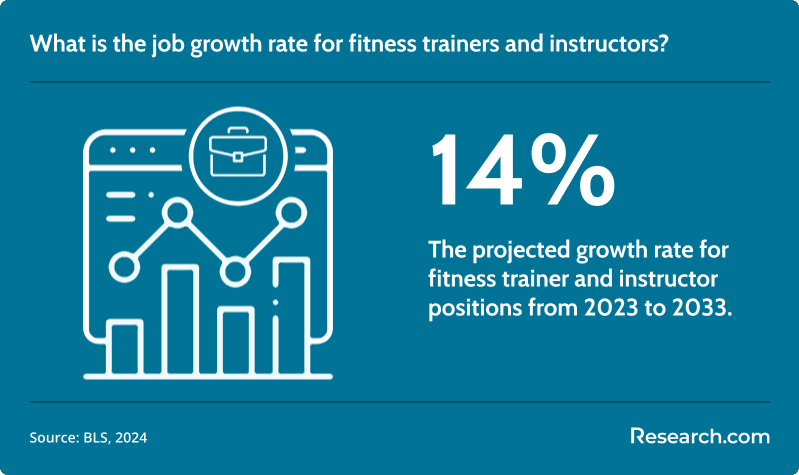
The job market depends on the role. Fitness and wellness careers are influenced by public interest in health, aging populations, corporate wellness efforts, and demand for accessible exercise programming. According to the U.S. Bureau of Labor Statistics (BLS), employment for fitness trainers and instructors is projected to grow by 14% from 2023 to 2033, much faster than the average for all occupations. Recreation workers are also projected to grow by 5% over the same period.
Even with positive projections, graduates should prepare for competition. Entry-level fitness jobs may be part time, commission-based, or schedule-dependent. Recreation roles may vary by season, municipality budgets, and local program demand. Students can improve their prospects by completing internships, earning certifications, building a portfolio of activity plans, gaining youth or client-facing experience, and developing strong communication skills.
| Job market factor | What it means for graduates | How to respond |
| Growth in fitness roles | Fitness trainers and instructors are projected to grow by 14% from 2023 to 2033 | Earn relevant certifications and gain practical training experience |
| Steady recreation demand | Recreation workers are projected to grow by 5% from 2023 to 2033 | Build experience in community programs, youth supervision, and event coordination |
| Employer expectations | Many roles value CPR training, safety knowledge, and applied experience | Choose programs with internships, labs, and career support |
| Technology adoption | Remote coaching, wearables, and fitness platforms are more common | Learn to use digital tools while protecting participant privacy and safety |
Can an Easy Physical Education Degree Lead to Educational Leadership Roles?
An associate degree alone usually does not qualify graduates for educational leadership positions. However, it can be the first step in a longer pathway. A student may begin with physical education coursework, gain experience in schools or recreation programs, complete a bachelor’s degree, earn teaching credentials where required, and later pursue graduate leadership training.
Professionals who want to supervise programs, manage staff, design curriculum, or move into school administration may eventually compare options such as the cheapest online educational leadership programs. The best time to plan this pathway is before transferring, so you can choose credits that apply toward the next degree.
How Can Creative Integration Enhance Physical Education Programs?
Creative integration can improve physical education by making activities more inclusive, memorable, and motivating. Lesson plans that use storytelling, music, visual design, movement challenges, or reflective prompts can help students connect physical activity with confidence, teamwork, and lifelong wellness.
Professionals interested in curriculum design or community programming may draw ideas from creative disciplines. For example, a cheap master of fine arts online degree can expose learners to narrative development, audience engagement, and creative problem-solving, although it should be pursued only when it supports a clear teaching, communication, or program-development goal.
Here’s What Graduates Have to Say About Their Physical Education Degree
-
: "
My associate degree in physical education gave me a realistic way to study while continuing to work. The flexible format helped me stay on track, and the coursework gave me the confidence to start building a career around fitness and helping others. Vanessa
"
-
: "
I was surprised by how practical the program felt. The classes were accessible, but they still pushed me to apply what I was learning. I appreciated being able to use those skills quickly in community fitness and recreation settings. Jay
"
-
: "
The program’s straightforward admissions process helped me get started, but the real value came from the hands-on work and relationships with instructors and classmates. It gave me a clearer direction for my next career steps. Mica
"
How Can Advanced Leadership Studies Boost Your Physical Education Career?
Leadership training can help physical education professionals move from direct service roles into program management, administration, policy, or organizational strategy. Advanced study may strengthen skills in budgeting, staff supervision, assessment, decision-making, and cross-department collaboration.
Professionals considering senior leadership in schools, sports organizations, nonprofits, or wellness systems may explore options such as online doctoral programs in leadership. This route is best suited for experienced professionals with clear leadership goals, not students who only need entry-level employment.
How Can Networking and Interdisciplinary Partnerships Enhance Professional Growth?
Physical education careers often grow through relationships. Internships, coaching networks, recreation departments, school partnerships, professional associations, and community wellness initiatives can help graduates find jobs, learn from experienced professionals, and discover specialized career paths.
Interdisciplinary partnerships can also improve program quality. Collaborating with nutrition educators, counselors, classroom teachers, public health professionals, athletic staff, writers, designers, or technology specialists can make wellness programs more effective. Students who want to improve audience engagement and content development may review related creative pathways such as jobs with MFA creative writing, especially if they plan to create educational materials, wellness campaigns, or community-facing content.
How Does Digital User Experience Enhance Online Physical Education Programs?
Online physical education programs depend heavily on digital learning design. A strong platform should make it easy for students to find assignments, watch demonstrations, submit performance videos, receive feedback, participate in discussions, and access support. Poor navigation or unclear instructions can make even a flexible program frustrating.
User experience matters because physical education is skill-based. Students need clear video examples, accessible content, timely instructor feedback, and practical ways to demonstrate movement or coaching techniques. Educators who want to strengthen digital learning design may consider complementary training such as an online degree UX design program, particularly if they plan to build online fitness courses, digital wellness tools, or remote coaching resources.
Common Mistakes to Avoid When Choosing an Easy Physical Education Degree
| Mistake | Why it can hurt you | Better approach |
| Choosing the cheapest tuition without checking total cost | Fees, travel, materials, and lost transfer credits can make a program more expensive than expected | Compare total cost of attendance and ask for a written estimate |
| Ignoring accreditation | Unaccredited or poorly recognized programs may limit transfer, aid, and employment options | Verify accreditation before applying |
| Assuming online means fully remote | Some programs require labs, practicums, workshops, or local field placements | Ask exactly how hands-on requirements are completed |
| Expecting the associate degree to qualify you for licensed teaching | Teaching roles generally require additional education and state certification | Map the full teacher-preparation pathway before enrolling |
| Overlooking certifications | Fitness employers may prefer or require personal training, CPR, or group fitness credentials | Choose electives and fieldwork that prepare you for relevant certifications |
| Relying only on rankings | A ranked school may not match your location, budget, schedule, or career goal | Use rankings as a starting point, then compare fit, transfer options, and outcomes |
| Not asking about transfer credits | Credits that do not transfer can add time and cost to a bachelor’s degree | Request transfer guidance and articulation agreement details |
Key Insights
- An easy physical education degree is best understood as accessible, flexible, and entry-level focused—not as a program that requires little effort.
- Most associate programs take two years for full-time students, require around 60 credits, and may be completed in as little as 18 months through accelerated formats.
- Tuition for listed programs ranges from $180 to $540 per credit, with estimated total degree costs between $7,200 and $32,600 before financial aid and additional expenses.
- Online programs can be convenient, but students should confirm how labs, practicums, internships, and physical demonstrations are handled.
- Graduates may pursue roles such as fitness trainer, recreation coordinator, physical education assistant, assistant coach, wellness aide, or sports operations assistant.
- Fitness trainers and instructors earn a median annual salary of $46,480, while recreation workers earn around $34,410 annually; certified personal trainers can earn upwards of $51,210 annually, with top earners exceeding $80,740.
- The BLS projects employment for fitness trainers and instructors to grow by 14% from 2023 to 2033, while recreation workers are projected to grow by 5% over the same period.
- Accreditation, transferability, hands-on training, student support, certification preparation, and total cost are the most important factors to compare before enrolling.
- An associate degree can start a career, but teaching, therapy, leadership, and advanced sports roles usually require further education or professional credentials.
References:
- BLS. (2024). Occupational Employment and Wage Statistics: Exercise Trainers and Group Fitness Instructors. BLS.
- BLS. (2024). Occupational Outlook Handbook: Fitness Trainers and Instructors. BLS.
- BLS. (2024). Occupational Outlook Handbook: Recreation Workers. BLS.
- Data USA. (2023). Exercise Trainers and Group Fitness Instructors. datausa.io.
- Data USA. (2023). Health and Physical Education. datausa.io.
- Data USA. (2023). Physical Education Teaching and Coaching. datausa.io.
- NCES. (2023). Number and percentage of students enrolled in degree-granting postsecondary institutions, by distance education participation, location of student, level of enrollment, and control and level of institution: Fall 2021 and fall 2022. NCES.
Other Things You Should Know About the Easiest Physical Education Degree Programs
Factors such as fewer prerequisites, a supportive learning environment, and comprehensive online resources contribute to making a physical education degree program easier to complete in 2027. Programs with a focus on practical experience rather than extensive theoretical study may also be considered less challenging.
The easiest physical education degree programs in 2027 focus on comprehensive curricula that blend theoretical knowledge with practical applications. Key components include foundational courses in exercise science, kinesiology, and health, along with hands-on internships, interactive workshops, and a flexible curriculum that adapts to various learning styles.


