
2027 Which Employers Hire Speech Pathology Degree Graduates? Industries, Roles, and Hiring Patterns

Co-Founder and Chief Data Scientist

Reviewed by Rhea Paul, PhD
SLP Education & Research Expert
Choosing where to apply with a speech pathology degree is not just a job-search question. It affects which degree level you pursue, which clinical placements you prioritize, whether you need state licensure, and how quickly you can move into specialized or higher-paying work. The employer landscape is broad, but it is not evenly distributed: healthcare settings account for approximately 65% of speech pathology job placements nationwide, making that sector the clearest center of demand.
This guide explains which employers hire speech pathology degree graduates, how hiring differs by industry and organization type, and what roles are realistic at different career stages. It also covers public-sector hiring, nonprofit opportunities, technology roles, geographic patterns, internship value, and how compensation can vary by employer type. Use it to match your education, clinical experience, specialization interests, and long-term career goals with the employers most likely to hire you.
Key Things to Know About the Employers That Hire Speech Pathology Degree Graduates
- Hospital systems, school districts, and outpatient therapy centers dominate hiring-each offering distinct roles from clinical assessment to educational support tailored to diverse patient needs.
- Entry-level positions emphasize direct patient care-mid-career shifts favor administrative, research, or specialized clinical roles, reflecting evolving industry demands.
- Geographic hiring concentrates in urban and suburban healthcare hubs-rural areas show slower growth, influencing relocation decisions and graduate recruitment strategies significantly.
Which Industries Hire the Most Speech Pathology Degree Graduates?
The largest employers of speech pathology degree graduates are concentrated in healthcare and education, with additional opportunities in residential care, public agencies, private practice, research, and early intervention. The best-fit industry depends heavily on degree level: associate and bachelor's graduates are more likely to qualify for aide, assistant, administrative, or research support roles, while independent clinical speech-language pathologist roles generally require graduate-level preparation, state licensure, and employer-specific credentialing.
Data from the Bureau of Labor Statistics (BLS), National Center for Education Statistics (NCES), and LinkedIn Workforce Insights point to several major employer categories:
- Healthcare: Hospitals, outpatient clinics, rehabilitation centers, nursing facilities, and specialty medical practices hire speech pathology graduates for evaluation, therapy, swallowing support, care coordination, and rehabilitation services. This is the dominant employment sector because speech-language services are closely tied to recovery, chronic condition management, and interdisciplinary patient care.
- Educational Services: Public school districts, private schools, charter schools, and early learning programs hire speech-language professionals and support staff to help children with articulation, fluency, language development, social communication, and learning-related communication needs. School-based work often involves individualized education plans (IEPs), collaboration with teachers and families, and documentation tied to special education requirements.
- Residential Care Facilities: Skilled nursing facilities, assisted living centers, and long-term care organizations hire speech-language professionals to support older adults and patients with neurological, cognitive-communication, or swallowing challenges. These roles often require comfort working with medically complex patients and families.
- Government Agencies and Public Health: Federal, state, and local agencies employ speech pathology graduates in veterans' services, public health programs, early intervention systems, correctional settings, community clinics, and disability services. These roles may combine direct service with program administration, screening, outreach, and compliance work.
- Private Practice and Outpatient Services: Independent clinics and therapy groups hire clinicians and assistants for pediatric, adult, telepractice, and specialty services. These settings can offer more autonomy and client variety, but they may also require stronger scheduling, billing, documentation, and business-awareness skills.
- Research and Higher Education: Universities, academic medical centers, and research organizations employ master's and doctoral graduates, along with research assistants at earlier degree levels. Work may involve clinical trials, intervention studies, assessment development, population health research, or training future practitioners.
- Early Childhood and Developmental Services: Nonprofits, private agencies, and public early intervention programs hire speech pathology graduates to support infants, toddlers, and families. These roles often require family-centered practice, developmental screening knowledge, and coordination with occupational therapists, physical therapists, educators, and social workers.
When comparing industries, students should look beyond job volume. Healthcare may offer the broadest clinical range, schools may provide predictable academic-year cycles, government roles may offer stronger benefits, and private practices may provide faster exposure to business operations. Students exploring related allied health paths can also compare demand patterns with nursing schools with high acceptance rates to understand how different healthcare professions connect to workforce needs.
What Entry-Level Roles Do Speech Pathology Degree Graduates Typically Fill?
Entry-level opportunities depend on the graduate's degree, state rules, and supervision requirements. A bachelor's degree in speech pathology or communication sciences and disorders may prepare graduates for assistant, aide, research, case coordination, or administrative roles, but independent speech-language pathologist positions typically require a master's degree, supervised clinical experience, state licensure, and often the Certificate of Clinical Competence in Speech-Language Pathology (CCC-SLP).
Common entry-level roles include:
- Clinical Speech-Language Pathologist Assistant:
- Core responsibilities: supporting licensed speech-language pathologists, preparing materials, helping deliver therapy activities under supervision, documenting sessions, and assisting with patient communication needs.
- Reporting structure: usually reports to a certified speech-language pathologist in a hospital, outpatient clinic, rehabilitation center, or private practice.
- Useful competencies: knowledge of speech and language development, comfort with patient interaction, accurate documentation habits, and the ability to follow treatment plans precisely.
- Educational Speech-Language Aide or Assistant:
- Core responsibilities: helping implement therapy activities, tracking student progress, preparing classroom or therapy materials, and supporting communication strategies used in schools.
- Reporting structure: works under a school-based speech-language pathologist, special education coordinator, or related services supervisor.
- Useful competencies: understanding of pediatric communication disorders, school routines, confidentiality expectations, family communication, and special education processes.
- Communication Specialist in Rehabilitation or Long-Term Care Facilities:
- Core responsibilities: assisting patients with communication strategies, supporting therapy activities for adults recovering from neurological conditions, and helping document progress.
- Reporting structure: works as part of a multidisciplinary team under clinical supervisors, rehabilitation directors, or licensed clinicians.
- Useful competencies: awareness of neurogenic communication disorders, patient-centered care, adaptive communication tools, and interprofessional teamwork.
- Speech Therapy Coordinator or Case Manager in Nonprofits:
- Core responsibilities: coordinating client intake, scheduling services, supporting program operations, maintaining records, and connecting families with community resources.
- Reporting structure: reports to program directors, clinic managers, or nonprofit leadership.
- Useful competencies: organization, client communication, service coordination, and familiarity with speech therapy delivery models.
- Research Assistant in Speech and Language Studies:
- Core responsibilities: collecting data, reviewing literature, preparing study materials, assisting with participant communication, and supporting analysis under a research team.
- Reporting structure: works under principal investigators, research coordinators, faculty members, or clinical research leaders.
- Useful competencies: data management, research ethics, attention to detail, and enough clinical context to understand study goals.
New graduates should read job descriptions carefully. Titles such as “assistant,” “aide,” and “coordinator” can vary by state and employer, and some positions require specific registration or supervision arrangements. The strongest candidates connect coursework, fieldwork, practicum experience, and documentation samples to the exact setting they want to enter.
Graduates who want to move toward clinic operations, department management, or service-line leadership may also consider how a healthcare administration degree could complement clinical training.
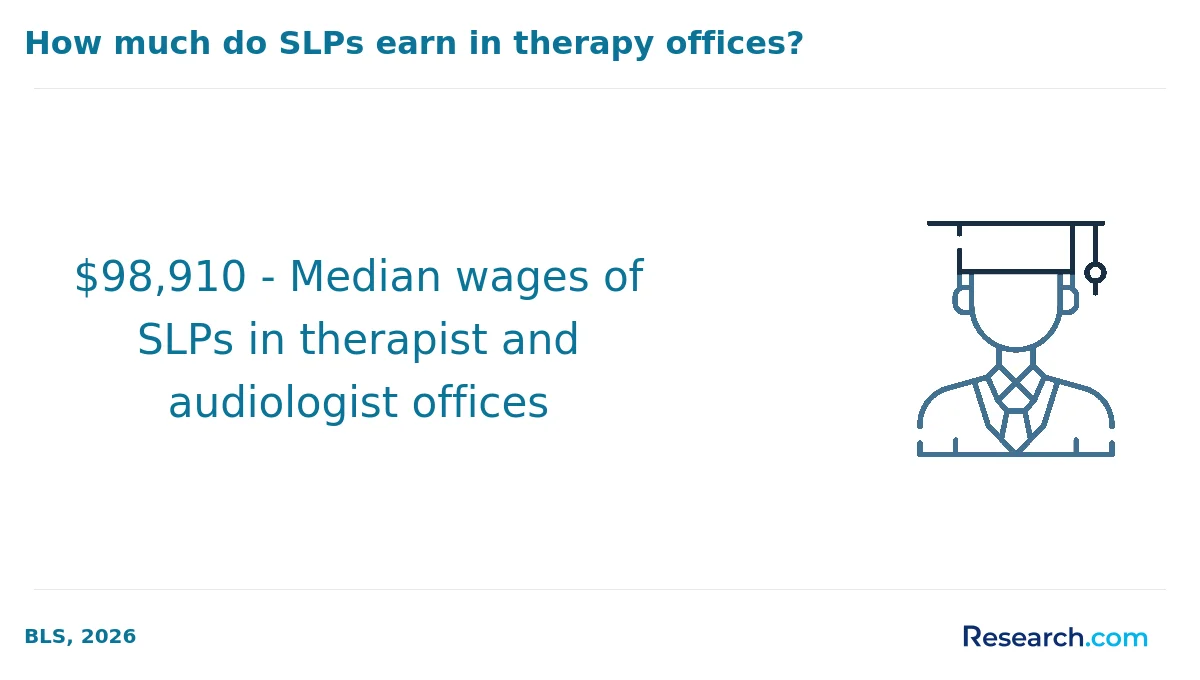
What Are the Highest-Paying Employer Types for Speech Pathology Degree Graduates?
The highest-paying employer types for speech pathology degree graduates are often private healthcare facilities, specialized clinics, technology companies, and consulting-oriented employers. Public agencies, schools, and nonprofits may offer lower base pay, but they can provide stability, retirement benefits, predictable schedules, or eligibility for programs that improve the overall value of the job.
Private Healthcare Facilities: Specialty clinics, private hospitals, and high-demand outpatient providers can offer stronger salary potential because they operate in revenue-generating clinical settings. Pay may be influenced by patient volume, reimbursement, specialization, productivity expectations, and local demand for licensed clinicians.
Investment-Backed Technology Firms: Companies developing speech, language, teletherapy, assistive communication, or digital health products may pay competitively for graduates who can translate clinical knowledge into product design, research, user testing, or clinical operations. Compensation may include salary, bonuses, or equity, but startup risk and workload expectations should be evaluated carefully.
Financial Services and Consulting Firms: These are less traditional employers, but some hire communication-disorders experts for disability consulting, accessibility strategy, workplace communication, claims review, or expert advisory roles. These positions usually require strong communication skills, documentation ability, and comfort applying clinical knowledge outside a therapy room.
Government Agencies: Federal, state, and local agencies may not always offer the highest base salary, but they can provide job stability, structured promotion systems, health coverage, retirement benefits, and predictable hiring frameworks. The financial value may be strongest for professionals who prioritize long-term security over rapid private-sector pay growth.
Nonprofit Organizations and Schools: These employers often have tighter budgets, especially for entry-level roles. However, they can provide meaningful work, training support, stable caseloads, school-year schedules, and in some cases eligibility for Public Service Loan Forgiveness (PSLF).
Compensation should be judged as a total package, not only a salary figure. Compare base pay, health insurance, retirement contributions, paid leave, supervision quality, caseload expectations, productivity requirements, continuing education support, loan forgiveness eligibility, and advancement options. A higher-paying job with limited mentorship or unsustainable workload may be a weaker long-term choice than a lower-paying role with strong supervision and growth.
- : "After graduation, navigating job options was overwhelming. I initially chased the highest salary at a private clinic but soon realized limited advancement and work-life balance issues. Switching to a government role meant a pay cut but offered stability and benefits that fit my long-term goals. It was a tough decision—balancing numbers with personal priorities—but understanding the broader compensation picture made all the difference."
Do Large Corporations or Small Businesses Hire More Speech Pathology Degree Graduates?
Speech pathology graduates are more commonly hired by small to mid-sized clinical, educational, and community-based employers than by large corporations. Large employers still matter, especially hospital systems, government contractors, education service organizations, and national therapy providers, but the daily work of speech pathology often happens in schools, clinics, rehabilitation settings, private practices, and local service agencies.
- Large Corporations and Large Systems: Major hospital networks, national therapy companies, large school service providers, and multisite healthcare organizations may offer formal onboarding, established documentation systems, benefits, clinical ladders, and clearer promotion paths. They can be a strong fit for graduates who want structured supervision, multidisciplinary teams, and access to specialized departments. The trade-off is that roles may be narrower and policies more standardized.
- Small Businesses and Private Practices: Independent clinics and small therapy groups often give early-career professionals wider exposure to scheduling, family communication, billing workflows, marketing, and program development. They may allow faster responsibility growth, but training can be less formal and benefits may vary.
- Mid-Market Employers and Nonprofits: Community health centers, regional rehabilitation providers, early intervention agencies, and mission-driven organizations often combine structure with flexibility. These settings can be especially appealing for graduates interested in pediatric services, telehealth, underserved communities, or interdisciplinary work.
- Specialization Fit: Employer size should match the graduate's clinical goals. Students comparing graduate pathways, including online speech pathology masters programs, should examine where programs place students for clinical experiences and whether those placements align with hospitals, schools, private practices, or telepractice employers.
- Broader Employer Fit: Size is only one factor. Graduates should also compare supervision quality, caseload mix, licensure support, productivity requirements, geographic location, salary structure, benefits, and long-term advancement.
How Do Government and Public Sector Agencies Hire Speech Pathology Degree Graduates?
Government and public-sector employers hire speech pathology graduates through structured processes that often take longer than private-sector hiring but can lead to stable positions with strong benefits. Common employers include the Department of Veterans Affairs, Department of Defense, Indian Health Service, state education departments, public health offices, local school districts, public hospitals, and early intervention programs.
- Hiring Framework: Federal roles often use the General Schedule (GS) system, with education, credentials, experience, and job duties influencing the pay grade. Many openings are posted through USAJobs and require detailed applications, resume formatting, eligibility documentation, and sometimes questionnaires or screenings. Some roles may be filled through excepted service procedures with more flexible rules.
- Credential Requirements: Clinical positions commonly require state licensure, completion of required clinical hours, and alignment with ASHA's academic standards. Some employers also prefer or require the Certificate of Clinical Competence in Speech-Language Pathology (CCC-SLP).
- Security Clearances and Background Checks: Roles connected to defense, veterans' services, public health facilities, or sensitive populations may require background checks or security clearances. Candidates should expect longer timelines and be prepared to submit accurate employment, education, and credential records.
- Employment Stability and Benefits: Public-sector jobs may offer job security, defined-benefit pensions, health coverage, paid leave, and predictable advancement systems. The trade-off is that base salary growth can be more structured and less flexible than in some private clinical or technology settings.
- Career Advancement: Advancement is often tied to tenure, performance, additional credentials, leadership responsibilities, and specialized experience. Pipeline options such as the VA's Speech Pathology Fellowship or Defense Health Agency internships can help recent graduates transition into government practice.
- : "Navigating federal hiring felt daunting at first because the process was competitive and paperwork-heavy. The process takes time, but the long-term benefits and stability make it worthwhile. Fellowship programs also provided critical mentorship and made the transition from graduate school to full-time practice much smoother."
What Roles Do Speech Pathology Graduates Fill in Nonprofit and Mission-Driven Organizations?
Nonprofit and mission-driven organizations hire speech pathology graduates to expand communication access, support underserved populations, and connect therapy services with broader community needs. Employers may include nonprofit health clinics, early intervention agencies, disability advocacy organizations, school-based therapy programs, rehabilitation centers, community health organizations, and family support agencies.
These jobs often blend direct service with coordination and outreach. A speech pathology graduate might support therapy delivery, organize screenings, manage referrals, help families navigate services, assist with grant reporting, contribute to public awareness campaigns, or coordinate volunteers. This variety can be valuable for early-career professionals who want leadership exposure, but it can also mean heavier administrative responsibilities than in a narrowly clinical role.
Organizational Culture: Nonprofits usually prioritize mission alignment, community trust, collaboration, and service access. Candidates should be ready to explain why the population served matters to them, not only why they are interested in speech pathology.
Compensation and Benefits: Nonprofit salaries may be lower than those offered by private healthcare facilities or corporate therapy employers. However, some roles may qualify for Public Service Loan Forgiveness (PSLF), and benefits such as flexible scheduling, professional development support, or meaningful community impact can improve the overall value of the position.
Mission-Driven For-Profit Sector: Benefit corporations, social enterprises, certified B Corporations, and impact-oriented startups may hire speech pathology graduates for service delivery, product development, training, accessibility, or community programs. These employers may offer stronger compensation than traditional nonprofits while still emphasizing social goals.
Career Development: Nonprofit roles can accelerate growth in communication, leadership, grant literacy, program management, and cross-agency collaboration. The trade-off is that long-term earning potential may grow more slowly unless the graduate moves into management, consulting, public-sector leadership, or specialized clinical work.
How Does the Healthcare Sector Employ Speech Pathology Degree Graduates?
Healthcare is the central employment sector for speech pathology graduates because communication, cognition, swallowing, rehabilitation, and patient education are directly tied to medical outcomes. Employers range from hospitals and outpatient clinics to insurance carriers, pharmaceutical companies, public health agencies, and health tech startups. Clinical roles usually require licensure and appropriate supervision; nonclinical roles may rely more on communication, research, operations, or policy skills.
- Hospital Systems: Speech-language pathologists assess and treat communication, swallowing, voice, cognitive-communication, and feeding-related concerns. Some graduates also support care coordination, discharge planning, rehabilitation program management, or patient education.
- Outpatient and Rehabilitation Providers: Clinics and rehabilitation centers hire graduates for therapy delivery, patient progress tracking, interdisciplinary treatment planning, and specialty programs such as pediatric language therapy or adult neurorehabilitation.
- Insurance Carriers: Graduates may work in case management, utilization review, policy research, claims support, or quality improvement, applying clinical knowledge to coverage decisions, documentation review, and treatment outcome evaluation.
- Pharmaceutical Companies: Opportunities may involve clinical trial coordination, patient communication strategy, health education, or support for studies involving neurological, developmental, or patient-reported outcomes.
- Public Health Agencies: Speech pathology graduates can contribute to community screening, early intervention, health communication, policy development, and population-level service planning.
- Health Tech Startups: These employers may hire graduates for telepractice operations, assistive communication tools, user experience research, product testing, data annotation, clinical content development, or implementation support.
Healthcare employers look for more than clinical knowledge. Strong candidates can document accurately, work with interdisciplinary teams, understand privacy and compliance expectations, communicate with families, and adapt to productivity or caseload demands. Before accepting a healthcare role, graduates should confirm supervision arrangements, licensure requirements, credential expectations, caseload type, documentation systems, and continuing education support.
The healthcare industry's resilience and growth, especially in outpatient care centers, home healthcare, and health technology, make it a strong option for speech pathology graduates who want stable demand and multiple advancement routes.
Which Technology Companies and Sectors Hire Speech Pathology Degree Graduates?
Technology employers hire speech pathology graduates when clinical communication expertise can improve digital products, assistive tools, teletherapy services, accessibility systems, or speech-related data. According to LinkedIn Talent Insights and BLS employment statistics, opportunities are concentrated in health tech, edtech, and AI-adjacent fields. These jobs may not always have “speech pathologist” in the title, so graduates should search by function as well as discipline.
- Health Tech: Telepractice platforms, digital therapy companies, assistive communication developers, and remote monitoring tools may need graduates who understand therapy workflows, patient engagement, clinical documentation, and communication disorders.
- AI and Machine Learning: Speech pathology graduates may contribute linguistic and clinical insight to natural language processing tools, speech recognition systems, voice-user interfaces, data labeling, model evaluation, and accessibility-focused product design.
- EdTech: Educational technology companies may hire graduates to support adaptive learning tools, language development platforms, communication supports, intervention content, and products for students with diverse learning needs.
- Technology Functions Within Non-Tech Companies: Finance, insurance, manufacturing, healthcare, and education organizations may hire graduates for accessibility, training, digital transformation, policy, compliance, or product implementation roles that benefit from communication-disorders expertise.
- Skills-Based Hiring and Remote Work: Remote-first and cross-disciplinary teams can create openings for graduates without computer science degrees, especially in product operations, UX research, clinical content, customer success, quality assurance, and implementation support.
- Entry Points and Portfolios: Graduates can strengthen their candidacy through internships involving telehealth, digital documentation, data analytics, user research, app testing, or AI-related communication projects. A portfolio showing product feedback, research summaries, workflow maps, or clinical content samples can help translate a speech pathology background into technology language.
Graduates considering healthcare technology leadership or administration may also compare options such as the top online MHA programs to determine whether additional management training fits their career goals.
What Mid-Career Roles Do Speech Pathology Graduates Commonly Advance Into?
Mid-career speech pathology graduates, typically five to ten years after entry, often move into specialized clinical practice, supervision, program leadership, education, consulting, private practice, research, or policy work. Advancement depends on the first employer, licensure status, clinical outcomes, supervision experience, and willingness to build skills beyond direct service.
- Clinical Specialists: Many professionals deepen expertise in pediatric speech disorders, neurogenic communication deficits, augmentative and alternative communication (AAC), swallowing, voice, fluency, or bilingual service delivery. Specialized roles may require advanced training, certifications, continuing education, or documented experience with specific populations.
- Functional Leadership: In hospitals, rehabilitation centers, schools, and large therapy organizations, experienced clinicians may become Clinical Supervisors, Program Coordinators, Lead SLPs, Department Managers, or service-line leaders. These roles require staff supervision, budgeting awareness, compliance knowledge, performance review, and caseload management.
- Educational Roles: Some graduates move into clinical education, university instruction, curriculum development, supervision of students, or professional training. These paths may require teaching credentials, advanced graduate study, or doctoral preparation depending on the employer.
- Consultancy and Private Practice: Professionals from small clinics or entrepreneurial settings may launch private practices, contract with schools, advise organizations, or specialize in telepractice. Success depends on referral development, billing knowledge, compliance, client retention, and business operations.
- Research and Policy Development: Some mid-career professionals move into academic research, public agency roles, program evaluation, disability policy, or clinical guideline development. These roles require strong writing, research methods, data literacy, and the ability to translate clinical evidence into policy or practice.
Large healthcare systems often provide clearer promotion ladders and competency benchmarks, while smaller employers may require professionals to create their own growth path through new services, leadership proposals, certifications, or external training. The strongest mid-career strategy is to build career capital early: document outcomes, seek quality supervision, pursue targeted continuing education, and choose roles that add either specialization depth or leadership responsibility.
Professionals considering broader clinical leadership or a transition into advanced healthcare roles may also review RN to NP programs as one example of how related healthcare career pathways structure advancement.
How Do Hiring Patterns for Speech Pathology Graduates Differ by Geographic Region?
Hiring patterns vary by region because speech pathology demand follows healthcare infrastructure, school district size, population age, state service systems, and local provider shortages. Major metropolitan areas usually offer the most openings, while rural and underserved regions may offer strong demand but fewer employer options.
- Major Metropolitan Hubs: New York City, Los Angeles, and Chicago lead in hiring volume because they have large hospital networks, academic medical centers, rehabilitation providers, universities, public agencies, and school districts. These markets may offer specialized roles and competitive salaries, but they also come with higher living costs and stronger applicant competition.
- Mid-Sized Markets: Cities such as Austin, Raleigh, and Salt Lake City increasingly hire certified specialists and bootcamp completers as outpatient clinics, school systems, and regional healthcare providers expand. These areas may offer a useful balance of opportunity, growth, and cost considerations.
- Rural and Smaller Markets: Rural hospitals, school districts, early intervention programs, and community clinics may have urgent hiring needs. Wages are typically lower and advancement options may be more limited, but candidates willing to serve underserved populations can sometimes gain broad experience quickly.
- Remote Work Influence: Since 2020, remote and hybrid roles have widened access to telepractice and digital health jobs beyond traditional hubs. This can help candidates in lower-cost regions, but it also increases national competition for flexible roles.
- Career Strategy: Graduates who can relocate may improve placement options by targeting dense employer markets. Those who need to stay local should build relationships with hospitals, school districts, early intervention agencies, and clinics that hire consistently.
LinkedIn data reveals a 35% increase in remote speech pathology job postings year-over-year, showing that geography still matters, but flexible work is changing where some graduates can compete.
What Role Does Internship Experience Play in How Employers Hire Speech Pathology Graduates?
Internship, practicum, and clinical placement experience can strongly influence hiring because employers want evidence that graduates can work with real clients, follow supervision, document accurately, and function in a professional setting. Data from the National Association of Colleges and Employers (NACE) and university career reports consistently reveal a nearly 20% higher job offer rate within six months post-graduation for candidates with internships compared to those without.
Quality and Relevance: A placement aligned with the target employer type is more valuable than a generic experience. Students aiming for schools should seek pediatric and IEP-related exposure; those targeting hospitals should prioritize medically oriented placements; candidates interested in technology should look for telehealth, digital documentation, UX, data, or assistive communication projects.
Employer Signal: Strong internships show reliability, communication skill, documentation discipline, and professional judgment. They also give supervisors a basis for references, which can be especially important for entry-level candidates with limited paid experience.
Prestige and Fit: Placements at reputable hospitals, school districts, research centers, or specialized clinics can strengthen a resume, but fit matters more than name recognition. A candidate who can explain what they did, what populations they served, and what competencies they developed will usually be more convincing than one who only lists a well-known employer.
Access Disparities: Not all students have equal access to high-quality internships. Lower-income students, students at institutions with fewer employer relationships, and those in regions with limited local placements may face barriers created by unpaid work, transportation costs, or relocation requirements.
- Strategies: Students can look for virtual placements, cooperative education, telepractice exposure, university clinic roles, research assistantships, and employers with diversity-focused recruitment practices.
- Timing: Applying early during the second or third year of study improves access to competitive placements and gives students time to correct gaps in experience.
- Networking: Faculty, alumni, career centers, clinical supervisors, and local professional associations can help students identify placements that are not always visible through public job boards.
The main mistake is treating internships as a graduation requirement rather than a hiring strategy. Students should choose placements that build proof for the employer type they want after graduation.
What Graduates Say About the Employers That Hire Speech Pathology Degree Graduates
- : "Graduating with a speech pathology degree opened my eyes to the diversity of employers—from healthcare providers to educational institutions, each valuing different strengths. Many organizations look for candidates who can adapt to clinical work and community outreach, especially in urban healthcare markets. I also found that continual learning and cross-disciplinary collaboration were much more central to the job than I expected. —Nicole"
- : "The range of employers hiring speech pathology graduates is broader than I initially thought, including rehabilitation centers, private practices, and government agencies. Hiring can be cyclical because some employers follow academic calendars or fiscal-year budgets. Rural and suburban areas also offer growing opportunities for people willing to work with underserved populations, which has been both challenging and rewarding. —Louise"
- : "Employers in this field place strong value on specialized skills in pediatric, geriatric, or neurogenic communication disorders. Hospitals and outpatient clinics dominate the hiring landscape, but schools and nonprofit organizations are also important. Metropolitan regions tend to have the most consistent openings, while remote telepractice is beginning to reshape where and how speech pathology services are delivered. —Norman"
Other Things You Should Know About Speech Pathology Degrees
Graduate degree holders in speech pathology typically have stronger hiring outcomes than those with only a bachelor's degree. Employers in healthcare, education, and rehabilitation settings often require a master's degree for clinical roles due to licensure and certification standards. Bachelor's graduates may find limited opportunities and often need further education to qualify for many speech pathology positions.
Employers prioritize hands-on clinical experience and relevant internships over traditional portfolios when assessing speech pathology graduates. Extracurricular activities-such as volunteering with populations requiring speech therapy-can enhance a candidate's profile by demonstrating commitment and practical skills. Documentation of successful therapy case studies or research involvement also supports stronger candidacy during hiring.
In 2027, speech pathology graduates are primarily hired by healthcare sectors, including hospitals, rehabilitation centers, and private practice clinics. Education systems, particularly early intervention and school-based programs, also actively recruit graduates. Demand is driven by a continued emphasis on communication disorders and early childhood education.
Diversity, equity, and inclusion (DEI) efforts are increasingly shaping hiring practices within speech pathology employers. Organizations seek to build culturally competent teams that can effectively serve diverse patient populations. DEI initiatives create more equitable opportunities for candidates from underrepresented backgrounds, encouraging recruitment and retention aligned with community needs.
References
- U.S. Bureau of Labor Statistics - Speech-Language Pathologists https://www.bls.gov/ooh/healthcare/speech-language-pathologists.htm
- ASHA EdFind - Accredited Speech-Language Pathology Programs https://find.asha.org/ed/
- Audiology and Speech-Language Pathology Interstate Compact https://aslpcompact.com/compact-map/
- Ithaca College - Online Master of Science in Speech-Language Pathology https://slponline.ithaca.edu/programs/masters-speech-language-pathology-online
- West Virginia University - Speech-Language Pathology, M.S. - Online https://medicine.hsc.wvu.edu/communications-sciences-and-disorders/speech-language-pathology-ms/future-students/curriculum/online-slp-program/
- James Madison University - Master of Science (M.S.) in Speech-Language Pathology (Distance Education / Online) https://www.jmu.edu/chbs/csd/online_ms/index.shtml
- Maryville University - Master of Science in Speech-Language Pathology https://www.maryville.edu/masters/speech-language-pathology/
- Auburn University, Montgomery - Master of Science in Speech-Language Pathology https://www.aum.edu/degree/ms-speech-language-pathology/


