
2027 Which Speech Pathology Degree Careers Offer the Best Long-Term Salary Growth?

Co-Founder and Chief Data Scientist

Reviewed by Rhea Paul, PhD
SLP Education & Research Expert
The biggest salary decision in speech pathology is not simply whether to become a speech-language pathologist. It is which setting, specialization, and advancement path you choose after earning the required credentials. Two graduates can start with similar degrees and move into very different earning trajectories depending on whether they work in schools, hospitals, rehabilitation, private practice, research, administration, or technology.
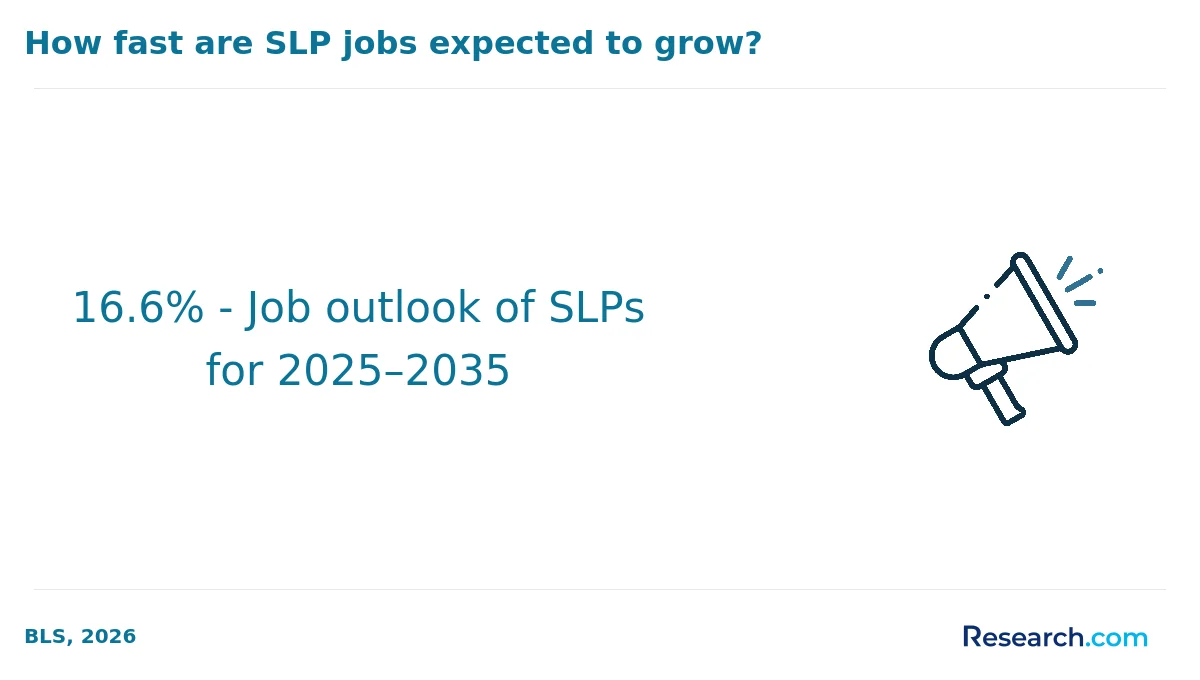
This guide is for prospective students, current speech pathology majors, graduate students, and early-career clinicians who want to understand where long-term income growth is most likely. The field has strong demand: according to the U.S. Bureau of Labor Statistics, employment for speech-language pathologists is projected to grow 17% from 2025 to 2035, faster than most occupations.
Below, you will find a practical breakdown of speech pathology careers with stronger long-term salary growth, how earnings tend to progress over time, which entry-level roles can lead to higher-paying work, and what factors matter most when planning a financially sustainable career.
Key Benefits of Speech Pathology Degree Careers That Offer Long-Term Salary Growth
- Speech Pathology careers typically see an average 3-5% annual salary increase, reflecting growing demand and specialization benefits throughout a professional's career.
- Advanced certifications and clinical experience significantly boost earning potential, with expert practitioners often securing leadership roles and higher wages.
- Long-term career growth in speech pathology supports financial stability through opportunities in education, healthcare administration, and private practice ownership.
Which Speech Pathology Careers Have the Highest Long-Term Salary Growth?
The speech pathology careers with the strongest long-term salary growth are usually the ones that add responsibility over time: advanced clinical decision-making, supervision, program leadership, business ownership, consulting, or specialized treatment of complex cases. The U.S. Bureau of Labor Statistics reports that the median wage for speech-language pathologists increased by about 15% over a decade, showing that the field can provide steady earnings progression, especially for clinicians who continue building expertise.
In general, the highest-growth paths are not always the highest-paying on day one. Some school-based and hospital roles begin with structured pay schedules, while private practice and consulting may grow more slowly at first but offer greater upside once a professional has a strong referral base.
- Clinical Speech-Language Pathologist: Hospital, outpatient, and medical settings can offer strong long-term growth because clinicians may move into advanced caseloads, specialty teams, supervisory duties, or clinical leadership. Salary growth is often tied to experience, setting, credentials, and the complexity of patient care.
- Private Practice Speech Pathologist: Private practice can produce substantial income growth for clinicians who build a client base, manage referrals, hire staff, or develop a niche service. This route carries more financial risk than a salaried role because earnings depend on demand, payer mix, operations, and business management.
- School-Based Speech-Language Pathologist: School roles often provide predictable raises through salary schedules based on years of service, education level, and additional duties. While pay ceilings may be more structured than in private practice, experienced school SLPs can improve earnings through leadership, district-level roles, extended-year work, or specialized assignments.
Students comparing speech pathology with adjacent healthcare leadership options should be careful not to assume that every advanced healthcare degree leads to the same career outcome. For example, online DNP programs are designed for nursing career advancement, not speech-language pathology licensure, but they can be useful for readers comparing broader healthcare education pathways.
How Does Salary Growth Progress Over Time in Speech Pathology Careers?
Salary growth in speech pathology usually happens gradually rather than through one large jump. Long-term labor market patterns show that earnings in speech pathology tend to grow approximately 3% to 5% annually across extended periods. That growth may come from scheduled raises, experience-based pay steps, job changes, specialty credentials, promotions, or expanded responsibilities.
Early-career salary increases often come from gaining clinical independence, improving caseload management, and completing required supervised practice or certification steps. Mid-career growth tends to depend more on specialization, workplace setting, performance, and whether the clinician moves into leadership or a higher-demand niche. Later-career growth is often strongest for professionals who supervise others, direct programs, own practices, consult, teach, or work in specialized medical or technology-related roles.
Typical salary-growth pattern
- Early career: Growth may be faster as new clinicians gain experience, complete credentialing milestones, and become more competitive for specialized roles.
- Mid-career: Raises may become steadier but more dependent on setting, location, certifications, and whether the role includes leadership or advanced clinical work.
- Late career: The strongest earnings often belong to professionals who have moved beyond general direct-service roles into administration, private practice ownership, consulting, research, or highly specialized care.
The main takeaway is that speech pathology salary growth rewards planning. A clinician who stays in the same role without adding credentials, responsibilities, or specialization may see predictable but limited growth. A clinician who deliberately builds expertise in a high-need area can often create more earning leverage over time.
Which Entry-Level Speech Pathology Jobs Lead to High-Paying Careers?
Entry-level speech pathology jobs that expose graduates to complex cases, strong supervision, and in-demand populations are often the best foundation for higher-paying careers. Average starting salaries for these roles typically fall between $60,000 and $75,000 annually, but the long-term value of a first job depends on more than starting pay.
A strong first role should help you build clinical judgment, documentation habits, interdisciplinary collaboration, and a clear specialization path. A slightly lower starting salary may be worthwhile if the job provides better mentorship, broader clinical exposure, or a pathway into medical, leadership, or specialized practice.
- Clinical Speech-Language Pathologist: Direct evaluation and therapy roles build the core experience needed for advancement. Clinicians who gain experience with complex communication, cognitive, feeding, swallowing, or neurological conditions may become more competitive for higher-paying specialized roles.
- Rehabilitation Speech Therapist: Rehabilitation settings can be valuable for clinicians interested in neurological recovery, acquired communication disorders, swallowing, and interdisciplinary care. This experience can support future movement into hospitals, specialty clinics, or advanced rehabilitation programs.
- School-Based Speech Pathologist: School roles help new clinicians learn caseload management, individualized education planning, compliance documentation, and collaboration with teachers and families. Over time, school-based SLPs may move into lead clinician, coordinator, district specialist, or administrative positions.
- Early Intervention Speech-Language Clinician: Early intervention work develops expertise in developmental communication, family coaching, and pediatric care. This can lead to specialized pediatric practice, leadership roles, or private-pay services for families seeking early support.
Recent graduates often describe the first job as both exciting and demanding. School settings, for example, can build confidence quickly because new clinicians learn to manage varied caseloads, communicate with families, and balance therapy time with paperwork. Mentorship matters: experienced colleagues can help early-career SLPs avoid burnout, improve clinical efficiency, and identify advancement opportunities that support future salary growth.
What Industries Offer the Best Salary Growth for Speech Pathology Graduates?
The industries with the best salary growth for speech pathology graduates are typically healthcare, educational services, rehabilitation and long-term care, private practice, and emerging technology or research settings. Speech pathologists in healthcare and educational settings often experience annual wage growth between 3% and 5%, but the way that growth happens differs by industry.
Healthcare roles may offer stronger growth for specialized medical expertise, while schools may provide more predictable step-based increases. Technology and research roles may have fewer traditional SLP openings, but they can reward clinicians who combine speech-language expertise with product development, data, accessibility, or assistive communication knowledge.
- Healthcare Sector: Hospitals, outpatient centers, and medical clinics may offer structured raises, specialty differentials, or advancement into senior clinician and program leadership roles. Growth is often strongest for clinicians who handle complex cases or work across interdisciplinary teams.
- Educational Services: Public and private schools often use salary schedules tied to years of experience, education level, and credentials. This can create predictable long-term salary growth, particularly for SLPs who take on district-level responsibilities or specialized student populations.
- Technology and Research: Speech recognition, communication access, assistive technology, and health innovation companies may value SLPs who can translate clinical knowledge into product design, usability, training, or research. Compensation can include competitive salaries, bonuses, or stock options, though opportunities may be more selective.
- Rehabilitation and Long-Term Care: These settings may reward experience with complex adult patients, cognitive-communication disorders, and swallowing-related care. Salary growth can come from tenure, productivity expectations, leadership, and advanced clinical responsibilities.
For SLPs who expect to move into department leadership, clinic operations, or healthcare management, a resource such as a healthcare administration degree guide may help clarify how administrative training differs from clinical speech pathology preparation.
What Factors Influence Long-Term Salary Growth in Speech Pathology Careers?
Long-term salary growth in speech pathology is shaped by a mix of personal career choices and external market conditions. Experience matters, but experience alone does not guarantee the strongest earnings. The clinicians who see better growth usually pair experience with specialization, strategic job selection, strong documentation and outcomes, and a willingness to take on higher-value responsibilities.
- Experience Accumulation: Pay generally rises as clinicians become more effective, independent, and trusted. Experience also helps SLPs qualify for supervisory, lead clinician, consulting, or specialty roles.
- Geographic Location: Regional demand, cost of living, school funding, healthcare reimbursement, and local employer competition can all affect salary growth. A high salary in one area may not mean stronger purchasing power if living costs are also high.
- Workplace Setting and Organization Size: Large health systems, school districts, and established clinics may have clearer pay scales and benefits. Smaller practices may offer flexibility or faster responsibility growth, but salary progression can be less predictable.
- Role Expansion and Promotions: Moving from direct service into supervision, program development, specialty coordination, training, or administration often creates stronger salary growth than remaining in the same generalist role.
- Economic and Funding Environment: Healthcare budgets, insurance reimbursement, school district funding, and public policy can influence hiring, raises, caseloads, and advancement opportunities.
One professional with a speech pathology degree described salary growth as less straightforward than she expected: “Navigating salary growth felt less straightforward than I anticipated, especially balancing opportunities with regional constraints.” Her experience highlights a common reality in the field. Taking on extra duties does not always produce an immediate raise, and funding changes can delay salary movement. Over time, however, consistent performance, adaptability, and strategic specialization can improve earning power.
How Do Skills and Specializations Affect Salary Growth?
Skills and specializations can have a major effect on speech pathology salary growth because they help clinicians solve more complex problems and qualify for roles with greater responsibility. Research shows that specialists can earn up to 20% more than professionals working in general fields. The strongest specializations are usually tied to high clinical need, limited provider supply, or measurable value for employers and clients.
Specialization should be chosen carefully. A niche can improve earnings, but only if there is demand for that expertise in the clinician’s region, setting, or intended practice model. For example, a medical specialization may be more valuable in hospitals and rehabilitation centers, while pediatric expertise may be more marketable in schools, early intervention, and private practice.
- Clinical Expertise: Advanced knowledge in feeding and swallowing, neurogenic communication, voice, fluency, autism-related communication, or complex pediatric disorders can support higher-value clinical roles.
- Technological Proficiency: Skills in augmentative and alternative communication, assistive technology, telepractice tools, and communication access can improve employability and open doors to consulting or technology-related work.
- Interdisciplinary Skills: SLPs who collaborate effectively with physicians, occupational therapists, physical therapists, educators, psychologists, and families may be better positioned for leadership in complex care environments.
- Leadership Opportunities: Specialized clinicians often become mentors, supervisors, program leads, or training coordinators. These added responsibilities can support stronger salary growth.
- Private Practice and Consulting: A clear niche can help clinicians attract referrals, set service focus, and build a stronger professional reputation. Income potential may increase, but business skills and ethical practice management are essential.
Do Advanced Degrees or Certifications Increase Long-Term Earnings?
Advanced degrees and certifications can increase long-term earnings in speech pathology when they lead to expanded responsibilities, specialized practice, supervisory roles, research, teaching, or administration. They are most valuable when they align with a clear career goal rather than being pursued only for the credential itself.
Studies show that speech pathologists with advanced qualifications can earn up to 20% more on average throughout their careers compared to those with entry-level credentials. This premium often reflects specialized knowledge in areas such as pediatric speech disorders, neurogenic communication impairments, swallowing, assistive technology, or leadership.
Prospective students should also distinguish between degrees required for entry into the profession and optional credentials that support advancement. Many speech-language pathology roles require graduate-level preparation, state licensure, and employer-specific qualifications. Requirements vary by state and setting, so students comparing slp master's programs online should review accreditation, clinical placement support, licensure alignment, and total cost before enrolling.
The payoff from advanced education depends heavily on setting. Hospital and research roles may reward specialized credentials more directly than school roles with fixed salary schedules. In schools, additional graduate credits or credentials may still matter, but the salary impact often depends on district policy. In private practice, the value of a credential depends on whether it helps attract referrals, improve outcomes, or support a profitable specialty service.
How Does Job Stability Impact Long-Term Salary Growth?
Job stability can support long-term salary growth because it allows speech-language pathologists to build experience, document outcomes, develop a reputation, and qualify for step increases or promotions. According to a report from the Bureau of Labor Statistics, speech-language pathology professionals employed in the field for over five years experience approximately 15% higher wage growth compared to those with interrupted careers.
Stable employment is especially valuable in settings with structured pay systems, such as school districts, hospitals, and large healthcare organizations. In those environments, longevity can contribute to predictable raises, retirement benefits, paid leave accrual, and internal promotion opportunities. Stability also helps clinicians develop deeper expertise with a population or service model.
That does not mean staying in one job is always the best financial choice. A strategic job change can increase salary if it moves the clinician into a higher-demand setting, better-funded employer, stronger benefits package, leadership role, or specialized practice area. The risk comes from frequent moves without a clear purpose, which can interrupt mentoring, weaken professional references, or prevent clinicians from reaching promotion thresholds.
Students and career changers who want to enter the workforce efficiently may find it useful to compare timelines and credential requirements through resources on accelerated degree programs, while still confirming that any chosen pathway meets speech-language pathology licensure expectations.
What Are the Highest-Paying Career Paths After 10+ Years?
After 10 or more years, the highest-paying speech pathology career paths are usually those that combine advanced expertise with leadership, ownership, research, or consulting. Median incomes for mid-to-late career speech-language pathologists often range from $90,000 to over $110,000 annually, especially when roles include specialized clinical work, management, or business responsibilities.
The common pattern is clear: long-term earnings rise when an SLP moves from providing general services to directing programs, treating complex cases, building a practice, influencing research, or applying clinical expertise in business and technology settings.
- Clinical Directors: Clinical directors oversee speech pathology programs in hospitals, rehabilitation centers, clinics, or multidisciplinary organizations. They may manage staff, budgets, quality standards, scheduling, compliance, and patient-care systems.
- Academic Leaders: Professors, researchers, and program leaders contribute to scholarship, train future clinicians, and may lead grants or academic departments. Readers comparing advanced healthcare leadership education may encounter resources such as online doctorate programs in healthcare management, though speech pathology academic roles typically require discipline-appropriate graduate preparation and research credentials.
- Private Practice Owners: Experienced clinicians who own practices can increase income by developing specialized services, hiring clinicians, contracting with schools or agencies, or expanding into assessment, consulting, or caregiver training. Earnings can be strong, but ownership also brings overhead, compliance, staffing, billing, and marketing responsibilities.
- Specialized Clinicians: SLPs with deep expertise in complex pediatric, medical, neurological, voice, swallowing, or assistive communication cases may qualify for premium clinical roles or referral-based private services.
- Corporate Experts: Some SLPs move into communication technology, accessibility, user research, clinical training, product development, or consulting. These roles are less traditional but can offer strong salary growth for clinicians who can connect speech-language expertise with business needs.
How Do You Choose a Speech Pathology Career Path With Strong Salary Growth?
To choose a speech pathology career path with strong salary growth, look beyond the first-year salary and evaluate the full advancement pathway. In 2022, the median wage for speech-language pathologists was around $81,000, but specialized or leadership roles often exceed $100,000. The best path depends on your interests, tolerance for risk, preferred population, geographic flexibility, and willingness to pursue additional credentials or leadership responsibilities.
A practical strategy is to compare career paths by four questions: How does pay increase over time? What credentials are required? How stable is the setting? What advancement options exist after five, 10, and 15 years?
- Industry Demand: Healthcare and educational services often provide steady demand, but salary growth depends on local funding, employer type, specialization, and workload expectations.
- Role Progression: Look for paths with clear movement into senior clinician, lead SLP, supervisor, program coordinator, director, owner, consultant, researcher, or technology specialist roles.
- Specialization Choice: A specialization can improve earnings when it matches market demand. Pediatric, geriatric, medical, neurogenic, swallowing, and assistive communication expertise may each lead to different opportunities depending on setting.
- Geographic Factors: Compare salaries against cost of living, licensing requirements, employer competition, and service demand. A higher salary is not always a better financial outcome if expenses are much higher.
- Ongoing Certification: Additional credentials can support advancement, but they should match the intended role. Adjacent healthcare credentials, such as an FNP post-master's certificate, serve different professions and should not be confused with speech-language pathology certification or licensure pathways.
Common mistakes include choosing a setting based only on starting salary, ignoring clinical placement quality, assuming private practice income is automatic, or enrolling in a program without checking licensure alignment. A stronger approach is to choose an accredited educational path, gain broad supervised experience, identify a high-demand specialization, and reassess salary opportunities every few years.
What Graduates Say About Speech Pathology Degree Careers That Offer Long-Term Salary Growth
- Erin: "Choosing a speech pathology degree was one of the best decisions I ever made because it balanced purpose with practical career growth. The long-term salary potential reflects the specialized skills you build over time, especially when you keep learning and take on more responsibility. The work is meaningful, and the career can be financially steady when you plan carefully."
- Fiona: "When I think about the return on investment, I look beyond tuition alone. Speech pathology gave me multiple ways to grow: direct clinical work, specialization, mentoring, and leadership. The salary increases came gradually, but the combination of job stability and professional fulfillment made the path worthwhile."
- Wayne: "My speech pathology degree opened doors to both clinical and research-focused work. The strongest growth came when I connected my foundational training with practical experience and a clear specialty. For anyone planning long term, this field can offer both meaningful impact and durable economic value."
Other Things You Should Know About Speech Pathology Degrees
In 2027, speech-language pathologists specializing in medical settings, such as hospitals and rehabilitation centers, or focusing on telepractice often experience the best long-term salary growth. These environments offer higher starting salaries and more opportunities for increase due to ongoing demand and advancements in technology.
Yes, geographic location significantly influences salary growth. Urban and high-cost-of-living areas generally offer higher starting salaries and better growth potential than rural or less populated regions. However, competition and cost of living should be considered alongside salary prospects.
Continuing education is crucial in speech pathology. Pursuing additional certifications, attending workshops, and staying current with research enhances skills and can lead to promotions and salary increases. Employers often value and incentivize ongoing professional development.
Experience is a key factor in long-term salary progression. As professionals gain expertise and demonstrate success with complex cases, they often qualify for higher pay grades, leadership roles, and specialized positions that offer better compensation. Longevity in the field typically correlates with increased earning potential.
References
- U.S. Bureau of Labor Statistics - Speech-Language Pathologists https://www.bls.gov/ooh/healthcare/speech-language-pathologists.htm
- ASHA EdFind - Accredited Speech-Language Pathology Programs https://find.asha.org/ed/
- O*NET OnLine - Speech-Language Pathologists https://www.onetonline.org/link/summary/29-1127.00
- University of North Carolina at Greensboro - Speech-Language Pathology, M.A. (Online) https://csd.uncg.edu/graduate/masters-of-arts-online/
- Delaware Valley University - Master of Science in Speech-Language Pathology (M.S.) https://delval.edu/programs/graduate-programs/speech-language-pathology
- Ithaca College - Online Master of Science in Speech-Language Pathology https://slponline.ithaca.edu/programs/masters-speech-language-pathology-online
- Nova Southeastern University - SLP Program - Master of Science in Speech-Language Pathology https://osteopathic.nova.edu/degrees/masters/speech-language-pathology/index.html
- Pennsylvania Western University - Master of Science in Speech-Language Pathology https://online.pennwest.edu/programs/speech-language-pathology-grad/index.php


