
2027 Fastest-Growing Careers for Speech Pathology Degree Graduates

Co-Founder and Chief Data Scientist

Reviewed by Rhea Paul, PhD
SLP Education & Research Expert
Choosing a speech pathology career path is no longer only a question of working in a school or clinic. Graduates now weigh medical roles, pediatric services, telepractice, assistive technology, rehabilitation, consulting, and management tracks—each with different credential requirements, salary ceilings, work settings, and growth prospects. Employment for speech-language pathologists is projected to grow 17% from 2025 to 2035, well above the average for all occupations, but the strongest opportunities are not distributed evenly across specialties, employers, or regions.
This guide breaks down where speech pathology degree holders are seeing the fastest job growth, which entry-level titles employers use, how salaries can progress, and how location, specialization, remote work, and advanced credentials affect long-term mobility. It is designed for students comparing degree options, recent graduates planning a first job search, and working professionals deciding whether to specialize, relocate, or move into leadership.
Key Things to Know About the Fastest-Growing Careers for Speech Pathology Degree Graduates
- Bureau of Labor Statistics projects a 17% employment growth for speech pathology graduates through 2035-much faster than average, driven by aging populations increasing demand for speech and language treatments.
- Labor market analytics reveal strongest salary growth and job openings in healthcare settings, educational institutions, and telepractice roles, emphasizing specialized certifications and bilingual skills.
- Current hiring trends highlight expanding opportunities in pediatric and geriatric care, with urban and suburban regions showing the highest demand and competitive compensation packages.
Which Speech Pathology Degree Career Paths Are Experiencing the Fastest Job Growth in the United States Right Now?
The fastest-growing speech pathology degree career paths are concentrated in clinical care, aging-related services, school-based support, rehabilitation, and communication technology. Growth is being driven by an older population, broader recognition of childhood communication disorders, expanded school-based services, and greater use of digital and assistive tools.
- Speech-Language Pathologists: This remains the central career path for many graduates. Employment is projected to grow 21%, supported by demand for assessment and treatment of speech, language, voice, cognitive-communication, and swallowing disorders. Aging-related conditions such as stroke and dementia add demand in hospitals, rehabilitation centers, skilled nursing facilities, and outpatient settings.
- Audiologists: Audiology is experiencing about 16% growth as hearing loss becomes more common among older adults and as hearing aid and diagnostic technologies improve. Early hearing detection policies for infants also support demand for screening and intervention services.
- Special Education Teachers with Speech Therapy Specialization: With projected growth near 9%, these roles are important in schools that serve students with speech and language impairments. Hiring is influenced by special education law, early intervention priorities, district budgets, and the availability of qualified providers.
- Rehabilitation Counselors with a Communication Disorders Focus: Expected to grow approximately 8%, these professionals help people with communication, cognitive, or neurological challenges return to work, school, and community life. This path may appeal to graduates who want to combine counseling, disability services, and vocational support.
- Assistive Technology Specialists: Growing around 12%, these roles focus on augmentative communication devices, adaptive software, and digital therapy tools. They are especially relevant for graduates who are comfortable translating clinical needs into practical technology solutions.
The best path depends on the setting you want, the population you prefer to serve, and how much additional credentialing you are willing to complete. Clinical speech-language pathology typically requires graduate education and licensure, while assistant, technology, education, and rehabilitation roles may offer earlier workforce entry with different advancement limits. Readers comparing adjacent allied health pathways and training costs can also review guidance on how much it costs to become a medical coder.
What Does the Bureau of Labor Statistics Project for Speech Pathology Degree Employment Over the Next Decade?
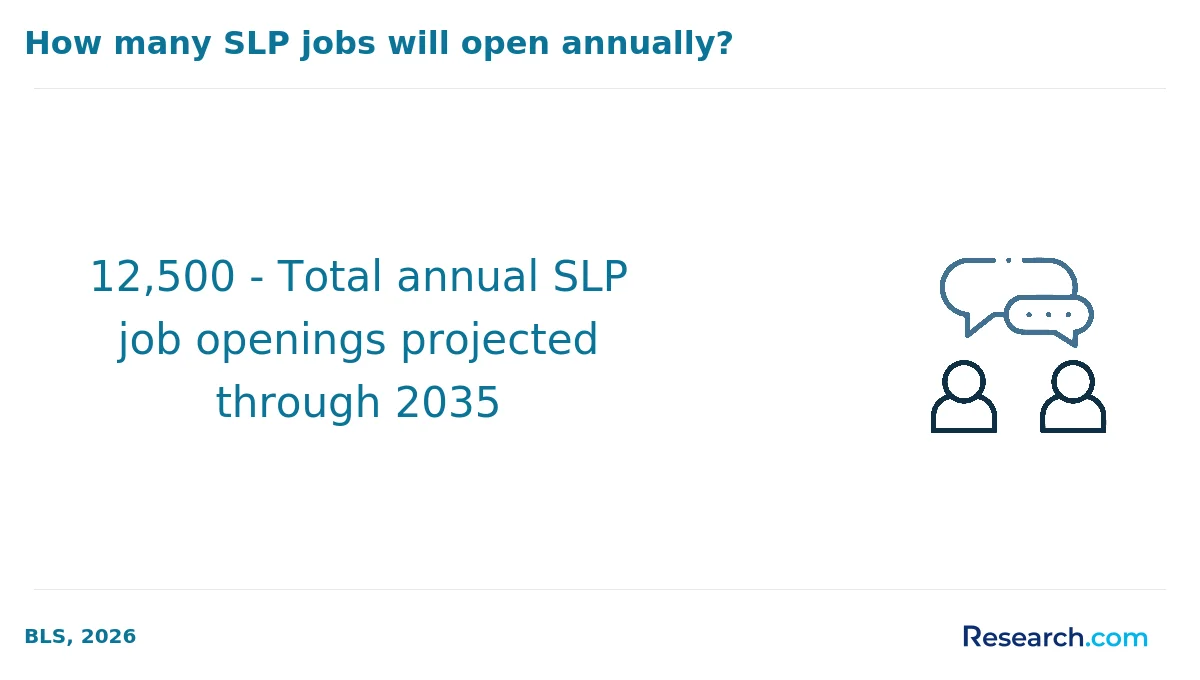
The Bureau of Labor Statistics projects strong employment growth for speech-language pathologists through 2035. The headline figure is a projected increase of approximately 17% from 2025 to 2035, compared with a 5% average growth rate across all jobs. For students and graduates, that means the field is expected to add opportunities faster than many other occupations, though actual openings will still vary by state, employer type, and specialization.
What is driving the projected growth?
- Aging population: As the baby-boomer population ages, more patients need support after stroke, dementia, neurological disease, and swallowing disorders. This increases demand in medical and rehabilitation settings.
- School-based service requirements: Federal and state rules requiring services for students with communication needs continue to support hiring in public schools, early intervention programs, and special education departments.
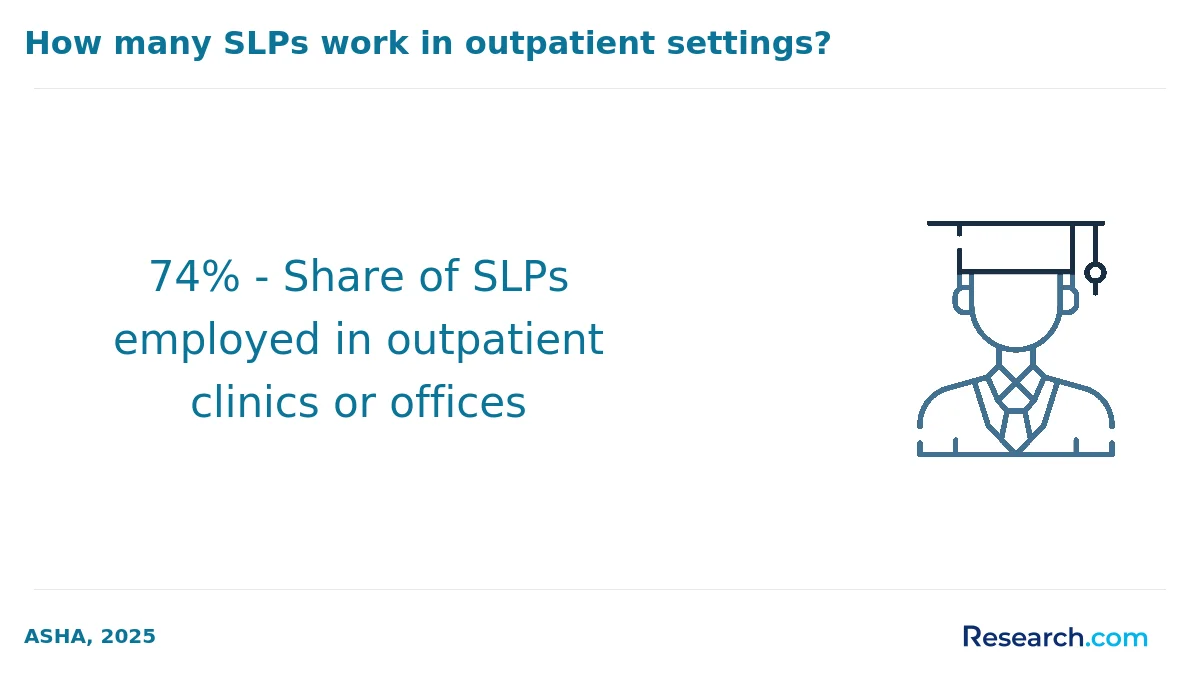
- Growth in outpatient and rehabilitation care: Hospitals, outpatient clinics, rehabilitation centers, and long-term care providers rely on speech-language pathologists to support recovery, safety, and quality of life.
- Replacement hiring: Retirements among current speech-language pathologists create openings in addition to new positions created by service growth.
- Specialized and technology-enabled care: Demand is rising for clinicians who can work with swallowing disorders, neurogenic communication disorders, pediatric language needs, AAC, and telepractice platforms.
BLS projections are national averages, not guarantees for every local market. A graduate in a region with strong school funding, hospital expansion, or aging-population growth may see more openings than a graduate in an area with fewer providers or limited public funding. Candidates who are open to high-need regions, bilingual services, medical placements, or telepractice may have a wider set of options.
Professionals comparing healthcare leadership pathways outside speech pathology may also examine MSN to DNP programs when evaluating advanced clinical and administrative credentials.
How Do Emerging Technologies and Industry Disruptions Create New Career Opportunities for Speech Pathology Graduates?
Technology is expanding—not replacing—the work of speech pathology graduates. Employers increasingly need professionals who can combine clinical judgment with digital tools, remote delivery, assistive communication systems, and data-informed care. The strongest opportunities are likely to go to graduates who can evaluate technology critically, protect patient privacy, and use tools to improve access and outcomes.
Technology-driven roles to watch
- Telepractice clinician: Provides assessment and therapy through secure video platforms, often serving schools, rural communities, or clients who have difficulty traveling.
- Telepractice coordinator: Helps organizations manage remote therapy workflows, documentation, scheduling, compliance, and platform training.
- Assistive technology consultant: Evaluates and implements communication devices, AAC systems, and adaptive software for clients with complex communication needs.
- Digital rehabilitation consultant: Designs or supports online therapy programs, mobile exercises, and hybrid care plans.
- AI speech interface specialist: Applies knowledge of speech, language, and communication patterns to tools that use speech recognition, natural language processing, or conversational interfaces.
- Neurocommunication specialist: Works with patients affected by brain injury, stroke, degenerative disease, or other neurological conditions, often in collaboration with rehabilitation teams and technology developers.
AI-driven speech recognition, natural language processing, mobile health applications, and smart assistive technologies all create new ways to deliver care. However, graduates should treat these tools as clinical supports, not automatic solutions. A platform may help collect data or extend access, but clinicians still need to interpret behavior, adapt treatment, communicate with families, and follow ethical and legal standards.
Brain-computer interfaces and advanced AAC tools are also creating collaboration opportunities with engineers, product teams, rehabilitation specialists, and researchers. Speech pathology graduates bring essential expertise about speech production, language development, swallowing, cognition, and user needs—knowledge that technology teams often lack.
Reports and insights from the World Economic Forum and McKinsey Global Institute point to rapid change across healthcare and digital work. For speech pathology graduates, the practical takeaway is clear: build comfort with telehealth platforms, digital documentation, AAC tools, data privacy expectations, and interdisciplinary communication.
One professional who earned a speech pathology degree described the transition this way: "Learning to navigate complex digital tools while maintaining personalized patient care was daunting. At first, the shift to teletherapy felt isolating, but mastering these platforms expanded my ability to reach clients beyond my local area. Embracing tech became less about replacing traditional skills and more about enhancing them." That experience reflects a broader shift in the field: technology rewards clinicians who remain adaptable while protecting the human side of care.
Which Entry-Level Job Titles for Speech Pathology Graduates Are Most In-Demand Among Today's Employers?
Entry-level job searches are more effective when graduates use the titles employers actually post. "Speech therapist" may appear in some listings, but many employers use more specific titles tied to supervision level, work setting, client population, or technology specialization.
- Speech-Language Pathologist Assistant: Speech-language pathologist assistants support licensed clinicians by preparing materials, carrying out therapy activities under supervision, documenting progress, and helping clients practice communication skills. They commonly work in schools, rehabilitation centers, and private practices. Starting salaries typically range from $30,000 to $45,000. This role can be a strong bridge toward licensed clinical practice, although advancement often requires additional education and certification.
- Early Intervention Specialist: These professionals support infants and toddlers with communication delays, often through home-based programs, community health agencies, and early childhood centers. Entry-level pay ranges from $35,000 to $50,000. The work is well suited to graduates interested in pediatrics, family coaching, developmental milestones, and interdisciplinary collaboration.
- Rehabilitation Aide: Rehabilitation aides usually work in hospitals, rehabilitation units, and outpatient clinics. They help prepare treatment spaces, manage equipment, organize therapy materials, and support clinical teams. Salaries begin at about $28,000 to $38,000. While this role is less specialized, it provides useful exposure to healthcare workflows and patient care environments.
- Speech-Language Pathologist Intern: Internships provide supervised experience in schools, hospitals, clinics, or community settings and are often connected to graduate training and licensure preparation. Compensation ranges from $30,000 to $48,000. Applicants should review whether a role is paid employment, a clinical placement, or a required supervised experience, because responsibilities and eligibility can differ.
- Augmentative and Alternative Communication (AAC) Technician: AAC technicians help clients use communication devices and related technologies. They may work in rehabilitation centers, specialized clinics, schools, or assistive technology programs. Starting salaries range from $40,000 to $55,000. This is a promising entry point for graduates interested in technology, disability support, and complex communication needs.
For stronger applicant tracking system matches, graduates should tailor resumes to the exact job title and setting. A school-based assistant application should emphasize child development, classroom collaboration, and IEP support. A rehabilitation aide resume should highlight patient care exposure, organization, and familiarity with clinical environments. Graduates planning to continue their education while working may also compare online universities with no application fee as part of a broader career progression plan.
What Salary Trajectory Can Speech Pathology Degree Holders Expect in the Top Five Fastest-Growing Career Paths?
Salary growth for speech pathology degree holders depends heavily on licensure, setting, specialization, geography, employer size, and whether the role is clinical, educational, administrative, or consulting-oriented. The fastest salary acceleration usually comes from combining clinical expertise with a high-demand specialty, leadership responsibility, or business-facing work.
- Speech-Language Pathologist: Entry salaries typically fall between $62,900 and $134,160, rising to $62,900-$134,160 at mid-career. Senior roles, especially those involving specialized pediatric or geriatric care and advanced certification, often surpass $95,000 after ten years.
- Rehabilitation Counselor: New graduates can expect earnings of around $40,000 to $50,000. Mid-level pay increases to approximately $55,000-$65,000, with senior counselors holding licensure earning up to $80,000. Salary growth is steady but more gradual than in some clinical and management tracks.
- Special Education Teacher: Starting salaries range from $45,000 to $55,000. With additional certifications and experience, mid-career educators earn $60,000-$70,000, while senior teachers or administrators often exceed $75,000. Raises in education are commonly tied to district salary schedules, credentials, and years of service.
- Medical and Health Services Manager: Careers here start near $70,000 and accelerate through mid-career levels of $85,000-$100,000 to reach $110,000+ in senior management positions. This path is strongest for graduates who add management, budgeting, compliance, operations, and team leadership skills.
- Healthcare Consultant: These roles begin with salaries around $55,000 to $65,000, progressing to $75,000-$90,000 mid-career. Senior consultants with niche experience often surpass $100,000. Compensation can grow quickly when a consultant can demonstrate measurable results in program design, patient access, clinical quality, technology implementation, or cost control.
Salary ranges should be interpreted as planning estimates rather than guarantees. A school-based role may offer stronger benefits and schedule predictability, while a medical, consulting, or private practice role may offer higher earning potential with more pressure, productivity expectations, or business development responsibilities. Cost of living also matters: a higher salary in a major metro area may not translate into higher disposable income.
One professional who moved into higher-paying roles after earning a speech pathology degree described the process as gradual: "Early years demanded patience and continuous learning, but every additional qualification unlocked noticeable salary gains." Her experience highlights a common pattern in the field: early compensation may be modest relative to the training required, but specialization, credentialing, supervision experience, and leadership skills can improve long-term earnings.
How Does Geographic Location Affect Career Growth Rates and Earning Potential for Speech Pathology Degree Graduates?
Geographic location affects both the number of openings and the practical value of compensation. Demand tends to be strongest where there are dense healthcare systems, large school districts, aging populations, university medical centers, and state-funded disability or early intervention programs. However, high salaries in expensive regions may be offset by housing, transportation, and taxes.
Regional patterns to consider
- Northeast: The Northeast offers steady job growth and some of the highest median wages. Major metropolitan hubs such as Boston and New York City support demand through hospitals, research universities, specialty clinics, and large school systems. Competition can be stronger, and cost of living can be high.
- Southeast: The Southeast is experiencing rapid employment growth as populations rise and access to healthcare expands. Wages are often moderate but increasing as states strengthen school-based and rehabilitation services. Atlanta and Miami stand out for diverse populations and demand for pediatric speech services.
- Midwest: Growth in the Midwest is generally stable, with pay levels slightly below national averages. Rural areas may have persistent provider shortages, while urban centers such as Chicago and Minneapolis offer stronger hospital, school, and research opportunities. Early intervention policies help sustain demand in some states.
- Southwest: The Southwest shows strong growth and rising wages because of population growth, healthcare investment, and diverse communities. Cities such as Dallas and Phoenix can be especially attractive for bilingual specialists and clinicians interested in pediatric, medical, or telepractice roles.
- West: The West combines competitive salaries with high living costs. Innovation hubs, large health systems, and state-funded disability services support roles in specialized care, clinical research, and technology-enabled practice. San Francisco and Seattle can offer advanced opportunities, but affordability should be weighed carefully.
Remote and hybrid roles reduce some geographic limits, especially for telepractice, digital assessment, consultation, and content development. Still, many pediatric, geriatric, swallowing, hospital, and school-based positions require in-person work or state-specific licensure. Graduates should compare not only salary and openings, but also licensure portability, caseload expectations, supervision availability, commute time, and quality of life.
A strong location strategy starts with the specialty you want. If you want AAC, look for children’s hospitals, specialized clinics, assistive technology programs, and districts with robust special education services. If you want medical speech pathology, prioritize hospital systems, rehabilitation centers, and regions with aging-population growth. If you want school-based work, review district demand, caseloads, benefits, and state education requirements.
Which Industries Are Hiring Speech Pathology Degree Graduates at the Highest Rates in the Current Job Market?
The highest hiring rates for speech pathology degree graduates are found in healthcare, education, home health, community services, research, technology, corporate training, and telepractice. Each industry offers a different balance of pay, stability, autonomy, caseload intensity, and advancement.
- Healthcare: Hospitals, outpatient clinics, rehabilitation centers, and long-term care facilities hire speech pathology graduates to support patients with communication, cognition, swallowing, and neurological conditions. Entry-level roles may involve clinical support or supervised practice, while advancement can lead to specialist, supervisor, or program management roles. Compensation often improves with medical specialization, productivity experience, and advanced certification.
- Education: Public schools, private schools, early intervention programs, and special education agencies hire professionals to support students with communication and developmental needs. School roles can offer job stability, benefits, and predictable calendars, though salaries may be lower than in some healthcare or consulting settings. Advancement may include lead clinician, district coordinator, or special education leadership roles.
- Home Health and Community Services: In-home and community-based care is expanding as more clients receive services outside institutional settings. These roles can offer flexibility and autonomy, but they also require strong documentation habits, travel planning, family communication, and independent decision-making.
- Research and Technology: Employers in clinical research, assistive technology, speech recognition, digital therapeutics, and health software value graduates who understand communication disorders and user needs. These roles may involve product development, testing, training, research coordination, or implementation support. Higher-than-average salaries are possible when clinical knowledge is paired with technical fluency.
- Corporate and Telepractice: Telepractice companies, healthcare platforms, and corporate communication programs hire speech pathology graduates for remote therapy, program development, training, quality assurance, and consulting. These roles may offer strong flexibility but often require comfort with digital systems, independent scheduling, and measurable performance outcomes.
Graduates should avoid choosing an industry based on salary alone. A hospital role may accelerate clinical skill development but involve demanding caseloads. A school role may offer stability and community impact but less pay flexibility. A technology role may provide higher growth potential but require nontraditional skills. The strongest long-term fit usually aligns population interest, work style, credential requirements, and advancement goals.
What Advanced Certifications or Graduate Credentials Accelerate Career Growth for Speech Pathology Degree Holders?
Advanced credentials can accelerate career growth when they match the roles a graduate actually wants. The right credential can improve eligibility, signal specialized expertise, support licensure, and open doors to supervisory, medical, academic, or technology-focused positions. The wrong credential can add cost and time without improving job prospects.
- Certificate of Clinical Competence in Speech-Language Pathology (CCC-SLP): This nationally recognized certification from the American Speech-Language-Hearing Association (ASHA) is widely valued by employers and often expected for clinical speech-language pathology roles. It signals that a clinician has met professional standards for education, supervised experience, and competency.
- State Licensure: Licensure is required for practicing speech pathologists, and requirements differ by state. Graduates should confirm state rules before enrolling in a program, relocating, or accepting a remote role. Licensure questions are especially important for telepractice, because the client’s location may affect requirements.
- Specialty Certifications: Specialty credentials can help clinicians move into focused roles with higher responsibility. Areas include swallowing and swallowing disorders, fluency and stuttering, child language and literacy, and augmentative and alternative communication (AAC). One example is the Board Recognized Specialist in Swallowing and Swallowing Disorders, BRS-S.
- Master's and Doctoral Degrees: The entry-level master's degree is central for many licensed speech-language pathology roles. Beyond that, doctoral degrees such as PhD and AuD, or graduate certificates in health administration, education leadership, or research, may support advancement into academia, research, administration, or specialized clinical leadership.
- Board Certification in Fluency Disorders (BCFD): This credential can strengthen a clinician’s standing in fluency-focused practice, school consultation, private practice, or specialized clinical work.
- Certified Brain Injury Specialist (CBIS): This certification is useful for professionals working with patients affected by traumatic brain injury, stroke, and other neurological conditions in rehabilitation or medical settings.
Before committing to a credential, compare four factors: eligibility requirements, time to completion, direct and indirect costs, and evidence that employers in your target setting value it. A credential that matters in a hospital system may not carry the same weight in a school district, and a certification useful for private practice may not improve pay in a fixed public salary schedule.
Students trying to shorten their path to graduate preparation may also compare accelerated speech pathology programs online, while confirming accreditation, clinical placement expectations, and state licensure alignment before enrolling.
For interdisciplinary preparation, some students also examine science-heavy pathways such as an online biology bachelor's degree, particularly if they are interested in research, medical communication disorders, neuroscience, or healthcare technology.
How Do Remote and Hybrid Work Trends Expand the Career Landscape for Speech Pathology Degree Graduates?
Remote and hybrid work have widened the speech pathology career landscape by making some roles less dependent on local employer supply. Telepractice, virtual school services, digital content development, consultation, and training roles can allow graduates to serve clients or organizations across broader regions. According to a 2023 Society for Human Resource Management (SHRM) survey, over 60% of healthcare and therapy-related jobs now offer some form of remote or hybrid option.
Remote-friendly speech pathology roles
- Telepractice Clinicians: These professionals deliver therapy and, where permitted, assessment through secure video platforms and digital tools. They may work with schools, private practices, healthcare organizations, or teletherapy companies.
- Educational Consultants: Consultants support schools and districts by developing intervention plans, training staff, reviewing service models, and advising on communication support programs.
- Content Developers: These professionals create speech therapy materials, digital resources, online training modules, and client education tools. This path is well suited to graduates who are strong writers, curriculum designers, or technology users.
Employers offer flexible roles for several reasons: talent shortages, broader candidate pools, client access needs, and mature digital workflows. However, remote speech pathology is not simply in-person care moved onto a screen. It requires strong planning, privacy awareness, caregiver coordination, technology troubleshooting, and the ability to keep clients engaged through a virtual format.
Remote work can also change the financial equation. For example, a telepractice clinician earning $80,000 annually based on New York market rates but living in a Midwestern city with a 25% lower cost of living can increase disposable income compared with an on-site role in New York. That said, pay may be adjusted by employer policy, client location, licensure requirements, and contract structure.
Job seekers should search using terms such as "remote," "hybrid," "telepractice," "virtual SLP," "online therapy," and "school teletherapy." Resumes should emphasize telehealth platforms, digital documentation, self-direction, family communication, privacy compliance, and outcomes tracking. Buffer's 2023 "State of Remote Work" reports that 61% of healthcare professionals prefer hybrid roles, suggesting that flexible work will remain a meaningful part of the field.
Professionals comparing online healthcare education pathways that may complement career mobility can review resources such as Capella vs WGU RN to BSN program comparisons.
What Role Does Specialization Play in Maximizing Career Growth Potential for Speech Pathology Graduates?
Specialization can significantly improve career growth for speech pathology graduates because it aligns skills with high-need populations and harder-to-fill roles. Generalist training creates flexibility, but focused expertise can improve competitiveness for medical, pediatric, technology-based, or leadership positions.
- Pediatric Speech-Language Pathology: Pediatric specialists support children with speech sound disorders, language delays, developmental disabilities, literacy-related challenges, and social communication needs. Demand is strong in schools, early intervention, pediatric clinics, and children’s hospitals.
- Medical Speech Pathology: Medical specialists work with swallowing disorders, cognitive-communication impairments, voice disorders, stroke, brain injury, and neurodegenerative conditions. These roles often require strong clinical judgment, interprofessional collaboration, and comfort in hospital or rehabilitation settings.
- Augmentative and Alternative Communication (AAC): AAC specialists help clients with complex communication needs use devices, symbols, software, and access methods. This area is growing alongside assistive technology innovation and is valuable in schools, rehabilitation, disability services, and specialized clinics.
- Geriatric Speech Pathology: Geriatric specialists serve older adults with communication, cognition, swallowing, and neurological conditions. The aging population supports demand in hospitals, skilled nursing facilities, home health, outpatient clinics, and long-term care.
Graduates can build specialization during graduate study and early employment by choosing targeted coursework, clinical placements, supervisors, continuing education, and case experiences. The BLS projects a 17% employment growth for speech-language pathologists from 2025 to 2035, underscoring why specialized skills can help graduates compete for the strongest opportunities.
The trade-off is flexibility. A deep specialization may improve pay and reputation in one niche but narrow the range of roles that feel relevant. A broader profile may make it easier to change settings but harder to stand out for advanced positions. The best strategy is to develop a primary specialty while maintaining enough general competence to adapt as employer demand changes.
How Do Public Sector Versus Private Sector Career Paths Compare in Terms of Growth and Advancement for Speech Pathology Graduates?
Public and private sector speech pathology careers differ in how they reward experience, performance, stability, and risk. Public sector roles are common in schools, government agencies, public hospitals, and state-funded programs. Private sector roles are common in private practices, hospitals, rehabilitation companies, telepractice firms, healthcare technology companies, and consulting organizations.
- Career Growth: Public sector advancement is usually structured around formal job classifications, years of service, credentials, and evaluations. Private sector advancement may move faster when professionals take on revenue-generating, leadership, program development, or specialized clinical responsibilities.
- Compensation Structures: Private employers may offer higher starting salaries, bonuses, or performance-based compensation, depending on the setting. Public roles may provide predictable raises, strong benefits, retirement plans, and more transparent salary schedules.
- Job Security: Public sector roles can offer stability, union protections, and established funding streams, although budgets still matter. Private sector roles may provide higher upside but can be more exposed to contract changes, productivity requirements, reimbursement shifts, or layoffs.
- Advancement Timelines: Public promotions often follow defined timelines and eligibility rules. Private sector promotions may depend more on measurable contributions, caseload management, client outcomes, business growth, and leadership ability.
- Hybrid Opportunities: Some roles blend public mission and private innovation, such as school teletherapy contracts, state workforce initiatives, university partnerships, and technology-supported disability services.
A public sector path may be the better fit for graduates who value stability, service missions, benefits, and predictable schedules. A private sector path may better suit those who want faster income growth, specialization, consulting, entrepreneurship, or technology-focused work. Neither sector is automatically better; the stronger choice depends on risk tolerance, financial goals, preferred population, and desired pace of advancement.
What Graduates Say About the Fastest-Growing Careers for Speech Pathology Degree Graduates
- : "Completing my bachelor's in speech pathology opened doors I hadn't imagined, especially in advancement potential. I noticed that many roles offer clear pathways to specialization and leadership, which is reflected in competitive compensation trajectories. Plus, the demand across both urban and rural areas makes geographic accessibility a real advantage for new grads like me. —Kayden"
- : "Looking back, the skills and credentials I gained through my speech pathology degree truly set me apart. Employers value not only clinical expertise but also proficiency in technology and communication strategies, which are vital in today's high-demand roles. It's gratifying to work in a field where continuous learning enhances both job security and personal growth. —Cannon"
- : "The professional versatility of a speech pathology degree impressed me most, from diverse settings to various patient needs. What stands out is the balance between solid compensation growth and the flexibility to practice in multiple geographic regions. Knowing that my education equips me with sought-after skills makes me confident in navigating this expanding career landscape. —Nolan"
Other Things You Should Know About Speech Pathology Degrees
In 2027, graduates entering fast-growing speech pathology careers should focus on skills like empathy, communication, and problem-solving. Additionally, proficiency in using technology for telepractice and patient management is vital. Understanding cultural and linguistic diversity also enhances effectiveness in treatment and interaction.
Internships provide hands-on experience and exposure to specialized areas such as pediatric speech therapy or telepractice, which are expanding rapidly. Early career roles allow graduates to build clinical competency and professional networks-both crucial for advancing into high-demand specialties. Participating in internships at hospitals, schools, or rehabilitation centers often leads to job offers in these fast-growing segments.
Joining professional associations like the American Speech-Language-Hearing Association (ASHA) offers access to continuing education, mentorship, and job boards focused on speech pathology fields with strong growth. Attending conferences and local chapter meetings strengthens connections with industry leaders and employers. Online networking platforms tailored to healthcare professionals also help graduates stay informed about emerging trends and job openings.
References
- U.S. Bureau of Labor Statistics - Speech-Language Pathologists https://www.bls.gov/ooh/healthcare/speech-language-pathologists.htm
- ASHA EdFind - Accredited Speech-Language Pathology Programs https://find.asha.org/ed/
- O*NET OnLine - Speech-Language Pathologists https://www.onetonline.org/link/summary/29-1127.00
- University of North Carolina at Greensboro - Speech-Language Pathology, M.A. (Online) https://csd.uncg.edu/graduate/masters-of-arts-online/
- Maryville University - Master of Science in Speech-Language Pathology https://www.maryville.edu/masters/speech-language-pathology/
- California State University-San Marcos - Online MS in Speech-Language Pathology https://www.csusm.edu/slp/programs/mastersonline/index.html
- Nova Southeastern University - SLP Program - Master of Science in Speech-Language Pathology https://osteopathic.nova.edu/degrees/masters/speech-language-pathology/index.html
- California State University-East Bay - Online Master of Science in Speech-Language Pathology https://ce.csueastbay.edu/programs/speech-language-pathology/


